Results by title
22279 books match the query 'Social Science' and 1635 start with s
Speaking for the Generations
Native Writers on WritingEdited by Simon J. Ortiz
University of Arizona Press, 1997
Of varied backgrounds, the writers represent Indian heritages and cultures from the Pacific Northwest to the northern plains, from Canada to Guatemala. They are poets, novelists, and playwrights. And although their backgrounds are different and their statements intensely personal, they share common themes of their relationship to the land, to their ancestors, and to future generations of their people. From Gloria Bird's powerful recounting of personal and family history to Esther Belin's vibrant tale of her urban Native homeland in Los Angeles, these writers reveal the importance of place and politics in their lives. Leslie Marmon Silko calls upon the ancient tradition of Native American storytelling and its role in connecting the people to the land. Roberta J. Hill and Elizabeth Woody ponder some of the absurdities of contemporary Native life, while Guatemalan Victor Montejo takes readers to the Mayan world, where a native culture had writing and books long before Europeans came.
Together these pieces offer an inspiring portrait of what it means to be a Native writer in the twentieth century. With passion and urgency, these writers are speaking for themselves, for their land, and for the generations.
Speaking for the People
Native Writing and the Question of Political FormMark Rifkin
Duke University Press, 2021
Speaking from the Body
Latinas on Health and CultureEdited by Angie Chabram-Dernersesian and Adela de la Torre
University of Arizona Press, 2008
Here are stories of Latinas living with conditions common to many: hypertension, breast cancer, obesity, diabetes, depression, osteoarthritis, rheumatoid arthritis, dementia, Parkinson’s, lupus, and hyper/hypothyroidism. By bringing these narratives out from the shadows of private lives, they demonstrate how such ailments form part of the larger whole of Latina lives that encompasses family, community, the medical profession, and society. They show how personal identity and community intersect to affect the interpretation of illness, compliance with treatment, and the utilization of allopathic medicine, alternative therapies, and traditional healing practices. The book also includes a retrospective analysis of the narratives and a discussion of Latina health issues and policy recommendations.
These Latina cultural narratives illustrate important aspects of the social contexts and real-world family relationships crucial to understanding illness. Speaking from the Body is a trailblazing collection of personal testimonies that integrates professional and personal perspectives and shows that our understanding of health remains incomplete if Latina cultural narratives are not included.
Speaking in Queer Tongues
GLOBALIZATION AND GAY LANGUAGEEdited by William L. Leap and Tom Boellstorff
University of Illinois Press, 2003
Western constructions of gay culture are now circulating widely beyond the boundaries of Western nations due to influences as diverse as Internet communication, global dissemination of entertainment and other media, increased travel and tourism, migration, displacement, and transnational citizenship. The authority claimed by these constructions, and by the linguistic codes embedded in them, is causing them to have a profound impact on public and private expressions of homosexuality in locations as diverse as sub-Saharan Africa, New Zealand, Indonesia and Israel.
Examining a wide range of global cultures, Speaking in Queer Tongues presents essays on topics that include old versus new sexual vocabularies, the rhetoric of gay-oriented magazines and news media, verbal and nonverbalized sexual imagery in poetry and popular culture, and the linguistic consequences of the globalized gay rights movement.
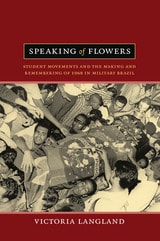
Speaking of Flowers
Student Movements and the Making and Remembering of 1968 in Military BrazilVictoria Langland
Duke University Press, 2013
Embodying Cold War political and gendered tensions, Brazil's increasingly violent military government mounted fierce challenges to student political activity just as students were beginning to see themselves as representing an otherwise demobilized civil society. By challenging the students' political legitimacy at a pivotal moment, the dictatorship helped to ignite the student protests that exploded in 1968. In her attentive exploration of the years after 1968, Langland analyzes what the demonstrations of that year meant to later generations of Brazilian students, revealing how student activists mobilized collective memories in their subsequent political struggles.
Speaking of Indigenous Politics
Conversations with Activists, Scholars, and Tribal LeadersJ. Kehaulani Kauanui
University of Minnesota Press, 2018
“A lesson in how to practice recognizing the fundamental truth that every inch of the Americas is Indigenous territory” —Robert Warrior, from the Foreword
Many people learn about Indigenous politics only through the most controversial and confrontational news: the Standing Rock Sioux Tribe’s efforts to block the Dakota Access Pipeline, for instance, or the battle to protect Bears Ears National Monument in Utah, a site sacred to Native peoples. But most Indigenous activism remains unseen in the mainstream—and so, of course, does its significance. J. Kēhaulani Kauanui set out to change that with her radio program Indigenous Politics. Issue by issue, she interviewed people who talked candidly and in an engaging way about how settler colonialism depends on erasing Native peoples and about how Native peoples can and do resist. Collected here, these conversations speak with clear and compelling voices about a range of Indigenous politics that shape everyday life.
Land desecration, treaty rights, political status, cultural revitalization: these are among the themes taken up by a broad cross-section of interviewees from across the United States and from Canada, Mexico, Chile, Bolivia, Peru, Australia, and New Zealand. Some speak from the thick of political action, some from a historical perspective, others from the reaches of Indigenous culture near and far. Writers, like Comanche Paul Chaat Smith, author of Everything You Know about Indians Is Wrong, expand on their work—about gaming and sovereignty, for example, or protecting Native graves, the reclamation of land, or the erasure of Indian identity. These conversations both inform and engage at a moment when their messages could not be more urgent.
Contributors: Jessie Little Doe Baird (Mashpee Wampanoag), Omar Barghouti, Lisa Brooks (Abenaki), Kathleen A. Brown-Pérez (Brothertown Indian Nation), Margaret “Marge” Bruchac (Abenaki), Jessica Cattelino, David Cornsilk (Cherokee Nation), Sarah Deer (Muskogee Creek Nation), Philip J. Deloria (Dakota), Tonya Gonnella Frichner (Onondaga Nation), Hone Harawira (Ngapuhi Nui Tonu), Suzan Shown Harjo (Cheyenne and Hodulgee Muscogee), Rashid Khalidi, Winona LaDuke (White Earth Ojibwe), Maria LaHood, James Luna (Luiseño), Aileen Moreton-Robinson (Quandamooka), Chief Mutáwi Mutáhash (Many Hearts) Marilynn “Lynn” Malerba (Mohegan), Steven Newcomb (Shawnee/Lenape), Jean M. O’Brien (White Earth Ojibwe), Jonathan Kamakawiwo‘ole Osorio (Kanaka Maoli), Steven Salaita, Paul Chaat Smith (Comanche), Circe Sturm (Mississippi Choctaw descendant), Margo Taméz (Lipan Apache), Chief Richard Velky (Schaghticoke), Patrick Wolfe.
Speaking of Race and Class
The Student Experience at an Elite CollegeElizabeth Aries
Temple University Press, 2012
In Speaking of Race and Class, the follow-up volume to her groundbreaking Race and Class Matters at an Elite College, Elizabeth Aries completes her four-year study of diversity at a prestigious liberal arts college. Here, the 58 students—affluent, lower-income, black, and white—that Aries has interviewed since they were Amherst freshmen provide a complete picture of what and how each group learned about issues of race and class.
Aries presents the students’ personal perceptions of their experiences. She reveals the extent to which learning from diversity takes place on campus, and examines the distinct challenges that arise for students living in this heterogeneous community. Aries also looks more broadly at how colleges and universities across the country are addressing the challenges surrounding diversity. Speaking of Race and Class testifies to the programming and practices that have proven successful.
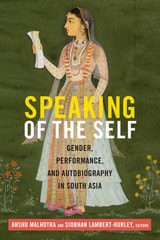
Speaking of the Self
Gender, Performance, and Autobiography in South AsiaAnshu Malhotra and Siobhan Lambert-Hurley, editors
Duke University Press, 2015
Contributors: Asiya Alam, Afshan Bokhari, Uma Chakravarti, Kathryn Hansen, Siobhan Lambert-Hurley, Anshu Malhotra, Ritu Menon, Shubhra Ray, Shweta Sachdeva Jha, Sylvia Vatuk
Speaking with the Ancestors
Mississippian Stone Statuary of the Tennessee-Cumberland RegionKevin E. Smith and James V. Miller
University of Alabama Press, 2008
When European explorers began their initial forays into southeastern North America in the 16th and 17th centuries they encountered what they called temples and shrines of native peoples, often decorated with idols in human form made of wood, pottery, or stone. The idols were fascinating to write about, but having no value to explorers searching for gold or land, there are no records of these idols being transported to the Old World, and mention of them seems to cease about the 1700s. However, with the settling of the fledgling United States in the 1800s, farming colonists began to unearth stone images in human form from land formerly inhabited by the native peoples. With little access to the records of the 16th and 17th centuries, debate and speculation abounded by the public and scholars alike concerning their origin and meaning.
During the last twenty years the authors have researched over 88 possible examples of southeastern Mississippian stone statuary, dating as far back as 1,000 years ago, and discovered along the river valleys of the interior Southeast. Independently and in conjunction, they have measured, analyzed, photographed, and traced the known history of the 42 that appear in this volume. Compiling the data from both early documents and public and private collections, the authors remind us that the statuary should not be viewed in isolation, but rather as regional expressions of a much broader body of art, ritual, and belief.
Spear of the Nation
Umkhonto weSizwe: South Africa’s Liberation Army, 1960s–1990sJanet Cherry
Ohio University Press, 2011
Umkhonto weSizwe, Spear of the Nation, was arguably the last of the great liberation armies of the twentieth century—but it never got to “march triumphant into Pretoria.” MK—as it was known—was the armed wing of the African National Congress, South Africa’s liberation movement, that challenged the South African apartheid government. A small group of revolutionaries committed to the seizure of power, MK discovered its principal members engaged in negotiated settlement with the enemy and was disbanded soon after.
The history of MK is one of paradox and contradiction, of successes and failures. In this short study, which draws widely on the personal experiences of—and commentary by—MK soldiers, Janet Cherry offers a new and nuanced account of the Spear of the Nation. She presents in broad outline the various stages of MK’s thirty-year history, considers the difficult strategic and moral problems the revolutionary army faced, and argues that its operations are likely to be remembered as a just war conducted with considerable restraint.
Spear-Won Land
Sardis from the King's Peace to the Peace of ApameaEdited by Andrea M. Berlin and Paul J. Kosmin
University of Wisconsin Press, 2019
The contributors to this volume are members of the Hellenistic Sardis Project, a research collaboration between long-standing expedition members and scholars keenly interested in the site. These new discussions on the pre-Roman history of Sardis restore the city in the scholarship of the Hellenistic East and will be enlightening to scholars of classical archaeology.

Special Admission
How College Sports Recruitment Favors White Suburban AthletesKirsten Hextrum
Rutgers University Press, 2021
Special Admission contradicts the national belief that college sports provide upward mobility opportunities. Kirsten Hextrum documents how white middle-class youth become overrepresented on college teams. Her institutional ethnography of one elite athletic and academic institution includes over 100 hours of interviews with college rowers and track & field athletes. She charts the historic and contemporary relationships between colleges, athletics, and white middle-class communities that ensure white suburban youth are advantaged in special athletic admissions. Suburban youth start ahead in college admissions because athletic merit—the competencies desired by university recruiters—requires access to vast familial, communal, and economic resources, all of which are concentrated in their neighborhoods. Their advantages increase as youth, parents, and coaches strategically invest in and engineer novel opportunities to maintain their race and class status. Thus, college sports allow white, middle-class athletes to accelerate their racial and economic advantages through admission to elite universities.

Special Delivery
Epistolary Modes in Modern FictionLinda S. Kauffman
University of Chicago Press, 1992
Kauffman first considers male writers whose works, testing the boundaries of genre and gender, imitate love letters: Viktor Shklovsky's Zoo, Vladimir Nabokov's Lolita, Roland Barthes's A Lover's Discourse, and Jacques Derrida's The Post Card. She then turns to three novels by women who are more preoccupied with politics than passion: Doris Lessing's The Golden Notebook, Alice Walker's The Color Purple, and Margaret Atwood's The Handmaid's Tale. By juxtaposing these "women's productions" with the men's "production of Woman," Special Delivery dismantles the polarities between male and female, theory and fiction, high and low culture, male critical theory, and feminist literary criticism. Kauffman demonstrates how all seven texts mercilessly expose the ideology of individualism and romantic love; each presents alternate paradigms of desire, wrested from Oedipus, grounded in history and politics, giving epistolarity a distinctively postmodern stamp.

Special?
The Chequered History of the UK-US RelationshipSimon McDonald
Haus Publishing, 2027
Special? investigates the unique, but increasingly weak, relationship between the US and UK and contemplates how it might develop in the future.
Many relationships in international affairs are singular, but the United Kingdom’s relationship with the United States has always been different. For a time, what Churchill dubbed the "special" relationship had consequences far beyond the borders of the two countries—a closeness that has provoked envy, curiosity, and bewilderment.
In this new volume, Simon McDonald takes stock of this special relationship and speculates about its future. Starting with its sixteenth-century origins, he takes a longer look at the twentieth century and the two nations' relationship today, before looking forward at how, and if, it may develop in the coming centuries. Just how important are ties in defense, intelligence, language, and culture? What can we make of the United States’s ambivalent relationship with the Royal Family? Has the US ever acted benevolently towards the UK, or has it always taken decisions in its own interest?
Today, the relationship is weaker than Churchill, Thatcher, or even Blair understood it; much that made it special belongs to a rapidly receding past. Though it can no longer be claimed that the relationship is central to international relations, McDonald asks if recent events represent a temporary cooling of what remains a vital relationship to the UK and an important one to the US; or a rift that will only grow wider.
Spectacles Of Realism
Gender, Body, GenreMargaret Cohen
University of Minnesota Press, 1995
A rethinking of realism that reveals its relevance to sexual and cultural politics.
Despite rumors of its demise in literary theory and practice, realism persists. Why this is, and how realism is relevant to current interdisciplinary debates in gender studies and cultural studies, are the questions underlying Spectacles of Realism. With particular reference to nineteenth-century French culture, the contributors explore the role realism has played in the social construction of gender and sexuality. Among their subjects are nineteenth-century physiologies, photographs, caricatures, and Balzac’s Comédie humaine; the ethnographic claims of Goncourt’s naturalism and the historical claims of Zola’s; and the allure of exotica displayed at new museums and international expositions.
Contributors: April Alliston, Princeton U; Emily Apter, UCLA; Charles Bernheimer, U of Pennsylvania; Rhonda Garelick; Judith Goldstein, Vassar; Anne Higonnet, Wellesley; Roger Huss, Queen Mary and Westfield College; Dorothy Kelly, Boston U; Diana Knight, U of Nottingham; Jann Matlock, Harvard U; Linda Nochlin, NYU; Patrick O’Donovan, King’s College; Vanessa Schwartz, American U; Naomi Segal, U of Reading; Barbara Vinken, NYU.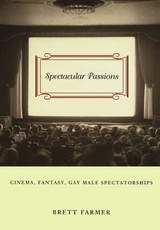
Spectacular Passions
Cinema, Fantasy, Gay Male SpectatorshipsBrett Farmer
Duke University Press, 2000
Building on the psychoanalytic concept of the fantasmatic, Farmer works to depathologize gay male subjectivity. While discussing such films as Kiss of the Spider Woman, The Pirate, Suddenly Last Summer, and Sunset Boulevard, and stars ranging from Mae West to Montgomery Clift, Farmer argues that the particularities of gay men’s social and psychic positionings motivate unique receptions of and investments in film. The Hollywood musical, gay camp readings of the extravagant female star, and the explicit homoeroticism of the cinematic male body in gay fanzines are further proof, says Farmer, of how the shifting libidinal profiles of homosexual desire interact with the fantasy scenarios of Hollywood film to produce a range of variable queer meanings.
This fascinating and provocative study makes a significant new contribution to discussions of cinema, spectatorship, and sexuality. As such, it will be welcomed by those in the fields of film theory, queer theory, and cultural studies.
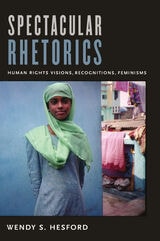
Spectacular Rhetorics
Human Rights Visions, Recognitions, FeminismsWendy S. Hesford
Duke University Press, 2011
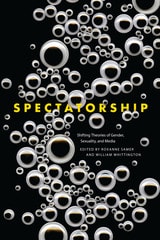
Spectatorship
Shifting Theories of Gender, Sexuality, and MediaEdited by Roxanne Samer and William Whittington
University of Texas Press, 2017
Media platforms continually evolve, but the issues surrounding media representations of gender and sexuality have persisted across decades. Spectator: The University of Southern California Journal of Film and Television Criticism has published groundbreaking articles on gender and sexuality, including some that have become canonical in film studies, since the journal’s founding in 1982. This anthology collects seventeen key articles that will enable readers to revisit foundational concerns about gender in media and discover models of analysis that can be applied to the changing media world today.
Spectatorship begins with articles that consider issues of spectatorship in film and television content and audience reception, noting how media studies has expanded as a field and demonstrating how theories of gender and sexuality have adapted to new media platforms. Subsequent articles show how new theories emerged from that initial scholarship, helping to develop the fields of fandom, transmedia, and queer theory. The most recent work in this volume is particularly timely, as the distinctions between media producers and media spectators grow more fluid and as the transformation of media structures and platforms prompts new understandings of gender, sexuality, and identification. Connecting contemporary approaches to media with critical conversations of the past, Spectatorship thus offers important points of historical and critical departure for discussion in both the classroom and the field.
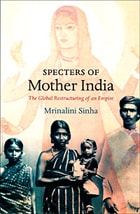
Specters of Mother India
The Global Restructuring of an EmpireMrinalini Sinha
Duke University Press, 2006
Sinha provides a rich historical narrative of the controversy surrounding Mother India, from the book’s publication through the passage in India of the Child Marriage Restraint Act in the closing months of 1929. She traces the unexpected trajectory of the controversy as critics acknowledged many of the book’s facts only to overturn its central premise. Where Mayo located blame for India’s social backwardness within the beliefs and practices of Hinduism, the critics laid it at the feet of the colonial state, which they charged with impeding necessary social reforms. As Sinha shows, the controversy became a catalyst for some far-reaching changes, including a reconfiguration of the relationship between the political and social spheres in colonial India and the coalescence of a collective identity for women.

Specters of War
The Battle of Mourning in Postconflict Central AmericaIgnacio Sarmiento
University of Arizona Press, 2025
Specters of War explores mourning practices in postwar Central America, particularly in El Salvador and Guatemala. Ignacio Sarmiento delves into the intricate dynamics of grieving through an interdisciplinary lens, analyzing expressions of mourning in literature, theater, and sites of memory. At the heart of this analysis is the contention over who has the right to mourn, how mourning is performed, and who is included in this process. Sarmiento reveals mourning not as a private affair but as a battleground where different societal factions vie for the possibility of grieving the dead.
Through meticulous research and theoretical nuance, Specters of War sheds light on the politics of mourning in postconflict societies. Sarmiento argues that mourning is not merely a personal experience but a deeply political act intertwined with power struggles and societal divisions. From victims of state terrorism to military elites, various groups engage in a complex dance of grief, revealing the fraught nature of public mourning in postwar Central America. By examining cultural artifacts and memorialization projects, Sarmiento uncovers the multifaceted nature of mourning and its implications for memory, justice, and reconciliation.
This groundbreaking work is essential reading for scholars, students, and professionals interested in Central American history and culture, as well as post-authoritarian societies. Specters of War promises to deepen our understanding of postwar Central America and the legacy of loss in shaping collective identities and narratives of the past.
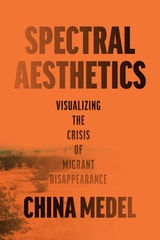
Spectral Aesthetics
Visualizing the Crisis of Migrant DisappearanceChina Medel
University of Texas Press, 2026
Analyzing how artists reimagine migrant disappearance and visibility at the US–Mexico border.
In the mid-1990s, the US government implemented Prevention through Deterrence, a major buildup of troops, walls, and surveillance around El Paso and San Diego. Cut off from these crucial urban crossings, migrants flowed into the dangerous surrounding deserts, where some ten thousand have since died. This is all according to plan: Pentagon documents describe the strategy of funneling migrants toward “mortal danger.”
In this bracing critique, China Medel explores the aesthetics enabling and resisting the crisis of migrant death. The nation-state’s performance of sovereignty along the border, predicated on mass casualties, is tolerated and even celebrated, thanks to the images in our heads of racialized and therefore criminal bodies, made invisible as they disintegrate in the baking sand. Spectral Aesthetics shows how state officials and mainstream media, relying on postracial ideologies and white-supremacist agendas, collectively foster this picture of a brown body so abject that it is disposable. In close readings of artworks contesting this murderous visual regime, Medel discovers an alternative kind of sight, one emphasizing the ghostly traces of the dead. These are images not of the individual “alien” but of life itself, indisposable.

Spectres of Fascism
Historical, Theoretical and International PerspectivesSamir Gandesha
Pluto Press, 2020

Spectropolis
The Enchantment of Capital in SingaporeJoshua Comaroff
University of Minnesota Press, 2025
How economic transformation and the spirit world collide in hypermodern Singapore
In Singapore, the financial center of Southeast Asia, hyperurbanization and commercial development exist alongside enduring belief in the economic power of ghosts: in their ability to control the flows of money and value and to determine the outcome of investments and wagers. Spectropolis explores the unlikely collusion of these two systems, demonstrating both the productive role of popular beliefs in the modern world and the surprising correlations between “late” capitalism and the workings of the spirit realm.
Detailing the logic and practices of Singapore’s ghost economy—from performing exorcisms on real estate development sites to offering money and commodities to the dead as a hedge against precarious real-world transactions—Joshua Comaroff shows how speculative finance, largely governed by chance and volatility, is understood via its inherently spectral qualities. Through the influence of Chinese Buddhist-Taoist thought, the movement of capital is placed under the sway of cosmology and geomancy, resulting in a built environment that is both technologically advanced and quite literally enchanted.
Based on detailed case studies and years of extensive fieldwork, Spectropolis argues for the power of popular belief systems to theorize contemporary socioeconomic conditions and to give form to collective affect as well as shared aspirations and anxieties. As Comaroff demonstrates, the uniquely all-consuming nature of Singapore’s tightly compressed urban economy is such that it may subsume even that which lies beyond the threshold of life itself.
Retail e-book files for this title are screen-reader friendly with images accompanied by short alt text and/or extended descriptions.
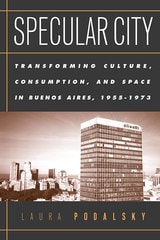
Specular City
The Transformation Of Culture, ConsumptionLaura Podalsky
Temple University Press, 2004

Speculate This!
Uncertain Commons
Duke University Press, 2013
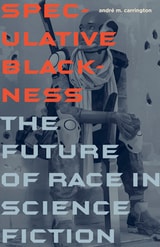
Speculative Blackness
The Future of Race in Science FictionAndré M. Carrington
University of Minnesota Press, 2016
In Speculative Blackness, André M. Carrington analyzes the highly racialized genre of speculative fiction—including science fiction, fantasy, and utopian works, along with their fan cultures—to illustrate the relationship between genre conventions in media and the meanings ascribed to blackness in the popular imagination.
Carrington’s argument about authorship, fandom, and race in a genre that has been both marginalized and celebrated offers a black perspective on iconic works of science fiction. He examines the career of actor Nichelle Nichols, who portrayed the character Uhura in the original Star Trek television series and later became a recruiter for NASA, and the spin-off series Star Trek: Deep Space Nine, set on a space station commanded by a black captain. He recovers a pivotal but overlooked moment in 1950s science fiction fandom in which readers and writers of fanzines confronted issues of race by dealing with a fictitious black fan writer and questioning the relevance of race to his ostensible contributions to the 'zines. Carrington mines the productions of Marvel comics and the black-owned comics publisher Milestone Media, particularly the representations of black sexuality in its flagship title, Icon. He also interrogates online fan fiction about black British women in Buffy the Vampire Slayer and the Harry Potter series.
Throughout this nuanced analysis, Carrington theorizes the relationship between race and genre in cultural production, revealing new understandings of the significance of blackness in twentieth-century American literature and culture.
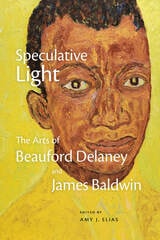
Speculative Light
The Arts of Beauford Delaney and James BaldwinAmy J. Elias, editor
Duke University Press, 2025
Contributors. Hilton Als, Nicholas Boggs, Indie A. Choudhury, Shawn Anthony Christian, Rachel Cohen, Amy J. Elias, Monika Gehlawat, David Leeming, D. Quentin Miller, Fred Moten, Walton M. Muyumba, Robert O’Meally, Ed Pavlić, Levi Prombaum, Robert Reid-Pharr, Tyler T. Schmidt, Abbe Schriber, Jered Sprecher, Stephen C. Wicks, Magdalena Zaborowska
Speculative Markets
Drug Circuits and Derivative Life in NigeriaKristin Peterson
Duke University Press, 2014
Speculative Relations
Indigenous Worlding and RepairJoseph M. Pierce
Duke University Press, 2025

Speculative Whiteness
Science Fiction and the Alt-RightJordan S. Carroll
University of Minnesota Press, 2024
Reveals the alt-right’s project to claim science fiction and—by extension—the future
Fascists such as Richard Spencer interpret science fiction films and literature as saying only white men have the imagination required to invent a high-tech future. Other white nationalists envision racist utopias filled with Aryan supermen and all-white space colonies. Speculative Whiteness traces these ideas through the entangled histories of science fiction culture and white supremacist politics, showing that debates about representation in science fiction films and literature are struggles over who has the right to imagine and inhabit the future. Although fascists insist that tomorrow belongs to them, they have always been and will continue to be contested by antifascist fans willing to fight for the future.
Speech and Song at the Margins of Global Health
Zulu Tradition, HIV Stigma, and AIDS Activism in South AfricaSteven P. Black
Rutgers University Press, 2019
Speechifying
The Words and Legacy of Johnnetta Betsch ColeJohnnetta Betsch Cole. Celeste Watkins-Hayes and Erica Lorraine Williams, editors
Duke University Press, 2023

Spent behind the Wheel
Drivers' Labor in the Uber EconomyJulietta Hua
University of Minnesota Press, 2021
Exploring professional passenger driving and the gig economy through feminist theories of labor
Are taxi drivers in today’s era of the ride-hail app performing care work akin to domestic and household labor? So argue the authors of Spent behind the Wheel. Bringing together sociological and legal perspectives with feminist theoretical insights, Julietta Hua and Kasturi Ray examine the case study of contemporary professional passenger driving in the United States. On the one hand, they show, the rise of the gig economy has brought new attention to the industry of professional passenger driving. On the other hand, the vulnerabilities that professional drivers experience remain hidden.
Drawing on interviews with drivers, labor organizers, and members of licensing commissions, as well as case law and other published resources, Hua and Ray argue that working for ride-hail companies like Uber and Lyft shares similarities with driving for taxi companies in the impact on driver lives. Lyft and Uber sell the idea of industry disruption, but in fact they entrench long-standing modes of extracting the reproductive labor of their drivers for the benefit of consumer lives. Reproductive labor—conventionally understood as feminized labor—is extracted, but masked, behind the masculinized, racialized bodies of drivers. Professional driving is thus best understood alongside domestic and other gendered service work as reproductive labors devalued and often demonetized to benefit the national economy.
Spent behind the Wheel is a must for readers interested in critical studies of technological change and the gig economy, showing how drivers’ capacities are drained for the benefit of riders, corporations, and the maintenance of the racial state.
Spheres of Influence
The Social Ecology of Racial and Class InequalityDouglas S. Massey
Russell Sage Foundation, 2014
Spider Woman Stories
G. M. Mullett
University of Arizona Press, 1979
"This is a fine introduction to Hopi mythology and values. It recreates an authentic poetic spirit and makes the reader eager to read more Hopi tales." —New Mexico Humanities Review
Spill
Scenes of Black Feminist FugitivityAlexis Pauline Gumbs
Duke University Press, 2016

Spinoza’s Challenge to Jewish Thought
Writings on His Life, Philosophy, and LegacyEdited by Daniel B. Schwartz
Brandeis University Press, 2019
Spiral to the Stars
Mvskoke Tools of FuturityLaura Harjo
University of Arizona Press, 2019
Geographer Laura Harjo demonstrates that Mvskoke communities have what they need to dream, imagine, speculate, and activate the wishes of ancestors, contemporary kin, and future relatives—all in a present temporality—which is Indigenous futurity.
Organized around four methodologies—radical sovereignty, community knowledge, collective power, and emergence geographies—Spiral to the Stars provides a path that departs from traditional community-making strategies, which are often extensions of the settler state. Readers are provided a set of methodologies to build genuine community relationships, knowledge, power, and spaces for themselves. Communities don’t have to wait on experts because this book helps them activate their own possibilities and expertise. A detailed final chapter provides participatory tools that can be used in workshop settings or one on one.
This book offers a critical and concrete map for community making that leverages Indigenous way-finding tools. Mvskoke narratives thread throughout the text, vividly demonstrating that theories come from lived and felt experiences. This is a must-have book for community organizers, radical pedagogists, and anyone wishing to empower and advocate for their community.
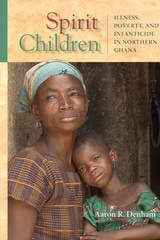
Spirit Children
Illness, Poverty, and Infanticide in Northern GhanaAaron R. Denham
University of Wisconsin Press, 2019
Refusing to generalize or oversimplify, Aaron R. Denham offers an ethnographic study of the spirit child phenomenon in Northern Ghana that considers medical, economic, religious, and political realities. He examines both the motivations of the families and the structural factors that lead to infanticide, framing these within the context of global public health. At the same time, he turns the lens on Western societies and the misunderstandings that prevail in discourse about this controversial practice. Engaging the complexity of the context, local meanings, and moral worlds of those confronting a spirit child, Denham offers visceral accounts of families' life and death decisions.
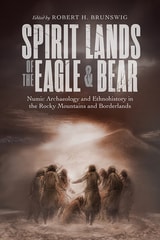
Spirit Lands of the Eagle and Bear
Numic Archaeology and Ethnohistory in the Rocky Mountains and BorderlandsRobert H. Brunswig
University Press of Colorado, 2020
New research into Numic archaeology, ethnohistory, and ethnography is significantly changing the understanding of migratory patterns, cultural interactions, chronology, and shared cultural-religious practices of regionally defined Numic branches and non-Numic populations of the American West. Contributors examine case studies of Ute and Shoshone material culture (ceramics, lithics, features and structures, trade and seasonal migration), chronology (dendrochronology, radiocarbon dating, thermoluminescence), and subsistence systems (hunting camps, game drives, faunal and botanical evidence of food sources). They also delineate different hunter-gatherer “ethnic groups” who co-occupied or interacted within one another’s territories through trade, raiding, or seasonal subsistence migrations, such as the Late Fremont/Ute and the Shoshone or the early Navajo/Ute and the Shoshone.
With a strong emphasis on diverse cases and new and original archaeological, ethnohistoric, and ethnographic lines of evidence, Spirit Lands of the Eagle and Bear interweaves anthropological theory and innovative applications of leading-edge scientific methodologies and technologies. The book presents a cross-section of field, laboratory, and ethnohistoric studies—including indigenous consultation—that explore past, recent, and ongoing developments in Numic cultural history and prehistory. It will be of interest to scholars of Southwestern archaeology, as well as private and government cultural resource specialists and museum staff.
Contributors:
Richard Adams, John Cater, Christine Chady, David Diggs, Rand Greubel, John Ives, Byron Loosle, Curtis Martin, Sally McBeth, Lindsay Montgomery, Bryon Schroeder, Matthew Stirn
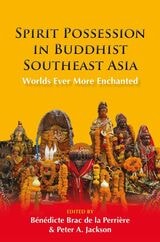
Spirit Possession in Buddhist Southeast Asia
Worlds Ever More EnchantedEdited by Bénédicte Brac de la Perrière and Peter A. Jackson
National University of Singapore Press, 2022
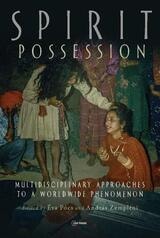
Spirit Possession
Multidisciplinary Approaches to a Worldwide PhenomenonÉva Pócs
Central European University Press, 2022
Possession, a seemingly irrational phenomenon, has posed challenges to generations of scholars rooted in Western notions of body-soul dualism, self and personhood, and a whole set of presuppositions inherited from Christian models of possession that was “good” or “bad.” The authors of the essays in this book present a new and more promising approach. They conceive spirit possession as a form of communication, of expressivity, of culturally defined behavior that should be understood in the context of local, vernacular theories and empiric reflections.
With the aim of reformulating the comparative anthropology of spirit possession, the editors have opened corridors between previously separate areas of research. Together, anthropologists and historians working on several historical periods and in different European, African, South American, and Asian cultural areas attempt to redefine the very concept of possession, freeing it from the Western notion of the self and more clearly delineating it from related matters such as witchcraft, devotion, or mysticism. The book also provides an overview of new research directions, including novel methods of participant observation and approaches to spirit possession as indigenous historiography
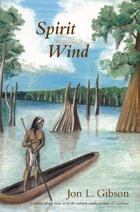
Spirit Wind
Jon L. Gibson
University of Alabama Press, 2009
A coming-of-age story set in the isolated, murky swamps of Louisiana.
When the mighty wind blows through the swamps of southern Louisiana, it changes not only the land, but the inhabitants as well. Just such a wind brought a lone infant into the care of the Chitimacha Indians deep in the Atchafalaya swamp. Raised by the tribal holy man, Storm Rider grows to adolescence as a respected tribal member, steeped in the wisdom and traditions of his adopted people. Their clan competitions, life-cycle rituals, social interactions, and subsistence labors are well explained in this historical novel.
When captured by an enemy raiding party, Storm Rider and his nemesis, the village bully, forge a bond that delivers them from danger and charts their futures. Love, hate, friendship, and loyalty ride the dark bayou waters and converge at the sacred Rain Tree. Swamps, hurricanes, cannibals, and unforgettable characters are interwoven as tightly as one of old Cane Basket's watertight baskets in this anthropologically accurate story of American Indian cultures in conflict.
Spirit Wives and Church Mothers
Marriage, Survival, and Healing in Central MozambiqueChristy K. Schuetze
University of Wisconsin Press, 2023
Drawing on years of field research, Schuetze offers a richly drawn ethnographic analysis of these important religious transformations in the lives of female participants. Illustrating how economic and social context shapes the possibilities for—and forms of—women’s empowerment, Spirit Wives andChurch Mothers intervenes in scholarly debates about the nature of agency and challenges universalist Western feminist assumptions about the form of women’s liberation.
Spirit and System
Media, Intellectuals, and the Dialectic in Modern German CultureDominic Boyer
University of Chicago Press, 2005
Boyer analyzes the creation and mediation of the social knowledge of "German-ness" from nineteenth-century university culture and its philosophies of history, to the media systems and redemptive public cultures of the Third Reich and the German Democratic Republic, to the present-day experiences of former East German journalists seeking to explain life in post-unification Germany. Throughout this study, Boyer reveals how dialectical knowledge of "German-ness"—that is, knowledge that emphasizes a cultural tension between an inner "spirit" and an external "system" of social life —is modeled unconsciously upon intellectuals' self-knowledge as it tracks their fluctuation between alienation and utopianism in their interpretations of nation and modernity.
Spirit of the New England Tribes
Indian History and Folklore, 1620–1984William S. Simmons
University Press of New England, 1986
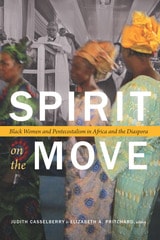
Spirit on the Move
Black Women and Pentecostalism in Africa and the DiasporaJudith Casselberry and Elizabeth Pritchard, editors
Duke University Press, 2019
Contributors. Paula Aymer, John Burdick, Judith Casselberry, Deidre Helen Crumbley, Elizabeth McAlister, Laura Premack, Elizabeth A. Pritchard, Jane Soothill, Linda van de Kamp
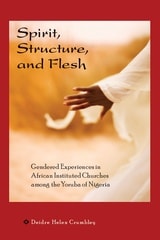
Spirit, Structure, and Flesh
Gender and Power in Yoruba African Instituted ChurchesDeidre Helen Crumbley
University of Wisconsin Press, 2008
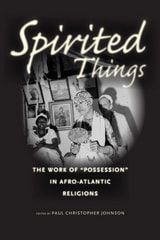
Spirited Things
The Work of "Possession" in Afro-Atlantic ReligionsEdited by Paul Christopher Johnson
University of Chicago Press, 2014

Spirits Before the Law
Faith, Race, and Freedom Beyond PropertyHannah Manshel
Duke University Press, 2027