1947 books match the query 'Music' and 183 start with s
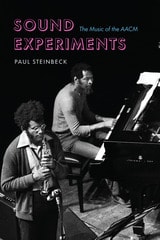
cover of Sound Experiments: The Music of the AACM

Sound Experiments

The Music of the AACM

Paul Steinbeck

University of Chicago Press, 2022

A groundbreaking study of the trailblazing music of Chicago’s AACM, a leader in the world of jazz and experimental music.
 
Founded on Chicago’s South Side in 1965 and still thriving today, the Association for the Advancement of Creative Musicians (AACM) is the most influential collective organization in jazz and experimental music. In Sound Experiments, Paul Steinbeck offers an in-depth historical and musical investigation of the collective, analyzing individual performances and formal innovations in captivating detail. He pays particular attention to compositions by Muhal Richard Abrams and Roscoe Mitchell, the Association’s leading figures, as well as Anthony Braxton, George Lewis (and his famous computer-music experiment, Voyager), Wadada Leo Smith, and Henry Threadgill, along with younger AACM members such as Mike Reed, Tomeka Reid, and Nicole Mitchell.
 
Sound Experiments represents a sonic history, spanning six decades, that affords insight not only into the individuals who created this music but also into an astonishing collective aesthetic. This aesthetic was uniquely grounded in nurturing communal ties across generations, as well as a commitment to experimentalism. The AACM’s compositions broke down the barriers between jazz and experimental music and made essential contributions to African American expression more broadly. Steinbeck shows how the creators of these extraordinary pieces pioneered novel approaches to instrumentation, notation, conducting, musical form, and technology, creating new soundscapes in contemporary music.
 
[more]
cover of Sound Figures of Modernity: German Music and Philosophy

Sound Figures of Modernity

German Music and Philosophy

Edited by Jost Hermand and Gerhard Richter

University of Wisconsin Press, 2006

The rich conceptual and experiential relays between music and philosophy—echoes of what Theodor W. Adorno once called Klangfiguren, or "sound figures"—resonate with heightened intensity during the period of modernity that extends from early German Idealism to the Critical Theory of the Frankfurt School. This volume traces the political, historical, and philosophical trajectories of a specifically German tradition in which thinkers take recourse to music, both as an aesthetic practice and as the object of their speculative work. 

The contributors examine the texts of such highly influential writers and thinkers as Schelling, Schopenhauer, Nietzsche, Bloch, Mann, Adorno, and Lukács in relation to individual composers including Beethoven, Wagner, Schönberg, and Eisler. Their explorations of the complexities that arise in conceptualizing music as a mode of representation and philosophy as a mode of aesthetic practice thematize the ways in which the fields of music and philosophy are altered when either attempts to express itself in terms defined by the other.

Contributors: Albrecht Betz, Lydia Goehr, Beatrice Hanssen, Jost Hermand, David Farrell Krell, Ludger Lütkehaus, Margaret Moore, Rebekah Pryor Paré, Gerhard Richter, Hans Rudolf Vaget, Samuel Weber

[more]
cover of Sound Ideas: Music, Machines, and Experience

Sound Ideas

Music, Machines, and Experience

Aden Evens

University of Minnesota Press, 2005
As people from record collectors to file swappers know, the experience of music - making it, marketing it, listening to it - relies heavily on technology. From the viola that amplifies the vibrations of a string to the CD player that turns digital bits into varying voltage, music and technology are deeply intertwined. What was gained - or lost - when compact discs replaced vinyl as the mass-market medium? What unique creative input does the musician bring to the music, and what contribution is made by the instrument? Do digital synthesizers offer unlimited range of sonic potential, or do their push-button interfaces and acoustical models lead to cookie-cutter productions? Through this interrogation of sound and technology, Aden Evens provides an acute consideration of how music becomes sensible, advancing original variations on the themes of creativity and habit, analog and digital technologies, and improvisation and repetition. Evens elegantly and forcefully dissects the paradoxes of digital culture and reveals how technology has profound implications for the phenomenology of art. Sound Ideas reinvents the philosophy of music in a way that encompasses traditional aspects of musicology, avant-garde explorations of music's relation to noise and silence, and the consequences of digitization.
[more]
cover of Sound Knowledge: Music and Science in London, 1789-1851

Sound Knowledge

Music and Science in London, 1789-1851

Edited by J. Q. Davies and Ellen Lockhart

University of Chicago Press, 2017

What does it mean to hear scientifically? What does it mean to see musically? This volume uncovers a new side to the long nineteenth century in London, a hidden history in which virtuosic musical entertainment and scientific discovery intersected in remarkable ways.

Sound Knowledge examines how scientific truth was accrued by means of visual and aural experience, and, in turn, how musical knowledge was located in relation to empirical scientific practice. James Q. Davies and Ellen Lockhart gather work by leading scholars to explore a crucial sixty-year period, beginning with Charles Burney’s ambitious General History of Music, a four-volume study of music around the globe, and extending to the Great Exhibition of 1851, where musical instruments were assembled alongside the technologies of science and industry in the immense glass-encased collections of the Crystal Palace. Importantly, as the contributions show, both the power of science and the power of music relied on performance, spectacle, and experiment. Ultimately, this volume sets the stage for a new picture of modern disciplinarity, shining light on an era before the division of aural and visual knowledge.
 
[more]
cover of Sound Pedagogy: Radical Care in Music

Sound Pedagogy

Radical Care in Music

Edited by Colleen Renihan, John Spilker, and Trudi Wright. Foreword by William Cheng

University of Illinois Press, 2024

Music education today requires an approach rooted in care and kindness that coexists alongside the dismantling of systems that fail to serve our communities in higher education. But, as the essayists in Sound Pedagogy show, the structural aspects of music study in higher education present obstacles to caring and kindness like the entrenched master-student model, a neoliberal individualist and competitive mindset, and classical music’s white patriarchal roots. The editors of this volume curate essays that use a broad definition of care pedagogy, one informed by interdisciplinary scholarship and aimed at providing practical strategies for bringing transformative learning and engaged pedagogies to music classrooms. The contributors draw from personal experience to address issues including radical kindness through universal design; listening to non-human musicality; public musicology as a forum for social justice discourse; and radical approaches to teaching about race through music.

Contributors: Molly M. Breckling, William A. Everett, Kate Galloway, Sara Haefeli, Eric Hung, Stephanie Jensen-Moulton, Mark Katz, Nathan A. Langfitt, Matteo Magarotto, Mary Natvig, Frederick A. Peterbark, Laura Moore Pruett, Colleen Renihan, Amanda Christina Soto, John Spilker, Reba A. Wissner, and Trudi Wright

[more]
cover of Sound Sentiment

Sound Sentiment

Peter Kivy

Temple University Press, 1989
The Corded Shell: Reflections on Musical Expression, published in 1980 and now out of print, was concerned with the question of how music comes to have the emotional properties that have been perceived in it and ascribed to it since antiquity. In that book, Peter Kivy argued that music possesses expressive properties, not as powers to arouse emotions in us but, rather, as perceived qualities of the music itself. In Sound Sentiment, he augments his previous work with four entirely new chapters. Incorporating the complete, corrected text of The Corded Shell, Kivy brings his earlier arguments up to date in light of recent work in the field, and discusses and answers various criticisms.
[more]
cover of Sound Streams: A Cultural History of Radio-Internet Convergence

Sound Streams

A Cultural History of Radio-Internet Convergence

Andrew J. Bottomley

University of Michigan Press, 2020

In talking about contemporary media, we often use a language of newness, applying words like “revolution” and “disruption.” Yet, the emergence of new sound media technologies and content—from the earliest internet radio broadcasts to the development of algorithmic music services and the origins of podcasting—are not a disruption, but a continuation of the century-long history of radio. Today’s most innovative media makers are reintroducing forms of audio storytelling from radio’s past.

Sound Streams is the first book to historicize radio-internet convergence from the early ’90s through the present, demonstrating how so-called new media represent an evolutionary shift that is nevertheless historically consistent with earlier modes of broadcasting. Various iterations of internet radio, from streaming audio to podcasting, are all new radio practices rather than each being a separate new medium: radio is any sound media that is purposefully crafted to be heard by an audience.  Rather than a particular set of technologies or textual conventions, web-based broadcasting combines unique practices and features and ideas from radio history. In addition, there exists a distinctive conversationality and reflexivity to radio talk, including a propensity for personal stories and emotional disclosure, that suits networked digital media culture.  What media convergence has done is extend and intensify radio’s logics of connectivity and sharing; sonically mediated personal expression intended for public consideration abounds in online media networks.

Sound Streams marks a significant contribution to digital media and internet studies. Its mix of cultural history, industry research, and genre and formal analysis, especially of contemporary audio storytelling, will appeal to media scholars, radio and podcast practitioners, audio journalism students, and dedicated podcast fans.
 
[more]
cover of Sound System: The Political Power of Music

Sound System

The Political Power of Music

Dave Randall

Pluto Press, 2017

Musicians have often wanted to change the world. From underground innovators to pop icons many have believed in the political power of music. Rulers recognise it too. Music has been used to challenge the political and social order - and to prop up the status quo.

Sound System is the story of one musician's journey to discover what makes music so powerful. Dave Randall uses his insider's knowledge of the industry to shed light on the secrets of celebrity, commodification and culture.

This is a book of raves, riots and revolution. From the Glastonbury Festival to the Arab Spring, Pop Idol to Trinidadian Carnival, Randall finds political inspiration across the musical spectrum and poses the question: how can we make music serve the interests of the many, rather than the few?

Published in partnership with the Left Book Club.
[more]
cover of Sound and Affect: Voice, Music, World

Sound and Affect

Voice, Music, World

Edited by Judith Lochhead, Eduardo Mendieta, and Stephen Decatur Smith

University of Chicago Press, 2021

There is no place on earth that does not echo with the near or distant sounds of human activity. More than half of humanity lives in cities, meaning the daily soundtrack of our lives is filled with sound—whether it be sonorous, harmonious, melodic, syncopated, discordant, cacophonous, or even screeching. This new anthology aims to explore how humans are placed in certain affective attitudes and dispositions by the music, sounds, and noises that envelop us.

​Sound and Affect maps a new territory for inquiry at the intersection of music, philosophy, affect theory, and sound studies. The essays in this volume consider objects and experiences marked by the correlation of sound and affect, in music and beyond: the voice, as it speaks, stutters, cries, or sings; music, whether vocal, instrumental, or machine-made; and our sonic environments, whether natural or artificial, and how they provoke responses in us. Far from being stable, correlations of sound and affect are influenced and even determined by factors as diverse as race, class, gender, and social and political experience. Examining these factors is key to the project, which gathers contributions from a cross-disciplinary roster of scholars, including both established and new voices. This agenda-setting collection will prove indispensable to anyone interested in innovative approaches to the study of sound and its many intersections with affect and the emotions.
[more]
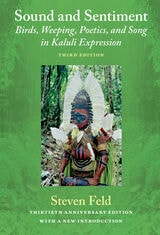
cover of Sound and Sentiment: Birds, Weeping, Poetics, and Song in Kaluli Expression, 3rd edition with a new introduction by the author

Sound and Sentiment

Birds, Weeping, Poetics, and Song in Kaluli Expression, 3rd edition with a new introduction by the author

Steven Feld

Duke University Press, 2012
This thirtieth anniversary edition of Sound and Sentiment makes Steven Feld's landmark, field-defining book available to a new generation of scholars and students. A sensory ethnography set in the rain forest of Papua New Guinea, among the Kaluli people of Bosavi, Sound and Sentiment introduced the anthropology of sound, or the cultural study of sound. After it was first published in 1982, a second edition, incorporating additional field research and a new postscript, was released in 1990. The third edition includes all of the material from the first two editions, along with a substantial new introduction in which Feld discusses Bosavi's recent history and reflects on the challenges it poses for contemporary theory and representation.
[more]
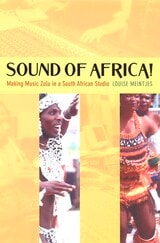
cover of Sound of Africa!: Making Music Zulu in a South African Studio

Sound of Africa!

Making Music Zulu in a South African Studio

Louise Meintjes

Duke University Press, 2003

Boosting the bass guitar, blending the vocals, overdubbing percussion while fretting over shoot-outs in the street. Grumbling about a producer, teasing a white engineer, challenging an artist to feel his African beat. Sound of Africa! is a riveting account of the production of a mbaqanga album in a state-of-the-art recording studio in Johannesburg. Made popular internationally by Mahlathini and the Mahotella Queens, mbaqanga's distinctive style features a bass solo voice and soaring harmonies of a female frontline over electric guitar, bass, keyboard, and drumset. Louise Meintjes chronicles the recording and mixing of an album by Izintombi Zesimanje, historically the rival group of the Mahotella Queens. Set in the early 1990s during South Africa’s tumultuous transition from apartheid to democratic rule, Sound of Africa! offers a rare portrait of the music recording process. It tracks the nuanced interplay among South African state controls, the music industry's transnational drive, and the mbaqanga artists' struggles for political, professional, and personal voice.

Focusing on the ways artists, producers, and sound engineers collaborate in the studio control room, Meintjes reveals not only how particular mbaqanga sounds are shaped technically, but also how egos and artistic sensibilities and race and ethnicity influence the mix. She analyzes how the turbulent identity politics surrounding Zulu ethnic nationalism impacted mbaqanga artists' decisions in and out of the studio. Conversely, she explores how the global consumption of Afropop and African images fed back into mbaqanga during the recording process. Meintjes is especially attentive to the ways the emotive qualities of timbre (sound quality or tone color) forge complex connections between aesthetic practices and political ideology. Vivid photos by the internationally renowned photographer TJ Lemon further dramatize Meintjes’ ethnography.
[more]
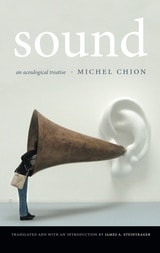
cover of Sound: An Acoulogical Treatise

Sound

An Acoulogical Treatise

Michel Chion

Duke University Press, 2016
First published in French in 1998, revised in 2010, and appearing here in English for the first time, Michel Chion's Sound addresses the philosophical, interpretive, and practical questions that inform our encounters with sound. Chion considers how cultural institutions privilege some sounds above others and how spurious distinctions between noise and sound guide the ways we hear and value certain sounds. He critiques the tenacious tendency to understand sounds in relation to their sources and advocates "acousmatic" listening—listening without visual access to a sound’s cause—to disentangle ourselves from auditory habits and prejudices. Yet sound can no more be reduced to mere perceptual phenomena than encapsulated in the sciences of acoustics and physiology. As Chion reminds us and explores in depth, a wide range of linguistic, sensory, cultural, institutional, and media- and technologically-specific factors interact with and shape sonic experiences. Interrogating these interactions, Chion stimulates us to think about how we might open our ears to new sounds, become more nuanced and informed listeners, and more fully understand the links between how we hear and what we do. 
 
[more]
cover of Sound: Dialogue, Music, and Effects

Sound

Dialogue, Music, and Effects

Kalinak, Kathryn

Rutgers University Press, 2015
Sound has always been an integral component of the moviegoing experience. Even during the so-called “silent era,” motion pictures were regularly accompanied by live music, lectures, and sound effects. Today, whether we listen to movies in booming Dolby theaters or on tiny laptop speakers, sonic elements hold our attention and guide our emotional responses. Yet few of us are fully aware of the tremendous collaborative work, involving both artistry and technical wizardry, required to create that cinematic soundscape. 
 
Sound, the latest book in the Behind the Silver Screen series, introduces key concepts, seminal moments, and pivotal figures in the development of cinematic sound. Each of the book’s six chapters cover a different era in the history of Hollywood, from silent films to the digital age, and each is written by an expert in that period. Together, the book’s contributors are able to explore a remarkable range of past and present film industry practices, from the hiring of elocution coaches to the marketing of soundtrack records.  
 
Not only does the collection highlight the achievements of renowned sound designers and film composers like Ben Burtt and John Williams, it also honors the unsung workers whose inventions, artistry, and performances have shaped the soundscapes of many notable movies. After you read Sound, you’ll never see—or hear—movies in quite the same way. 
 
Sound is a volume in the Behind the Silver Screen series—other titles in the series include Acting; Animation; Art Direction and Production Design; Cinematography; Costume, Makeup, and Hair; Directing; Editing and Special Visual Effects; Producing; and Screenwriting.


[more]
cover of Soundies Jukebox Films and the Shift to Small-Screen Culture

Soundies Jukebox Films and the Shift to Small-Screen Culture

Kelley, Andrea J

Rutgers University Press, 2018
Soundies Jukebox Films and the Shift to Small-Screen Culture is the first and only book to position what are called “Soundies” within the broader cultural and technological milieu of the 1940s. From 1940 to 1946, these musical films circulated in everyday venues, including bars, bowling alleys, train stations, hospitals, and even military bases. Viewers would pay a dime to watch them playing on the small screens of the Panoram jukebox. This book expands U.S. film history beyond both Hollywood and institutional film practices. Examining the dynamics between Soundies’ short musical films, the Panoram’s film-jukebox technology, their screening spaces and their popular discourse, Andrea J. Kelley provides an integrative approach to historic media exhibition. She situates the material conditions of Soundies’ screening sites alongside formal considerations of the films and their unique politics of representation to illuminate a formative moment in the history of the small screen.  
[more]
cover of Sounding Dissent: Rebel Songs, Resistance, and Irish Republicanism

Sounding Dissent

Rebel Songs, Resistance, and Irish Republicanism

Stephen R. Millar

University of Michigan Press, 2020

The signing of the Good Friday Agreement on April 10, 1998, marked the beginning of a new era of peace and stability in Northern Ireland. As the public overwhelmingly rejected a return to the violence of the Troubles, loyalist and republican groups sought other outlets to continue their struggle. Music, which has long been used to celebrate cultural identity in the North of Ireland, became a key means of facilitating the continuation of pre-Agreement identity narratives in a “post-conflict” era.

Sounding Dissent draws on three years of sustained fieldwork within Belfast's rebel music scene, in-depth interviews with republican musicians, contemporary audiences, and former paramilitaries, as well as diverse historical and archival material, including songbooks, prison records, and newspaper articles, to understand the history of political violence in Ireland.The book examines the potential of rebel songs to memorialize a pantheon of republican martyrs, and demonstrates how musical performance and political song not only articulate experiences and memories of oppression and violence, but also play a central role in the reproduction of conflict and exclusion in times of peace.
[more]
cover of Sounding Human: Music and Machines, 1740/2020

Sounding Human

Music and Machines, 1740/2020

Deirdre Loughridge

University of Chicago Press, 2023

An expansive analysis of the relationship between human and machine in music.
 
From the mid-eighteenth century on, there was a logic at work in musical discourse and practice: human or machine. That discourse defined a boundary of absolute difference between human and machine, with a recurrent practice of parsing “human” musicality from its “merely mechanical” simulations. In Sounding Human, Deirdre Loughridge tests and traverses these boundaries, unmaking the “human or machine” logic and seeking out others, better characterized by conjunctions such as and or with.

Sounding Human enters the debate on posthumanism and human-machine relationships in music, exploring how categories of human and machine have been continually renegotiated over the centuries. Loughridge expertly traces this debate from the 1737 invention of what became the first musical android to the creation of a “sound wave instrument” by a British electronic music composer in the 1960s, and the chopped and pitched vocals produced by sampling singers’ voices in modern pop music. From music-generating computer programs to older musical instruments and music notation, Sounding Human shows how machines have always actively shaped the act of music composition. In doing so, Loughridge reveals how musical artifacts have been—or can be—used to help explain and contest what it is to be human.
[more]
cover of Sounding Latin Music, Hearing the Americas

Sounding Latin Music, Hearing the Americas

Jairo Moreno

University of Chicago Press, 2023

How is Latin American music heard, by whom, and why?

Many in the United States believe Latin American musicians make “Latin music”—which carries with it a whole host of assumptions, definitions, and contradictions. In their own countries, these expatriate musicians might generate immense national pride or trigger suspicions of “national betrayals.” The making, sounding, and hearing of “Latin music” brings into being the complex array of concepts that constitute “Latin Americanism”—its fissures and paradoxes, but also its universal aspirations. Taking as its center musicians from or with declared roots in Latin America, Jairo Moreno presents us with an innovative analysis of how and why music emerges as a necessary but insufficient shorthand for defining and understanding Latin American, Latinx, and American experiences of modernity.
 
This close look at the growth of music-making by Latin American and Spanish-speaking musicians in the United States at the turn of the twenty-first century reveals diverging understandings of music’s social and political possibilities for participation and belonging. Through the stories of musicians—Rubén Blades, Shakira, Arturo O’Farrill and the Afro-Latin Jazz Orchestra, and Miguel Zenón—Sounding Latin Music, Hearing the Americas traces how artists use music to produce worlds and senses of the world at the ever-transforming conjunction of Latin America and the United States.
[more]
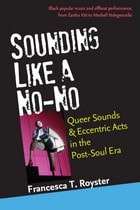
cover of Sounding Like a No-No: Queer Sounds and Eccentric Acts in the Post-Soul Era

Sounding Like a No-No

Queer Sounds and Eccentric Acts in the Post-Soul Era

Francesca T. Royster

University of Michigan Press, 2012

Sounding Like a No-No traces a rebellious spirit in post–civil rights black music by focusing on a range of offbeat, eccentric, queer, or slippery performances by leading musicians influenced by the cultural changes brought about by the civil rights, black nationalist, feminist, and LGBTQ movements, who through reinvention created a repertoire of performances that have left a lasting mark on popular music. The book's innovative readings of performers including Michael Jackson, Grace Jones, Stevie Wonder, Eartha Kitt, and Meshell Ndegeocello demonstrate how embodied sound and performance became a means for creativity, transgression, and social critique, a way to reclaim imaginative and corporeal freedom from the social death of slavery and its legacy of racism, to engender new sexualities and desires, to escape the sometimes constrictive codes of respectability and uplift from within the black community, and to make space for new futures for their listeners. The book's perspective on music as a form of black corporeality and identity, creativity, and political engagement will appeal to those in African American studies, popular music studies, queer theory, and black performance studies; general readers will welcome its engaging, accessible, and sometimes playful writing style, including elements of memoir.

[more]
cover of Sounding Like a No-No: Queer Sounds and Eccentric Acts in the Post-Soul Era

Sounding Like a No-No

Queer Sounds and Eccentric Acts in the Post-Soul Era

Francesca T. Royster

University of Michigan Press, 2013

Sounding Like a No-No traces a rebellious spirit in post–civil rights black music by focusing on a range of offbeat, eccentric, queer, or slippery performances by leading musicians influenced by the cultural changes brought about by the civil rights, black nationalist, feminist, and LGBTQ movements, who through reinvention created a repertoire of performances that have left a lasting mark on popular music. The book's innovative readings of performers including Michael Jackson, Grace Jones, Stevie Wonder, Eartha Kitt, and Meshell Ndegeocello demonstrate how embodied sound and performance became a means for creativity, transgression, and social critique, a way to reclaim imaginative and corporeal freedom from the social death of slavery and its legacy of racism, to engender new sexualities and desires, to escape the sometimes constrictive codes of respectability and uplift from within the black community, and to make space for new futures for their listeners. The book's perspective on music as a form of black corporeality and identity, creativity, and political engagement will appeal to those in African American studies, popular music studies, queer theory, and black performance studies; general readers will welcome its engaging, accessible, and sometimes playful writing style, including elements of memoir.
[more]
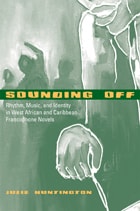
cover of Sounding Off: Rhythm, Music, and Identity in West African and Caribbean Francophone Novels

Sounding Off

Rhythm, Music, and Identity in West African and Caribbean Francophone Novels

Julie Huntington

Temple University Press, 2009

Intrigued by "texted" sonorities—the rhythms, musics, ordinary noises, and sounds of language in narratives—Julie Huntington examines the soundscapes in contemporary Francophone novels such as Ousmane Sembene's God's Bits of Wood (Senegal), and Patrick Chamoiseau's Solibo Magnificent (Martinique). Through an ethnomusicological perspective, Huntington argues in Sounding Off that the range of sounds —footsteps, heartbeats, drumbeats—represented in West African and Caribbean works provides a rhythmic polyphony that creates spaces for configuring social and cultural identities.

Huntington’s analysis shows how these writers and others challenge the aesthetic and political conventions that privilege written texts over orality and invite readers-listeners to participate in critical dialogues—to sound off, as it were, in local and global communities.
[more]
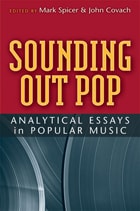
cover of Sounding Out Pop: Analytical Essays in Popular Music

Sounding Out Pop

Analytical Essays in Popular Music

Mark Spicer and John Covach, editors

University of Michigan Press, 2010

"A variety of approaches are brought to bear on fascinating repertoire, but with the underlying aim of better understanding some brilliant music. There’s nothing more exciting in music writing than something which entices you to listen to what’s familiar to you in a new way, and this collection brings such excitement in abundance."
---Allan Moore, author of Jethro Tull: Aqualung and Rock: The Primary Text

"These essays bring together a remarkable range of tools and perspectives to such diverse topics and contexts as the behind-the-scenes collaborations of composers, performers, arrangers, producers and engineers; pop culture; narratology; and race, politics and gender. The reader continuously benefits from a complementary lineup of sensitive ears that discover novelty in the familiar, exposing the heart of many rock and pop classics through imaginative and authoritative prose."
---Walter Everett, author of The Foundations of Rock and The Beatles as Musicians

The nine essays in Sounding Out Pop work together to map the myriad styles and genres of the pop-rock universe through detailed case studies that confront the music from a variety of engaging, thought-provoking perspectives---from historical to music-analytic, aesthetic to ethnographic, with several authors drawing liberally from ideas in other disciplines. The range of bands and artists covered is as vast and varied as the more than fifty-year history of pop and rock music, from the Coasters and Roy Orbison to Marvin Gaye, Bob Dylan, Radiohead, Beck, Genesis, Tori Amos, and the Police. Together these diverse essays cover a broad spectrum of studies ideally suited for classroom use and for other readers interested in gaining a deeper knowledge of the way popular music works.

Mark Spicer is Associate Professor and Director of Undergraduate Studies in Music at Hunter College and the Graduate Center, City University of New York. His writings have appeared in Contemporary Music Review, Gamut, Music Theory Online, twentieth-century music, and other scholarly journals and essay collections.

John Covach is Professor of Music at the University of Rochester and Professor of Theory at the Eastman School of Music. He is the author of the college textbook What's That Sound? An Introduction to Rock and Its History and the coeditor of Understanding Rock, American Rock and the Classical Music Tradition, and Traditions, Institutions, and American Popular Music.

Cover art credit: © iStockphoto.com/Aleksandar Dickov
[more]
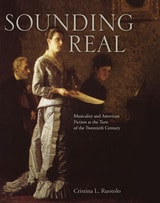
cover of Sounding Real: Musicality and American Fiction at the Turn of the Twentieth Century

Sounding Real

Musicality and American Fiction at the Turn of the Twentieth Century

Cristina L. Ruotolo

University of Alabama Press, 2013
Examining American realist fiction as it was informed and shaped by the music of the period, Sounding Real sheds new light on the profound musical and cultural change at the turn of the twentieth century.
 
Sounding Real by Cristina L. Ruotolo examines landmark changes in American musical standards and tastes in the late-nineteenth and early-twentieth centuries and the way they are reflected in American literature of the period. Whereas other interdisciplinary approaches to music and literature often focus on more recent popular music and black music that began with blues and jazz, Ruotolo addresses the literary response to the music that occurred in the decades before the Jazz Age.
 
By bringing together canonical and lesser-known works by authors like Theodore Dreiser, Kate Chopin, Harold Fredric, James Weldon Johnson, Willa Cather, and Gertrude Atherton, Ruotolo argues that new, emerging musical forms were breaking free from nineteenth-century constraints, and that the elemental authenticity or real-ness that this new music articulated sparked both interest and anxiety in literature: What are the effects of an emancipated musicality on self and society? How can literature dramatize musical encounters between people otherwise segregated by class, race, ethnicity, or gender?
 
By examining the influence of an increasingly aggressive and progressive musical marketplace on the realm of literature, Sounding Real depicts a dynamic dialogue between two art forms that itself leads to a broader discussion of how art speaks to society.
[more]
cover of Sounding Salsa: Performing Latin Music in New York City

Sounding Salsa

Performing Latin Music in New York City

Christopher Washburne

Temple University Press, 2008
Written from the perspective of salsa musicians,this ethnographic journey into New York salsa of the 1990s, this pioneering study examines how musicians navigated their everyday lives, grappling with the intercultural tensions and commercial pressures that were so pronounced on the salsa scene. Author Chris Washburne examines the organizational structures, recording processes, rehearsing, and gigging of salsa bands, paying particular attention to how bands created a sense of community, privileged "the people" over artistic and commercial concerns, and incited cultural pride during performance events.  He considers how violence, the illicit drug trade, and issues of gender informed sound structure, salsa aesthetics, and performance practice.   He concludes the book with a discussion of salsa style in the 1990s, emphasizing how certain structural principles involved in music making (e.g., clave) and the intercultural dynamics of Puerto Rico and New York informed performance practice.
[more]
cover of Sounding Together: Collaborative Perspectives on U.S. Music in the 21st Century

Sounding Together

Collaborative Perspectives on U.S. Music in the 21st Century

Charles Hiroshi Garrett and Carol J. Oja, Editors

University of Michigan Press, 2021

Sounding Together: Collaborative Perspectives on U.S. Music in the Twenty-21st Century is a multi-authored, collaboratively conceived book of essays that tackles key challenges facing scholars studying music of the United States in the early twenty-first century. This book encourages scholars in music circles and beyond to explore the intersections between social responsibility, community engagement, and academic practices through the simple act of working together. The book’s essays—written by a diverse and cross-generational group of scholars, performers, and practitioners—demonstrate how collaboration can harness complementary skills and nourish comparative boundary-crossing through interdisciplinary research. The chapters of the volume address issues of race, nationalism, mobility, cultural domination, and identity; as well as the crisis of the Trump era and the political power of music. Each contribution to the volume is written collaboratively by two scholars, bringing together contributors who represent a mix of career stages and positions. Through the practice of and reflection on collaboration, Sounding Together breaks out of long-established paradigms of solitude in humanities scholarship and works toward social justice in the study of music.
[more]
cover of Sounding the Center: History and Aesthetics in Thai Buddhist Performance

Sounding the Center

History and Aesthetics in Thai Buddhist Performance

Deborah Wong

University of Chicago Press, 2001

Sounding the Center is an in-depth look at the power behind classical music and dance in Bangkok, the capital and sacred center of Buddhist Thailand. Focusing on the ritual honoring teachers of music and dance, Deborah Wong reveals a complex network of connections among kings, teachers, knowledge, and performance that underlies the classical court arts.

Drawing on her extensive fieldwork, Wong lays out the ritual in detail: the way it is enacted, the foods and objects involved, and the people who perform it, emphasizing the way the performers themselves discuss and construct aspects of the ceremony.
[more]
cover of Sounds Beyond: Arvo Pärt and the 1970s Soviet Underground

Sounds Beyond

Arvo Pärt and the 1970s Soviet Underground

Kevin C. Karnes

University of Chicago Press, 2021

Sounds Beyond charts the origins of Arvo Pärt’s most famous music, which was created in dialogue with underground creative circles in the USSR. 

In Sounds Beyond, Kevin C. Karnes studies the interconnected alternative music and art scenes in the USSR during the second half of the 1970s, revealing the audacious origins of some of Estonian composer Arvo Pärt’s most famous music. Karnes shows how Pärt’s work was created within a vital yet forgotten culture of collective experimentation, the Soviet underground. 
 
Mining archives and oral history from across the former USSR, Sounds Beyond carefully situates modes of creative experimentation within their late socialist contexts. In documenting Pärt’s work, Karnes reveals the rich creative culture that thrived covertly in the USSR and the network of figures that made underground performances possible: students, audio engineers, sympathetic administrators, star performers, and aspiring DJs. Sounds Beyond advances a new understanding of Pärt’s music as an expression of the aesthetic and religious commitments shared, nurtured, and celebrated by many in Soviet underground circles. At the same time, this story attests to the lasting power of Pärt’s music. Dislodging the mythology of the solitary creative genius, Karnes shows that Pärt’s work would be impossible without community.
[more]
cover of Sounds English: TRANSNATIONAL POPULAR MUSIC

Sounds English

TRANSNATIONAL POPULAR MUSIC

Nabeel Zuberi

University of Illinois Press, 2001

Popular music culture serves as an arena for debates on English and British national identity in this lively discussion of English popular music of the 1980s and 1990s. Against the background of his own upbringing as a Pakistani Brit, Nabeel Zuberi deftly combines a detailed account of the development of this music with a sophisticated assessment of its relation to the politics of cultural identity in Britain.
 
Zuberi looks at how the sounds, images, and lyrics of English popular music generate and critique ideas of national belonging, recasting the social and even the physical landscapes of cities like Manchester and London. The Smiths and Morrissey play on romanticized notions of the (white) English working class, while the Pet Shop Boys map a "queer urban Britain" in the AIDS era. The techno-culture of raves and dance clubs incorporates both an anti-institutional do-it-yourself politics and emergent leisure practices, while the potent mix of technology and creativity in British black music includes local conditions as well as a sense of global diaspora. British Asian musicians, drawing on Afrodiasporic and South Asian traditions, seek a sense of place in Britain as commercial interests try to pin down an image of them to market.
           
Sounds English shows how popular music complicates cherished notions of Englishness as it activates cultural outsiders and taps into a sense of not belonging. Alert and readable, Zuberi's wide-ranging discussion includes the performers Oasis, Blur, Tricky, Massive Attack, Goldie, A Guy Called Gerald, Roni Size, Bally Sagoo, Funˆdaˆmental, Echobelly, Cornershop, Talvin Singh, and others.
 
[more]
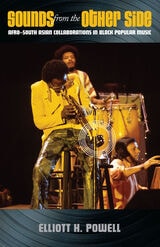
cover of Sounds from the Other Side: Afro–South Asian Collaborations in Black Popular Music

Sounds from the Other Side

Afro–South Asian Collaborations in Black Popular Music

Elliott H. Powell

University of Minnesota Press, 2020

A sixty-year history of Afro–South Asian musical collaborations

From Beyoncé’s South Asian music–inspired Super Bowl Halftime performance, to jazz artists like John and Alice Coltrane’s use of Indian song structures and spirituality in their work, to Jay-Z and Missy Elliott’s high-profile collaborations with diasporic South Asian artists such as the Panjabi MC and MIA, African American musicians have frequently engaged South Asian cultural productions in the development of Black music culture. Sounds from the Other Side traces such engagements through an interdisciplinary analysis of the political implications of African American musicians’ South Asian influence since the 1960s.

Elliott H. Powell asks, what happens when we consider Black musicians’ South Asian sonic explorations as distinct from those of their white counterparts? He looks to Black musical genres of jazz, funk, and hip hop and examines the work of Miles Davis, John Coltrane, Rick James, OutKast, Timbaland, Beyoncé, and others, showing how Afro–South Asian music in the United States is a dynamic, complex, and contradictory cultural site where comparative racialization, transformative gender and queer politics, and coalition politics intertwine. Powell situates this cultural history within larger global and domestic sociohistorical junctures that link African American and South Asian diasporic communities in the United States.

The long historical arc of Afro–South Asian music in Sounds from the Other Side interprets such music-making activities as highly political endeavors, offering an essential conversation about cross-cultural musical exchanges between racially marginalized musicians.

[more]
cover of Sounds of Black Switzerland: Blackness, Music, and Unthought Voices

Sounds of Black Switzerland

Blackness, Music, and Unthought Voices

Jessie Cox

Duke University Press, 2025

Writing as a scholar, composer, and musician, Jessie Cox foregrounds the experience of Black Swiss through sound and music in his first book, Sounds of Black Switzerland. Cox, himself Black Swiss, affirms the value of Black life through sound while critiquing anti-Blackness as a cause of erasure, silence, and limitation. He examines Swiss Nigerian composer Charles Uzor’s pieces for George Floyd, work by Black Swiss musicians such as DJ Maïté Chénière, clarinetist Jérémie Jolo, and rapper Nativ, as well as his own musical collaborations with the Lucerne Festival. In these analyses, Cox tackles the particularities of anti-Blackness in Switzerland, creating a practice of listening beyond what can be directly heard to explore the radical potential of Black thought and experience in a nation often claimed to be race-free. In so doing, he ultimately shifts thinking about Blackness in relation to citizenship, immigration laws, gender, kinship, and belonging. By listening to Black Swiss and other voices inaudible to the current world, Cox theorizes new ways of practicing scholarly study and general ways of relating to others and the world.
[more]
cover of Sounds of Crossing: Music, Migration, and the Aural Poetics of Huapango Arribeño

Sounds of Crossing

Music, Migration, and the Aural Poetics of Huapango Arribeño

Alex E. Chávez

Duke University Press, 2017
In Sounds of Crossing Alex E. Chávez explores the contemporary politics of Mexican migrant cultural expression manifest in the sounds and poetics of huapango arribeño, a musical genre originating from north-central Mexico. Following the resonance of huapango's improvisational performance within the lives of audiences, musicians, and himself—from New Year's festivities in the highlands of Guanajuato, Mexico, to backyard get-togethers along the back roads of central Texas—Chávez shows how Mexicans living on both sides of the border use expressive culture to construct meaningful communities amid the United States’ often vitriolic immigration politics. Through Chávez's writing, we gain an intimate look at the experience of migration and how huapango carries the voices of those in Mexico, those undertaking the dangerous trek across the border, and those living in the United States. Illuminating how huapango arribeño’s performance refigures the sociopolitical and economic terms of migration through aesthetic means, Chávez adds fresh and compelling insights into the ways transnational music-making is at the center of everyday Mexican migrant life.
[more]
cover of Sounds of Vacation: Political Economies of Caribbean Tourism

Sounds of Vacation

Political Economies of Caribbean Tourism

Jocelyne Guilbault and Timothy Rommen, editors

Duke University Press, 2019

The contributors to Sounds of Vacation examine the commodification of music and sound at popular vacation destinations throughout the Caribbean in order to tease out the relationships between political economy, hospitality, and the legacies of slavery and colonialism. Drawing on case studies from Barbados, the Bahamas, Guadeloupe, Saint Martin, and Saint Lucia, the contributors point to the myriad ways live performances, programmed music, and the sonic environment heighten tourists' pleasurable vacation experience. They explore, among other topics, issues of authenticity in Bahamian music; efforts to give tourists in Barbados peace and quiet at a former site of colonial violence; and how resort soundscapes extend beyond music to encompass the speech accents of local residents. Through interviews with resort managers, musicians, and hospitality workers, the contributors also outline the social, political, and economic pressures and interests that affect musical labor and the social encounters of musical production. In so doing, they prompt a rethinking of how to account for music and sound's resonances in postcolonial spaces.

Contributors. Jerome Camal, Steven Feld, Francio Guadeloupe, Jocelyne Guilbault, Jordi Halfman, Susan Harewood, Percy C. Hintzen, Timothy Rommen
[more]
cover of Sounds of the Citizens: Dancehall and Community in Jamaica

Sounds of the Citizens

Dancehall and Community in Jamaica

Anne M. Galvin

Vanderbilt University Press, 2014

Dancehall: it's simultaneously a source of raucous energy in the streets of Kingston, Jamaica; a way of life for a group of professional artists and music professionals; and a force of stability and tension within the community. Electronically influenced, relevant to urban Jamaicans, and highly danceable, dancehall music and culture forms a core of popular entertainment in the nation. As Anne Galvin reveals in Sounds of the Citizens, the rhythms of dancehall music reverberate in complicated ways throughout the lives of countless Jamaicans.


Galvin highlights the unique alliance between the dancehall industry and community development efforts. As the central role of the state in supporting communities has diminished, the rise of private efforts such as dancehall becomes all the more crucial. The tension, however, between those involved in the industry and those within the neighborhoods is palpable and often dangerous. Amidst all this, individual Jamaicans interact with the dancehall industry and its culture to find their own paths of employment, social identity, and sexual mores.


As Sounds of the Citizens illustrates, the world of entertainment in Jamaica is serious business and uniquely positioned as a powerful force within the community.
[more]
cover of Sounds of the Modern Nation: Music, Culture, and Ideas in Post-Revolutionary Mexico

Sounds of the Modern Nation

Music, Culture, and Ideas in Post-Revolutionary Mexico

Alejandro L. Madrid

Temple University Press, 2008

Sounds of the Modern Nation explores the development of modernist and avant-garde art music styles and aesthetics in Mexico in relation to the social and cultural changes that affected the country after the 1910-1920 revolution. Alejandro Madrid argues that these modernist works provide insight into the construction of individual and collective identities based on new ideas about modernity and nationality. Instead of depicting a dichotomy between modernity and nationalism, Madrid reflects on the multiple intersections between these two ideas and the dialogic ways through which these notions acquired meaning.

Madrid challenges the view that Latin American modernist music and other art were mere imitations of European trends, advancing instead the argument that Latin American artists resignified European ideas according to their specific historical and cultural circumstances. His work shows how microtonal and futurist music, modernist and avant-garde aesthetics, as well as indigenist and indianist ideas, entered a process of negotiation that ultimately shaped the ideological framework of twentieth-century Mexico.
[more]
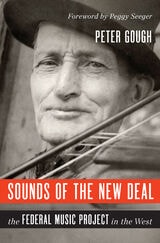
cover of Sounds of the New Deal: The Federal Music Project in the West

Sounds of the New Deal

The Federal Music Project in the West

Peter Gough

University of Illinois Press, 2015
At its peak the Federal Music Project (FMP) employed nearly 16,000 people who reached millions of Americans through performances, composing, teaching, and folksong collection and transcription. In Sounds of the New Deal, Peter Gough explores how the FMP's activities in the West shaped a new national appreciation for the diversity of American musical expression.
 
From the onset, administrators and artists debated whether to represent highbrow, popular, or folk music in FMP activities. Though the administration privileged using "good" music to educate the public, in the West local preferences regularly trumped national priorities and allowed diverse vernacular musics to be heard. African American and Hispanic music found unprecedented popularity while the cultural mosaic illuminated by American folksong exemplified the spirit of the Popular Front movement. These new musical expressions combined the radical sensibilities of an invigorated Left with nationalistic impulses. At the same time, they blended traditional patriotic themes with an awareness of the country's varied ethnic musical heritage and vast--but endangered--store of grassroots music.
[more]
cover of Sounds of the New Deal: The Federal Music Project in the West

Sounds of the New Deal

The Federal Music Project in the West

Peter Gough

University of Illinois Press, 2015

At its peak, the Federal Music Project (FMP) employed nearly 16,000 people who reached millions of Americans through performances, composing, teaching, and folksong collection and transcription. In Sounds of the New Deal , Peter Gough explores how the FMP's activities in the West shaped a new national appreciation for the diversity of American musical expression. From the onset, administrators and artists debated whether to represent highbrow, popular, or folk music in FMP activities. Though the administration privileged using "good" music to educate the public, in the West local preferences regularly trumped national priorities and allowed diverse vernacular musics to be heard. African American and Hispanic music found unprecedented popularity while the cultural mosaic illuminated by American folksong exemplified the spirit of the Popular Front movement. These new musical expressions combined the radical sensibilities of an invigorated Left with nationalistic impulses. At the same time, they blended traditional patriotic themes with an awareness of the country's varied ethnic musical heritage and vast--but endangered--store of grassroots music.
[more]
cover of Sounds of the South

Sounds of the South

Daniel W. Patterson, ed.

Duke University Press, 1991

Beyond the familiar forms of Mississippi Delta Blues and mainstream country music, the vernacular music of the South also ranges from the ceremonial music of Native Americans, to "shout" singing in South Carolina sea islands, Cajun fiddling, and Mexican-American conjunto music. Sounds of the South assesses past efforts to document these richly varied musical forms and the challenges facing future work.
"Sounds of the South"—a 1989 conference that gathered record collectors, folklorists, musicians, record producers, librarians, archivists, and traditional music lovers—celebrated the official opening of the Southern Folklife Collection with the John Edwards Memorial Collection at the library of the University of North Carolina, Chapel Hill. Based on that conference, Sounds of the South includes Bill Malone's account of his own career as fan and scholar of country music, Paul Oliver on European blues scholarship, and Ray Funk on researching Black Gospel Quartets.
The contributors look at a number of topics related to the role of the archivist/folklorist in recording and documenting the music of the South—evaluating past fieldwork and current needs in documentation, archival issues, prospects for the publication of recordings, and changes in music and technology. Written in an accessible style, this volume will be of interest to all those concerned with preserving the music of the American South.
[more]
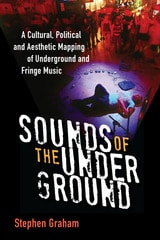
cover of Sounds of the Underground: A Cultural, Political and Aesthetic Mapping of Underground and Fringe Music

Sounds of the Underground

A Cultural, Political and Aesthetic Mapping of Underground and Fringe Music

Stephen Graham

University of Michigan Press, 2016
In basements, dingy backrooms, warehouses, and other neglected places around the world music is being made that doesn't fit neatly into popular or classical categories and genres, whose often extreme sounds and tiny concerts hover on the fringes of these commercial and cultural mainstreams.

The term “underground music” as it’s being used here connects various forms of music-making that exist outside or on the fringes of mainstream institutions and culture, such as noise, free improvisation, and extreme metal. This is music that makes little money, that’s noisy and exploratory in sound and that’s largely independent from both the market and from traditional high art institutions. It sometimes exists at the fringes of these commercial and cultural institutions, as for example with experimental metal or improv, but for the most part it’s removed from the mainstream, “underground,” as we see with noise artists such as Werewolf Jerusalem or Ramleh, obscure black metal artists such as Lord Foul, and improvisers such as Maggie Nicols. In response to a lack of previous scholarly discussion, Graham provides a cultural, political, and aesthetic mapping of this broad territory. By outlining the historical background but focusing on the digital age, the underground and its fringes can be seen as based in radical anti-capitalist politics or radical aesthetics while also being tied to the political contexts and structures of late capitalism. The book explores these various ideas of separation and captures, through interviews and analysis, a critical account of both the music and the political and cultural economy of the scene.

[more]
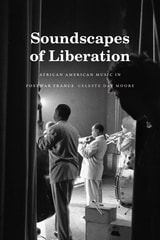
cover of Soundscapes of Liberation: African American Music in Postwar France

Soundscapes of Liberation

African American Music in Postwar France

Celeste Day Moore

Duke University Press, 2021
In Soundscapes of Liberation, Celeste Day Moore traces the popularization of African American music in postwar France, where it signaled new forms of power and protest. Moore surveys a wide range of musical genres, soundscapes, and media: the US military's wartime records and radio programs; the French record industry's catalogs of blues, jazz, and R&B recordings; the translations of jazz memoirs; a provincial choir specializing in spirituals; and US State Department-produced radio programs that broadcast jazz and gospel across the French empire. In each of these contexts, individual intermediaries such as educators, producers, writers, and radio deejays imbued African American music with new meaning, value, and political power. Their work resonated among diverse Francophone audiences and transformed the lives and labor of many African American musicians, who found financial and personal success as well as discrimination in France. By showing how the popularity of African American music was intertwined with contemporary structures of racism and imperialism, Moore demonstrates this music's centrality to postwar France and the convergence of decolonization, the expanding globalized economy, the Cold War, and worldwide liberation movements.
[more]
cover of Soundtrack Available: Essays on Film and Popular Music

Soundtrack Available

Essays on Film and Popular Music

Pamela Robertson Wojcik and Arthur Knight, eds.

Duke University Press, 2001

From the silent era to the present day, popular music has been a key component of the film experience. Yet there has been little serious writing on film soundtracks that feature popular music. Soundtrack Available fills this gap, as its contributors provide detailed analyses of individual films as well as historical overviews of genres, styles of music, and approaches to film scoring.
With a cross-cultural emphasis, the contributors focus on movies that use popular songs from a variety of genres, including country, bubble-gum pop, disco, classical, jazz, swing, French cabaret, and showtunes. The films discussed range from silents to musicals, from dramatic and avant-garde films to documentaries in India, France, England, Australia, and the United States. The essays examine both “nondiegetic” music in film—the score playing outside the story space, unheard by the characters, but no less a part of the scene from the perspective of the audience—and “diegetic” music—music incorporated into the shared reality of the story and the audience. They include analyses of music written and performed for films, as well as the now common practice of scoring a film with pre-existing songs. By exploring in detail how musical patterns and structures relate to filmic patterns of narration, character, editing, framing, and mise-en-scene, this volume demonstrates that pop music is a crucial element in the film experience. It also analyzes the life of the soundtrack apart from the film, tracing how popular music circulates and acquires new meanings when it becomes an official soundtrack.

Contributors.
Rick Altman, Priscilla Barlow, Barbara Ching, Kelley Conway, Corey Creekmur, Krin Gabbard, Jonathan Gill, Andrew Killick, Arthur Knight, Adam Knee, Jill Leeper, Neepa Majumdar, Allison McCracken, Murray Pomerance, Paul Ramaeker, Jeff Smith, Pamela Robertson Wojcik, Nabeel Zuberi
[more]
cover of Soundtracks of Asian America: Navigating Race through Musical Performance

Soundtracks of Asian America

Navigating Race through Musical Performance

Grace Wang

Duke University Press, 2015

In Soundtracks of Asian America, Grace Wang explores how Asian Americans use music to construct narratives of self, race, class, and belonging in national and transnational spaces. She highlights how they navigate racialization in different genres by considering the experiences of Asians and Asian Americans in Western classical music, U.S. popular music, and Mandopop (Mandarin-language popular music). Her study encompasses the perceptions and motivations of middle-class Chinese and Korean immigrant parents intensely involved in their children's classical music training, and of Asian and Asian American classical musicians whose prominence in their chosen profession is celebrated by some and undermined by others. Wang interviews young Asian American singer-songwriters who use YouTube to contest the limitations of a racialized U.S. media landscape, and she investigates the transnational modes of belonging forged by Asian American pop stars pursuing recording contracts and fame in East Asia. Foregrounding musical spaces where Asian Americans are particularly visible, Wang examines how race matters and operates in the practices and institutions of music making.
[more]
cover of Soundworks: Race, Sound, and Poetry in Production

Soundworks

Race, Sound, and Poetry in Production

Anthony Reed

Duke University Press, 2021
In Soundworks Anthony Reed argues that studying sound requires conceiving it as process and as work. Since the long Black Arts era (ca. 1958–1974), intellectuals, poets, and musicians have defined black sound as radical aesthetic practice. Through their recorded collaborations as well as the accompanying interviews, essays, liner notes, and other media, they continually reinvent black sound conceptually and materially. Soundwork is Reed’s term for that material and conceptual labor of experimental sound practice framed by the institutions of the culture industry and shifting historical contexts. Through analyses of Langston Hughes’s collaboration with Charles Mingus, Amiri Baraka’s work with the New York Art Quartet, Jayne Cortez’s albums with the Firespitters, and the multimedia projects of Archie Shepp, Matana Roberts, Cecil Taylor, and Jeanne Lee, Reed shows that to grasp black sound as a radical philosophical and aesthetic insurgence requires attending to it as the product of material, technical, sensual, and ideological processes. 
[more]
cover of South End Shout: Boston’s Forgotten Music Scene in the Jazz Age

South End Shout

Boston’s Forgotten Music Scene in the Jazz Age

Roger House

Lever Press, 2023

South End Shout: Boston’s Forgotten Music Scene in the Jazz Age details the power of music in the city’s African American community, spotlighting the era of ragtime culture in the early 1900s to the rise of big band orchestras in the 1930s. This story is deeply embedded in the larger social condition of Black Bostonians and the account is brought to life by the addition of 20 illustrations of musicians, theaters, dance halls, phonographs, and radios used to enjoy the music. 

South End Shout is part of an emerging field of studies that examines jazz culture outside of the major centers of music production. In extensive detail, author Roger R. House covers the activities of jazz musicians, jazz bands, the places they played, the relationships between Black and white musicians, the segregated local branches of the American Federation of Musicians (AFL-CIO), and the economics of Boston’s music industry. Readers will be captivated by the inclusion of vintage local newspaper reports, classified advertisements, and details of hard-to-access oral history accounts by musicians and residents. These precious documentary materials help to understand how jazz culture evolved as a Boston art form and contributed to the national art form between the world wars. 

With this book, House makes an important contribution to American studies and jazz history. Scholars and general readers alike who are interested in jazz and jazz culture, the history of Boston and its Black culture, and 20th century American and urban studies will be enlightened and delighted by this book. 
[more]
cover of South Side Impresarios: How Race Women Transformed Chicago's Classical Music Scene

South Side Impresarios

How Race Women Transformed Chicago's Classical Music Scene

Samantha Ege

University of Illinois Press, 2024

Between the world wars, Chicago Race women nurtured a local yet widely resonant Black classical music community entwined with Black civic life. Samantha Ege tells the stories of the Black women whose acumen and energy transformed Chicago’s South Side into a wellspring of music making.

Ege focuses on composers like Florence Price, Nora Holt, and Margaret Bonds not as anomalies but as artists within an expansive cultural flowering. Overcoming racism and sexism, Black women practitioners instilled others with the skill and passion to make classical music while Race women like Maude Roberts George, Estella Bonds, Neota McCurdy Dyett, and Beulah Mitchell Hill built and fostered institutions central to the community. Ege takes readers inside the backgrounds, social lives, and female-led networks of the participants while shining a light on the scene’s audiences, supporters, and training grounds. What emerges is a history of Black women and classical music in Chicago and the still-vital influence of the world they created.

A riveting counter to a history of silence, South Side Impresarios gives voice to an overlooked facet of the Black Chicago Renaissance.
[more]
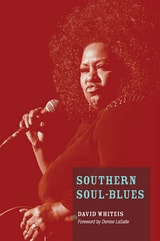
cover of Southern Soul-Blues

Southern Soul-Blues

David Whiteis

University of Illinois Press, 2013

Attracting passionate fans primarily among African American listeners in the South, southern soul draws on such diverse influences as the blues, 1960s-era deep soul, contemporary R & B, neosoul, rap, hip-hop, and gospel. Aggressively danceable, lyrically evocative, and fervidly emotional, southern soul songs often portray unabashedly carnal themes, and audiences delight in the performer-audience interaction and communal solidarity at live performances.

Examining the history and development of southern soul from its modern roots in the 1960s and 1970s, David Whiteis highlights some of southern soul's most popular and important entertainers and provides first-hand accounts from the clubs, show lounges, festivals, and other local venues where these performers work. Profiles of veteran artists such as Denise LaSalle, the late J. Blackfoot, Latimore, and Bobby Rush--as well as contemporary artists T. K. Soul, Ms. Jody, Sweet Angel, Willie Clayton, and Sir Charles Jones--touch on issues of faith and sensuality, artistic identity and stereotyping, trickster antics, and future directions of the genre. These revealing discussions, drawing on extensive new interviews, also acknowledge the challenges of striving for mainstream popularity while still retaining the cultural and regional identity of the music and maintaining artistic ownership and control in the age of digital dissemination.
[more]
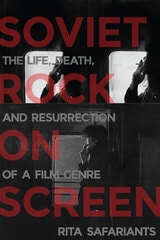
cover of Soviet Rock on Screen: The Life, Death, and Resurrection of a Film Genre

Soviet Rock on Screen

The Life, Death, and Resurrection of a Film Genre

Rita Safariants

University of Wisconsin Press, 2026

As the Iron Curtain fell and Cold War suspicions thickened in the second half of the twentieth century, the quintessentially American genre of rock and roll, seen as a potent symbol and product of an enemy ideology, quickly became a clandestine import in the USSR. The Soviet underground embraced the forbidden sounds, despite official propaganda that called rock stars social parasites and corrupting sluggards. Contrary to the regime’s desires, the genre grew in popularity until it could no longer be ignored. In the Soviet Union’s last decade, a flailing film industry, controlled by and dependent on an increasingly unstable central government, seized on the rock star as a central figure—and the Soviet rock film was born.

In Soviet Rock on Screen, Rita Safariants chronicles the birth, life, death, and resurrection of a genre that rapidly became one of the most readily recognized cultural signifiers of the perestroika era and which continues to reflect and codify Russian culture. During their initial heyday in the 1980s, rock films were influenced by and encouraged the cultural shifts of perestroika and the incipient political storm. Today, Safariants argues, the reemergence and reconfiguration of the genre indicates the extent to which Soviet-era cultural emblems inform Russian national identity and obliquely support the current political repression under Putin.

[more]
cover of Space Is the Place: The Lives and Times of Sun Ra

Space Is the Place

The Lives and Times of Sun Ra

John Szwed

Duke University Press, 2020

Considered by many to be a founder of Afrofuturism, Sun Ra—aka Herman Blount—was a composer, keyboardist, bandleader, philosopher, entrepreneur, poet, and self-proclaimed extraterrestrial from Saturn. He recorded over 200 albums with his Arkestra, which, dressed in Egypto-space costumes, played everything from boogie-woogie and swing to fusion and free jazz. John Szwed's Space is the Place is the definitive biography of this musical polymath, who was one of the twentieth century's greatest avant-garde artists and intellectuals. Charting the whole of Sun Ra's life and career, Szwed outlines how after years in Chicago as a blues and swing band pianist, Sun Ra set out in the 1950s to impart his views about the galaxy, black people, and spiritual matters by performing music with the Arkestra that was as vital and innovative as it was mercurial and confounding. Szwed's readers—whether they are just discovering Sun Ra or are among the legion of poets, artists, intellectuals, and musicians who consider him a spiritual godfather—will find that, indeed, space is the place.
[more]
cover of Speech and Song at the Margins of Global Health: Zulu Tradition, HIV Stigma, and AIDS Activism in South Africa

Speech and Song at the Margins of Global Health

Zulu Tradition, HIV Stigma, and AIDS Activism in South Africa

Steven P. Black

Rutgers University Press, 2019
Speech and Song at the Margins of Global Health tells the story of a unique Zulu gospel choir comprised of people living with HIV in South Africa, and how they maintained healthy, productive lives amid globalized inequality, international aid, and the stigma that often comes with having HIV. By singing, joking, and narrating about HIV in Zulu, the performers in the choir were able to engage with international audiences, connect with global health professionals, and also maintain traditional familial respect through the prism of performance. The focus on gospel singing in the narrative provides a holistic viewpoint on life with HIV in the later years of the pandemic, and the author’s musical engagement led to fieldwork in participants’ homes and communities, including the larger stigmatized community of infected individuals. This viewpoint suggests overlooked ways that aid recipients contribute to global health in support, counseling, and activism, as the performers set up instruments, waited around in hotel lobbies, and struck up conversations with passersby and audience members. The story of the choir reveals the complexity and inequities of global health interventions, but also the positive impact of those interventions in the crafting of community.
[more]
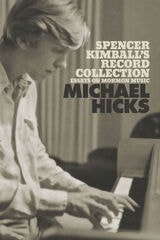
cover of Spencer Kimball's Record Collection: Essays on Mormon Music

Spencer Kimball's Record Collection

Essays on Mormon Music

Michael Hicks

Signature Books, 2020

At times jubilant, at times elegiac, this set of ten essays by music historian Michael Hicks navigates topics that range from the inner musical life of Joseph Smith to the Mormon love of blackface musicals, from endless wrangling over hymnbooks to the compiling of Mormon folk and exotica albums in the 1960s.  It also offers a brief memoir of what happened to LDS Church President Spencer Kimball’s record collection and a lengthy, brooding piece on the elegant strife it takes to write about Mormon musical history in the first place.  There are surprises and provocations, of course, alongside judicious sifting of sources and weighing of evidence. The prose is fresh, the research smart, and the result a welcome mixture of the careful and the carefree from Mormonism’s best-known scholar of musical life.
[more]
cover of Spirituals and the Birth of a Black Entertainment Industry

Spirituals and the Birth of a Black Entertainment Industry

Sandra Jean Graham

University of Illinois Press, 2018
Spirituals performed by jubilee troupes became a sensation in post-Civil War America. First brought to the stage by choral ensembles like the Fisk Jubilee Singers, spirituals anchored a wide range of late nineteenth-century entertainments, including minstrelsy, variety, and plays by both black and white companies. In the first book-length treatment of postbellum spirituals in theatrical entertainments, Sandra Jean Graham mines a trove of resources to chart the spiritual's journey from the private lives of slaves to the concert stage. Graham navigates the conflicting agendas of those who, in adapting spirituals for their own ends, sold conceptions of racial identity to their patrons. In so doing they lay the foundation for a black entertainment industry whose artistic, financial, and cultural practices extended into the twentieth century. A companion website contains jubilee troupe personnel, recordings, and profiles of 85 jubilee groups. Please go to: http://www.press.uillinois.edu/books/graham/spirituals/
[more]
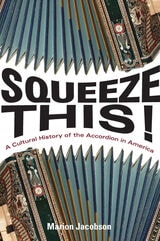
cover of Squeeze This!: A Cultural History of the Accordion in America

Squeeze This!

A Cultural History of the Accordion in America

Marion Jacobson

University of Illinois Press, 2012

No other instrument has witnessed such a dramatic rise to popularity--and precipitous decline--as the accordion. Squeeze This! is the first history of the piano accordion and the first book-length study of the accordion as a uniquely American musical and cultural phenomenon.
 
Ethnomusicologist and accordion enthusiast Marion Jacobson traces the changing idea of the accordion in the United States and its cultural significance over the course of the twentieth century. From the introduction of elaborately decorated European models imported onto the American vaudeville stage and the instrument's celebration by ethnic musical communities and mainstream audiences alike, to the accordion-infused pop parodies by "Weird Al" Yankovic, Jacobson considers the accordion's contradictory status as both an "outsider" instrument and as a major force in popular music in the twentieth century.
 
Drawing on interviews and archival investigations with instrument builders and retailers, artists and audiences, professionals and amateurs, Squeeze This! explores the piano accordion's role as an instrument of community identity and its varied musical and cultural environments. Jacobson concentrates on six key moments of transition: the Americanization of the piano accordion, originally produced and marketed by sales-savvy Italian immigrants; the transformation of the accordion in the 1920s from an exotic, expensive vaudeville instrument to a mass-marketable product; the emergence of the accordion craze in the 1930s and 1940s, when a highly organized "accordion industrial complex" cultivated a white, middle-class market; the peak of its popularity in the 1950s, exemplified by Lawrence Welk and Dick Contino; the instrument's marginalization in the 1960s and a brief, ill-fated effort to promote the accordion to teen rock 'n' roll musicians; and the revival beginning in the 1980s of the accordion as a "world music instrument" and a key component for cabaret and burlesque revivals and pop groups such as alternative experimenters They Might Be Giants and polka rockers Brave Combo.
 
Loaded with dozens of images of gorgeous instruments and enthusiastic performers and fans, Squeeze This! A Cultural History of the Accordion in America represents the accordion in a wide range of popular and traditional musical styles, revealing the richness and diversity of accordion culture in America.
[more]