Results by title
3064 books match the query 'Social conditions' and 211 start with s

Sloss Furnaces and the Rise of the Birmingham District
An Industrial EpicW. David Lewis
University of Alabama Press, 1994
"A masterpiece that deserves to be ranked with such seminal and influential works as Cash’s Mind of the South." —Edwin T. Layton Jr., author of The Revolt of the Engineers: Social Responsibility and the American Profession
This pathbreaking book tells the dramatic story of a unique manufacturing complex and the city that it helped to create. The events recounted and interpreted by W. David Lewis are of more than local or regional significance. The rise of Sloss furnaces and Birmingham epitomized the emergence of the United States as the world's foremost economic power. Similarly, the closing of a once-profitable ironmaking installation amid social and technological changes that convulsed Birmingham nine decades after the city's founding typified challenges that were facing America at the dawn of the postindustrial age.
Above all, Sloss Furnaces resonates with the class of competition and the frenetic energy with which southerners joined other Americans in a rush to transform a continent after a fratricidal drive for independence had failed. The sweeping narrative that Lewis has produced amply justifies its subtitle, An Industrial Epic.

Slovenes in Michigan
James E. Seelye
Michigan State University Press, 2017
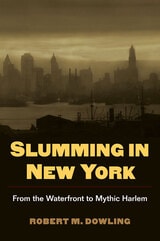
Slumming in New York
From the Waterfront to Mythic HarlemRobert M. Dowling
University of Illinois Press, 2006
Using the methods of ethnicity theory, black studies, regional studies, literary studies, and popular culture, Robert M. Dowling reveals the way in which "outsider" authors helped alleviate New York's mounting social anxieties by popularizing "insider" voices from neighborhoods as distinctive as the East Side waterfront, the Bowery, the Tenderloin's "black Bohemia," the Jewish Lower East Side, and mythic Harlem.
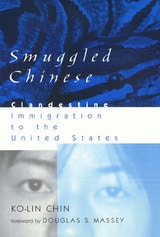
Smuggled Chinese
Ko-Lin Chin
Temple University Press, 1999
When the Golden Venture ran aground off New York's coast in 1993 and ten of the 260 Chinese on board drowned, the public outcry about human smuggling became front-page news. Probing into the causes and consequences of this clandestine traffic, Ko-lin Chin has interviewed more than 300 people -- smugglers, immigrants, government officials, and business owners -- in the United States, China, and Taiwan. Their poignant and chilling testimony describes a flourishing industry in which smugglers -- big and little snakeheads -- command fees as high as $30,000 to move desperate but hopeful men and women around the world. For many who survive the hunger, filthy and crowded conditions, physical and sexual abuse, and other perils of the arduous journey, life in the United States, specifically in New York's Chinatown, is a disappointment if not a curse. Few will return to China, though, because their families depend on the money and status gained by having a relative in the States.
In Smuggled Chinese, Ko-lin Chin puts a human face on this intractable international problem, showing how flaws in national policies and lax law enforcement perpetuate the cycle of desperation and suffering. He strongly believes, however, that the problem of human smuggling will continue as long as China's citizens are deprived of fundamental human rights and economic security.
Smuggled Chinese will engage readers interested in human rights, Asian and Asian American studies, urban studies, and sociology.
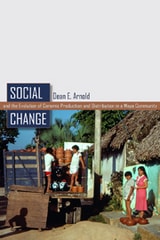
Social Change and the Evolution of Ceramic Production and Distribution in a Maya Community
Dean E. Arnold
University Press of Colorado, 2008
Dean E. Arnold made ten visits to Ticul, Yucatan, Mexico, witnessing the changes in transportation infrastructure, the use of piped water, and the development of tourist resorts. Even in this context of social change and changes in the demand for pottery, most of the potters in 1997 came from the families that had made pottery in 1965. This book traces changes and continuities in that population of potters, in the demand and distribution of pottery, and in the procurement of clay and temper, paste composition, forming, and firing.
In this volume, Arnold bridges the gap between archaeology and ethnography, using his analysis of contemporary ceramic production and distribution to generate new theoretical explanations for archaeologists working with pottery from antiquity. When the descriptions and explanations of Arnold’s findings in Ticul are placed in the context of the literature on craft specialization, a number of insights can be applied to the archaeological record that confirm, contradict, and nuance generalizations concerning the evolution of ceramic specialization. This book will be of special interest to anthropologists, archaeologists, and ethnographers.

Social Change and the Family in Taiwan
Arland Thornton and Hui-Sheng Lin
University of Chicago Press, 1994
This interdisciplinary study explores the patterns and causes of change in education, work, income, leisure time, marriage, living arrangements, and interactions among extended kin. Theoretical chapters enunciate a theory of family and social change centered on the life course and modes of social organization. Other chapters look at the shift from arranged marriages toward love matches, as well as changes in dating practices, premarital sex, fertility, and divorce.
Contributions to the book are made by Jui-Shan Chang, Ming-Cheng Chang, Deborah S. Freedman, Ronald Freedman, Thomas E. Fricke, Albert Hermalin, Mei-Lin Lee, Paul K. C. Liu, Hui-Sheng Lin, Te-Hsiung Sun, Arland Thornton, Maxine Weinstein, and Li-Shou Yang.
Social Change in a Metropolitan Community
Otis Dudley Duncan
Russell Sage Foundation, 1973
Social Constructions of Deafness
Examining Deaf Languacultures in EducationThomas P. Horejes
Gallaudet University Press, 2012
Thomas P. Horejes’s new book focuses on revealing critical knowledge that addresses certain social justice issues, including deafness, language, culture, and deaf education. He conveys this information through discourses about his own experiences being deaf and through his research in which he “stresses the contingency of the social” in educational institutions.
In Social Constructions of Deafness: Examining Deaf Languacultures in Education, Horejes contends that schools as social institutions play powerful and exacting roles in the creation and maintenance of social constructions such as language and culture for deaf children. He subscribes to Michael Agar’s concept of “languaculture,” defined as the inextricable relationship between language and culture in which a specific language will shape and influence culture. His approach employs other anthropological terminology as he connects his personal experience as a deaf student (emic) to academic research on deafness (etic) to bring understanding to the multidimensional aspects of his own negotiated identities.
Horejes extends his inquiry through his analysis of two kindergarten classes for deaf students, one orally oriented and the other conducted using sing language. His findings are sobering evidence of the myriad challenges educators face in defining appropriate academic, linguistic, and cultural pedagogy for deaf children in schools and other social institutions.
Social Controversy and Public Address in the 1960s and Early 1970s
A Rhetorical History of the United States, Volume IXRichard J. Jensen
Michigan State University Press, 2017

Social Currents in Eastern Europe
The Sources and Consequences of the Great TransformationSabrina P. Ramet
Duke University Press, 1994
Ramet draws on interviews conducted over a ten-year period with individuals active in arenas for social change—intellectual dissent, feminism, religious activism, youth cultures and movements, and trade unionism—in eight East European countries: East Germany, Poland, Czechoslovakia, Hungary, Yugoslavia, Romania, Bulgaria, and Albania. She shows how the processes leading to the ultimate collapse of communism began more than a decade earlier and how they were necessarily manifested in spheres as diverse as religion and rock music.
Ramet also examines the consequences of the "Great Transformation" and analyzes the numerous unresolved problems that these societies currently confront, whether it be in the arena of economics, political legitimation, or the challenges of establishing a civil society free of chauvinism.

Social History and African Environments
William Beinart
Ohio University Press, 2003
The explosion of interest in African environmental history has stimulated research and writing on a wide range of issues facing many African nations.
This collection represents some of the finest studies to date. The general topics include African environmental ideas and practices; colonial science, the state and African responses; and settlers and Africans' culture and nature. The contributors are Emmanuel Kreike, Karen Middleton, Innocent Pikirayi, Terence Ranger, JoAnn McGregor, Helen Tilley, Grace Garswell, John McCracken, Ingrid Yngstrom, David Bunn, Sandra Swart, Robert J. Gordon, and Jane Carruthers.
Social Inequality in Oaxaca
A History of Resistance and ChangeArthur Murphy
Temple University Press, 1991
Social Organization in South China, 1911–1949
The Case of Kuan Lineage in K’ai-p’ing CountyYuen-fong Woon
University of Michigan Press, 1984
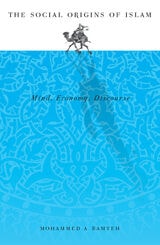
Social Origins Of Islam
Mind, Economy, DiscourseMohammed Bamyeh
University of Minnesota Press, 1999
Explores the genesis of Islam for insight into the nature of ideological transformation.
The story of the origins of Islam provides a rich and suggestive example of sweeping cultural transformation. Incorporating both innovation and continuity, Islam built upon the existing cultural patterns among the peoples of the Arabian peninsula even as it threatened to eradicate these same patterns. In this provocative interdisciplinary study, Mohammed A. Bamyeh combines perspectives from sociology, literary studies, anthropology, and economic history to examine the cultural ecology that fostered Islam.
Highlighting the pivotal connections in pre-Islamic society between the emergence of certain economic practices (such as trade and money-based exchange), worldview (as rendered in pre-Islamic literature and theology), and the reconfiguration of transtribal patterns of solidarity and settlement, Bamyeh finds in the genesis of Islam a sophisticated model for examining ideological transformation in general.At the heart of Bamyeh’s enterprise are close readings of both the Qur’an and the pre-Islamic poetry that preceded it. Bamyeh uncovers in these texts narrative and pedagogical content, poetic structure, use of metaphor, and historical references that are suggestive of societies in transition. He also explores the expressive limits of the pre-Islamic literature and its transmutation into Qur’anic speech in the wake of social transformation. Emphasizing the organic connections between belief structures, economic formations, and modes of discourse in pre-Islamic Arabia, The Social Origins of Islam explains how various material and discursive changes made the idea of Islam possible at a particular point in history. More broadly, it persuasively demonstrates how grand cultural shifts give rise to new systems of faith.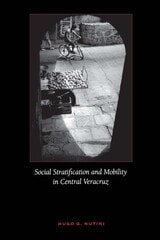
Social Stratification and Mobility in Central Veracruz
By Hugo G. Nutini
University of Texas Press, 2005
Since the Revolution of 1910, Mexican society has undergone a profound transformation, characterized by the disempowerment of the landed aristocracy and the rise of a new ruling class of plutocrats and politicians; the development of a middle class of white-collar professionals; and the upward mobility of formerly disenfranchised Indians who have become urban, working-class Mestizos. Indeed, Mexico's class system today increasingly resembles that of Western industrialized nations, proving that, while further democratic reforms are needed, the Revolution initiated an ongoing process of change that has created a more egalitarian society in Mexico with greater opportunities for social advancement.
This authoritative ethnography examines the transformation of social classes in the Córdoba-Orizaba region during the latter half of the twentieth century to create a model of provincial social stratification in Mexico. Hugo Nutini focuses on the increased social mobility that has affected all classes of society, especially the rural Indians who have taken advantage of education, job opportunities, and contact with the wider world to achieve Mestizo status. He also traces the transfer of power that followed the demise of the hacienda system, as well as the growing importance of the middle class. This description and analysis of the provincial social stratification system complements the work Nutini has done on the national class system, centered in Mexico City, to offer a comprehensive picture of social stratification and mobility in Mexico today.
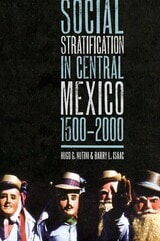
Social Stratification in Central Mexico, 1500-2000
By Hugo G. Nutini and Barry L. Isaac
University of Texas Press, 2009
In Aztec and colonial Central Mexico, every individual was destined for lifelong placement in a legally defined social stratum or estate. Social mobility became possible after independence from Spain in 1821 and increased after the 1910–1920 Revolution. By 2000, the landed aristocracy that was for long Mexico's ruling class had been replaced by a plutocracy whose wealth derives from manufacturing, commerce, and finance—but rapid growth of the urban lower classes reveals the failure of the Mexican Revolution and subsequent agrarian reform to produce a middle-class majority. These evolutionary changes in Mexico's class system form the subject of Social Stratification in Central Mexico, 1500–2000, the first long-term, comprehensive overview of social stratification from the eve of the Spanish Conquest to the end of the twentieth century.
The book is divided into two parts. Part One concerns the period from the Spanish Conquest of 1521 to the Revolution of 1910. The authors depict the main features of the estate system that existed both before and after the Spanish Conquest, the nature of stratification on the haciendas that dominated the countryside for roughly four centuries, and the importance of race and ethnicity in both the estate system and the class structures that accompanied and followed it. Part Two portrays the class structure of the post-revolutionary period (1920 onward), emphasizing the demise of the landed aristocracy, the formation of new upper and middle classes, the explosive growth of the urban lower classes, and the final phase of the Indian-mestizo transition in the countryside.

Society, Culture, and the State in Germany, 1870-1930
Geoff Eley, Editor
University of Michigan Press, 1997

Sojourner Truth's America
Margaret Washington
University of Illinois Press, 2009
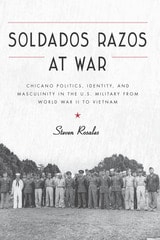
Soldados Razos at War
Chicano Politics, Identity, and Masculinity in the U.S. Military from World War II to VietnamSteven Rosales
University of Arizona Press, 2017
What were the catalysts that motivated Mexican American youth to enlist or readily accept their draft notices in World War II, Korea, or Vietnam? In Soldados Razos at War, historian and veteran Steven Rosales chronicles the experiences of Chicano servicemen who fought for the United States, explaining why these men served, how they served, and the impact of their service on their identity and political consciousness.
As a social space imbued with its own martial and masculine ethos, the U.S. military offers an ideal way to study the aspirations and behaviors that carried over into the civilian lives of these young men. A tradition of martial citizenship forms the core of the book. Using rich oral histories and archival research, Rosales investigates the military’s transformative potential with a particular focus on socioeconomic mobility, masculinity, and postwar political activism across three generations.
The national collective effort characteristic of World War II and Korea differed sharply from the highly divisive nature of American involvement in Vietnam. Thus, for Mexican Americans, military service produced a wide range of ideological reactions, with the ideals of each often in opposition to the others. Yet a critical thread connecting these diverse outcomes was a redefined sense of self and a willingness to engage in individual and collective action to secure first-class citizenship.
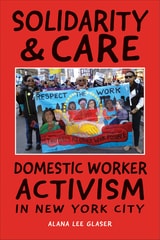
Solidarity & Care
Domestic Worker Activism in New York CityAlana Lee Glaser
Temple University Press, 2023
Solidarity & Care examines the political mobilization of diverse care workers who joined together and supported one another through education, protests, lobbying, and storytelling. Domestic work activists used narrative and emotional appeals to build a coalition of religious communities, employers of domestic workers, labor union members, and politicians to first pass and then to enforce the new law.
Through oral history interviews, as well as ethnographic observation during DWU meetings and protest actions, Glaser chronicles how these women fought (and continue to fight) to improve working conditions. She also illustrates how they endure racism, punitive immigration laws, on-the-job indignities, and unemployment that can result in eviction and food insecurity.
The lessons from Solidarity & Care along with the DWU’s precedent-setting legislative success have applications to workers across industries.
All royalties will go directly to the Domestic Workers United

Somalia - the Untold Story
The War Through the Eyes of Somali WomenEdited by Judith Gardner and Judy El Bushra
Pluto Press, 2004
In this book, Somali women write and talk about the war, their experiences and the unacceptable choices they often faced. They explain clearly, in their own words, the changes, challenges – and sometimes the opportunities – that war brought, and how they coped with them.
Key themes include the slaughter and loss of men, who were the prime target for killings; rape and sexual violence as a weapon of war; changing roles in the family and within the pastoralist economy; women mobilising for peace; and leading social recovery in a war-torn society.
This book is not only an important record of women's experience of war, but also provides researchers and students of gender and conflict with rare first hand accounts highlighting the impact of war on gender relations, and women's struggle for equal political rights in a situation of state collapse.
Somalis in the Twin Cities and Columbus
Immigrant Incorporation in New DestinationsStephanie Chambers
Temple University Press, 2017
In the early 1990s, Somali refugees arrived in Minneapolis and St. Paul, Minnesota. Later in the decade, an additional influx of immigrants arrived in a second destination of Columbus, Ohio. These refugees found low-skill jobs in warehouses and food processing plants and struggled as social “outsiders,” often facing discrimination based on their religious traditions, dress, and misconceptions that they are terrorists. The immigrant youth also lacked access to quality educational opportunities.
In Somalis in the Twin Cities and Columbus, Stefanie Chambers provides a cogent analysis of these refugees in Midwestern cities where new immigrant communities are growing. Her comparative study uses qualitative and quantitative data to assess the political, economic, and social variations between these urban areas. Chambers examines how culture and history influenced the incorporation of Somali immigrants in the U.S., and recommends policy changes that can advance rather than impede incorporation.
Her robust investigation provides a better understanding of the reasons these refugees establish roots in these areas, as well as how these resettled immigrants struggle to thrive.

Some Girls Survive on Their Sorcery Alone
PoemsThiahera Nurse
Northwestern University Press, 2019
Some Girls Survive on Their Sorcery Alone sees Renisha McBride, Sandra Bland, Korrynn Gaines, and others not as ornamental nor does the book attempt to canonize the dead women as saints. The poems see them as they are: play-cousins, home-girls, the mirror. Line to line, there is an obsession with keeping all of the women in the poems safe and perhaps resurrectable. The black girl who is alive here lives to switch her waistline to a reggae beat. She is in the middle of the dance floor with a suicide note in her purse as a means of warding off bad juju. Always, she is chasing joy head-on, at warp speed.
Some Girls Survive on Their Sorcery Alone is a celebration that the black girl will always dance, in the church basement, a grandmother’s funeral repast—she dances until she hits the floor, in her joy . . . and her grief.

Some Reflections Upon Marriage
Mary Astell. Introduction by John A. Dussinger
University of Illinois Press, 2015
Some of Us
Chinese Women Growing Up in the Mao EraZhong, Xueping
Rutgers University Press, 2001
What does it mean to have grown up female in the Mao era? How can the remembered details of everyday life help shed light upon those turbulent times?
Some of Us is a collection of memoirs by nine Chinese women who grew up during the Mao era. All hail from urban backgrounds and all have obtained their Ph.D.s in the United States; thus, their memories are informed by intellectual training and insights that only distance can allow. Each of the chapters—arranged by the age of the author—is crafted by a writer who reflects back to that time in a more nuanced manner than has been possible for Western observers. The authors attend to gender in a way that male writers have barely noticed and reflect on their lives in the United States.
The issues explored here are as varied as these women’s lives: The burgeoning rebellion of a young girl in northeast China. A girl’s struggles to obtain for herself the education her parents inspired her to attain. An exploration of gender and identity as experienced by two sisters.
Some of Us offers insight into a place and time when life was much more complex than Westerners have allowed. These eloquent writings shatter our stereotypes of persecution, repression, victims, and victimizers. Together, these multi-faceted memoirs offer the reader new perspectives as they daringly explore difficult—and fascinating—issues.
Somebody Told Me
The Newspaper Stories of Rick BraggRick Bragg
University of Alabama Press, 2000
Over the past twenty years, writer Rick Bragg has earned legions of fans with his award-winning newspaper stories and with his critically aclaimed memoir All Over but the Shoutin'. His unique storytelling talent and his sympathy for the day-to-day struggles of everyday people set him apart from journalists who focus on political intrigue and the foibles of the rich and famous.
This collection showcases Bragg's talent for turning seemingly ordinary situations into extraordinary stories by bringing together more than sixty of his most recent feature articles, most of them written for the New York Times. Bragg explores such questions as: What happens to someone released from prison for a crime he didn't commit? Who takes care of the graves of poor people? What keeps an elderly woman from selling her land for a tidy profit? Bragg's curiosity often leads him to society's margins, where he wins the confidence of those who have good reason to mistrust others.
Bragg has reported on some of the most newsworthy tragedies in the nation, and his unfolding coverage of events such as the Oklahoma City bombing and the Susan Smith child murders is included here. Once again, though, his special ability to connect with people allows him accesss and perspectives that many other reporters do not achieve.
Whether he's profiling the sheriff who broke the Smith case or relating the efforts of Alabama churchgoers to understand a Sunday morning tornado strike, Bragg writes with genuine compassion and sentiment but without being sensationalist. He looks where others don’t and gets behind the headlines to the people standing there stunned and often, until he finds them, voiceless. When asked how he came up with his remarkable stories, Bragg has his answer down pat: “Somebody told me.”

Somos Tejanas!
Chicana Identity and Culture in TexasEdited by Jody A. Marín and Norma E. Cantú
University of Texas Press, 2025
2026 Outstanding Book Award for Non-Fiction, National Association for Chicana and Chicano Studies (NACCS) Tejas Foco
2026 Silver Medal for the Dolores Huerta Best Cultural & Community Themed Book – English, Conference on Latin American History (CLAH)
An expansive volume on Tejana identity and Tejanidad told through personal narratives, poetry, and essays.
Being Tejanx is different than just being from Texas. Being Tejanx means you are a border subject. Being Tejanx means living in and from a certain history of oppression, possibility, activism, and cultural-linguistic hybridity arising within the US-Mexico borderland that is home. And being Tejanx means something in particular if you are a woman.
In ¡Somos Tejanas!, editors Norma E. Cantú and Jody A. Marín assemble contemporary Tejanx writers who provide firsthand accounts of their experience of identity, enriching the field of Tejanx studies through an encounter with gender and sexuality. The contributions, including personal and scholarly essays, poems, criticism, and artworks, explore the heterogeneity of Tejana identity and the sociopolitical movements, stories, dances, music, and athletic feats that mark Tejanidad. Authors contemplate the history and memory of segregation in Texas, the struggles of surviving the unnatural disaster and blackouts of 2021 amid the global pandemic of COVID-19, and the drug-war violence and ever-tightening immigration restrictions that strangle a transborder way of life shared by millions. An unrepentant act of expression from women under attack by state policymakers, this collection dispels the silence imposed by colonial erasure.

Sonata
By Charles Bowden; foreword by Alfredo Corchado
University of Texas Press, 2020
"I believe every sunrise and I remember the smell of wet grass, the color of robins, and rustle of leaves on the big oaks that outlive nations, all this comes with each sunrise."
Sonata marks the sixth and final installment of Charles Bowden’s towering “Unnatural History of America” series. While his earlier volumes were suffused with violence and war, Bowden offers here a celebration of rebirth and regrowth. Rendered in Bowden's inimitable style, more prose poetry than reportage, he evokes panoramas that contain the potential for respite and offer a state of grace all but lost in the endless wars of man.
Bowden travels back in time to the worlds of artists Francisco Goya and Vincent van Gogh, the latter painting furiously against encroaching madness. “Van Gogh tries to dream a life of color,” writes Bowden. “Powder blue sheds, yellow stubble, pink skies—but the fears and dark things drag him down.” As Bowden’s vivid prose wrestles with the madness of the world, van Gogh’s paintings represent an act of resistance, ultimately unsuccessful, against depression and suicide.
Moving from the vibrant hues of van Gogh’s painted gardens to America’s southern border, Bowden returns once more to the Mexican asylum run by "El Pastor," Jose Antonio Galvan, who was first introduced to readers of the sextet in Jericho. Here, too, is the dream of a garden that will be planted in the desert, a promise of regeneration in a world gone mad. Poetic, elegiac, and elliptical, Sonata is the final, captivating book of Bowden’s monumental career.
Sonorous Worlds
Musical Enchantment in VenezuelaYana Stainova
University of Michigan Press, 2021
Sonorous Worlds is an ethnography of the young Venezuelan musicians who participate in El Sistema, many of whom live in urban barrios and face everyday gang violence, state repression, social exclusion, and forced migration in response to sociopolitical crisis. This book looks at how these young people engage with what the author calls “enchantment,” that is, how through musical practices they create worlds that escape, rupture, and critique dominant structures of power. Stainova’s focus on artistic practice and enchantment allows her to theorize the successes and failures of political projects through the lens of everyday transformations in people’s lives.
Sons And Daughters Of Los
Culture And Community In L.A.David James
Temple University Press, 2003
Sons of Chinatown
A Memoir Rooted in China and AmericaWilliam Gee Wong
Temple University Press, 2024
As Pop grappled with the systemic racism towards Asians during the exclusion era, Wong wistfully depicts Pop’s efforts to establish a family business and build a life for his family in segregated Oakland. As the exclusion law ended in 1943, young William was assimilating into American life and developing his path as a journalist. Writing for the Wall Street Journal, Oakland Tribune, and Asian American periodicals, Wong chronicled Asian American experiences while honoring Chinese American history and identity, but he too faced discrimination.
Sons of Chinatown poignantly weaves these father and son stories together with admiration and righteous anger. Through the mirrored lens of his father, Wong reflects on the hardships Asian Americans endured—and continue to face—with American exceptionalism. Wong’s inspiring memoir provides a personal history that also raises the question of whether America welcomes or repels immigrants.

Sons, Daughters, and Sidewalk Psychotics
Mental Illness and Homelessness in Los AngelesNeil Gong
University of Chicago Press, 2024
Drawing on the nuanced experiences of patients and care providers, Sons, Daughters, and Sidewalk Psychotics introduces readers to two drastically different forms of community psychiatric services: public safety net clinics focused on keeping people housed and out of jail and elite private care trying to push clients toward respectable futures.
In downtown Los Angeles, many people in psychiatric crisis only receive help after experiencing homelessness or arrest. Public providers engage in guerrilla social work to secure housing and safety, but these programs are rarely able to deliver true rehabilitation for psychological distress and addiction. Patients are free to refuse treatment or use illegal drugs—so long as they do so away from public view. Across town in West LA or Malibu, wealthy people diagnosed with serious mental illness attend luxurious treatment centers. Programs may offer yoga and organic meals alongside personalized therapeutic treatments, but patients can feel trapped, as their families pay exorbitantly to surveil and “fix” them. Meanwhile, middle-class families—stymied by private insurers, unable to afford elite providers, and yet not poor enough to qualify for social services—struggle to find care at all.
Examining this divergent treatment of people facing similar mental struggles, Gong raises provocative questions about urban policy, individual freedom, and what it would take to create a fundamentally different psychiatric system—one that will meet the needs of patients, their loved ones, and society at large.
Soulside
Inquiries into Ghetto Culture and CommunityUlf Hannerz
University of Chicago Press, 2004
Originally published 35 years ago, Soulside became an urban anthropological classic. The book helped to dispel many false impressions about ghetto life and questioned the idea, precipitated in the influential Moynihan Report and in notions of a "culture of poverty," that the poor had chosen to lead the lives they do. Raising central moral and political questions about American society in a turbulent period, Soulside became an example of public engagement in anthropology. In a new afterword, Ulf Hannerz discusses the book's place in the debates of the time and its relevance to current arguments in anthropology.

Sounds of Black Switzerland
Blackness, Music, and Unthought VoicesJessie Cox
Duke University Press, 2025
South Side Girls
Growing Up in the Great MigrationMarcia Chatelain
Duke University Press, 2015
South Slavs in Michigan
Daniel Cetinich
Michigan State University Press, 2003
The South Slavs of Michigan—Slovenes, Croats, Serbs, Macedonians, and Bosnian Muslims—are a microcosm of the immigration waves of southern and eastern Europeans who came to the United States between 1880 and 1924. History has almost forgotten these immigrants, who were instrumental in developing the large urban centers of Michigan and the United States, and who specifically contributed to development of the auto industry and struck in 1913–1914 for better working conditions in the copper mines of the Upper Peninsula. While labor problems were the primary obstacles confronting Michigan’s South Slavs, the painful process of acculturation has since dimmed their very real accomplishments. As Daniel Cetinich shows, South Slavs helped shape both a regional and national civilization in North America with their hands, backs, feet, and the labor organizations they helped create.
Southeastern Mesoamerica
Indigenous Interaction, Resilience, and ChangeWhitney A. Goodwin
University Press of Colorado, 2020
Drawing on archaeological evidence ranging back to the late Pleistocene as well as extensive documentation from the historic period, contributors show how Southeastern Mesoamericans created unique identities, strategically incorporating cosmopolitan influences from cultures to the north and south with their own long-lived traditions. These populations developed autochthonous forms of monumental architecture and routes and methods of exchange and had distinct social, cultural, political, and economic traits. They also established unique long-term human-environment relations that were the result of internal creativity and inspiration influenced by local social and natural trajectories.
Southeastern Mesoamerica calls upon archaeologists, anthropologists, historians, ethnohistorians, and others working in Mesoamerica, Central America, and other cultural boundaries around the world to reexamine the role Indigenous resilience and agency play in these areas and in the cultural developments and interactions that occur within them.
Contributors: Edy Barrios, Christopher Begley, Walter Burgos, Mauricio Díaz García, William R. Fowler, Rosemary A. Joyce, Gloria Lara-Pinto, Eva L. Martínez, William J. McFarlane, Cameron L. McNeil, Lorena D. Mihok, Pastor Rodolfo Gómez Zúñiga, Timothy Scheffler, Edward Schortman, Russell Sheptak, Miranda Suri, Patricia Urban, Antolín Velásquez, E. Christian Wells
Southern Discomfort
Women's Activism in Tampa, Florida, 1880s-1920sNancy A. Hewitt
University of Illinois Press, 2001
Hewitt emphasizes the process by which women forged and reformulated their activist identities from Reconstruction through the U.S. declaration of war against Spain in April 1898, the industrywide cigar strike of 1901, and the emergence of progressive reform and labor militancy. She also recasts our understanding of southern history by demonstrating how Tampa's triracial networks alternately challenged and re-inscribed the South's biracial social and political order.

Southern Exposure
Making the South Safe for DemocracyStetson Kennedy
University of Alabama Press, 2011
Using thorough and stark statistics, Kennedy describes a South emerging from World War II, coming to grips with the racism and feudalism that had held it back for generations. He includes an all-out Who’s Who, based on his own undercover investigations, of the "hate-mongers, race-racketeers, and terrorists who swore that apartheid must go on forever." The first paperback edition brings to a new generation of readers Kennedy’s searing profile of Dixie before the civil rights movement.
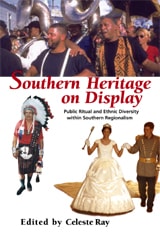
Southern Heritage on Display
Public Ritual and Ethnic Diversity within Southern RegionalismEdited by Celeste Ray
University of Alabama Press, 2002
W. J. Cash's 1941 observation that “there are many Souths and many cultural traditions among them” is certainly validated by this book. Although the Civil War and its “lost cause” tradition continues to serve as a cultural root paradigm in celebrations, both uniting and dividing loyalties, southerners also embrace a panoply of public rituals—parades, cook-offs, kinship homecomings, church assemblies, music spectacles, and material culture exhibitions—that affirm other identities. From the Appalachian uplands to the Mississippi Delta, from Kentucky bluegrass to Carolina piedmont, southerners celebrate in festivals that showcase their diverse cultural backgrounds and their mythic beliefs about themselves.
The ten essays of this cohesive, interdisciplinary collection present event-centered research from various fields of study—anthropology, geography, history, and literature—to establish a rich, complex picture of the stereotypically “Solid South.” Topics include the Mardi Gras Indian song cycle as a means of expressing African-American identity in New Orleans; powwow performances and Native American traditions in southeast North Carolina; religious healings in southern Appalachian communities; Mexican Independence Day festivals in central Florida; and, in eastern Tennessee, bonding ceremonies of melungeons who share Indian, Scots Irish, Mediterranean, and African ancestry. Seen together, these public heritage displays reveal a rich “creole” of cultures that have always been a part of southern life and that continue to affirm a flourishing regionalism.
This book will be valuable to students and scholars of cultural anthropology, American studies, and southern history; academic and public libraries; and general readers interested in the American South. It contributes a vibrant, colorful layer of understanding to the continuously emerging picture of complexity in this region historically depicted by simple stereotypes.
Southern Marches of Imperial Ethiopia
Essays in History and Social AnthropologyDonald L. Donham
Ohio University Press, 2002
This pioneering book, first published to wide acclaim in 1986, traces the way the Ethiopian center and the peripheral regions of the country affected each other. It looks specifically at the expansion of the highland Ethiopian state into the western and southern lowlands from the 1890s up to 1974.
Sovereignty and Extortion
A New State Form in MexicoClaudio Lomnitz
Duke University Press, 2024

Soviet Signoras
Personal and Collective Transformations in Eastern European MigrationMartina Cvajner
University of Chicago Press, 2019
Cvajner details the personal and collective changes brought about by the experience of migration for these women: from the first hours arriving in a new country with no friends, relatives, or existing support networks, to later remaking themselves for their new environment. In response to their traumatic displacement, the women of Soviet Signoras—nearly all of whom found work in their new Western homes as elder care givers—refashioned themselves in highly sexualized, materialistic, and intentionally conspicuous ways. Cvajner’s focus on overt sexuality and materialism is far from sensationalist, though. By zeroing in on these elements of personal identity, she reveals previously unexplored sides of the social psychology of migration, coloring our contemporary discussion with complex shades of humanity.
Spaces of Creative Resistance
Social Change Projects in Twenty-First-Century East AsiaAndrea Gevurtz Arai
Rutgers University Press, 2025
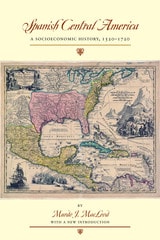
Spanish Central America
A Socioeconomic History, 1520–1720By Murdo J. MacLeod
University of Texas Press, 2007
The seventeenth century has been characterized as "Latin America's forgotten century." This landmark work, originally published in 1973, attempted to fill the vacuum in knowledge by providing an account of the first great colonial cycle in Spanish Central America. The colonial Spanish society of the sixteenth century was very different from that described in the eighteenth century. What happened in the Latin American colonies between the first conquests, the seizure of long-accumulated Indian wealth, the first silver booms, and the period of modern raw material supply? How did Latin America move from one stage to the other? What were these intermediate economic stages, and what effect did they have on the peoples living in Latin America? These questions continue to resonate in Latin American studies today, making this updated edition of Murdo J. MacLeod's original work more relevant than ever.
Colonial Central America was a large, populous, and always strategically significant stretch of land. With the Yucatán, it was home of the Maya, one of the great pre-Columbian cultures. MacLeod examines the long-term process it underwent of relative prosperity, depression, and then recovery, citing comparative sources on Europe to describe Central America's great economic, demographic, and social cycles. With an updated historiographical and bibliographical introduction, this fascinating study should appeal to historians, anthropologists, and all who are interested in the colonial experience of Latin America.

Spanish Peru, 1532–1560
A Social HistoryJames Lockhart
University of Wisconsin Press, 1994
When Spanish Peru, 1532–1560 was published in 1968, it was acclaimed as an innovative study of the early Spanish presence in Peru. It has since become a classic of the literature in Spanish American social history, important in helping to introduce career-pattern history to the field and notable for its broad yet intimate picture of the functioning of an entire society. In this second edition, James Lockhart provides a new conclusion and preface, updated terminology, and additional footnotes.
Spatializing Blackness
Architectures of Confinement and Black Masculinity in ChicagoRashad Shabazz
University of Illinois Press, 2015
A geographic study of race and gender, Spatializing Blackness casts light upon the ubiquitous--and ordinary--ways carceral power functions in places where African Americans live. Moving from the kitchenette to the prison cell, and mining forgotten facts from sources as diverse as maps and memoirs, Rashad Shabazz explores the myriad architectures of confinement, policing, surveillance, urban planning, and incarceration. In particular, he investigates how the ongoing carceral effort oriented and imbued black male bodies and gender performance from the Progressive Era to the present. The result is an essential interdisciplinary study that highlights the racialization of space, the role of containment in subordinating African Americans, the politics of mobility under conditions of alleged freedom, and the ways black men cope with--and resist--spacial containment.
A timely response to the massive upswing in carceral forms within society, Spatializing Blackness examines how these mechanisms came to exist, why society aimed them against African Americans, and the consequences for black communities and black masculinity both historically and today.

Speaking Yiddish to Chickens
Holocaust Survivors on South Jersey Poultry FarmsSeth Stern
Rutgers University Press, 2023
Most of the roughly 140,000 Holocaust survivors who came to the United States in the first decade after World War II settled in big cities such as New York. But a few thousand chose an alternative way of life on American farms. More of these accidental farmers wound up raising chickens in southern New Jersey than anywhere else. Speaking Yiddish to Chickens is the first book to chronicle this little-known chapter in American Jewish history when these mostly Eastern European refugees – including the author’s grandparents - found an unlikely refuge and gateway to new lives in the US on poultry farms. They gravitated to a section of south Jersey anchored by Vineland, a small rural city where previous waves of Jewish immigrants had built a rich network of cultural and religious institutions.
This book relies on interviews with dozens of these refugee farmers and their children, as well as oral histories and archival records to tell how they learned to farm while coping with unimaginable grief. They built small synagogues within walking distance of their farms and hosted Yiddish cultural events more frequently found on the Lower East Side than perhaps anywhere else in rural America at the time. Like refugees today, they embraced their new American identities and enriched the community where they settled, working hard in unfamiliar jobs for often meager returns. Within a decade, falling egg prices and the rise of industrial-scale agriculture in the South would drive almost all of these novice poultry farmers out of business, many into bankruptcy. Some hated every minute here; others would remember their time on south Jersey farms as their best years in America. They enjoyed a quieter way of life and more space for themselves and their children than in the crowded New York City apartments where so many displaced persons settled. This is their remarkable story of loss, renewal, and perseverance in the most unexpected of settings.
Author Facebook page (https://www.facebook.com/YiddishtoChickens)
Speaking of Race and Class
The Student Experience at an Elite CollegeElizabeth Aries
Temple University Press, 2012
In Speaking of Race and Class, the follow-up volume to her groundbreaking Race and Class Matters at an Elite College, Elizabeth Aries completes her four-year study of diversity at a prestigious liberal arts college. Here, the 58 students—affluent, lower-income, black, and white—that Aries has interviewed since they were Amherst freshmen provide a complete picture of what and how each group learned about issues of race and class.
Aries presents the students’ personal perceptions of their experiences. She reveals the extent to which learning from diversity takes place on campus, and examines the distinct challenges that arise for students living in this heterogeneous community. Aries also looks more broadly at how colleges and universities across the country are addressing the challenges surrounding diversity. Speaking of Race and Class testifies to the programming and practices that have proven successful.

Speaking the Unspeakable
Marital Violence among South Asian Immigrants in the United StatesAbraham, Margaret
Rutgers University Press, 2000
Over the past 20 years, much work has focused on domestic violence, yet little attention has been paid to the causes, manifestations, and resolutions to marital violence among ethnic minorities, especially recent immigrants. Margaret Abraham’s Speaking the Unspeakable is the first book to focus on South Asian women’s experiences of domestic violence, defined by the author as physical, sexual, verbal, mental, or economic coercion, power, or control perpetrated on a woman by her spouse or extended kin. Abraham explains how immigration issues, cultural assumptions, and unfamiliarity with American social, legal, economic, and other institutional systems, coupled with stereotyping, make these women especially vulnerable to domestic violence.
Abraham lets readers hear the voices of abused South Asian women. Through their stories, we learn of their weaknesses and strengths, and of their experiences of domestic violence within the larger cultural, social, economic, and political context. We see both the individual strategies of resistance against their abusers as well as the pivotal role South Asian organizations play in helping these women escape abusive relationships.
Abraham also describes the central role played by South Asian activism as it emerged in the 1980s in the United States, and addresses the ideas and practices both within and outside of the South Asian community that stereotype, discriminate, and oppress South Asians in their everyday lives.