Results by title
22279 books match the query 'Social Science' and 1635 start with s
Summoned
Identification and Religious Life in a Jewish NeighborhoodIddo Tavory
University of Chicago Press, 2016
In Summoned, Tavory takes readers to the heart of the exhilarating—at times exhausting—life of the Beverly-La Brea Orthodox community. Just blocks from West Hollywood’s nightlife, the Orthodox community thrives next to the impure sights, sounds, and smells they encounter every day. But to sustain this life, as Tavory shows, is not simply a moral decision they make. To be Orthodox is to be constantly called into being. People are reminded of who they are as they are called upon by organizations, prayer quorums, the nods of strangers, whiffs of unkosher food floating through the street, or the rarer Anti-Semitic remarks. Again and again, they find themselves summoned both into social life and into their identity as Orthodox Jews. At the close of Tavory’s fascinating ethnography, we come away with a better understanding of the dynamics of social worlds, identity, interaction and self—not only in Beverly-La Brea, but in society at large.
Sun Circles and Human Hands
The Southeastern Indians Art and IndustriesEdited by Emma Lila Fundaburk and Mary Douglass Fundaburk Foreman
University of Alabama Press, 2001
This classic compendium of ancient Indian artifacts from the entire southeastern United States remains an indispensable reference source for professionals and enthusiasts alike.
From utilitarian arrowheads to beautiful stone effigy pipes to ornately-carved shell disks, the photographs and drawings in Sun Circles and Human Hands present the archaeological record of the art and native crafts of the prehistoric southeastern Indians. Painstakingly compiled in the 1950s by two sisters who traveled the eastern United States interviewing archaeologists and collectors and visiting the major repositories, Sun Circles and Human Hands is remarkable for its breadth of illustration of Indian-made artifacts and its comprehensive documentation. Although research over the last 50 years has disproven many of the early theories reported in the text—which were not the editors' theories but those of the archaeologists of the day—the excellent illustrations of objects no longer available for examination have more than validated the lasting worth of this popular book.
Broadly acclaimed when it first appeared, this new printing has the added value of Knight's foreword, which places the work in its proper context. Useful to museums, state and national parks, school libraries, gift stores, archaeological agencies, and private collections, Sun Circles and Human Hands is a rich pictorial survey accessible to anyone interested in early American Indian culture.
Sun Ra's Chicago
Afrofuturism and the CityWilliam Sites
University of Chicago Press, 2020

Sun, Sin & Suburbia
The History of Modern Las Vegas, Revised and ExpandedGeoff Schumacher
University of Nevada Press, 2015
Schumacher’s history also profiles the Las Vegas where more than two million people live. He explores the neighborhoods sprawling beyond the Strip’s neon gleam and uncovers a diverse community offering much more than table games, lounge acts, and organized crime. Schumacher discusses contemporary Las Vegas, charting its course from the nation’s fastest-growing metropolis to one of the Great Recession’s most battered victims.
Sun, Sin & Suburbia will appeal to tourists looking to understand more than the glitz and glitter of Las Vegas and to newcomers who want to learn about their new hometown. It will also be an essential addition to any longtime Nevadan’s library of local history.
First published in 2012 by Stephens Press, this paperback edition is now available from the University of Nevada Press.
SunWatch
Fort Ancient Development in the Mississippian WorldRobert Cook
University of Alabama Press, 2007
The last prehistoric cultures to inhabit the Middle Ohio Valley (ca. A.D. 1000–1650) are referred to as Fort Ancient societies, which exhibited a wide variety of Mississippian period characteristics. What is less well-known and little understood are the social processes by which Mississippian characteristics spread to Fort Ancient communities. Through a comprehensive study of SunWatch, one of the few thoroughly excavated Fort Ancient settlements, the author focuses on the development of village social structure within a broad geographic and temporal framework, recognizing border areas as particularly dynamic contexts of social change. As a fundamental study of social patterning of Fort Ancient villages, this work reveals the interrelationships of small social units in culture change and social structure development and provides a full reconsideration of the Mississippian dimensions of Fort Ancient societies and a model for future investigations of larger patterning in the lateprehistory of the region.
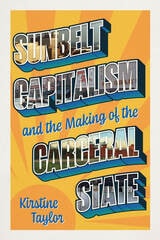
Sunbelt Capitalism and the Making of the Carceral State
Kirstine Taylor
University of Chicago Press, 2025
The story of how the American South became the most incarcerated region in the world’s most incarcerated nation.
Sunbelt Capitalism and the Making of the Carceral State examines the evolution of southern criminal punishment from Jim Crow to the dawn of mass incarceration, charting this definitive era of carceral transformation and expansion in the southern United States. The demise of the county chain gang, the professionalization of police, and the construction of large-scale prisons were among the sweeping changes that forever altered the southern landscape and bolstered the region’s capacity to punish. What prompted this southern revolution in criminal punishment?
Kirstine Taylor argues that the crisis in the cotton fields and the arrival of Sunbelt capitalism in the south’s rising metropolises prompted lawmakers to build expansive, modern criminal punishment systems in response to Brown v. Board of Education and the Black freedom movements of the 1960s and ‘70s. Taking us inside industry-hunting expeditions, school desegregation battles, the sit-in movement, prisoners’ labor unions, and policy commissions, Taylor tells the story of how a modernizing south became the most incarcerated region in the globe’s most incarcerated nation.
Sunbelt Capitalism and the Making of the Carceral State
Kirstine Taylor
University of Chicago Press, 2025
This is an auto-narrated audiobook version of this book.
The story of how the American South became the most incarcerated region in the world’s most incarcerated nation.
Sunbelt Capitalism and the Making of the Carceral State examines the evolution of southern criminal punishment from Jim Crow to the dawn of mass incarceration, charting this definitive era of carceral transformation and expansion in the southern United States. The demise of the county chain gang, the professionalization of police, and the construction of large-scale prisons were among the sweeping changes that forever altered the southern landscape and bolstered the region’s capacity to punish. What prompted this southern revolution in criminal punishment?
Kirstine Taylor argues that the crisis in the cotton fields and the arrival of Sunbelt capitalism in the south’s rising metropolises prompted lawmakers to build expansive, modern criminal punishment systems in response to Brown v. Board of Education and the Black freedom movements of the 1960s and ‘70s. Taking us inside industry-hunting expeditions, school desegregation battles, the sit-in movement, prisoners’ labor unions, and policy commissions, Taylor tells the story of how a modernizing south became the most incarcerated region in the globe’s most incarcerated nation.
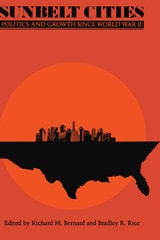
Sunbelt Cities
Politics and Growth since World War IIEdited by Richard M. Bernard and Bradley R. Rice
University of Texas Press, 1983
Between 1940 and 1980, the Sunbelt region of the United States grew in population by 112 percent, while the older, graying Northeast and Midwest together grew by only 42 percent. Phoenix expanded by an astonishing 1,138 percent. San Diego, Houston, Dallas–Fort Worth, Tampa, Miami, and Atlanta quadrupled in size. Even a Sunbelt laggard such as New Orleans more than doubled its population.
Sunbelt Cities brings together a collection of outstanding original essays on the growth and late-twentieth-century political development of the major metropolitan areas below the thirty-seventh parallel. The cities surveyed are Albuquerque, Atlanta, Dallas–Fort Worth, Houston, Los Angeles, Miami, New Orleans, Oklahoma City, Phoenix, San Antonio, San Diego, and Tampa. Each author examines the economic and social causes of postwar population growth in the city under consideration and the resulting changes in its political climate. Major causes of growth such as changing economic conditions, industrial recruitment, lifestyle preferences, and climate are discussed. Particular attention is paid to the role of the federal government, especially the Pentagon, in encouraging development in the Sunbelt. Describing characteristic political developments of many of these cities, the authors note shifting political alliances, the ouster of machines and business elites from political power, and the rise of minority and neighborhood groups in local politics.
Sunbelt Cities is the first full-scale scholarly examination of the region popularly conceived as the Sunbelt. As one of the first works to thoroughly examine a wide range of cities within the region, it has served as a standard reference on the area for some time.
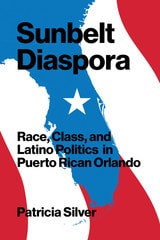
Sunbelt Diaspora
Race, Class, and Latino Politics in Puerto Rican OrlandoBy Patricia Silver
University of Texas Press, 2020
2021 — Silver Medal, Raul Yzaguirre Best Political/Current Affairs Book – International Latino Book Awards, Latino Literacy Now
An in-depth look at an emerging Latino presence in Orlando, Florida, where Puerto Ricans and others navigate differences of race, class, and place of origin in their struggle for social, economic, and political belonging.
Puerto Ricans make up half of Orlando-area Latinos, arriving from Puerto Rico as well as from other long-established diaspora communities to a place where Latino politics has long been about Cubans in Miami. Together with other Latinos from multiple places, Puerto Ricans bring diverse experiences of race and class to this Sunbelt city. Tracing the emergence of the Puerto Rican and Latino presence in Orlando from the 1940s through an ethnographic moment of twenty-first-century electoral redistricting, Sunbelt Diaspora provides a timely prism for viewing how differences of race, class, and place play out in struggles to claim political, social, and economic ground for Latinos.
Drawing on over a decade of ethnographic, oral history, and archival research, Patricia Silver situates her findings in Orlando’s historically black-white racial landscape, post-1960s claims to “color-blindness,” and neoliberal celebrations of individualism. Through the voices of diverse participants, Silver brings anthropological attention to the question of how social difference affects collective identification and political practice. Sunbelt Diaspora asks what constitutes community and how criteria for membership and legitimate representation are negotiated.

Sundae Best
History of Soda FountainsAnne Cooper Funderburg
University of Wisconsin Press, 2001
The evolution of the soda fountain reflected momentous developments in American history— urbanization, the temperance movement and Prohibition, the Great Depression, technical progress, the decline of Main Street, and the rise of car culture and growth of suburbia. The fountain’s evolution was also closely tied to trends in retailing, food service, lifestyles, and the decorative arts.

Sundancers and River Demons
Essays on Landscape and RitualConger Beasley Jr.
University of Arkansas Press, 1990

Sundanese Print Culture and Modernity in 19th Century West Java
Mikihiro Moriyama
National University of Singapore Press, 2005
Starting with the 'discovery' of Sundanese by Europeans in the early 19th century, Mikihiro Moriyama follows the developments in the ensuing century when a small group of Dutch scholars and colonial officials reshaped the language and its literature over the next one hundred years. Schools taught Sundanese, and printed materials based on western concepts began to influence indigenous writing and oral tradition. The imposition of European standards of literary aesthetics shaped a modernity that rejected traditional knowledge in favour of rational and empirical paradigms. Interest in traditional poetry and its mythologies declined, and new forms of prose, including novels, captured the attention of the reading public. These materials promoted useful knowledge and morality, and encouraged deference and loyalty towards colonial authority.
Early in the 20th century, the establishment of the Commissie voor de Inlandsche School- en Volkslectuur (Committee for Indigenous Schoolbooks and Popular Reading Books), a government-subsidised institution, provided the growing number of literate people in the Indies with 'good' and 'appropriate' reading materials. Its development marked the end of an era when Sundanese writing competed with Western-style schools and publications, and signalled the triumph of the new colonial modernity.
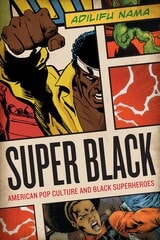
Super Black
American Pop Culture and Black SuperheroesBy Adilifu Nama
University of Texas Press, 2011
Winner, American Book Award, Before Columbus Foundation, 2012
Super Black places the appearance of black superheroes alongside broad and sweeping cultural trends in American politics and pop culture, which reveals how black superheroes are not disposable pop products, but rather a fascinating racial phenomenon through which futuristic expressions and fantastic visions of black racial identity and symbolic political meaning are presented. Adilifu Nama sees the value—and finds new avenues for exploring racial identity—in black superheroes who are often dismissed as sidekicks, imitators of established white heroes, or are accused of having no role outside of blaxploitation film contexts.
Nama examines seminal black comic book superheroes such as Black Panther, Black Lightning, Storm, Luke Cage, Blade, the Falcon, Nubia, and others, some of whom also appear on the small and large screens, as well as how the imaginary black superhero has come to life in the image of President Barack Obama. Super Black explores how black superheroes are a powerful source of racial meaning, narrative, and imagination in American society that express a myriad of racial assumptions, political perspectives, and fantastic (re)imaginings of black identity. The book also demonstrates how these figures overtly represent or implicitly signify social discourse and accepted wisdom concerning notions of racial reciprocity, equality, forgiveness, and ultimately, racial justice.

SuperVision
An Introduction to the Surveillance SocietyJohn Gilliom and Torin Monahan
University of Chicago Press, 2012
We live in a surveillance society. Anyone who uses a credit card, cell phone, or even search engines to navigate the Web is being monitored and assessed—and often in ways that are imperceptible to us. The first general introduction to the growing field of surveillance studies, SuperVision uses examples drawn from everyday technologies to show how surveillance is used, who is using it, and how it affects our world.
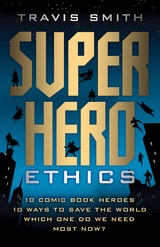
Superhero Ethics
10 Comic Book Heroes; 10 Ways to Save the World; Which One Do We Need Most Now?Travis Smith
Templeton Press, 2018
Although these outlandish figures—in their capes, masks, and tights, with their unbelievable origins and preternatural powers—are often dismissed as juvenile amusements, they really are profound metaphors for different approaches to shaping one’s character and facing the challenges of life.
But, given the choice, which superhero should we follow today? Who is most worthy of our admiration? Whose goals are most noble? Whose ethics should we strive to emulate?
To decide, Travis Smith takes ten top superheroes and pits them one against another, chapter by chapter. The hero who better exemplifies how we ought to live advances to the final round. By the end of the book, a single superhero emerges victorious and is crowned most exemplary for our times.
How, then, shall we live?
- How can we overcome our beastly nature and preserve our humanity? (The Hulk vs. Wolverine)
- How far can we rely on our willpower and imagination to improve the human condition? (Iron Man vs. Green Lantern)
- What limits must we observe when protecting our neighborhood from crime and corruption? (Batman vs. Spider-Man)
- Will the pursuit of an active life or a contemplative life bring us true fulfillment? (Captain America vs. Mr. Fantastic)
- Should we put our faith in proven tradition or in modern progress to achieve a harmonious society? (Thor vs. Superman)

Superhero Thought Experiments
Comic Book PhilosophyChris Gavaler and Nathaniel Goldberg
University of Iowa Press, 2019

Superheroes and Contemporary Cultures
Cross-Medial Explorations and Societal PerspectivesEdited by Torsten Caeners and Danny Graydon
Intellect Books, 2026
Offering a global and interdisciplinary perspective on the superhero genre across comics, television, and film, this book presents a diverse range of contemporary superhero scholarship. It combines close readings of iconic characters like Batman, Iron Man, and The Watchmen with critical analysis of broader cultural and societal discourses.
The volume explores how superheroes reflect and problematize ideology, the military-industrial complex, and notions of public and private responsibility. Key themes include identity construction through secret identities and masking, as well as cultural and personal grief and trauma in relation to race and politics. Designed for students, scholars, and fans alike, this work reveals the enduring mainstream appeal of superheroes and their complex intersections with global popular culture.

Supermadre
Women in Politics in Latin AmericaBy Elsa M. Chaney
University of Texas Press, 1979
The title of this book, Supermadre, is ironic. It means, not that women have begun to exercise real power in Latin American political life, but that their participation is mostly confined to roles that are extensions of their roles as mothers—health, education, welfare, for example—and then only on the lower levels of policy-making.
Elsa Chaney begins her study with an examination of various attempts to explain women's virtual absence from decision-making councils not only in Latin America but also world-wide, concluding that their motherhood role has had the profoundest effect on the nature of their political activities. She then analyzes the images and realities of women in Latin American society from colonial times to the present.
The remainder of the book is a detailed study of women in politics and government in Latin America, with emphasis on the contrasting cases of Peru and Chile. In conclusion, Chaney suggests that women will make only slow progress toward full participation in public life until they themselves stop seeing their role in politics as that of the supermadre.
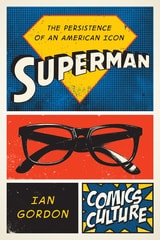
Superman
The Persistence of an American IconGordon, Ian
Rutgers University Press, 2017
Superman: Persistence of an American Icon examines the many iterations of the character in comic books, comic strips, radio series, movie serials, feature films, television shows, animation, toys, and collectibles over the past eight decades. Demonstrating how Superman’s iconic popularity cannot be attributed to any single creator or text, comics expert Ian Gordon embarks on a deeper consideration of cultural mythmaking as a collective and dynamic process. He also outlines the often contentious relationships between the various parties who have contributed to the Superman mythos, including corporate executives, comics writers, artists, nostalgic commentators, and collectors.
Armed with an encyclopedic knowledge of Superman’s appearances in comics and other media, Gordon also digs into comics archives to reveal the prominent role that fans have played in remembering, interpreting, and reimagining Superman’s iconography. Gordon considers how comics, film, and TV producers have taken advantage of fan engagement and nostalgia when selling Superman products. Investigating a character who is equally an icon of American culture, fan culture, and consumer culture, Superman thus offers a provocative analysis of mythmaking in the modern era.
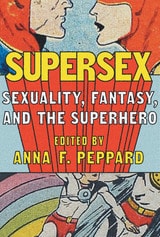
Supersex
Sexuality, Fantasy, and the SuperheroEdited by Anna F. Peppard
University of Texas Press, 2020
2021 Comic Studies Society Prize for Edited Collection
From Superman and Batman to the X-Men and Young Avengers, Supersex interrogates the relationship between heroism and sexuality, shedding new light on our fantasies of both.
From Superman, created in 1938, to the transmedia DC and Marvel universes of today, superheroes have always been sexy. And their sexiness has always been controversial, inspiring censorship and moral panic. Yet though it has inspired jokes and innuendos, accusations of moral depravity, and sporadic academic discourse, the topic of superhero sexuality is like superhero sexuality itself—seemingly obvious yet conspicuously absent. Supersex: Sexuality, Fantasy, and the Superhero is the first scholarly book specifically devoted to unpacking the superhero genre’s complicated relationship with sexuality.
Exploring sexual themes and imagery within mainstream comic books, television shows, and films as well as independent and explicitly pornographic productions catering to various orientations and kinks, Supersex offers a fresh—and lascivious—perspective on the superhero genre’s historical and contemporary popularity. Across fourteen essays touching on Superman, Batman, the X-Men, and many others, Anna F. Peppard and her contributors present superhero sexuality as both dangerously exciting and excitingly dangerous, encapsulating the superhero genre’s worst impulses and its most productively rebellious ones. Supersex argues that sex is at the heart of our fascination with superheroes, even—and sometimes especially—when the capes and tights stay on.
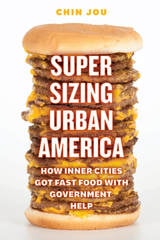
Supersizing Urban America
How Inner Cities Got Fast Food with Government HelpChin Jou
University of Chicago Press, 2017
What doesn’t get mentioned in all this? The fact that the federal government helped create the obesity crisis in the first place—especially where it is strikingly acute, among urban African-American communities. Supersizing Urban America reveals the little-known story of how the U.S. government got into the business of encouraging fast food in inner cities, with unforeseen consequences we are only beginning to understand. Chin Jou begins her story in the late 1960s, when predominantly African-American neighborhoods went from having no fast food chain restaurants to being littered with them. She uncovers the federal policies that have helped to subsidize that expansion, including loan guarantees to fast food franchisees, programs intended to promote minority entrepreneurship, and urban revitalization initiatives. During this time, fast food companies also began to relentlessly market to urban African-American consumers. An unintended consequence of these developments was that low-income minority communities were disproportionately affected by the obesity epidemic.
In the first book about the U.S. government’s problematic role in promoting fast food in inner-city America, Jou tells a riveting story of the food industry, obesity, and race relations in America that is essential to understanding health and obesity in contemporary urban America.

Superstorm Sandy
The Inevitable Destruction and Reconstruction of the Jersey ShoreBates, Diane C
Rutgers University Press, 2015
Diane C. Bates offers a wide-ranging look at the Jersey Shore both before and after Sandy, examining the many factors—such as cultural attachment, tourism revenues, and governmental regulation—that combined to create a highly vulnerable coastal region. She explains why the Shore is so important to New Jerseyans, acting as a key cultural touchstone in a state that lacks a central city or even a sports team to build a shared identity among the state’s residents. She analyzes post-Sandy narratives about the Jersey Shore that trumpeted the dominance of human ingenuity over nature (such as the state’s “Stronger than the Storm” advertising campaign) or proclaimed a therapeutic community (“Jersey Strong”)—narratives rooted in emotion and iconography, waylaying any thought of the near-certainty of future storms. The book also examines local business owners, politicians, real estate developers, and residents who have vested interests in the region, explaining why the Shore was developed intensively prior to Sandy, and why restoration became an imperative in the post-storm period.
Engagingly written and insightful, Superstorm Sandy highlights the elements that compounded the disaster on the Shore, providing a framework for understanding such catastrophes and preventing them in the future.

Supervillains
The Significance of Evil in Superhero ComicsNao Tomabechi
Rutgers University Press, 2025
Bringing together different approaches and critical perspectives across disciplines, author Nao Tomabechi troubles overly hero-centered works in comics studies to reconsider the modern American myths of the superheroes. Considering the likes of Lex Luthor, the Joker, Catwoman, Harley Quinn, Loki, Venom, and more, Supervillians explores themes such as gender and sexuality, disability, and many forms of Otherness in relation to the notion of evil as it appears in the superhero genre. The book investigates how supervillains uphold and, at times, trouble dominant ideals expressed by the heroism of our superheroes.
Supplement to the Handbook of Middle American Indians, Volume 1
ArchaeologyVictoria Reifler Bricker, general editor; Jeremy A. Sabloff, volume editor
University of Texas Press, 1982
The sixteen-volume Handbook of Middle American Indians, completed in 1976, has been acclaimed the world over as the most valuable resource ever produced for those involved in the study of Mesoamerica. When it was determined in 1978 that the Handbook should be updated periodically, Victoria Reifler Bricker, well-known cultural anthropologist, was selected to be series editor.
This first volume of the Supplement is devoted to the dramatic changes that have taken place in the field of archaeology. The volume editor, Jeremy A. Sabloff, has gathered together detailed reports from the directors of many of the most significant archaeological projects of the mid-twentieth century in Mesoamerica, along with discussions of three topics of general interest (the rise of sedentary life, the evolution of complex culture, and the rise of cities).
Supplement to the Handbook of Middle American Indians, Volume 3
LiteraturesVictoria R. Bricker, general editor<br>Munro S. Edmonson, volume editor
University of Texas Press, 1985
The sixteen-volume Handbook of Middle American Indians, completed in 1976, has been acclaimed the world over as the single most valuable resource ever produced for those involved in the study of Mesoamerica. When it was determined in 1978 that the Handbook should be updated periodically, Victoria Reifler Bricker, well-known cultural anthropologist, was elected to be general editor.
This third volume of the Supplement is devoted to the aboriginal literatures of Mesoamerica, a topic receiving little attention in the original Handbook. According to the general editor, "This volume does more than supplement and update the coverage of Middle American Indian literatures in the Handbook. It breaks new ground by defining the parameters of a new interdisciplinary field in Middle American Indian studies."
The aim of the present volume is to consider literature from five Middle American Indian languages: Nahuatl, Yucatecan Maya, Quiche, Tzotzil, and Chorti. The first three literatures are well documented for both the Classical and Modern variants of their languages and are obvious candidates for inclusion in this volume. The literatures of Tzotzil and Chorti, on the other hand, are oral, and heretofore little has been written of their genres and styles.
Taken together, these essays represent a substantial contribution to the Handbook series, with the volume editor's introduction placing in geographic perspective the five literatures chosen as representative of the Middle American literary tradition.
Supplement to the Handbook of Middle American Indians, Volume 4
EthnohistoryVictoria R. Bricker, general editor<br>Ronald Spores, volume editor
University of Texas Press, 1986
The sixteen-volume Handbook of Middle American Indians, completed in 1976, has been acclaimed the world over as the single most valuable resource ever produced for those involved in the study of Mesoamerica. When it was determined in 1978 that the Handbook should be updated periodically, Victoria Reifler Bricker, well-known cultural anthropologist, was elected to be general editor.
This fourth volume of the Supplement is devoted to colonial ethnohistory. Four of the eleven chapters review research and ethnohistorical resources for Guatemala, South Yucatan, North Yucatan, and Oaxaca, areas that received less attention than the central Mexican area in the original Guide to Ethnohistorical Sources (HMAI vols. 12-15).
Six substantive and problem-oriented studies cover the use of colonial texts in the study of pre-colonial Mayan languages; political and economic organization in the valleys of Mexico, Puebla-Tlaxcala, and Morelos; urban-rural relations in the Basin of Mexico; kinship and social organization in colonial Tenochtitlan; tlamemes and transport in colonial central Mexico; and land tenure and titles in central Mexico as reflected in colonial codices.
Supplement to the Handbook of Middle American Indians, Volume 5
EpigraphyEdited by Victoria Reifler Bricker
University of Texas Press, 1991
In 1981, under the editorship of Victoria Bricker, UT Press began to issue supplemental volumes to the classic sixteen-volume work Handbook of Middle American Indians. These supplements are intended to update scholarship in various areas and to cover topics of current interest that may not have been included in the original Handbook.
This volume is designed to recognize the important role that epigraphy has come to play in Middle American scholarship and to document significant achievements in three areas: dynastic history, phonetic decipherment, and calendrics. The book covers four of the major pre-Columbian scripts in the region (Zapotec, Mixtec, Aztec, and Maya) and one that is relatively unknown (Tlapanec).
Supplement to the Handbook of Middle American Indians, Volume 6
EthnologyVictoria Reifler Bricker, general editor; John D. Monaghan, volume editor, with the assistance of Barbara W. Edmonson
University of Texas Press, 2000
In 1981, UT Press began to issue supplemental volumes to the classic sixteen-volume work, Handbook of Middle American Indians. These supplements are intended to update scholarship in various areas and to cover topics of current interest. Supplements devoted to Archaeology, Linguistics, Literatures, Ethnohistory, and Epigraphy have appeared to date.
In this Ethnology supplement, anthropologists who have carried out long-term fieldwork among indigenous people review the ethnographic literature in the various regions of Middle America and discuss the theoretical and methodological orientations that have framed the work of areal scholars over the last several decades. They examine how research agendas have developed in relationship to broader interests in the field and the ways in which the anthropology of the region has responded to the sociopolitical and economic policies of Mexico and Guatemala. Most importantly, they focus on the changing conditions of life of the indigenous peoples of Mesoamerica. This volume thus offers a comprehensive picture of both the indigenous populations and developments in the anthropology of the region over the last thirty years.

Suq
Geertz on the MarketClifford Geertz
HAU, 2022
Originally published in 1979, Clifford Geertz’s essay on the Moroccan bazaar is a classic ethnographic account of the interplay of economic, social, and religious lives in the bustle of transaction. Drawing on years of fieldwork in the Middle Atlas town of Sefrou, Geertz explores how actors from diverse backgrounds assess the worth and meaning of other people’s wares, words, and ways of doing business. He shows how the search for market information, so central to the theorization of markets by economists, is here based on careful appraisals of social relations, embedded in understandings of the broader institutional environment of the market town and its hinterlands. With a richness of insights procured for generations of readers, Geertz’s essay on the sūq is a model of and for the craft of ethnographic theory. Long out of print, it is republished here in a stand-alone edition introduced by Lawrence Rosen.

Surface Encounters
Screen Materials and Film CultureAndrea J. Kelley
University of Illinois Press, 2027
Kelley expands film history into homes, parks, and outdoor spaces to reveal that ordinary screen materials bring with them long histories tied to labor, race, gender, and industry. As she shows, when people project films onto these surfaces, their histories impact the meaning of the viewing experience. Kelley draws on archival research, film analysis, and examples like backyard movie nights and COVID-era outdoor screenings to focus on how overlooked elements affect our understanding of spectatorship, exhibition, and media culture.
An evocative look at a popular experience, Surface Encounters shows that movie screens matter because of what they are made of and the ways people encounter them in everyday places.

Surface Relations
Queer Forms of Asian American InscrutabilityVivian L. Huang
Duke University Press, 2022

Surfer Girls in the New World Order
Krista Comer
Duke University Press, 2010

Surgery Junkies
Wellness and Pathology in Cosmetic CulturePitts-Taylor, Victoria
Rutgers University Press, 2007

Surgical Consent
Bioethics and Cochlear ImplantationLinda Komesaroff
Gallaudet University Press, 2007
Drawing on current research, this volume presents the varying reactions around the globe to the high rate of implantation. These views contrast sharply with the medical perspective of deafness overwhelmingly promoted through the media and by the cochlear implantation industry. At the same time, the contributors aim to disrupt the binaries that have long dominated the field of deafness — speech versus sign, instruction through speech and sign systems versus bilingual education, and medical intervention versus cultural membership in the Deaf community.
Surgical Consent begins and ends with the voices of Deaf people. Their articulate and, at times, raw insights clearly delineate the issues of power, positioning, and minority-majority group relations that are inherent in the dominant hearing culture’s understanding of diversity and globalization.
Surplus Citizens
Struggle and Nationalism in the Greek CrisisDimitra Kotouza
Pluto Press, 2018
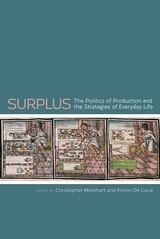
Surplus
The Politics of Production and the Strategies of Everyday LifeChristopher T. Morehart
University Press of Colorado, 2015
The concept of surplus captures the politics of production and also conveys the active material means by which people develop the strategies to navigate everyday life. Surplus: The Politics of Production and the Strategies of Everyday Life examines how surpluses affected ancient economies, governments, and households in civilizations across Mesoamerica, the Southwest United States, the Andes, Northern Europe, West Africa, Mesopotamia, and eastern Asia.
A hallmark of archaeological research on sociopolitical complexity, surplus is central to theories of political inequality and institutional finance. This book investigates surplus as a macro-scalar process on which states or other complex political formations depend and considers how past people—differentially positioned based on age, class, gender, ethnicity, role, and goal—produced, modified, and mobilized their social and physical worlds.
Placing the concept of surplus at the forefront of archaeological discussions on production, consumption, power, strategy, and change, this volume reaches beyond conventional ways of thinking about top-down or bottom-up models and offers a comparative framework to examine surplus, generating new questions and methodologies to elucidate the social and political economies of the past.
Contributors include Douglas J. Bolender, James A. Brown, Cathy L. Costin, Kristin De Lucia, Timothy Earle, John E. Kelly, Heather M. L. Miller, Christopher R. Moore, Christopher T. Morehart, Neil L. Norman, Ann B. Stahl, Victor D. Thompson, T. L. Thurston, and E. Christian Wells.
Surreal Geographies
A New History of Holocaust ConsciousnessKathryn L. Brackney
University of Wisconsin Press, 2024
Brackney offers a new look at familiar works by authors and artists such as Claude Lanzmann, W. G. Sebald, and Paul Celan, while making surprising connections to contemporary scholars like Timothy Snyder and Donna Haraway, and events such as the Space Race. In the process, she maps out a decades-long process through which transnational conventions of mourning have emerged in Western Europe, North America, and Israel, functioning to constitute Jewish victimization as “grievable life.” Ultimately, she shows how the Holocaust has developed into a figure for the destabilization and reformulation of the category of humanity and the problem of mourning across difference.
Surrender
Feminist Rhetoric and Ethics in Love and IllnessJessica Restaino
Southern Illinois University Press, 2019
One of Library Journal's Top 20 Best-Selling Language Titles of 2019
In an ethnographic study spanning the last years of research collaborator and friend Susan Lundy Maute’s life with terminal breast cancer, author Jessica Restaino argues the interpretative challenges posed by research and writing amid illness and intimacy demand a methodological break from accepted genres and established practices of knowledge making. Restaino searches their experiences—recorded in interviews, informal writings, and correspondence—to discover a rhetoric of love and illness. She encourages a synthesis of methods and the acceptance of a reversal of roles—researcher and researched, writer and written-about—and emphasizes the relevancy of methodological diversity, the necessity of the personal, and the analytical richness of unpredictability and risk in being who we are in our scholarship at any given moment.
Bringing together critical analysis, qualitative-style research methods, close reading, Surrender: Feminist Rhetoric and Ethics inLove and Illness resists traditional ideas about academic writing and invites others to pursue collaborations that subvert accepted approaches to representation, textual production, and subjectivity. Restaino demonstrates a way of writing—the rendering of the academic text itself—that suggests how we do our work has resonance for what we produce. She offers framing questions for use by others interested in doing similar kinds of scholarship that may frighten, overwhelm, or confound. This book deepens our understanding of subjectivity and the gains made by feminist resistance to conventional concepts of objectivity in research collaborations.

Surrogate Humanity
Race, Robots, and the Politics of Technological FuturesNeda Atanasoski and Kalindi Vora
Duke University Press, 2019

Surveillance in the Time of Insecurity
Monahan, Torin
Rutgers University Press, 2010
Surveillance in the Time of Insecurity fuses advanced theoretical accounts of state power and neoliberalism with original research from the social settings in which insecurity dynamics play out in the new century. Torin Monahan explores the counterterrorism-themed show 24, Rapture fiction, traffic control centers, security conferences, public housing, and gated communities, and examines how each manifests complex relationships of inequality, insecurity, and surveillance. Alleviating insecurity requires that we confront its mythic dimensions, the politics inherent in new configurations of security provision, and the structural obstacles to achieving equality in societies.

Survey Measurements
Techniques, Data Quality and Sources of ErrorEdited by Uwe Engel
Campus Verlag, 2015
Survey Research in the Social Sciences
Charles Y. Glock
Russell Sage Foundation, 1967

Surveying Subjective Phenomena
Charles Turner
Russell Sage Foundation, 1984

Surveying Subjective Phenomena
Charles Turner
Russell Sage Foundation, 1984

Surveying Subjective Phenomena
Charles Turner
Russell Sage Foundation, 1984
Surveying The Archaeology Of Northwest Mexico
Gilliam E Newell
University of Utah Press, 2003
Archaeology in the Southwest is increasingly directing its attention south of the international border as it becomes clear that a picture of the pre-hispanic Southwest is incomplete without taking the Mexican Northwest into account.
Surveying the Archaeology of Northwest Mexico presents an overview of recent work in Sonora and Chihuahua, comprising a sort of professional tour of the area. The chapters offer fresh insights into the formation of centers such as Paquimé, Cerro de Trincheras, and the Rio Sonora cabaceras. Contributors explore relations between these centers, individual internal organization of the various identifiable polities, and the relation of the whole northwest Mexican region to better-known adjacent ones. The volume underscores that northwest Mexico was not a dependent hinterland but was inhabited by many independent groups throughout prehistory.

Survival Arts of the Primitive Paiutes
Margaret M. Wheat
University of Nevada Press, 1977
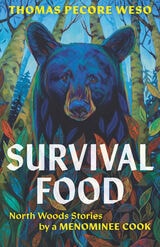
Survival Food
North Woods Stories by a Menominee CookThomas Pecore Weso
Wisconsin Historical Society Press, 2023
In these coming-of-age tales set on the Menominee Indian Reservation of the 1980s and 1990s, Thomas Pecore Weso explores the interrelated nature of meals and memories. As he puts it, “I cannot separate foods from the moments in my life when I first tasted them.” Weso’s stories recall the foods that influenced his youth in northern Wisconsin: subsistence meals from hunted, fished, and gathered sources; the culinary traditions of the German, Polish, and Swedish settler descendants in the area; and the commodity foods distributed by the government—like canned pork, dried beans, and powdered eggs—that made up the bulk of his family’s pantry. His mom called this “survival food.”
These stories from the author’s teen and tween years—some serious, some laugh-out-loud funny—will take readers from Catholic schoolyards to Native foot trails to North Woods bowling alleys, while providing Weso’s perspective on the political currents of the era. The book also contains dozens of recipes, from turtle soup and gray squirrel stew to twice-baked cheesy potatoes. This follow-up to Weso’s Good Seeds: A Menominee Indian Food Memoir is a hybrid of modern foodways, Indigenous history, and creative nonfiction from a singular storyteller.
2024 Wisconsin Library Association Outstanding Achievement Award
2024 PEN Oakland Josephine Miles Award for Excellence
Silver winner of the 2023 Midwest Book Award for Cookbooks/Crafts/Hobbies
Thomas Pecore Weso’s Survival Food was selected by the Wisconsin Center for the Book as the Wisconsin entry in the “Great Reads from Great Places” program of the Library of Congress.
“This book is not only about survival food, but about the singular beauty, creativity, and fortitude that comes out of that survival.”
—Chef Sean Sherman, author, The Sioux Chef’s Indigenous Kitchen
“Survival Food is interesting because it’s one part cookbook, three parts memoir, one part history, and one part multidisciplinary exploration of its setting, northern Wisconsin."
—James Norton, The Cookbook Test
“Nothing brings people together like good food and good stories. There’s an abundance of both in Thomas Pecore Weso’s latest memoir. As Weso attests, food can bring back happy, loving memories of times that were far from happy. Even a tray of funeral sandwiches brings a kind of comfort. This is a wonderful, honest portrait of northeastern Wisconsin, enlightening even to those of us who call this area home.”
—Jared Santek, Founder & Artistic Director, Write On Door County
“Survival Food provides ample nourishment for the mind and body. . . . The stories, told with humor and affection, are complemented by recipes ranging from mouth-watering instructions for cooking wild asparagus to ever-so-interesting advice for preparing bear stew.”
—Lucille Lang Day, author of Birds of San Pancho and Other Poems of Place and coeditor of Red Indian Road West: Native American Poetry from California
“His grandmother cooked according to Native traditions; his mother, ‘a nontraditional college student during my teens,’ resorted to instant meals. His grandfather was town constable and days spent with him brought Weso to the meatloaf, sausage and sauerkraut of German and Polish neighbors. Uncle Buddy’s flash car brings buckwheat pancakes to Weso’s mind, and he lived for a time near Cheese Box Curve—so called after a truck hauling dairy products overturned. Weso includes a few recipes, but mostly, Survival Food is an entertaining look back at life in Wisconsin’s rural north.”
—David Luhrssen, Shepherd Express
“Survival Food: North Woods Stories by a Menominee Cook by Thomas Pecore Weso is a posthumous sequel to his celebrated collection of family stories, Good Seeds: A Menominee Food Memoir. . . . Rich with captivating tales that include driving a convertible on logging roads, agreeing on terms before throwing eggs at passing cars, and his grandmother’s brief stay in a jailhouse she’d later purchase, Weso’s entries offer readers catharsis—demonstrating how to laugh, boast, debate, eat, mourn, and heal.”
—Ryan Winn, College of Menominee Nation, Tribal College Journal
Survival Food
North Woods Stories by a Menominee CookThomas Pecore Weso
Wisconsin Historical Society Press, 2025
In these coming-of-age tales set on the Menominee Indian Reservation of the 1980s and 1990s, Thomas Pecore Weso explores the interrelated nature of meals and memories. As he puts it, “I cannot separate foods from the moments in my life when I first tasted them.” Weso’s stories recall the foods that influenced his youth in northern Wisconsin: subsistence meals from hunted, fished, and gathered sources; the culinary traditions of the German, Polish, and Swedish settler descendants in the area; and the commodity foods distributed by the government—like canned pork, dried beans, and powdered eggs—that made up the bulk of his family’s pantry. His mom called this “survival food.”
These stories from the author’s teen and tween years—some serious, some laugh-out-loud funny—will take readers from Catholic schoolyards to Native foot trails to North Woods bowling alleys, while providing Weso’s perspective on the political currents of the era. The book also contains dozens of recipes, from turtle soup and gray squirrel stew to twice-baked cheesy potatoes. This follow-up to Weso’s Good Seeds: A Menominee Indian Food Memoir is a hybrid of modern foodways, Indigenous history, and creative nonfiction from a singular storyteller.
2024 Wisconsin Library Association Outstanding Achievement Award
2024 PEN Oakland Josephine Miles Award for Excellence
Silver winner of the 2023 Midwest Book Award for Cookbooks/Crafts/Hobbies
Thomas Pecore Weso’s Survival Food was selected by the Wisconsin Center for the Book as the Wisconsin entry in the “Great Reads from Great Places” program of the Library of Congress.
“This book is not only about survival food, but about the singular beauty, creativity, and fortitude that comes out of that survival.”
—Chef Sean Sherman, author, The Sioux Chef’s Indigenous Kitchen
“Survival Food is interesting because it’s one part cookbook, three parts memoir, one part history, and one part multidisciplinary exploration of its setting, northern Wisconsin."
—James Norton, The Cookbook Test
“Nothing brings people together like good food and good stories. There’s an abundance of both in Thomas Pecore Weso’s latest memoir. As Weso attests, food can bring back happy, loving memories of times that were far from happy. Even a tray of funeral sandwiches brings a kind of comfort. This is a wonderful, honest portrait of northeastern Wisconsin, enlightening even to those of us who call this area home.”
—Jared Santek, Founder & Artistic Director, Write On Door County
“Survival Food provides ample nourishment for the mind and body. . . . The stories, told with humor and affection, are complemented by recipes ranging from mouth-watering instructions for cooking wild asparagus to ever-so-interesting advice for preparing bear stew.”
—Lucille Lang Day, author of Birds of San Pancho and Other Poems of Place and coeditor of Red Indian Road West: Native American Poetry from California
“His grandmother cooked according to Native traditions; his mother, ‘a nontraditional college student during my teens,’ resorted to instant meals. His grandfather was town constable and days spent with him brought Weso to the meatloaf, sausage and sauerkraut of German and Polish neighbors. Uncle Buddy’s flash car brings buckwheat pancakes to Weso’s mind, and he lived for a time near Cheese Box Curve—so called after a truck hauling dairy products overturned. Weso includes a few recipes, but mostly, Survival Food is an entertaining look back at life in Wisconsin’s rural north.”
—David Luhrssen, Shepherd Express
“Survival Food: North Woods Stories by a Menominee Cook by Thomas Pecore Weso is a posthumous sequel to his celebrated collection of family stories, Good Seeds: A Menominee Food Memoir. . . . Rich with captivating tales that include driving a convertible on logging roads, agreeing on terms before throwing eggs at passing cars, and his grandmother’s brief stay in a jailhouse she’d later purchase, Weso’s entries offer readers catharsis—demonstrating how to laugh, boast, debate, eat, mourn, and heal.”
—Ryan Winn, College of Menominee Nation, Tribal College Journal
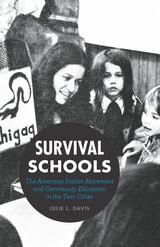
Survival Schools
The American Indian Movement and Community Education in the Twin CitiesJulie L. Davis
University of Minnesota Press, 2013
In the late 1960s, Indian families in Minneapolis and St. Paul were under siege. Clyde Bellecourt remembers, “We were losing our children during this time; juvenile courts were sweeping our children up, and they were fostering them out, and sometimes whole families were being broken up.” In 1972, motivated by prejudice in the child welfare system and hostility in the public schools, American Indian Movement (AIM) organizers and local Native parents came together to start their own community school. For Pat Bellanger, it was about cultural survival. Though established in a moment of crisis, the school fulfilled a goal that she had worked toward for years: to create an educational system that would enable Native children “never to forget who they were.”
While AIM is best known for its national protests and political demands, the survival schools foreground the movement’s local and regional engagement with issues of language, culture, spirituality, and identity. In telling of the evolution and impact of the Heart of the Earth school in Minneapolis and the Red School House in St. Paul, Julie L. Davis explains how the survival schools emerged out of AIM’s local activism in education, child welfare, and juvenile justice and its efforts to achieve self-determination over urban Indian institutions. The schools provided informal, supportive, culturally relevant learning environments for students who had struggled in the public schools. Survival school classes, for example, were often conducted with students and instructors seated together in a circle, which signified the concept of mutual human respect. Davis reveals how the survival schools contributed to the global movement for Indigenous decolonization as they helped Indian youth and their families to reclaim their cultural identities and build a distinctive Native community.
The story of these schools, unfolding here through the voices of activists, teachers, parents, and students, is also an in-depth history of AIM’s founding and early community organizing in the Twin Cities—and evidence of its long-term effect on Indian people’s lives.