Results by title
28167 books match the query 'History' and 1838 start with s
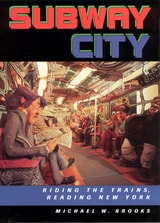
Subway City
Riding the Trains, Reading New YorkBrooks, Michael
Rutgers University Press, 1997
None of the world's great cities is as closely identified with its subway as New York. Its trains provide much more than just rapid transit. They give New Yorkers a powerful symbol of their metropolis, one that they use to express both their hopes and their fears for the urban future.
Subway City explores New York's transit system as both fact and metaphor. Brooks traces the development of the subway from its inception as the newest and most efficient public transportation system to its decline as an overcrowded and dangerous part of city life. The crowded cars gave Harold Lloyd material for comedy, fueled William Randolph Hearst's crusade against the Traction Trust, and convinced Lewis Mumford that the subway was a futile effort to solve the city's problems. Brooks explores films which have dramatized the dangers lurking below ground, and examines the infamous Bernhard Goetz shooting that made the subway a symbol of urban decay. More hopefully, he describes the Metropolitan Transportation Authority's station improvements and ambitious programs for Music Underground, Poetry in Transit, and Arts-in-Transit, as keys to the city's renewal.
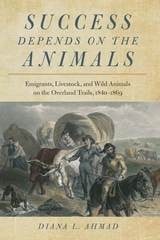
Success Depends on the Animals
Emigrants, Livestock, and Wild Animals on the Overland Trails, 1840–1869Diana L. Ahmad
University of Nevada Press, 2016
Between 1840 and 1869, thousands of people crossed the American continent looking for a new life in the West. Success Depends on the Animals explores the relationships and encounters that these emigrants had with animals, both wild and domestic, as they traveled the Overland Trail. In the longest migration of people in history, the overlanders were accompanied by thousands of work animals such as horses, oxen, mules, and cattle. These travelers also brought dogs and other companion animals, and along the way confronted unknown wild animals.
Ahmad’s study is the first to explore how these emigrants became dependent upon the animals that traveled with them, and how, for some, this dependence influenced a new way of thinking about the human-animal bond. The pioneers learned how to work with the animals and take care of them while on the move. Many had never ridden a horse before, let alone hitched oxen to a wagon. Due to the close working relationship that the emigrants were forced to have with these animals, many befriended the domestic beasts of burden, even attributing human characteristics to them.
Drawing on primary sources such as journals, diaries, and newspaper accounts, Ahmad explores how these new experiences influenced fresh ideas about the role of animals in pioneer life. Scholars and students of western history and animal studies will find this a fascinating and distinctive analysis of an understudied topic.
Success and Failure in Limited War
Information and Strategy in the Korean, Vietnam, Persian Gulf, and Iraq WarsSpencer D. Bakich
University of Chicago Press, 2014
Traditional assessments of wartime strategy focus on the relationship between the military and civilians, but Bakich argues that we must take into account the information flow patterns among top policy makers and all national security organizations. By examining the fate of American military and diplomatic strategy in four limited wars, Bakich demonstrates how not only the availability and quality of information, but also the ways in which information is gathered, managed, analyzed, and used, shape a state’s ability to wield power effectively in dynamic and complex international systems.
Utilizing a range of primary and secondary source materials, Success and Failure in Limited War makes a timely case for the power of information in war, with crucial implications for international relations theory and statecraft.
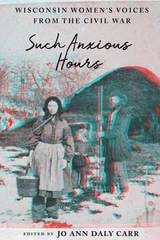
Such Anxious Hours
Wisconsin Women's Voices from the Civil WarJo Ann Daly Carr
University of Wisconsin Press, 2020
In Such Anxious Hours, Jo Ann Daly Carr places this material in historical context, detailing what was happening simultaneously in the nation, state, and local communities. Civil War history enthusiasts will appreciate these enlightening perspectives that demonstrate the variety of experiences in the Midwest during the bloody conflict.

Such Is My Love
A Study of Shakespeare's SonnetsJoseph Pequigney
University of Chicago Press, 1985

Sudden Deaths in St. Louis
Coroner Bias in the Gilded AgeSarah E. Lirley
Southern Illinois University Press, 2024
Honorable Mention, 2025 Society of Midland Authors Award in History!
A social history of death investigations in the urban Midwest
The scene of myriad grisly deaths, late nineteenth-century St. Louis was a hotbed for homicide, suicide, alcoholism, abortion, and workplace accidents. The role of the city’s Gilded Age coroners has not been fully examined, contextualized, or interrogated until now. Sarah E. Lirley investigates the process in which these outcomes were determined, finding coroners’ rulings were not uniform, but rather varied by who was conducting the inquest. These fascinating case studies explore the lives of the deceased, as well as their families, communities, press coverage of the events, and the coroners themselves.
Sudden Deaths in St. Louis is a study of 120 coroners’ inquests conducted between 1875 and 1885. Each chapter analyzes the typical versus the atypical in verdicts of death. At the time, inaccurate findings and cursory investigations fueled criticisms of coroner’s offices for employing poorly trained laymen. The coroners featured in this book had the power to shape public perception of the deceased, and they often relied on preexisting reputations to determine cause of death. For instance, women who worked as prostitutes were likely to be ruled as suicides, whether or not that was actually the case, and women who were respected members of their communities, particularly mothers, frequently received rulings of suicide caused by insanity. Verdicts also depended in part on availability of witnesses, including family members, to determine whether another person could be held liable for the death. Lirley’s book highlights the stories of ordinary men and women whose lives were tragically cut short, and the injustice they received even after death.
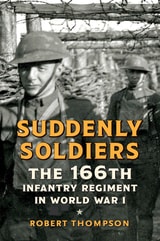
Suddenly Soldiers
The 166th Infantry Regiment in World War IRobert Thompson
Westholme Publishing, 2020
Finalist for the 2021 Army Historical Foundation Distinguished Writing Awards in Unit Histories
Americans Face the Horror of a Modern European War for the First Time
When America entered World War I in April 1917, state National Guard units had never planned to mobilize for this kind of war, and the men who made up the hometown companies of each regiment never imagined that they would be asked to fight in what was then the most savage war in human history—they were “innocents” being thrown into a horrendous European conflagration. Made up of companies from ten Ohio towns, the 166th Infantry Regiment became part of the famous 42nd Division, known as the “Rainbow Division.” They were the third American division to arrive in France, where they fought courageously in the trenches at Lunéville and Baccarat before being a key part of the American effort in the Second Battle of the Marne and the Saint Mihiel and Meuse-Argonne offensives. Despite their initial lack of training in modern warfare and weapons, the 166th Infantry compiled an impressive combat record. However, that record came at a terrible cost, with the regiment suffering over two thousand casualties in just nine months of fighting. While they battled the Germans, these hometown Guardsmen lived in trenches and foxholes for weeks at a time, while subsisting on canned beef and coffee amid near constant rain, deep mud, rats, and body lice that made their lives miserable. Because of poor planning and leadership from higher headquarters, they were often asked to achieve impossible objectives amid withering enemy machine-gun fire without proper logistics or artillery support. Yet, despite these challenges, they would persevere, overcome, and emerge victorious.
Using regimental histories and the letters and diaries of the soldiers who fought in France, Suddenly Soldiers: The 166th Infantry Regiment in World War I by author and historian Robert Thompson tells the compelling story of the young men—“citizen soldiers”—who have always borne the cost of America’s freedom with quiet courage.

Suds Series
Baseball, Beer Wars, and the Summer of '82J. Daniel
University of Missouri Press, 2023
Even nominal baseball fans will enjoy reading about legendary players, teams, and personalities that emerged in the 1982 season: the year Ricky Henderson stole 130 bases; Reggie Jackson led the league in home runs; and Cal Ripken Jr. began his remarkable playing streak. Readers will also enjoy the cultural references, including the Pac-Man craze, a chart-topping album by Rush, and the “Light Beer Wars” waged by Anheuser-Busch and the Miller Brewing Company through a series of humorous TV commercials featuring well-loved professional sports figures.

Suffering For Science
Reason and Sacrifice in Modern AmericaHerzig, Rebecca
Rutgers University Press, 2006
Suffering for Science reveals more than the passion evident in many scientific vocations; it also illuminates a nation's changing understandings of the purposes of suffering, the limits of reason, and the nature of freedom in the aftermath of slavery.
Suffering Made Real
American Science and the Survivors at HiroshimaM. Susan Lindee
University of Chicago Press, 1994
Suffering Made Real is the first comprehensive history of the ABCC's research on how radiation affected the survivors of the atomic bomb. Arguing that Cold War politics and cultural values fundamentally shaped the work of the ABCC, M. Susan Lindee tells the compelling story of a project that raised disturbing questions about the ethical implications of using human subjects in scientific research.
How did the politics of the emerging Cold War affect the scientists' biomedical research and findings? How did the ABCC document and publicly present the effects of radiation? Why did the ABCC refuse to provide medical treatment to the survivors? Through a detailed examination of ABCC policies, archival materials, the minutes of committee meetings, newspaper accounts, and interviews with ABCC scientists, Lindee explores how political and cultural interests were reflected in the day-to-day operations of this controversial research program.
Set against a period of conflicting views of nuclear weapons and nuclear power, Suffering Made Real follows the course of a politically charged research program and reveals in detail how politics and cultural values can shape the conduct, results, and uses of science.
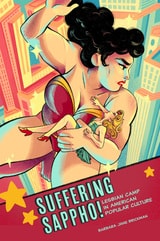
Suffering Sappho!
Lesbian Camp in American Popular CultureBarbara Jane Brickman
Rutgers University Press, 2024
Offering the first major consideration of lesbian camp in American popular culture, Suffering Sappho! traces a larger-than-life lesbian menace across midcentury media forms to propose five prototypical queer icons—the sicko, the monster, the spinster, the Amazon, and the rebel. On the pages of comics and sensational pulp fiction and the dramas of television and drive-in movies, Barbara Jane Brickman discovers evidence not just of campy sexual deviants but of troubling female performers, whose failures could be epic but whose subversive potential could inspire.
Supplemental images of interest related to this title: George and Lomas; Connie Minerva; Cat On Hot Tin; and Beulah and Oriole.


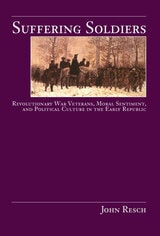
Suffering Soldiers
Revolutionary War Veterans, Moral Sentiment, and Political Culture in the Early RepublicJohn Resch
University of Massachusetts Press, 1999
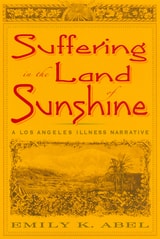
Suffering in the Land of Sunshine
A Los Angeles Illness NarrativeAbel, Emily K.
Rutgers University Press, 2006
The history of medicine is much more than the story of doctors, nurses, and hospitals. Seeking to understand the patient’s perspective, historians scour the archives, searching for rare personal accounts. Bringing together a trove of more than 400 family letters by Charles Dwight Willard, Suffering in the Land of Sunshine provides a unique window into the experience of sickness.
A Los Angeles civic leader at the turn of the twentieth century, Willard is well known to historians of the West, but exclusively for his public life as a booster and reformer. Willard’s evocative story offers fresh insights into several critical issues, including how concepts of gender, class, and race shape patients’ representations of their illness, how expectations of cure affect the illness experience, how different cultures constrain the coping strategies of the sick, and why robust health is such an exalted value in certain societies.

Suffrage and citizenship in Ireland, 1912-18
Senia Pašeta
University of London Press, 2019

Suffragettes in the Land of the Tsars
Jessie Kenney’s Diary of Revolutionary RussiaLee Farrow
Central European University Press, 2026
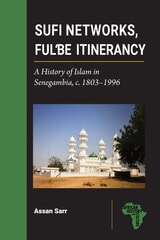
Sufi Networks, Fulbe Itinerancy
A History of Islam in Senegambia, c. 1803–1996Assan Sarr
Michigan State University Press, 2026
This book traces the development and expansion of a network of itinerant Fulbe clerics in southern Senegambia who forged solidarity under the banner of Islam. Beginning with a marabout named Cherno Muhammadu Jallow (c. 1803–1883)—who expanded the Umarian branch of the Tijaniyya sect into remote parts of the region—Assan Sarr demonstrates that some Fulbe groups were not drawn into Islam until the late nineteenth and early twentieth centuries. He argues that by creating a series of villages that served as educational centers during a tumultuous period, the itinerant scholars who are at the heart of this book not only spread Islam throughout the land of the Firdu, Saloum, and parts of the Gambia region but also played a pivotal role in establishing a widely shared Muslim identity among the Fulbe people.
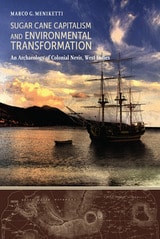
Sugar Cane Capitalism and Environmental Transformation
An Archaeology of Colonial Nevis, West IndiesMarco G. Meniketti
University of Alabama Press, 2015
In this deeply researched and multifaceted study, Marco G. Meniketti demonstrates how the landscape of the small Caribbean island of Nevis preserves and reveals artifacts and evidence of the highly complex and interrelated seventeenth- to nineteenth-century “Atlantic Economy,” comprising early capitalist sugar production, the African slave trade, and European settlement.
Sugar Cane Capitalism and Environmental Transformation is based on twelve seasons of meticulous archaeological field work and documentary research. Although Nevis was once a bustling hub of the British colonial project, the emigration of emancipated slaves and abandonment by European planters left large swathes of Nevis vacant. Reclaimed by forests and undisturbed by later waves of economic development, the island—dotted with fascinating ruins, debris from the sugar industry, windmills, chimneys, and multistoried great house—provided Meniketti with an ideal subject for archaeological inquiry.
Through intensive archaeological and landscape surveys of multiple key plantation sites, Meniketti traces the development of Nevis from its initial European settlement in 1627 to its central role as a British mercantile hub and a laboratory and prototype of capitalist sugar cultivation. His nuanced analysis explains the backdrop of European political and economic rivalries, of which the colonial agro-industrial enterprises were the physical manifestations, and makes telling comparisons with Dutch and French archaeological sites. The work also compares and contrasts the adoption of capitalist modes of sugar production and socialization at wealthy and middling plantation sites.
Supported with a wealth of photos, tables, and maps, Sugar Cane Capitalism and Environmental Transformation offers a vital case study of one island whose environment and archaeological record illuminates the complex webs of Atlantic history.

Sugar and Slavery in Puerto Rico
The Plantation Economy of Ponce, 1800–1850Francisco A. Scarano
University of Wisconsin Press, 1984
This important study of Ponce, a major sugar-producing district in Puerto Rico, examines in detail the processes by which a predominantly peasant economy an society was transformed into a plantation system. Scarano’s work, one of the first full investigations into Puerto Rico’s nineteenth-century economic history, dispels the long-held belief that slavery was an inconsequential factor in this society; indeed, he finds that the new plantation system was fully dependent on African slave labor, and that the initial stimuli for economic change came from immigrants.
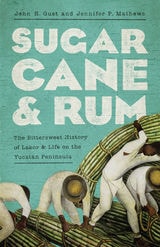
Sugarcane and Rum
The Bittersweet History of Labor and Life on the Yucatán PeninsulaJohn R. Gust and Jennifer P. Mathews
University of Arizona Press, 2020
While the Yucatán Peninsula of Mexico may conjure up images of vacation getaways and cocktails by the sea, these easy stereotypes hide a story filled with sweat and toil. The story of sugarcane and rum production in the Caribbean has been told many times. But few know the bittersweet story of sugar and rum in the jungles of the Yucatán Peninsula during the nineteenth century. This is much more than a history of coveted commodities. The unique story that unfolds in John R. Gust and Jennifer P. Mathews’s new history Sugarcane and Rum is told through the lens of Maya laborers who worked under brutal conditions on small haciendas to harvest sugarcane and produce rum.
Gust and Mathews weave together ethnographic interviews and historical archives with archaeological evidence to bring the daily lives of Maya workers into focus. They lived in a cycle of debt, forced to buy all of their supplies from the company store and take loans from the hacienda owners. And yet they had a certain autonomy because the owners were so dependent on their labor at harvest time. We also see how the rise of cantinas and distilled alcohol in the nineteenth century affected traditional Maya culture and that the economies of Cancún and the Mérida area are predicated on the rum-influenced local social systems of the past. Sugarcane and Rum brings this bittersweet story to the present and explains how rum continues to impact the Yucatán and the people who have lived there for millennia.
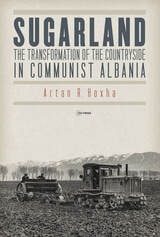
Sugarland
The Transformation of the Countryside in Communist AlbaniaArtan R. Hoxha
Central European University Press, 2023
In this historical monograph on non-urban communist Albania, Artan Hoxha discusses the ambitious development project that turned a swampland into a site of sugar production after 1945. The author seeks to free the history of Albanian communism from the stereotypes that still circulate about it with stigmas of an aberration, paranoia, extreme nationalism, and xenophobia.
This micro-history of the agricultural and industrial transformation of a zone in southeastern Albania, explores a wide range of issues including modernization, development, and social, cultural, and economic policies. In addition to analyzing the collectivization of agriculture, Hoxha shows how communism affected the lives of ordinary rural people. As elsewhere in the Communist Bloc, the Albanian regime borrowed developmental projects from the past and implemented them using social mobilization and a command economy. The abundant archival resources along with interviews in the field attest to the authorities’ efforts to increase consumption and to radically transform people’s tastes. But the book argues that despite the repressive environment, people involved in the sugar project were not simply passive receivers of models from the nation's capital. The author also describes that—in defiance of Cold War bipolarity—technological requirements and social policy considerations required a degree of engagement with the broader world.

Suicide or Murder?
The Strange Death of Governor Meriwether LewisVardis Fisher
Ohio University Press, 1962
The death of Meriwether Lewis is one of the great mysteries of American history. Was he murdered at Grinder’s Stand or did he commit suicide? Vardis Fisher meticulously reconstructs the events and presents his own version of the case with the precision and persuasiveness of a fine trial lawyer. But Fisher was also a great novelist and it is his sense of character that serves him best here. We know Lewis’ complex sensibility as well as we know that of any man of his time—his journals are so self-revealing, so exacting in the record they make of his musings, doubts, and elations. Fisher offers us this complex Lewis and, with equal perceptiveness, sets the rough, frontier scene at Grinder’s Stand. The result is a fine mystery, well solved, that leans toward tragedy.
Sukeroku’s Double Identity
The Dramatic Structure of Edo KabukiBarbara E. Thornbury
University of Michigan Press, 1982
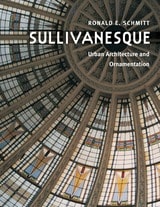
Sullivanesque
Urban Architecture and OrnamentationRonald E. Schmitt
University of Illinois Press, 2001

Sumerian Economic Texts from the Third Ur Dynasty
Tom B. Jones, , , and
University of Minnesota Press, 1961
Sumerian Economic Texts from the Third Ur Dynasty was first published in 1961. Minnesota Archive Editions uses digital technology to make long-unavailable books once again accessible, and are published unaltered from the original University of Minnesota Press editions.
This is a study and catalogue of some 350 hitherto unpublished Sumerian cuneiform documents, nearly all economic in nature. The authors describe the transliterate each document and present viewpoints regarding certain important classes of the texts. The findings of the study may lead to renewed interest in the third Ur Dynasty, which scholars have long regarded as relatively unimportant because its history is the swan song of Sumerian autonomy and culture.
Summa Theologiae, Prima Pars
Volume 1, The One God, QQ 1-26: With the Commentary of Cardinal CajetanThomas Aquinas
Catholic University of America Press, 2023
Summa Theologiae, Prima Pars
Volume 2, On the Holy Trinity and Creation in General, QQ 27-74: With the Commentary of Cardinal CajetanThomas Aquinas
Catholic University of America Press, 2023
Summa Theologiae, Prima Pars
Volume 3, Human Beings and God's Governance of Creation, QQ 75-119: With the Commentary of Cardinal CajetanThomas Aquinas
Catholic University of America Press, 2023
Summa metaphysicae ad mentem Sancti Thomae
Essays in Honor of John F. WippelTherese Scarpelli Cory
Catholic University of America Press, 2023
Summers Off?
A History of U.S. Teachers' Other Three MonthsChristine A. Ogren
Rutgers University Press, 2026
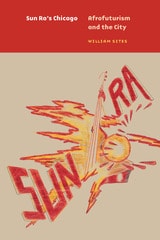
Sun Ra's Chicago
Afrofuturism and the CityWilliam Sites
University of Chicago Press, 2020
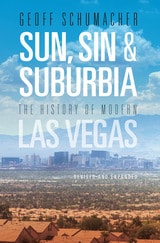
Sun, Sin & Suburbia
The History of Modern Las Vegas, Revised and ExpandedGeoff Schumacher
University of Nevada Press, 2015
Schumacher’s history also profiles the Las Vegas where more than two million people live. He explores the neighborhoods sprawling beyond the Strip’s neon gleam and uncovers a diverse community offering much more than table games, lounge acts, and organized crime. Schumacher discusses contemporary Las Vegas, charting its course from the nation’s fastest-growing metropolis to one of the Great Recession’s most battered victims.
Sun, Sin & Suburbia will appeal to tourists looking to understand more than the glitz and glitter of Las Vegas and to newcomers who want to learn about their new hometown. It will also be an essential addition to any longtime Nevadan’s library of local history.
First published in 2012 by Stephens Press, this paperback edition is now available from the University of Nevada Press.
Sunbelt Capitalism and the Making of the Carceral State
Kirstine Taylor
University of Chicago Press, 2025
The story of how the American South became the most incarcerated region in the world’s most incarcerated nation.
Sunbelt Capitalism and the Making of the Carceral State examines the evolution of southern criminal punishment from Jim Crow to the dawn of mass incarceration, charting this definitive era of carceral transformation and expansion in the southern United States. The demise of the county chain gang, the professionalization of police, and the construction of large-scale prisons were among the sweeping changes that forever altered the southern landscape and bolstered the region’s capacity to punish. What prompted this southern revolution in criminal punishment?
Kirstine Taylor argues that the crisis in the cotton fields and the arrival of Sunbelt capitalism in the south’s rising metropolises prompted lawmakers to build expansive, modern criminal punishment systems in response to Brown v. Board of Education and the Black freedom movements of the 1960s and ‘70s. Taking us inside industry-hunting expeditions, school desegregation battles, the sit-in movement, prisoners’ labor unions, and policy commissions, Taylor tells the story of how a modernizing south became the most incarcerated region in the globe’s most incarcerated nation.
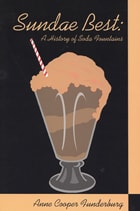
Sundae Best
History of Soda FountainsAnne Cooper Funderburg
University of Wisconsin Press, 2001
The evolution of the soda fountain reflected momentous developments in American history— urbanization, the temperance movement and Prohibition, the Great Depression, technical progress, the decline of Main Street, and the rise of car culture and growth of suburbia. The fountain’s evolution was also closely tied to trends in retailing, food service, lifestyles, and the decorative arts.
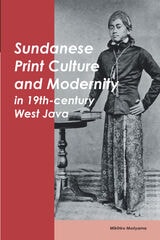
Sundanese Print Culture and Modernity in 19th Century West Java
Mikihiro Moriyama
National University of Singapore Press, 2005
Starting with the 'discovery' of Sundanese by Europeans in the early 19th century, Mikihiro Moriyama follows the developments in the ensuing century when a small group of Dutch scholars and colonial officials reshaped the language and its literature over the next one hundred years. Schools taught Sundanese, and printed materials based on western concepts began to influence indigenous writing and oral tradition. The imposition of European standards of literary aesthetics shaped a modernity that rejected traditional knowledge in favour of rational and empirical paradigms. Interest in traditional poetry and its mythologies declined, and new forms of prose, including novels, captured the attention of the reading public. These materials promoted useful knowledge and morality, and encouraged deference and loyalty towards colonial authority.
Early in the 20th century, the establishment of the Commissie voor de Inlandsche School- en Volkslectuur (Committee for Indigenous Schoolbooks and Popular Reading Books), a government-subsidised institution, provided the growing number of literate people in the Indies with 'good' and 'appropriate' reading materials. Its development marked the end of an era when Sundanese writing competed with Western-style schools and publications, and signalled the triumph of the new colonial modernity.
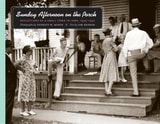
Sunday Afternoon on the Porch
Reflections of a Small Town in Iowa, 1939-1942Everett W. Kuntz
University of Iowa Press, 2008
Everett bought movie reel film in bulk from a mail-order house, rolled his own film, and developed it in a closet at home, but he never had the money to print his photographs. More than two thousand negatives stayed in a box while he married, raised a family, and worked as an electrical engineer in the Twin Cities. When he became ill with cancer in the fall of 2002—sixty years after he had developed the last of his bulk film—Everett opened his time capsule and printed the images from his youth. He died in 2003, having brought his childhood town back to life just as he was leaving it.
A sense of peace radiates from these images. Whether skinny-dipping in the Turkey River, wheelbarrow-racing, threshing oats, milking cows, visiting with relatives after church, or hanging out at the drugstore or the movies, Ridgeway’s hardworking citizens are modest and trusting and luminous in their graceful harmony and their unguarded affection for each other. Visiting the town in 2006 as he was writing the text to accompany these photographs, Jim Heynen crafted vignettes that perfectly complement these rediscovered images by blending fact and fiction to give context and voice to Ridgeway’s citizens.
Sundays at Sinai
A Jewish Congregation in ChicagoTobias Brinkmann
University of Chicago Press, 2012
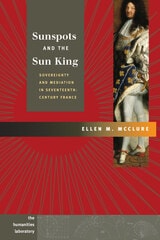
Sunspots and the Sun King
Sovereignty and Mediation in Seventeenth-Century FranceEllen M. McClure
University of Illinois Press, 2006
Mediation, monarchy, and Louis XIV's attempts to legitimize his reign
In order to assert his divine right, Louis XIV missed no opportunity to identify himself as God’s representative on earth. However, in Sunspots and the Sun King Ellen McClure explores the contradictions inherent in attempting to reconcile the logical and mystical aspects of divine right monarchy. McClure analyzes texts devoted to definitions of sovereignty, presents a meticulous reading of Louis XIV’s memoirs to the crown prince, and offers a novel analysis of diplomats and ambassadors as the mediators who preserved and transmitted the king’s authority. McClure asserts that these discussions, ranging from treatises to theater, expose incommensurable models of authority and representation permeating almost every aspect of seventeenth-century French culture.
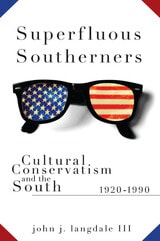
Superfluous Southerners
Cultural Conservatism and the South, 1920-1990John J. Langdale III
University of Missouri Press, 2012

Superfortress
The Boeing B-29 and American Airpower in World War IICurtis LeMay
Westholme Publishing, 2007
"A fascinating history of a remarkable aircraft."—Edward Jablonski
"An eloquent tribute." —Publishers Weekly
"Superb. . . . an excellent history." —General John T. Chain, Jr. USAF
Among the most sophisticated aircraft flown during World War II, the Boeing B-29 Superfortress was designed to replace the B-17 as the primary long-range bomber of the U.S. Army Air Forces. With its distinctive glazed nose and long, thin wings that provided both speed at high altitude and stability at takeoff and landing, the Superfortress was the first operational bomber with a pressurized crew cabin and featured advanced radar and avionics. Armed with remote-controlled machine gun turrets and a 20,000 pound bomb load, it was the first USAAF bomber capable of mastering the vast distances of the Pacific Theater of World War II. The prototype flew in September 1942 but a series of post-production modifications delayed the bomber's first mission until April 1944. Superfortresses began attacking Japan in daylight with conventional ordnance from high altitude, but their mission was redirected in March 1945, with massive low-level formations dropping incendiary bombs! at night on Japanese cities. The ensuing firestorms, followed by the complete destruction of Hiroshima and Nagasaki by atomic bombs dropped from two specially modified "silverplate" B-29s, forced Japan to cease fighting.
Written by the man who led the B-29 into combat, Superfortress: The Boeing B-29 and American Airpower in World War II is an important document of one of the most turbulent times in world history. General Curtis LeMay recalls the early debate about whether or not the United States needed a long-range bomber, how the B-29 was created and produced despite the enormous logistical difficulties of the design, and the decision to conduct fire-bombings against Japan and ultimately drop the atomic bomb. Highly praised when it was first published, this new edition is complete with photographs, a new introduction, and statistical tables.
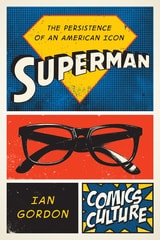
Superman
The Persistence of an American IconGordon, Ian
Rutgers University Press, 2017
Superman: Persistence of an American Icon examines the many iterations of the character in comic books, comic strips, radio series, movie serials, feature films, television shows, animation, toys, and collectibles over the past eight decades. Demonstrating how Superman’s iconic popularity cannot be attributed to any single creator or text, comics expert Ian Gordon embarks on a deeper consideration of cultural mythmaking as a collective and dynamic process. He also outlines the often contentious relationships between the various parties who have contributed to the Superman mythos, including corporate executives, comics writers, artists, nostalgic commentators, and collectors.
Armed with an encyclopedic knowledge of Superman’s appearances in comics and other media, Gordon also digs into comics archives to reveal the prominent role that fans have played in remembering, interpreting, and reimagining Superman’s iconography. Gordon considers how comics, film, and TV producers have taken advantage of fan engagement and nostalgia when selling Superman products. Investigating a character who is equally an icon of American culture, fan culture, and consumer culture, Superman thus offers a provocative analysis of mythmaking in the modern era.

Supernatural America
The Paranormal in American ArtEdited by Robert Cozzolino
University of Chicago Press, 2021
Featuring artists from James McNeill Whistler and Kerry James Marshall to artist/mediums who made images with spirits during séances, this catalog covers more than two hundred years of the supernatural in American art. Here we find works that explore haunting, UFO sightings, and a broad range of experiential responses to other worldly contact.

Supernatural Japan
Izumi Kyoka and the Global FantasticPedro Thiago Ramos Bassoe
University of Michigan Press, 2026
Pedro Bassoe considers how Kyōka’s stories have been produced by a meeting of global influences—including Apuleius, The Arabian Nights, Hans Christian Andersen, the Brothers Grimm, Prosper Mérimée, Guy de Maupassant, Gerhart Hauptmann, and Jules Verne—combined with traditional Japanese genres. Bassoe develops the notion of “the scholarly fantastic” to describe how a set of realistic epistemologies reinforce the fantastic in Kyōka’s writings. Supernatural Japan offers an up-to-date introduction to Izumi Kyōka and his writing for students, scholars, or fans of Japanese fantasy literature and media.

Supersizing Urban America
How Inner Cities Got Fast Food with Government HelpChin Jou
University of Chicago Press, 2017
What doesn’t get mentioned in all this? The fact that the federal government helped create the obesity crisis in the first place—especially where it is strikingly acute, among urban African-American communities. Supersizing Urban America reveals the little-known story of how the U.S. government got into the business of encouraging fast food in inner cities, with unforeseen consequences we are only beginning to understand. Chin Jou begins her story in the late 1960s, when predominantly African-American neighborhoods went from having no fast food chain restaurants to being littered with them. She uncovers the federal policies that have helped to subsidize that expansion, including loan guarantees to fast food franchisees, programs intended to promote minority entrepreneurship, and urban revitalization initiatives. During this time, fast food companies also began to relentlessly market to urban African-American consumers. An unintended consequence of these developments was that low-income minority communities were disproportionately affected by the obesity epidemic.
In the first book about the U.S. government’s problematic role in promoting fast food in inner-city America, Jou tells a riveting story of the food industry, obesity, and race relations in America that is essential to understanding health and obesity in contemporary urban America.

Superstitions
Omens, Charms, Cures 1787Francis Grose
Bodleian Library Publishing, 2011
Superstitions are surprisingly enduring. From dodging black cats to crossing one’s fingers while making a wish to an aversion to staff meetings on Friday the thirteenth, it is remarkable how many superstitions remain intact—even in this age of rationalism and swift scientific advancement.
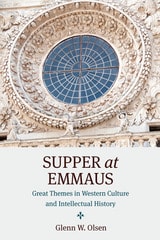
Supper at Emmaus
Glenn W. Olsen
Catholic University of America Press, 2016
Supplement to the Handbook of Middle American Indians, Volume 2
LinguisticsVictoria Reifler Bricker, general editor
University of Texas Press, 1984
The sixteen-volume Handbook of Middle American Indians, completed in 1976, has been acclaimed the world over as the single most valuable resource ever produced for those involved in the study of Mesoamerica. When it was determined in 1978 that the Handbook should be updated periodically, well-known cultural anthropologist Victoria Reifler Bricker was selected to be general editor.
This second volume of the Supplement is devoted to Mesoamerican languages. It differs in both scope and content from its forerunner, Volume 5 of the Handbook of Middle American Indians: Linguistics, which presents a general survey of Middle American linguistics and descriptions of Classical Nahuatl, Yucatec, Quiche, Popoluca, Zapotec, Mazatec, Pame, and Chontal de Oaxaca.
The aim of the present volume is to provide detailed sketches of five additional languages: Mixe, Chichimeco Jonaz, Choltí, Tarascan, and Huastec. All the grammatical sketches deal with the phonology, morphology, and syntax of the languages treated; most cover discourse as well. Taken together, these new essays represent a substantial enrichment of the earlier Handbook volume on linguistics. Alone, the Supplement stands as an invaluable reference guide for all who are interested in learning about these important and heretofore poorly treated languages of Middle America.
Supplement to the Handbook of Middle American Indians, Volume 4
EthnohistoryVictoria R. Bricker, general editor<br>Ronald Spores, volume editor
University of Texas Press, 1986
The sixteen-volume Handbook of Middle American Indians, completed in 1976, has been acclaimed the world over as the single most valuable resource ever produced for those involved in the study of Mesoamerica. When it was determined in 1978 that the Handbook should be updated periodically, Victoria Reifler Bricker, well-known cultural anthropologist, was elected to be general editor.
This fourth volume of the Supplement is devoted to colonial ethnohistory. Four of the eleven chapters review research and ethnohistorical resources for Guatemala, South Yucatan, North Yucatan, and Oaxaca, areas that received less attention than the central Mexican area in the original Guide to Ethnohistorical Sources (HMAI vols. 12-15).
Six substantive and problem-oriented studies cover the use of colonial texts in the study of pre-colonial Mayan languages; political and economic organization in the valleys of Mexico, Puebla-Tlaxcala, and Morelos; urban-rural relations in the Basin of Mexico; kinship and social organization in colonial Tenochtitlan; tlamemes and transport in colonial central Mexico; and land tenure and titles in central Mexico as reflected in colonial codices.
Supplement to the Handbook of Middle American Indians, Volume 5
EpigraphyEdited by Victoria Reifler Bricker
University of Texas Press, 1991
In 1981, under the editorship of Victoria Bricker, UT Press began to issue supplemental volumes to the classic sixteen-volume work Handbook of Middle American Indians. These supplements are intended to update scholarship in various areas and to cover topics of current interest that may not have been included in the original Handbook.
This volume is designed to recognize the important role that epigraphy has come to play in Middle American scholarship and to document significant achievements in three areas: dynastic history, phonetic decipherment, and calendrics. The book covers four of the major pre-Columbian scripts in the region (Zapotec, Mixtec, Aztec, and Maya) and one that is relatively unknown (Tlapanec).
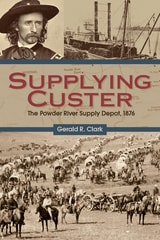
Supplying Custer
The Powder River Supply Depot, 1876Gerald R. Clark
University of Utah Press, 2014
The book details the items recovered archaeologically, including ale and soda bottles, cartridges, packing crates, and a horseshoe and ceramic doll. It also addresses the army’s knowledge of this area and how the supply depot fit into the broader military campaign. This book connects archaeology and history to explore how the American military planned, maneuvered, and operated on the northern plains from the end of the Civil War through 1876.
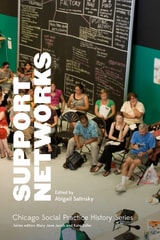
Support Networks
Edited by Abigail Satinsky
School of the Art Institute of Chicago, 2014
The contributors to this collection explore how the city continues to inform and shape contemporary cultural work and the development of informal organizations. Many of the authors are contributors to the scene themselves, having envisioned, founded, and activated these new ways of working. The unconventional systems explored in Support Networks call attention to stories and experiences often overlooked in this history. Ranging from artists’ reflections to essays, interviews, and ephemera, these perspectives challenge existing narratives and foreground underrepresented voices. Through more than twenty-five diverse examples of community building, activism, and catalytic projects, readers will find the inspiration they need to build their own counter-institutions.
Support Networks is part of the new Chicago Social Practice History series, edited by Mary Jane Jacob and Kate Zeller in the Department of Exhibitions and Exhibition Studies at the School of the Art Institute of Chicago (SAIC).