Results by title
4413 books match the query 'Anthropology' and 316 start with s

Social Media in Emergent Brazil
How the Internet Affects Social MobilityJuliano Spyer
University College London, 2017

Social Media in Industrial China
Xinyuan Wang
University College London, 2016
Social Media in Northern Chile
Posting the Extraordinarily OrdinaryNell Haynes
University College London, 2016
Social Media in Rural China
Social Networks and Moral FrameworksTom McDonald
University College London, 2016
Social Media in South India
Shriram Venkatraman
University College London, 2017
Social Media in Southeast Italy
Crafting IdealsRazvan Nicolescu
University College London, 2016
Why is social media in southeast Italy so predictable when it is used by such a range of different people?
This book describes the impact of social media on the population of a town in the southern region of Puglia, Italy. Razvan Nicolescu spent 15 months living among the town’s residents, exploring what it means to be an individual on social media. Why do people from this region conform on platforms that are designed for personal expression?
Nicolescu argues that social media use in this region of the world is related to how people want to portray themselves. He pays special attention to the ability of users to craft their appearance in relation to collective ideals, values, and social positions, and how this feature of social media has, for the residents of the town, become a moral obligation: they are expected to be willing to adapt their appearance to suit their different audiences at the same time, which is crucial in a town where religion and family are at the heart of daily life.
Social Media in Southeast Turkey
Love, Kinship and PoliticsElisabetta Costa
University College London, 2016
Social Media in Trinidad
Values and VisibilityJolynna Sinanan
University College London, 2017
Social Media in an English Village
(Or how to keep people at just the right distance)Daniel Miller
University College London, 2016
Social Organization in South China, 1911–1949
The Case of Kuan Lineage in K’ai-p’ing CountyYuen-fong Woon
University of Michigan Press, 1984
Social Science Knowledge and Economic Development
An Institutional Design PerspectiveVernon W. Ruttan
University of Michigan Press, 2003
With its emphasis on interdisciplinarity, Social Science Knowledge and Economics Developmentis important reading for social scientists, development economists, and in the development studies classroom.
Vernon W. Ruttan is Regents Professor Emeritus in the Department of Applied Economics at the University of Minnesota.
Social Stratification and Mobility in Central Veracruz
By Hugo G. Nutini
University of Texas Press, 2005
Since the Revolution of 1910, Mexican society has undergone a profound transformation, characterized by the disempowerment of the landed aristocracy and the rise of a new ruling class of plutocrats and politicians; the development of a middle class of white-collar professionals; and the upward mobility of formerly disenfranchised Indians who have become urban, working-class Mestizos. Indeed, Mexico's class system today increasingly resembles that of Western industrialized nations, proving that, while further democratic reforms are needed, the Revolution initiated an ongoing process of change that has created a more egalitarian society in Mexico with greater opportunities for social advancement.
This authoritative ethnography examines the transformation of social classes in the Córdoba-Orizaba region during the latter half of the twentieth century to create a model of provincial social stratification in Mexico. Hugo Nutini focuses on the increased social mobility that has affected all classes of society, especially the rural Indians who have taken advantage of education, job opportunities, and contact with the wider world to achieve Mestizo status. He also traces the transfer of power that followed the demise of the hacienda system, as well as the growing importance of the middle class. This description and analysis of the provincial social stratification system complements the work Nutini has done on the national class system, centered in Mexico City, to offer a comprehensive picture of social stratification and mobility in Mexico today.

Social Theory After the Internet
Media, Technology, and GlobalizationRalph Schroeder
University College London, 2018
Social Theory Now
Edited by Claudio E. Benzecry, Monika Krause, and Isaac Ariail Reed
University of Chicago Press, 2017
The book provides a strategic window onto social theory based on current research, examining trends in classical traditions and the cutting edge of more recent approaches. From distinctive theoretical positions, contributors address questions about how social order is accomplished; the role of materiality, practice, and meaning; as well as the conditions for the knowledge of the social world. The theoretical traditions presented include cultural sociology, microsociologies, world-system theory and post-colonial theory, gender and feminism, actor network and network theory, systems theory, field theory, rational choice, poststructuralism, pragmatism, and the sociology of conventions. Each chapter introduces a tradition and presents an agenda for further theoretical development. Social Theory Now is an essential tool for sociologists. It will be central to the discussion and teaching of contemporary social theory for years to come.
Socialist States and the Environment
Lessons for Eco-Socialist FuturesSalvatore Engel-Di Mauro
Pluto Press, 2021
More than thirty years after the collapse of the USSR, the critique of state socialism is still used to deny alternatives to capitalism, irrespective of global capitalist ecological and social devastation. There is seemingly nothing worthwhile salvaging from decades of state socialist experiences.
As the climate crisis deepens, Engel-Di Mauro argues that we need to re-evaluate the environmental practices and policies of state socialism, especially as they had more environmentally beneficial than destructive effects. Rather than dismissing state socialism’s heritage out of hand, we should reclaim it for contemporary eco-socialist ends.
By means of a comparative and multiple-scaled approach, Engel-Di Mauro points to highly diverse and environmentally constructive state socialist experiences. Taking the reader from the USSR to China and Cuba, this is a fiery and contentious look at what worked, what didn’t, and how we can move towards an eco-socialist future.

Soda Science
Making the World Safe for Coca-ColaSusan Greenhalgh
University of Chicago Press, 2024
The 1990s were tough times for the soda industry. In the United States, obesity rates were exploding. Public health critics pointed to sugary soda as a main culprit and advocated for soda taxes that might decrease the consumption of sweetened beverages—and threaten the revenues of the giant soda companies.
Soda Science tells the story of how industry leader Coca-Cola mobilized allies in academia to create a soda-defense science that would protect profits by advocating exercise, not dietary restraint, as the priority solution to obesity, a view few experts accept. Anthropologist and science studies specialist Susan Greenhalgh discovers a hidden world of science-making—with distinctive organizations, social networks, knowledge-making practices, and ethical claims—dedicated to creating industry-friendly science and keeping it under wraps. By tracing the birth, maturation, death, and afterlife of the science they made, Greenhalgh shows how corporate science has managed to gain such a hold over our lives.
Spanning twenty years, her investigation takes her from the US, where the science was made, to China, a key market for sugary soda. In the US, soda science was a critical force in the making of today’s society of step-counting, fitness-tracking, weight-obsessed citizens. In China, this distorted science has left its mark not just on national obesity policies but on the apparatus for managing chronic disease generally. By following the scientists and their ambitious schemes to make the world safe for Coke, Greenhalgh offers an account that is more global—and yet more human—than the story that dominates public understanding today.
Coke’s research isn’t fake science, Greenhalgh argues; it was real science, conducted by real and eminent scientists, but distorted by its aim. Her gripping book raises crucial questions about conflicts of interest in scientific research, the funding behind familiar messages about health, and the cunning ways giant corporations come to shape our diets, lifestyles, and health to their own needs.

Sojiji
Discipline, Compassion, and Enlightenment at a Japanese Zen TempleJoshua A. Irizarry
University of Michigan Press, 2022
Based on more than fifteen years of fieldwork, interviews, and archival research, Sōjiji: Discipline, Compassion, and Enlightenment at a Japanese Zen Temple immerses the reader in the lives and experiences of the different groups that comprise Sōjiji's contemporary religious community. Through clear and accessible prose, ethnographically-grounded analysis, and emotionally compelling stories, the reader will explore the rich pastiche of daily life and ritual activity at a major Japanese Zen temple in institutional, historical, and social context through the lived practices of its community of clergy, practitioners, parishioners, and visitors.
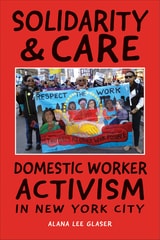
Solidarity & Care
Domestic Worker Activism in New York CityAlana Lee Glaser
Temple University Press, 2023
Solidarity & Care examines the political mobilization of diverse care workers who joined together and supported one another through education, protests, lobbying, and storytelling. Domestic work activists used narrative and emotional appeals to build a coalition of religious communities, employers of domestic workers, labor union members, and politicians to first pass and then to enforce the new law.
Through oral history interviews, as well as ethnographic observation during DWU meetings and protest actions, Glaser chronicles how these women fought (and continue to fight) to improve working conditions. She also illustrates how they endure racism, punitive immigration laws, on-the-job indignities, and unemployment that can result in eviction and food insecurity.
The lessons from Solidarity & Care along with the DWU’s precedent-setting legislative success have applications to workers across industries.
All royalties will go directly to the Domestic Workers United
Somalis Abroad
Clan and Everyday Life in FinlandStephanie R. Bjork
University of Illinois Press, 2017

Somatic States
On Cartography, Geobodies, Bodily IntegrityFranck Billé
Duke University Press, 2025

Some Other Amazonians
Perspectives on Modern AmazoniaEdited by Mark Harris and Stephen Nugent
University of London Press, 2004
Contributors include Rosa Elizabeth Acevedo Marin, Edna De Castro, and David McGrath (Nucleo de Altos Estudos Amazonicos, Federal University of Para, Brazil), Scott Anderson (Tide-Energy Project in the Amazon), Neide Esterci (Federal University of Rio de Janeiro), Deborah Lima (Fluminense Federal University), Raymundo Heraldo Maues (Federal University of Para, Brazil), and Gregory Prang (Wayne State University).

Someone
The Pragmatics of Misfit Sexualities, from Colette to Hervé GuibertMichael Lucey
University of Chicago Press, 2019
In Someone, Michael Lucey considers characters from twentieth-century French literary texts whose sexual forms prove difficult to conceptualize or represent. The characters expressing these “misfit” sexualities gravitate towards same-sex encounters. Yet they differ in subtle but crucial ways from mainstream gay or lesbian identities—whether because of a discordance between gender identity and sexuality, practices specific to a certain place and time, or the fleetingness or non-exclusivity of desire. Investigating works by Simone de Beauvoir, Colette, Jean Genet, and others, Lucey probes both the range of same-sex sexual forms in twentieth-century France and the innovative literary language authors have used to explore these evanescent forms.
As a portrait of fragile sexualities that involve awkward and delicate maneuvers and modes of articulation, Someone reveals just how messy the ways in which we experience and perceive sexuality remain, even to ourselves.
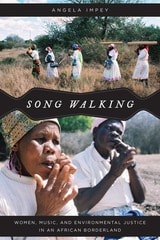
Song Walking
Women, Music, and Environmental Justice in an African BorderlandAngela Impey
University of Chicago Press, 2018
This book links ethnomusicological research to larger themes of international development, environmental conservation, gender, and local economic access to resources. By demonstrating that development processes are essentially cultural processes and revealing how music fits within this frame, Song Walking testifies to the affective, spatial, and economic dimensions of place, while contributing to a more inclusive and culturally apposite alignment between land and environmental policies and local needs and practices.

Songs At the River's Edge
Stories From a Bangladeshi VillageKaty Gardner
Pluto Press, 1997
Songs for Dead Parents
Corpse, Text, and World in Southwest ChinaErik Mueggler
University of Chicago Press, 2017
Drawing on more than twenty years of fieldwork in a mountain community in Yunnan Province, Songs for Dead Parents shows how people view the dead as both material and immaterial, as effigies replace corpses, tombstones replace effigies, and texts eventually replace tombstones in a long process of disentangling the dead from the shared world of matter and memory. It is through these processes that people envision the cosmological underpinnings of the world and assess the social relations that make up their community. Thus, state interventions aimed at reforming death practices have been deeply consequential, and Mueggler traces the transformations they have wrought and their lasting effects.

Songs that Make the Road Dance
Courtship and Fertility Music of the Tz'utujil MayaBy Linda O'Brien-Rothe
University of Texas Press, 2015
An important and previously unexplored body of esoteric ritual songs of the Tz’utujil Maya of Santiago Atitlán, Guatemala, the “Songs of the Old Ones” are a central vehicle for the transmission of cultural norms of behavior and beliefs within this group of highland Maya. Ethnomusicologist Linda O’Brien-Rothe began collecting these songs in 1966, and she has amassed the largest, and perhaps the only significant, collection that documents this nearly lost element of highland Maya ritual life.
This book presents a representative selection of the more than ninety songs in O’Brien-Rothe’s collection, including musical transcriptions and over two thousand lines presented in Tz’utujil and English translation. (Audio files of the songs can be downloaded from the UT Press website.) Using the words of the “songmen” who perform them, O’Brien-Rothe explores how the songs are intended to move the “Old Ones”—the ancestors or Nawals—to favor the people and cause the earth to labor and bring forth corn. She discusses how the songs give new insights into the complex meaning of dance in Maya cosmology, as well as how they employ poetic devices and designs that place them within the tradition of K’iche’an literature, of which they are an oral form. O’Brien-Rothe identifies continuities between the songs and the K’iche’an origin myth, the Popol Vuh, while also tracing their composition to the late sixteenth and early seventeenth centuries by their similarities with the early chaconas that were played on the Spanish guitarra española, which survives in Santiago Atitlán as a five-string guitar.
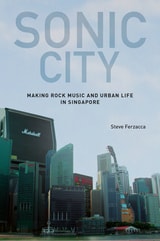
Sonic City
Making Rock Music and Urban Life in SingaporeSteve Ferzacca
National University of Singapore Press, 2020
Grounded in debates from sound studies, Ferzacca draws on Bruno Latour’s ideas of the social—continually emergent, constantly in-the-making, “associations of heterogeneous elements” of human and non-human “mediators and intermediaries”—to portray a community entangled in the confounding relations between vernacular and national heritage projects. Music shops, music gear, music genres, sound, urban space, neighborhoods, State presence, performance venues, practice spaces, regional travel, local, national, regional, and sonic histories afford expected and unexpected opportunities for work, play, and meaning, in the contemporary music scene in this Southeast Asian city-state. The emergent quality of this deep sound is fiercely cosmopolitan, yet entirely Singaporean. What emerges is a vernacular heritage drawing upon Singapore’s unique place in Southeast Asian and world history.

Sonic Persuasion
Reading Sound in the Recorded AgeGreg Goodale
University of Illinois Press, 2011
Sonora Yaqui Language Structures
John M. Dedrick and Eugene H. Casad
University of Arizona Press, 1999
The book includes useful sections on quantifiers and adverbial and deictic particles, often inadequately treated in reference grammars. A section on auxiliary verbs and well-documented information on voice, aspect, and other features of verbal inflection provide readers with useful data for particular lines of linguistic inquiry. Each grammatical point is illustrated by example sentences distinguished by their naturalness and cultural relevance. At the end of the book, a Yaqui text provides a sample of connected sentences in a natural context.
Sonora Yaqui Language Structures is a valuable source not only for research on this language family but also for anthropological studies of the Arizona-Sonora cultural region. In addition, it documents an indigenous language for future generations of Yaqui speakers.
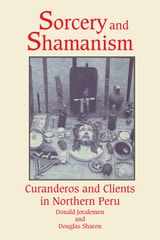
Sorcery And Shamanism
Donald Joralemon
University of Utah Press, 1993
The curanderos of northern Peru, traditional healing specialists who invoke Jesus Christ and the saints with a mescaline sacrament and a shamanic rattle, are not vestigial curiosities nor are their patients rural illiterates without access to "modern medicine." Instead, many of these shamans have thriving urban practices with clients from all levels of society.
Sorcery and Shamanism documents the lives and rituals of twelve curanderos, offering a perspective on their curing role and shared knowledge. Authors Donald Joralemon and Douglas Sharon also consider the therapeutic experiences of over one hundred patients, including case histories and follow-ups. They offer a broad view of the shamans’ work in modern Peruvian society, particularly in connection with gender-based conflicts.
The significant work goes a long way toward dispelling the stereotype of shamans as enigmatic and wise, showing them to be pragmatic curers confronting the health effects of everyday aggressions and betrayals.
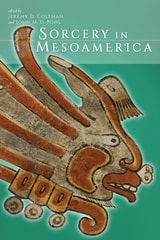
Sorcery in Mesoamerica
Jeremy D. Coltman and John M. D. Pohl
University Press of Colorado, 2020
In each chapter, preeminent scholars of ritual and belief ask very different questions about what exactly sorcery is in Mesoamerica. Contributors consider linguistic and visual aspects of sorcery and witchcraft, such as the terminology in Aztec semantics and dictionaries of the Kaqchiquel and K’iche’ Maya. Others explore the practice of sorcery and witchcraft, including the incorporation by indigenous sorcerers in the Mexican highlands of European perspectives and practices into their belief system. Contributors also examine specific deities, entities, and phenomena, such as the pantheistic Nahua spirit entities called forth to assist healers and rain makers, the categorization of Classic Maya Wahy (“co-essence”) beings, the cult of the Aztec goddess Cihuacoatl, and the recurring relationship between female genitalia and the magical conjuring of a centipede throughout Mesoamerica.
Placing the Mesoamerican people in a human context—as engaged in a rational and logical system of behavior—Sorcery inMesoamerica is the first comprehensive study of the subject and an invaluable resource for students and scholars of Mesoamerican culture and religion.
Contributors:
Lilián González Chévez, John F. Chuchiak IV, Jeremy D. Coltman, Roberto Martínez González, Oswaldo Chinchilla Mazariegos, Cecelia F. Klein, Timothy J. Knab, John Monaghan, Jesper Nielsen, John M. D. Pohl, Alan R. Sandstrom, Pamela Effrein Sandstrom, David Stuart

Sorcery in the Black Atlantic
Edited by Luis Nicolau Parés and Roger Sansi
University of Chicago Press, 2011
Most scholarship on sorcery and witchcraft has narrowly focused on specific times and places, particularly early modern Europe and twentieth-century Africa. And much of that research interprets sorcery as merely a remnant of premodern traditions. Boldly challenging these views, Sorcery in the Black Atlantic takes a longer historical and broader geographical perspective, contending that sorcery is best understood as an Atlantic phenomenon that has significant connections to modernity and globalization.
A distinguished group of contributors here examine sorcery in Brazil, Cuba, South Africa, Cameroon, and Angola. Their insightful essays reveal the way practices and accusations of witchcraft spread throughout the Atlantic world from the age of discovery up to the present, creating an indelible link between sorcery and the rise of global capitalism. Shedding new light on a topic of perennial interest, Sorcery in the Black Atlantic will be provocative, compelling reading for historians and anthropologists working in this growing field.

Soulside
Inquiries into Ghetto Culture and CommunityUlf Hannerz
University of Chicago Press, 2004
Originally published 35 years ago, Soulside became an urban anthropological classic. The book helped to dispel many false impressions about ghetto life and questioned the idea, precipitated in the influential Moynihan Report and in notions of a "culture of poverty," that the poor had chosen to lead the lives they do. Raising central moral and political questions about American society in a turbulent period, Soulside became an example of public engagement in anthropology. In a new afterword, Ulf Hannerz discusses the book's place in the debates of the time and its relevance to current arguments in anthropology.
Sound and Sentiment
Birds, Weeping, Poetics, and Song in Kaluli Expression, 3rd edition with a new introduction by the authorSteven Feld
Duke University Press, 2012
Sounds of Crossing
Music, Migration, and the Aural Poetics of Huapango ArribeñoAlex E. Chávez
Duke University Press, 2017
Sounds of Tohi
Cherokee Health and Well-Being in Southern AppalachiaLisa J. Lefler and Thomas N. Belt
University of Alabama Press, 2022
Dialogue between a medical anthropologist and a Cherokee linguist about health, well-being, and environmental issues
Sounds of Tohi: Cherokee Health and Well-Being in Southern Appalachia is the result of almost two decades of work by medical anthropologist Lisa J. Lefler and Cherokee elder and traditionalist Thomas N. Belt. The narrative consists of a dialogue between them that displays traditional Indigenous knowledge as well as the importance of place for two people from cultures and histories that intersect in the mountains of Southern Appalachia. Together, Lefler and Belt decolonize thinking about health, well-being, and environmental issues through the language and experiences of people whose identity is inextricably linked to the mountains and landscape of western North Carolina.
Lefler and Belt discuss several critical cultural concepts that explain the science of relationships with this world, with the spirit world, and with people. They explore tohi, the Cherokee concept of health, which offers a more pervasive understanding of relationships in life as balanced and moving forward in a good way. They converse about the importance of matrilineality, particularly in light of community healing, the epistemologies of Cherokee cosmography, and decolonizing counseling approaches.
The discussions here offer a different way of approaching the issues that face Americans in this difficult time of division. Lefler and Belt share their urgency to take action against the wholesale exploitation of public lands and the shared environment, to work to perpetuate tribal languages, to preserve the science that can make a difference in how people treat one another, and to create more forums that are inclusive of Native and marginalized voices and that promote respect and appreciation of one another and the protection of sacred places. Throughout, they rely on the preservation of traditional knowledge, or Native science, via Native language to provide insight as to why people should recognize a connection to the land.

Sounds of Vacation
Political Economies of Caribbean TourismJocelyne Guilbault and Timothy Rommen, editors
Duke University Press, 2019
Contributors. Jerome Camal, Steven Feld, Francio Guadeloupe, Jocelyne Guilbault, Jordi Halfman, Susan Harewood, Percy C. Hintzen, Timothy Rommen
South Koreans in the Debt Crisis
The Creation of a Neoliberal Welfare SocietyJesook Song
Duke University Press, 2009
Drawing on her experience during the crisis as an employee in a public works program in Seoul, Song provides an ethnographic assessment of the efforts of the state and civilians to regulate social insecurity, instability, and inequality through assistance programs. She focuses specifically on efforts to help two populations deemed worthy of state subsidies: the “IMF homeless,” people temporarily homeless but considered employable, and the “new intellectuals,” young adults who had become professionally redundant during the crisis but had the high-tech skills necessary to lead a transformed post-crisis South Korea.
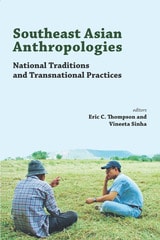
Southeast Asian Anthropologies
National Traditions and Transnational PracticesEdited by Eric C. Thompson and Vineeta Sinha
National University of Singapore Press, 2019
Southeast Asian Anthropologies outlines the practices and paradigms of anthropologists working from and within Southeast Asia. It addresses three overlapping issues: the historical development of unique traditions of research, scholarship, and social engagement across diverse anthropological communities of the region; the opportunities and challenges faced by Southeast Asian anthropologists as they practice their craft in different institutional and political contexts; and the emergence of locally grounded, intraregional, transnational linkages and practices undertaken by Southeast Asian-based anthropologists. It is a much-needed assessment of the state of the discipline that will be an invaluable tool for anthropologists navigating a new era of development and challenges.
Southern Epistemologies
Knowledge, Wisdom, and Understanding in the Andes and Western AmazonEdited by H. Clark Barrett, Michael L. Cepek, Pablo Quintanilla, Emanuele Fabiano, and Edouard Machery
HAU, 2026
What does it mean to know, and how is knowledge practiced? How can Indigenous perspectives challenge conventional concepts of knowledge in the Global North? Drawing on Indigenous epistemologies from the Andes and Western Amazon, Southern Epistemologies investigates how knowledge, wisdom, and understanding are shaped by local cultures, languages, bodies, and environments.
Bringing together linguists, philosophers, anthropologists, and Indigenous knowledge holders, the volume examines the dynamic interactions between culture, language, and place, showing how the unique linguistic histories and worldviews of Andean and Amazonian societies inform distinct ways of knowing. By interpreting these perspectives on their own terms, the book offers fresh insights into the plurality and diversity of human knowledge.
As the first volume specifically focused on Indigenous South American epistemologies, Southern Epistemologies foregrounds Indigenous knowledge systems and science while fostering dialogue with academic traditions. By opening new interdisciplinary and cross-cultural conversations, this groundbreaking volume challenges conventional notions of knowledge and illuminates how engagement with Indigenous perspectives can expand and enrich our understanding of what it truly means to know.
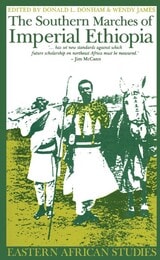
Southern Marches of Imperial Ethiopia
Essays in History and Social AnthropologyDonald L. Donham
Ohio University Press, 2002
This pioneering book, first published to wide acclaim in 1986, traces the way the Ethiopian center and the peripheral regions of the country affected each other. It looks specifically at the expansion of the highland Ethiopian state into the western and southern lowlands from the 1890s up to 1974.
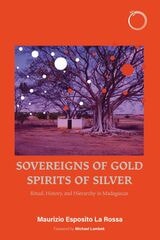
Sovereigns of Gold, Spirits of Silver
Ritual, History, and Hierarchy in MadagascarMaurizio Esposito La Rossa
HAU, 2026
How the inhabitants of Western Madagascar reshape their collective identity and negotiate their place within contemporary society through royal rituals and the reinterpretation of the past.
In a postcolonial republic marked by recurrent crises, royal hierarchy continues to frame social inequalities. Within this context, both the descendants of slaves and the newly rich seek to claim or legitimize new hierarchical positions by reformulating historical narratives and establishing them through royal rituals. Focusing on a cult dedicated to the spirits of the ancestors of the Silver Dynasty, Maurizio Esposito La Rossa investigates the categories of “silver” and “gold” that structure the hierarchy of the Sakalava monarchy and are also mobilized by politicians to legitimize their power.
Through multi-sited ethnography, the book offers a broader reflection on the link between narratives and places and on contrasting ways of conceiving history. Whereas Western historiography—and the rise of the nation-state—tends to produce unified historical narratives, the Sakalava monarchies conceive of history as rooted in specific places and social groups, where multiple versions coexist and contend. Combining the divergent demands of a historical anthropology and an anthropology of history, this book endeavors to recount another history of the Sakalava monarchy, without neglecting the polyphony that characterizes it. By tracing how the past is mobilized, transformed, and contested in the present, the book speaks to anthropologists, historians, and readers interested in the intricate entanglements of history, ritual, and political power in postcolonial settings.
Sovereignty Unhinged
An Illustrated Primer for the Study of Present Intensities, Disavowals, and Temporal DerangementsDeborah A. Thomas and Joseph Masco, editors
Duke University Press, 2023
Contributors. Alex Blanchette, Yarimar Bonilla, Jessica Cattelino, María Elena García, Akhil Gupta, Lochlann Jain, Purnima Mankekar, Joseph Masco, Michael Ralph, Danilyn Rutherford, Arjun Shankar, Kristen L. Simmons, Deborah A. Thomas, Leniqueca A. Welcome, Kaya Naomi Williams, Jessica Winegar
Sovereignty and Extortion
A New State Form in MexicoClaudio Lomnitz
Duke University Press, 2024

Sovereignty, Inc.
Three Inquiries in Politics and EnjoymentWilliam Mazzarella, Eric L. Santner, and Aaron Schuster
University of Chicago Press, 2020
Drawing on anthropology, political theory, philosophy, psychoanalysis, and theater, William Mazzarella, Eric L. Santner, and Aaron Schuster show how politics in the age of Trump functions by mobilizing a contradictory and convoluted enjoyment, an explosive mixture of drives and fantasies that eludes existing portraits of our era. The current political moment turns out to be not so much exceptional as exceptionally revealing of the constitutive tension between enjoyment and economy that has always been a key component of the social order. Santner analyzes the collective dream-work that sustains a new sort of authoritarian charisma or mana, a mana-facturing process that keeps us riveted to an excessively carnal incorporation of sovereignty. Mazzarella examines the contemporary merger of consumer brand and political brand and the cross-contamination of politics and economics, warning against all too easy laments about the corruption of politics by marketing. Schuster, focusing on the extreme theatricality and self-satirical comedy of the present, shows how authority reasserts itself at the very moment of distrust and disillusionment in the system, profiting off its supposed decline. A dazzling diagnostic of our present, Sovereignty, Inc., forces us to come to terms with our complicity in Trump’s political presence and will immediately take its place in discussions of contemporary politics.
Sowing the Forest
A Historical Ecology of People and Their LandscapesWilliam Balée
University of Alabama Press, 2023
Explores how, over centuries, Amazonian people and their cultures have interacted with rainforests
William Balée is a world-renowned expert on the cultural and historical ecology of the Amazon basin. His new collection, Sowing the Forest, is a companion volume to the award-winning Cultural Forests of the Amazon, published in 2013. Sowing the Forest engages in depth with how, over centuries, Amazonian people and their cultures have interacted with rainforests, making the landscapes of palm forests and other kinds of forests, and how these and related forests have fed back into the vocabulary and behavior of current indigenous occupants of the remotest parts of the vast hinterlands.
The book is divided into two parts. Part 1, “Substrate of Intentionality,” comprises chapters on historical ecology, indigenous palm forests, plant names in Amazonia, the origins of the Amazonian plantain, and the unknown “Dark Earth people” of thousands of years ago and their landscaping. Together these chapters illustrate the phenomenon of feedback between culture and environment.
In Part 2, “Scope of Transformation,” Balée lays out his theory of landscape transformation, which he divides into two rubrics—primary landscape transformation and secondary landscape transformation—and for which he provides examples and various specific effects. One chapter compares environmental and social interrelationships in an Orang Asli group in Malaysia and the Ka’apor people of eastern Amazonian Brazil, and another chapter covers loss of language and culture in the Bolivian Amazon. A final chapter addresses the controversial topic of monumentality in the rainforest. Balée concludes by emphasizing the common thread in Amazonian historical ecology: the long-term phenomenon of encouraging diversity for its own sake, not just for economic reasons.
Sowing the Seeds of Change
The Story of the Community Food Bank of Southern ArizonaSeth Schindler
University of Arizona Press, 2021
The numbers are no less shocking in southern Arizona: one in six residents, and one in four children, are food insecure. How can this be in the richest country in the world? This book explores that paradox and the innovative solutions that one organization has developed to create a healthier, more secure tomorrow for the less fortunate among us.
The Community Food Bank of Southern Arizona (CFB) is one of the oldest and most respected food banks in America. It is a widely recognized leader not simply in providing hunger relief but in attacking the root causes of hunger and poverty through community development, education, and advocacy. In 2018, Feeding America—the national organization of food banks—named it “Food Bank of the Year.” The CFB serves as a model for all nonprofits to follow, no matter their mission.
This profusely illustrated book chronicles the CFB’s amazing success and evolution from a tiny grassroots hunger-relief organization to one with more than six thousand workers and an annual budget exceeding $100 million. The book gives voice to the thousands of CFB participants past and present, weaving their profiles and quotes throughout the book. These profiles personalize the history of the CFB and give readers an insider’s perspective on the people and events that shaped the food bank’s success. It shows how individuals working together can help prevent hunger and break the cycle of poverty that is its cause.
The aim of Sowing the Seeds of Change is not to laud the CFB’s achievements. It is to demonstrate to readers that the war against hunger, despite the obstacles, can be won. And not tomorrow. Now!

Space of Detention
The Making of a Transnational Gang Crisis between Los Angeles and San SalvadorElana Zilberg
Duke University Press, 2011

Spaces, Worlds, and Grammar
Edited by Gilles Fauconnier and Eve Sweetser
University of Chicago Press, 1996
These twelve original papers extend the mental-spaces framework and demonstrate its utility in solving deep problems in linguistics and discourse theory. Investigating the ties between mental constructs, they analyze a wide range of phenomena, including analogical counterfactuals; the metaphor system for conceptualizing the self; abstract change expressions in Japanese; mood in Spanish; deictic expressions; copular sentences in Japanese; conditional constructions; and reference in American Sign Language.
The ground-breaking research presented in this volume will be of interest to linguists and cognitive scientists.
The contributors are Claudia Brugman, Gilles Fauconnier, George Lakoff, Yo Matsumoto, Errapel Mejias-Bikandi, Laura A. Michaelis, Gisela Redeker, Jo Rubba, Shigeru Sakahara, Jose Sanders, Eve Sweetser, and Karen van Hoek.
Spaceship in the Desert
Energy, Climate Change, and Urban Design in Abu DhabiGökçe Günel
Duke University Press, 2019