Results by title
3369 books match the query 'Cultural & Social' and 236 start with s
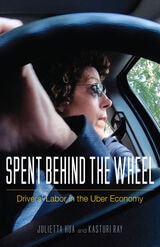
Spent behind the Wheel
Drivers' Labor in the Uber EconomyJulietta Hua
University of Minnesota Press, 2021
Exploring professional passenger driving and the gig economy through feminist theories of labor
Are taxi drivers in today’s era of the ride-hail app performing care work akin to domestic and household labor? So argue the authors of Spent behind the Wheel. Bringing together sociological and legal perspectives with feminist theoretical insights, Julietta Hua and Kasturi Ray examine the case study of contemporary professional passenger driving in the United States. On the one hand, they show, the rise of the gig economy has brought new attention to the industry of professional passenger driving. On the other hand, the vulnerabilities that professional drivers experience remain hidden.
Drawing on interviews with drivers, labor organizers, and members of licensing commissions, as well as case law and other published resources, Hua and Ray argue that working for ride-hail companies like Uber and Lyft shares similarities with driving for taxi companies in the impact on driver lives. Lyft and Uber sell the idea of industry disruption, but in fact they entrench long-standing modes of extracting the reproductive labor of their drivers for the benefit of consumer lives. Reproductive labor—conventionally understood as feminized labor—is extracted, but masked, behind the masculinized, racialized bodies of drivers. Professional driving is thus best understood alongside domestic and other gendered service work as reproductive labors devalued and often demonetized to benefit the national economy.
Spent behind the Wheel is a must for readers interested in critical studies of technological change and the gig economy, showing how drivers’ capacities are drained for the benefit of riders, corporations, and the maintenance of the racial state.
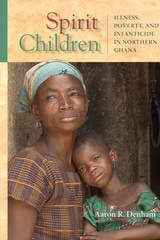
Spirit Children
Illness, Poverty, and Infanticide in Northern GhanaAaron R. Denham
University of Wisconsin Press, 2019
Refusing to generalize or oversimplify, Aaron R. Denham offers an ethnographic study of the spirit child phenomenon in Northern Ghana that considers medical, economic, religious, and political realities. He examines both the motivations of the families and the structural factors that lead to infanticide, framing these within the context of global public health. At the same time, he turns the lens on Western societies and the misunderstandings that prevail in discourse about this controversial practice. Engaging the complexity of the context, local meanings, and moral worlds of those confronting a spirit child, Denham offers visceral accounts of families' life and death decisions.
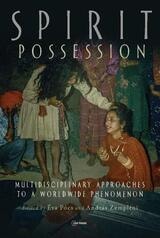
Spirit Possession
Multidisciplinary Approaches to a Worldwide PhenomenonÉva Pócs
Central European University Press, 2022
Possession, a seemingly irrational phenomenon, has posed challenges to generations of scholars rooted in Western notions of body-soul dualism, self and personhood, and a whole set of presuppositions inherited from Christian models of possession that was “good” or “bad.” The authors of the essays in this book present a new and more promising approach. They conceive spirit possession as a form of communication, of expressivity, of culturally defined behavior that should be understood in the context of local, vernacular theories and empiric reflections.
With the aim of reformulating the comparative anthropology of spirit possession, the editors have opened corridors between previously separate areas of research. Together, anthropologists and historians working on several historical periods and in different European, African, South American, and Asian cultural areas attempt to redefine the very concept of possession, freeing it from the Western notion of the self and more clearly delineating it from related matters such as witchcraft, devotion, or mysticism. The book also provides an overview of new research directions, including novel methods of participant observation and approaches to spirit possession as indigenous historiography
Spirit Wives and Church Mothers
Marriage, Survival, and Healing in Central MozambiqueChristy K. Schuetze
University of Wisconsin Press, 2023
Drawing on years of field research, Schuetze offers a richly drawn ethnographic analysis of these important religious transformations in the lives of female participants. Illustrating how economic and social context shapes the possibilities for—and forms of—women’s empowerment, Spirit Wives andChurch Mothers intervenes in scholarly debates about the nature of agency and challenges universalist Western feminist assumptions about the form of women’s liberation.
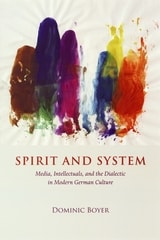
Spirit and System
Media, Intellectuals, and the Dialectic in Modern German CultureDominic Boyer
University of Chicago Press, 2005
Boyer analyzes the creation and mediation of the social knowledge of "German-ness" from nineteenth-century university culture and its philosophies of history, to the media systems and redemptive public cultures of the Third Reich and the German Democratic Republic, to the present-day experiences of former East German journalists seeking to explain life in post-unification Germany. Throughout this study, Boyer reveals how dialectical knowledge of "German-ness"—that is, knowledge that emphasizes a cultural tension between an inner "spirit" and an external "system" of social life —is modeled unconsciously upon intellectuals' self-knowledge as it tracks their fluctuation between alienation and utopianism in their interpretations of nation and modernity.
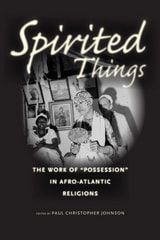
Spirited Things
The Work of "Possession" in Afro-Atlantic ReligionsEdited by Paul Christopher Johnson
University of Chicago Press, 2014
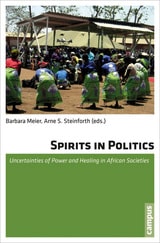
Spirits in Politics
Uncertainties of Power and Healing in African SocietiesEdited by Barbara Meier and Arne S. Steinforth
Campus Verlag, 2013
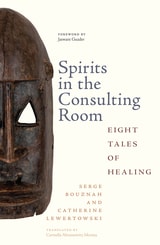
Spirits in the Consulting Room
Eight Tales of HealingSerge Bouznah
Rutgers University Press, 2023
Drawn from two decades of their experience with transcultural mediation, Spirits in the Consulting Room tells the stories of eight patients—mainly migrants—and their families. Each chapter focuses on a different patient, and Christelle, Djibril, Moncef, Alhassane, Jacinthe, Amy, Cyril, Alice, and Pierre leap off the page as distinct people with unique situations. Together, these chapters reveal how patients’ comprehension of their symptoms is shaped by their cultural background, while recounting the challenges of translating that into terms the doctors can grasp.
The book shows how trained transcultural mediators can help to redress the power imbalance between doctors and the migrants they treat, providing patients with advocates who respect the authority of their background and experiences and don’t just take the side of the medical professionals. The groundbreaking insights modeled in this book can be applied to any medical situation where doctors and patients find themselves speaking different languages.
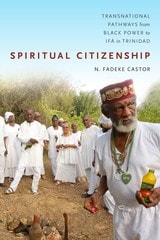
Spiritual Citizenship
Transnational Pathways from Black Power to Ifá in TrinidadN. Fadeke Castor
Duke University Press, 2017

Sports in Africa, Past and Present
Todd Cleveland
Ohio University Press, 2020
These groundbreaking essays demonstrate how Africans past and present have utilized sports to forge complex identities and shape Africa’s dynamic place in the world.
Since the late nineteenth century, modern sports in Africa have both reflected and shaped cultural, social, political, economic, generational, and gender relations on the continent. Although colonial powers originally introduced European sports as a means of “civilizing” indigenous populations and upholding then current notions of racial hierarchies and “muscular Christianity,” Africans quickly appropriated these sporting practices to fulfill their own varied interests. This collection encompasses a wide range of topics, including women footballers in Nigeria, Kenya’s world-class long-distance runners, pitches and stadiums in communities large and small, fandom and pay-to-watch kiosks, the sporting diaspora, sports pedagogy, sports as resistance and as a means to forge identity, sports heritage, the impact of politics on sports, and sporting biography.

Squatter Life
Persistence at the Urban Margins of Buenos AiresJavier Auyero and Sofía Servián
Duke University Press, 2025
Sri Lanka--Ethnic Fratricide and the Dismantling of Democracy
Stanley Jeyaraja Tambiah
University of Chicago Press, 1986
"In this concise, informative, lucidly written book, scrupulously documented and well indexed, [Tambiah] trains his dispassionate anthropologist's eye on the tangled roots of an urgent, present-day problem in the passionate hope that enlightenment, understanding, and a generous spirit of compromise may yet be able to prevail."—Merle Rubin, Christian Science Monitor
"An incredibly rich and balanced analysis of the crisis. It is exemplary in highlighting the general complexities of ethnic crises in long-lived societies carrying a burden of historical memories."—Amita Shastri, Journal of Asian Studies
"Tambiah makes an eloquent case for pluralist democracy in a country abundantly endowed with excuses to abandon such an approach to politics."—Donald L. Horowitz, New Republic
"An excellent and thought-provoking book, for anyone who cares about Sri Lanka."—Paul Sieghart, Los Angeles Times Book Review
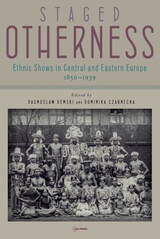
Staged Otherness
Ethnic Shows in Central and Eastern Europe, 1850–1939Dagnoslaw Demski
Central European University Press, 2022
The cultural phenomenon of exhibiting non-European people in front of the European audiences in the 19th and 20th century was concentrated in the metropolises in the western part of the continent. Nevertheless, traveling ethnic troupes and temporary exhibitions of non-European humans took place also in territories located to the east of the Oder river and Austria. The contributors to this edited volume present practices of ethnographic shows in Russia, Poland, Czechia, Slovenia, Hungary, Germany, Romania, and Austria and discuss the reactions of local audiences. The essays offer critical arguments to rethink narratives of cultural encounters in the context of ethnic shows. By demonstrating the many ways in which the western models and customs were reshaped, developed, and contested in Central and Eastern European contexts, the authors argue that the dominant way of characterizing these performances as “human zoos” is too narrow.
The contributors had to tackle the difficult task of finding traces other than faint copies of official press releases by the tour organizers. The original source material was drawn from local archives, museums, and newspapers of the discussed period. A unique feature of the volume is the rich amount of images that complement every single case study of ethnic shows.
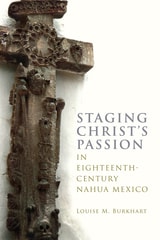
Staging Christ's Passion in Eighteenth-Century Nahua Mexico
Louise M. Burkhart
University Press of Colorado, 2023
A cast with over fifty distinct roles acted out events extending from Palm Sunday to Christ’s death on the cross. One actor became a localized embodiment of Jesus through a process of investiture and mimesis that carried aspects of pre-Columbian materialized divinity into the later colonial period. The play told afar richer version of the Passion story than what later colonial Nahuas typically learned from their priests or catechists. And by assimilating Jesus to an Indigenous, or macehualli, identity, the players enacted a protest against colonial rule.
The situation in eighteenth-century New Spain presents both a unique confrontation between Indigenous communities and Enlightenment era religious reformers and a new chapter in an age-old power game between popular practice and religious orthodoxy. By focusing on how Nahuas localized the universalizing narrative of Christ’s Passion, Staging Christ’s Passion in Eighteenth-Century Nahua Mexico offers an unusually in-depth view of religious life under colonial rule.
Burkhart’s accompanying website also makes available transcriptions and translations of the six Nahuatl-language plays, four Spanish-language plays composed in response to the suppression of the Nahuatl practice, and related documentation, providing a valuable resource for anyone interested in consulting the original material.
Comments restricted to single page
plays composed in response to the suppression of the Nahuatl practice, and related documentation,
providing a valuable resource for anyone interested in consulting the original material
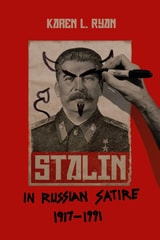
Stalin in Russian Satire, 1917–1991
Karen L. Ryan
University of Wisconsin Press, 2009
Examining works from the 1917 Revolution to the fall of the Soviet Union in 1991, Karen L. Ryan reveals how satirical treatments of Stalin often emphasize his otherness, distancing him from Russian culture. Some satirists portray Stalin as a madman. Others show him as feminized, animal-like, monstrous, or diabolical. Stalin has also appeared as the unquiet dead, a spirit that keeps returning to haunt the collective memory of the nation. While many writers seem anxious to exorcise Stalin from the body politic, for others he illuminates the self in disturbing ways. To what degree Stalin was and is “in us” is a central question of all these works. Although less visible than public trials, policy shifts, or statements of apology, Russian satire has subtly yet insistently participated in the protracted process of de-Stalinization.
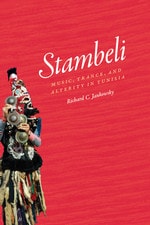
Stambeli
Music, Trance, and Alterity in TunisiaRichard C. Jankowsky
University of Chicago Press, 2010
Part ethnography, part history of the complex relationship between Tunisia’s Arab and sub-Saharan populations, Stambeli will be welcomed by scholars and students of ethnomusicology, anthropology, African studies, and religion.
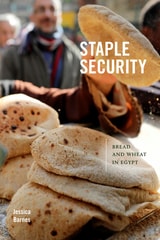
Staple Security
Bread and Wheat in EgyptJessica Barnes
Duke University Press, 2022
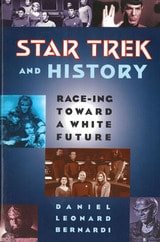
Star Trek and History
Race-ing toward a White FutureBernardi, Daniel Leonard
Rutgers University Press, 1998
Star Trek and History traces the shifting and reforming meaning of race articulated throughout the Star Trek television series, feature films, and fan community. Daniel Bernardi investigates and politicizes the presentation of race in Star Trek in the original series of the 1960s, the feature films and television spin-offs of the 1980s and 1990s, and the current fan community on the Internet. Through both critical and historical analysis, the book proposes a method of studying the framing of race in popular film and television that integrates sociology, critical theory, and cultural studies.
Bernardi examines the representational and narrative functions of race in Star Trek and explores how the meaning of race in the science fiction series has been facilitated or constrained by creative and network decision-making, by genre, by intertextuality, and by fans. He interprets how the changing social and political movements of the times have influenced the production and meaning of Trek texts and the ways in which the ongoing series negotiated and reflected these turbulent histories. Most significantly, Bernardi tells us why is it important for readers to better understand the articulation of race in this enduring icon of American popular culture.
Starring Mandela and Cosby
Media and the End(s) of ApartheidRon Krabill
University of Chicago Press, 2010
During the worst years of apartheid, the most popular show on television in South Africa—among both Black and White South Africans—was The Cosby Show. Why did people living under a system built on the idea that Black people were inferior and threatening flock to a show that portrayed African Americans as comfortably mainstream? Starring Mandela and Cosby takes up this paradox, revealing the surprising impact of television on racial politics.
The South African government maintained a ban on television until 1976, and according to Ron Krabill, they were right to be wary of its potential power. The medium, he contends, created a shared space for communication in a deeply divided nation that seemed destined for civil war along racial lines. At a time when it was illegal to publish images of Nelson Mandela, Bill Cosby became the most recognizable Black man in the country, and, Krabill argues, his presence in the living rooms of white South Africans helped lay the groundwork for Mandela’s release and ascension to power.
Weaving together South Africa’s political history and a social history of television, Krabill challenges conventional understandings of globalization, offering up new insights into the relationship between politics and the media.
State Formation in the Liberal Era
Capitalisms and Claims of Citizenship in Mexico and PeruEdited by Ben Fallaw and David Nugent
University of Arizona Press, 2020
Mexico and Peru are widely regarded as two great centers of Latin American civilization. In State Formation in the Liberal Era, a diverse group of historians and anthropologists from the United States, the United Kingdom, and Latin America compare how the two countries advanced claims of statehood from the dawning of the age of global liberal capitalism to the onset of the Cold War. Chapters cover themes ranging from foreign banks to road building and labor relations. The introductions serve as an original interpretation of Peru’s and Mexico’s modern histories from a comparative perspective.
Focusing on the tensions between disparate circuits of capital, claims of statehood, and the contested nature of citizenship, the volume spans disciplinary and geographic boundaries. It reveals how the presence (or absence) of U.S. influence shaped Latin American history and also challenges notions of Mexico’s revolutionary exceptionality. The book offers a new template for ethnographically informed comparative history of nation building in Latin America.

State Healthcare and Yanomami Transformations
A Symmetrical EthnographyJosé Antonio Kelly
University of Arizona Press, 2011
That long-standing dichotomy is challenged in this new ethnography by anthropologist José Kelly. Kelly places the study of culture and cosmology squarely within the context of the modern nation-state and its institutions. He explores Indian-white relations as seen through the operation of a state-run health system among the indigenous Yanomami of southern Venezuela.
With theoretical foundations in the fields of medical and Amazonian anthropology, Kelly sheds light on how Amerindian cosmology shapes concepts of the state at the community level. The result is a symmetrical anthropology that treats white and Amerindian perceptions of each other within a single theoretical framework, thus expanding our understanding of each group and its influences on the other. This book will be valuable to those studying Amazonian peoples, medical anthropology, development studies, and Latin America. Its new takes on theory and methodology make it ideal for classroom use.
State Work
Public Administration and Mass IntellectualityStefano Harney
Duke University Press, 2002
State Work begins with an ethnographic account of Harney’s work as a midlevel manager within an Ontario government initiative charged with leading the province’s efforts to combat racism. Through readings of material such as The X-Files and Law & Order, Harney then reviews how popular images of the state and government labor are formed within American culture and how these ideas shape everyday life. He highlights the mutually dependent roles played in state work by the citizenry and civil servants. Using as case studies Al Gore’s National Partnership for Reinventing Government and a community-policing project in New York City, Harney also critiques public management literature and performance measurement theories. He concludes his study with a look at the motivations of state workers.
State of Fear
Policing a Postcolonial CityJoshua Barker
Duke University Press, 2024

Stateless
Tienshi Lara Chen
National University of Singapore Press, 2023
"In the springtime of the year that I was twenty-one, I found myself stuck at the border between two familiar countries, unable to enter either. I had never felt my statelessness so keenly.”
Japan’s 1971 termination of diplomatic ties with the Republic of China left 9,200 Chinese residents stateless. Tienshi “Lara” Chen was one of them, born to Chinese parents in Yokohama’s Chinatown. What does it mean to be stateless? What does it feel like?
To answer, Stateless presents Chen’s engaging autobiographical account of her bi-cultural upbringing and Japanese education. She reflects on her experience of statelessness eventually led her into a career spanning academia and activism, and she analyzes the contradictions inherent in the concepts of nationality, nation-state, and citizenship, in a world where individual nationality, identity, and experience are increasingly complex. She concludes that the current system of regulating individuals with citizenship is unworkable in the long run.
Blending life writing, auto-ethnography, and a study of stateless communities around Asia, this book unpacks the idea of citizenship by showing the hidden everyday narratives and lived experiences of stateless persons who have no legal ties to any nation-state. Originally published in Japanese, this adapted and updated English edition critically engages with questions of borders, mobility, belonging, and identity.
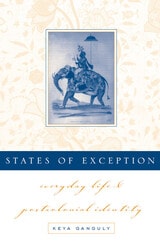
States Of Exception
Everyday Life and Postcolonial IdentityKeya Ganguly
University of Minnesota Press, 2001
Explores the conflict between capitalism and tradition in an immigrant community.
A philosophical anthropology of everyday experience, this book is also a deeply informed and thought-provoking reflection on the work of cultural critique. States of Exception looks into a community of immigrants from India living in southern New Jersey—a group to whom the author, as a daughter of two of its members, enjoyed unprecedented access.
Her position allows Keya Ganguly to approach the culture of a middle-class group (albeit one that is marginalized by racial prejudice), while the group’s relatively comfortable and protected style of life offers unusual insight into the concept of the everyday and the sense in which a seemingly commonplace existence can be understood as in crisis: a state of exception. Thus, Ganguly draws on the work of the Frankfurt School, particularly Walter Benjamin and Theodor Adorno, to explore the possibilities of a dialectical critique of the everyday—a state of exception informing ordinary yet crisis-ridden narratives of the self under late capitalism.
States of Grace
Senegalese in Italy and the New European ImmigrationDonald Martin Carter
University of Minnesota Press, 1997
States of Grace was first published in 1997. Minnesota Archive Editions uses digital technology to make long-unavailable books once again accessible, and are published unaltered from the original University of Minnesota Press editions.
Leaving their depleted fields for better prospects, Senegalese immigrants have made their way to Italy in significant numbers. What this migration means, in the context of both the migratory traditions and conditions of Africa and the history and future of the European nation-state, is the subject of this timely and ambitious book.
Focusing on Turin, the northern Italian point of entry for so many Senegalese, States of Grace chronicles the arrival and formation of a transnational African Islamic community in a largely Catholic Western European country, one that did not have immigrant legislation until 1991. With no colonial relation to Italy, the Senegalese represent the vanguard of population movements expanding outside of the arch of former colonial powers.
Donald Martin Carter locates the Senegalese migration in the context of past African internal and international migration and of present crises in West African agriculture. He also shows how the Senegalese migration, constituting a "phenomenon" and catalyzing new immigration restrictions among European states, calls into question the European interstate system, the future of the nation-state, and the nature of its relationship with non-European states.
Throughout Europe, protectionist immigration policies are often crafted in chauvinist and racist tones in which "migrants" is a euphemism for blacks, Arabs, and Asians. States of Grace uses Senegalese migration to demonstrate that racial conceptions are crucial to understanding the classifications of non-national "outside" and internal "other." The book is a bracing encounter with the ever-increasing cultural and ethnic heterogeneity that is the new and pressing reality of European society.
Donald Martin Carter is visiting assistant professor of anthropology at Johns Hopkins University.
States of Imagination
Ethnographic Explorations of the Postcolonial StateThomas Blom Hansen and Finn Stepputat, eds.
Duke University Press, 2001
Focusing on the micropolitics of everyday state-making, the contributors examine the mythologies, paradoxes, and inconsistencies of the state through ethnographies of diverse postcolonial practices. They show how the authority of the state is constantly challenged from the local as well as the global and how growing demands to confer rights and recognition to ever more citizens, organizations, and institutions reveal a persistent myth of the state as a source of social order and an embodiment of popular sovereignty. Demonstrating the indispensable value of ethnographic work on the practices and the symbols of the state, States of Imagination showcases a range of studies and methods to provide insight into the diverse forms of the postcolonial state as an arena of both political and cultural struggle.
This collection will interest students and scholars of anthropology, cultural studies, sociology, political science, and history.
Contributors. Lars Buur, Mitchell Dean, Akhil Gupta, Thomas Blom Hansen, Steffen Jensen, Aletta J. Norval, David Nugent, Sarah Radcliffe, Rachel Sieder, Finn Stepputat, Martijn van Beek, Oskar Verkaaik, Fiona Wilson

States of Violence
Fernando Coronil and Julie Skurski, Editors
University of Michigan Press, 2005
By means of a combination of detailed historical studies and imaginative reflection, this book explores the often unrecognized violent foundations of modern nations. Focusing on the relations between the state and the domestic order, it directs attention to contests over the establishment and representation of meanings and addresses the impact of state-centered categories and narratives on the organization and collective remembering of violence. The essays cover a wide range of regions, time periods, and processes, including the Middle East, South Asia, Latin America, the United States, and Europe, and span violent uprisings as well as the quotidian administration of the law. As its title suggests, States of Violence brings together the stable and the transient, the institutional and the experiential, the state sanctioned and the insurgent, inviting recognition of the multiple intersections of practices of governance and processes of feeling.
"Few scholars have managed as effectively as these to denature the place of violence in modern social life and thought. They make it abundantly plain that the frank brutality, often associated with colonial contexts, is inseparable from less acknowledged forms of "peaceful violence" that pervade much of our contemporary political life."
-Jean Comaroff, Bernard E. and Ellen C. Distinguished Service Professor, University of Chicago
Fernando Coronil, a Venezuelan citizen, is Associate Professor of Anthropology and History at the University of Michigan and Director of the Latin American and Caribbean Studies Program. His research focuses on contemporary historical transformations in Latin America and on theoretical issues concerning the state, modernity, and postcolonialism. His numerous publications include The Magical State: Nature, Money, and Modernity in Venezuela; "Beyond Occidentalism: Towards Non-Imperial Geohistorical Categories"; and the introductory essay in Cuban Counterpoint: Tobacco and Sugar, by Fernando Ortiz. He is completing a book on the coup against President Chávez of Venezuela.
Julie Skurski teaches in the Departments of Anthropology and History at the University of Michigan and is the Associate Director of the Doctoral Program in Anthropology and History. Her research concerns the intersections of national, racial, and gender relations in Latin America, with a focus on popular religiosity. Her publications include "The Ambiguities of Authenticity in Latin America: Doña Bárbara and the Construction of National Identity," in Becoming National, G. Eley and R. Suny, eds. She is currently completing Civilizing Barbarism, a book on gender, mestizaje, and the state in Venezuela.

Status
Why Is It Everywhere? Why Does It Matter?Cecilia L. Ridgeway
Russell Sage Foundation, 2019
Ridgeway’s research on status has important implications for our understanding of social inequality. Distinct from power or wealth, status is prized because it provides affirmation from others and affords access to valuable resources. Ridgeway demonstrates how the conferral of status inevitably contributes to differing life outcomes for individuals, with impacts on pay, wealth creation, and health and wellbeing. Status beliefs are widely held views about who is better in society than others in terms of esteem, wealth, or competence. These beliefs confer advantages which can exacerbate social inequality. Ridgeway notes that status advantages based on race, gender, and class—such as the belief that white men are more competent than others—are the most likely to increase inequality by facilitating greater social and economic opportunities.
Ridgeway argues that status beliefs greatly enhance higher status groups’ ability to maintain their advantages in resources and access to positions of power and make lower status groups less likely to challenge the status quo. Many lower status people will accept their lower status when given a baseline level of dignity and respect—being seen, for example, as poor but hardworking. She also shows that people remain willfully blind to status beliefs and their effects because recognizing them can lead to emotional discomfort. Acknowledging the insidious role of status in our lives would require many higher-status individuals to accept that they may not have succeeded based on their own merit; many lower-status individuals would have to acknowledge that they may have been discriminated against.
Ridgeway suggests that inequality need not be an inevitable consequence of our status beliefs. She shows how status beliefs can be subverted—as when we reject the idea that all racial and gender traits are fixed at birth, thus refuting the idea that women and people of color are less competent than their male and white counterparts. This important new book demonstrates the pervasive influence of status on social inequality and suggests ways to ensure that it has a less detrimental impact on our lives.

Staying Sober in Mexico City
By Stanley Brandes
University of Texas Press, 2002
Staying sober is a daily struggle for many men living in Mexico City, one of the world's largest, grittiest urban centers. In this engaging study, Stanley Brandes focuses on a common therapeutic response to alcoholism, Alcoholics Anonymous (A.A.), which boasts an enormous following throughout Mexico and much of Latin America.
Over several years, Brandes observed and participated in an all-men's chapter of A.A. located in a working class district of Mexico City. Employing richly textured ethnography, he analyzes the group's social dynamics, therapeutic effectiveness, and ritual and spiritual life. Brandes demonstrates how recovering alcoholics in Mexico redefine gender roles in order to preserve masculine identity. He also explains how an organization rooted historically in evangelical Protestantism has been able to flourish in Roman Catholic Latin America.
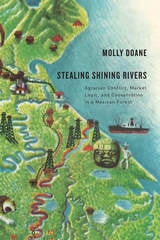
Stealing Shining Rivers
Agrarian Conflict, Market Logic, and Conservation in a Mexican ForestMolly Doane
University of Arizona Press, 2012
What happens to indigenous people when their homelands are declared by well-intentioned outsiders to be precious environmental habitats? In this revelatory book, Molly Doane describes how a rain forest in Mexico’s southern state of Oaxaca was appropriated and redefined by environmentalists who initially wanted to conserve its biodiversity. Her case study approach shows that good intentions are not always enough to produce results that benefit both a habitat and its many different types of inhabitants.
Doane begins by showing how Chimalapas—translated as “shining rivers”—has been “produced” in various ways over time, from a worthless wasteland to a priceless asset. Focusing on a series of environmental projects that operated between 1990 and 2008, she reveals that environmentalists attempted to recast agrarian disputes—which actually stemmed from government-supported corporate incursions into community lands and from unequal land redistribution—as environmental problems.
Doane focuses in particular on the attempt throughout the 1990s to establish a “Campesino Ecological Reserve” in Chimalapas. Supported by major grants from the World Wildlife Foundation (WWF), this effort to foster and merge agrarian and environmental interests was ultimately unsuccessful because it was seen as politically threatening by the state. By 2000, the Mexican government had convinced the WWF to redirect its conservation monies to the state government and its agencies.
The WWF eventually abandoned attempts to establish an “enclosure” nature reserve in the region or to gain community acceptance for conservation. Instead, working from a new market-based model of conservation, the WWF began paying cash to individuals for “environmental services” such as reforestation and environmental monitoring.

Stealing with the Eyes
Imaginings and Incantations in IndonesiaWill Buckingham
Haus Publishing, 2018
Through his encounters with these remarkable craftsmen—which in relating her also interweaves with Tanimbarese history, myth, and philosophy dating back to ancient times— we are shown the forces at play in all of our lives: the struggle between the powerful and the powerless, the tension between the past and the future, and how to make sense of a world that is in constant flux.
Steeped in Heritage
The Racial Politics of South African Rooibos TeaSarah Ives
Duke University Press, 2017

Steps to an Ecology of Mind
Collected Essays in Anthropology, Psychiatry, Evolution, and EpistemologyGregory Bateson
University of Chicago Press, 2000
Stigma and Culture
Last-Place Anxiety in Black AmericaJ. Lorand Matory
University of Chicago Press, 2015
Matory describes the competitive process that hierarchically structures their self-definition as ethnic groups and the similar process by which middle-class African Americans seek distinction from their impoverished compatriots. Drawing on research at universities such as Howard, Harvard, and Duke and among their alumni networks, he details how university life—while facilitating individual upward mobility, touting human equality, and regaling cultural diversity—also perpetuates the cultural standards that historically justified the dominance of some groups over others. Combining his ethnographic findings with classic theoretical insights from Frantz Fanon, Fredrik Barth, Erving Goffman, Pierre Bourdieu and others—alongside stories from his own life in academia—Matory sketches the university as an institution that, particularly through the anthropological vocabulary of culture, encourages the stigmatized to stratify their own.
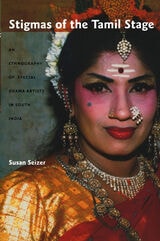
Stigmas of the Tamil Stage
An Ethnography of Special Drama Artists in South IndiaSusan Seizer
Duke University Press, 2005
Special Drama is looked down upon by the middle- and upper-classes as too popular, too vulgar, and too “mixed.” The artists are stigmatized: people insult them in public and landlords refuse to rent to them. Stigma falls most heavily, however, on actresses, who are marked as “public women” by their participation in Special Drama. As Susan Seizer’s sensitive study shows, one of the primary ways the performers deal with such stigma is through humor and linguistic play. Their comedic performances in particular directly address questions of class, culture, and gender deviations—the very issues that so stigmatize them. Seizer draws on extensive interviews with performers, sponsors, audience members, and drama agents as well as on careful readings of live Special Drama performances in considering the complexities of performers’ lives both on stage and off.
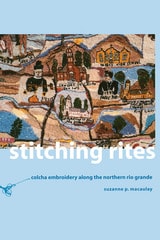
Stitching Rites
Colcha Embroidery along the Northern Rio GrandeSuzanne P. MacAulay
University of Arizona Press, 2000
In the San Luis Valley of southern Colorado, there thrives a folk tradition with links to both the past and future.
Colcha embroidery is a traditional Spanish colonial style of textile, bed covering, or wall hanging dating from the early nineteenth century. In the first book to consider this craft, Suzanne MacAulay provides a detailed account of this folk art tradition that is both old and constantly renewing itself, presenting a sensitive portrayal of artists and the contexts in which they live and work.
Stitching Rites reveals how art, history, and memory interweave in a rich creative web. Based on archival research and on extensive interviews with artists, the book reveals the personal motivations of the embroiderers and their relationships with their work, with each other, with their community, and with outsiders. Through stitchers like Josephine Lobato and the San Luis Ladies Sewing Circle, MacAulay shows how colcha creation is bound up in a perpetual round of cultural commentary and self-reflection.
MacAulay includes detailed descriptions of changes in stitching techniques, themes, and styles to show the impact of a wide range of outside influences on the lives of the artists and on the art form. She also provides a discussion of New Mexican Carson colchas and their place in the collector market. By focusing on the individual creative act, she shows how colcha embroidery is used to record how a stitcher's memories of her life are intertwined with the history of her community.
Through this picture of a community of embroiderers, MacAulay helps us to understand their stitching rites and sheds new light on the relationship between Hispanic and Anglo cultures.
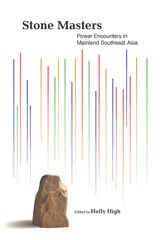
Stone Masters
Power Encounters in Mainland Southeast AsiaEdited by Holly High
National University of Singapore Press, 2022
Stones and stone masters are an important focus of animist religious practice in Southeast Asia. Recent studies on animism see animist rituals not as a mere metaphor for community or shared values, but as a way of forming and maintaining relationships with occult presences. This book features city pillars, statues, megaliths, termite mounds, mountains, rocks found in forests, and stones that have been moved to shrines, as well as the territorial cults which can form around them. The contributors extend and deepen the recent literature on animism to form a new analytical perspective on these cults across mainland Southeast Asia. Not just a collection of exemplary ethnographies, Stone Masters is also a deeply comparative volume that develops its ideas through a meshwork of regional entanglements, parallels, and differences, before entering into a dialogue with debates on power, mastery, and the social theory of animism globally.
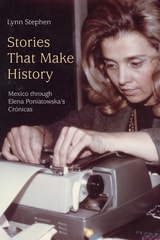
Stories That Make History
Mexico through Elena Poniatowska’s CrónicasLynn Stephen
Duke University Press, 2021

Stories as Equipment for Living
Last Talks and Tales of Barbara MyerhoffBarbara Myerhoff
University of Michigan Press, 2007
Barbara Myerhoff's groundbreaking work in reflexivity and narrative ethnography broke with tradition by focusing not on the raw ethnographic data, but on her interaction with those she studied. Myerhoff's unfinished projects, including her final talks on storytelling, ritual, and the "culture of aging and Yiddishkeit," offer a magisterial summary of her life's work.
"The beauty of Stories as Equipment for Living is the quality of being a compilation of rescued fragments, bits and pieces of a great master's writing and thinking that were coming towards synthesis but had never reached a finished form prior to her death. This collection is an examination of the place of narrative in human life, the synthetic nature of culture and the constant search for visibility particularly by those relegated for one reason or another to the margins. A thought-provoking book worthy of extended reflection."
---Jack Kugelmass, Professor of Anthropology and Director of Jewish Studies, University of Florida
"Stories as Equipment for Living achieves a nice balance between preserving Myerhoff's work in its original form and reconstructed contexts, but presenting it in a manner relevant to readers a generation after her death. The book documents Myerhoff's growing involvement with Jewish culture, the actual process of anthropological work through field notes, and the picture of how she always was bouncing the fine details of this combined professional and personal venture off the 'big questions' of anthropology in its broadest sense."
---Harvey E. Goldberg, Professor of Sociology and Anthropology, Hebrew University, Israel
"These essays capture the rhythm of Barbara Myerhoff's words and her vivid and distinctive train of thought, bringing the reader into the classroom of one of anthropology's finest lecturers. As an anthropologist with a poet's gift for language, she utilizes the tools of ethnography and extraordinary powers of observation---a remarkable 'ethnographic eye'---to explore the outward expressions and inner lives of the Fairfax neighborhood of L.A. These stories are not only glorious introductions to the study of culture, but provide in their revelations a reason for studying it. They are required reading for anyone passionate to know what an anthropologist can teach us about communities and ultimately about ourselves."
---Steve Zeitlin, Director, City Lore: The New York Center for Urban Folk Culture
"Master of the third voice, the voice of collaboration, Myerhoff is at once a consummate listener and inspired storyteller. This book offers a rare and luminous opening into the working process and wisdom of one of the great anthropologists of the twentieth century."
---Barbara Kirshenblatt-Gimblett, Professor of Performance Studies at New York University and coauthor of They Called Me Mayer July: Painted Memories of a Jewish Childhood in Poland Before the Holocaust
"Myerhoff and her collaborators have given her 'Hasidim,' her disciples old and new, a final and precious gift."
---Jonathan Boyarin, The Robert M. Beren Distinguished Professor of Modern Jewish Studies at the University of Kansas and author of Thinking in Jewish
Barbara Myerhoff was a renowned anthropologist who did pioneering work in gerontology, Jewish studies, folklore, and narrative anthropology. She is best known for her ethnography of and personal involvement with a community of elderly immigrant Jews in California. Her writings and lectures have had an enormous impact on all of these areas of study, and her books are widely celebrated, especially Number Our Days, whose companion documentary film won an Academy Award.
Marc Kaminsky is a psychotherapist, a poet, a writer, and the former codirector of the Institute on Humanities, Arts and Aging of the Brookdale Center on Aging.
Mark Weiss is a writer, an editor, a translator, and a poet; his books include the widely praised Across the Line/Al Otro Lado.
Deena Metzger is a novelist, a poet, and the founding codirector (with Marc Kaminsky) of the Myerhoff Center.
Thomas R. Cole is the Beth and Toby Grossman Professor and Director of the McGovern Center for Health, Humanities, and the Human Spirit at the University of Texas Health Science Center in Houston, and a Professor of Humanities in the Department of Religious Studies at Rice University; his expertise lies in the history of aging and humanistic gerontology.
Stories of Capitalism
Inside the Role of Financial AnalystsStefan Leins
University of Chicago Press, 2018
Building on recent developments in the social studies of finance, Stories of Capitalism provides the first ethnography of financial analysis. Drawing on two years of fieldwork in a Swiss bank, Stefan Leins argues that financial analysts construct stories of possible economic futures, presenting them as coherent and grounded in expert research and analysis. In so doing, they establish a role for themselves—not necessarily by laying bare empirically verifiable trends but rather by presenting the market as something that makes sense and is worth investing in. Stories of Capitalism is a nuanced look at how banks continue to boost investment—even in unstable markets—and a rare insider’s look into the often opaque financial practices that shape the global economy.
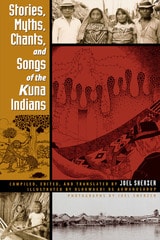
Stories, Myths, Chants, and Songs of the Kuna Indians
Compiled, edited, and translated by Joel Sherzer
University of Texas Press, 2004
The Kuna Indians of Panama, probably best known for molas, their colorful appliqué blouses, also have a rich literary tradition of oral stories and performances. One of the largest indigenous groups in the South American tropics, the majority of them (about 70,000) reside in Kuna Yala, a string of island and mainland villages stretching along the Caribbean coast. It is here that Joel Sherzer lived among them, photographing and recording their verbal performances, which he feels are representative of the beauty, complexity, and diversity of the oral literary traditions of the indigenous peoples of Latin America.
This book is organized into three types of texts: humorous and moralistic stories; myths and magical chants; and women's songs. While quite different from one another, they share features characteristic of Kuna literature as a whole, including appreciation of their environment and a remarkable knowledge of their plants and animals; a belief in spirits as an important component of their world in curing, magic, and aesthetics; and, especially, great humor and a sense of play.
Vividly illustrated by a Kuna artist and accompanied by photographs that lend a sense of being present at the performances, the texts provide readers with a unique aesthetic perspective on this rich culture while preserving an endangered and valuable indigenous oral tradition.
Storytelling Globalization from the Chaco and Beyond
Mario Blaser
Duke University Press, 2010
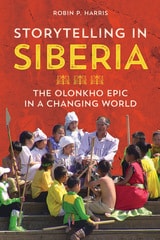
Storytelling in Siberia
The Olonkho Epic in a Changing WorldRobin P. Harris
University of Illinois Press, 2017
Drawing on her ten years of living in the Russian North, Robin P. Harris documents how the Sakha have used the Masterpiece program to revive olonkho and strengthen their cultural identity. Harris’s personal relationships with and primary research among Sakha people provide vivid insights into understanding olonkho and the attenuation, revitalization, transformation, and sustainability of the Sakha’s cultural reemergence. Interdisciplinary in scope, Storytelling in Siberia considers the nature of folklore alongside ethnomusicology, anthropology, comparative literature, and cultural studies to shed light on how marginalized peoples are revitalizing their own intangible cultural heritage.
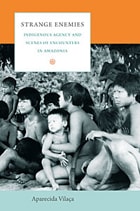
Strange Enemies
Indigenous Agency and Scenes of Encounters in AmazoniaAparecida Vilaça
Duke University Press, 2010
During the 1940s and 1950s, white rubber tappers invading the Wari’ lands raided the native villages, shooting and killing their victims as they slept. These massacres prompted the Wari’ to initiate a period of intense retaliatory warfare. The national government and religious organizations subsequently intervened, seeking to “pacify” the Indians. Aparecida Vilaça was able to interview both Wari’ and non-Wari’ participants in these encounters, and here she shares their firsthand narratives of the dramatic events. Taking the Wari’ perspective as its starting point, Strange Enemies combines a detailed examination of these cross-cultural encounters with analyses of classic ethnological themes such as kinship, shamanism, cannibalism, warfare, and mythology.

Strange Future
Pessimism and the 1992 Los Angeles RiotsMin Hyoung Song
Duke University Press, 2005
Song considers works that address the riots and often the traumatic place of the Korean American community within them: the independent documentary Sa-I-Gu (Korean for April 29, the date the riots began), Chang-rae Lee’s novel Native Speaker, the commercial film Strange Days, and the experimental drama of Anna Deavere Smith, among many others. He describes how cultural producers have used the riots to examine the narrative of national decline, manipulating language and visual elements, borrowing and refashioning familiar tropes, and, perhaps most significantly, repeatedly turning to metaphors of bodily suffering to convey a sense of an unraveling social fabric. Song argues that these aesthetic experiments offer ways of revisiting the traumas of the past in order to imagine more survivable futures.
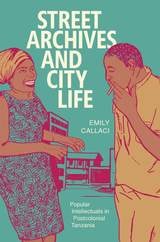
Street Archives and City Life
Popular Intellectuals in Postcolonial TanzaniaEmily Callaci
Duke University Press, 2017
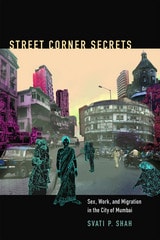
Street Corner Secrets
Sex, Work, and Migration in the City of MumbaiSvati P. Shah
Duke University Press, 2014
Street Life under a Roof
Youth Homelessness in South AfricaEmily Margaretten
University of Illinois Press, 2015
In Street Life under a Roof, Emily Margaretten draws on ten years of up-close fieldwork to explore the distinct cultural universe of the Point Place community. Margaretten's sensitive investigations reveal how young men and women draw on customary notions of respect and support to forge an ethos of connection and care that allows them to live far richer lives than ordinarily assumed. Her discussion of gender dynamics highlights terms like nakana--to care about or take notice of another--that young women and men use to construct "outside" and "inside" boyfriends and girlfriends and to communicate notions of trust. Margaretten exposes the structures of inequality at a local, regional, and global level that contribute to socioeconomic and political dislocation. But she also challenges the idea that Point Place's marginalized residents need "rehabilitation." As she argues, these young men and women want love, secure homes, and the means to provide for their dependents--in short, the same hopes and aspirations mirrored across South African society.

Street Therapists
Race, Affect, and Neoliberal Personhood in Latino NewarkAna Y. Ramos-Zayas
University of Chicago Press, 2012
Drawing from almost a decade of ethnographic research in largely Brazilian and Puerto Rican neighborhoods in Newark, New Jersey, Ana Y. Ramos-Zayas, in Street Therapists,examines how affect, emotion, and sentiment serve as waypoints for the navigation of interracial relationships among US-born Latinos, Latin American migrants, blacks, and white ethnics. Tackling a rarely studied dynamic approach to affect, Ramos-Zayas offers a thorough—and sometimes paradoxical—new articulation of race, space, and neoliberalism in US urban communities.
After looking at the historical, political, and economic contexts in which an intensified connection between affect and race has emerged in Newark, New Jersey, Street Therapists engages in detailed examinations of various community sites—including high schools, workplaces, beauty salons, and funeral homes, among others—and secondary sites in Belo Horizonte, Brazil and San Juan to uncover the ways US-born Latinos and Latin American migrants interpret and analyze everyday racial encounters through a language of psychology and emotions. As Ramos-Zayas notes, this emotive approach to race resurrects Latin American and Caribbean ideologies of “racial democracy” in an urban US context—and often leads to new psychological stereotypes and forms of social exclusion. Extensively researched and thoughtfully argued, Street Therapists theorizes the conflictive connection between race, affect, and urban neoliberalism.