Results by title
3745 books match the query 'Europe' and 247 start with s
Space and Time under Persecution
The German-Jewish Experience in the Third ReichGuy Miron
University of Chicago Press, 2023
In Space and Time under Persecution, Guy Miron considers how social exclusion, economic decline, physical relocation, and, later, forced evictions, labor, and deportation under Nazi rule forever changed German Jews’ experience of space and time. Facing ever-mounting restrictions, German Jews reimagined their worlds—devising new relationships to traditional and personal space, new interpretations of their histories, and even new calendars to measure their days. For Miron, these tactics reveal a Jewish community’s attachment to German bourgeois life as well as their defiant resilience under Nazi persecution.
Spaces of Honor
Making German Civil Society, 1700-1914Heikki Lempa
University of Michigan Press, 2021
The common understanding is that honor belongs to a bygone era, whereas civil society belongs to the future and modern society. Heikki Lempa argues that honor was not gone or even in decline between 1700 and 1914, and that civil society was not new but had long roots that stretched into the Middle Ages. In fact, what is peculiar for this era in Germany were the deep connections between practices of honor and civil society. This study focuses on collective actions of honor and finds them, in a series of case studies, at such communal spaces as schools, theaters, lunch and dinner tables, spas, workers’ strikes, and demonstrations. It is in these collective actions that we see civil society in making.
The Spaces of Honor sees civil society not primarily as an idea or an intellectual project but as a set of practices shaped in physical spaces. Around 1700, the declining power of religious authorities allowed German intellectuals to redefine civil society, starting with a new language of honor. Then, in the middle of the eighteenth century, an increasing number of voluntary associations and public spaces turned it into reality. Here, honor provided cohesion. In the nineteenth century, urbanization and industrialization ushered in powerful forces of atomization that civil society attempted to remedy. The remedy came from social and physical spaces that generated a culture of honor and emotional belonging. We find them in voluntary associations, spas, revived guilds, and labor unions. By the end of the nineteenth century, honor was deeply embedded in German civil society.

Spain and Portugal in the New World, 1492-1700
Lyle N. McAlister
University of Minnesota Press, 1984
Spain and Portugal in the New World, 1492-1700 was first published in 1984. Minnesota Archive Editions uses digital technology to make long-unavailable books once again accessible, and are published unaltered from the original University of Minnesota Press editions.
Spanish and Portuguese expansion substantially altered the social, political, and economic contours of the modern world. In his book, Lyle McAlister provides a narrative and interpretive history of the exploration and settlement of the Americas by Spain and Portugal.
McAlister divides this period (and the book) into three parts. First, he describes the formation of Old World societies with particular attention to those features that influenced the directions and forms of overseas expansion. Second, he traces the dynamic processes of conquest and colonization that between 1492 and about 1570 firmly established Spanish and Portuguese dominion in the New World. The third part deals with colonial growth and consolidation down to about 1700. McAlister's main themes are: the post-conquest territorial expansion that established the limits of what later came to be called Latin America, the emergence of distinctively Spanish and Portuguese American societies and economies, the formation of systems of imperial control and exploitation, and the ways in which conflicts between imperial and American interests were reconciled.
This comprehensive history, with its extensive bibliographic essay and attention to historiographic issues, will be a standard reference for students and scholars of the period.
Spain and the Abolition of Slavery in Cuba, 1817–1886
By Arthur F. Corwin
University of Texas Press, 1967
This book explores the abolition of African slavery in Spanish Cuba from 1817 to 1886—from the first Anglo-Spanish agreement to abolish the slave trade until the removal from Cuba of the last vestige of black servitude. Making extensive use of heretofore untapped research sources from the Spanish archives, the author has developed new perspectives on nineteenth-century Spanish policy in Cuba. He skillfully interrelates the problem of slavery with international politics, with Cuban conservative and liberal movements, and with political and economic developments in Spain itself.
Arthur Corwin finds that the study of this problem falls naturally into two phases, the first of which, 1817–1860, traces the gradual reduction of the African traffic to the Spanish Antilles and constitutes, in effect, a study in Anglo-Spanish diplomacy. He gives special attention here to the aggressive nature of British abolitionist diplomacy and the mounting but generally ineffective indignation resulting from Spanish failure to apply sanctions against the traffic, as well as the increasing North American interest in the annexation of Cuba. The first phase has for its principal theme the manner in which for decades Spain feigned compliance with agreements to end the slave trade while actually protecting slaveholding interests as the best means of holding Cuba.
The American Civil War, which destroyed the greatest bulwark of black slavery in the New World, marked the opening of a new phase, 1860–1886. The author strongly emphasizes here such influences as the rise of the Creole reform movement in Cuba and Puerto Rico, which, reading the signs of the times, gave the initial impulse to a Spanish abolitionist movement and contributed to closing the Cuban slave trade in 1866; the liberal revolution of 1868 in Spain and its promise of colonial reforms; the outbreak of the great Creole rebellion in Cuba, 1868–1878, and the abolitionist promises of the rebel chieftains; the threat of American intervention and the abolitionist pressure of American diplomacy; and the protests of the Spanish reactionaries in Spain and Cuba, leading to further procrastination in Madrid. The second phase has as its principal theme the shaping, through all these intertwined factors, of Spain’s first measure of gradual emancipation, the Moret Law of 1870, and all subsequent steps toward abolition.
Spain and the American Civil War
Wayne H. Bowen
University of Missouri Press, 2011
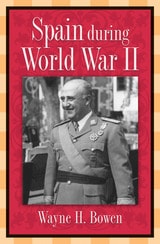
Spain during World War II
Wayne H Bowen
University of Missouri Press, 2006
The story of Spain during World War II has largely been viewed as the story of dictator Francisco Franco’s foreign diplomacy in the aftermath of civil war. Wayne H. Bowen now goes behind the scenes of fascism to reveal less-studied dimensions of Spanish history. By examining the conflicts within the Franco regime and the daily lives of Spaniards, he has written the first book-length assessment of the regime’s formative years and the struggle of its citizens to survive.
Bowen argues that the emphasis of previous scholars on Spain’s foreign affairs is misplaced—that even the most pro-Axis elements of Franco’s regime were more concerned with domestic politics, the potential for civil unrest, and poverty than with events in Europe. Synthesizing a wide range of Spanish-language scholarship and recently declassified government documents, Bowen reveals how Franco’s government stumbled in the face of world war, inexperienced leaders, contradictory political ideology, and a divided populace. His book tells the dramatic story of a six-year argument among the general, the politicians, and the clerics on nothing less than what should be the nature of the new Spain, touching on issues as diverse as whether the monarchy should be restored and how women should dress.
Examining the effects of World War II years on key facets of Spanish life—Catholicism, the economy, women, leisure, culture, opposition to Franco, and domestic politics—Bowen explores a wide range of topics: the grinding poverty following the civil war, exacerbated by poor economic decisions; restrictions on employment for women versus the relative autonomy enjoyed by female members of the Falange; the efforts of the Church to recover from near decimation; and methods of repression practiced by the regime against leftists, separatists, and Freemasons. He also shows that the lives of most Spaniards remained apolitical and centered on work, family, and leisure marked by the popularity of American movies and the resurgence of loyalty to regional sports teams.
Unlike other studies that have focused exclusively on Spain’s foreign affairs during the Second World War, Bowen’s work stresses the importance of the home front not only in keeping Spain out of the war but also in keeping Franco in power. He shows that in spite of internal problems and external distractions, Franco’s government managed to achieve its goals of state survival and internal peace. As the only single-volume survey of this era available in English, Spain during World War II is a masterful synthesis that offers a much-needed alternative view of the Franco regime during crucial times as it provides a testament to the Spanish people’s will to survive.
Spain in the African American Imagination
Rebecca C. Pawel
University of Massachusetts Press, 2027
Revealing how African American intellectuals reframed race, history, and cultural belonging in the modern era
In 1954, Richard Wright rented a car in France and drove south to the Spanish border on the first of two month-long trips that gave rise to the travelogue Pagan Spain, where Wright declared that the Pyrenees, on the France-Spain border, “mark the termination of Europe and the beginning of Africa.” While Spain was not actually seen as an African country, such language suggests instead that Spain would be incomplete without African influences. In the wake of the Spanish-American war of 1898, Americans and Northern Europeans attributed Spain’s weakened economy and loss of international clout to an inability to modernize, which they described in highly racialized terms. As African American modernists explored the country, they compared modernist notions coming out of the United States pertaining to race, gender, and other categories against Spain’s history and contemporary culture.
Spain in the African American Imagination traces how African American intellectuals in the mid-20th century, including Wright, Arthur Schomburg, Langston Hughes, Dorothy Peterson, and Frank Yerby, interpreted Spanish national myths. Rebecca Pawel argues that a literary idea of Spain as eternally “medieval” or “primitive” gave African American writers a conceptual space for thinking about the ways race is constructed through historical narrative. Spain provided a location that was considered ipso facto archaic and thus used racial referents typical of an era removed from the present in a space that was not quite African and not quite European. Ultimately, Pawel argues, Spain became a powerful lens through which African American intellectuals rewrote racial narratives and reimagined modernity across the Atlantic.
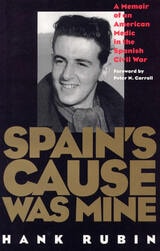
Spain's Cause was Mine
A Memoir of an American Medic in the Spanish WarHank Rubin
Southern Illinois University Press, 1999
“No man ever entered earth more honorably than those who died in Spain.”—Ernest Hemingway
In 1937, Hank Rubin, a twenty-year-old Jewish pre-med student at UCLA, volunteered for service in the International Brigades combating fascists in the Spanish Civil War. In his illustrated memoir, Rubin reflects on those events, making no apologies for his youthful impulsiveness, bravado, and ideology, but recalling the heroics and sufferings he witnessed and experienced in Spain, as well as the disappointing treatment he received upon his return.
Spain's First Democracy
The Second Republic, 1931–1936Stanley G. Payne
University of Wisconsin Press, 1993
Payne’s detailed study places the Republic within the historical framework of Spanish liberalism and the rapid modernization of interwar Europe, which was unlike any other period in Spain’s history. Payne discusses the Republicans’ efforts to establish Spain’s first democratic political systems and to institute major reforms within the Republic. In highlighting reforms in politics and government, church-state relations, education and culture, public works, military affairs, and society as a whole, he assesses the successes and failures of these reforms as well as the reasons for their limitations. He also examines the economic and foreign policy issues of the period.
Focusing particularly on political conflict and social cleavage, Payne brilliantly explores the sources and character of the political polarization that developed as a result of the assaults on the Republic from the Left and the Right. He identifies the main political actors in this schism and their role in the eventual breakdown of the Republic. Tracing the progressive collapse of the Republican polity in the first half of 1936, Payne stresses the importance of political violence in the democracy’s downfall.
In restoring perspectives that have been ignored or bypassed, Payne presents a consistent and detailed interpretation of Spain’s Second Republic, demonstrating its striking parallels to the Weimar Republic in Germany.
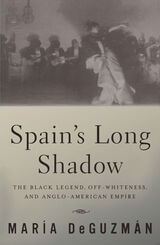
Spain's Long Shadow
The Black Legend, Off-Whiteness, and Anglo-American EmpireMaría DeGuzmán
University of Minnesota Press, 2005
England and the Netherlands, Spain’s imperial rivals of the sixteenth and seventeenth centuries, imagined Spain as a land of cruel and degenerate barbarians of la leyenda negra (the Black Legend), in league with the powers of “blackest darkness” and driven by “dark motives.” In Spain’s Long Shadow, María DeGuzmán explores how this convenient demonization made its way into American culture—and proved essential to the construction of whiteness. DeGuzmán’s work reaches from the late eighteenth century—in the wake of the American Revolution—to the present. Surveying a broad range of texts and images, from Poe’s “William Wilson” and John Singer Sargent’s El Jaleo to Richard Wright’s Pagan Spain and Kathy Acker’s Don Quixote, Spain’s Long Shadow shows how the creation of Anglo-American ethnicity as specifically American has depended on the casting of Spain as a colonial alter ego. The symbolic power of Spain in the American imagination, DeGuzmán argues, is not just a legacy of that nation’s colonial presence in the Americas; it lives on as well in the “blackness” of Spain and Spaniards—in the assigning of people of Spanish origin to an “off-white” racial category that reserves the designation of white for Anglo-Americans. By demonstrating how the Anglo-American imagination needs Spain and Spaniards as figures of attraction and repulsion, DeGuzmán makes a compelling and illuminating case for treating Spain as the imperial alter ego of the United States. Cross-cultural and interdisciplinary, ambitious in its chronological sweep, and elegant in its interpretation of literary and visual works, DeGuzmán’s book leads us to a powerful new understanding of the nature—and history—of American ethnicity.
Spain
A Unique HistoryStanley G. Payne
University of Wisconsin Press, 2010
From bloodthirsty conquest to exotic romance, stereotypes of Spain abound. This new volume by distinguished historian Stanley G. Payne draws on his half-century of experience to offer a balanced, broadly chronological survey of Spanish history from the Visigoths to the present. Who were the first “Spaniards”? Is Spain a fully Western country? Was Spanish liberalism a failure? Examining Spain’s unique role in the larger history of Western Europe, Payne reinterprets key aspects of the country’s history.
Topics include Muslim culture in the peninsula, the Spanish monarchy, the empire, and the relationship between Spain and Portugal. Turning to the twentieth century, Payne discusses the Second Republic and the Spanish Civil War. The book’s final chapters focus on the Franco regime, the nature of Spanish fascism, and the special role of the military. Analyzing the figure of Franco himself, Payne seeks to explain why some Spaniards still regard him with respect, while many others view the late dictator with profound loathing.
Framed by reflections on the author’s own formation as a Hispanist and his evaluation of the controversy about “historical memory” in contemporary Spain, this volume offers deeply informed insights into both the history and the historiography of a unique country.
A Choice Outstanding Academic Book

Spain
The Rise of the First World PowerJohn Fraser Ramsey
University of Alabama Press, 2026
Before Britain. Before America. There was Spain.
In Spain: The Rise of the First World Power, John Fraser Ramsey traces the evolution of Spain from a battleground of Romans, Visigoths, Moors, and Christians to the most formidable empire of its age. Not merely a chronicle of kings, battles, and dynasties, the book reveals how institutions, beliefs, ambitions, and accidents combined to propel a stubborn and quarrelsome people onto history’s center stage.
In his memorable, avuncular style, Ramsey shows how nations are a mix of virtues and flaws, complicated human communities held together by ingenuity, conviction, and occasional luck. His Spain is not populated solely by monarchs in brocade and generals on horseback. Merchants, clerics, adventurers, bureaucrats, and visionaries all take their places in the procession, forming the untidy pageant from which great powers invariably emerge. The effect is less a lecture than a guided expedition through the machinery of history.
This reissue of Ramsey's longest work arrives at an opportune hour. Amid fissiparous debates about identity, borders, religion, and power, Ramsey supplies the rarer commodity of perspective. Readers interested in Spanish history, European civilization, empire, exploration, military affairs, political institutions, religious history, and cultural exchange will find a rich larder of insight. It is especially suited to those who suspect that the past is more instructive than the slogans with which moderns so industriously replace it.
Spaniards and Nazi Germany
Collaboration in the New OrderWayne H. Bowen
University of Missouri Press, 2000
Using recently declassified documents from Spain and the United States, personal interviews, and unpublished and published Spanish, German, British, and U.S. records, Spaniards and Nazi Germany makes a significant contribution to the understanding of Hispano-German relations during the 1930s and 1940s. This study shows that Naziphiles within the Spanish Falange, Spain's fascist party, made a concerted effort to bring their nation into World War II, and that only the indecisiveness of dictator Francisco Franco and diplomatic mistakes by the Nazis prevented them from succeeding.
Bowen demonstrates that while Spain was neutral in World War II, its policies clearly favored the Axis, at least in the early stages of the war. Franco, who had emerged victorious from the Spanish Civil War in 1939 largely because of support from Adolf Hitler and Benito Mussolini, even carefully considered entering World War II on the side of Nazi Germany.
By the late 1930s, members of the Falange saw World War II as a revolutionary opportunity, a chance to lead Spain into a new age as a partner with Nazi Germany and Fascist Italy at the head of a New Europe of social justice and authoritarian regimes. By the end of 1939, a significant minority of pro- Nazi Spaniards were unhappy that Spain had not entered the war and remade itself to fit better into Hitler's New Order. Bowen argues that support for Nazi Germany in Spain and among Spanish communities throughout Europe was both wide and deep, and that this enthusiasm for the Third Reich and the New Order it promised to bring lasted until the end of the war. Despite statements of neutrality by the Spanish government, the Franco regime was well aware of this collaboration by Spanish citizens as late as 1944-1945 and did little to stop it. Had Hitler been more interested in bringing Spain into his empire, or exploiting the pro-Nazi sentiments of these thousands of Spaniards, he might have replaced Franco with someone more willing to support his interests even as late as 1943.
Spaniards and Nazi Germany presents many possibilities for what might have been a far different outcome of World War II in Europe. It shows that even without the full support of the Spanish or German governments, pro-Nazi Spaniards, even if they did not quite bring Spain into the war, added to the strength of the Third Reich by serving in its armies, working in its factories, and promoting its ideas to other nations.
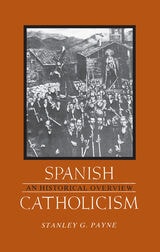
Spanish Catholicism
An Historical OverviewStanley G. Payne
University of Wisconsin Press, 1984
“This is the first complete history of Spanish Catholicism in English. The history of the Spanish church is rich, complex, and controversial, and this enormous undertaking by Stanley Payne is all the more praiseworthy in view of his determination not to limit his study to the church alone, but to investigate the relationship between the Catholic Church and Spanish culture and nationhood in general.”—Isaac Aviv, Mediterranean Historical Review
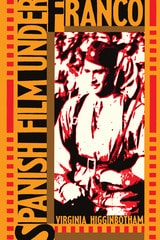
Spanish Film Under Franco
By Virginia Higginbotham
University of Texas Press, 1988
How does a totalitarian government influence the arts, and how do the arts respond? Spanish Film Under Franco raises these important questions, giving English speakers a starting point in their study of Spanish cinema.
After a brief overview of Spanish film before Franco, the author proceeds to a discussion of censorship as practiced by the Franco regime. The response of directors to censorship—the “franquista aesthetic,” or “aesthetic of repression,” with its highly metaphorical, oblique style—is explored in the works of Luis Buñuel, Carlos Saura, Juan Antonio Bardem, Luis García Berlanga, and other important directors.
Virginia Higginbotham combines historical perspective with detailed critical analysis and interpretation of many famous Franco-era films. She shows how directors managed to evade the censors and raise public awareness of issues relating to the Spanish Civil War and the repressions of the Franco regime.
Film has always performed an educational function in Spain, reaching masses of poor and uneducated citizens. And sometimes, as this study also reveals, Spanish film has been ignored when the questions it raised became too painful or demanding.
The author concludes with a look at post-Franco cinema and the directions it has taken. For anyone interested in modern Spanish film, this book will be essential reading.
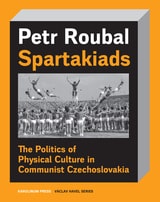
Spartakiads
The Politics of Physical Culture in Communist CzechoslovakiaPetr Roubal
Karolinum Press, 2018
In this book, Petr Roubal explores the political, social, and aesthetical dimensions of these mass physical demonstrations, with a particular focus on their roots in the völkisch nationalism of the German Turner movement and the Czech Sokol gymnastic tradition. Roubal draws on extensive interviews and archival research to investigate the many facets of this sporting tradition, from the reactions of ordinary, non-political gymnasts who appropriated and challenged official rituals to the organizational demands of the Spartakiads, such as the incredible finances involved and the knowledge and skills required from hundreds of former Sokol officials. Featuring an abundance of archival photographs, Spartakiad takes a new approach to Communist history by opening a window onto the mentality and mundanity behind the Iron Curtain.
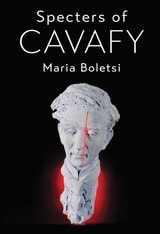
Specters of Cavafy
Maria Boletsi
University of Michigan Press, 2024
Winner of the European Society of Modern Greek Studies Best Monograph Award
The Greek Alexandrian poet C. P. Cavafy (1863–1933) has been recognized as a central figure in European modernism and world literature. His poetry explored the conditions for animating the past and making lost worlds or people haunt the present. Yet he also described himself as “a poet of the future generations.” Indeed, his writings address concerns and desires that permeate the twentieth and twenty-first centuries. How does poetry concerned with the past, memory, loss, and death, carry futurity? How does it haunt, and how is it haunted by, future presents?
Specters of Cavafy broaches these questions by proposing spectral poetics as a novel approach to Cavafy’s work. Drawing from theorizations of specters and haunting, it develops spectrality as a lens for revisiting Cavafy’s poetry and prose, fiction and nonfiction, as well as his poetry’s bearing on our present. By examining Cavafy’s spectral poetics, the book’s first part shows how conjurations work in his writings, and how the spectral permeates the entanglement of modernity and haunting, and of irony and affect. The second part traces the afterlives of specific poems in the Western imagination since the 1990s, in Egypt’s history of debt and colonization, and in Greece during the country’s recent debt crisis. Beyond its original contribution to Cavafy studies, the book proposes tools and modes of reading that are broadly applicable in literary and cultural studies.
Speculum, volume 100 number 1 (January 2025)
The University of Chicago Press
University of Chicago Press Journals, 2025
Speculum, volume 100 number 2 (April 2025)
The University of Chicago Press
University of Chicago Press Journals, 2025
Speculum, volume 100 number 3 (July 2025)
The University of Chicago Press
University of Chicago Press Journals, 2025
Speculum, volume 100 number 4 (October 2025)
The University of Chicago Press
University of Chicago Press Journals, 2025
Speculum, volume 101 number 1 (January 2026)
The University of Chicago Press
University of Chicago Press Journals, 2026
Speculum, volume 101 number 2 (April 2026)
The University of Chicago Press
University of Chicago Press Journals, 2026
Speculum, volume 101 number 3 (July 2026)
The University of Chicago Press
University of Chicago Press Journals, 2026
Speculum, volume 101 number 4 (October 2026)
The University of Chicago Press
University of Chicago Press Journals, 2026
Speculum, volume 96 number 4 (October 2021)
The University of Chicago Press
University of Chicago Press Journals, 2021
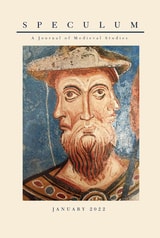
Speculum, volume 97 number 1 (January 2022)
The University of Chicago Press
University of Chicago Press Journals, 2022
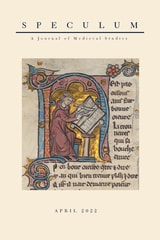
Speculum, volume 97 number 2 (April 2022)
The University of Chicago Press
University of Chicago Press Journals, 2022
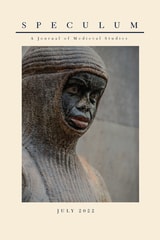
Speculum, volume 97 number 3 (July 2022)
The University of Chicago Press
University of Chicago Press Journals, 2022
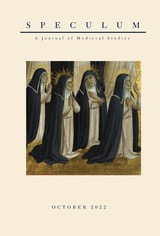
Speculum, volume 97 number 4 (October 2022)
The University of Chicago Press
University of Chicago Press Journals, 2022
Speculum, volume 98 number 1 (January 2023)
The University of Chicago Press
University of Chicago Press Journals, 2023
Speculum, volume 98 number 2 (April 2023)
The University of Chicago Press
University of Chicago Press Journals, 2023
Speculum, volume 98 number 4 (October 2023)
The University of Chicago Press
University of Chicago Press Journals, 2023
Speculum, volume 99 number 1 (January 2024)
The University of Chicago Press
University of Chicago Press Journals, 2024
Speculum, volume 99 number 2 (April 2024)
The University of Chicago Press
University of Chicago Press Journals, 2024
Speculum, volume 99 number 3 (July 2024)
The University of Chicago Press
University of Chicago Press Journals, 2024
Speculum, volume 99 number 4 (October 2024)
The University of Chicago Press
University of Chicago Press Journals, 2024
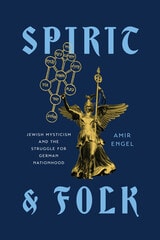
Spirit and Folk
Jewish Mysticism and the Struggle for German NationhoodAmir Engel
University of Chicago Press, 2027
A study of the twentieth-century construction of a Jewish mystical tradition by German Jewish intellectuals.
For most of European history, the notion of Jewish spirituality was unthinkable—buried beneath a pervasive desire to understand Judaism as uniquely material and Christianity as uniquely spiritual. In Spirit and Folk, Amir Engel tells the story of how a group of Jewish intellectuals, seeking greater involvement in political life, worked to invent a mystical tradition for Judaism amid the existential crises of twentieth-century Germany.
Beginning with Martin Buber in 1900 and ending with Gershom Scholem in 1942, Engel traces the rich debate among thinkers both well-known and forgotten about the need to imagine and construct a uniquely Jewish mystical tradition from historical religious sources. This quest and the tradition that emerged, Engel argues, developed in response to one of the most volatile questions of the last century: can Jews be Germans? The invention of Jewish spirituality, Engel shows, was not only a religious innovation but also a political gambit—a demand to be accepted as equal contributors to the German national project.
Spirit and System
Media, Intellectuals, and the Dialectic in Modern German CultureDominic Boyer
University of Chicago Press, 2005
Boyer analyzes the creation and mediation of the social knowledge of "German-ness" from nineteenth-century university culture and its philosophies of history, to the media systems and redemptive public cultures of the Third Reich and the German Democratic Republic, to the present-day experiences of former East German journalists seeking to explain life in post-unification Germany. Throughout this study, Boyer reveals how dialectical knowledge of "German-ness"—that is, knowledge that emphasizes a cultural tension between an inner "spirit" and an external "system" of social life —is modeled unconsciously upon intellectuals' self-knowledge as it tracks their fluctuation between alienation and utopianism in their interpretations of nation and modernity.
Spiritual Despots
Modern Hinduism and the Genealogies of Self-RuleJ. Barton Scott
University of Chicago Press, 2016
Through this alternative genealogy of the self-ruling subject, Spiritual Despots demonstrates that Hindu reform movements cannot be understood solely within the precolonial tradition, but rather need to be read alongside other movements of their period. The book’s focus moves fluidly between Britain and India—engaging thinkers such as James Mill, Keshub Chunder Sen, Max Weber, Karsandas Mulji, Helena Blavatsky, M. K. Gandhi, and others—to show how colonial Hinduism shaped major modern discourses about the self. Throughout, Scott sheds much-needed light how the rhetoric of priestcraft and practices of worldly asceticism played a crucial role in creating a new moral and political order for twentieth-century India and demonstrates the importance of viewing the emergence of secularism through the colonial encounter.
Spiritual Sonnets
A Bilingual EditionGabrielle de Coignard
University of Chicago Press, 2003
Spiritual Sonnets presents the first English translation of 129 of Coignard's highly autobiographical poems, giving us a startlingly intimate view into the life and mind of this Renaissance woman. The sonnets are all written "in the shadow of the Cross" and include elegies, penitential lyrics, Biblical meditations, and more. Rich with emotion, Coignard's poems reveal anguished moments of loneliness and grief as well as ecstatic experiences of mystical union. They also reveal her mastery of sixteenth-century literary conventions and spiritual traditions.
This edition, printed in bilingual format with Melanie E. Gregg's translations facing the French originals, will be welcomed by teachers and students of poetry, French literature, women's studies, and religious and Renaissance studies.
Sports in the Western World
William J. Baker
University of Illinois Press, 1982

St Peter-On-The-Wall
Landscape and Heritage on the Essex CoastEdited by Johanna Dale
University College London, 2023
The Chapel of St Peter-on-the-Wall, built on the ruins of a Roman fort, dates from the mid-seventh century and is one of the oldest largely intact churches in England. It stands in splendid isolation on the shoreline at the mouth of the Blackwater Estuary in Essex, where the land meets and interpenetrates with the sea and the sky. This book brings together contributors from across the arts, humanities, and social sciences to uncover the premodern contexts and modern resonances of this medieval building and its landscape setting. In analyzing the significance of the chapel and surrounding landscape over more than a thousand years, this collection additionally contributes to wider debates about the relationship between space and place, and particularly the interfaces between both medieval and modern cultures and also heritage and the natural environment.

St. Augustine's Bones
A MicrohistoryHarold Samuel Stone
University of Massachusetts Press, 2002
In 1695, workers in Pavia, Italy, chanced upon a collection of bones in the crypt of the Cathedral of San Pietro in Ciel d'Oro. The workers later testified that they had seen the name of St. Augustine written in charcoal on the surface of the casket they had uncovered. Yet by the time of the official inquest, all traces of the writing had disappeared.
Rich with new insights into urban literacy and conceptions of reading, this book explores the controversy that ensued over the alleged discovery of Augustine's bones. Manuscripts, broadsides, pamphlets—even whole books—were devoted to proving or disproving the authenticity of the remains. Although these works were addressed to members of the clergy, they were also intended for the general reading public in Pavia, Milan, and Venice. Their dissemination helped create a temporary public sphere in which the merits of the case were examined in a spirit of free debate.
A reexamination of the dispute over St. Augustine's bones illuminates aspects of Catholic spirituality in Northern Italy during the late seventeenth and early eighteenth centuries. It also reveals the different ways in which Catholic scholars, local religious leaders, and the papal administration sought to influence and direct local popular religious belief and practices. Although the controversy was officially resolved by the papacy in 1728, the debate over the relics of San Pietro continued into the twentieth century.
By combining methods developed in the burgeoning field of the history of the book with the tools of cultural analysis, Harold Samuel Stone not only recovers the stories surrounding St. Augustine's bones, but also reconstructs the mental world of those who read or heard them.
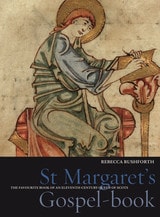
St. Margaret's Gospel
The Favourite Book of a Queen of ScotlandRebecca Rushforth
Bodleian Library Publishing, 2007
Margaret’s piety, dignity, and compassion made her a beloved figure long after her death. Her illuminated manuscript reveals the depths of her sanctity, opening with a Latin poem relating the one miracle attributed to her, where she preserved this book from damage. Exquisite illustrations transform the script into an arresting treasure, and Rebecca Rushforth uses incisive and comprehensive commentary to explain the story behind the manuscript and set it within Margaret’s historical context. She explores both the creation of the manuscript and its special meaning for Margaret, along with Margaret’s role as a significant figure in British and world history.
A fascinating piece of historical art, St Margaret’s Gospel-Book will be treasured by historians, religious scholars, and classicists alike.
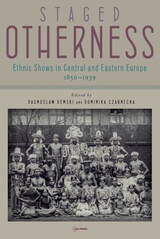
Staged Otherness
Ethnic Shows in Central and Eastern Europe, 1850–1939Dagnoslaw Demski
Central European University Press, 2022
The cultural phenomenon of exhibiting non-European people in front of the European audiences in the 19th and 20th century was concentrated in the metropolises in the western part of the continent. Nevertheless, traveling ethnic troupes and temporary exhibitions of non-European humans took place also in territories located to the east of the Oder river and Austria. The contributors to this edited volume present practices of ethnographic shows in Russia, Poland, Czechia, Slovenia, Hungary, Germany, Romania, and Austria and discuss the reactions of local audiences. The essays offer critical arguments to rethink narratives of cultural encounters in the context of ethnic shows. By demonstrating the many ways in which the western models and customs were reshaped, developed, and contested in Central and Eastern European contexts, the authors argue that the dominant way of characterizing these performances as “human zoos” is too narrow.
The contributors had to tackle the difficult task of finding traces other than faint copies of official press releases by the tour organizers. The original source material was drawn from local archives, museums, and newspapers of the discussed period. A unique feature of the volume is the rich amount of images that complement every single case study of ethnic shows.
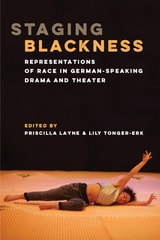
Staging Blackness
Representations of Race in German-Speaking Drama and TheaterPriscilla Dionne Layne and Lily Tonger-Erk, Editors
University of Michigan Press, 2024
Written by scholars and theater professionals with a wide variety of historical and theoretical expertise, the chapters seek to explore the connections between the German discourse on national theater and emerging ideas about race, analyze how dramaturges deal with older representations of Blackness in current productions, and discuss the contributions Black German playwrights and dramaturges have made to this discourse. Historians question how these plays were staged in their time, while cultural studies scholars contemplate how to interpret the function of race in these plays and how they can continue to be staged today.
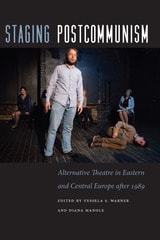
Staging Postcommunism
Alternative Theatre in Eastern and Central Europe after 1989Vessela S. Warner and Diana Manole
University of Iowa Press, 2020
Contributors: Dennis Barnett, Dennis C. Beck, Violeta Decheva, Luule Epner, John Freedman, Barry Freeman, Margarita Kompelmakher, Jaak Rahesoo, Angelina Ros¸ca, Ban¸uta Rubess, Christopher Silsby, Andrea Tompa, S. E. Wilmer
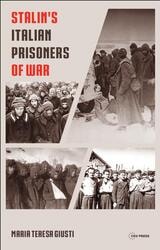
Stalin's Italian Prisoners of War
Maria Teresa Giusti
Central European University Press, 2021
Stalinism Revisited
The Establishment of Communist Regimes in East-Central EuropeVladimir Tismaneanu
Central European University Press, 2010
Deals with the period of takeover and of ‘high Stalinism’ in Eastern Europe (1945–1955). These years are considered to be fundamentally characterized by institutional and ideological transfers based upon the premise of radical transformism and of cultural revolution. Both a balance-sheet and a politico-historical synthesis that reflects the archival and thematic novelties which came about in the field of communism studies after 1989.
Contains contributions analyzing various aspects related these topics for each country of the former Soviet bloc (with the exception of Albania). The essays are based on new archival research, some are reassessments of the author’s previous research and others are critical appraisals of the specific literature published on issues related to the main topic. A path-breaking comparative framework for interpreting the relationship between late Stalinism and the communist takeovers in former Eastern Europe. A bonus for the volume is that it also provides detailed, sectorial analyses for the Romanian case, something that the field paritcularly lacks.