Results by title
18284 books match the query 'United States' and 1181 start with s

Science on a Mission
How Military Funding Shaped What We Do and Don’t Know about the OceanNaomi Oreskes
University of Chicago Press, 2021
What difference does it make who pays for science?
Some might say none. If scientists seek to discover fundamental truths about the world, and they do so in an objective manner using well-established methods, then how could it matter who’s footing the bill? History, however, suggests otherwise. In science, as elsewhere, money is power. Tracing the recent history of oceanography, Naomi Oreskes discloses dramatic changes in American ocean science since the Cold War, uncovering how and why it changed. Much of it has to do with who pays.
After World War II, the US military turned to a new, uncharted theater of warfare: the deep sea. The earth sciences—particularly physical oceanography and marine geophysics—became essential to the US Navy, which poured unprecedented money and logistical support into their study. Science on a Mission brings to light how this influx of military funding was both enabling and constricting: it resulted in the creation of important domains of knowledge but also significant, lasting, and consequential domains of ignorance.
As Oreskes delves into the role of patronage in the history of science, what emerges is a vivid portrait of how naval oversight transformed what we know about the sea. It is a detailed, sweeping history that illuminates the ways funding shapes the subject, scope, and tenor of scientific work, and it raises profound questions about the purpose and character of American science. What difference does it make who pays? The short answer is: a lot.

Science on the Air
Popularizers and Personalities on Radio and Early TelevisionMarcel Chotkowski LaFollette
University of Chicago Press, 2008
Marcel Chotkowski LaFollette transports readers to the early days of radio, when the new medium allowed innovative and optimistic scientists the opportunity to broadcast serious and dignified presentations over the airwaves. But the exponential growth of listenership in the 1920s, from thousands to millions, and the networks’ recognition that each listener represented a potential consumer, turned science on the radio into an opportunity to entertain, not just educate.
Science on the Air chronicles the efforts of science popularizers, from 1923 until the mid-1950s, as they negotiated topic, content, and tone in order to gain precious time on the air. Offering a new perspective on the collision between science’s idealistic and elitist view of public communication and the unbending economics of broadcasting, LaFollette rewrites the history of the public reception of science in the twentieth century and the role that scientists and their institutions have played in both encouraging and inhibiting popularization. By looking at the broadcasting of the past, Science on the Air raises issues of concern to all those who seek to cultivate a scientifically literate society today.
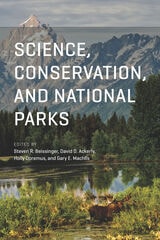
Science, Conservation, and National Parks
Edited by Steven R. Beissinger, David D. Ackerly, Holly Doremus, and Gary E. Machlis
University of Chicago Press, 2016
Examining the major challenges of parks and protected areas throughout the world, contributors provide answers to a number of key conservation questions, such as: How should stewardship address climate change, urban encroachment and pollution, and invasive species? How can society, especially youth, become more engaged with nature and parks, and are there models to guide interactions between parks and their neighbors? What are appropriate conservation objectives for parks in the Anthropocene? Charting a course for the parks of the next century, Science, Conservation, and National Parks is certain not only to catalyze the continued evolution of US park conservation policy, but also to be an inspiration for parks, conservation, and management worldwide.
Science, Money, and Politics
Political Triumph and Ethical ErosionDaniel S. Greenberg
University of Chicago Press, 2001

Scientific Evidence and Equal Protection of the Law
Ancheta, Angelo N
Rutgers University Press, 2006
Scientific and social scientific evidence has informed judicial decisions and the making of constitutional law for decades, but for much of U.S. history it has also served as a rhetorical device to justify inequality. It is only in recent years that scientific and statistical research has helped redress discrimination—but not without controversy.
Scientific Evidence and Equal Protection of the Law provides unique insights into the judicial process and scientific inquiry by examining major decisions of the U.S. Supreme Court, civil rights advocacy, and the nature of science itself. Angelo Ancheta discusses leading equal protection cases such as Brown v. Board of Education and recent litigation involving race-related affirmative action, gender inequality, and discrimination based on sexual orientation. He also examines less prominent, but equally compelling cases, including McCleskey v. Kemp, which involved statistical evidence that a state’s death penalty was disproportionately used when victims were white and defendants were black, and Castaneda v. Partida, which established key standards of evidence in addressing the exclusion of Latinos from grand jury service. For each case, Ancheta explores the tensions between scientific findings and constitutional values.

Scotland and America in the Age of Paine
Ronald Lyndsey Crawford
Aberdeen University Press, 2022
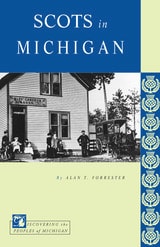
Scots in Michigan
Alan T. Forrester
Michigan State University Press, 2003
Scots began settling in North America in the earliest colonial days. They were heavily involved in the Great Lakes region’s major industries, as these evolved from fur trade to farming and lumbering to industry. From early settlement to the industrial revolution, Scots brought to the state a pioneer spirit and an extraordinary level of education. Though rendered almost invisible both by clustering under the umbrella of the British Commonwealth and by the fact that few Scottish traditions are considered whatsoever foreign, ethnic, or exotic, Scottish influences run deep in Michigan history and culture. From ice hockey to industry, much of what represents Michigan has roots that were embedded in Scotland. Although Alan T. Forrester notes that symbolic Scottish ethnicity—Highland Games, Scottish Festivals, and Burns Night Suppers—is practically the only obvious relic of Scottish heritage in Michigan, he illuminates how much more of this legacy is a part of this state.
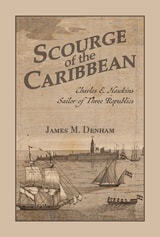
Scourge of the Caribbean
Charles E. Hawkins, Sailor of Three RepublicsJames M. Denham
University of Alabama Press, 2026
Illuminates the early American period in the upper Caribbean
Scourge of the Caribbean explores the mysterious and dramatic life and career of Charles E. Hawkins, a relatively unknown naval figure in early national America. Hawkins’s action-packed life at sea in his brief but accomplished career reveals much about an era when the rules of the maritime world, especially in the Caribbean, were in flux. For the US Navy and its commanders, the Caribbean presented an untold number of ambiguities: revolutionary juntas, privateering, piracy, and deadly disease, all within some of the most beautiful landscapes and waterscapes on earth.
Hawkins, from a well-connected family, took to the sea as a midshipman in the US Navy. Stalled promotion, economic setbacks, and blunted opportunities stymied the young officer, but ambition, combined with varied experiences and maritime pursuits, presented other prospects. At a time when individual agency mattered most, Hawkins stepped outside traditional boundaries of conduct on numerous occasions. Hawkins followed a mentor into the Mexican navy and became the most successful and feared raider of Spanish ships, earning the sobriquet “scourge” because of his raids along Cuba’s northern coast. In 1835, Hawkins joined the Texas independence movement against Mexico. Within the historical narrative are lurid accounts of adultery, affairs of honor, a bloody assassination, and complicated maritime legal battles. Based on prodigious research, this lively tale will appeal to those interested in maritime and early American history and the upper Caribbean in the Age of Sail.
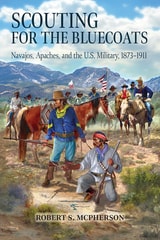
Scouting for the Bluecoats
Navajos, Apaches, and the U.S. Military, 1873–1911Robert S. McPherson
University Press of Colorado, 2022
—Kent Powell, Senior historian at Utah Division of State History and editor of Utah State Historical Quarterly (retired)
"Scouting for the Bluecoats examines the important role that Navajos played in military operations during the last quarter of the nineteenth and beginning of the twentieth centuries. Unlike the famous Navajo code talkers of World War II, little has been written about these men who served in some of the most challenging and noteworthy struggles against the Apaches. Until now, their story has been forgotten. Navajo skills in understanding and tracking a wily foe across an inhospitable landscape proved to be essential elements in ending the Apache wars. For those interested in the recruitment and deployment of the scouts, measures taken to counter enemy tactics, and the challenge of obtaining recognition for their service, this book is an invaluable source and a must-read for any serious scholar of Navajo history."
—Ronald P. Maldonado, Tribal historic preservation officer (retired), Navajo Nation
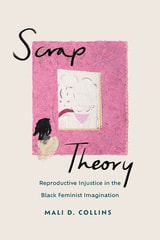
Scrap Theory
Reproductive Injustice in the Black Feminist ImaginationMali D. Collins
The Ohio State University Press, 2025
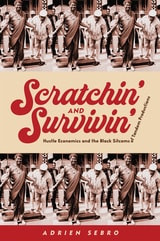
Scratchin' and Survivin'
Hustle Economics and the Black Sitcoms of Tandem ProductionsAdrien Sebro
Rutgers University Press, 2024
The 1970s was a golden age for representations of African American life on TV sitcoms: Sanford & Son, Good Times, The Jeffersons. Surprisingly, nearly all the decade’s notable Black sitcoms were made by a single company, Tandem Productions. Founded by two white men, the successful team behind All in the Family, writer Norman Lear and director Bud Yorkin, Tandem gave unprecedented opportunities to Black actors, writers, and producers to break into the television industry. However, these Black auteurs also struggled to get the economic privileges and creative autonomy regularly granted to their white counterparts.
Scratchin’ and Survivin’ discovers surprising parallels between the behind-the-scenes drama at Tandem and the plotlines that aired on their sitcoms, as both real and fictional African Americans devised various strategies for getting their fair share out of systems prone to exploiting their labor. The media scholar Adrien Sebro describes these tactics as a form of “hustle economics,” and he pays special attention to the ways that Black women—including actresses like LaWanda Page, Isabel Sanford, and Esther Rolle—had to hustle for recognition. Exploring Tandem’s complex legacy, including its hit racially mixed sitcom Diff’rent Strokes, he showcases the Black talent whose creative agency and labor resilience helped to transform the television industry.

Scream! Bleed! Take Off Your Clothes!
Stuart Gordon and Chicago’s Organic Theater CompanyMary Griswold, Cordis Heard, Jim Rinnert and Mike Saad
University of Chicago Press, 2026
A captivating firsthand account of Chicago’s groundbreaking, tumultuous Organic Theater Company.
When the founder of the Organic Theater Company died in 2020, the Chicago Tribune asked, “Did one person invent Chicago theater? If so, it was Stuart Gordon.” And yet, this iconic theater group is arguably the most influential Chicago company whose story has never been fully told.
In its heyday, from 1969 through 1985, the Organic’s high-spirited, gutsy, and close-knit company created more than thirty idiosyncratic works. A springboard for playwright David Mamet and for the television series ER, it also was formative in the careers of many well-known actors, including Joe Mantegna, André De Shields, Meshach Taylor, and Dennis Franz. Scream! Bleed! Take Off Your Clothes! is the story of a young theater company that always pushed boundaries with an anarchic exuberance. Drawing on extensive interviews and archival research, this insiders’ account, assembled by three Organic members and an artistic associate, details those exciting productions and the company’s complicated internal dynamics, while also positioning the group within Chicago’s vibrant theater scene and the larger culture of the time.
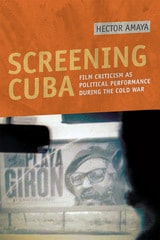
Screening Cuba
Film Criticism as Political Performance during the Cold WarHector Amaya
University of Illinois Press, 2010
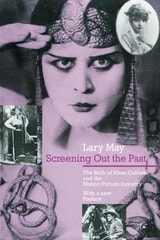
Screening Out the Past
The Birth of Mass Culture and the Motion Picture IndustryLary May
University of Chicago Press, 1983
"It is impossible to follow a narrow trail through the movies. The vistas keep opening, and May, linking movies to mass society, finds and makes new perceptions on emerging women, the rise of the studios, the special growth and appeal of Los Angeles, the nature of studio leadership and the early and persistent imputed corrupting power of film."—Charles Champlin, Los Angeles Times
"Lary May . . . has provided a set of new and rich insights into the changing patterns of American culture, 1890-1929. . . . His concentration on social and cultural history indirectly provides answers to questions which have baffled political historians for several decades."—David W. Noble, Minneapolis Tribune
"[Screening Out the Past is] a scrupulously argued, clearly written account of Hollywood's role in bringing America skipping and giggling from the Victorian world into the twentieth century. May is splendid on the psychology of the immigrant movie moguls, on Douglas Fairbanks and Mary Pickford as post Great War role models, and many other things."—Philip French, London Sunday Observor
"Altogether, the book represents the most successful blending of movie and cultural history to date."—Benjamin McArthur, Journal of Social History
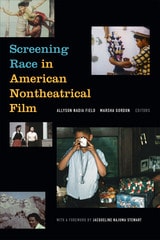
Screening Race in American Nontheatrical Film
Nadia Allyson Field and Marsha Gordon, editors
Duke University Press, 2019
Contributors. Crystal Mun-hye Baik, Jasmyn R. Castro, Nadine Chan, Mark Garrett Cooper, Dino Everett, Allyson Nadia Field, Walter Forsberg, Joshua Glick, Tanya Goldman, Marsha Gordon, Noelle Griffis, Colin Gunckel, Michelle Kelley, Todd Kushigemachi, Martin L. Johnson, Caitlin McGrath, Elena Rossi-Snook, Laura Isabel Serna, Jacqueline Najuma Stewart, Dan Streible, Lauren Tilton, Noah Tsika, Travis L. Wagner, Colin Williamson

Screening Sex
Linda Williams
Duke University Press, 2008
Combining stories of her own coming of age as a moviegoer with film history, cultural history, and readings of significant films, Williams presents a fascinating history of the on-screen kiss, a look at the shift from adolescent kisses to more grown-up displays of sex, and a comparison of the “tasteful” Hollywood sexual interlude with sexuality as represented in sexploitation, Blaxploitation, and avant-garde films. She considers Last Tango in Paris and Deep Throat, two 1972 films unapologetically all about sex; In the Realm of the Senses, the only work of 1970s international cinema that combined hard-core sex with erotic art; and the sexual provocations of the mainstream movies Blue Velvet and Brokeback Mountain. She describes art films since the 1990s, in which the sex is aggressive, loveless, or alienated. Finally, Williams reflects on the experience of screening sex on small screens at home rather than on large screens in public. By understanding screening sex as both revelation and concealment, Williams has written the definitive study of sex at the movies.
Linda Williams is Professor of Film Studies and Rhetoric at the University of California, Berkeley. Her books include Porn Studies, also published by Duke University Press; Playing the Race Card: Melodramas of Black and White from Uncle Tom to O. J. Simpson; Viewing Positions: Ways of Seeing Film; and Hard Core: Power, Pleasure, and the “Frenzy of the Visible.”
A John Hope Franklin Center Book
November
424 pages
129 illustrations
6x9 trim size
ISBN 0-8223-0-8223-4285-5
paper, $24.95
ISBN 0-8223-0-8223-4263-4
library cloth edition, $89.95
ISBN 978-0-8223-4285-4
paper, $24.95
ISBN 978-0-8223-4263-2
library cloth edition, $89.95
Screening Space
The American Science Fiction FilmSobchack, Vivian
Rutgers University Press, 1997
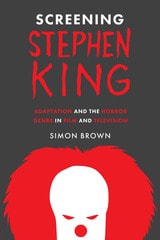
Screening Stephen King
Adaptation and the Horror Genre in Film and TelevisionBy Simon Brown
University of Texas Press, 2018
Since the 1970s, the name Stephen King has been synonymous with horror. His vast number of books has spawned a similar number of feature films and TV shows, and together they offer a rich opportunity to consider how one writer’s work has been adapted over a long period within a single genre and across a variety of media—and what that can tell us about King, about adaptation, and about film and TV horror. Starting from the premise that King has transcended ideas of authorship to become his own literary, cinematic, and televisual brand, Screening Stephen King explores the impact and legacy of over forty years of King film and television adaptations.
Simon Brown first examines the reasons for King’s literary success and then, starting with Brian De Palma’s Carrie, explores how King’s themes and style have been adapted for the big and small screens. He looks at mainstream multiplex horror adaptations from Cujo to Cell, low-budget DVD horror films such as The Mangler and Children of the Corn franchises, non-horror films, including Stand by Me and The Shawshank Redemption, and TV works from Salem’s Lot to Under the Dome. Through this discussion, Brown identifies what a Stephen King film or series is or has been, how these works have influenced film and TV horror, and what these influences reveal about the shifting preoccupations and industrial contexts of the post-1960s horror genre in film and TV.
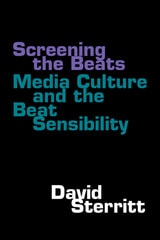
Screening the Beats
Media Culture and the Beat SensibilityDavid Sterritt
Southern Illinois University Press, 2004
Film critic David Sterritt’s Screening the Beats: Media Culture and the Beat Sensibility showcases the social and aesthetic viewpoints of lynchpin Beat writers Jack Kerouac, William S. Burroughs, and Allen Ginsberg, juxtaposing their artistry with 1950s culture and achieving what Kerouac might have called a “bookmovie” riff. In clear prose, Sterritt captures the raw energy of the Beats and joins in their celebration of aesthetic freakishness. Tapping into the diversified spirit of the Beat Generation and its nuanced relationship with postwar American culture, Sterritt considers how the Beats variously foreground, challenge, and illuminate major issues in Hollywood and avant-garde film, critical and cultural theory, and music in the mass-media age.
Sterritt engages the creative and spiritual facets of the Beats, emulating their desire to evoke ephemeral aspects of human existence. Dealing with both high and low cultures as well as various subcultures, he highlights the complementary contributions to cultural creativity made by these authors. Screening the Beats grapples with paradoxes in Beat writing, in particular the conflict between spiritual purity and secular connectedness, which often materialized in the beatific bebop spontaneity, Zen-like transcendentalism, and plain hipster smarts that characterized the writings of Kerouac, Burroughs, and Ginsberg.
This interdisciplinary study tackles such topics as Ginsberg’s and Kerouac’s uses of racial and ethnic stereotypes prevalent in the popular movies of the 1950s era; the uses and limitations of improvisation as a creative tool in literature, jazz, and film; Kerouac’s use of cinematic metaphor to evoke Buddhist concepts; and intersections of the grotesque and carnivalesque in works as seemingly diverse as autobiographical novels by Kerouac, a radio play by Antonin Artaud, cultural theories of Gilles Deleuze and Félix Guattari, and the boisterous lunacy of Three Stooges farce. Deftly threading literary, musical, and cinematic works with a colorful array of critical theories, Screening the Beats illuminates the relationship between American culture and the imaginative forces of the Beat Generation.
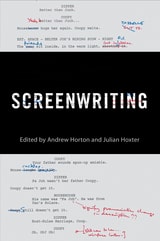
Screenwriting
Horton, Andrew
Rutgers University Press, 2014
Reaching back to the early days of Hollywood, when moonlighting novelists, playwrights, and journalists were first hired to write scenarios and photoplays, Screenwriting illuminates the profound ways that screenwriters have contributed to the films we love. This book explores the social, political, and economic implications of the changing craft of American screenwriting from the silent screen through the classical Hollywood years, the rise of independent cinema, and on to the contemporary global multi-media marketplace. From The Birth of a Nation (1915), Gone With the Wind (1939), and Gentleman’s Agreement (1947) to Chinatown (1974), American Beauty (1999), and Lost in Translation (2003), each project began as writers with pen and ink, typewriters, or computers captured the hopes and dreams, the nightmares and concerns of the periods in which they were writing.
As the contributors take us behind the silver screen to chronicle the history of screenwriting, they spotlight a range of key screenplays that changed the game in Hollywood and beyond. With original essays from both distinguished film scholars and accomplished screenwriters, Screenwriting is sure to fascinate anyone with an interest in Hollywood, from movie buffs to industry professionals.
Screwing the System and Making it Work
Juvenile Justice in the No-Fault SocietyMark D. Jacobs
University of Chicago Press, 1990

Scribbling Women
Short Stories by 19th-Century American WomenShowalter, Elaine
Rutgers University Press, 1997
Showalter, a highly regarded critic known for her provocative and strongly held opinions, has here established a compelling new Who's Who of women's thought. Certain to spark controversy, the omission of such feminist perennials as Gloria Steinem, Susan B. Anthony, Robin Morgan, Eleanor Roosevelt, and Virginia Woolf will surprise and shock the conventional wisdom.
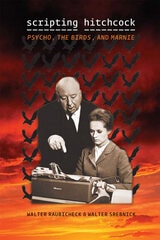
Scripting Hitchcock
Psycho, The Birds, and MarnieWalter Raubicheck and Walter Srebnick
University of Illinois Press, 2011
Hitchcock allowed his writers a great deal of creative freedom, which resulted in dynamic screenplays that expanded traditional narrative and defied earlier conventions. Critically examining the question of authorship in film, Raubicheck and Srebnick argue that Hitchcock did establish visual and narrative priorities for his writers, but his role in the writing process was that of an editor. While the writers and their contributions have generally been underappreciated, this study reveals that all the dialogue and much of the narrative structure of the films were the work of screenwriters Jay Presson Allen, Joseph Stefano, and Evan Hunter. The writers also shaped American cultural themes into material specifically for actors such as Janet Leigh, Tippi Hedren, and Tony Perkins. This volume gives due credit to those writers who gave narrative form to Hitchcock's filmic vision.
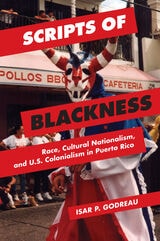
Scripts of Blackness
Race, Cultural Nationalism, and U.S. Colonialism in Puerto RicoIsar P. Godreau
University of Illinois Press, 2015
Based on an ethnographic study of the barrio of San Antón in the city of Ponce, Scripts of Blackness examines institutional and local representations of blackness as developing from a power-laden process that is inherently selective and political, not neutral or natural. Godreau traces the presumed benevolence or triviality of slavery in Puerto Rico, the favoring of a Spanish colonial whiteness (under a hispanophile discourse), and the insistence on a harmonious race mixture as discourses that thrive on a presumed contrast with the United States that also characterize Puerto Rico as morally superior. In so doing, she outlines the debates, social hierarchies, and colonial discourses that inform the racialization of San Antón and its residents as black.
Mining ethnographic materials and anthropological and historical research, Scripts of Blackness provides powerful insights into the critical political, economic, and historical context behind the strategic deployment of blackness, whiteness, and racial mixture.
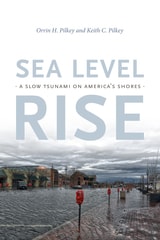
Sea Level Rise
A Slow Tsunami on America's ShoresOrrin H. Pilkey and Keith C. Pilkey
Duke University Press, 2019
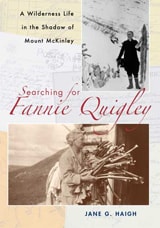
Searching for Fannie Quigley
A Wilderness Life in the Shadow of Mount McKinleyJane G. Haigh
Ohio University Press, 2007
At the age of 27, Fannie Sedlacek left her Bohemian homestead in Nebraska to join the gold rush to the Klondike. From the Klondike to the Tanana, Fannie continued north, finally settling in Katishna near Mount McKinley. This woman, later known as Fannie Quigley, became a prospector who staked her own claims and a cook who ran a roadhouse. She hunted and trapped and thrived for nearly forty years in an environment that others found unbearable.
Her wilderness lifestyle inspired many of those who met her to record their impressions of this self-sufficient woman, who died in 1944. To many of the 700,000 annual visitors to Denali National Park she is a symbol of the enduring spirit of the original pioneers.
Searching for Fannie Quigley: A Wilderness Life in the Shadow of Mount McKinley goes beyond the mere biographical facts of this unique woman’s journey. It also tells historian Jane G. Haigh’s own story of tracking and tracing the many paths that Fannie Quigley’s intriguing life took. Uncovering remote clues, digging through archives, and listening to oral accounts from a wide array of sources, Haigh has fashioned this rich lode into a compelling narrative.
In Searching for Fannie Quigley, Haigh separates fact from fiction to reveal the true story of this highly mythologized pioneer woman.
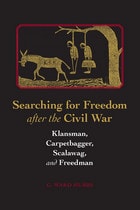
Searching for Freedom after the Civil War
Klansman, Carpetbagger, Scalawag, and FreedmanG. Ward Hubbs
University of Alabama Press, 2015
Examines the life stories and perspectives about freedom in relation to the figures depicted in an infamous Reconstruction-era political cartoon
The cartoon first appeared in the Tuskaloosa Independent Monitor, published by local Ku Klux Klan boss Ryland Randolph, as a swaggering threat aimed at three individuals. Hanged from an oak branch clutching a carpetbag marked “OHIO” is the Reverend Arad S. Lakin, the Northern-born incoming president of the University of Alabama. Swinging from another noose is Dr. Noah B. Cloud—agricultural reformer, superintendent of education, and deemed by Randolph a “scalawag” for joining Alabama’s reformed state government. The accompanying caption, penned in purple prose, similarly threatens Shandy Jones, a politically active local man of color.
Using a dynamic and unprecedented approach that interprets the same events through four points of view, Hubbs artfully unpacks numerous layers of meaning behind this brutal two-dimensional image.
The four men associated with the cartoon—Randolph, Lakin, Cloud, and Jones—were archetypes of those who were seeking to rebuild a South shattered by war. Hubbs explores these broad archetypes but also delves deeply into the four men’s life stories, writings, speeches, and decisions in order to recreate each one’s complex worldview and quest to live freely. Their lives, but especially their four very different understandings of freedom, help to explain many of the conflicts of the 1860s. The result is an intellectual tour de force.
General readers of this highly accessible volume will discover fascinating new insights about life during and after America’s greatest crisis, as will scholars of the Civil War, Reconstruction, and southern history.
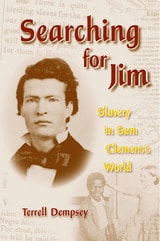
Searching for Jim
Slavery in Sam Clemens's WorldTerrell Dempsey
University of Missouri Press, 2005
During Sam’s earliest years, his father, John Marshall Clemens, had significant interaction with slaves. Newly discovered court records show the senior Clemens in his role as justice of the peace in Hannibal enforcing the slave ordinances. With the death of his father, young Sam was apprenticed to learn the printing and newspaper trade. It was in the newspaper that slaves were bought and sold, masters sought runaways, and life insurance was sold on slaves. Stories the young apprentice typeset helped Clemens learn to write in black dialect, a skill he would use throughout his writing, most notably in Huckleberry Finn.
Missourians at that time feared abolitionists across the border in Illinois and Iowa. Slave owners suspected every traveling salesman, itinerant preacher, or immigrant of being an abolition agent sent to steal slaves. This was the world in which Sam Clemens grew up. Dempsey also discusses the stories of Hannibal’s slaves: their treatment, condition, and escapes. He uncovers new information about the Underground Railroad, particularly about the role free blacks played in northeast Missouri.
Carefully reconstructed from letters, newspaper articles, sermons, speeches, books, and court records, Searching for Jim offers a new perspective on Clemens’s writings, especially regarding his use of race in the portrayal of individual characters, their attitudes, and worldviews. This fascinating volume will be valuable to anyone trying to measure the extent to which Clemens transcended the slave culture he lived in during his formative years and the struggles he later faced in dealing with race and guilt. It will forever alter the way we view Sam Clemens, Hannibal, and Mark Twain.
Searchlight
The Camp That Didn't FailHarry Reid
University of Nevada Press, 2007
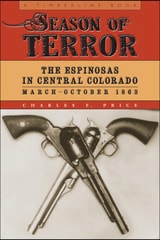
Season of Terror
The Espinosas in Central Colorado, March–October 1863Charles F. Price
University Press of Colorado, 2013
For eight months during the spring and fall of 1863, brothers Felipe Nerio and José Vivián Espinosa and their young nephew, José Vincente, New Mexico–born Hispanos, killed and mutilated an estimated thirty-two victims before their rampage came to a bloody end. Their motives were obscure, although they were members of the Penitentes, a lay Catholic brotherhood devoted to self-torture in emulation of the sufferings of Christ, and some suppose they believed themselves inspired by the Virgin Mary to commit their slaughters.
Until now, the story of their rampage has been recounted as lurid melodrama or ignored by academic historians. Featuring a fascinating array of frontier characters, Season of Terror exposes this neglected truth about Colorado’s past and examines the ethnic, religious, political, military, and moral complexity of the controversy that began as a regional incident but eventually demanded the attention of President Lincoln.

Seasoned Authors for a New Season
The Search for Standards in Popular WritingEdited by Louis Filler
University of Wisconsin Press, 1980
Secession and the Union in Texas
By Walter L. Buenger
University of Texas Press, 1984
In 1845 Texans voted overwhelmingly to join the Union. They voted just as overwhelmingly to secede in 1861. The story of why and how that happened is filled with colorful characters, such as the aged Sam Houston, and with the southwestern flavor of raiding Comanches, German opponents of slavery, and a border with Mexico.
Texas was unique among the seceding states because of its ambivalence toward secession. Yet for all its uniqueness the story of the secession of Texas has broad implications for the secession movement in general. Despite the local color and the southwestern nature of the state, Texas was more southern than western in 1860. Texans supported the Union or insisted upon secession for reasons common to the South and to the whole nation. Most Texans in 1860 were recent immigrants from southern and border states. They still thought and acted like citizens of their former states. The newness of Texas then makes it a particularly appropriate place from which to draw conclusions about the entire secession movement.
Secession and the Union in Texas is both a narrative of secession in Texas and a case study of the causes of secession in a southern state. Politics play a key role in this history, but politics broadly defined to include the influence of culture, partisanship, ideology, and self-interest. As any study of a mass movement carried out in tense circumstances must be, this is social history as well as political history. It is a study of public hysteria, the pressure for consensus, and the vanishing of a political process in which rational debate about secession and the Union could take place.
Although relying primarily on traditional sources such as manuscript collections and newspapers, a particularly rich source for this study, the author also uses election returns, population shifts over the course of the 1850s, and the breakdown of population within Texas counties to provide a balanced approach.
These sources indicate that Texans were not simply secessionists or unionists. At the end of 1860 Texans ranged from ardent secessionists to equally passionate supporters of the Union. But the majority fell in between these two extremes, creating an atmosphere of ambivalence toward secession which was not erased even by the war.
Second Lives
Black-Market Melodramas and the Reinvention of TelevisionMichael Szalay
University of Chicago Press, 2023
In Second Lives, Michael Szalay defines a new television genre that has driven the breathtaking ascent of TV as a cultural force over the last two decades: the black-market melodrama. Exemplified by the likes of The Sopranos and Breaking Bad, the genre moves between a family’s everyday life and its secret second life, which may involve illegal business, espionage, or even an alternate reality. Second lives allow characters (and audiences) to escape what feels like endless work into a revanchist vision of the white middle class family. But there is for this grimly resigned genre no meaningful way back to the Fordist family wage for which it longs. In fact, Szalay argues, black-market melodramas lament the very economic transformations that untethered TV viewing from the daily rhythms of the nine-to-five job and led, ultimately, to prestige TV.

Second Nature
An Environmental History of New EnglandRichard W. Judd
University of Massachusetts Press, 2014
Winner of the 2014 New England Historical Association's James P. Hanlan Book Award
Bounded by the St. Lawrence Valley to the north, Lake Champlain to the west, and the Gulf of Maine to the east, New England may be the most cohesive region in the United States, with a long and richly recorded history. In this book, Richard W. Judd explores the mix of ecological process and human activity that shaped that history over the past 12,000 years. He traces a succession of cultures through New England's changing postglacial environment down to the 1600s, when the arrival of Europeans interrupted this coevolution of nature and culture.
A long period of tension and warfare, inflected by a variety of environmental problems, opened the way for frontier expansion. This in turn culminated in a unique landscape of forest, farm, and village that has become the embodiment of what Judd calls “second nature”—culturally modified landscapes that have superseded a more pristine “first nature.”
In the early 1800s changes in farm production and industrial process transformed central New England, while burgeoning markets at the geographical margins brought rapid expansion in fishing and logging activities. Although industrialization and urbanization severed connections to the natural world, the dominant cultural expression of the age, Romanticism, provided new ways of appreciating nature in the White Mountains and Maine woods. Spurred by these Romantic images and by a long tradition of local resource management, New England gained an early start in rural and urban conservation.
In the 1970s environmentalists, inspired by a widespread appreciation for regional second-nature landscapes, moved quickly from battling pollution and preserving wild lands to sheltering farms, villages, and woodlands from intrusive development. These campaigns, uniquely suited to the region's land-use history, ecology, and culture, were a fitting capstone to the environmental history of New England.
Second Verse, Same as the First
The 2012 Presidential Election in the SouthScott E. Buchanan
University of Arkansas Press, 2014
Second Wounds
Victims’ Rights and the Media in the U.S.Carrie A. Rentschler
Duke University Press, 2011
Second in Command
Reevaluating the Role of Vice Presidents and Running Mates in Modern American PoliticsEdited by Karine Prémont and Christopher J. Devine
University of Michigan Press, 2026
In recent years, the office of the vice president has become a focal point of presidential politics and governance. From the emergence of the modern vice presidency under Walter Mondale to Mike Pence’s and Kamala Harris’s dramatic influence on the outcome of the 2020 election, Second in Command explores how vice presidents and vice-presidential candidates have shaped the direction of the country and changed American politics. The frenzy of speculation surrounding the “veepstakes” every four years and extensive media coverage of the vice-presidential debate may seem odd, given the vice presidency’s limited constitutional powers and dismal public reputation.
Dispelling the myth that the vice presidency is a powerless or merely ceremonial role, Second in Command draws on the multidisciplinary expertise of more than a dozen leading vice-presidential scholars to reveal the complex, consequential, and often misunderstood nature of the office. With accessible language and vivid examples, it traces the transformation of vice-presidential power over the past half-century, reveals the evolving electoral significance of vice-presidential running mates, and highlights the need for a deeper public understanding of these pivotal figures. Chapters employ a range of qualitative and quantitative methodologies, including elite interviews, archival research, case studies, and advanced statistical modeling to cover topics such as gender and media effects in running mate selection and the representation of vice presidents in popular culture. This book offers a fresh, engaging, and essential perspective on a vital institution at the heart of American democracy.
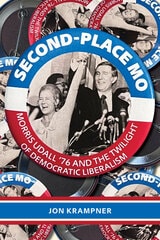
Second-Place Mo
Morris Udall ’76 and the Twilight of Democratic LiberalismJon Krampner
Michigan State University Press, 2027
Second-Place Mo examines the rightward drift of the Democratic Party that began in earnest with Jimmy Carter’s defeat of Morris “Mo” Udall for the Democratic presidential nomination in 1976—a turning point that set the party toward a free-market economy and away from economic liberalism.
The candidacy of Mo Udall, a congressman from Arizona, was the first time in almost a century that a member of the House of Representatives had a chance to become president; it also promised a continuation of the Democrats’ tradition of New Deal liberalism, which had been the party’s guiding star since the 1930s. But the Udall campaign was rocked by events beyond its control, its own mistakes, and the whirlwind candidacy of Jimmy Carter, who went on to win the nomination and the presidency.
Mo Udall chalked up eight second-place primary finishes without a victory. His candidacy was memorable for his dogged persistence, sunny good humor, and unabashed liberalism. This book chronicles a Democratic primary filled with memorable candidates, including the militarist and arch-Zionist Scoop Jackson; the newly minted more-populist-than-thou Fred Harris; the Hamlet-like figures of Birch Bayh and Hubert Humphrey; the fading, injured apostle of the Confederate South, George Wallace; the affable yet ineffective Kennedy in-law, Sargent Shriver; the anti-abortion housewife from Long Island, Ellen McCormack; and others. All are vividly brought to life—including Jimmy Carter, a thrower of sharp elbows before he became the beloved, humanitarian former president—set against the backdrop of Udall’s doomed effort.
Second-Place Mo examines why Udall’s 1976 campaign failed and what lessons his near misses hold for contemporary politics. Along the way, it recovers a figure whose principled liberalism and self-deprecating humor offer an instructive contrast to the politics of our own moment.

Secret Covenants
New Insights on Early Mormon PolygamyBruno, Cheryl L.
Signature Books, 2024
Navigating the intricate labyrinth of early Mormon plural marriage can be fascinating, frustrating, and often confusing. The essays in this volume venture into the depths of historical inquiry, presenting a diverse array of perspectives on the subject. Authored by a consortium of esteemed scholars and researchers in the field of Mormon studies, it addresses the nuanced intricacies of Joseph Smith’s involvement in plural marriage.
Delving into the core of this discourse, these experts meticulously analyze foundational documents, highlighting the complexities Joseph Smith faced in practicing plural marriage and shedding light on the legal aspects of polygamy in 1840s Illinois. It navigates lesser-known details of Smith’s proposals and relationships, including the enigmatic story of Fanny Alger.
Secret Covenants presents a balanced exploration. It critiques traditional portrayals, providing multiple viewpoints, such as the examination of Emma Smith’s vehement rejection of polygamy after her husband’s death, and an analysis of the societal impact on women within polygamous unions. Furthermore, the authors address evolving doctrinal debates triggered by the “Marriage Revelation” and its impact on Mormon philosophy and thought.
This anthology serves as a foundational resource for academic scholars, individuals interested in religious history, and anyone seeking to understand the many layers of Mormon plural marriage.
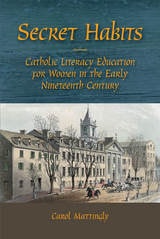
Secret Habits
Catholic Literacy Education for Women in the Early Nineteenth CenturyCarol Mattingly
Southern Illinois University Press, 2016
Mattingly shows that despite widespread fears and opposition, including attacks by vaunted northeastern Protestant pioneers of literacy, Catholic women nonetheless became important educators of women in many areas of America. They founded convents, convent academies, and schools; developed their own curricula and pedagogies; and persisted in their efforts in the face of significant prejudices. The convents faced sharp opposition from Protestant educators, who often played on anti-Catholic fears to gain support for their own schools. Using a performative rhetoric of good works that emphasized civic involvement, Catholic women were able to educate large numbers of women and expand opportunities for literacy instruction.
A needed corrective to studies that have focused solely on efforts by Protestant educators, Mattingly’s work offers new insights into early nineteenth-century women’s literacy, demonstrating that literacy education was more religiously and geographically diverse than previously recognized.
Secret Power
WikiLeaks and Its EnemiesStefania Maurizi
Pluto Press, 2022
*Winner of the European Award for Investigative And Judicial Journalism 2021*
*Winner of the Premio Alessandro Leogrande Award for Investigative Journalism 2022*
*Winner of the Premio Angelo Vassallo Award 2022*
'I want to live in a society where secret power is accountable to the law and to public opinion for its atrocities, where it is the war criminals who go to jail, not those who have the conscience and courage to expose them.'
It is 2008, and Stefania Maurizi, an investigative journalist with a growing interest in cryptography, starts looking into the little-known organisation WikiLeaks. Through hushed meetings, encrypted files and explosive documents, what she discovers sets her on a life-long journey that takes her deep into the realm of secret power.
Working closely with WikiLeaks' founder Julian Assange and his organisation for her newspaper, Maurizi has spent over a decade investigating state criminality protected by thick layers of secrecy, while also embarking on a solitary trench warfare to unearth the facts underpinning the cruel persecution of Assange and WikiLeaks.
With complex and disturbing insights, Maurizi’s tireless journalism exposes atrocities, the shameful treatment of Chelsea Manning and Edward Snowden, on up to the present persecution of WikiLeaks: a terrifying web of impunity and cover-ups.
At the heart of the book is the brutality of secret power and the unbearable price paid by Julian Assange, WikiLeaks and truthtellers.
Secret Treachery Of Words
Feminism And Modernism In AmericaElizabeth Francis
University of Minnesota Press, 2002

Secrets and Rivals
Wartime Letters and the Parents I Never KnewR. Bruce Larson
University of Missouri Press, 2015
Reading through the letters, he is drawn into his parents’ courtship amid the hardships of separation and war. Beyond the tumultuous romance, Larson finds that he barely recognizes his father, whom he knew only as distant and impassive. He uncovers shocking truths about his mother, Ruth, whom family lore had pigeonholed as sweetly pious.
At the time of the letters, Bob is a young Coast Guard clerk fighting off depression with thoughts of his dream girl back home. Back in Minnesota, Ruth passes the days adrift in romantic fantasies and liaisons with local admirers. Bob’s suspicions about Ruth and his obsession with her from afar threaten the young man’s fragile hold on his sanity, but he will not give her up. Decades later, their son comes to feel a tenderness for both his parents and to understand how their losses, fears, and reluctance can transform and refashion family bonds.

Secrets of the Greatest Snow on Earth, Second Edition
Weather, Climate Change, and Finding Deep Powder in Utah's Wasatch Mountains and Around the WorldJim Steenburgh
Utah State University Press, 2023
Utah has long claimed to have the greatest snow on Earth—the state itself has even trademarked the phrase. In Secrets of the Greatest Snow on Earth, Jim Steenburgh investigates Wasatch weather, exposing the myths, explaining the reality, and revealing how and why Utah’s powder lives up to its reputation. Steenburgh also examines ski and snowboard regions beyond Utah, providing a meteorological guide to mountain weather and snow climates around the world.
Chapters explore mountain weather, avalanches and snow safety, historical accounts of weather events and snow conditions, and the basics of climate and weather forecasting. In this second edition, Steenburgh explains what creates the best snow for skiing and snowboarding using accurate and accessible language and 150 color photographs and illustrations, making Secrets of the Greatest Snow on Earth a helpful tool for planning vacations and staying safe during mountain adventures.
This edition is updated with two new chapters covering microclimates and climate change in greater depth. Steenburgh addresses the declining snowpack and the future of snow across the western United States, as well as the declining snow and ice in several regions of the world—the European Alps in particular. Snowriders, weather enthusiasts, meteorologists, students of snow science, and anyone who dreams of deep powder and bluebird skies will want to get their gloves on this new edition of Secrets of the Greatest Snow on Earth.
Praise for the first edition:
“Everything you always wanted to know about how snow forms and how to follow forecasts so you see
how much an”d where is in the book. It’s a must-have for any fan of snow, sure to get you excited about
winter, and give you a bevy of conversation topics for the chairlift ride.”
—Utah Adventure Journal
“For backcountry enthusiasts that find themselves infatuated with weather patterns, snow-water
equivalents, microclimates, and Utah, this book is a dream come true.”
—The Backcountry Skiing Blog
“Steenburgh shares a career’s worth of knowledge in this book. His love of both snow science and skiing
is obvious, and he adds humor and personality to the scientific discussion.”
—First Tracks!! Online Skiing Magazine
“When it comes to snow, the details—both small- and large-scale—do matter. If we all observed our
surroundings with as much curiosity and enthusiasm as Steenburgh, the world could be a much better-
tended place.”
—American Scientist
Secrets, Sex, and Spectacle
The Rules of Scandal in Japan and the United StatesMark D. West
University of Chicago Press, 2006
A leader of a global superpower is betrayed by his mistress, who makes public the sordid details of their secret affair. His wife stands by as he denies the charges. Debates over definitions of moral leadership ensue. Sound familiar? If you guessed Clinton and Lewinsky, try again. This incident involved former Japanese prime minister Sosuke Uno and a geisha.
In Secrets, Sex, and Spectacle, Mark D. West organizes the seemingly random worlds of Japanese and American scandal—from corporate fraud to baseball cheaters, political corruption to celebrity sexcapades—to explore well-ingrained similarities and contrasts in law and society. In Japan and the United States, legal and organizational rules tell us what kind of behavior is considered scandalous. When Japanese and American scandal stories differ, those rules—rules that define what’s public and what’s private, rules that protect injuries to dignity and honor, and rules about sex, to name a few—often help explain the differences. In the cases of Clinton and Uno, the rules help explain why the media didn’t cover Uno’s affair, why Uno’s wife apologized on her husband’s behalf, and why Uno—and not Clinton—resigned.
Secrets, Sex, and Spectacle offers a novel approach to viewing the phenomenon of scandal—one that will be applauded by anyone who has obsessed over (or ridiculed) these public episodes.

Sect Ideologies and Social Status
Gary Schwartz
University of Chicago Press, 1970
The author studied and compared a Pentecostal group and a Seventh-day Adventist group in preparation for this work. The question which stimulated the investigation can be stated as a paradox. In the Adventist case, why should persons who firmly believe that God is soon to destroy the world work so diligently and against formidable odds to improve their own secular fortunes? In the Pentecostal case, why should persons who believe that God is available for direct aid in every human contingency not use this power for their own advancement?
In theorizing about the relationship between an individual's position in the socioeconomic system and his sect affiliation, Mr. Schwartz asserts that the specifically ideological component of a creed resides in the ways in which believers conceptualize the meaning of secular problems.
The study as a whole attempts to reveal what makes a special set of beliefs attractive to a person grappling with certain secular exigencies, and how these beliefs affect his view of secular matters. It develops a model of a religious ideology applicable to any study of the relationship between cultural symbols and social structure.
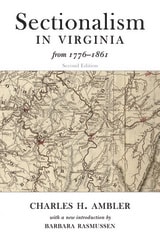
Sectionalism in Virginia from 1776 - 1861
Charles H. Ambler with a new introduction by Barbara Rasmussen
West Virginia University Press, 2008
This 1910 study of sectionalism in Virginia illustrates how the east and west of Virginia were destined to separate into two states. Barbara Rasmussen, professor of Public History and Director of Cultural Resource Management at West Virginia University writes a new introduction to Sectionalism in Virginia, setting Ambler’s classic grand achievement into the context of its production by creating an historical process for studying West Virginia history.

Sectors of Mutual Benefit in U.S.-Soviet Relations
Nish Jamgotch Jr., editor
Duke University Press, 1985
Without minimizing the enormous dangers of ongoing strategic military competition, the contributors attempt to determine which sectors of U.S.-Soviet relations have yielded the most significant mutual benefits. They raise questions about where U.S. policy has gone wrong, where it has been effective, and how safe we are in forecasting the continuation of those cooperative relationships.
Secular Days, Sacred Moments
The America Columns of Robert ColesRobert Coles
Michigan State University Press, 2013
Secular Faith
How Culture Has Trumped Religion in American PoliticsMark A. Smith
University of Chicago Press, 2015
Mark A. Smith provocatively argues that religion is not nearly the unchanging conservative influence in American politics that we have come to think it is. In fact, in the long run, religion is best understood as responding to changing political and cultural values rather than shaping them. Smith makes his case by charting five contentious issues in America’s history: slavery, divorce, homosexuality, abortion, and women’s rights. For each, he shows how the political views of even the most conservative Christians evolved in the same direction as the rest of society—perhaps not as swiftly, but always on the same arc. During periods of cultural transition, Christian leaders do resist prevailing values and behaviors, but those same leaders inevitably acquiesce—often by reinterpreting the Bible—if their positions become no longer tenable. Secular ideas and influences thereby shape the ways Christians read and interpret their scriptures.
So powerful are the cultural and societal norms surrounding us that Christians in America today hold more in common morally and politically with their atheist neighbors than with the Christians of earlier centuries. In fact, the strongest predictors of people’s moral beliefs are not their religious commitments or lack thereof but rather when and where they were born. A thoroughly researched and ultimately hopeful book on the prospects for political harmony, Secular Faith demonstrates how, over the long run, boundaries of secular and religious cultures converge.