Results by title
3369 books match the query 'Cultural & Social' and 236 start with s

Streets of a Million Martyrs
Everyday Poetics and Politics in Urban AlgeriaStephanie Love
University of Chicago Press, 0
Follows ordinary people as they move through the Algerian city of Oran, navigating the politically charged context of postcolonialism.
In this book, anthropologist Stephanie Love examines ordinary Algerians’ hope for a better future through what she calls “everyday urban poetics,” focusing on the country’s second-largest city of Oran. Examining linguistic forms including placenames, jokes, metaphors, anecdotes, and code-switches along with urban forms including monuments, buildings, and street layouts, Love shows how popular imaginaries of resistance are inscribed in Oran’s language and cityscapes.
Love argues that these everyday urban poetics constitute a street-based language that has helped Algerians find ways around oppressive censorship, reckon with painful pasts, and develop what she views as a politically fertile creative insurgency. This is particularly true in the wake of the 2019 uprising known as Hirak (“the movement”) that found Algerians challenging the legitimacy of the postcolonial regime through large-scale demonstrations and protests. Analyzing phenomena as diverse as efforts to preserve buildings and monuments, the informal renaming of streets and landmarks, and the development of women-led associations encouraging education and open discourse, Love shows how new forms of political life can be developed and sharpened in everyday speech.
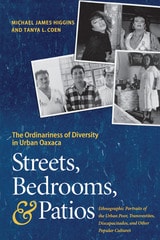
Streets, Bedrooms, and Patios
The Ordinariness of Diversity in Urban OaxacaBy Michael James Higgins and Tanya L. Coen
University of Texas Press, 2000
Diversity characterizes the people of Oaxaca, Mexico. Within this city of half a million, residents are rising against traditional barriers of race and class, defining new gender roles, and expanding access for the disabled. In this rich ethnography of the city, Michael Higgins and Tanya Coen explore how these activities fit into the ordinary daily lives of the people of Oaxaca.
Higgins and Coen focus their attention on groups that are often marginalized—the urban poor, transvestite and female prostitutes, discapacitados (the physically challenged), gays and lesbians, and artists and intellectuals. Blending portraits of and comments by group members with their own ethnographic observations, the authors reveal how such issues as racism, sexism, sexuality, spirituality, and class struggle play out in the people's daily lives and in grassroots political activism. By doing so, they translate the abstract concepts of social action and identity formation into the actual lived experiences of real people.
Structural Anthropology, Volume 2
Claude Lévi-Strauss
University of Chicago Press, 1983
"Structural Anthropology, Volume II is a diverse collection. [It is] a useful 'sampler' that gives a reader the full range of Lévi-Strauss's interests."—Daniel Bell, New York Times Book Review
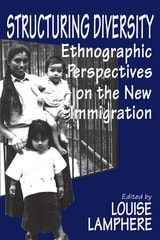
Structuring Diversity
Ethnographic Perspectives on the New ImmigrationEdited by Louise Lamphere
University of Chicago Press, 1992
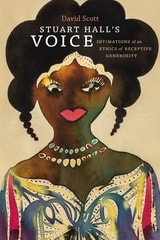
Stuart Hall's Voice
Intimations of an Ethics of Receptive GenerosityDavid Scott
Duke University Press, 2017

Studies In Italian American Folklore
Luisa Del Giudice
Utah State University Press, 1994
Studies in Culture Contact
Interaction, Culture Change, and ArchaeologyEdited by James G. Cusick
Southern Illinois University Press, 1998
People have long been fascinated about times in human history when different cultures and societies first came into contact with each other, how they reacted to that contact, and why it sometimes occurred peacefully and at other times was violent or catastrophic.
Studies in Culture Contact: Interaction, Culture Change, and Archaeology, edited by James G. Cusick,seeks to define the role of culture contact in human history, to identify issues in the study of culture contact in archaeology, and to provide a critical overview of the major theoretical approaches to the study of culture and contact.
In this collection of essays, anthropologists and archaeologists working in Europe and the Americas consider three forms of culture contact—colonization, cultural entanglement, and symmetrical exchange. Part I provides a critical overview of theoretical approaches to the study of culture contact, offering assessments of older concepts in anthropology, such as acculturation, as well as more recently formed concepts, including world systems and center-periphery models of contact. Part II contains eleven case studies of specific contact situations and their relationships to the archaeological record, with times and places as varied as pre- and post-Hispanic Mexico, Iron Age France, Jamaican sugar plantations, European provinces in the Roman Empire, and the missions of Spanish Florida.
Studies in Culture Contact provides an extensive review of the history of culture contact in anthropological studies and develops a broad framework for studying culture contact’s role, moving beyond a simple formulation of contact and change to a more complex understanding of the amalgam of change and continuity in contact situations.

Studying Technological Change
A Behavioral ApproachMichael Brian Schiffer
University of Utah Press, 2011
Studying Technological Change synthesizes nearly four decades of research by Michael Brian Schiffer, a cofounder of the field of behavioral archaeology. This new book asks historical and scientific questions about the interaction of people with artifacts during all times and in all places. The book is not about the history or prehistory of technology, nor is it a catalog of methods and techniques for inferring how specific technologies were made or used. Rather, it supplies conceptual tools that can be used to help craft an explanation of any technological change in any society.
Styling Masculinity
Gender, Class, and Inequality in the Men's Grooming IndustryBarber, Kristen
Rutgers University Press, 2016
Subaltern Studies 2.0
Being against the CapitaloceneMilinda Banerjee and Jelle J.P. Wouters
Prickly Paradigm Press, 2022
State and Capital reign over the Age of Sorrow. We face inequality, pandemics, ethnocide, climate crisis, and mass extinction. Our desire for security and power governs us as State. Our desire for possessions governs us as Capital. Our desires imprison and rule us beings as Unbeing. Yet, from Nagaland to New Zealand, Bhutan to Bolivia, a second wave of anti-colonial revolutions has begun. Arising from assemblies of humans and other-than-humans, these revolutions replace possessive individualism with non-exploitative interdependence. Naga elders, Bhutanese herders and other indigenous communities, feminists, poets, seers, yaks, cranes, vultures, and fungi haunt this pamphlet. The original Subaltern Studies narrated how Indian peasant communities destroyed the British empire. Subaltern Studies 2.0 prophesies the multi-being demos and liberates Being from Unbeing. Re-kin, Re-nomad, Re-animate, Re-wild! The Animist Revolution has come.
Subject to Colonialism
African Self-Fashioning and the Colonial LibraryGaurav Desai
Duke University Press, 2001
Presenting colonialism not as a singular, monolithic structure but rather as a practice frought with contradictions and tensions, Desai works to historicize the foundation of postcolonialism by decentering both canonical texts and privileged categories of analysis such as race, capitalism, empire, and nation. To achieve this, he focuses on texts that construct or reform—rather than merely reflect—colonialism, placing explicit emphasis on processes, performances, and the practices of everyday life. Reading these texts not merely for the content of their assertions but also for how they were created and received, Desai looks at works such as Jomo Kenyatta’s ethnography of the Gikuyu and Akiga Sai’s history of the Tiv and makes a particular plea for the canonical recuperation of African women’s writing.
Scholars in African history, literature, and philosophy, postcolonial studies, literary criticism, and anthropology will welcome publication of this book.

Subject to Death
Life and Loss in a Buddhist WorldRobert Desjarlais
University of Chicago Press, 2016
Subjective Lives and Economic Transformations in Mongolia
Life in the GapRebecca M. Empson
University College London, 2020
Substance and Seduction
Ingested Commodities in Early Modern MesoamericaEdited by Stacey Schwartzkopf and Kathryn E. Sampeck
University of Texas Press, 2017
Chocolate and sugar, alcohol and tobacco, peyote and hallucinogenic mushrooms—these seductive substances have been a nexus of desire for both pleasure and profit in Mesoamerica since colonial times. But how did these substances seduce? And when and how did they come to be desired and then demanded, even by those who had never encountered them before? The contributors to this volume explore these questions across a range of times, places, and peoples to discover how the individual pleasures of consumption were shaped by social, cultural, economic, and political forces.
Focusing on ingestible substances as a group, which has not been done before in the scholarly literature, the chapters in Substance and Seduction trace three key links between colonization and commodification. First, as substances that were taken into the bodies of both colonizers and colonized, these foods and drugs participated in unexpected connections among sites of production and consumption; racial and ethnic categories; and free, forced, and enslaved labor regimes. Second, as commodities developed in the long transition from mercantile to modern capitalism, each substance in some way drew its enduring power from its ability to seduce: to stimulate bodies; to alter minds; to mark class, social, and ethnic boundaries; and to generate wealth. Finally, as objects of scholarly inquiry, each substance rewards interdisciplinary approaches that balance the considerations of pleasure and profit, materiality and morality, and culture and political economy.
Subversive Archaism
Troubling Traditionalists and the Politics of National HeritageMichael Herzfeld
Duke University Press, 2021
Subverted Kinship
Nurturing and Inhabiting Gender in Amerindian PhilosophyDiego Madi Dias
HAU, 2020

Subway City
Riding the Trains, Reading New YorkBrooks, Michael
Rutgers University Press, 1997
None of the world's great cities is as closely identified with its subway as New York. Its trains provide much more than just rapid transit. They give New Yorkers a powerful symbol of their metropolis, one that they use to express both their hopes and their fears for the urban future.
Subway City explores New York's transit system as both fact and metaphor. Brooks traces the development of the subway from its inception as the newest and most efficient public transportation system to its decline as an overcrowded and dangerous part of city life. The crowded cars gave Harold Lloyd material for comedy, fueled William Randolph Hearst's crusade against the Traction Trust, and convinced Lewis Mumford that the subway was a futile effort to solve the city's problems. Brooks explores films which have dramatized the dangers lurking below ground, and examines the infamous Bernhard Goetz shooting that made the subway a symbol of urban decay. More hopefully, he describes the Metropolitan Transportation Authority's station improvements and ambitious programs for Music Underground, Poetry in Transit, and Arts-in-Transit, as keys to the city's renewal.

Sugar and Slavery in Puerto Rico
The Plantation Economy of Ponce, 1800–1850Francisco A. Scarano
University of Wisconsin Press, 1984
This important study of Ponce, a major sugar-producing district in Puerto Rico, examines in detail the processes by which a predominantly peasant economy an society was transformed into a plantation system. Scarano’s work, one of the first full investigations into Puerto Rico’s nineteenth-century economic history, dispels the long-held belief that slavery was an inconsequential factor in this society; indeed, he finds that the new plantation system was fully dependent on African slave labor, and that the initial stimuli for economic change came from immigrants.
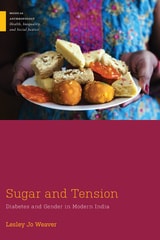
Sugar and Tension
Diabetes and Gender in Modern IndiaWeaver, Lesley Jo
Rutgers University Press, 2019

Superheroes and Contemporary Cultures
Cross-Medial Explorations and Societal PerspectivesEdited by Torsten Caeners and Danny Graydon
Intellect Books, 2026
Offering a global and interdisciplinary perspective on the superhero genre across comics, television, and film, this book presents a diverse range of contemporary superhero scholarship. It combines close readings of iconic characters like Batman, Iron Man, and The Watchmen with critical analysis of broader cultural and societal discourses.
The volume explores how superheroes reflect and problematize ideology, the military-industrial complex, and notions of public and private responsibility. Key themes include identity construction through secret identities and masking, as well as cultural and personal grief and trauma in relation to race and politics. Designed for students, scholars, and fans alike, this work reveals the enduring mainstream appeal of superheroes and their complex intersections with global popular culture.

Suq
Geertz on the MarketClifford Geertz
HAU, 2022
Originally published in 1979, Clifford Geertz’s essay on the Moroccan bazaar is a classic ethnographic account of the interplay of economic, social, and religious lives in the bustle of transaction. Drawing on years of fieldwork in the Middle Atlas town of Sefrou, Geertz explores how actors from diverse backgrounds assess the worth and meaning of other people’s wares, words, and ways of doing business. He shows how the search for market information, so central to the theorization of markets by economists, is here based on careful appraisals of social relations, embedded in understandings of the broader institutional environment of the market town and its hinterlands. With a richness of insights procured for generations of readers, Geertz’s essay on the sūq is a model of and for the craft of ethnographic theory. Long out of print, it is republished here in a stand-alone edition introduced by Lawrence Rosen.

Surgery Junkies
Wellness and Pathology in Cosmetic CulturePitts-Taylor, Victoria
Rutgers University Press, 2007
Survival Strategy
Stopping Fossil Fuels in the Age of "Drill, Baby, Drill"David McDermott Hughes
Rutgers University Press, 2027
In the United States, the climate movement has, so far, failed in the all-important task of shutting down fossil fuels. David McDermott Hughes offers a plan for a more daring form of climate politics, recommending that the climate movement adopt a strategy of mass blockades and sabotage against functioning fossil fuel infrastructure. Ideally, the saboteurs would not get caught—but if they did, in their trials they could appeal to the little-known power of jury nullification to avoid prison and to make pipelines unprotectable.
Climate change is no longer a technical problem that can simply be fixed. It is now a political predicament that must be faced. Elected politicians—even those who support renewable energy—remain committed to the extraction of petroleum and methane. No one with political power is even attempting to do the one thing that must be done: shut down fossil fuels. With trepidation, Hughes offers the last resort against the approaching climate catastrophe.
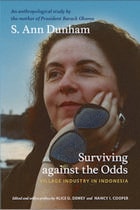
Surviving against the Odds
Village Industry in IndonesiaS. Ann Dunham
Duke University Press, 2009
President Barack Obama’s mother, S. Ann Dunham, was an economic anthropologist and rural development consultant who worked in several countries including Indonesia. Dunham received her doctorate in 1992. She died in 1995, at the age of 52, before having the opportunity to revise her dissertation for publication, as she had planned. Dunham’s dissertation adviser Alice G. Dewey and her fellow graduate student Nancy I. Cooper undertook the revisions at the request of Dunham’s daughter, Maya Soetoro-Ng. The result is Surviving against the Odds, a book based on Dunham’s research over a period of fourteen years among the rural metalworkers of Java, the island home to nearly half Indonesia’s population. Surviving against the Odds reflects Dunham’s commitment to helping small-scale village industries survive; her pragmatic, non-ideological approach to research and problem solving; and her impressive command of history, economic data, and development policy. Along with photographs of Dunham, the book includes many pictures taken by her in Indonesia.
After Dunham married Lolo Soetoro in 1967, she and her six-year-old son, Barack Obama, moved from Hawai‘i to Soetoro’s home in Jakarta, where Maya Soetoro was born three years later. Barack returned to Hawai‘i to attend school in 1971. Dedicated to Dunham’s mother Madelyn, her adviser Alice, and “Barack and Maya, who seldom complained when their mother was in the field,” Surviving against the Odds centers on the metalworking industries in the Javanese village of Kajar. Focusing attention on the small rural industries overlooked by many scholars, Dunham argued that wet-rice cultivation was not the only viable economic activity in rural Southeast Asia.
Surviving against the Odds includes a preface by the editors, Alice G. Dewey and Nancy I. Cooper, and a foreword by her daughter Maya Soetoro-Ng, each of which discusses Dunham and her career. In his afterword, the anthropologist and Indonesianist Robert W. Hefner explores the content of Surviving against the Odds, its relation to anthropology when it was researched and written, and its continuing relevance today.
Surviving the Americas
Garifuna Persistence from Nicaragua to New York CitySerena Cosgrove, José Idiáquez, Leonard Joseph Bent, and Andrew Gorvetzian
University of Minnesota Press, 2020
In Surviving the Americas, Serena Cosgrove, José Idiáquez, Leonard Joseph Bent, and Andrew Gorvetzian shed light on what it means to be Garifuna today, particularly in Nicaragua. Their research includes over nine months of fieldwork in Garifuna communities in the Pearl Lagoon on the southern Caribbean coast of Nicaragua and in New York City. The resulting ethnography illustrates the unique social issues of the Nicaraguan Garifuna and how their culture, traditions, and reverence for their ancestors continues to persist.
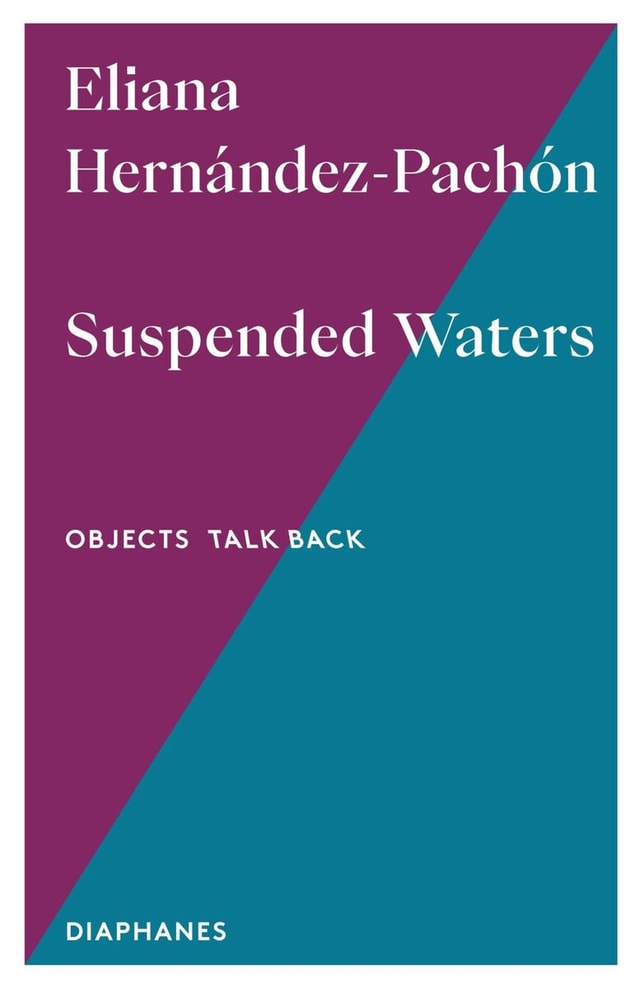
Suspended Waters
Eliana Hernandez-Pachon
Diaphanes, 2026
From the Colombia National Poetry Prize winner, Eliana Hernández-Pachón, comes a poetic essay that asks: what does it mean to possess, to preserve, to let go?
Suspended Waters is a poetic essay that connects four objects made of plant fibers: a death raft woven from reeds that has come ashore in the wrong place, a gold Muisca raft that evokes the legend of El Dorado, Amazonian flutes made of palm that can only be seen by men, and a sheet of paper used for museum records.
Exploring how these objects sustain different worlds through a text pulsing with the life of more-than-human beings and voices both solo and Choral, Colombian writer Eliana Hernández-Pachón evokes worlds of ritual, sanctity, and abundance.

Sustaining Activism
A Brazilian Women's Movement and a Father-Daughter CollaborationJeffrey W. Rubin and Emma Sokoloff-Rubin
Duke University Press, 2013
Starting in 2002, Rubin and Sokoloff-Rubin traveled together to southern Brazil, where they interviewed activists over the course of ten years. Their vivid descriptions of women’s lives reveal the hard work of sustaining a social movement in the years after initial victories, when the political way forward was no longer clear and the goal of remaking gender roles proved more difficult than activists had ever imagined. Highlighting the tensions within the movement about how best to effect change, Sustaining Activism ultimately shows that democracies need social movements in order to improve people’s lives and create a more just society.
Sustaining Interdisciplinary Collaboration
A Guide for the AcademyRegina Bendix
University of Illinois Press, 2017

Swahili Origins
Swahili Culture and The Shungwaya PhenomenonJames de Vere Allen
Ohio University Press, 1993
Kiswahili has become the lingua franca of eastern Africa. Yet there can be few historic peoples whose identity is as elusive as that of the Swahili. Some have described themselves as Arabs, as Persians or even, in one place, as Portuguese. It is doubtful whether, even today, most of the people about whom this book is written would unhesitatingly and in all contexts accept the name Swahili.
This book was central to the thought and lifework of the late James de Vere Allen. It is his major study of the origin of the Swahili and of their cultural identity. He focuses on how the African element in their cultural patrimony was first modified by Islam and later changed until many Swahili themselves lost sight of it.
They share a language and they share a culture. Their territory stretches from the coast of southern Somalia to the Lamu archipelago in Kenya, to the Rovuma River in modern Mozambique and out into the islands of the Indian Ocean. But they lack a shared historical experience.
James de Vere Allen, in this study of contentious originality, set out to give modern Swahili evidence of their shared history during a period of eight centuries.
Sweatshop
The History of an American IdeaHapke, Laura
Rutgers University Press, 2004
Arguing that the sweatshop is as American as apple pie, Laura Hapke surveys over a century and a half of the language, verbal and pictorial, in which the sweatshop has been imagined and its stories told. Not seeking a formal definition of the sort that policymakers are concerned with, nor intending to provide a strict historical chronology, this unique book shows, rather, how the “real” sweatshop has become intertwined with the “invented” sweatshop of our national imagination, and how this mixture of rhetoric and myth has endowed American sweatshops with rich and complex cultural meaning.
Hapke uncovers a wide variety of tales and images that writers, artists, social scientists, reformers, and workers themselves have told about “the shop.” Adding an important perspective to historical and economic approaches, Sweatshop draws on sources from antebellum journalism, Progressive era surveys, modern movies, and anti-sweatshop websites. Illustrated chapters detail how the shop has been a facilitator of assimilation, a promoter of upward mobility, the epitome of exploitation, a site of ethnic memory, a venue for political protest, and an expression of twentieth-century managerial narratives.
An important contribution to the real and imagined history of garment industry exploitation, this book provides a valuable new context for understanding contemporary sweatshops that now represent the worst expression of an unregulated global economy.
Sweeping the Way
Divine Transformation in the Aztec Festival of OchpaniztliCatherine DiCesare
University Press of Colorado, 2022
Switzerland
A Village HistoryDavid Birmingham
Ohio University Press, 2004
Switzerland: A Village History is an account of an Alpine village that illuminates the broader history of Switzerland and its rural, local underpinnings. It begins with the colonization of the Alps by Romanized Celtic peoples who came from the plain to clear the wilderness, establish a tiny monastic house, and create a dairy economy that became famous for its cheeses. Over ten centuries the village, like the rest of Switzerland, went through the traumas of religious reformation and political revolution. A single currency, a unified postal service, and eventually an integrated army brought improved stability and prosperity to the union of two dozen small republics.
Yet Switzerland’s enduring foundation remains the three thousand boroughs to which the Swiss people feel they truly belong. In Switzerland: A Village History, distinguished scholar David Birmingham tells the story of his childhood village-Château-d’Oex-where records of cheesemaking date to 1328. The evolution of this ancient grazing and forest economy included the rise of the legal profession to keep track of complex deeds, grazing allotments, and animal rights-of-way. Switzerland’s eventual privatization of communal grazing land drove many highlanders to emigrate to the European plains and overseas to the Americas. The twentieth century brought wealth from foreign tourism to Switzerland, punctuated by austerities imposed by Europe’s wars. Alpine peasants were integrated into Swiss union society and began at last to share in some of the prosperity flowing from urban industry.
Switzerland: A Village History replaces the mythology and patriotic propaganda that too often have passed for Swiss history with a rigorous, insightful, and charming account of the daily life, small-scale rivalries, and local loyalties that actually make up Swiss history.
Symbolism and Ritual in a One-Party Regime
Unveiling Mexico's Political CultureLarissa Adler-Lomnitz, Rodrigo Salazar Elena, and Ilya Adler
University of Arizona Press, 2010
Discussing Mexican presidential politics from the perspectives of anthropology, political science, and communications science, the authors analyze the 1988 presidential campaign of Carlos Salinas de Gortari—the last great campaign of the PRI to display the characteristics traditionally found in the twentieth century. These detailed descriptions of campaign events show that their ritualistic nature expressed both a national culture and an aura of domination.
The authors describe the political and cultural context in which this campaign took place—an authoritarian presidential system that dated from the 1920s—and explain how the constitutional provisions of the state interacted with the informal practices of the party to produce highly scripted symbolic rituals. Their analysis probes such topics as the meanings behind the candidate’s behavior, the effects of public opinion polling, and the role of the press, then goes on to show how the system has begun to change since 2000.
By dealing with the campaign from multiple perspectives, the authors reveal it as a rite of passage that sheds light on the political culture of the country. Their study expands our understanding of authoritarianism during the years of PRI dominance and facilitates comparison of current practices with those of the past.

Symbols that Stand for Themselves
Roy Wagner
University of Chicago Press, 1986

Synthetic
How Life Got MadeSophia Roosth
University of Chicago Press, 2017
In Synthetic: How Life Got Made, cultural anthropologist Sophia Roosth reveals how synthetic biologists make new living things in order to understand better how life works. The first book-length ethnographic study of this discipline, Synthetic documents the social, cultural, rhetorical, economic, and imaginative transformations biology has undergone in the post-genomic age. Roosth traces this new science from its origins at MIT to start-ups, laboratories, conferences, and hackers’ garages across the United States—even to contemporary efforts to resurrect extinct species. Her careful research reveals that rather than opening up a limitless new field, these biologists’ own experimental tactics circularly determine the biological features, theories, and limits they fasten upon. Exploring the life sciences emblematic of our time, Synthetic tells the origin story of the astonishing claim that biological making fosters biological knowing.

System and Succession
The Social Bases of Political Elite RecruitmentBy John D. Nagle
University of Texas Press, 1977
System and Succession provides a comparative analysis of the social composition of national political leadership in the United States, Russia, Germany, and Mexico. These systems were chosen as case studies because their forms of government are representative of many others, because they are conveniently suited for comparison, and because they have high internal control over their own means of recruitment. Drawing on a mass of data and an extensive bibliography, Nagle's comprehensive study exhibits a mastery of the intricacies of these four quite divergent political systems. Complete time-series data covering several generations of elite recruitment provide the basis for a new methodological approach to comparative elite analysis.
The author investigates, among other issues, elite displacements associated with revolution, economic crises, and postwar peace and prosperity. Especially important differences along class and generational lines are found in the elite displacements associated with the revolutions in Germany (1918), Russia (1917–1921), and Mexico (1910–1920). The American case serves as a nonrevolutionary control case. The overriding theoretical issue throughout System and Succession is the debate among Marxists, radical democrats, and pluralists over the importance of elite social composition for equitable representation of social or class interests. Nagle develops a convincing argument supporting the Marxist thesis that the importance of class in elite recruitment is a defining characteristic of the political system.
System and Succession will be of particular interest to scholars in comparative politics. Political scientists in other areas, as well as historians and sociologists interested in the four countries examined, will also find this book provocative.