Results by title
3388 books match the query 'Fiction' and 233 start with s
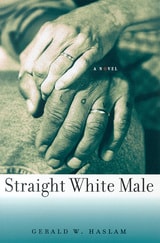
Straight White Male
(A Novel)Gerald W. Haslam
University of Nevada Press, 2000
But life is about to deliver a series of challenges that overturn Leroy’s hard-won serenity and threaten to destroy his marriage and his family. Leroy’s father, Earl, once so wise and invincible, is descending into the empty, helpless depths of senility, while his ill-tempered mother struggles with her own health problems. The marriage of a high school friend ends tragically. And Leroy wrestles with his own bitter secret—his fierce resentment of his beloved wife’s troubled past and of the other men who knew her before he married her.

Strange Gourmets
Sophistication, Theory, and the NovelJoseph Litvak
Duke University Press, 1997
Though commonly thought of as a kind of worldliness at its best and an elitist snobbery at its worst, sophistication, Litvak reminds us, remains tied to its earlier, if forgotten, meaning of "perversion"—a perversion whose avatars are the homosexual and the intellectual. Proceeding with his investigations from a specifically gay academic perspective, Litvak presents thoroughly inventive readings of novels by Austen, Thackeray, and Proust, and of theoretical works by Adorno and Barthes, each text epitomizing sophistication in one of its more familiar modes. Among the issues he explores are the ways in which these texts teach sophistication, the embarrassment that sophistication causes the sophisticated, and how the class politics of sophistication are inseparable from its sexual politics. Helping gay, queer, feminist, and other provocative critics to make the most of their bad publicity, Litvak mindfully celebrates sophistication’s economy of taste and pleasure.
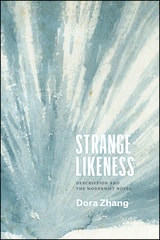
Strange Likeness
Description and the Modernist NovelDora Zhang
University of Chicago Press, 2020
Description is the novelistic technique charged with establishing a common world, but in the early twentieth century, there was little agreement about how a common world could be known and represented. Zhang argues that the protagonists in her study responded by shifting description away from visualizing objects to revealing relations—social, formal, and experiential—between disparate phenomena. In addition to shedding new light on some of the best-known works of modernism, Zhang opens up new ways of thinking about description more broadly. She moves us beyond the classic binary of narrate-or-describe and reinvigorates our thinking about the novel. Strange Likeness will enliven conversations around narrative theory, affect theory, philosophy and literature, and reading practices in the academy.
Stream Of Life
Clarice Lispector
University of Minnesota Press, 1989

Strike!
Mary Heaton Vorse
University of Illinois Press, 1991
The story is told by Mary Heaton Vorse, the leading labor reporter of the period, who had covered major strikes since 1912. This novel was the first of six inspired by the Gastonia strike. Critics hailed it as the best.
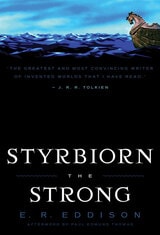
Styrbiorn the Strong
E. R. Eddison
University of Minnesota Press, 2011
E. R. Eddison’s classic saga novel now in paperback—includes for the first time Eddison’s remarkable letter of introduction and his unabridged closing note
Styrbiorn the Strong tells the grand tale of Styrbiorn Olafsson, heir to the Swedish throne and known both for his impressive size and strength and his unruly, quarrelsome nature. Denied his birthright and exiled from Sweden, Styrbiorn becomes the leader of the Jomsvikings and sets out to reclaim the Swedish throne in the epic Battle of Fýrisvellir. A rediscovered classic, Styrbiorn the Strong is a tale reminiscent of the Old Norse sagas, a historical novel from one of the twentieth century’s most influential masters of fantasy.
Subject Lessons
Susan S. Levine
Carnegie Mellon University Press, 2027
Psychoanalyst Susan S. Levine provides a fly-on-the-wall view of psychoanalysis through the observations of fictional Dr. Sandra Krasnapol.
Subject Lessons is a novel in stories that provides a fly-on-the-wall view of psychoanalysis from the perspective of the elegant and exacting Dr. Sandra Krasnapol, whose sometimes hair-raising, sometimes heartwarming encounters in and out of the office offer voyeuristic satisfaction for anyone who has ever wondered what goes on in an analyst’s mind.
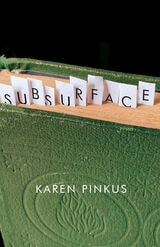
Subsurface
Karen Pinkus
University of Minnesota Press, 2023
A bold new consideration of climate change between narratives of the Earth’s layers and policy of the present
Long seen as a realm of mystery and possibility, the subsurface beneath our feet has taken on all-too-real import in the era of climate change. Can reading narratives of the past that take imaginative leaps under the surface better attune us to our present knowledge of a warming planet?
In Subsurface, Karen Pinkus looks below the surface of texts by Edgar Allan Poe, Arthur Conan Doyle, George Sand, E. T. A. Hoffmann, and Jules Verne to find the buried origins of capitalist fantasies in which humans take what they want from the earth. Putting such texts into conversation with narrative theory, critical theory, geology, and climate policy, she shows that the subsurface has been, in our past, a place of myth and stories of male voyages down to gain knowledge—but it is also now the realm of fossil fuels. How do these two modes intertwine?
A highly original take on evocative terms such as extraction, burial, fossils, deep time, and speculative futurity, Subsurface questions the certainty of comfortable narrative arcs. It asks us to read literature with and against the figure of the geological column, with and against fossil fuels and the emissions warming our planet. As we see our former selves move into the distance, what new modes of imagination might we summon?
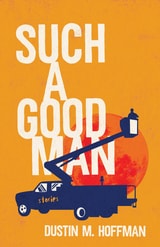
Such a Good Man
Dustin M. Hoffman
University of Wisconsin Press, 2025

Sugarless
A NovelJames Magruder
University of Wisconsin Press, 2009
After he brings two girls in speech class to tears by reading a story aloud, Rick is coaxed onto the interscholastic forensics team to perform an eight-minute dramatic interpretation of The Boys in the Band, the controversial sixties play about homosexuality. Unexpectedly successful at this oddball event, Rick begins winning tournaments and making friends with his teammates.
Rick also discovers the joys of sex—with a speech coach from a rival school—just as his mother, reacting to a deteriorating home environment, makes an unnerving commitment to Christ. The newly confident Rick assumes this too shall pass—until the combined forces of family, sex, and faith threaten to undo him at the state meet in Peoria.
James Magruder’s Sugarless offers a ruefully entertaining take on the simultaneous struggles of coming-out, coming-of-age, and coming-to-Jesus.

Summer Light
Roxana Robinson
University Press of New England, 1995
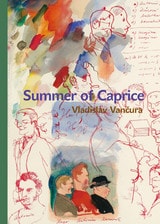
Summer of Caprice
Vladislav Vancura
Karolinum Press, 2006

Summer of Caprice
Vladislav Vancura
Karolinum Press, 2016
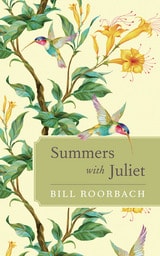
Summers with Juliet
Bill Roorbach
The Ohio State University Press, 2000
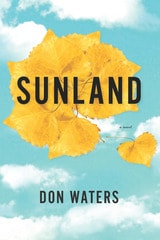
Sunland
A NovelDon Waters
University of Nevada Press, 2013

Sunlit Riffles and Shadowed Runs
Stories of Fly Fishing in AmericaKent Cowgill
University of Wisconsin Press, 2012
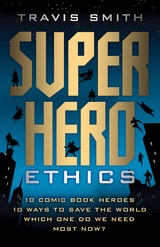
Superhero Ethics
10 Comic Book Heroes; 10 Ways to Save the World; Which One Do We Need Most Now?Travis Smith
Templeton Press, 2018
Although these outlandish figures—in their capes, masks, and tights, with their unbelievable origins and preternatural powers—are often dismissed as juvenile amusements, they really are profound metaphors for different approaches to shaping one’s character and facing the challenges of life.
But, given the choice, which superhero should we follow today? Who is most worthy of our admiration? Whose goals are most noble? Whose ethics should we strive to emulate?
To decide, Travis Smith takes ten top superheroes and pits them one against another, chapter by chapter. The hero who better exemplifies how we ought to live advances to the final round. By the end of the book, a single superhero emerges victorious and is crowned most exemplary for our times.
How, then, shall we live?
- How can we overcome our beastly nature and preserve our humanity? (The Hulk vs. Wolverine)
- How far can we rely on our willpower and imagination to improve the human condition? (Iron Man vs. Green Lantern)
- What limits must we observe when protecting our neighborhood from crime and corruption? (Batman vs. Spider-Man)
- Will the pursuit of an active life or a contemplative life bring us true fulfillment? (Captain America vs. Mr. Fantastic)
- Should we put our faith in proven tradition or in modern progress to achieve a harmonious society? (Thor vs. Superman)
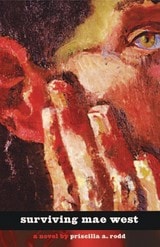
Surviving Mae West
A Novel by Priscilla A. Rodd
West Virginia University Press, 2006
Tess, a West Virginian in New York City, finds herself among seedy brothels facing life as a prostitute. A number of trials test her in every way, leading to both understanding and misunderstanding among her friends and her family. Tess tells these stories of pain, joy, depression, loneliness, and endurance in her journal, and they will shock some readers and charm others. With the shadow of the Appalachians calling her back home, she desperately struggles to claim her individuality in a world of debauchery without the painful remnants of her past and fear of a fragmented future overwhelming her.

Susan Glaspell
Essays on Her Theater and FictionLinda Ben-Zvi, Editor
University of Michigan Press, 1995
The career of Susan Glaspell (1876-1948), the American playwright and novelist, follows closely the trajectory of other "reclaimed" American women writers of the century such as Kate Chopin, Charlotte Perkins Gilman, and Zora Neale Hurston. She was well known in her time, effaced from canonical consideration after her death, and rediscovered years later through the surfacing of one work around which critical attention has focused. Glaspell was a respected international playwright and novelist who amassed some of the most impressive credentials in American theater history, including the Pulitzer Prize in 1931. Over the past fifteen years, she has been rediscovered through the work of leading feminist scholars; and her one-act play Trifles and its short story form, "A Jury of Her Peers," have become classics. This book is the first collection devoted to the study of the body of Glaspell's work. Essays by leading playwrights and scholars provide an array of perspectives on the writer and her work. The book features the first complete Glaspell bibliography, including original reviews of her plays and fiction and recent critical studies of her writing.

Suspense in the Formula Story
George N. Dove
University of Wisconsin Press, 1989
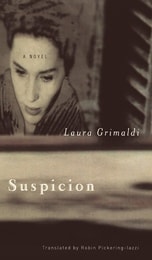
Suspicion
A NovelLaura Grimaldi
University of Wisconsin Press, 2003
In the shadow of the "Monster of Florence," a serial murderer who has terrorized Italy for seventeen years, Laura Grimaldi sets her tense psychological thriller Suspicion—a noir mystery of a city transformed by fear, and of friendships and family ties twisted by uncertainty and dark speculation. Grimaldi, whose hardboiled mysteries of the 1950s earned her the title "Italy’s queen of crime," turns here to the deeper, more elusive and disturbing questions that haunt human affairs.
For years Matilde, the widow of a prominent Florentine doctor, has lived alone with her eccentric middle-aged son, Enea. When the police pay a call, the balance between mother and son is shifted just subtly enough to make Matilde prey to suspicions and doubts that grow ever more corrosive, ever harder to conceal and more dangerous to reveal. In the literary tradition of such mystery writers as Patricia Highsmith and Ruth Rendell, Grimaldi creates an atmosphere charged with suspense as the daily lives and routines of her characters, infected with suspicion, begin to rearrange themselves around a few frightening facts and infinite monstrous possibilities.
Matilde’s efforts to decipher Enea’s secretive movements and occupations appear perfectly sensible and defensible through Grimaldi’s deft shifts between mother and son—and another, chillingly detached perspective on the gruesome murders. Grimaldi’s readers will find themselves as subject to misinterpretation and doubt, to sympathies and suspicions as her Florentine characters, and spellbound until the book’s final page.
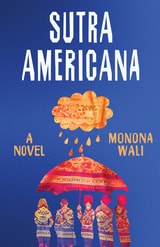
Sutra Americana
Monona Wali
University of Wisconsin Press, 2026
In 1960 S. K. Sharma, a brilliant young astrophysicist at the beginning of his academic career, has finally succeeded in bringing his wife, Sushila, from India to America. Intensely drawn to one another as star university students, the couple pursue an unlikely affair and marriage that crosses caste lines. Their sweeping, decades-long story of love, forgiveness, and coming of age takes place in a country that is both fascinated by and shuns them. The United States, with its exaltation of individualism, offers immense opportunities, but its looser sexual mores threaten to undermine the family’s happiness and devotion to one another.
As their three daughters become young women, they must navigate the tumultuous decades of the Vietnam War, the civil rights movement, and the women’s liberation movement. In their journeys of self-discovery, they upend their parents’ hold on them to craft radically new identities for themselves. As they discover their parents’ faults they grow increasingly puzzled by their devotion to one another, eventually learning how love and forgiveness have the power to overcome the most uncomfortable truths.
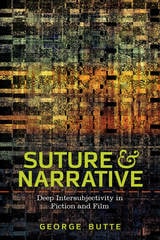
Suture and Narrative
Deep Intersubjectivity in Fiction and FilmGeorge Butte
The Ohio State University Press, 2017
Suture and Narrative: Deep Intersubjectivity in Fiction and Film by George Butte offers a new phenomenological understanding of how fiction and film narratives use particular techniques to create and represent the experience of community. Butte turns to the concept of suture from Lacanian film theory and to the work of Merleau-Ponty to contribute a deeper and broader approach to intersubjectivity for the field of narrative theory.
Butte’s approach allows for narratives that represent insight as well as blindness, love, and loss, locating these connections and disconnections in narratological techniques that capture the crisscrossing of perspectives, such as those in fiction’s free indirect discourse and in the oblique angle of film’s shot/reverse shot convention. Butte studies the implications of this chiasmus in the novels and film adaptations of later Henry James works, Barrie’s Peter Pan tales and film adaptations, and the films Silence of the Lambsand Nothing But a Man. Suture’s story in the twentieth century, according to Butte, is a story of the loss of immediacy and community. Yet in concluding this, Butte finds optimism in the Coen brothers’ Raising Arizona as well as in Why Be Happy When You Could Be Normal? by Jeanette Winterson and Marc Webb’s film (500) Days of Summer.
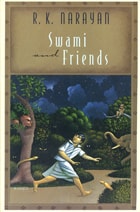
Swami and Friends
R. K. Narayan
University of Chicago Press, 1980
Offering rare insight into the complexities of Indian middle-class society, R. K. Narayan traces life in the fictional town of Malgudi. The Dark Room is a searching look at a difficult marriage and a woman who eventually rebels against the demands of being a good and obedient wife. In Mr. Sampath, a newspaper man tries to keep his paper afloat in the face of social and economic changes sweeping India. Narayan writes of youth and young adulthood in the semiautobiographical Swami and Friends and The Bachelor of Arts. Although the ordinary tensions of maturing are heightened by the particular circumstances of pre-partition India, Narayan provides a universal vision of childhood, early love and grief.
"The experience of reading one of his novels is . . . comparable to one's first reaction to the great Russian novels: the fresh realization of the common humanity of all peoples, underlain by a simultaneous sense of strangeness—like one's own reflection seen in a green twilight."—Margaret Parton, New York Herald Tribune
"The novels of R.K. Narayan are the best I have read in any language for a long time. . . . His work gives the conviction that it is possible to capture in English, a language not born of India, the distinctive characteristics of Indian family life."—Amit Roy, Daily Telegraph

Swede Hollow
Ola Larsmo
University of Minnesota Press, 2024
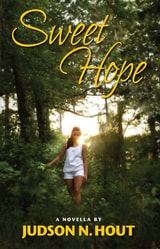
Sweet Hope
a novellaJudson N. Hout
Parkhurst Brothers, Inc., 2013

Sweet Promised Land, 50th ed.
Robert Laxalt
University of Nevada Press, 2007
Dominique Laxalt was sixteen when he left the French Pyrenees for America. He became a sheepherder in the Nevada desert and nearby hills of the Sierra. Like all his fellow Basque immigrants, Dominique dreamed of someday returning to the land of his beginnings. Most Basques never made the journey back, but Dominique finally did return for a visit with family and friends. Sweet Promised Land is the story of that trip, told by his son Robert, who accompanied him to the pastoral mountain village of Tardets in France. Dominique came home victorious, the adventurer who had conquered the unknown and found his fortune in the New World. He told of his life in America, the hardships and challenges, and began to realize that he had changed since his departure from Tardets. By the end of the visit, he knew with certainty where he belonged.
During the past fifty years, this book has become a classic in Western American literature, still beloved by the Basque-American community. In celebration of the fiftieth anniversary of the book’s publication, western literature scholar Ann Ronald wrote a new foreword, discussing the book in the context of American and Nevada literature.

Sweet Promised Land, 50th ed.
Robert Laxalt
University of Nevada Press, 2007
Dominique Laxalt was sixteen when he left the French Pyrenees for America. He became a sheepherder in the Nevada desert and nearby hills of the Sierra. Like all his fellow Basque immigrants, Dominique dreamed of someday returning to the land of his beginnings. Most Basques never made the journey back, but Dominique finally did return for a visit with family and friends. Sweet Promised Land is the story of that trip, told by his son Robert, who accompanied him to the pastoral mountain village of Tardets in France. Dominique came home victorious, the adventurer who had conquered the unknown and found his fortune in the New World. He told of his life in America, the hardships and challenges, and began to realize that he had changed since his departure from Tardets. By the end of the visit, he knew with certainty where he belonged.
During the past fifty years, this book has become a classic in Western American literature, still beloved by the Basque-American community. In celebration of the fiftieth anniversary of the book’s publication, western literature scholar Ann Ronald wrote a new foreword, discussing the book in the context of American and Nevada literature.
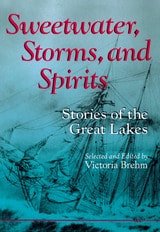
Sweetwater, Storms, and Spirits
Stories of the Great LakesSelected and Edited by Victoria Brehm
University of Michigan Press, 1991
Native American legends, shipping tales, folklore, and myths spanning the last 150 years are gathered together for the first time in this collection. The presence of Native American culture, the unpredictable climate, the dangerous closeness of the shoreline, and the bloody history of shipping on the Lakes contribute greatly to the uniqueness of maritime literature on the Lakes.
Sweetwater, Storms, and Spirits will appeal to those interested in both Native American literature and history and Great Lakes maritime history, and to those who simply enjoy a good maritime tale. The collection is a seabag of different kinds of stories, myths, and tales that together create a picture of life as it has been lived on the Great Lakes.
Swim for the Little One First
Noy Holland
University of Alabama Press, 2012
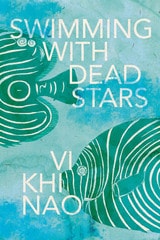
Swimming with Dead Stars
Vi Khi Nao
University of Alabama Press, 2022
She wanted to die. The universe—and her mother—had other plans.
Maldon is an adjunct literature instructor at a prestigious East Coast university, with a deteriorating heart condition and no insurance. She finds herself caught between the demands of her job and the needs of her body, triggering economic and emotional strains that cause her to fantasize about taking her own life. But Maldon, who has pledged to safeguard her mother ever since their arrival in the US on a refugee ship from postwar Vietnam, has vowed to forgo suicide for as long as her mother is living.
In time, her heart worsens rapidly, and she ventures cross-country to a place called Cloud for the operation that may save her life. In Cloud, Maldon is joined by old friend planet Neptune, who is hermaphroditic, peculiar, and has agreed to accompany Maldon through the operation.
Swimming with Dead Stars is a hallucinatory meditation on the stars and planets, the precariousness of our existence, the cruel inequities of labor and healthcare, chickens and ice cream, and the grace that comes from enduring the physical and psychic pain wrought by pernicious social forces that enslave us all.
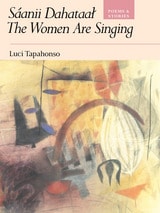
Sáanii Dahataal/The Women Are Singing
Poems and StoriesLuci Tapahonso
University of Arizona Press, 1993
Luci Tapahonso shows how the details of everyday life—whether the tragedy of losing a loved one or the joy of raising children, or simply drinking coffee with her uncle—bear evidence of cultural endurance and continuity. Through her work, readers may come to better appreciate the different perceptions that come from women's lives.

Sámi Folktales from the Near and Far Worlds
Just Knud Qvigstad
University of Minnesota Press, 2026
The most comprehensive collection of Sámi folktales ever translated into English
From the vast region of Northern Sápmi comes Sámi Folktales from the Near and Far Worlds, the most extensive compilation of Sámi narratives recorded from Sámi storytellers ever published in English translation. Comprising more than 300 folktales and legends from Northern Norway, including many from the coastal Sámi and the Skolt Sámi of Eastern Finnmark, this volume illuminates an oral storytelling tradition and shares narratives told by fishers, farmers, reindeer herders, lay preachers, and teachers from the interior plateaus and valleys to the Arctic fjords.
Originally recorded in the late nineteenth and early twentieth centuries by the Norwegian philologist Just Knud Qvigstad and the Sámi politician and folklorist Isak Saba, this collection spans centuries of storytelling in multiple genres, from migratory fairytales with kings and princesses to legends of ghosts and the Devil to fables with talking animals. A young lad from a poor family embarks on a quest through the wilderness to find treasure, receiving help from a wise female elder along his path. A Sámi boy falls in love with a háldi girl from another world, and they find a way to marry. A man carries sickness out of a village and stops the plague from spreading. Cunning foxes outsmart bears and humans alike. The villainous Chudes are tricked, foiled in their plans to steal from and kill the Sámi. People are turned into wolves, able to turn back only if they don’t taste the blood of a reindeer or if they are given cooked food. The ogre Stállu appears again and again, terrorizing the community until he’s outwitted or subdued. Rávgas, undead creatures of the sea, drag themselves out of the depths to lure others to their demise.
With historical context that reveals the cultural resilience of the Sámi people, Sámi Folktales from the Near and Far Worlds honors these traditional narratives, often overlooked in other folktale anthologies from the Nordic countries. Translator Barbara Sjoholm’s insightful introduction describes Qvigstad’s and Saba’s backgrounds and their work in gathering and translating these essential texts, and she introduces Sámi storytellers Johan Aikio, Efraim Pedersen, and Elen Utsi, who contributed dozens of stories.
An unprecedented trove of Sámi narratives, this expansive collection brings most of these tales to English readers for the first time, marking a major contribution to Indigenous folk literature and enhancing a broader understanding of Sámi and Nordic cultures.
Retail e-book files for this title are screen-reader friendly with images accompanied by short alt text and/or extended descriptions.