Results by title
3064 books match the query 'Social conditions' and 211 start with s
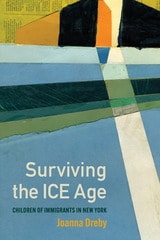
Surviving the ICE Age
Children of Immigrants in New YorkJoanna Dreby
Russell Sage Foundation, 2025
Dreby shows that a restrictive approach to immigration creates problems over time and across generations. These issues occur regardless of one’s citizenship status and go beyond deportations. Despite having pride in their heritage, her interviewees did not talk much about immigration. She refers to this unwillingness—and at times, inability—to speak about immigration as silencing. Silencing in a community or family is often intended to protect children, but this can leave them with little information about their backgrounds and status, leading to fear and anxiety instead. Self-silencing often resulted from traumatic experiences tied to enforcement episodes, which sometimes took the form of memory loss or emotional withholding. Dreby finds that experiences with the immigration system that disrupted relationships in a child’s household arising from family separations, moves, or changing roles in the family had especially long-term effects, causing, at times, ongoing mental health issues. Even the risk of immigration involvement left some young adults feeling vulnerable and undermined their sense of safety and security as U.S. citizens.
Dreby also highlights stories that offer hope. Young adults developed strategies to persevere, and children who grew up in communities and families that openly talked about migration felt empowered and fared much better, especially when they had access to resources, such as adequate food and shelter, mental health services, and community support. Dreby calls for policies and practices to mitigate the harms of restrictive migratory control on children’s wellbeing, such avoiding the arrest of parents in front of children and ensuring that U.S. citizen children’s interests are considered in immigration court without their direct involvement.
Surviving the ICE Age details the generational harms caused by U.S. immigration policy and offers suggestions for a better way forward.
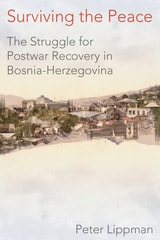
Surviving the Peace
The Struggle for Postwar Recovery in Bosnia-HerzegovinaPeter Lippman
Vanderbilt University Press, 2019
Essential reading for students of the former Yugoslavia and anyone interested in postwar or post-genocide studies, Surviving the Peace is an instant classic of long-form reporting, an impossible accomplishment without a lifetime of dedication to a place and people.
Peter Lippman's website is http://survivingthepeace.org/.
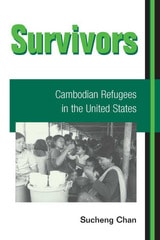
Survivors
CAMBODIAN REFUGEES IN THE UNITED STATESSucheng Chan
University of Illinois Press, 2004
Unparalleled in scope, Survivors begins with the Cambodians' experiences under the brutal Khmer Rouge regime, following them through escape to refugee camps in Thailand and finally to the United States, where they try to build new lives in the wake of massive trauma. Their struggle becomes primarily economic as they continue to negotiate new cultures and deal with rapidly changing gender and intergenerational relations within their own families. Poverty, crime, and racial discrimination all have an impact on their experiences in America, and each is examined in depth.
Although written as a history, this is a thoroughly multidisciplinary study, and Chan makes use of research from anthropology, sociology, psychology, medicine, social work, linguistics and education. She also captures the perspective of individual Cambodians. Drawing on interviews with more than fifty community leaders, a hundred government officials, and staff members in volunteer agencies, Survivors synthesizes the literature on Cambodian refugees, many of whom come from varying socioeconomic backgrounds.
A major scholarly achievement, Survivors is unique in the Asian American canon for its memorable presentation of cutting-edge research and its interpretation of both sides of the immigration process.
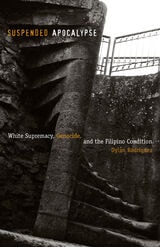
Suspended Apocalypse
White Supremacy, Genocide, and the Filipino ConditionDylan Rodríguez
University of Minnesota Press, 2009
Suspended Apocalypse is a rich and provocative meditation on the emergence of the Filipino American as a subject of history. Culling from historical, popular, and ethnographic archives, Dylan Rodríguez provides a sophisticated analysis of the Filipino presence in the American imaginary. Radically critiquing current conceptions of Filipino American identity, community, and history, he puts forth a genealogy of Filipino genocide, rooted in the early twentieth-century military, political, and cultural subjugation of the Philippines by the United States.
Suspended Apocalypse critically addresses what Rodríguez calls "Filipino American communion," interrogating redemptive and romantic notions of Filipino migration and settlement in the United States in relation to larger histories of race, colonial conquest, and white supremacy. Contemporary popular and scholarly discussions of the Filipino American are, he asserts, inseparable from their origins in the violent racist regimes of the United States and its historical successor, liberal multiculturalism.
Rodríguez deftly contrasts the colonization of the Philippines with present-day disasters such as Hurricane Katrina and Mount Pinatubo to show how the global subjection of Philippine, black, and indigenous peoples create a linked history of genocide. But in these juxtapositions, Rodríguez finds moments and spaces of radical opportunity. Engaging the violence and disruption of the Filipino condition sets the stage, he argues, for the possibility of a transformation of the political lens through which contemporary empire might be analyzed, understood, and perhaps even overcome.
Swamplife
People, Gators, and Mangroves Entangled in the EvergladesLaura A. Ogden
University of Minnesota Press, 2010
Today, the many visions of the Everglades—protectionist, ecological, commercial, historical—have become a tangled web of contradictory practices and politics for conservation and for development. Yet within this entanglement, the place of people remains highly ambivalent. It is the role of people in the Everglades that interests Ogden, as she seeks to reclaim the landscape’s long history as a place of human activity and, in doing so, discover what it means to be human through changing relations with other animals and plant life.
Ogden tells this story through the lives of poor rural whites, gladesmen, epitomized in tales of the Everglades’ most famous outlaws, the Ashley Gang. With such legends and lore on one side, and outsized efforts at drainage and development on the other, Swamplife strikes a rare balance, offering a unique insight into the hidden life of the Everglades—and into how an appreciation of oppositional culture and social class operates in our understanding of wilderness in the United States.
Sweating Saris
Indian Dance as Transnational LaborPriya Srinivasan
Temple University Press, 2011
A groundbreaking book that seeks to understand dance as labor, Sweating Saris examines dancers not just as aesthetic bodies but as transnational migrant workers and wage earners who negotiate citizenship and gender issues.
Srinivasan merges ethnography, history, critical race theory, performance and post-colonial studies among other disciplines to investigate the embodied experience of Indian dance. The dancers’ sweat stained and soaked saris, the aching limbs are emblematic of global circulations of labor, bodies, capital, and industrial goods. Thus the sweating sari of the dancer stands in for her unrecognized labor.
Srinivasan shifts away from the usual emphasis on Indian women dancers as culture bearers of the Indian nation. She asks us to reframe the movements of late nineteenth century transnational Nautch Indian dancers to the foremother of modern dance Ruth St. Denis in the early twentieth century to contemporary teenage dancers in Southern California, proposing a transformative theory of dance, gendered-labor, and citizenship that is far-reaching.
Sweet Tea
A PlayE. Patrick Johnson; With a Foreword by Jane M. Saks
Northwestern University Press, 2020
Based on several tours and individual stagings, Sweet Tea: A Play invites readers, students, theater practitioners, and audiences from different backgrounds to engage with the lives of eleven men and one gender-nonconforming person—incredible characters all originally played by the author in a one-man show.
Sweetness in the Blood
Race, Risk, and Type 2 DiabetesJames Doucet-Battle
University of Minnesota Press, 2021
A bold new indictment of the racialization of science
Decades of data cannot be ignored: African American adults are far more likely to develop Type 2 diabetes than white adults. But has science gone so far in racializing diabetes as to undermine the search for solutions? In a rousing indictment of the idea that notions of biological race should drive scientific inquiry, Sweetness in the Blood provides an ethnographic picture of biotechnology’s framings of Type 2 diabetes risk and race and, importantly, offers a critical examination of the assumptions behind the recruitment of African American and African-descent populations for Type 2 diabetes research.
James Doucet-Battle begins with a historical overview of how diabetes has been researched and framed racially over the past century, chronicling one company’s efforts to recruit African Americans to test their new diabetes risk-score algorithm with the aim of increasing the clinical and market value of the firm’s technology. He considers African American reticence about participation in biomedical research and examines race and health disparities in light of advances in genomic sequencing technology. Doucet-Battle concludes by emphasizing that genomic research into sub-Saharan ancestry in fact underlines the importance of analyzing gender before attempting to understand the notion of race. No disease reveals this more than Type 2 diabetes.
Sweetness in the Blood challenges the notion that the best approach to understanding, managing, and curing Type 2 diabetes is through the lens of race. It also transforms how we think about sugar, filling a neglected gap between the sugar- and molasses-sweetened past of the enslaved African laborer and the high-fructose corn syrup- and corporate-fed body of the contemporary consumer-laborer.

Swiss in Wisconsin
Frederick Hale
Wisconsin Historical Society Press, 2007
In this concise introduction to the state’s Swiss settlers, Frederick Hale traces the catalysts for Swiss emigration, their difficult journeys, and their adjustments to life on Wisconsin soil. Updates for this expanded edition include additional historic photographs and the selected writings of John Luchsinger, who settled at the Swiss colony at New Glarus, in 1856.
Systems of Suffering
Dispersal and the Denial of AsylumJonathan Darling
Pluto Press, 2021
Of the many state-enacted cruelties to which refugees and asylum seekers are subjected, detention and deportation loom largest in popular consciousness. But there is a third practice, perpetrating a slower violence, that remains hidden: dispersal.
Jonathan Darling provides the first detailed account of how dispersal - the system of accommodation and support for asylum seekers and refugees in Britain - both sustains and produces patterns of violence, suffering and social abjection. He explores the evolution of dispersal as a privatized process, from the first outsourced asylum accommodation contracts in 2012 to the renewed wave of outsourcing pursued by the Home Office today.
Drawing on six years of research into Britain's dispersal system, and foregrounding the voices and experiences of refugees and asylum seekers, Darling argues that dispersal has played a central role in the erasure of asylum from public concern. Systems of Suffering is a vital tool in the arsenal of those fighting to hold the government to account for the violence of its asylum policy and practice.
solo/black/woman
scripts, interviews, and essaysEdited by E. Patrick Johnson and Ramón H. Rivera-Servera and with a foreword by D. Soyini Madison
Northwestern University Press, 2013