Results by title
3027 books match the query 'Sociology' and 224 start with s
Structured Luck
Downstream Effects of the U.S. Diversity Visa ProgramOnoso Imoagene
Russell Sage Foundation, 2024
Combining ethnographic observation in Africa and interviews with immigrants, their family members, and friends from Ghana and Nigeria, Imoagene demonstrates that the visa program is a process of “structured luck,” from how people hear about the lottery, who registers for it, and who participates in it to the application requirements for the visa. In Ghana and Nigeria, people often learn about the lottery through friends, colleagues, or relatives who persuade them to enter for the perceived benefits of receiving a visa: opportunities for upward mobility, permanent legal status, and the ability to bring along family members. Though anyone can enter the lottery, not everyone who wins obtains a visa. The visa application process requires proof of a high school diploma or artisan skills, a medical exam, a criminal background check, an interview with U.S. consular officers, and payment of fees. Such requirements have led to the growth of visa entrepreneurs, who often charge exorbitant fees to steer immigrants through the process. Visa recipients who were on track to obtain university degrees at home often leave in the middle of their studies for the United States but struggle to continue their education due to high U.S. tuition costs. And though their legal status allows them to escape the demoralizing situations that face the undocumented, these immigrants lack the social support that the government sometimes provides for refugees and other migrants. Ultimately, Imoagene notes, the real winner of the visa lottery is not the immigrants themselves but the United States, which benefits from their relatively higher levels of education. Consequently, she argues, the U.S. must do more to minimize the visa program’s negative consequences.
Structured Luck illuminates the trauma, resilience, and determination of immigrants who come to the United States through the Diversity Visa Program and calls for the United States to develop policies that will better integrate them into society.
Struggling Giants
City-Region Governance in London, New York, Paris, and TokyoPaul Kantor
University of Minnesota Press, 2012
Throughout the past thirty years a small number of city-regions have achieved unprecedented global status in the world economy while undergoing radical changes. Struggling Giants examines the transformation of four of the most significant metropolises: London, New York, Paris, and Tokyo. This volume analyzes the thorniest issues these sprawling city-regions have faced, including ameliorating social problems through public policies, the effect of globalization on local governance, and the relationships between local, regional, and national institutions.
Three critical themes frame Struggling Giants. The first is the continuing struggle for governability in the midst of regional governmental fragmentation. The second theme is how the city-regions fight to manage powerful political biases. Policy-making is often selective, the authors find, and governments are more responsive to economic exigencies than to social or environmental needs. Finally, these city-regions are shown to be strong economic leaders in part because they are able to change—although the authors reveal that pragmatism and piecemeal policy solutions can still prevail.
Stuck in Place
Urban Neighborhoods and the End of Progress toward Racial EqualityPatrick Sharkey
University of Chicago Press, 2013
In the 1960s, many believed that the civil rights movement’s successes would foster a new era of racial equality in America. Four decades later, the degree of racial inequality has barely changed. To understand what went wrong, Patrick Sharkey argues that we have to understand what has happened to African American communities over the last several decades. In Stuck in Place, Sharkey describes how political decisions and social policies have led to severe disinvestment from black neighborhoods, persistent segregation, declining economic opportunities, and a growing link between African American communities and the criminal justice system.
Student Activism in Asia
Between Protest and PowerlessnessMeredith L. Weiss
University of Minnesota Press, 2012
Since World War II, students in East and Southeast Asia have led protest movements that toppled authoritarian regimes in countries such as Indonesia, South Korea, and Thailand. Elsewhere in the region, student protests have shaken regimes until they were brutally suppressed—most famously in China’s Tiananmen Square and in Burma. But despite their significance, these movements have received only a fraction of the notice that has been given to American and European student protests of the 1960s and 1970s. The first book in decades to redress this neglect, Student Activism in Asia tells the story of student protest movements across Asia.
Taking an interdisciplinary, comparative approach, the contributors examine ten countries, focusing on those where student protests have been particularly fierce and consequential: China, Japan, Hong Kong, Taiwan, South Korea, Indonesia, Burma, Malaysia, Thailand, and the Philippines. They explore similarities and differences among student movements in these countries, paying special attention to the influence of four factors: higher education systems, students’ collective identities, students’ relationships with ruling regimes, and transnational flows of activist ideas and inspirations.
The authors include leading specialists on student activism in each of the countries investigated. Together, these experts provide a rich picture of an important tradition of political protest that has ebbed and flowed but has left indelible marks on Asia’s sociopolitical landscape.
Contributors: Patricio N. Abinales, U of Hawaii, Manoa; Prajak Kongkirati, Thammasat U, Thailand; Win Min, Vahu Development Institute; Stephan Ortmann, City U of Hong Kong; Mi Park, Dalhousie U, Canada; Patricia G. Steinhoff, U of Hawaii, Manoa; Mark R. Thompson, City U of Hong Kong; Teresa Wright, California State U, Long Beach.

Studies In Italian American Folklore
Luisa Del Giudice
Utah State University Press, 1994
Subalternity and Representation
Arguments in Cultural TheoryJohn Beverley
Duke University Press, 1999
Dismissed by some as simply another new fashion in the critique of culture and by others as a postmarxist heresy, subaltern studies began with the work of Ranajit Guha and the South Asian Subaltern Studies collective in the 1980s. Beverley’s focus on Latin America, however, is evidence of the growing province of this field. In assessing subaltern studies’ purposes and methods, the potential dangers it presents, and its interactions with deconstruction, poststructuralism, cultural studies, Marxism, and political theory, Beverley builds his discussion around a single, provocative question: How can academic knowledge seek to represent the subaltern when that knowledge is itself implicated in the practices that construct the subaltern as such? In his search for answers, he grapples with a number of issues, notably the 1998 debate between David Stoll and Rigoberta Menchú over her award-winning testimonial narrative, I, Rigoberta Menchú. Other topics explored include the concept of civil society, Florencia Mallon’s influential Peasant and Nation, the relationship between the Latin American “lettered city” and the Túpac Amaru rebellion of 1780–1783, the ideas of transculturation and hybridity in postcolonial studies and Latin American cultural studies, multiculturalism, and the relationship between populism, popular culture, and the “national-popular” in conditions of globalization.
This critique and defense of subaltern studies offers a compendium of insights into a new form of knowledge and knowledge production. It will interest those studying postcolonialism, political science, cultural studies, and Latin American culture, history, and literature.

Subalternity, Antagonism, Autonomy
Constructing the Political SubjectMassimo Modonesi
Pluto Press, 2013
In this bold and innovative book, Massimo Modonesi weaves together theory and political practice by relating the concepts of subalternity, antagonism and autonomy to contemporary movements in Latin America and elsewhere.
In a sophisticated account, Modonesi reconstructs the debates between Marxist authors and schools of thought in order to sketch out informed strategies of resistance. He reviews the works of Gramsci, Negri, Castoriadis and Lefort, and engages with the arguments made by E. P. Thompson, Spivak, Laclau and Mouffe.
Subalternity, Antagonism, Autonomy firmly roots key theoretical arguments from a range of critical thinkers within specific political movements in order to recover these concepts as analytical instruments which can help to guide contemporary struggles.

Suburban Dreams
Imagining and Building the Good LifeGreg Dickinson
University of Alabama Press, 2014
2016 CHOICE OUTSTANDING ACADEMIC TITLE AND JANE JACOBS URBAN COMMUNICATION BOOK AWARD FINALIST
Explores how the suburban imaginary, composed of the built environment and imaginative texts, functions as a resource for living out the “good life”
Starting with the premise that suburban films, residential neighborhoods, chain restaurants, malls, and megachurches are compelling forms (topos) that shape and materialize the everyday lives of residents and visitors, Greg Dickinson’s Suburban Dreams offers a rhetorically attuned critical analysis of contemporary American suburbs and the “good life” their residents pursue.
Dickinson’s analysis suggests that the good life is rooted in memory and locality, both of which are foundations for creating a sense of safety central to the success of suburbs. His argument is situated first in a discussion of the intersections among buildings, cities, and the good life and the challenges to these relationships wrought by the twentieth and twenty-first centuries. The argument then turns to rich, fully-embodied analyses of suburban films and a series of archetypal suburban landscapes to explore how memory, locality, and safety interact in constructing the suburban imaginary. Moving from the pastoralism of residential neighborhoods and chain restaurants like Olive Garden and Macaroni Grill, through the megachurch’s veneration of suburban malls to the mixed-use lifestyle center’s nostalgic invocation of urban downtowns, Dickinson complicates traditional understandings of the ways suburbs situate residents and visitors in time and place.
The analysis suggests that the suburban good life is devoted to family. Framed by the discourses of consumer culture, the suburbs often privilege walls and roots to an expansive vision of worldliness. At the same time, developments such as farmers markets suggest a continued striving by suburbanites to form relationships in a richer, more organic fashion.
Dickinson’s work eschews casually dismissive attitudes toward the suburbs and the pursuit of the good life. Rather, he succeeds in showing how by identifying the positive rhetorical resources the suburbs supply, it is in fact possible to engage with the suburbs intentionally, thoughtfully, and rigorously. Beyond an analysis of the suburban imaginary, Suburban Dreams demonstrates how a critical engagement with everyday places can enrich daily life. The book provides much of interest to students and scholars of rhetoric, communication studies, public memory, American studies, architecture, and urban planning.

Suburban Plots
Men at Home in Nineteenth-Century American Print CultureMaura D'Amore
University of Massachusetts Press, 2014
In Suburban Plots, Maura D'Amore explores how Henry David Thoreau, Henry Ward Beecher, Donald Grant Mitchell, Nathaniel Hawthorne, Nathaniel Parker Willis, and others utilized the pen to plot opportunities for a new sort of male agency grounded, literarily and spatially, in a suburbanized domestic landscape. D'Amore uncovers surprising narratives that do not fit easily into standard critical accounts of midcentury home life. Taking men out of work spaces and locating them in the domestic sphere, these writers were involved in a complex process of portraying men struggling to fulfill fantasies outside of their professional lives, in newly emerging communities. These representations established the groundwork for popular conceptions of suburban domestic life that remain today.
Suburban Urbanities
Suburbs and the Life of the High StreetEdited by Laura Vaughan
University College London, 2015
Suddenly Diverse
How School Districts Manage Race and InequalityErica O. Turner
University of Chicago Press, 2020
Suddenly Diverse is an ethnographic account of two school districts in the Midwest responding to rapidly changing demographics at their schools. It is based on observations and in-depth interviews with school board members and superintendents, as well as staff, community members, and other stakeholders in each district: one serving “Lakeside,” a predominately working class, conservative community and the other serving “Fairview,” a more affluent, liberal community. Erica O. Turner looks at district leaders’ adoption of business-inspired policy tools and the ultimate successes and failures of such responses. Turner’s findings demonstrate that, despite their intentions to promote “diversity” or eliminate “achievement gaps,” district leaders adopted policies and practices that ultimately perpetuated existing inequalities and advanced new forms of racism.
While suggesting some ways forward, Suddenly Diverse shows that, without changes to these managerial policies and practices and larger transformations to the whole system, even district leaders’ best efforts will continue to undermine the promise of educational equity and the realization of more robust public schools.

Summoned
Identification and Religious Life in a Jewish NeighborhoodIddo Tavory
University of Chicago Press, 2016
In Summoned, Tavory takes readers to the heart of the exhilarating—at times exhausting—life of the Beverly-La Brea Orthodox community. Just blocks from West Hollywood’s nightlife, the Orthodox community thrives next to the impure sights, sounds, and smells they encounter every day. But to sustain this life, as Tavory shows, is not simply a moral decision they make. To be Orthodox is to be constantly called into being. People are reminded of who they are as they are called upon by organizations, prayer quorums, the nods of strangers, whiffs of unkosher food floating through the street, or the rarer Anti-Semitic remarks. Again and again, they find themselves summoned both into social life and into their identity as Orthodox Jews. At the close of Tavory’s fascinating ethnography, we come away with a better understanding of the dynamics of social worlds, identity, interaction and self—not only in Beverly-La Brea, but in society at large.

Sun, Sin & Suburbia
The History of Modern Las Vegas, Revised and ExpandedGeoff Schumacher
University of Nevada Press, 2015
Schumacher’s history also profiles the Las Vegas where more than two million people live. He explores the neighborhoods sprawling beyond the Strip’s neon gleam and uncovers a diverse community offering much more than table games, lounge acts, and organized crime. Schumacher discusses contemporary Las Vegas, charting its course from the nation’s fastest-growing metropolis to one of the Great Recession’s most battered victims.
Sun, Sin & Suburbia will appeal to tourists looking to understand more than the glitz and glitter of Las Vegas and to newcomers who want to learn about their new hometown. It will also be an essential addition to any longtime Nevadan’s library of local history.
First published in 2012 by Stephens Press, this paperback edition is now available from the University of Nevada Press.
Sunbelt Cities
Politics and Growth since World War IIEdited by Richard M. Bernard and Bradley R. Rice
University of Texas Press, 1983
Between 1940 and 1980, the Sunbelt region of the United States grew in population by 112 percent, while the older, graying Northeast and Midwest together grew by only 42 percent. Phoenix expanded by an astonishing 1,138 percent. San Diego, Houston, Dallas–Fort Worth, Tampa, Miami, and Atlanta quadrupled in size. Even a Sunbelt laggard such as New Orleans more than doubled its population.
Sunbelt Cities brings together a collection of outstanding original essays on the growth and late-twentieth-century political development of the major metropolitan areas below the thirty-seventh parallel. The cities surveyed are Albuquerque, Atlanta, Dallas–Fort Worth, Houston, Los Angeles, Miami, New Orleans, Oklahoma City, Phoenix, San Antonio, San Diego, and Tampa. Each author examines the economic and social causes of postwar population growth in the city under consideration and the resulting changes in its political climate. Major causes of growth such as changing economic conditions, industrial recruitment, lifestyle preferences, and climate are discussed. Particular attention is paid to the role of the federal government, especially the Pentagon, in encouraging development in the Sunbelt. Describing characteristic political developments of many of these cities, the authors note shifting political alliances, the ouster of machines and business elites from political power, and the rise of minority and neighborhood groups in local politics.
Sunbelt Cities is the first full-scale scholarly examination of the region popularly conceived as the Sunbelt. As one of the first works to thoroughly examine a wide range of cities within the region, it has served as a standard reference on the area for some time.

SuperVision
An Introduction to the Surveillance SocietyJohn Gilliom and Torin Monahan
University of Chicago Press, 2012
We live in a surveillance society. Anyone who uses a credit card, cell phone, or even search engines to navigate the Web is being monitored and assessed—and often in ways that are imperceptible to us. The first general introduction to the growing field of surveillance studies, SuperVision uses examples drawn from everyday technologies to show how surveillance is used, who is using it, and how it affects our world.
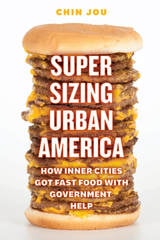
Supersizing Urban America
How Inner Cities Got Fast Food with Government HelpChin Jou
University of Chicago Press, 2017
What doesn’t get mentioned in all this? The fact that the federal government helped create the obesity crisis in the first place—especially where it is strikingly acute, among urban African-American communities. Supersizing Urban America reveals the little-known story of how the U.S. government got into the business of encouraging fast food in inner cities, with unforeseen consequences we are only beginning to understand. Chin Jou begins her story in the late 1960s, when predominantly African-American neighborhoods went from having no fast food chain restaurants to being littered with them. She uncovers the federal policies that have helped to subsidize that expansion, including loan guarantees to fast food franchisees, programs intended to promote minority entrepreneurship, and urban revitalization initiatives. During this time, fast food companies also began to relentlessly market to urban African-American consumers. An unintended consequence of these developments was that low-income minority communities were disproportionately affected by the obesity epidemic.
In the first book about the U.S. government’s problematic role in promoting fast food in inner-city America, Jou tells a riveting story of the food industry, obesity, and race relations in America that is essential to understanding health and obesity in contemporary urban America.

Surgery Junkies
Wellness and Pathology in Cosmetic CulturePitts-Taylor, Victoria
Rutgers University Press, 2007

Surveillance in the Time of Insecurity
Monahan, Torin
Rutgers University Press, 2010
Surveillance in the Time of Insecurity fuses advanced theoretical accounts of state power and neoliberalism with original research from the social settings in which insecurity dynamics play out in the new century. Torin Monahan explores the counterterrorism-themed show 24, Rapture fiction, traffic control centers, security conferences, public housing, and gated communities, and examines how each manifests complex relationships of inequality, insecurity, and surveillance. Alleviating insecurity requires that we confront its mythic dimensions, the politics inherent in new configurations of security provision, and the structural obstacles to achieving equality in societies.

Survey Measurements
Techniques, Data Quality and Sources of ErrorEdited by Uwe Engel
Campus Verlag, 2015

Sustainable Failures
Environmental Policy and Democracy in a Petro-dependent WorldSherry Cable
Temple University Press, 2012
Environmental policies fail in conspicuous and egregious ways to sustain the natural resource base and protect citizens from production-generated risky exposures. In her engaging study, Sustainable Failures, Sherry Cable asks, why does environmental policy seem to be a contributing cause rather than a partial solution to environmental problems?
Melding a biophysical science perspective of environmental processes with sociological insights into human behavior, Cable examines the people, policies, and issues of petrochemical dependence and broader environment questions. She insists that our present policies around the manufacture and use of petroleum products violate rudimentary ecological principles—and do so in complicated ways.
Sustainable Failures is a blistering wake-up call to what is at stake not only regarding the failure of policy outcomes and grievous natural resource depletion and pollution, but also concerning democracy and ecological survival, and eventually, potentially, the existence of our species.
Symbolic Interaction and Cultural Studies
Edited by Howard S. Becker and Michal M. McCall
University of Chicago Press, 1990
Symbolic Power, Politics, and Intellectuals
The Political Sociology of Pierre BourdieuDavid L. Swartz
University of Chicago Press, 2013
Symbolic Violence
Conversations with BourdieuMichael Burawoy
Duke University Press, 2019

Systemic Choices
Nonlinear Dynamics and Practical ManagementGregory A. Daneke
University of Michigan Press, 1999