Results by title
4531 books match the query 'Cultural & Ethnic Studies' and 296 start with s
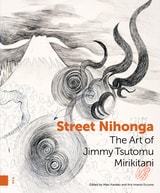
Street Nihonga
The Art of Jimmy Tsutomu MirikitaniMaki Kaneko
Amsterdam University Press, 2026
This volume features 163 color illustrations alongside scholarly essays and reflections that frame Mirikitani’s practice as both artistic achievement and political intervention. Maki Kaneko’s introduction situates the exhibition within the artist’s distinctive “street Nihonga” aesthetic—a collaged form of artmaking, storytelling, and community collaboration. Contributors Noriko Murai, Scott Tsuchitani, Yukinori Okamura, and Kris Ercums offer wide-ranging perspectives, including the transnational legacy of Nihonga, the memory politics of Japanese American incarceration, the evolving lineage of “A-bomb art,” and the curatorial process behind the exhibition. Linda Hattendorf and Masa Yoshikawa, Mirikitani’s close friends and documentarians, provide intimate insights into his life and art.
At once scholarly and inviting, Street Nihonga encourages readers to encounter Mirikitani not as an artist of the margins but as a radical reinterpreter of convention and a witness to histories often left untold. This catalogue remains open-ended—a living collage and a call to engage with Mirikitani’s extraordinary life and work.
Street Players
Black Pulp Fiction and the Making of a Literary UndergroundKinohi Nishikawa
University of Chicago Press, 2018
Kinohi Nishikawa contends that black pulp fiction was built on white readers’ fears of the feminization of society—and the appeal of black masculinity as a way to counter it. In essence, it was the original form of blaxploitation: a strategy of mass-marketing race to suit the reactionary fantasies of a white audience. But while chauvinism and misogyny remained troubling yet constitutive aspects of this literature, from 1973 onward, Holloway House moved away from publishing sleaze for a white audience to publishing solely for black readers. The standard account of this literary phenomenon is based almost entirely on where this literature ended up: in the hands of black, male, working-class readers. When it closed, Holloway House was synonymous with genre fiction written by black authors for black readers—a field of cultural production that Nishikawa terms the black literary underground. But as Street Players demonstrates, this cultural authenticity had to be created, promoted, and in some cases made up, and there is a story of exploitation at the heart of black pulp fiction’s origins that cannot be ignored.
Street Scriptures
Between God and Hip-HopAlejandro Nava
University of Chicago Press, 2022
The world of hip-hop is saturated with religion, but rarely is that element given serious consideration. In Street Scriptures, Alejandro Nava focuses our attention on this aspect of the music and culture in a fresh way, combining his profound love of hip-hop, his passion for racial and social justice, and his deep theological knowledge. Street Scriptures offers a refreshingly earnest and beautifully written journey through hip-hop’s deep entanglement with the sacred.
Nava reveals a largely unheard religious heartbeat in hip-hop, exploring crosscurrents of the sacred and profane in rap, reggaeton, and Latinx hip-hop today. Ranging from Kendrick Lamar, Chance the Rapper, Lauryn Hill, Cardi B, and Bad Bunny to St. Augustine and William James, Nava examines the ethical-political, mystical-prophetic, and theological qualities in hip-hop, probing the pure sonic and aesthetic signatures of music, while also diving deep into the voices that invoke the spirit of protest. The result is nothing short of a new liberation theology for our time, what Nava calls a “street theology.”

Streets of a Million Martyrs
Everyday Poetics and Politics in Urban AlgeriaStephanie Love
University of Chicago Press, 0
Follows ordinary people as they move through the Algerian city of Oran, navigating the politically charged context of postcolonialism.
In this book, anthropologist Stephanie Love examines ordinary Algerians’ hope for a better future through what she calls “everyday urban poetics,” focusing on the country’s second-largest city of Oran. Examining linguistic forms including placenames, jokes, metaphors, anecdotes, and code-switches along with urban forms including monuments, buildings, and street layouts, Love shows how popular imaginaries of resistance are inscribed in Oran’s language and cityscapes.
Love argues that these everyday urban poetics constitute a street-based language that has helped Algerians find ways around oppressive censorship, reckon with painful pasts, and develop what she views as a politically fertile creative insurgency. This is particularly true in the wake of the 2019 uprising known as Hirak (“the movement”) that found Algerians challenging the legitimacy of the postcolonial regime through large-scale demonstrations and protests. Analyzing phenomena as diverse as efforts to preserve buildings and monuments, the informal renaming of streets and landmarks, and the development of women-led associations encouraging education and open discourse, Love shows how new forms of political life can be developed and sharpened in everyday speech.
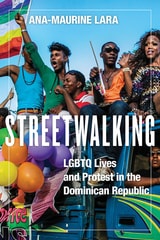
Streetwalking
LGBTQ Lives and Protest in the Dominican RepublicAna-Maurine Lara
Rutgers University Press, 2021
Streetwalking: LGBTQ Lives and Protest in the Dominican Republic is an exploration of the ways that lesbian, gay, bisexual, trans and queer persons exercise power in a Catholic Hispanic heteropatriarchal nation-state, namely the Dominican Republic. Lara presents the specific strategies employed by LGBTQ community leaders in the Dominican Republic in their struggle for subjectivity, recognition, and rights. Drawing on ethnographic encounters, film and video, and interviews, LGBTQ community leaders teach readers about streetwalking, confrontación, flipping the script, cuentos, and the use of strategic universalisms in the exercise of power and agency. Rooted in Maria Lugones's theorization of streetwalker strategies and Audre Lorde's theorization of silence and action, this text re-imagines the exercise and locus of power in examples provided by the living, thriving LGBTQ community of the Dominican Republic.
Streetwise
Race, Class, and Change in an Urban CommunityElijah Anderson
University of Chicago Press, 1990
"The sharpness of his observations and the simple clarity of his prose recommend his book far beyond an academic audience. Vivid, unflinching, finely observed, Streetwise is a powerful and intensely frightening picture of the inner city."—Tamar Jacoby, New York Times Book Review
"The book is without peer in the urban sociology literature. . . . A first-rate piece of social science, and a very good read."—Glenn C. Loury, Washington Times
Strolling in the Ruins
The Caribbean's Non-sovereign Modern in the Early Twentieth CenturyFaith Smith
Duke University Press, 2023

Structural Intimacies
Sexual Stories in the Black AIDS EpidemicMackenzie, Sonja
Rutgers University Press, 2013
Sonja Mackenzie elegantly argues that structural vulnerability is felt—quite literally—in the blood, in the possibilities and constraints on sexual lives, and in the rhetorics of their telling. The circulation of structural intimacies in daily life and in the political domain reflects possibilities for seeking what Mackenzie calls intimate justice at the nexus of cultural, economic, political, and moral spheres. Structural Intimacies presents a compelling case: in an era of deepening medicalization of HIV/AIDS, public health must move beyond individual-level interventions to community-level health equity frames and policy changes
Structured Luck
Downstream Effects of the U.S. Diversity Visa ProgramOnoso Imoagene
Russell Sage Foundation, 2024
Combining ethnographic observation in Africa and interviews with immigrants, their family members, and friends from Ghana and Nigeria, Imoagene demonstrates that the visa program is a process of “structured luck,” from how people hear about the lottery, who registers for it, and who participates in it to the application requirements for the visa. In Ghana and Nigeria, people often learn about the lottery through friends, colleagues, or relatives who persuade them to enter for the perceived benefits of receiving a visa: opportunities for upward mobility, permanent legal status, and the ability to bring along family members. Though anyone can enter the lottery, not everyone who wins obtains a visa. The visa application process requires proof of a high school diploma or artisan skills, a medical exam, a criminal background check, an interview with U.S. consular officers, and payment of fees. Such requirements have led to the growth of visa entrepreneurs, who often charge exorbitant fees to steer immigrants through the process. Visa recipients who were on track to obtain university degrees at home often leave in the middle of their studies for the United States but struggle to continue their education due to high U.S. tuition costs. And though their legal status allows them to escape the demoralizing situations that face the undocumented, these immigrants lack the social support that the government sometimes provides for refugees and other migrants. Ultimately, Imoagene notes, the real winner of the visa lottery is not the immigrants themselves but the United States, which benefits from their relatively higher levels of education. Consequently, she argues, the U.S. must do more to minimize the visa program’s negative consequences.
Structured Luck illuminates the trauma, resilience, and determination of immigrants who come to the United States through the Diversity Visa Program and calls for the United States to develop policies that will better integrate them into society.
Struggles for the Human
Violent Legality and the Politics of RightsLara Montesinos Coleman
Duke University Press, 2024
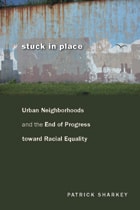
Stuck in Place
Urban Neighborhoods and the End of Progress toward Racial EqualityPatrick Sharkey
University of Chicago Press, 2013
In the 1960s, many believed that the civil rights movement’s successes would foster a new era of racial equality in America. Four decades later, the degree of racial inequality has barely changed. To understand what went wrong, Patrick Sharkey argues that we have to understand what has happened to African American communities over the last several decades. In Stuck in Place, Sharkey describes how political decisions and social policies have led to severe disinvestment from black neighborhoods, persistent segregation, declining economic opportunities, and a growing link between African American communities and the criminal justice system.
Study Guide to China
Adapting the Past, Confronting the FutureThomas Buoye
University of Michigan Press, 2003
Each section, in addition to essay and excerpts, also includes a bibliography of additional topical works as well as suggestions for complementary video and internet teaching resources.
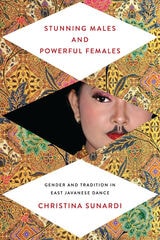
Stunning Males and Powerful Females
Gender and Tradition in East Javanese DanceChristina Sunardi
University of Illinois Press, 2015
Christina Sunardi ventures into the regency of Malang in east Java to study and perform with dancers. Through formal interviews and casual conversation, Sunardi learns about their lives and art. Her work shows how performers continually transform dance traditions to negotiate, and renegotiate, the boundaries of gender and sex--sometimes reinforcing lines of demarcation, sometimes transgressing them, and sometimes doing both simultaneously. But Sunardi's investigation moves beyond performance. It expands notions of the spiritual power associated with female bodies and feminine behavior, and the ways women, men, and waria (males who dress and live as female) access the magnetic power of femaleness.
A journey into understudied regions and ideas, Stunning Males and Powerful Females reveals how performances seemingly fixed by tradition are instead dynamic environments for cultural negotiation and change surrounding questions of sex and gender.
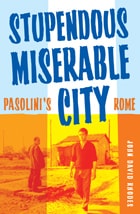
Stupendous, Miserable City
Pasolini’s RomeJohn David Rhodes
University of Minnesota Press, 2007
John David Rhodes places the city of Rome at the center of this original and in-depth examination of the work of Italian director Pier Paolo Pasolini—but it’s not the classical Rome you imagine. Stupendous, Miserable City situates Pasolini within the history of twentieth-century Roman urban development. The book focuses first on the Fascist period, when populations were moved out of the urban center and into public housing on the periphery of the city, called the borgate, and then turns to the progressive social housing experiments of the 1950s. These environments were the settings of most of Pasolini’s films of the early to mid-1960s.
Discussing films such as Accattone, Mamma Roma, and The Hawks and the Sparrows, Rhodes shows how Pasolini used the borgate to critique Roman urban planning and neorealism and to draw attention to the contemptuous treatment of Rome’s poor. To Pasolini, the borgate, rich in human incident, linguistic difference, and squalor, “were life”—and now his passion can be appreciated fully for the first time.
Carefully tracing Pasolini’s surprising engagement with this part of Rome and looking beyond his films to explore the interrelatedness of all of Pasolini’s artistic output in the 1950s and 1960s—including his poetry, fiction, and journalism—Rhodes opens up completely new ways of understanding Pasolini’s work and proves how connected Pasolini was to the political and social upheavals in Italy at the time.
John David Rhodes is lecturer in literature and visual culture at the University of Sussex.
Subalternity and Representation
Arguments in Cultural TheoryJohn Beverley
Duke University Press, 1999
Dismissed by some as simply another new fashion in the critique of culture and by others as a postmarxist heresy, subaltern studies began with the work of Ranajit Guha and the South Asian Subaltern Studies collective in the 1980s. Beverley’s focus on Latin America, however, is evidence of the growing province of this field. In assessing subaltern studies’ purposes and methods, the potential dangers it presents, and its interactions with deconstruction, poststructuralism, cultural studies, Marxism, and political theory, Beverley builds his discussion around a single, provocative question: How can academic knowledge seek to represent the subaltern when that knowledge is itself implicated in the practices that construct the subaltern as such? In his search for answers, he grapples with a number of issues, notably the 1998 debate between David Stoll and Rigoberta Menchú over her award-winning testimonial narrative, I, Rigoberta Menchú. Other topics explored include the concept of civil society, Florencia Mallon’s influential Peasant and Nation, the relationship between the Latin American “lettered city” and the Túpac Amaru rebellion of 1780–1783, the ideas of transculturation and hybridity in postcolonial studies and Latin American cultural studies, multiculturalism, and the relationship between populism, popular culture, and the “national-popular” in conditions of globalization.
This critique and defense of subaltern studies offers a compendium of insights into a new form of knowledge and knowledge production. It will interest those studying postcolonialism, political science, cultural studies, and Latin American culture, history, and literature.
Subject Lessons
The Western Education of Colonial IndiaSanjay Seth
Duke University Press, 2007
Drawing on history, political science, anthropology, and philosophy, Seth interprets the debates and controversies that came to surround western education. Central among these were concerns that Indian students were acquiring western education by rote memorization—and were therefore not acquiring “true knowledge”—and that western education had plunged Indian students into a moral crisis, leaving them torn between modern, western knowledge and traditional Indian beliefs. Seth argues that these concerns, voiced by the British as well as by nationalists, reflected the anxiety that western education was failing to produce the modern subjects it presupposed. This failure suggested that western knowledge was not the universal epistemology it was thought to be. Turning to the production of collective identities, Seth illuminates the nationalists’ position vis-à-vis western education—which they both sought and criticized—through analyses of discussions about the education of Muslims and women.
Subjects of the Sun
Solar Energy in the Shadows of Racial CapitalismMyles Lennon
Duke University Press, 2025
Suburban Sahibs
Kalita, S. Mitra
Rutgers University Press, 2003
In this updated edition, journalist S. Mitra Kalita shows that although the reception from long-time residents has not been entirely welcoming, Indians have come to achieve economic success and their desire for political and social parity continues to grow stronger. She traces the evolution of the suburb from a destination for new arrivals to a launching pad for them.
In the late nineteenth century, tourists descended upon Edison to gawk at its Christmas lights displays. Today, thousands of Indians from all over the United States arrive in the same bedroom community to celebrate their own festivals of lights and colors. Suburban Sahibs attempts to answer the question of how and why they arrived, and offers a window into what America has become: a nation of suburbs as well as a nation of immigrants.

Success Won't Save Us
How Asian Americans Can Fight White SupremacyPawan Dhingra
Duke University Press, 2027

Succession to High Office in Botswana
Three Case StudiesJack Parson
Ohio University Press, 1990
Suddenly Diverse
How School Districts Manage Race and InequalityErica O. Turner
University of Chicago Press, 2020
Suddenly Diverse is an ethnographic account of two school districts in the Midwest responding to rapidly changing demographics at their schools. It is based on observations and in-depth interviews with school board members and superintendents, as well as staff, community members, and other stakeholders in each district: one serving “Lakeside,” a predominately working class, conservative community and the other serving “Fairview,” a more affluent, liberal community. Erica O. Turner looks at district leaders’ adoption of business-inspired policy tools and the ultimate successes and failures of such responses. Turner’s findings demonstrate that, despite their intentions to promote “diversity” or eliminate “achievement gaps,” district leaders adopted policies and practices that ultimately perpetuated existing inequalities and advanced new forms of racism.
While suggesting some ways forward, Suddenly Diverse shows that, without changes to these managerial policies and practices and larger transformations to the whole system, even district leaders’ best efforts will continue to undermine the promise of educational equity and the realization of more robust public schools.

Suddenly Jewish
Jews Raised as Gentiles Discover Their Jewish RootsBarbara Kessel
Brandeis University Press, 2007
Sueños Americanos
Barrio Youth Negotiating Social and Cultural IdentitiesJulio Cammarota
University of Arizona Press, 2012
For nearly a decade Julio Cammarota interviewed and observed Latino youth between the ages of seventeen and twenty-four who lived in a barrio in a city on the California coast. He conducted forty life interviews, selecting six people to investigate in depth. Twenty of the study participants worked at a fast-food restaurant, while the other twenty worked at a community cultural center.
Focusing on the experiences of his subjects in the primary settings of family, work, and school, Cammarota structured his research to examine how Latino youth negotiate myriad social conditions and hostile economic and political pressures in their daily lives. His extensive interviews and incisive analyses illuminate the complex relationships among low-wage employment, cultural standards, education, class oppression, and gender expectations.
Among other topics, Cammarota investigates how working affects Latino education; how gender influences social relationships and life choices; how Latinos and Latinas try to maintain their distinct ethnic identity while attempting to transcend marginalization; whether the Latino culture helps young people work hard for their families and for a better future; and how the connections and disconnections among work, family, and school constitute formative processes that shape the cultural identities of Latino youth.
One of the most extensive studies of barrio youth available, Sueños Americanos concludes with a discussion of social justice education for Latino youth and how this educational approach meets their academic needs while providing opportunities for self-determination and community activism.
Suffering and Sunset
World War I in the Art and Life of Horace PippinCeleste-Marie Bernier
Temple University Press, 2017
For self-made artist and soldier Horace Pippin—who served in the 369th all-black infantry in World War I until he was wounded—war provided a formative experience that defined much of his life and work. His ability to transform combat service into canvases of emotive power, psychological depth, and realism showed not only how he viewed the world but also his mastery as a painter. In Suffering and Sunset, Celeste-Marie Bernier painstakingly traces Pippin’s life story of art as a life story of war.
Illustrated with more than sixty photographs, including works in various mediums—many in full color—this is the first intellectual history and cultural biography of Pippin. Working from newly discovered archives and unpublished materials, Bernier provides an in-depth investigation into the artist’s development of an alternative visual and textual lexicon and sheds light on his work in its aesthetic, social, and political contexts.
Suffering and Sunset illustrates Pippin’s status as a groundbreaking artist as it shows how this African American painter suffered from but also staged many artful resistances to racism in a white-dominated art world.

Sugar's Life in the Hood
The Story of a Former Welfare MotherBy Sugar Turner and Tracy Bachrach Ehlers
University of Texas Press, 2002
All her life, Sugar Turner has had to hustle to survive. An African American woman living in the inner city, she has been a single mother juggling welfare checks, food stamps, boyfriends and husbands, illegal jobs, and home businesses to make ends meet for herself and her five children. Her life's path has also wandered through the wilderness of crack addiction and prostitution, but her strong faith in God and her willingness to work hard for a better life pulled her through. Today, Turner is off welfare and is completing her education. She is computer literate, holds a job in the local school system, has sent three of her children to college, and is happily married.
In this engrossing book, Sugar Turner collaborates with anthropologist Tracy Bachrach Ehlers in telling her story. Through conversations with Ehlers, diary entries, and letters, Turner vividly and openly describes all aspects of her life, including motherhood, relationships with men, welfare and work, and her attachment to her friends, family, and life in the "hood." Ehlers also gives her reactions to Turner's story, discussing not only how it belies the "welfare queen" stereotype, but also how it forced her to confront her own lingering confusions about race, her own bigotry.
What emerges from this book is a fascinating story of two women from radically different backgrounds becoming equal witnesses to each other's lives. By allowing us into the real world of an inner-city African American mother, they replace with compassion and insight the stereotypes, half-truths, and scorn that too often dominate public discourse.

Sukeroku’s Double Identity
The Dramatic Structure of Edo KabukiBarbara E. Thornbury
University of Michigan Press, 1982
Sun Ra's Chicago
Afrofuturism and the CityWilliam Sites
University of Chicago Press, 2020
Sunbelt Diaspora
Race, Class, and Latino Politics in Puerto Rican OrlandoBy Patricia Silver
University of Texas Press, 2020
2021 — Silver Medal, Raul Yzaguirre Best Political/Current Affairs Book – International Latino Book Awards, Latino Literacy Now
An in-depth look at an emerging Latino presence in Orlando, Florida, where Puerto Ricans and others navigate differences of race, class, and place of origin in their struggle for social, economic, and political belonging.
Puerto Ricans make up half of Orlando-area Latinos, arriving from Puerto Rico as well as from other long-established diaspora communities to a place where Latino politics has long been about Cubans in Miami. Together with other Latinos from multiple places, Puerto Ricans bring diverse experiences of race and class to this Sunbelt city. Tracing the emergence of the Puerto Rican and Latino presence in Orlando from the 1940s through an ethnographic moment of twenty-first-century electoral redistricting, Sunbelt Diaspora provides a timely prism for viewing how differences of race, class, and place play out in struggles to claim political, social, and economic ground for Latinos.
Drawing on over a decade of ethnographic, oral history, and archival research, Patricia Silver situates her findings in Orlando’s historically black-white racial landscape, post-1960s claims to “color-blindness,” and neoliberal celebrations of individualism. Through the voices of diverse participants, Silver brings anthropological attention to the question of how social difference affects collective identification and political practice. Sunbelt Diaspora asks what constitutes community and how criteria for membership and legitimate representation are negotiated.
Super Black
American Pop Culture and Black SuperheroesBy Adilifu Nama
University of Texas Press, 2011
Winner, American Book Award, Before Columbus Foundation, 2012
Super Black places the appearance of black superheroes alongside broad and sweeping cultural trends in American politics and pop culture, which reveals how black superheroes are not disposable pop products, but rather a fascinating racial phenomenon through which futuristic expressions and fantastic visions of black racial identity and symbolic political meaning are presented. Adilifu Nama sees the value—and finds new avenues for exploring racial identity—in black superheroes who are often dismissed as sidekicks, imitators of established white heroes, or are accused of having no role outside of blaxploitation film contexts.
Nama examines seminal black comic book superheroes such as Black Panther, Black Lightning, Storm, Luke Cage, Blade, the Falcon, Nubia, and others, some of whom also appear on the small and large screens, as well as how the imaginary black superhero has come to life in the image of President Barack Obama. Super Black explores how black superheroes are a powerful source of racial meaning, narrative, and imagination in American society that express a myriad of racial assumptions, political perspectives, and fantastic (re)imaginings of black identity. The book also demonstrates how these figures overtly represent or implicitly signify social discourse and accepted wisdom concerning notions of racial reciprocity, equality, forgiveness, and ultimately, racial justice.

Surface Encounters
Screen Materials and Film CultureAndrea J. Kelley
University of Illinois Press, 2027
Kelley expands film history into homes, parks, and outdoor spaces to reveal that ordinary screen materials bring with them long histories tied to labor, race, gender, and industry. As she shows, when people project films onto these surfaces, their histories impact the meaning of the viewing experience. Kelley draws on archival research, film analysis, and examples like backyard movie nights and COVID-era outdoor screenings to focus on how overlooked elements affect our understanding of spectatorship, exhibition, and media culture.
An evocative look at a popular experience, Surface Encounters shows that movie screens matter because of what they are made of and the ways people encounter them in everyday places.
Surface Relations
Queer Forms of Asian American InscrutabilityVivian L. Huang
Duke University Press, 2022
Surrogate Humanity
Race, Robots, and the Politics of Technological FuturesNeda Atanasoski and Kalindi Vora
Duke University Press, 2019
Surviving HIV/AIDS in the Inner City
How Resourceful Latinas Beat the OddsChase, Sabrina
Rutgers University Press, 2011
Based on her work with minority women living in Newark, New Jersey, Sabrina Marie Chase illuminates the hidden traps and land mines burdening our current health care system as a whole. For the women she studied, alliances with doctors, nurses, and social workers could literally mean the difference between life and death. By applying the theories of sociologist Pierre Bourdieu to the day-to-day experiences of HIV-positive Latinas, Chase explains why some struggled and even died while others flourished and thrived under difficult conditions. These gripping, true-life stories advocate for those living with chronic illness who depend on the health care "safety net." Through her exploration of life and death among Newark's resourceful women, Chase provides the groundwork for inciting positive change in the U.S. health care system.
Surviving the ICE Age
Children of Immigrants in New YorkJoanna Dreby
Russell Sage Foundation, 2025
Dreby shows that a restrictive approach to immigration creates problems over time and across generations. These issues occur regardless of one’s citizenship status and go beyond deportations. Despite having pride in their heritage, her interviewees did not talk much about immigration. She refers to this unwillingness—and at times, inability—to speak about immigration as silencing. Silencing in a community or family is often intended to protect children, but this can leave them with little information about their backgrounds and status, leading to fear and anxiety instead. Self-silencing often resulted from traumatic experiences tied to enforcement episodes, which sometimes took the form of memory loss or emotional withholding. Dreby finds that experiences with the immigration system that disrupted relationships in a child’s household arising from family separations, moves, or changing roles in the family had especially long-term effects, causing, at times, ongoing mental health issues. Even the risk of immigration involvement left some young adults feeling vulnerable and undermined their sense of safety and security as U.S. citizens.
Dreby also highlights stories that offer hope. Young adults developed strategies to persevere, and children who grew up in communities and families that openly talked about migration felt empowered and fared much better, especially when they had access to resources, such as adequate food and shelter, mental health services, and community support. Dreby calls for policies and practices to mitigate the harms of restrictive migratory control on children’s wellbeing, such avoiding the arrest of parents in front of children and ensuring that U.S. citizen children’s interests are considered in immigration court without their direct involvement.
Surviving the ICE Age details the generational harms caused by U.S. immigration policy and offers suggestions for a better way forward.
Surviving the State
Land and Democracy in MyanmarHilary Oliva Faxon
Duke University Press, 2026
Suspended Apocalypse
White Supremacy, Genocide, and the Filipino ConditionDylan Rodríguez
University of Minnesota Press, 2009
Suspended Apocalypse is a rich and provocative meditation on the emergence of the Filipino American as a subject of history. Culling from historical, popular, and ethnographic archives, Dylan Rodríguez provides a sophisticated analysis of the Filipino presence in the American imaginary. Radically critiquing current conceptions of Filipino American identity, community, and history, he puts forth a genealogy of Filipino genocide, rooted in the early twentieth-century military, political, and cultural subjugation of the Philippines by the United States.
Suspended Apocalypse critically addresses what Rodríguez calls "Filipino American communion," interrogating redemptive and romantic notions of Filipino migration and settlement in the United States in relation to larger histories of race, colonial conquest, and white supremacy. Contemporary popular and scholarly discussions of the Filipino American are, he asserts, inseparable from their origins in the violent racist regimes of the United States and its historical successor, liberal multiculturalism.
Rodríguez deftly contrasts the colonization of the Philippines with present-day disasters such as Hurricane Katrina and Mount Pinatubo to show how the global subjection of Philippine, black, and indigenous peoples create a linked history of genocide. But in these juxtapositions, Rodríguez finds moments and spaces of radical opportunity. Engaging the violence and disruption of the Filipino condition sets the stage, he argues, for the possibility of a transformation of the political lens through which contemporary empire might be analyzed, understood, and perhaps even overcome.
Swahili Beyond the Boundaries
Literature, Language, and IdentityAlamin Mazrui
Ohio University Press, 2007
Swahili literature is a hybrid that is being reconfigured by a conjuncture of global and local forces. As the interweaving of elements of the colonizer and the colonized, this hybrid formation provides a representation of cultural difference that is said to constitute a “third space,” blurring existing boundaries and calling into question established identitarian categorizations. This cultural dialectic is clearly evident in the Swahili literary experience as it has evolved in the crucible of the politics of African cultural production.
However, Swahili Beyond the Boundaries demonstrates that, from the point of view of Swahili literature, while hybridity evokes endless openness on questions of home and identity, it can simultaneously put closure on specific forms of subjectivity. In the process of this contestation, a new synthesis may be emerging that is poised to subject Swahili literature to new kinds of challenges in the politics of identity, compounded by the dynamics and counterdynamics of post–Cold War globalization.
Swallows and Settlers
The Great Migration from North China to ManchuriaThomas R. Gottschang and Diana Lary
University of Michigan Press, 2000
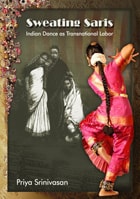
Sweating Saris
Indian Dance as Transnational LaborPriya Srinivasan
Temple University Press, 2011
A groundbreaking book that seeks to understand dance as labor, Sweating Saris examines dancers not just as aesthetic bodies but as transnational migrant workers and wage earners who negotiate citizenship and gender issues.
Srinivasan merges ethnography, history, critical race theory, performance and post-colonial studies among other disciplines to investigate the embodied experience of Indian dance. The dancers’ sweat stained and soaked saris, the aching limbs are emblematic of global circulations of labor, bodies, capital, and industrial goods. Thus the sweating sari of the dancer stands in for her unrecognized labor.
Srinivasan shifts away from the usual emphasis on Indian women dancers as culture bearers of the Indian nation. She asks us to reframe the movements of late nineteenth century transnational Nautch Indian dancers to the foremother of modern dance Ruth St. Denis in the early twentieth century to contemporary teenage dancers in Southern California, proposing a transformative theory of dance, gendered-labor, and citizenship that is far-reaching.

Sweet Promised Land, 50th ed.
Robert Laxalt
University of Nevada Press, 2007
Dominique Laxalt was sixteen when he left the French Pyrenees for America. He became a sheepherder in the Nevada desert and nearby hills of the Sierra. Like all his fellow Basque immigrants, Dominique dreamed of someday returning to the land of his beginnings. Most Basques never made the journey back, but Dominique finally did return for a visit with family and friends. Sweet Promised Land is the story of that trip, told by his son Robert, who accompanied him to the pastoral mountain village of Tardets in France. Dominique came home victorious, the adventurer who had conquered the unknown and found his fortune in the New World. He told of his life in America, the hardships and challenges, and began to realize that he had changed since his departure from Tardets. By the end of the visit, he knew with certainty where he belonged.
During the past fifty years, this book has become a classic in Western American literature, still beloved by the Basque-American community. In celebration of the fiftieth anniversary of the book’s publication, western literature scholar Ann Ronald wrote a new foreword, discussing the book in the context of American and Nevada literature.

Sweet Promised Land, 50th ed.
Robert Laxalt
University of Nevada Press, 2007
Dominique Laxalt was sixteen when he left the French Pyrenees for America. He became a sheepherder in the Nevada desert and nearby hills of the Sierra. Like all his fellow Basque immigrants, Dominique dreamed of someday returning to the land of his beginnings. Most Basques never made the journey back, but Dominique finally did return for a visit with family and friends. Sweet Promised Land is the story of that trip, told by his son Robert, who accompanied him to the pastoral mountain village of Tardets in France. Dominique came home victorious, the adventurer who had conquered the unknown and found his fortune in the New World. He told of his life in America, the hardships and challenges, and began to realize that he had changed since his departure from Tardets. By the end of the visit, he knew with certainty where he belonged.
During the past fifty years, this book has become a classic in Western American literature, still beloved by the Basque-American community. In celebration of the fiftieth anniversary of the book’s publication, western literature scholar Ann Ronald wrote a new foreword, discussing the book in the context of American and Nevada literature.
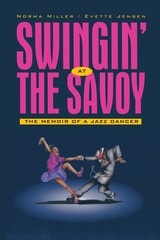
Swingin' at the Savoy
Norma Miller
Temple University Press, 1996
A dance contest winner by 14, Norma Miller became a member of Herbert White's Lindy Hoppers and a celebrated Savoy Ballroom Lindy Hop champion. Swingin' at the Savoy chronicles a significant period in American cultural history and race relations, as it glorifies the home of the Lindy Hop and he birthplace of memorable dance hall fads. Miller shares fascinating anecdotes about her youthful encounters with many of the greatest jazz legends in music history, including Ella Fitzgerald, Count Basie, Benny Goodman, Billie Holiday, Artie Shaw, Duke Ellington, Ethel Waters, and even boxer Joe Louis. Readers will experience the legend of the celebrated Harlem ballroom and the phenomenal Swing generation that changed music and dance history forever.
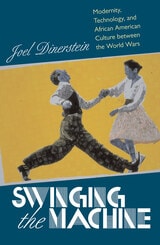
Swinging the Machine
Modernity, Technology, and African American Culture between the World WarsJoel Dinerstein
University of Massachusetts Press, 2003
In any age and any given society, cultural practices reflect the material circumstances of people's everyday lives. According to Joel Dinerstein, it was no different in America between the two World Wars—an era sometimes known as the “machine age”—when innovative forms of music and dance helped a newly urbanized population cope with the increased mechanization of modern life. Grand spectacles such as the Ziegfeld Follies and the movies of Busby Berkeley captured the American ethos of mass production, with chorus girls as the cogs of these fast, flowing pleasure vehicles.
Yet it was African American culture, Dinerstein argues, that ultimately provided the means of aesthetic adaptation to the accelerated tempo of modernity. Drawing on a legacy of engagement with and resistance to technological change, with deep roots in West African dance and music, black artists developed new cultural forms that sought to humanize machines. In “The Ballad of John Henry,” the epic toast “Shine,” and countless blues songs, African Americans first addressed the challenge of industrialization. Jazz musicians drew on the symbol of the train within this tradition to create a set of train-derived aural motifs and rhythms, harnessing mechanical power to cultural forms. Tap dance and the lindy hop brought machine aesthetics to the human body, while the new rhythm section of big band swing mimicked the industrial soundscape of northern cities. In Dinerstein's view, the capacity of these artistic innovations to replicate the inherent qualities of the machine-speed, power, repetition, flow, precision-helps explain both their enormous popularity and social function in American life.
Sylvia Wynter
On Being Human as PraxisKatherine McKittrick, ed.
Duke University Press, 2015
Sámi People
Traditions in TransitionsVeli-Pekka Lehtola
University of Alaska Press, 2005
Sí, Ella Puede!
The Rhetorical Legacy of Dolores Huerta and the United Farm WorkersBy Stacey K. Sowards
University of Texas Press, 2019
Winner, Marie Hochmuth Nichols Award, Public Address Division, National Communication Association, 2020
Outstanding Book Award, Latina/o Communication Studies Division, National Communication Association, 2020
Since the 1950s, Latina activist Dolores Huerta has been a fervent leader and organizer in the struggle for farmworkers’ rights within the Latina/o community. A cofounder of the United Farm Workers union in the 1960s alongside César Chávez, Huerta was a union vice president for nearly four decades before starting her own foundation in the early 2000s. She continues to act as a dynamic speaker, passionate lobbyist, and dedicated figure for social and political change, but her crucial contributions and commanding presence have often been overshadowed by those of Chávez and other leaders in the Chicana/o movement. In this new study, Stacey K. Sowards closely examines Huerta’s rhetorical skills both in and out of the public eye and defines Huerta’s vital place within Chicana/o history.
Referencing the theoretical works of Pierre Bourdieu, Chela Sandoval, Gloria Anzaldúa, and others, Sowards closely analyzes Huerta’s speeches, letters, and interviews. She shows how Huerta navigates the complex intersections of race, ethnicity, gender, language, and class through the myriad challenges faced by women activists of color. Sowards’s approach to studying Huerta’s rhetorical influence offers a unique perspective for understanding the transformative relationship between agency and social justice.