5448 books match the query 'History and criticism' and 403 start with s

cover of Space Is the Place: The Lives and Times of Sun Ra

Space Is the Place

The Lives and Times of Sun Ra

John Szwed

Duke University Press, 2020

Considered by many to be a founder of Afrofuturism, Sun Ra—aka Herman Blount—was a composer, keyboardist, bandleader, philosopher, entrepreneur, poet, and self-proclaimed extraterrestrial from Saturn. He recorded over 200 albums with his Arkestra, which, dressed in Egypto-space costumes, played everything from boogie-woogie and swing to fusion and free jazz. John Szwed's Space is the Place is the definitive biography of this musical polymath, who was one of the twentieth century's greatest avant-garde artists and intellectuals. Charting the whole of Sun Ra's life and career, Szwed outlines how after years in Chicago as a blues and swing band pianist, Sun Ra set out in the 1950s to impart his views about the galaxy, black people, and spiritual matters by performing music with the Arkestra that was as vital and innovative as it was mercurial and confounding. Szwed's readers—whether they are just discovering Sun Ra or are among the legion of poets, artists, intellectuals, and musicians who consider him a spiritual godfather—will find that, indeed, space is the place.
[more]
cover of Space as Storyteller: Spatial Jumps in Architecture, Critical Theory, and Literature

Space as Storyteller

Spatial Jumps in Architecture, Critical Theory, and Literature

Laura Chiesa

Northwestern University Press, 2016

Walter Benjamin's Arcades Project suggests that space can become a storyteller: if so, plenty of fleeting stories can be read in the space of modernity, where repetition and the unexpected cross-pollinate. In Space as Storyteller, Laura Chiesa explores several stories across a wide range of time that narrate spatial jumps, from Benjamin's tangential take on the cityscape, the experimentalism of Futurist theatricality, the multiple and potential atlases narrated by Italo Calvino and Georges Perec, and the posturban thought and practice of Bernard Tschumi and Rem Koolhaas/OMA. Space as Storyteller diverts attention from isolated disciplines and historical or geographical contexts toward transdisciplinary encounters that mobilize the potential to invent new spaces of comparison, a potential the author describes as "architecturability."
[more]
cover of Space in Greek Tragedy (BICS Supplement 131)

Space in Greek Tragedy (BICS Supplement 131)

Edited by Vassiliki Kampourelli

University of London Press, 2016
This book presents a critical application of semiotic models to Greek tragic space. It thus reappraises certain aspects of the tragic texts themselves by illuminating the semantics of space, that is, the ways in which space may contribute to the creation of meaning. After the formulation of a working model appropriate to the examination of space in Greek tragedy, an analysis of the proposed categories of tragic space follows. The architectural space of tragedy is then examined with particular reference to the ways in which it finds expression in the Theatre of Dionysus in Athens. Drawing widely on the works of Aeschylus, Sophocles and Euripedes, the focus turns to the interactions between the proposed categories of tragic space.
[more]
cover of Spain's Long Shadow: The Black Legend, Off-Whiteness, and Anglo-American Empire

Spain's Long Shadow

The Black Legend, Off-Whiteness, and Anglo-American Empire

María DeGuzmán

University of Minnesota Press, 2005

England and the Netherlands, Spain’s imperial rivals of the sixteenth and seventeenth centuries, imagined Spain as a land of cruel and degenerate barbarians of la leyenda negra (the Black Legend), in league with the powers of “blackest darkness” and driven by “dark motives.” In Spain’s Long Shadow, María DeGuzmán explores how this convenient demonization made its way into American culture—and proved essential to the construction of whiteness. DeGuzmán’s work reaches from the late eighteenth century—in the wake of the American Revolution—to the present. Surveying a broad range of texts and images, from Poe’s “William Wilson” and John Singer Sargent’s El Jaleo to Richard Wright’s Pagan Spain and Kathy Acker’s Don Quixote, Spain’s Long Shadow shows how the creation of Anglo-American ethnicity as specifically American has depended on the casting of Spain as a colonial alter ego. The symbolic power of Spain in the American imagination, DeGuzmán argues, is not just a legacy of that nation’s colonial presence in the Americas; it lives on as well in the “blackness” of Spain and Spaniards—in the assigning of people of Spanish origin to an “off-white” racial category that reserves the designation of white for Anglo-Americans. By demonstrating how the Anglo-American imagination needs Spain and Spaniards as figures of attraction and repulsion, DeGuzmán makes a compelling and illuminating case for treating Spain as the imperial alter ego of the United States. Cross-cultural and interdisciplinary, ambitious in its chronological sweep, and elegant in its interpretation of literary and visual works, DeGuzmán’s book leads us to a powerful new understanding of the nature—and history—of American ethnicity.
 

[more]
cover of Spanish American Poetry at the End of the Twentieth Century: Textual Disruptions

Spanish American Poetry at the End of the Twentieth Century

Textual Disruptions

By Jill Kuhnheim

University of Texas Press, 2005

Has poetry lost its relevance in the postmodern age, unable to keep pace with other forms of cultural production such as film, mass media, and the Internet? Quite the contrary, argues Jill Kuhnheim in this pathfinding book, which explores how recent Spanish American poetry participates in the fundamental cultural debates of its time.

Using a variety of interdisciplinary approaches, Kuhnheim engages in close readings of numerous poetic works to show how contemporary Spanish American poetry struggles with the divisions between politics and aesthetics and between visual and written images; grapples with issues of ethnic, national, sexual, and urban identities; and incorporates rather than rejects technological innovations and elements from the mass media. Her analysis illuminates the ways in which contemporary issues such as indigenismo and Latin America's postcolonial legacy, modernization, immigration, globalization, economic shifts toward neoliberalism and informal economies, urbanization, and the technological revolution have been expressed in—and even changed the very form of—Spanish American poetry since the 1970s.
[more]
cover of Spanish American Women's Use of the Word: Colonial through Contemporary Narratives

Spanish American Women's Use of the Word

Colonial through Contemporary Narratives

Stacey Schlau

University of Arizona Press, 2001
Women's participation, both formal and informal, in the creation of what we now call Spanish America is reflected in its literary legacy. Stacey Schlau examines what women from a wide spectrum of classes and races have to say about the societies in which they lived and their place in them. Schlau has written the first book to study a historical selection of Spanish American women's writings with an emphasis on social and political themes. Through their words, she offers an alternative vision of the development of narrative genres—critical, fictional, and testimonial—from colonial times to the present. The authors considered here represent the chronological yet nonlinear development of women's narrative. They include Teresa Romero Zapata, accused before the Inquisition of being a false visionary; Inés Suárez, nun and writer of spiritual autobiography; Gertrudis Gómez de Avellaneda, author of an indigenist historical romance; Magda Portal, whose biography of Flora Tristán furthered her own political agenda; Dora Alonso, who wrote revolutionary children's books; Domitila Barrios de Chungara, political leader and organizer; Elvira Orphée, whose novel unpacks the psychology of the torturer; and several others who address social and political struggles that continue to the present day. Although the writers treated here may seem to have little in common, all sought to maneuver through institutions and systems and insert themselves into public life by using the written word, often through the appropriation and modification of mainstream genres. In examining how these authors stretched the boundaries of genre to create a multiplicity of hybrid forms, Schlau reveals points of convergence in the narrative tradition of challenging established political and social structures. Outlining the shape of this literary tradition, she introduces us to a host of neglected voices, as well as examining better-known ones, who demonstrate that for women, simply writing can be a political act.
[more]
cover of Spanish Perspectives on Chicano Literature: Literary and Cultural Essays

Spanish Perspectives on Chicano Literature

Literary and Cultural Essays

Vanessa Fonseca and Jesús Rosales

The Ohio State University Press, 2017

In their comprehensive study Spanish Perspectives on Chicano Literature: Literary and Cultural Essays, editors Jesús Rosales and Vanessa Fonseca provide a fresh set of perspectives on the field of Chicano literary and cultural studies. Composed of essays by scholars who live and work in the United States in addition to those who work primarily in Spain, the book examines how Spanish literary critics view and study Chicano literature. In general, these critics demonstrate a deep interest in Chicano culture in relation to its American, Mexican, and Spanish identities, or multiple cultural mestizajes.
 
 
For Chicanos this interest is intriguing, for they see Spain’s vision of the Chicano both with inviting enthusiasm and justifiable reservation—enthusiasm because this interest shows a humanistic concern in understanding their social issues (national identity, bilingualism, immigration, feminism, and so on) in relation to Spain’s own, and reservation because there still prevails an “open wound” from their historical connection with that country. In other words, a lingering Spanish colonial presence still exists in the Chicano psyche. These Spanish perspectives are important to consider as Chicano literature reflects on its place in twenty-first-century America and its transnational and global aspirations.
 
[more]
cover of Spanish Women Writers and the Essay: Gender, Politics, and the Self

Spanish Women Writers and the Essay

Gender, Politics, and the Self

Kathleen M. Glenn and Mercedes Mazquirán de Rodríguez

University of Missouri Press, 1998

Never before has a book examined Spanish women and their mastery of the essay. In the groundbreaking collection Spanish Women Writers and the Essay, Kathleen M. Glenn and Mercedes Mazquiarán de Rodríguez help to rediscover the neglected genre, which has long been considered a "masculine" form. Taking a feminist perspective, the editors examine why Spanish women have been so drawn to the essay through the decades, from Concepción Arenal's nineteenth-century writings to the modern works of Rosa Montero.

Spanish women, historically denied a public voice, have discovered an outlet for their expression via the essay. As essayists, they are granted the authority to address subjects they personally deem important, discuss historical and sociopolitical issues, and denounce female subordination. This genre, which attracts a different audience than does the novel or poem, allows Spanish women writers to engage in a direct dialogue with their readers.

Featuring twelve critical investigations of influential female essayists, Spanish Women Writers and the Essay illustrates Spanish women writers' command of the genre, their incorporation of both the ideological and the aesthetic into one concise form, and their skillful use of various strategies for influencing their readers. This fascinating study, which provides English translations for all quotations, will appeal to anyone interested in nineteenth- and twentieth-century Spanish literature, comparative literature, feminist criticism, or women's studies.
[more]
cover of Spatial and Discursive Violence in the US Southwest

Spatial and Discursive Violence in the US Southwest

Rosaura Sánchez and Beatrice Pita

Duke University Press, 2020
In Spatial and Discursive Violence in the US Southwest Rosaura Sánchez and Beatrice Pita examine literary representations of settler colonial land enclosure and dispossession in the history of New Mexico, Texas, and Oklahoma. Sánchez and Pita analyze a range of Chicano/a and Native American novels, films, short stories, and other cultural artifacts from the eighteenth century to the present, showing how Chicano/a works often celebrate an idealized colonial Spanish past as a way to counter stereotypes of Mexican and Indigenous racial and ethnic inferiority. As they demonstrate, these texts often erase the participation of Spanish and Mexican settlers in the dispossession of Indigenous lands. Foregrounding the relationship between literature and settler colonialism, they consider how literary representations of land are manipulated and redefined in ways that point to the changing practices of dispossession. In so doing, Sánchez and Pita prompt critics to reconsider the role of settler colonialism in the deep history of the United States and how spatial and discursive violence are always correlated.
[more]
cover of Speak to Me Words: Essays on Contemporary American Indian Poetry

Speak to Me Words

Essays on Contemporary American Indian Poetry

Edited by Dean Rader and Janice Gould

University of Arizona Press, 2003

Although American Indian poetry is widely read and discussed, few resources have been available that focus on it critically. This book is the first collection of essays on the genre, bringing poetry out from under the shadow of fiction in the study of Native American literature.

Speak to Me Words is a stimulating blend of classic articles and original pieces that reflect the energy of modern American Indian literary studies. Highlighting various aspects of poetry written by American Indians since the 1960s, it is a wide-ranging collection that balances the insights of Natives and non-Natives, men and women, old and new voices. Included here are such landmark articles as "Answering the Deer" by Paula Gunn Allen, "Herbs of Healing" by Carter Revard, and "Song, Poetry and Language—Expression and Perception" by Simon Ortiz—all pieces that have shaped how we think about Native poetry. Among the contributions appearing for the first time are Elaine Jahner writing on Paula Gunn Allen's use of formal structures; Robert Nelson addressing pan-Indian tropes of emergence, survival, return, and renewal; and Janet McAdams focusing on Carter Revard's "angled mirrors." Although many Native writers may disregard distinctions between genres, together these writings help readers see the difference between American Indian poetry and other forms of Native literature.

These essays are as broad, encompassing, and provocative as Native poetry itself, branching off from and weaving back into one another. In showing how American Indian poetry redefines our social order and articulates how Indian communities think about themselves, these writers establish a new foundation for the study—and enjoyment—of this vital art.
[more]
cover of Speaking for the Generations: Native Writers on Writing

Speaking for the Generations

Native Writers on Writing

Edited by Simon J. Ortiz

University of Arizona Press, 1997

Now it is my turn to stand. At Acoma Pueblo meetings, members rise and announce their intention to speak. In that moment they are recognized and heard. In Speaking for the Generations, Acoma Pueblo poet Simon Ortiz brings together contemporary Native American writers to take their turn. Each offers an evocation of herself or himself, describing the personal, social, and cultural influences on her or his development as a writer. Although each writer's viewpoint is personal and unique, together they reflect the rich tapestry of today's Native literature.

Of varied backgrounds, the writers represent Indian heritages and cultures from the Pacific Northwest to the northern plains, from Canada to Guatemala. They are poets, novelists, and playwrights. And although their backgrounds are different and their statements intensely personal, they share common themes of their relationship to the land, to their ancestors, and to future generations of their people. From Gloria Bird's powerful recounting of personal and family history to Esther Belin's vibrant tale of her urban Native homeland in Los Angeles, these writers reveal the importance of place and politics in their lives. Leslie Marmon Silko calls upon the ancient tradition of Native American storytelling and its role in connecting the people to the land. Roberta J. Hill and Elizabeth Woody ponder some of the absurdities of contemporary Native life, while Guatemalan Victor Montejo takes readers to the Mayan world, where a native culture had writing and books long before Europeans came.

Together these pieces offer an inspiring portrait of what it means to be a Native writer in the twentieth century. With passion and urgency, these writers are speaking for themselves, for their land, and for the generations.
[more]
cover of Speaking for the People: Native Writing and the Question of Political Form

Speaking for the People

Native Writing and the Question of Political Form

Mark Rifkin

Duke University Press, 2021
In Speaking for the People Mark Rifkin examines nineteenth-century Native writings to reframe contemporary debates around Indigenous recognition, refusal, and resurgence. Rifkin shows how works by Native authors (William Apess, Elias Boudinot, Sarah Winnemucca, and Zitkala-Ša) illustrate the intellectual labor involved in representing modes of Indigenous political identity and placemaking. These writers highlight the complex processes involved in negotiating the character, contours, and scope of Indigenous sovereignties under ongoing colonial occupation. Rifkin argues that attending to these writers' engagements with non-native publics helps provide further analytical tools for addressing the complexities of Indigenous governance on the ground—both then and now. Thinking about Native peoplehood and politics as a matter of form opens possibilities for addressing the difficult work involved in navigating among varied possibilities for conceptualizing and enacting peoplehood in the context of continuing settler intervention. As Rifkin demonstrates, attending to writings by these Indigenous intellectuals provides ways of understanding Native governance as a matter of deliberation, discussion, and debate, emphasizing the open-ended unfinishedness of self-determination.
[more]
cover of Speaking in Tongues: Languages at Play in the Theatre

Speaking in Tongues

Languages at Play in the Theatre

Marvin Carlson

University of Michigan Press, 2010

Speaking in Tongues presents a unique account of how language has been employed in the theatre, not simply as a means of communication but also as a stylistic and formal device, and for a number of cultural and political operations. The use of multiple languages in the contemporary theatre is in part a reflection of a more globalized culture, but it also calls attention to how the mixing of language has always been an important part of the functioning of theatre.

The book begins by investigating various "levels" of language-high and low style, prose and poetry-and the ways in which these have been used historically to mark social positions and relationships. It next considers some of the political and historical implications of dialogue theatre, as well as theatre that literally employs several languages, from classical Greek examples to the postmodern era. Carlson treats with special attention the theatre of the postcolonial world, and especially the triangulation of the local language, the national language, and the colonial language, drawing on examples of theatre in the Caribbean, Africa, Australia, and New Zealand. Finally, Carlson considers the layering of languages in the theatre, such as the use of supertitles or simultaneous signing.

Speaking in Tongues draws important social and political conclusions about the role of language in cultural power, making a vital contribution to the fields of theatre and performance.

Marvin Carlson is Sidney E. Cohn Professor of Theatre and Comparative Literature, CUNY Graduate Center. He is author of Performance: A Critical Introduction; Theories of the Theatre: A Historical and Critical Survey, from the Greeks to the Present; and The Haunted Stage: The Theatre as Memory Machine, among many other books.
[more]
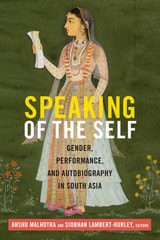
cover of Speaking of the Self: Gender, Performance, and Autobiography in South Asia

Speaking of the Self

Gender, Performance, and Autobiography in South Asia

Anshu Malhotra and Siobhan Lambert-Hurley, editors

Duke University Press, 2015

Many consider the autobiography to be a Western genre that represents the self as fully autonomous. The contributors to Speaking of the Self challenge this presumption by examining a wide range of women's autobiographical writing from South Asia. Expanding the definition of what kinds of writing can be considered autobiographical, the contributors analyze everything from poetry, songs, mystical experiences, and diaries to prose, fiction, architecture, and religious treatises. The authors they study are just as diverse: a Mughal princess, an eighteenth-century courtesan from Hyderabad, a nineteenth-century Muslim prostitute in Punjab, a housewife in colonial Bengal, a Muslim Gandhian devotee of Krishna, several female Indian and Pakistani novelists, and two male actors who worked as female impersonators. The contributors find that in these autobiographies the authors construct their gendered selves in relational terms. Throughout, they show how autobiographical writing—in whatever form it takes—provides the means toward more fully understanding the historical, social, and cultural milieu in which the author performs herself and creates her subjectivity.

Contributors: Asiya Alam, Afshan Bokhari, Uma Chakravarti, Kathryn Hansen, Siobhan Lambert-Hurley, Anshu Malhotra, Ritu Menon, Shubhra Ray, Shweta Sachdeva Jha, Sylvia Vatuk

 
[more]
cover of Special Branch: The British Spy Novel, 1890-1980

Special Branch

The British Spy Novel, 1890-1980

University of Wisconsin Press, 1981

The author has chosen seventeen of the most important or representative British spy novelists to write about. He presents some basic literary analysis and criticism, trying both to place them in historical perspective and to describe and analyze the content and form of their fiction.
[more]
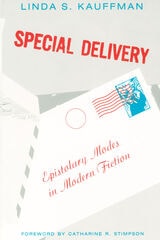
cover of Special Delivery: Epistolary Modes in Modern Fiction

Special Delivery

Epistolary Modes in Modern Fiction

Linda S. Kauffman

University of Chicago Press, 1992

Though letter writing is almost a lost art, twentieth-century writers have mimed the epistolary mode as a means of reevaluating the theme of love. In Special Delivery, Linda S. Kauffman places the narrative treatment of love in historical context, showing how politics, economics, and commodity culture have shaped the meaning of desire.

Kauffman first considers male writers whose works, testing the boundaries of genre and gender, imitate love letters: Viktor Shklovsky's Zoo, Vladimir Nabokov's Lolita, Roland Barthes's A Lover's Discourse, and Jacques Derrida's The Post Card. She then turns to three novels by women who are more preoccupied with politics than passion: Doris Lessing's The Golden Notebook, Alice Walker's The Color Purple, and Margaret Atwood's The Handmaid's Tale. By juxtaposing these "women's productions" with the men's "production of Woman," Special Delivery dismantles the polarities between male and female, theory and fiction, high and low culture, male critical theory, and feminist literary criticism. Kauffman demonstrates how all seven texts mercilessly expose the ideology of individualism and romantic love; each presents alternate paradigms of desire, wrested from Oedipus, grounded in history and politics, giving epistolarity a distinctively postmodern stamp.
[more]
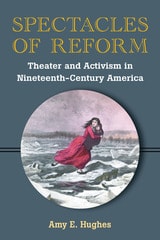
cover of Spectacles of Reform: Theater and Activism in Nineteenth-Century America

Spectacles of Reform

Theater and Activism in Nineteenth-Century America

Amy E. Hughes

University of Michigan Press, 2014

In the nineteenth century, long before film and television arrived to electrify audiences with explosions, car chases, and narrow escapes, it was America's theaters that offered audiences such thrills, with "sensation scenes" of speeding trains, burning buildings, and endangered bodies, often in melodramas extolling the virtues of temperance, abolition, and women's suffrage. In Spectacles of Reform , Amy E. Hughes scrutinizes these peculiar intersections of spectacle and reform, revealing that spectacle plays a crucial role in American activism. By examining how theater producers and political groups harnessed its power and appeal, Hughes suggests that spectacle was—and remains—central to the dramaturgy of reform.

Engaging evidence from lithographs to children's books to typography catalogs, Hughes traces the cultural history of three famous sensation scenes—the drunkard suffering from the delirium tremens, the fugitive slave escaping over a river, and the victim tied to the railroad tracks—assessing how they conveyed, allayed, and denied concerns about the rights and responsibilities of citizenship. These images also appeared in printed propaganda, suggesting that the coup de théâtre was an essential part of American reform culture. Additionally, Hughes argues that today's producers and advertisers continue to exploit the affective dynamism of spectacle, reaching an even broader audience through film, television, and the Internet.

To be attuned to the dynamics of spectacle, Hughes argues, is to understand how we see. Consequently, Spectacles of Reform will interest not only theater historians, but also scholars and students of political, literary, and visual culture who are curious about how U.S. citizens saw themselves and their world during a pivotal period in American history.

[more]
cover of Spectacular Disappearances: Celebrity and Privacy, 1696-1801

Spectacular Disappearances

Celebrity and Privacy, 1696-1801

Julia H. Fawcett

University of Michigan Press, 2016
How can people in the spotlight control their self-representations when the whole world seems to be watching? The question is familiar, but not new. Julia Fawcett examines the stages, pages, and streets of eighteenth-century London as England's first modern celebrities performed their own strange and spectacular self-representations.  They include the enormous wig that actor Colley Cibber donned in his comic role as Lord Foppington--and that later reappeared on the head of Cibber's cross-dressing daughter, Charlotte Charke. They include the black page of Tristram Shandy, a memorial to the parson Yorick (and author Laurence Sterne), a page so full of ink that it cannot be read. And they include the puffs and prologues that David Garrick used to heighten his publicity while protecting his privacy; the epistolary autobiography, modeled on the sentimental novel, of Garrick's protégée George Anne Bellamy; and the elliptical poems and portraits of the poet, actress, and royal courtesan Mary Robinson, a.k.a. Perdita.

Linking all of these representations is a quality that Fawcett terms "over-expression," the unique quality that allows celebrities to meet their spectators' demands for disclosure without giving themselves away. Like a spotlight so brilliant it is blinding, these exaggerated but illegible self-representations suggest a new way of understanding some of the key aspects of celebrity culture, both in the eighteenth century and today. They also challenge divides between theatrical character and novelistic character in eighteenth-century studies, or between performance studies and literary studies today. The book provides an indispensable history for scholars and students in celebrity studies, performance studies, and autobiography—and for anyone curious about the origins of the eighteenth-century self.
[more]
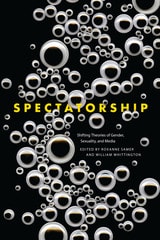
cover of Spectatorship: Shifting Theories of Gender, Sexuality, and Media

Spectatorship

Shifting Theories of Gender, Sexuality, and Media

Edited by Roxanne Samer and William Whittington

University of Texas Press, 2017

Media platforms continually evolve, but the issues surrounding media representations of gender and sexuality have persisted across decades. Spectator: The University of Southern California Journal of Film and Television Criticism has published groundbreaking articles on gender and sexuality, including some that have become canonical in film studies, since the journal’s founding in 1982. This anthology collects seventeen key articles that will enable readers to revisit foundational concerns about gender in media and discover models of analysis that can be applied to the changing media world today.

Spectatorship begins with articles that consider issues of spectatorship in film and television content and audience reception, noting how media studies has expanded as a field and demonstrating how theories of gender and sexuality have adapted to new media platforms. Subsequent articles show how new theories emerged from that initial scholarship, helping to develop the fields of fandom, transmedia, and queer theory. The most recent work in this volume is particularly timely, as the distinctions between media producers and media spectators grow more fluid and as the transformation of media structures and platforms prompts new understandings of gender, sexuality, and identification. Connecting contemporary approaches to media with critical conversations of the past, Spectatorship thus offers important points of historical and critical departure for discussion in both the classroom and the field.
[more]
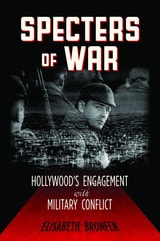
cover of Specters of War: Hollywood's Engagement with Military Conflict

Specters of War

Hollywood's Engagement with Military Conflict

Bronfen, Elisabeth

Rutgers University Press, 2012

Specters of War looks at the way war has been brought to the screen in various genres and at different historical moments throughout the twentieth century and into the twenty-first. Elisabeth Bronfen asserts that Hollywood has emerged as a place where national narratives are created and circulated so that audiences can engage with fantasies, ideologies, and anxieties that take hold at a given time, only to change with the political climate.

Such cultural reflection is particularly poignant when it deals with America’s traumatic history of war. The nation has no direct access to war as a horrific experience of carnage and human destruction; we understand our relation to it through images and narratives that transmit and interpret it for us. Bronfen does not discuss actual conflicts but the films by which we have come to know and remember them, including All Quiet on the Western Front, The Best Years of Our Lives, Miracle at St. Anna, The Deer Hunter, and Flags of Our Fathers. Battles and campaigns, the home front and women-who-wait narratives, war correspondents, and court martials are also explored as instruments of cultural memory. Bronfen argues that we are haunted by past wars and by cinematic re-conceptualizations of them, and reveals a national iconography of redemptive violence from which we seem unable to escape.
[more]
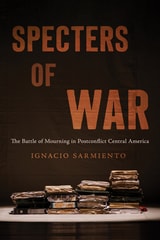
cover of Specters of War: The Battle of Mourning in Postconflict Central America

Specters of War

The Battle of Mourning in Postconflict Central America

Ignacio Sarmiento

University of Arizona Press, 2025

Specters of War explores mourning practices in postwar Central America, particularly in El Salvador and Guatemala. Ignacio Sarmiento delves into the intricate dynamics of grieving through an interdisciplinary lens, analyzing expressions of mourning in literature, theater, and sites of memory. At the heart of this analysis is the contention over who has the right to mourn, how mourning is performed, and who is included in this process. Sarmiento reveals mourning not as a private affair but as a battleground where different societal factions vie for the possibility of grieving the dead.

Through meticulous research and theoretical nuance, Specters of War sheds light on the politics of mourning in postconflict societies. Sarmiento argues that mourning is not merely a personal experience but a deeply political act intertwined with power struggles and societal divisions. From victims of state terrorism to military elites, various groups engage in a complex dance of grief, revealing the fraught nature of public mourning in postwar Central America. By examining cultural artifacts and memorialization projects, Sarmiento uncovers the multifaceted nature of mourning and its implications for memory, justice, and reconciliation.

This groundbreaking work is essential reading for scholars, students, and professionals interested in Central American history and culture, as well as post-authoritarian societies. Specters of War promises to deepen our understanding of postwar Central America and the legacy of loss in shaping collective identities and narratives of the past.
[more]
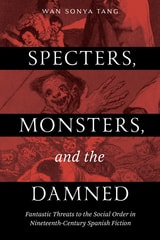
cover of Specters, Monsters, and the Damned: Fantastic Threats to the Social Order in Nineteenth-Century Spanish Fiction

Specters, Monsters, and the Damned

Fantastic Threats to the Social Order in Nineteenth-Century Spanish Fiction

Wan Sonya Tang

Vanderbilt University Press, 2024

Specters, Monsters, and the Damned examines a rich selection of Spanish fantastic literature to illustrate how the language of the supernatural expresses the fears of complex societies beset by dizzying change and perceived decline. Throughout the nineteenth century, amid governmental upheavals and imperial losses, Spain’s dominant political, legal, and scientific voices constructed the prototypical citizen as male, middle‑class, and “ethnically pure.” The role of realist novels by canonical authors like Benito Pérez Galdós, Emilia Pardo Bazán, and Leopoldo Alas in forging this Spanish identity has been meticulously examined over the last half century, to the exclusion of many other genres. This book complements existing scholarship by demonstrating how a neglected corpus of late nineteenth‑ and turn‑of‑the‑century fantastic short fictions, many by the same canonical authors, engages with processes of national identity formation in unexpected and ambiguous ways.

Tang offers innovative readings of eleven fantastic short stories and one novella as they first appeared, some serialized and others illustrated, in Spanish periodicals from the late 1800s and early 1900s. Drawing on original archival research, she demonstrates how these stories—in which the everyday is suddenly and inexplicably disrupted by the supernatural—often employ gothic imagery (specifically that of the specter, the monster, and the curse) to depict as threatening those who deviate from cultural norms in terms of class, gender, and race. Tang argues, however, that these unsettling, open‑ended narratives likewise allow readers to question how and why certain designated groups are privileged by society. She contends that the fantastic depiction of reality as unstable in these works ultimately facilitates an interrogation of those values that are accepted as natural by the reigning social order, gesturing toward the inhumanity not of the marginalized, but of the dominant group.
[more]
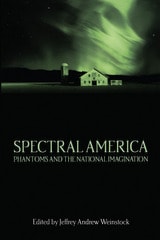
cover of Spectral America: Phantoms and the National Imagination

Spectral America

Phantoms and the National Imagination

Edited by Jeffrey Andrew Weinstock

University of Wisconsin Press, 2004

    From essays about the Salem witch trials to literary uses of ghosts by Twain, Wharton, and Bierce to the cinematic blockbuster The Sixth Sense, this book is the first to survey the importance of ghosts and hauntings in American culture across time. From the Puritans’ conviction that a thousand preternatural beings appear every day before our eyes, to today’s resurgence of spirits in fiction and film, the culture of the United States has been obsessed with ghosts. In each generation, these phantoms in popular culture reflect human anxieties about religion, science, politics, and social issues.
    Spectral America asserts that ghosts, whether in oral tradition, literature, or such modern forms as cinema have always been constructions embedded in specific historical contexts and invoked for explicit purposes, often political in nature. The essays address the role of "spectral evidence" during the Salem witch trials, the Puritan belief in good spirits, the convergence of American Spiritualism and technological development in the nineteenth century, the use of the supernatural as a tool of political critique in twentieth-century magic realism, and the "ghosting" of persons living with AIDS. They also discuss ghostly themes in the work of Ambrose Bierce, Edith Wharton, Gloria Naylor, and Stephen King.
[more]
cover of Spectral Characters: Genre and Materiality on the Modern Stage

Spectral Characters

Genre and Materiality on the Modern Stage

Sarah Balkin

University of Michigan Press, 2019

Theater’s materiality and reliance on human actors has traditionally put it at odds with modernist principles of aesthetic autonomy and depersonalization. Spectral Characters argues that modern dramatists in fact emphasized the extent to which humans are fictional, made and changed by costumes, settings, props, and spoken dialogue. Examining work by Ibsen, Wilde, Strindberg, Genet, Kopit, and Beckett, the book takes up the apparent deadness of characters whose selves are made of other people, whose thoughts become exteriorized communication technologies, and whose bodies merge with walls and furniture. The ghostly, vampiric, and telepathic qualities of these characters, Sarah Balkin argues, mark a new relationship between the material and the imaginary in modern theater. By considering characters whose bodies respond to language, whose attempts to realize their individuality collapse into inanimacy, and who sometimes don’t appear at all, the book posits a new genealogy of modernist drama that emphasizes its continuities with nineteenth-century melodrama and realism.
[more]
cover of Spectres of 1919: Class and Nation in the Making of the New Negro

Spectres of 1919

Class and Nation in the Making of the New Negro

Barbara Foley

University of Illinois Press, 2002

A look at the violent “Red Summer of 1919” and its intersection with the highly politicized New Negro movement and the Harlem Renaissance

With the New Negro movement and the Harlem Renaissance, the 1920s was a landmark decade in African American political and cultural history, characterized by an upsurge in racial awareness and artistic creativity. In Spectres of 1919 Barbara Foley traces the origins of this revolutionary era to the turbulent year 1919, identifying the events and trends in American society that spurred the black community to action and examining the forms that action took as it evolved.

Unlike prior studies of the Harlem Renaissance, which see 1919 as significant mostly because of the geographic migrations of blacks to the North, Spectres of 1919 looks at that year as the political crucible from which the radicalism of the 1920s emerged. Foley draws from a wealth of primary sources, taking a bold new approach to the origins of African American radicalism and adding nuance and complexity to the understanding of a fascinating and vibrant era.
[more]
cover of Speculation and the Darwinian Method in British Romance Fiction, 1859-1914

Speculation and the Darwinian Method in British Romance Fiction, 1859-1914

Kate Holterhoff

Ohio University Press, 2025

This study explores how British romance fictions published between 1859 and 1914 absorbed distinctly Darwinian attitudes toward the epistemology of science—one that accorded with scientific speculation. Following the 1859 publication of On the Origin of Species, in which Charles Darwin acknowledged arriving at his thesis by allowing himself “to speculate on the subject” of species transmutation, many romance fiction writers embraced, criticized, and promoted acts of speculating characterized as scientific. The romance fictions discussed in this book recurred to Darwin’s speculative methodology more than to rigorous Baconian empiricism because it permitted them to draw pointedly imaginative conclusions in reasonable ways. Kate Holterhoff’s book examines how romance authors like Grant Allen, H. G. Wells, and Arthur Conan Doyle incorporated Darwinian ideas and speculative thinking into their works to advance their ideological and aesthetic goals. Holterhoff uses five paired genres and methods to analyze this engagement:

  • scientific romance and experimentation,
  • metaphysical romance and thought experiments,
  • anthropological romance and reasoning with imperfect data,
  • gothic romance and probability, and
  • utopian romance and Malthusian political economy.
 

By focusing on Darwin’s influence in legitimizing speculative methods in science, the book places the interplay between British science and romance fiction into critical perspective and highlights Darwin’s enduring impact on Western culture.
[more]
cover of Speculative Blackness: The Future of Race in Science Fiction

Speculative Blackness

The Future of Race in Science Fiction

André M. Carrington

University of Minnesota Press, 2016

In Speculative Blackness, André M. Carrington analyzes the highly racialized genre of speculative fiction—including science fiction, fantasy, and utopian works, along with their fan cultures—to illustrate the relationship between genre conventions in media and the meanings ascribed to blackness in the popular imagination.

Carrington’s argument about authorship, fandom, and race in a genre that has been both marginalized and celebrated offers a black perspective on iconic works of science fiction. He examines the career of actor Nichelle Nichols, who portrayed the character Uhura in the original Star Trek television series and later became a recruiter for NASA, and the spin-off series Star Trek: Deep Space Nine, set on a space station commanded by a black captain. He recovers a pivotal but overlooked moment in 1950s science fiction fandom in which readers and writers of fanzines confronted issues of race by dealing with a fictitious black fan writer and questioning the relevance of race to his ostensible contributions to the 'zines. Carrington mines the productions of Marvel comics and the black-owned comics publisher Milestone Media, particularly the representations of black sexuality in its flagship title, Icon. He also interrogates online fan fiction about black British women in Buffy the Vampire Slayer and the Harry Potter series.

Throughout this nuanced analysis, Carrington theorizes the relationship between race and genre in cultural production, revealing new understandings of the significance of blackness in twentieth-century American literature and culture.

[more]
cover of Speculative Formalism: Literature, Theory, and the Critical Present

Speculative Formalism

Literature, Theory, and the Critical Present

Tom Eyers

Northwestern University Press, 2017

Speculative Formalism engages decisively in recent debates in the literary humanities around form and formalism, making the case for a new, nonmimetic and antihistoricist theory of literary reference. Where formalism has often been accused of sealing texts within themselves, Eyers demonstrates instead how a renewed, speculative formalism can illuminate the particular ways in which literature actively opens onto history, politics, and nature, in a connective movement that puts formal impasses to creative use.
 
Through a combination of philosophical reflection and close rhetorical readings, Eyers explores the possibilities and limits of deconstructive approaches to the literary, the impact of the “digital humanities” on theory, and the prospects for a formalist approach to “world literature.” The book includes sustained close readings of Baudelaire, Mallarmé, Yeats, and Wallace Stevens, as well as Alain Badiou, Paul de Man, and Fredric Jameson.
[more]
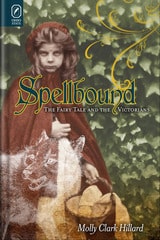
cover of Spellbound: The Fairy Tale and the Victorians

Spellbound

The Fairy Tale and the Victorians

Molly Clark Hillard

The Ohio State University Press, 2014

In examining the relationship between fairy tales and Victorian culture, Molly Clark Hillard concludes that the Victorians were “spellbound”: novelists, poets, and playwrights were self-avowedly enchanted by these tales. At the same time, Spellbound: The Fairy Tale and the Victorians shows that literary genres were bound to the fairy tale and dependent on its forms and figures to make meaning. But these “spellbound” literary artists also feared that fairy tales exuded an originative power that pervaded and precluded authored work. In part to dispel the fairy tale’s potency, Victorians resolved this tension by treating the form as a nostalgic refuge from an industrial age, a quaint remnant of the pre-literacy of childhood and peasantry, and a form fit not for modern gentlemen but rather for old wives.
 
Through close readings of the novels of Dickens, Eliot, and Charlotte Brontë; the poetry of Tennyson and Christina Rossetti; the visual artistry of Burne-Jones and Punch; and the popular theatricals of dramatists like Planche and Buckingham, Spellbound opens fresh territory into well-traversed titles of the Victorian canon. Hillard demonstrates that these literary forms were all cross-pollenated by the fairy tale and that their authors were—however reluctantly—purveyors of disruptive fairy tale matter over which they had but imperfect control.

[more]
cover of Spencer Kimball's Record Collection: Essays on Mormon Music

Spencer Kimball's Record Collection

Essays on Mormon Music

Michael Hicks

Signature Books, 2020

At times jubilant, at times elegiac, this set of ten essays by music historian Michael Hicks navigates topics that range from the inner musical life of Joseph Smith to the Mormon love of blackface musicals, from endless wrangling over hymnbooks to the compiling of Mormon folk and exotica albums in the 1960s.  It also offers a brief memoir of what happened to LDS Church President Spencer Kimball’s record collection and a lengthy, brooding piece on the elegant strife it takes to write about Mormon musical history in the first place.  There are surprises and provocations, of course, alongside judicious sifting of sources and weighing of evidence. The prose is fresh, the research smart, and the result a welcome mixture of the careful and the carefree from Mormonism’s best-known scholar of musical life.
[more]
cover of Spies and Holy Wars: The Middle East in 20th-Century Crime Fiction

Spies and Holy Wars

The Middle East in 20th-Century Crime Fiction

By Reeva Spector Simon

University of Texas Press, 2010

Illuminating a powerful intersection between popular culture and global politics, Spies and Holy Wars draws on a sampling of more than eight hundred British and American thrillers that are propelled by the theme of jihad—an Islamic holy war or crusade against the West. Published over the past century, the books in this expansive study encompass spy novels and crime fiction, illustrating new connections between these genres and Western imperialism.

Demonstrating the social implications of the popularity of such books, Reeva Spector Simon covers how the Middle Eastern villain evolved from being the malleable victim before World War II to the international, techno-savvy figure in today's crime novels. She explores the impact of James Bond, pulp fiction, and comic books and also analyzes the ways in which world events shaped the genre, particularly in recent years. Worldwide terrorism and economic domination prevail as the most common sources of narrative tension in these works, while military "tech novels" restored the prestige of the American hero in the wake of post-Vietnam skepticism. Moving beyond stereotypes, Simon examines the relationships between publishing trends, political trends, and popular culture at large—giving voice to the previously unexamined truths that emerge from these provocative page-turners.
[more]
cover of Spilling the Beans in Chicanolandia: Conversations with Writers and Artists

Spilling the Beans in Chicanolandia

Conversations with Writers and Artists

By Frederick Luis Aldama

University of Texas Press, 2006

Since the 1980s, a prolific "second wave" of Chicano/a writers and artists has tremendously expanded the range of genres and subject matter in Chicano/a literature and art. Building on the pioneering work of their predecessors, whose artistic creations were often tied to political activism and the civil rights struggle, today's Chicano/a writers and artists feel free to focus as much on the aesthetic quality of their work as on its social content. They use novels, short stories, poetry, drama, documentary films, and comic books to shape the raw materials of life into art objects that cause us to participate empathetically in an increasingly complex Chicano/a identity and experience.

This book presents far-ranging interviews with twenty-one "second wave" Chicano/a poets, fiction writers, dramatists, documentary filmmakers, and playwrights. Some are mainstream, widely recognized creators, while others work from the margins because of their sexual orientations or their controversial positions. Frederick Luis Aldama draws out the artists and authors on both the aesthetic and the sociopolitical concerns that animate their work. Their conversations delve into such areas as how the artists' or writers' life experiences have molded their work, why they choose to work in certain genres and how they have transformed them, what it means to be Chicano/a in today's pluralistic society, and how Chicano/a identity influences and is influenced by contact with ethnic and racial identities from around the world.

[more]
cover of Spirit of Australia: The Crime Fiction of Arthur W. Upfield

Spirit of Australia

The Crime Fiction of Arthur W. Upfield

University of Wisconsin Press, 1988

In the world of crime fiction, Arthur W. Upfield stands among the giants. His detective-inspector Napoleon Bonaparte, is one of the most memorable of all crime fighters. Upfield was an independent, fiercely self-assertive ex-Britisher, who loved Australia, especially the Outback. In many ways Upfield became Outback Australia—the “Spirit of Australia.”


Library of Congress subject headings for this publication:
Upfield, Arthur William, -- 1888-1964 -- Criticism and interpretation.
Detective and mystery stories, Australian -- History and criticism.
Bonaparte, Napoleon, Inspector (Fictitious character)
National characteristics, Australian, in literature.
Australia -- In literature.
Police in literature.
Crime in literature.
[more]
cover of Spiritual Mestizaje: Religion, Gender, Race, and Nation in Contemporary Chicana Narrative

Spiritual Mestizaje

Religion, Gender, Race, and Nation in Contemporary Chicana Narrative

Theresa Delgadillo

Duke University Press, 2011

Gloria Anzaldúa’s narrative and theoretical innovations, particularly her concept of mestiza consciousness, have influenced critical thinking about colonialism, gender, history, language, religion, sexuality, spirituality, and subjectivity. Yet Anzaldúa’s theory of spiritual mestizaje has not been extensively studied until now. Taking up that task, Theresa Delgadillo reveals spiritual mestizaje as central to the queer feminist Chicana theorist’s life and thought, and as a critical framework for interpreting contemporary Chicana literary and visual narratives. First mentioned by Anzaldúa in her pioneering book Borderlands/La Frontera, spiritual mestizaje is a transformative process of excavating bodily memory to develop a radical, sustained critique of oppression and renew one’s relation to the sacred. Delgadillo analyzes the role of spiritual mestizaje in Anzaldúa’s work and in relation to other forms of spirituality and theories of oppression. Illuminating the ways that contemporary Chicana narratives visualize, imagine, and enact Anzaldúa’s theory and method of spiritual mestizaje, Delgadillo interprets novels, memoir, and documentaries. Her critical reading of literary and visual technologies demonstrates how Chicanas challenge normative categories of gender, sexuality, nation, and race by depicting alternative visions of spirituality.
[more]
cover of Spirituality and the Writer: A Personal Inquiry

Spirituality and the Writer

A Personal Inquiry

Thomas Larson

Ohio University Press, 2019

Today, the surprisingly elastic form of the memoir embraces subjects that include dying, illness, loss, relationships, and self-awareness. Writing to reveal the inner self—the pilgrimage into one’s spiritual and/or religious nature—is a primary calling. Contemporary memoirists are exploring this field with innovative storytelling, rigorous craft, and new styles of confessional authorship. Now, Thomas Larson brings his expertise as a critic, reader, and teacher to the boldly evolving and improvisatory world of spiritual literature.

In his book-length essay Spirituality and the Writer, Larson surveys the literary insights of authors old and new who have shaped religious autobiography and spiritual memoir—from Augustine to Thomas Merton, from Peter Matthiessen to Cheryl Strayed. He holds them to an exacting standard: they must render transcendent experience in the writing itself. Only when the writer’s craft prevails can the fleeting and profound personal truths of the spirit be captured. Like its predecessor, Larson’s The Memoir and the Memoirist,Spirituality and the Writer will find a home in writing classrooms and book groups, and be a resource for students, teachers, and writers who seek guidance with exploring their spiritual lives.

[more]
cover of Spirituals and the Birth of a Black Entertainment Industry

Spirituals and the Birth of a Black Entertainment Industry

Sandra Jean Graham

University of Illinois Press, 2018

Spirituals performed by jubilee troupes became a sensation in post-Civil War America. First brought to the stage by choral ensembles like the Fisk Jubilee Singers, spirituals anchored a wide range of late nineteenth-century entertainments, including minstrelsy, variety, and plays by both black and white companies. In the first book-length treatment of postbellum spirituals in theatrical entertainments, Sandra Jean Graham mines a trove of resources to chart the spiritual's journey from the private lives of slaves to the concert stage. Graham navigates the conflicting agendas of those who, in adapting spirituals for their own ends, sold conceptions of racial identity to their patrons. In so doing they lay the foundation for a black entertainment industry whose artistic, financial, and cultural practices extended into the twentieth century. A companion website contains jubilee troupe personnel, recordings, and profiles of 85 jubilee groups. Please go to: http://www.press.uillinois.edu/books/graham/spirituals/
[more]
cover of Splattered Ink: Postfeminist Gothic Fiction and Gendered Violence

Splattered Ink

Postfeminist Gothic Fiction and Gendered Violence

Sarah E Whitney

University of Illinois Press, 2016

In-depth and refreshingly readable, Splattered Ink is a bold analysis of postfeminist gothic, a literary genre that continues to jar readers, reject happy endings, and find powerful new ways to talk about violence against women.

Sarah E. Whitney explores the genre's challenge to postfeminist assumptions of women's equality and empowerment. The authors she examines--Patricia Cornwell, Jodi Picoult, Susanna Moore, Sapphire, and Alice Sebold--construct narratives around socially invisible and physically broken protagonists who directly experience consequences of women's ongoing disempowerment. Their works ask readers to inhabit women's suffering and to face the uncomfortable, all-too-denied fact that today's women must navigate lives fraught with risk. Whitney's analysis places the authors within a female gothic tradition that has long given voice to women's fears of their own powerlessness. But she also reveals the paradox that allows the genre to powerfully critique postfeminism's often sunshiney outlook while uneasily coexisting within the same universe.

[more]
cover of Spoiling the Stories: The Rise of Israeli Women's Fiction

Spoiling the Stories

The Rise of Israeli Women's Fiction

Tamar Merin

Northwestern University Press, 2016

In Spoiling the Stories, Tamar Merin presents the as yet untold story of the rise of prose by Israeli women, while further exploring and expanding the gendered models of literary influence in modern Hebrew literature. The theoretical idea upon which this book is based is that of intersexual dialogue, a term that refers to the various literary strategies employed by Israeli female fiction writers expressing their voice within a male-dominated and (still) inherently Oedipal literary tradition. Spoiling the Stories focuses on intersexual dialogue as it evolved in the first three decades after the establishment of the state of Israel in the works of Yehudit Hendel, Amalia Kahana Carmon, and Rachel Eytan. According to Merin, these three women writers were the most important in the history of modern Hebrew literature: each was a significant participant in the poetic development of her time.
 
[more]
cover of Spoon River America: Edgar Lee Masters and the Myth of the American Small Town

Spoon River America

Edgar Lee Masters and the Myth of the American Small Town

Jason Stacy

University of Illinois Press, 2021

From Main Street to Stranger Things, how poetry changed our idea of small town life

A literary and cultural milestone, Spoon River Anthology captured an idea of the rural Midwest that became a bedrock myth of life in small-town America. Jason Stacy places the book within the atmosphere of its time and follows its progress as the poetry took root and thrived. Published by Edgar Lee Masters in 1915, Spoon River Anthology won praise from modernists while becoming an ongoing touchstone for American popular culture. Stacy charts the ways readers embraced, debated, and reshaped Masters's work in literary controversies and culture war skirmishes; in films and other media that over time saw the small town as idyllic then conflicted then surreal; and as the source of three archetypes—populist, elite, and exile—that endure across the landscape of American culture in the twenty-first century.

A wide-ranging reconsideration of a literary landmark, Spoon River America tells the story of how a Midwesterner's poetry helped change a nation's conception of itself.

[more]
cover of Sports Movies

Sports Movies

Lester D. Friedman

Rutgers University Press, 2020

From Rocky to Field of Dreams, sports movies are among the most beloved of American films. Revolving around familiar narratives like the underdog story, these movies have generated modern-day legends, reinforcing and disseminating our national myths about the American Dream.

In Sports Movies, Lester D. Friedman describes the traditional formulas that have made these movies such crowd-pleasers, including stock figures like the disgraced athlete on a quest for redemption, or the wise old coaches who help mentor the heroes to victory. He also explores how the genre’s attitudes have changed over time, especially in key issues like class, race, masculinity, and women in sports.

Along the way, he takes stock of sports films from the dawn of cinema’s silent era to the present day, including classic baseball movies like Pride of the Yankees and Bull Durham, basketball movies like Hoosiers and He’s Got Game, football movies like Friday Night Lights and Rudy, and boxing movies like Raging Bull and Million Dollar Baby. As Friedman’s analyses reveal, not only do sports movies influence our perceptions about the drama of real-life sports, but they also help to shape our attitudes toward the competitive ethos in American life.
[more]
cover of Squee from the Margins: Fandom and Race

Squee from the Margins

Fandom and Race

Rukmini Pande

University of Iowa Press, 2018

Rukmini Pande’s examination of race in fan studies is sure to make an immediate contribution to the growing field. Until now, virtually no sustained examination of race and racism in transnational fan cultures has taken place, a lack that is especially concerning given that current fan spaces have never been more vocal about debating issues of privilege and discrimination. 

Pande’s study challenges dominant ideas of who fans are and how these complex transnational and cultural spaces function, expanding the scope of the field significantly. Along with interviewing thirty-nine fans from nine different countries about their fan practices, she also positions media fandom as a postcolonial cyberspace, enabling scholars to take a more inclusive view of fan identity. With analysis that spans from historical to contemporary, Pande builds a case for the ways in which non-white fans have always been present in such spaces, though consistently ignored. 

[more]
cover of Stage Blood: Vampires of the 19th Century Stage

Stage Blood

Vampires of the 19th Century Stage

Roxana Stuart

University of Wisconsin Press, 1994

The vampire originally took on its characteristics in the public imagination from a series of plays written and performed by some of the most important figures in nineteenth-century theater. This work is the first major study devoted to the vampire on stage; the author discusses the figure that preceded Dracula—Lord Ruthven—the subject of more than forty English, French, and American plays. The principal works are melodramas, but the vampire theme was also treated in tragedy, opera, ballet, burlesque, farce, burletta, and satire.
[more]
cover of Staged News: The Federal Theatre Project’s Living Newspapers in New York

Staged News

The Federal Theatre Project’s Living Newspapers in New York

Jordana Cox

University of Massachusetts Press, 2023

Finalist for the 2023 Frank Luther Mott - Kappa Tau Alpha Journalism and Mass Communication Research Award

In 1935, a group of journalists and theater artists embarked on an unusual collaboration. With funds from the Federal Theatre Project (FTP), a Depression-era employment initiative established by President Roosevelt’s New Deal, they set out to produce news for the theatrical stage. Over the next four years, the New York–based team created six productions, known as the Living Newspapers. Covering a variety of public issues that included affordable housing, the plight of Dust Bowl farmers, the Tennessee Valley Authority, and labor law, Living Newspaper productions would reach hundreds of thousands of spectators and inspire adaptations across the country.

Staged News interprets the Living Newspaper’s process and repertoire amid journalists’ changing conceptions of their profession. Jordana Cox spotlights marginalized “newsmakers,” particularly Black artists, who challenged the parameters of public knowledge and assumptions surrounding newsworthiness. This timely analysis reveals how a vital theatrical form sprouted from a changing news landscape and reimagined what journalism could do for people seeking democratic change.

[more]
cover of Stages of Life: Transcultural Performance and Identity in U.S. Latina Theater

Stages of Life

Transcultural Performance and Identity in U.S. Latina Theater

Alberto Sandoval-Sánchez

University of Arizona Press, 2001

Latina theater and solo performance emerged in the 1990s as vibrant, energetic new genres found on stages from New York to Los Angeles. Many women now work in all aspects of Latina theater—often as playwrights or solo performers—with practitioners ranging from teenagers to grandmothers. Alberto Sandoval-Sánchez and Nancy Saporta Sternbach have previously published a groundbreaking anthology of Latina theater, Puro Teatro. They now offer a critical analysis of theatrical works, presenting a theoretical perspective from which to examine, understand, and contextualize Latina theater as a genre in its own right.

This is the first in-depth study of the entire corpus of Latina theater, based on close readings of works both published and in manuscript. It considers a large body of productions and performances, including works by such internationally known authors as Dolores Prida, Cherríe Moraga, and Janis Astor del Valle.

Applying feminist and postcolonial theory as well as theories of transculturation, Sandoval-Sánchez and Sternbach show how, despite cultural differences among Latinas, their works share a common poetics by building upon the politics of representation, identity, and location. In addition to covering theater, this study also shows that solo performance has its own history, properties, structure, and poetics. It examines performances of Carmelita Tropicana, Monica Palacios, and Marga Gomez—artists whose hybrid identities as Latina lesbians constitute living examples of transculturation in the making—to show how solo performance has roots in and digresses from more traditional modes of theater. With their Latina heritage as a unifying link, these women reflect common traits, patterns, dramatic structures, and properties that overcome regional differences. Stages of Life reads these eclectic cultural productions as a unified body of work that contributes to the formation of Latina identity in America today.
[more]
cover of Stagestruck: Theater, AIDS, and the Marketing of Gay America

Stagestruck

Theater, AIDS, and the Marketing of Gay America

Sarah Schulman

Duke University Press, 1998

In Stagestruck noted novelist and outspoken critic Sarah Schulman offers an account of her growing awareness of the startling similarities between her novel People in Trouble and the smash Broadway hit Rent. Written with a powerful and personal voice, Schulman’s book is part gossipy narrative, part behind-the-scenes glimpse into the New York theater culture, and part polemic on how mainstream artists co-opt the work of “marginal” artists to give an air of diversity and authenticity to their own work. Rising above the details of her own case, Schulman boldly uses her suspicions of copyright infringement as an opportunity to initiate a larger conversation on how AIDS and gay experience are being represented in American art and commerce.
Closely recounting her discovery of the ways in which Rent took materials from her own novel, Schulman takes us on her riveting and infuriating journey through the power structures of New York theater and media, a journey she pursued to seek legal restitution and make her voice heard. Then, to provide a cultural context for the emergence of Rent—which Schulman experienced first-hand as a weekly theater critic for the New York Press at the time of Rent’s premiere—she reveals in rich detail the off- and off-off-Broadway theater scene of the time. She argues that these often neglected works and performances provide more nuanced and accurate depictions of the lives of gay men, Latinos, blacks, lesbians and people with AIDS than popular works seen in full houses on Broadway stages. Schulman brings her discussion full circle with an incisive look at how gay and lesbian culture has become rapidly commodified, not only by mainstream theater productions such as Rent but also by its reduction into a mere demographic made palatable for niche marketing. Ultimately, Schulman argues, American art and culture has made acceptable a representation of “the homosexual” that undermines, if not completely erases, the actual experiences of people who continue to suffer from discrimination or disease. Stagestruck’s message is sure to incite discussion and raise the level of debate about cultural politics in America today.


[more]
cover of Staging America: The Artistic Legacy of the Provincetown Players

Staging America

The Artistic Legacy of the Provincetown Players

Jeffery Kennedy

University of Alabama Press, 2023

A comprehensive history of the Provincetown Players and their influence on modern American theatre

The Provincetown Players created a revolution in American theatre, making room for truly modern approaches to playwriting, stage production, and performance unlike anything that characterized the commercial theatre of the early twentieth century. In Staging America: The Artistic Legacy of the Provincetown Players, Jeffery Kennedy gives readers the unabridged story in a meticulously researched and comprehensive narrative that sheds new light on the history of the Provincetown Players. This study draws on many new sources that have only become available in the last three decades; this new material modifies, refutes, and enhances many aspects of previous studies.

At the center of the study is an extensive account of the career of George Cram Cook, the Players’ leader and artistic conscience, as well as one of the most significant facilitators of modernist writing in early twentieth-century American literature and theatre. It traces Cook’s mission of “cultural patriotism,” which drove him toward creating a uniquely American identity in theatre. Kennedy also focuses on the group of friends he calls the “Regulars,” perhaps the most radical collection of minds in America at the time; they encouraged Cook to launch the Players in Provincetown in the summer of 1915 and instigated the move to New York City in fall 1916.

Kennedy has paid particular attention to the many legends connected to the group (such as the “discovery” of Eugene O’Neill), and also adds to the biographical record of the Players’ forty-seven playwrights, including Susan Glaspell, Neith Boyce, Edna St. Vincent Millay, Floyd Dell, Rita Wellman, Mike Gold, Djuna Barnes, and John Reed. Kennedy also examines other fascinating artistic, literary, and historical personalities who crossed the Players’ paths, including Emma Goldman, Charles Demuth, Berenice Abbott, Sophie Treadwell, Theodore Dreiser, Claudette Colbert, and Charlie Chaplin. Kennedy highlights the revolutionary nature of those living in bohemian Greenwich Village who were at the heart of the Players and the America they were responding to in their plays.
 

[more]
cover of Staging Black Fugitivity

Staging Black Fugitivity

Stacie Selmon McCormick

The Ohio State University Press, 2019

Staging Black Fugitivity asks: How does drama constitute an important site for ongoing conversations about slavery’s resonance and its legacies? To answer this question, Stacie Selmon McCormick charts the historical turn toward slavery in black drama that began in the last quarter of the twentieth century. This movement, spearheaded by August Wilson and Suzan-Lori Parks, has been largely under-theorized, yet it participates in and advances the neo-slave narrative genre—with contemporary black dramas enhancing the neo-slave narrative’s capacity to represent the visual, corporal, and affective dimensions of the black body and slavery as an institution.
 
McCormick traces the innovative ways that artists render slavery for present-day audiences. The dramas assembled in this book approach slavery from myriad perspectives—afrofuturist, feminist, and queer—in order to produce new imaginaries that offer more complex depictions of black experience. Through subverting notions of time, race, gender, and familiar histories of slavery themselves, the dramas under discussion produce performances of fugitivity—subversive, radical, and experimental performances of black artistic and political freedom at the site of slavery.
 
[more]
cover of Staging Blackness: Representations of Race in German-Speaking Drama and Theater

Staging Blackness

Representations of Race in German-Speaking Drama and Theater

Priscilla Dionne Layne and Lily Tonger-Erk, Editors

University of Michigan Press, 2024

Staging Blackness provides a multifaceted look at how Blackness has been staged in Germany from the eighteenth century, the birth of German national theater, until the present. In recent years, the German stage has been at the forefront of discussions about race, from cases of blackface to fights for better representation within the professional community. These debates frequently invoke larger discussions about the politics of race in German theater and their origins and beyond. 

Written by scholars and theater professionals with a wide variety of historical and theoretical expertise, the chapters seek to explore the connections between the German discourse on national theater and emerging ideas about race, analyze how dramaturges deal with older representations of Blackness in current productions, and discuss the contributions Black German playwrights and dramaturges have made to this discourse. Historians question how these plays were staged in their time, while cultural studies scholars contemplate how to interpret the function of race in these plays and how they can continue to be staged today.
[more]
cover of Staging Christ's Passion in Eighteenth-Century Nahua Mexico

Staging Christ's Passion in Eighteenth-Century Nahua Mexico

Louise M. Burkhart

University Press of Colorado, 2023

Staging Christ’s Passion in Eighteenth-Century Nahua Mexico explores the Passion plays performed in Nahuatl (Aztec) by Indigenous Mexicans living under Spanish colonial occupation. Though sourced from European writings and devotional practices that emphasized the suffering of Christ and his mother, this Nahuatl theatrical tradition grounded the Passion story in the Indigenous corporate community. Passion plays had courted controversy in Europe since their twelfth-century origin, but in New Spain they faced Catholic authorities who questioned the spiritual and intellectual capacity of Indigenous people and, in the eighteenth century, sought to suppress these performances. Six surviving eighteenth-century scripts, variants of an original play possibly composed early in the seventeenth century, reveal how Nahuas passed along this model text while modifying it with new dialogue, characters, and stage techniques. Louise M. Burkhart explores the way Nahuas merged the Passion story with their language, cultural constructs, social norms, and religious practices while also responding to surveillance by Catholic churchmen. Analytical chapters trace significant themes through the six plays and key these to a composite play in English included in the volume.

A cast with over fifty distinct roles acted out events extending from Palm Sunday to Christ’s death on the cross. One actor became a localized embodiment of Jesus through a process of investiture and mimesis that carried aspects of pre-Columbian materialized divinity into the later colonial period. The play told afar richer version of the Passion story than what later colonial Nahuas typically learned from their priests or catechists. And by assimilating Jesus to an Indigenous, or macehualli, identity, the players enacted a protest against colonial rule.

The situation in eighteenth-century New Spain presents both a unique confrontation between Indigenous communities and Enlightenment era religious reformers and a new chapter in an age-old power game between popular practice and religious orthodoxy. By focusing on how Nahuas localized the universalizing narrative of Christ’s Passion, Staging Christ’s Passion in Eighteenth-Century Nahua Mexico offers an unusually in-depth view of religious life under colonial rule.

Burkhart’s
accompanying website also makes available transcriptions and translations of the six Nahuatl-language plays, four Spanish-language plays composed in response to the suppression of the Nahuatl practice, and related documentation, providing a valuable resource for anyone interested in consulting the original material.    

Comments restricted to single page

plays composed in response to the suppression of the Nahuatl practice, and related documentation,
providing a valuable resource for anyone interested in consulting the original material
[more]
cover of Staging Consciousness: Theater and the Materialization of Mind

Staging Consciousness

Theater and the Materialization of Mind

William W. Demastes

University of Michigan Press, 2002

Staging Consciousness argues that theater is a living invalidation of the Western dualism of mind and body, activating human consciousness through its embodiment of thought in performance. While consciousness theory has begun to find ways to bridge dualist gaps, Staging Consciousness suggests that theater has anticipated these advances, given the ways in which the physical theater promotes nonphysical thought, connecting the two realms in unique and ingenious ways.
William W. Demastes makes use of the writings of such varied theater practitioners as Antonin Artaud, Jerzy Grotowski, Samuel Beckett, Tony Kushner, Sam Shepard, Spalding Gray, Peter Shaffer, and others, illuminating theater as proof that mind is an extension of body. The living stage incubates and materializes thought in a way that highlights the processes of daily existence outside the theater. This book offers a new way for theater practitioners to look at the unique value of the theater and an invitation for philosophers and scientists to search for new paradigms in theater, the oldest of art forms.
William W. Demastes is Professor of English, Louisiana State University. His previous books include Theatre of Chaos: Beyond Absurdism, into Disorderly Order.
[more]