Results by title
4743 books match the query 'Religion' and 324 start with s
Spirituals and the Birth of a Black Entertainment Industry
Sandra Jean Graham
University of Illinois Press, 2018
Splitting the Difference
Gender and Myth in Ancient Greece and IndiaWendy Doniger
University of Chicago Press, 1999
Myth, Doniger argues, responds to the complexities of the human condition by multiplying or splitting its characters into unequal parts, and these sloughed and cloven selves animate mythology's prodigious plots of sexuality and mortality. Doniger's comparisons show that ultimately differences in gender are more significant than differences in culture; Greek and Indian stories of doubled women resemble each other more than they do tales of doubled men in the same culture. In casting Hindu and Greek mythologies as shadows of each other, Doniger shows that culture is sometimes but the shadow of gender.
Spokesmen for the Despised
Fundamentalist Leaders of the Middle EastEdited by R. Scott Appleby
University of Chicago Press, 1997
The deeds of the men profiled in this book make history and headlines, whether through the anti-American rhetoric of the late Iranian revolutionary, Ayatollah Ruhollah Khomeini; the violent acts of Hizbullah, the Lebanese Shi'ite movement headed by Sayyid Muhammad Husayn Fadlallah; or the group of Jewish rabbis who appear to have inspired the assassination of Israeli Prime Minister Yitzhak Rabin. No one better exemplifies this history-making than Shaykh Ahmad Yasin, the spiritual leader of Hamas, who from his Israeli jail cell continues to influence Hamas's efforts to eliminate both Israel and the PLO. Also featured are the spiritual guides of the radical Jewish settler movement Gush Emunim, the Sudanese sponsor of "the Islamic Awakening," the preacher who inflamed Upper Egypt, and the ideological leader of the Zionist International Christian Embassy.
These riveting biographies include interviews with true believers and bitter opponents, and in several cases with the subjects themselves, carefully placing the lives of these charismatic leaders in the contexts of their religious traditions and their varied social, political, and religious settings. Spokesmen for the Despised is an essential volume for anyone wishing to understand the relationship between religion and politics in the Middle East.
Contributors: Ziad Abu Amr, Gideon Aran, Yaakov Ariel, Daniel Brumberg, Patrick D. Gaffney, Samuel Heilman, Martin Kramer, and Judith Miller
Sport and Christianity
A Sign of the Times in the Light of FaithKevin Lixey
Catholic University of America Press, 2012

Sports in Zion
Mormon Recreation, 1890-1940Richard Ian Kimball
University of Illinois Press, 2002
If a religion cannot attract and instruct young people, it will struggle to survive, which is why recreational programs were second only to theological questions in the development of twentieth-century Mormonism. In this book, Richard Ian Kimball explores how Mormon leaders used recreational programs to ameliorate the problems of urbanization and industrialization and to inculcate morals and values in LDS youth. As well as promoting sports as a means of physical and spiritual excellence, Progressive Era Mormons established a variety of institutions such as the Deseret Gymnasium and camps for girls and boys, all designed to compete with more "worldly" attractions and to socialize adolescents into the faith.
Kimball employs a wealth of source material including periodicals, diaries, journals, personal papers, and institutional records to illuminate this hitherto underexplored aspect of the LDS church. In addition to uncovering the historical roots of many Mormon institutions still visible today, Sports in Zion is a detailed look at the broader functions of recreation in society.
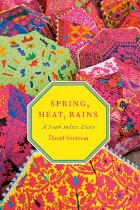
Spring, Heat, Rains
A South Indian DiaryDavid Shulman
University of Chicago Press, 2008

St. Augustine's Bones
A MicrohistoryHarold Samuel Stone
University of Massachusetts Press, 2002
In 1695, workers in Pavia, Italy, chanced upon a collection of bones in the crypt of the Cathedral of San Pietro in Ciel d'Oro. The workers later testified that they had seen the name of St. Augustine written in charcoal on the surface of the casket they had uncovered. Yet by the time of the official inquest, all traces of the writing had disappeared.
Rich with new insights into urban literacy and conceptions of reading, this book explores the controversy that ensued over the alleged discovery of Augustine's bones. Manuscripts, broadsides, pamphlets—even whole books—were devoted to proving or disproving the authenticity of the remains. Although these works were addressed to members of the clergy, they were also intended for the general reading public in Pavia, Milan, and Venice. Their dissemination helped create a temporary public sphere in which the merits of the case were examined in a spirit of free debate.
A reexamination of the dispute over St. Augustine's bones illuminates aspects of Catholic spirituality in Northern Italy during the late seventeenth and early eighteenth centuries. It also reveals the different ways in which Catholic scholars, local religious leaders, and the papal administration sought to influence and direct local popular religious belief and practices. Although the controversy was officially resolved by the papacy in 1728, the debate over the relics of San Pietro continued into the twentieth century.
By combining methods developed in the burgeoning field of the history of the book with the tools of cultural analysis, Harold Samuel Stone not only recovers the stories surrounding St. Augustine's bones, but also reconstructs the mental world of those who read or heard them.
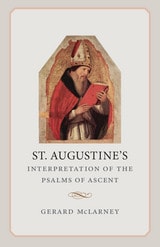
St. Augustine's Interpretaion of the Psalms of Ascent
Gerard McLarney
Catholic University of America Press, 2014

St. Austin Review, Religion & Politics, September/October 2011, Vol. 11, No. 5
Joseph Pearce
St. Augustine's Press, 2011
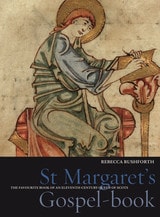
St. Margaret's Gospel
The Favourite Book of a Queen of ScotlandRebecca Rushforth
Bodleian Library Publishing, 2007
Margaret’s piety, dignity, and compassion made her a beloved figure long after her death. Her illuminated manuscript reveals the depths of her sanctity, opening with a Latin poem relating the one miracle attributed to her, where she preserved this book from damage. Exquisite illustrations transform the script into an arresting treasure, and Rebecca Rushforth uses incisive and comprehensive commentary to explain the story behind the manuscript and set it within Margaret’s historical context. She explores both the creation of the manuscript and its special meaning for Margaret, along with Margaret’s role as a significant figure in British and world history.
A fascinating piece of historical art, St Margaret’s Gospel-Book will be treasured by historians, religious scholars, and classicists alike.
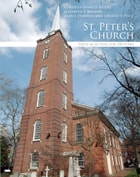
St. Peter's Church
Faith in Action for 250 YearsCornelia Frances Biddle
Temple University Press, 2011
Celebrating 250 years, St. Peter's Episcopal Church in the Society Hill neighborhood of Philadelphia, has witnessed a rich mixture of people and events that reflect critical periods of American political and cultural history. George Washington worshiped here as did abolitionists and slave holders, Whigs, Democrats, and Republicans. St. Peter's was a point of first contact for thousands of immigrants, and the church opened schools for immigrants to help them to acculturate to life in Philadelphia.
Opening a window onto colonial Philadelphia and the nation's histories, St. Peter's Church is a glorious testament to this National Historic Landmark. In addition to the stories and hundreds of black-and-white and color photographs, this handsome volume provides a history of the grounds, the churchyard, and the church itself-a classic example of eighteenth-century Philadelphia design that later incorporated the work of renown architects William Strickland, Thomas U. Walter, and Frank Furness.
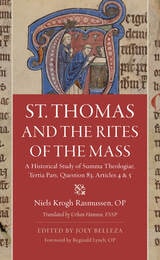
St. Thomas and the Rites of Man
A Historical Study of the Summa Theologiae, Tertia Pars, Question 83, Articles 4 & 5Niels Krogh Rasmussen
Catholic University of America Press, 2026
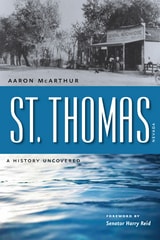
St. Thomas, Nevada
A History UncoveredAaron McArthur
University of Nevada Press, 2013
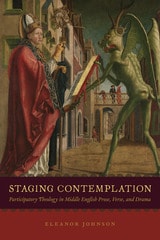
Staging Contemplation
Participatory Theology in Middle English Prose, Verse, and DramaEleanor Johnson
University of Chicago Press, 2018
Yet, in this groundbreaking new book, Eleanor Johnson argues instead for the pervasiveness and accessibility of contemplative works to medieval audiences. By drawing together ostensibly diverse literary genres—devotional prose, allegorical poetry, cycle dramas, and morality plays—Staging Contemplation paints late Middle English contemplative writing as a broad genre that operated collectively and experientially as much as through radical individual disengagement from the world. Johnson further argues that the contemplative genre played a crucial role in the exploration of the English vernacular as a literary and theological language in the fifteenth century, tracing how these works engaged modes of disfluency—from strained syntax and aberrant grammar, to puns, slang, code-switching, and laughter—to explore the limits, norms, and potential of English as a devotional language. Full of virtuoso close readings, this book demonstrates a sustained interest in how poetic language can foster a participatory experience of likeness to God among lay and devotional audiences alike.
Stained Glass Ceilings
How Evangelicals Do Gender and Practice PowerLisa Weaver Swartz
Rutgers University Press, 2023
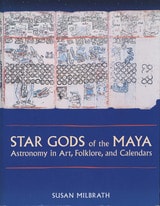
Star Gods of the Maya
Astronomy in Art, Folklore, and CalendarsBy Susan Milbrath
University of Texas Press, 2000
Observations of the sun, moon, planets, and stars played a central role in ancient Maya lifeways, as they do today among contemporary Maya who maintain the traditional ways. This pathfinding book reconstructs ancient Maya astronomy and cosmology through the astronomical information encoded in Precolumbian Maya art and confirmed by the current practices of living Maya peoples.
Susan Milbrath opens the book with a discussion of modern Maya beliefs about astronomy, along with essential information on naked-eye observation. She devotes subsequent chapters to Precolumbian astronomical imagery, which she traces back through time, starting from the Colonial and Postclassic eras. She delves into many aspects of the Maya astronomical images, including the major astronomical gods and their associated glyphs, astronomical almanacs in the Maya codices [painted books], and changes in the imagery of the heavens over time. This investigation yields new data and a new synthesis of information about the specific astronomical events and cycles recorded in Maya art and architecture. Indeed, it constitutes the first major study of the relationship between art and astronomy in ancient Maya culture.
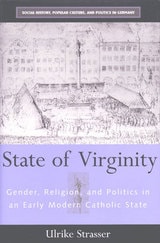
State of Virginity
Gender, Religion, and Politics in an Early Modern Catholic StateUlrike Strasser
University of Michigan Press, 2006
Winner: 2005 Book Award from the Society for the Study of Early Modern Women; Selected by the German Studies Association as one of the top five books of 2004 in early modern history
"A fresh, original study of gender roles and religious ideology in the early modern Catholic state. . . . Using a rich array of archival sources, Strasser explores ways in which an increasingly centralized Bavarian government in Munich inaugurated marriage and convent reforms and a civil religion based on the veneration of the Virgin Mary. Her carefully selected case studies show how church and state collaborated to produce a shared discourse and consistent policies proscribing extramarital sex, and excluding those without property from marriage. "
Ulrike Strasser is Associate Professor of History, Affiliate Faculty in Women's Studies, and Core Faculty in Religious Studies at the University of California, Irvine.
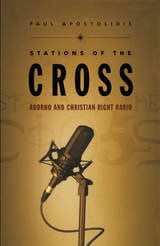
Stations of the Cross
Adorno and Christian Right RadioPaul Apostolidis
Duke University Press, 2000
Public ideology and institutional tendencies clash, the author argues, in the restructuring of the welfare state, the financing of the electoral system, and the backlash against women and minorities. These frictions are nowhere more apparent than on Christian right radio. Reinvigorating the intellectual tradition of the Frankfurt School, Apostolidis shows how ideas derived from early critical theory—in particular that of Theodor W. Adorno—can illuminate the political and social dynamics of this aspect of contemporary American culture. He uses and reworks Adorno’s theories to interpret the nationally broadcast Focus on the Family, revealing how the cultural discourse of the Christian right resonates with recent structural transformations in the American political economy. Apostolidis shows that the antidote to the Christian right’s marriage of religious and market fundamentalism lies not in a reinvocation of liberal fundamentals, but rather depends on a patient cultivation of the affinities between religion’s utopian impulses and radical, democratic challenges to the present political-economic order.
Mixing critical theory with detailed analysis, Stations of the Cross provides a needed contribution to sociopolitical studies of mass movements and will attract readers in sociology, political science, philosophy, and history.
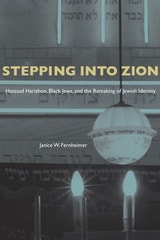
Stepping Into Zion
Hatzaad Harishon, Black Jews, and the Remaking of Jewish IdentityJanice W. Fernheimer
University of Alabama Press, 2014
Considers the question “Who is a Jew?”— a critical rhetorical issue with far-reaching consequences for Jews and non-Jews alike
Hatzaad Harishon ("The First Step") was a New York-based, multiracial Jewish organization that worked to increase recognition and legitimacy for Black Jews in the sixties and seventies. In Stepping into Zion, Janice W. Fernheimer examines the history and archives of Hatzaad Harishon to illuminate the shifting definitions and borders of Jewish identity, which have critical relevance to Jews of all traditions as well as to non-Jews.
Fernheimer focuses on a period when Jewish identity was in flux and deeply influenced by the Civil Rights and Black Power movements. In 1964, white and Black Jews formed Hatzaad Harishon to foster interaction and unity between Black and white Jewish communities. They raised the question of who or what constitutes Jewishness or Jewish identity, and in searching for an answer succeeded—both historically and rhetorically—in gaining increased recognition for Black Jews. Fernheimer traces how, despite deep disagreement over definitions, members of Hatzaad Harishon were able to create common ground in a process she terms "interruptive invention": an incremental model for rhetorical success that allows different groups to begin and continue important but difficult discussions when they share little common ground or make unequal claims to institutional and discursive power, or when the nature of common ground is precisely what is at stake. Consequently, they provide a practical way out of the seemingly incommensurable stalemate incompatible worldviews present.
Through insightful interpretations of Hatzaad Harishon's archival materials, Fernheimer chronicles the group's successes and failures within the larger rhetorical history of conflicts that emerge when cultural identities shift or expand.
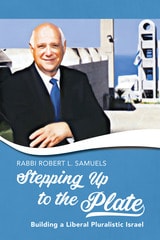
Stepping Up to the Plate
Building a Liberal Pluralistic IsraelRabbi Robert L. Samuels
Central Conference of American Rabbis, 2017
U'vamakom she'ein anashim, hishtadel l'hiyot ish…"In the place where no one stands up to do what is right, be the one who steps up to the plate."
Stepping Up to the Plate is the autobiography of Rabbi Robert L. Samuels, a visionary who fused Zionism and Progressive Judaism and who had a tremendous impact on Israel.
Steps to a New Edition of the Hebrew Bible
Ronald Hendel
SBL Press, 2016
Understand the purpose and background of the new The Hebrew Bible: A Critical Edition project
Our understanding of the textual history of the Hebrew Bible has been transformed in the wake of the discovery of the Dead Sea Scrolls. Hendel explores and refines this new knowledge and formulates a rationale for a new edition of the Hebrew Bible. The chapters situate The Hebrew Bible; A Critical Edition project in a broad historical context, from the beginnings of textual criticism in late antiquity and the Renaissance to the controversies in contemporary theory and practice. This book combines close analysis with broad synthesis, yielding new perspectives on the text of the Hebrew Bible.
Features- Theory and practice of textual criticism
- Textual history of the Hebrew Bible
- History of text-critical scholarship
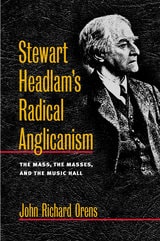
Stewart Headlam's Radical Anglicanism
The Mass, the Masses, and the Music HallJohn Richard Orens
University of Illinois Press, 2003
This book, the first significant study of Headlam since 1928, paints a rich and complex picture of this larger-than-life man of the cloth, charting the trail he blazed across the social, political, and religious landscape of late nineteenth- and early twentieth-century Britain.
Dissatisfied from an early age with his family’s Evangelical faith, Headlam became an Anglican curate, but his political views were increasingly radicalized as he befriended working-class atheists and trade union leaders. John Richard Orens details Headlam’s repeated conflicts with the establishment figures of his faith over his defense of music hall ballet performers’ right to reveal their legs, his role in the early years of the Fabian Society, his anti-puritanism, and his passionate socialism. Headlam was even instrumental in having Oscar Wilde bailed out of prison following the writer’s arrest for “homosexual offenses.”
With this intellectual biography, Orens places Headlam’s life, beliefs, and actions in the context of the period, contributing to the ongoing debate about the proper relationship between Christianity, on the one hand, and society, sexuality, and the arts, on the other.
Still Seeking the Magic Mushroom
Fungi, Pharmaceuticals, and Mysticism Without ReligionHugh B. Urban
University of Chicago Press, 2026
A sweeping cultural history of our yearning for psychedelics to free us from both modern life and traditional religion.
In 1957, Life Magazine published an article called “Seeking the Magic Mushroom” about a Mexican healing ritual centered on an obscure psychedelic: Psilocybe mushrooms. Readers raced to experiment with the drug for their own spiritual, therapeutic, and recreational purposes until a psychedelic wave swept the nation. Today, though psilocybin has been transformed from a sacred fungus into a pharmaceutical product, many people still turn to the enigmatic mushroom to encounter profound spiritual experiences without the baggage of traditional religion.
In Still Seeking the Magic Mushroom, Hugh B. Urban examines the alluring promise of mysticism without religion. With psychedelics, one need not fast, flagellate, or even worship a god to encounter the transcendent; a carefully timed ingestion of psilocybin will suffice. But, Urban argues, stripping the trip from its religion came at a cost: the erasure of Indigenous culture and the eventual commercialization and scientification of the psychedelic underground. Urban shows that psychedelic mushrooms, far from the fringe or countercultural margins, have been central players in shaping American attitudes toward religion and science over the last century. He argues that our love affair with the intoxicating fungus reveals a deep frustration with a disenchanted world, desire for meaning beyond religion, yearning for nature amid ecological crisis, faith in science to save us, and the relentless power of capitalism to turn everything into commodities.
Still, the Small Voice
Narrative, Personal Revelation, and the Mormon Folk TraditionTom Mould
Utah State University Press, 2011
Memorates—personal experience narratives of encounters with the supernatural—that recount individuals’ personal revelations, primarily through the Holy Ghost, are a pervasive aspect of the communal religious experience of Mormons, members of the Church of Jesus Christ of Latter-day Saints. In accordance with current emphases in folklore studies on narrative and belief, Tom Mould uses ethnographic research and an emic approach that honors the belief systems under study to analyze how people within Mormon communities frame and interpret their experiences with the divine through the narratives they share. In doing so, he provides a significant new ethnographic interpretation of Mormon culture and belief and also applies his findings directly to broader scholarly folklore discourse on performance, genre, personal experience narrative, belief, and oral versus written traditions.
Stimulus Pastorum
A Charge to PastorsBartholomew of the Martyrs, O.P.
St. Augustine's Press, 2022
Stoic Theology
Proof for the Existence of the Cosmic God and of the Traditional GodsP. A. Meijer
Eburon Academic Publishers, 2008
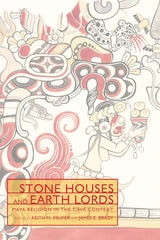
Stone Houses and Earth Lords
Maya Religion in the Cave ContextKeith M. Prufer
University Press of Colorado, 2021
Demonstrating the importance of these subterranean spaces to Maya archaeology, contributors provide interpretations of archaeological remains that yield insights into Maya ritual and cosmology. Compiling the best current scholarship in this fast-growing area of research, Stone Houses and Earth Lords is a vital reference for Mayanists, Mesoamerican specialists, and others interested in the human use of caves in the New World. Contributors include: Juan Luis Bonor, James E. Brady, Robert Burnett, Allan B. Cobb, Pierre Robert Colas, Cesar Espinosa, Sergio Garza, David M. Glassman, Christina T. Halperin, Amalia Kenward, Andrew Kindon, Patricia McAnany, Christopher Morehart, Holley Moyes, Vanessa A. Owen, Shankari Patel, Polly Peterson, Keith M. Prufer, Timothy. W. Pugh, Frank Saul, Julie Saul, Ann M. Scott, Andrea Stone, and Vera Tiesler.
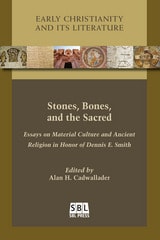
Stones, Bones, and the Sacred
Essays on Material Culture and Ancient Religion in Honor of Dennis E.Alan H. Cadwallader
SBL Press, 2016
A crucial text for any university course on the interaction of archaeology and the Bible
The world of early Christians was not a world lived in texts; it was a world saturated with material reality and concerns: what, where and when to eat or drink; how to present oneself in the space of bodily life and that of death; how to move from one place to another; what impacted status or the adjudication of legal charges. All these and more controlled so much of life in the ancient world. The Christians were not immune from the impact of these realities. Sometimes they absorbed their surrounds; sometimes they quite explicitly rejected the material practices bearing in on them; frequently they modified the practice and the rationale to create a significant Christian alternative. The collection of essays in this volume come from a range of international scholars who, for all their different interests and critical commitments, are yet united in treasuring research into the Greek and Roman worlds in which Christians sought to make their way. They offer these essays in honor of one who has made a lifetime's work in mining ancient material culture to extract nuggets of insight into early Christian dining practices: Dennis E. Smith.
Features
- Rich examples of method in the utilization of ancient material culture for biblical interpretation.
- Thirteen essays with a response from Dennis E. Smith
- Maps, diagrams, and plates
Storied Landscapes
Ethno-Religious Identity and the Canadian PrairiesFrances Swyripa
University of Manitoba Press, 2010
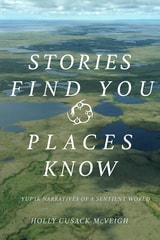
Stories Find You, Places Know
Yup'ik Narratives of a Sentient WorldHolly Cusack-McVeigh
University of Utah Press, 2017
For the Yup’ik people, places are also social actors that react to human actions and emotions. Stories tell how people learn about each other through encounters on the land, and thereby places also learn about people. Places comment on human behavior through the land's responses to specific actions. Stories variously reveal ideas about human associations and relationships between humans and nonhuman beings. Pointing to a systematic correlation between places and narrative elements that has not been previously explored, this volume makes a unique contribution to the literature on place.
Winner of the Brian McConnell Book Award from the International Society for Contemporary Legend Research.
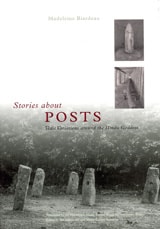
Stories about Posts
Vedic Variations around the Hindu GoddessMadeleine Biardeau
University of Chicago Press, 2004
After exploring several ethnographic facts that have escaped the notice of previous observers, Biardeau presents a variety of hunches, hypotheses, and insights building up to the provocative thesis of Stories about Posts: that the variations found in the contemporary cult of the Goddess—in both her royal and rural village aspects—reveal untraced regional histories of the Vedic sacrificial post, the yupa. Biardeau's work opens up new ways of thinking about Vedic sacrificial themes and elements as they recur in post-Vedic texts and iconographies. It also connects wayside stones in Maharashtra named after the buffalo to stones, posts, and people named after a so-called Buffalo King in Maharashtra, Andhra Pradesh, Karnataka, and Tamilnadu.
A work of magnificent scholarship and fieldwork, Stories about Posts, in ways no previous work has attempted, much less accomplished, unravels much of the mystery surrounding contemporary Hindu ritual by connecting it to the ancient Sanskrit epics. As such, it will fascinate students of Indology, religious studies, and anthropology for years to come.
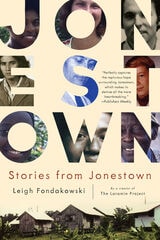
Stories from Jonestown
Leigh Fondakowski
University of Minnesota Press, 2010
The saga of Jonestown didn’t end on the day in November 1978 when more than nine hundred Americans died in a mass murder-suicide in the Guyanese jungle. While only a handful of people present at the agricultural project survived that day in Jonestown, more than eighty members of Peoples Temple, led by Jim Jones, were elsewhere in Guyana on that day, and thousands more members of the movement still lived in California. Emmy-nominated writer Leigh Fondakowski, who is best known for her work on the play and HBO film The Laramie Project, spent three years traveling the United States to interview these survivors, many of whom have never talked publicly about the tragedy. Using more than two hundred hours of interview material, Fondakowski creates intimate portraits of these survivors as they tell their unforgettable stories.
Collectively this is a record of ordinary people, stigmatized as cultists, who after the Jonestown massacre were left to deal with their grief, reassemble their lives, and try to make sense of how a movement born in a gospel of racial and social justice could have gone so horrifically wrong—taking with it the lives of their sons and daughters, husbands and wives, fathers and mothers, and brothers and sisters. As these survivors look back, we learn what led them to join the Peoples Temple movement, what life in the church was like, and how the trauma of Jonestown’s end still affects their lives decades later.
What emerges are portrayals both haunting and hopeful—of unimaginable sadness, guilt, and shame but also resilience and redemption. Weaving her own artistic journey of discovery throughout the book in a compelling historical context, Fondakowski delivers, with both empathy and clarity, one of the most gripping, moving, and humanizing accounts of Jonestown ever written.
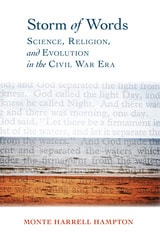
Storm of Words
Science, Religion, and Evolution in the Civil War EraMonte Harrell Hampton
University of Alabama Press, 2014
A study of the ways that southern Presbyterians in the wake of the Civil War contended with a host of cultural and theological questions
Southern Presbyterian theologians enjoyed a prominent position in antebellum southern culture. Respected for both their erudition and elite constituency, these theologians identified the southern society as representing a divine, Biblically ordained order. Beginning in the 1840s, however, this facile identification became more difficult to maintain, colliding first with antislavery polemics, then with Confederate defeat and reconstruction, and later with women’s rights, philosophical empiricism, literary criticisms of the Bible, and that most salient symbol of modernity, natural science.
As Monte Harrell Hampton shows in Storm of Words, modern science seemed most explicitly to express the rationalistic spirit of the age and threaten the Protestant conviction that science was the faithful “handmaid” of theology. Southern Presbyterians disposed of some of these threats with ease. Contemporary geology, however, posed thornier problems. Ambivalence over how to respond to geology led to the establishment in 1859 of the Perkins Professorship of Natural Science in Connexion with Revealed Religion at the seminary in Columbia, South Carolina. Installing scientist-theologian James Woodrow in this position, southern Presbyterians expected him to defend their positions.
Within twenty-five years, however, their anointed expert held that evolution did not contradict scripture. Indeed, he declared that it was in fact God’s method of creating. The resulting debate was the first extended evolution controversy in American history. It drove a wedge between those tolerant of new exegetical and scientific developments and the majority who opposed such openness. Hampton argues that Woodrow believed he was shoring up the alliance between science and scripture—that a circumscribed form of evolution did no violence to scriptural infallibility. The traditionalists’ view, however, remained interwoven with their identity as defenders of the Lost Cause and guardians of southern culture.
The ensuing debate triggered Woodrow’s dismissal. It also capped a modernity crisis experienced by an influential group of southern intellectuals who were grappling with the nature of knowledge, both scientific and religious, and its relationship to culture—a culture attempting to define itself in the shadow of the Civil War and Reconstruction.
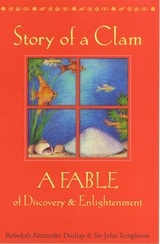
Story Of A Clam
Visionary FictionSir John Templeton
Templeton Press, 2001
Story of a Clam is a special, magical tale of an egotistical clam who thinks he and his community are the center of the universe. It offers us the artistry of the written word, creating an adventure in evolving consciousness. In an exciting series of events, the clam becomes aware that "there is more to life than you presently know and experience."
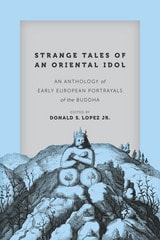
Strange Tales of an Oriental Idol
An Anthology of Early European Portrayals of the BuddhaEdited by Donald S. Lopez Jr.
University of Chicago Press, 2016
Featuring writings by soldiers, adventurers, merchants, missionaries, theologians, and colonial officers, this volume contains a wide range of portraits of the Buddha. The descriptions are rarely flattering, as all manner of reports—some accurate, some inaccurate, and some garbled—came to circulate among European savants and eccentrics, many of whom were famous in their day but are long forgotten in ours. Taken together, these accounts present a fascinating picture, not only of the Buddha as he was understood and misunderstood for centuries, but also of his portrayers.
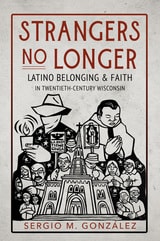
Strangers No Longer
Latino Belonging and Faith in Twentieth-Century WisconsinSergio M. González
University of Illinois Press, 2024
Hospitality practices grounded in religious belief have long exercised a profound influence on Wisconsin’s Latino communities. Sergio M. González examines the power relations at work behind the types of hospitality--welcoming and otherwise--practiced on newcomers in both Milwaukee and rural areas of the Badger State. González’s analysis addresses central issues like the foundational role played by religion and sacred spaces in shaping experiences and facilitating collaboration among disparate Latino groups and across ethnic lines; the connections between sacred spaces and the moral justification for social justice movements; and the ways sacred spaces evolved into places for mitigating prejudice and social alienation, providing sanctuary from nativism and repression, and fostering local and transnational community building.
Perceptive and original, Strangers No Longer reframes the history of Latinos in Wisconsin by revealing religion’s central role in the settlement experience of immigrants, migrants, and refugees.
Street Saints
Renewing American CitiesBarbara J. Elliott
Templeton Press, 2006
Based on eight years of hands-on experience and more than 300 interviews, Street Saints is both a book of motivational stories about unsung heroes and a sociological study of the "faith factor," documenting faith-based programs that are treating social maladies in America. This book takes readers on a tour of communities and institutions in America where faith-based initiatives are making a difference. It offers inspiration, role models, and guidelines for people who would like to give back to their own communities.
Street Scriptures
Between God and Hip-HopAlejandro Nava
University of Chicago Press, 2022
The world of hip-hop is saturated with religion, but rarely is that element given serious consideration. In Street Scriptures, Alejandro Nava focuses our attention on this aspect of the music and culture in a fresh way, combining his profound love of hip-hop, his passion for racial and social justice, and his deep theological knowledge. Street Scriptures offers a refreshingly earnest and beautifully written journey through hip-hop’s deep entanglement with the sacred.
Nava reveals a largely unheard religious heartbeat in hip-hop, exploring crosscurrents of the sacred and profane in rap, reggaeton, and Latinx hip-hop today. Ranging from Kendrick Lamar, Chance the Rapper, Lauryn Hill, Cardi B, and Bad Bunny to St. Augustine and William James, Nava examines the ethical-political, mystical-prophetic, and theological qualities in hip-hop, probing the pure sonic and aesthetic signatures of music, while also diving deep into the voices that invoke the spirit of protest. The result is nothing short of a new liberation theology for our time, what Nava calls a “street theology.”
Streets of Glory
Church and Community in a Black Urban NeighborhoodOmar M. McRoberts
University of Chicago Press, 2003
McRoberts finds, for example, that most of the churches in Four Corners are attended and run by people who do not live in the neighborhood but who worship there because of the low overhead. These churches, McRoberts argues, are communities in and of themselves, with little or no attachment to the surrounding area. This disconnect makes the churches less inclined to cooperate with neighborhood revitalization campaigns and less likely to respond to the immediate needs of neighborhood residents. Thus, the faith invested in inner-city churches as beacons of local renewal might be misplaced, and the decision to count on them to administer welfare definitely should be revisited.
As the federal government increasingly moves toward delivering social services through faith-based organizations, Streets of Glory must be read for its trenchant revisionist view of how churches actually work in depressed urban areas.
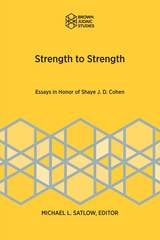
Strength to Strength
Essays in Honor of Shaye J. D. CohenMichael L. Satlow
SBL Press, 2018
Essays that engage the scholarship of Shaye J. D. Cohen
The essays in Strength to Strength honor Shaye J. D. Cohen across a range of ancient to modern topics. The essays seek to create an ongoing conversation on issues of identity, cultural interchange, and Jewish literature and history in antiquity, all areas of particular interest for Cohen. Contributors include: Moshe J. Bernstein, Daniel Boyarin, Jonathan Cohen, Yaakov Elman, Ari Finkelstein, Charlotte Elisheva Fonrobert, Steven D. Fraade, Isaiah M. Gafni, Gregg E. Gardner, William K. Gilders, Martin Goodman, Leonard Gordon, Edward L. Greenstein, Erich S. Gruen, Judith Hauptman, Jan Willem van Henten, Catherine Hezser, Tal Ilan, Richard Kalmin, Yishai Kiel, Ross S. Kraemer, Hayim Lapin, Lee I. Levine, Timothy H. Lim, Duncan E. MacRae, Ivan Marcus, Mahnaz Moazami, Rachel Neis, Saul M. Olyan, Jonathan J. Price, Jeffrey L. Rubenstein, Michael L. Satlow, Lawrence H. Schiffman, Daniel R. Schwartz, Joshua Schwartz, Karen Stern, Stanley Stowers, and Burton L. Visotzky.
Features:
- A full bibliography of Cohen’s published works
- An essay on the contributions of Cohen
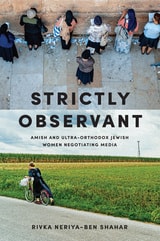
Strictly Observant
Amish and Ultra-Orthodox Jewish Women Negotiating MediaRivka Neriya-Ben Shahar
Rutgers University Press, 2024
The Amish and ultra-Orthodox Jewish communities have typically been associated with strict religious observance, a renunciation of worldly things, and an obedience of women to men. Women’s relationship to media in these communities, however, betrays a more nuanced picture of the boundaries at play and women’s roles in negotiating them.
Strictly Observant presents a compelling ethnographic study of the complex dynamic between women in both the Pennsylvanian Old Order Amish and Israeli ultra-Orthodox Jewish communities and contemporary media technologies. These women regularly establish valuable social, cultural, and religious capital through the countless decisions for use and nonuse of media that they make in their daily lives, and in ways that challenge the gender hierarchies of each community. By exhibiting a deep awareness of how media can be managed to increase their social and religious reputations, these women prompt us to reconsider our outmoded understanding of the Amish and ultra-Orthodox Jewish communities, the role that women play in these communities as agents of change, and our own relationship to media today.
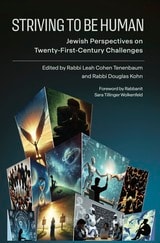
Striving to Be Human
Jewish Perspectives on Twenty-First-Century ChallengesRabbi Leah Cohen Tenenbaum and Rabbi Douglas Kohn
Central Conference of American Rabbis, 2025
In his clarion call for ethical behavior, Rabbi Hillel tells us, “In a place where there is no humanity, strive to be human.” But what exactly does it mean to be human, especially in an age of rapid transformation? Striving to Be Human: Jewish Perspectives on Twenty-First-Century Challenges confronts this question with boldness, hope, and a foundation of Jewish wisdom. The volume begins with “Challenges from Within Us,” addressing such topics as moral justice, belonging, queer theology, and good and evil. In part two, “Challenges from Beyond Us,” the authors delve into artificial intelligence, robotics, reproductive technologies, and the animal-human relationship. The result is a profound conversation about Jewish values and human dignity in our evolving landscape.
Stromateis, Books 1–3
Catholic University of America Press, 1991
Strong Religion
The Rise of Fundamentalisms around the WorldGabriel A. Almond, R. Scott Appleby, and Emmanuel Sivan
University of Chicago Press, 2003
To answer questions like these, Strong Religion draws on the results of the Fundamentalism Project, a decade-long interdisciplinary study of antimodernist, antisecular militant religious movements on five continents and within seven world religious traditions. The authors of this study analyze the various social structures, cultural contexts, and political environments in which fundamentalist movements have emerged around the world, from the Islamic Hamas and Hizbullah to the Catholic and Protestant paramilitaries of Northern Ireland, and from the Moral Majority and Christian Coalition of the United States to the Sikh radicals and Hindu nationalists of India. Offering a vividly detailed portrait of the cultures that nourish such movements, Strong Religion opens a much-needed window onto different modes of fundamentalism and identifies the kind of historical events that can trigger them.
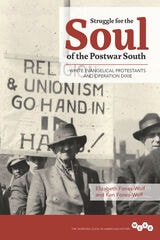
Struggle for the Soul of the Postwar South
White Evangelical Protestants and Operation DixieElizabeth Fones-Wolf and Ken Fones-Wolf
University of Illinois Press, 2015
The authors' nuanced look at working class religion reveals how laborers across the surprisingly wide evangelical spectrum interpreted their lives through their faith. Factors like conscience, community need, and lived experience led individual preachers to become union activists and mill villagers to defy the foreman and minister alike to listen to organizers. As the authors show, however, all sides enlisted belief in the battle. In the end, the inability of northern organizers to overcome the suspicion with which many evangelicals viewed modernity played a key role in Operation Dixie's failure, with repercussions for labor and liberalism that are still being felt today.
Identifying the role of the sacred in the struggle for southern economic justice, and placing class as a central aspect in southern religion, Struggle for the Soul of the Postwar South provides new understandings of how whites in the region wrestled with the options available to them during a crucial period of change and possibility.
Studia Philonica Annual XXIV, 2012
David T. Runia
SBL Press, 2012
Studia Philonica Annual XXV, 2013
David T. Runia
SBL Press, 2013
Studia Philonica Annual XXVI, 2014
David T. Runia
SBL Press, 2014
The best current research on Philo and Hellenistic Judaism
The Studia Philonica Annual is a scholarly journal devoted to the study of Hellenistic Judaism, particularly the writings and thought of the Hellenistic-Jewish writer Philo of Alexandria (circa 15 BCE to circa 50 CE).
Features:
- Articles on aspects of Hellenistic Judaism written by experts in the field
- Bibliography
- Book reviews

Studies in Josephus and the Varieties of Ancient Judaism
Louis H. Feldman Jubilee VolumeShaye J. D. Cohen
SBL Press, 2016
Now in paperback!
Former students, colleagues and friends of the eminent classicist and historian Louis H. Feldman are pleased to honor him with a Jubilee volume. While Feldman has long been considered an outstanding scholar of Josephus, his scholarly interests and research interests pertain to almost all aspects of the ancient world and Jews.
Features:
- Paperback format of an essential Brill resource
- Articles cover topics such as biblical interpretation, Judaism and Hellenism, Jews and Gentiles, history of the Mishnah and Talmud periods, and Jerusalem
- Contributors include the most prominent international scholars
Studies in Rabbinic Narratives, Volume 1
Jeffrey L. Rubenstein
SBL Press, 2021
Explore new theoretical tools and lines of analysis of rabbinic stories
Rabbinic literature includes hundreds of stories and brief narrative traditions. These narrative traditions often take the form of biographical anecdotes that recount a deed or event in the life of a rabbi. Modern scholars consider these narratives as didactic fictions—stories used to teach lessons, promote rabbinic values, and grapple with the tensions and conflicts of rabbinic life. Using methods drawn from literary and cultural theory, including feminist, structuralist, Marxist, and psychoanalytic methods, contributors analyze narratives from the Babylonian Talmud, midrash, Mishnah, and other rabbinic compilations to shed light on their meanings, functions, and narrative art. Contributors include Julia Watts Belser, Beth Berkowitz, Dov Kahane, Jane L. Kanarek, Tzvi Novick, James Adam Redfield, Jay Rovner, Jeffrey L. Rubenstein, Zvi Septimus, Dov Weiss, and Barry Scott Wimpfheimer.