Results by title
4038 books match the query 'Social aspects' and 325 start with s
Statistical Panic
Cultural Politics and Poetics of the EmotionsKathleen Woodward
Duke University Press, 2009
Referring discreetly to her own experience, Woodward examines the interpenetration of social structures and subjectivity, considering how psychological emotions are social phenomena, with feminist anger, racial shame, old-age depression, and sympathy for non-human cyborgs (including robots) as key cases in point. She discusses how emerging institutional and discursive structures engender “new” affects that in turn can help us understand our changing world if we are attentive to them—the “statistical panic” produced by the risk society, with its numerical portents of disease and mortality; the rage prompted by impenetrable and bloated bureaucracies; the brutal shame experienced by those caught in the crossfire of the media; and the conservative compassion that is not an emotion at all, only an empty political slogan.
The orbit of Statistical Panic is wide, drawing in feminist theory, critical phenomenology, and recent theories of the emotions. But at its heart are stories. As an antidote to the vacuous dramas of media culture, with its mock emotions and scattershot sensations, Woodward turns to the autobiographical narrative. Stories of illness—by Joan Didion, Yvonne Rainer, Paul Monette, and Alice Wexler, among others—receive special attention, with the inexhaustible emotion of grief framing the book as a whole.
Steady Gains and Stalled Progress
Inequality and the Black-White Test Score GapKatherine Magnuson
Russell Sage Foundation, 2008

Steel Chair to the Head
The Pleasure and Pain of Professional WrestlingNicholas Sammond, ed.
Duke University Press, 2005
The essayists include scholars in anthropology, psychology, film studies, communication studies, and sociology, one of whom used to wrestle professionally. Classic studies of wrestling by Roland Barthes, Carlos Monsiváis, Sharon Mazer, and Henry Jenkins appear alongside original essays. Whether exploring how pro wrestling inflects race, masculinity, and ideas of reality and authenticity; how female fans express their enthusiasm for male wrestlers; or how lucha libre provides insights into Mexican social and political life, Steel Chair to the Head gives due respect to pro wrestling by treating it with the same thorough attention usually reserved for more conventional forms of cultural expression.
Contributors. Roland Barthes, Douglas L. Battema, Susan Clerc, Laurence de Garis, Henry Jenkins III, Henry Jenkins IV, Heather Levi, Sharon Mazer, Carlos Monsiváis, Lucia Rahilly, Catherine Salmon, Nicholas Sammond, Phillip Serrat, Philip Sewell

Stigma Stories
Rhetoric, Lived Experience, and Chronic IllnessMolly Margaret Kessler
The Ohio State University Press, 2022
Engaging interdisciplinary conversations from the rhetoric of health and medicine, disability studies, narrative medicine, and sociology, Kessler takes an innovative look at how stigma functions on individual, interpersonal, and societal levels. In doing so, Kessler reveals how stories and lived experiences have much to teach us not only about how stigma functions but also about how it can be dismantled.

Still a Hollow Hope
State Power and the Second AmendmentAnthony D. Cooling
University of Michigan Press, 2022
The U.S. Supreme Court increasingly matters in American political life when those across the political spectrum look at the Court for relief from policies they oppose and as another venue for advancing their own policy agendas. However, the evidence is mounting, to include this book in a big way, that courts are more of a sideshow to the culture war. While court decisions, especially Supreme Court decisions, do have importance, the decisions emanating from the Court reflect social, cultural, and political change that occurred long prior to their decision ever being made.
This book tests how much political and social change has been made primarily through Gerald Rosenberg’s framework from his seminal work, The Hollow Hope: Can Courts Bring About Social Change, but it also utilizes Daniel Elazar’s Political Culture Theory to explain state level variations in political and social change. The findings indicate that while courts are not powerless institutions, reformers will not have success unless supported by the public and the elected branches, and most specifically, that preexisting state culture is a determining factor in the amount of change courts make. In short, federalism still matters.

Stolen Bases
Why American Girls Don't Play BaseballJennifer Ring
University of Illinois Press, 2013
Jennifer Ring questions the forces that try to keep girls who want to play baseball away from the game. Focusing on a history that, unfortunately, repeats itself, Ring describes the circumstances that twice stole baseball from American girls: once in the late nineteenth and early twentieth century, and again in the late twentieth century, after it was no longer legal to exclude girls who wanted to play. In the early twentieth century, Albert Goodwill Spalding--sporting goods magnate, baseball player, and promoter--declared baseball off limits for women and envisioned global baseball on a colonialist scale, using the American sport to teach men from non-white races and non-European cultures to become civilized and rational. And by the late twentieth century, baseball had become serious business for boys and men at all levels, with female players perceived as obstacles or detriments to rising male players' chances of success.
Stolen Bases also looks at the backgrounds of American softball, which was originally invented by men who wanted to keep playing baseball indoors during cold winter months but has become the consolation sport for most female players. Throughout her analysis, Ring searches for ways to rescue baseball from its arrogance and sense of exclusionary entitlement.

Stones of Contention
A History of Africa’s DiamondsTodd Cleveland
Ohio University Press, 2014
Africa supplies the majority of the world’s diamonds, yet consumers generally know little about the origins and history of these precious stones beyond sensationalized media accounts of so-called blood diamonds.
Stones of Contention explores the major developments in the remarkable history of Africa’s diamonds, from the earliest stirrings of international interest in the continent’s mineral wealth in the first millennium A.D. to the present day. In the European colonial period, the discovery of diamonds in South Africa ushered in an era of unprecedented greed during which monopolistic enterprises exploited both the mineral resources and the indigenous workforce. In the aftermath of World War II, the governments of newly independent African states, both democratic and despotic, joined industry giant De Beers and other corporations to oversee and profit from mining activity on the continent.
The book also considers the experiences of a wide array of Africans—from informal artisanal miners, company mineworkers, and indigenous authorities to armed rebels, mining executives, and premiers of mineral-rich states—and their relationships to the stones that have the power to bring both wealth and misery. With photos and maps, Stones of Contention illustrates the scope and complexity of the African diamond trade as well as its impact on individuals and societies.

Stop Saying Snip!
The Rhetoric of VasectomyJenna Vinson
Rutgers University Press, 2026
In the US, the most common contraceptive methods rely on women’s time, labor, and vulnerability to risk. Comparatively few people rely on vasectomies as a means of preventing pregnancies. Something is happening rhetorically—through meaning-making symbols and the material practices they manifest—that sustains a collective disinterest in vasectomies. Jenna Vinson draws from her feminist rhetorical study of thirty-seven television and film representations, health insurance policies, and interviews with seventeen people who have experienced vasectomy, surfacing barriers to vasectomy uptake, including problematic tropes and practices that keep vasectomy unappealing, out of mind, and inaccessible. Stop Saying Snip! also illustrates tactics and circumstances that lead people to get a vasectomy, sharing real vasectomy stories and showing that women often play an important (and until now unheeded or pathologized) role in this communication process. This book intervenes in the misogynistic cultural expectation that it is women’s responsibility to endure the pain, labor, and risks of managing fertility by identifying the rhetorics that make men’s reproductive bodies seem unnatural sites for pregnancy prevention work. Fostering a persuasive vision of vasectomy is an urgent project that contributes to the movement toward reproductive justice.
Stories Employers Tell
Race, Skill, and Hiring in AmericaPhilip Moss
Russell Sage Foundation, 2001
Stories of Capitalism
Inside the Role of Financial AnalystsStefan Leins
University of Chicago Press, 2018
Building on recent developments in the social studies of finance, Stories of Capitalism provides the first ethnography of financial analysis. Drawing on two years of fieldwork in a Swiss bank, Stefan Leins argues that financial analysts construct stories of possible economic futures, presenting them as coherent and grounded in expert research and analysis. In so doing, they establish a role for themselves—not necessarily by laying bare empirically verifiable trends but rather by presenting the market as something that makes sense and is worth investing in. Stories of Capitalism is a nuanced look at how banks continue to boost investment—even in unstable markets—and a rare insider’s look into the often opaque financial practices that shape the global economy.

Story Tech
Power, Storytelling, and Social Change AdvocacyFilippo Trevisan, Michael Vaughan, and Ariadne Vromen
University of Michigan Press, 2025
Story Tech explores the increasingly influential impact of technologies—such as databases, algorithms, and digital story banks—that are usually invisible to the public. It shows that hidden “story tech” enables political organizations to treat stories as data that can be queried for storylines and used to intervene in news and information cycles in real time. In particular, the authors review successful story-centered campaigns that helped change dominant narratives on disability rights, marriage equality, and essential workers’ rights in the United States and Australia. They compare the use of storytelling advocacy across different types of organizations including volunteer grassroots groups, large national advocacy coalitions, and trade unions, and examine how trends differ for storytellers, organizers, and their technology partners. As political stories shift to being “on demand,” they reshape power relationships in key public debates in ways that produce moments of tension as well as positive narrative change. Story Tech examines these trends and illustrates how storytelling success can—and should—be achieved in conjunction with personal dignity, privacy, and empowerment for storytellers and their communities, particularly marginalized ones.

Storytelling Globalization from the Chaco and Beyond
Mario Blaser
Duke University Press, 2010
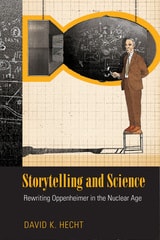
Storytelling and Science
Rewriting Oppenheimer in the Nuclear AgeDavid K. Hecht
University of Massachusetts Press, 2015
No single figure embodies Cold War science more than the renowned physicist J. Robert Oppenheimer. Although other scientists may have been more influential in establishing the institutions and policies of the nuclear age, none has loomed larger in the popular imagination than the “father of the atomic bomb.” Americans have been drawn to the story of the Manhattan Project Oppenheimer helped lead and riveted by the McCarthy-era politics that caught him in its crosshairs. Journalists and politicians, writers and artists have told Oppenheimer's story in many different ways since he first gained notoriety in 1945. In Storytelling and Science, David K. Hecht examines why they did so, and what they hoped to achieve through their stories.
From the outset, accounts of Oppenheimer's life and work were deployed for multiple ends: to trumpet or denigrate the value of science, to settle old scores or advocate new policies, to register dissent or express anxieties. In these different renditions, Oppenheimer was alternately portrayed as hero and villain, establishment figure and principled outsider, “destroyer of worlds” and humanist critic. Yet beneath the varying details of these stories, Hecht discerns important patterns in the way that audiences interpret, and often misinterpret, news about science. In the end, he argues, we find that science itself has surprisingly little to do with how its truths are assimilated by the public. Instead its meaning is shaped by narrative traditions and myths that frame how we think and write about it.
Strange Future
Pessimism and the 1992 Los Angeles RiotsMin Hyoung Song
Duke University Press, 2005
Song considers works that address the riots and often the traumatic place of the Korean American community within them: the independent documentary Sa-I-Gu (Korean for April 29, the date the riots began), Chang-rae Lee’s novel Native Speaker, the commercial film Strange Days, and the experimental drama of Anna Deavere Smith, among many others. He describes how cultural producers have used the riots to examine the narrative of national decline, manipulating language and visual elements, borrowing and refashioning familiar tropes, and, perhaps most significantly, repeatedly turning to metaphors of bodily suffering to convey a sense of an unraveling social fabric. Song argues that these aesthetic experiments offer ways of revisiting the traumas of the past in order to imagine more survivable futures.
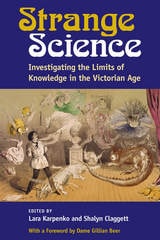
Strange Science
Investigating the Limits of Knowledge in the Victorian AgeEdited by Lara Karpenko and Shalyn Claggett
University of Michigan Press, 2017

Strange Tastes
Aesthetics and the Public in Latin American and Latinx FeminismsMonique Roelofs
Duke University Press, 2026

Strangers in the Land
Patterns of American Nativism, 1860-1925Higham, John
Rutgers University Press, 1988
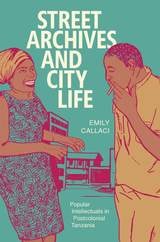
Street Archives and City Life
Popular Intellectuals in Postcolonial TanzaniaEmily Callaci
Duke University Press, 2017
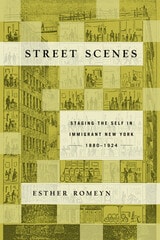
Street Scenes
Staging the Self in Immigrant New York, 1880–1924Esther Romeyn
University of Minnesota Press, 2008
Street Scenes focuses on the intersection of modern city life and stage performance. From street life and slumming to vaudeville and early cinema, to Yiddish theater and blackface comedy, Esther Romeyn discloses racial comedy, passing, and masquerade as gestures of cultural translation. In these performances she detects an obsession with the idea of the city as theater and the self as actor, which was fueled by the challenges that consumer capitalism presented to notions of an “authentic” self.
It was exactly this idea of “authentic” immigrant selfhood that was at stake in many performances on the popular stage, and Romeyn ultimately demonstrates how these diverse and potent immigrant works influenced the emergence of a modern metropolitan culture.
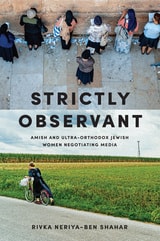
Strictly Observant
Amish and Ultra-Orthodox Jewish Women Negotiating MediaRivka Neriya-Ben Shahar
Rutgers University Press, 2024
The Amish and ultra-Orthodox Jewish communities have typically been associated with strict religious observance, a renunciation of worldly things, and an obedience of women to men. Women’s relationship to media in these communities, however, betrays a more nuanced picture of the boundaries at play and women’s roles in negotiating them.
Strictly Observant presents a compelling ethnographic study of the complex dynamic between women in both the Pennsylvanian Old Order Amish and Israeli ultra-Orthodox Jewish communities and contemporary media technologies. These women regularly establish valuable social, cultural, and religious capital through the countless decisions for use and nonuse of media that they make in their daily lives, and in ways that challenge the gender hierarchies of each community. By exhibiting a deep awareness of how media can be managed to increase their social and religious reputations, these women prompt us to reconsider our outmoded understanding of the Amish and ultra-Orthodox Jewish communities, the role that women play in these communities as agents of change, and our own relationship to media today.

Stronger Together / Kammanatut Atausigun / Iknaqataghaghluta Qerngaamta
Bering Strait Communities Respond to the COVID-19 PandemicAmy Phillips-Chan
University of Alaska Press, 2024
The featured artists narrativize works inspired by the pandemic, from walrus ivory masks and sealskin face coverings to scenes of subsistence activities and informal family portraits. Full-color illustrations enliven the text with vibrant images of local community members, activities, and artwork from those who call this northern expanse of rolling tundra and icy seas home.
Stronger Together features hopeful and redemptive behind-the-scenes perspectives of how remote Alaskan communities endured the COVID-19 pandemic and appeals to anyone looking for hopeful and redemptive stories of this time, as well as museum, public arts, and culture program administrators; student and scholars of Indigenous and Alaska Native languages and culture; the Alaska anthropology community; artists and art enthusiasts; and those with a general interest in Alaska.

Structural Intimacies
Sexual Stories in the Black AIDS EpidemicMackenzie, Sonja
Rutgers University Press, 2013
Sonja Mackenzie elegantly argues that structural vulnerability is felt—quite literally—in the blood, in the possibilities and constraints on sexual lives, and in the rhetorics of their telling. The circulation of structural intimacies in daily life and in the political domain reflects possibilities for seeking what Mackenzie calls intimate justice at the nexus of cultural, economic, political, and moral spheres. Structural Intimacies presents a compelling case: in an era of deepening medicalization of HIV/AIDS, public health must move beyond individual-level interventions to community-level health equity frames and policy changes

Structures in the Stream
Water, Science, and the Rise of the U.S. Army Corps of EngineersBy Todd Shallat
University of Texas Press, 1994
As the Mississippi and other midwestern rivers inundated town after town during the summer of 1993, concerned and angry citizens questioned whether the very technologies and structures intended to "tame" the rivers did not, in fact, increase the severity of the floods. Much of the controversy swirled around the apparent culpability of the U.S. Army Corps of Engineers, the builder of many of the flood control systems that failed.
In this book, Todd Shallat examines the turbulent first century of the dam and canal building Corps and follows the agency's rise from European antecedents through the boom years of river development after the American Civil War. Combining extensive research with a lively style, Shallat tells the story of monumental construction and engineering fiascoes, public service and public corruption, and the rise of science and the army expert as agents of the state.
More than an institutional history, Structures in the Stream offers significant insights into American society, which has alternately supported the public works projects that are a legacy of our French heritage and opposed them based on the democratic, individualist tradition inherited from Britain. It will be important reading for a wide audience in environmental, military, and scientific history, policy studies, and American cultural history.

Structures of Indifference
An Indigenous Life and Death in a Canadian CityMary Jane Logan McCallum
University of Manitoba Press, 2018

Struggle over Identity
The Official and the Alternative "Belarusianness"Nelly Bekus
Central European University Press, 2010
Rejecting the cliché about “weak identity and underdeveloped nationalism,” Bekus argues for the co-existence of two parallel concepts of Belarusianness—the official and the alternative one—which mirrors the current state of the Belarusian people more accurately and allows for a different interpretation of the interconnection between the democratization and nationalization of Belarusian society.
The book describes how the ethno-symbolic nation of the Belarusian nationalists, based on the cultural capital of the Golden Age of the Belarusian past (17th century) competes with the “nation” institutionalized and reified by the numerous civic rituals and social practices under the auspices of the actual Belarusian state.
Comparing the two concepts not only provides understanding of the logic that dominates Belarusian society’s self-description models, but also enables us to evaluate the chances of alternative Belarusianness to win this unequal struggle over identity.
Stuck in Place
Urban Neighborhoods and the End of Progress toward Racial EqualityPatrick Sharkey
University of Chicago Press, 2013
In the 1960s, many believed that the civil rights movement’s successes would foster a new era of racial equality in America. Four decades later, the degree of racial inequality has barely changed. To understand what went wrong, Patrick Sharkey argues that we have to understand what has happened to African American communities over the last several decades. In Stuck in Place, Sharkey describes how political decisions and social policies have led to severe disinvestment from black neighborhoods, persistent segregation, declining economic opportunities, and a growing link between African American communities and the criminal justice system.
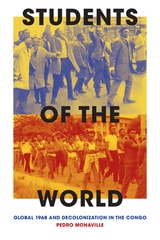
Students of the World
Global 1968 and Decolonization in the CongoPedro Monaville
Duke University Press, 2022

Studying Technological Change
A Behavioral ApproachMichael Brian Schiffer
University of Utah Press, 2011
Studying Technological Change synthesizes nearly four decades of research by Michael Brian Schiffer, a cofounder of the field of behavioral archaeology. This new book asks historical and scientific questions about the interaction of people with artifacts during all times and in all places. The book is not about the history or prehistory of technology, nor is it a catalog of methods and techniques for inferring how specific technologies were made or used. Rather, it supplies conceptual tools that can be used to help craft an explanation of any technological change in any society.
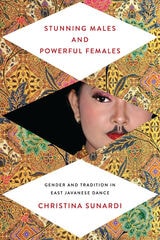
Stunning Males and Powerful Females
Gender and Tradition in East Javanese DanceChristina Sunardi
University of Illinois Press, 2015
Christina Sunardi ventures into the regency of Malang in east Java to study and perform with dancers. Through formal interviews and casual conversation, Sunardi learns about their lives and art. Her work shows how performers continually transform dance traditions to negotiate, and renegotiate, the boundaries of gender and sex--sometimes reinforcing lines of demarcation, sometimes transgressing them, and sometimes doing both simultaneously. But Sunardi's investigation moves beyond performance. It expands notions of the spiritual power associated with female bodies and feminine behavior, and the ways women, men, and waria (males who dress and live as female) access the magnetic power of femaleness.
A journey into understudied regions and ideas, Stunning Males and Powerful Females reveals how performances seemingly fixed by tradition are instead dynamic environments for cultural negotiation and change surrounding questions of sex and gender.
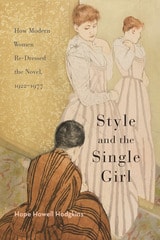
Style and the Single Girl
How Modern Women Re-Dressed the Novel, 1922–1977Hope Howell Hodgkins
The Ohio State University Press, 2016
Hodgkins delineates how in the 1920s and 1930s, popular novels by Dorothy Sayers and high-art fiction by Jean Rhys used dress to comment wittily and bitterly on gender relations. During World War II, changes in British Vogue and compromises made by the literary journal Horizon signaled the death of modernist styles, as Elizabeth Bowen’s gender-bent wartime stories show. Then demure and reserved postwar styles—Dior’s curvy New Look, the Movement’s understated literary irony—were intertwined in the fictions of Barbara Pym and Muriel Spark, who re-dressed the novel with a vengeance. Whether fashioning detective fiction, literary impressionism, or postwar comedy, these novelists used style in every sense to redefine that famous question, “What do women want?”

Subject to Death
Life and Loss in a Buddhist WorldRobert Desjarlais
University of Chicago Press, 2016
Subjects of the Sun
Solar Energy in the Shadows of Racial CapitalismMyles Lennon
Duke University Press, 2025
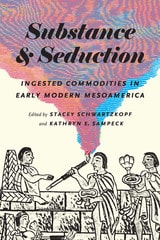
Substance and Seduction
Ingested Commodities in Early Modern MesoamericaEdited by Stacey Schwartzkopf and Kathryn E. Sampeck
University of Texas Press, 2017
Chocolate and sugar, alcohol and tobacco, peyote and hallucinogenic mushrooms—these seductive substances have been a nexus of desire for both pleasure and profit in Mesoamerica since colonial times. But how did these substances seduce? And when and how did they come to be desired and then demanded, even by those who had never encountered them before? The contributors to this volume explore these questions across a range of times, places, and peoples to discover how the individual pleasures of consumption were shaped by social, cultural, economic, and political forces.
Focusing on ingestible substances as a group, which has not been done before in the scholarly literature, the chapters in Substance and Seduction trace three key links between colonization and commodification. First, as substances that were taken into the bodies of both colonizers and colonized, these foods and drugs participated in unexpected connections among sites of production and consumption; racial and ethnic categories; and free, forced, and enslaved labor regimes. Second, as commodities developed in the long transition from mercantile to modern capitalism, each substance in some way drew its enduring power from its ability to seduce: to stimulate bodies; to alter minds; to mark class, social, and ethnic boundaries; and to generate wealth. Finally, as objects of scholarly inquiry, each substance rewards interdisciplinary approaches that balance the considerations of pleasure and profit, materiality and morality, and culture and political economy.

Suburban Dreams
Imagining and Building the Good LifeGreg Dickinson
University of Alabama Press, 2014
2016 CHOICE OUTSTANDING ACADEMIC TITLE AND JANE JACOBS URBAN COMMUNICATION BOOK AWARD FINALIST
Explores how the suburban imaginary, composed of the built environment and imaginative texts, functions as a resource for living out the “good life”
Starting with the premise that suburban films, residential neighborhoods, chain restaurants, malls, and megachurches are compelling forms (topos) that shape and materialize the everyday lives of residents and visitors, Greg Dickinson’s Suburban Dreams offers a rhetorically attuned critical analysis of contemporary American suburbs and the “good life” their residents pursue.
Dickinson’s analysis suggests that the good life is rooted in memory and locality, both of which are foundations for creating a sense of safety central to the success of suburbs. His argument is situated first in a discussion of the intersections among buildings, cities, and the good life and the challenges to these relationships wrought by the twentieth and twenty-first centuries. The argument then turns to rich, fully-embodied analyses of suburban films and a series of archetypal suburban landscapes to explore how memory, locality, and safety interact in constructing the suburban imaginary. Moving from the pastoralism of residential neighborhoods and chain restaurants like Olive Garden and Macaroni Grill, through the megachurch’s veneration of suburban malls to the mixed-use lifestyle center’s nostalgic invocation of urban downtowns, Dickinson complicates traditional understandings of the ways suburbs situate residents and visitors in time and place.
The analysis suggests that the suburban good life is devoted to family. Framed by the discourses of consumer culture, the suburbs often privilege walls and roots to an expansive vision of worldliness. At the same time, developments such as farmers markets suggest a continued striving by suburbanites to form relationships in a richer, more organic fashion.
Dickinson’s work eschews casually dismissive attitudes toward the suburbs and the pursuit of the good life. Rather, he succeeds in showing how by identifying the positive rhetorical resources the suburbs supply, it is in fact possible to engage with the suburbs intentionally, thoughtfully, and rigorously. Beyond an analysis of the suburban imaginary, Suburban Dreams demonstrates how a critical engagement with everyday places can enrich daily life. The book provides much of interest to students and scholars of rhetoric, communication studies, public memory, American studies, architecture, and urban planning.
Subversive Archaism
Troubling Traditionalists and the Politics of National HeritageMichael Herzfeld
Duke University Press, 2021
Subversive Sounds
Race and the Birth of Jazz in New OrleansCharles B. Hersch
University of Chicago Press, 2008
Subversive Sounds probes New Orleans’s history, uncovering a web of racial interconnections and animosities that was instrumental to the creation of a vital American art form—jazz. Drawing on oral histories, police reports, newspaper accounts, and vintage recordings, Charles Hersch brings to vivid life the neighborhoods and nightspots where jazz was born.
This volume shows how musicians such as Jelly Roll Morton, Nick La Rocca, and Louis Armstrong negotiated New Orleans’s complex racial rules to pursue their craft and how, in order to widen their audiences, they became fluent in a variety of musical traditions from diverse ethnic sources. These encounters with other music and races subverted their own racial identities and changed the way they played—a musical miscegenation that, in the shadow of Jim Crow, undermined the pursuit of racial purity and indelibly transformed American culture.
“More than timely . . . Hersch orchestrates voices of musicians on both sides of the racial divide in underscoring how porous the music made the boundaries of race and class.”—New Orleans Times-Picayune
Subversives and Mavericks in the Muslim Mediterranean
A Subaltern HistoryEdited by Odile Moreau and Stuart Schaar; preface by Edmund Burke III
University of Texas Press, 2016
Subaltern studies, the study of non-elite or underrepresented people, have revolutionized the writing of Middle Eastern history. Subversives and Mavericks in the Muslim Mediterranean represents the next step in this transformation. The book explores the lives of eleven nonconformists who became agents of political and social change, actively organizing new forms of resistance—against either colonial European regimes or the traditional societies in which they lived—that disrupted the status quo, in some cases, with dramatic results. These case studies highlight cross-border connections in the Mediterranean world, exploring how these channels were navigated.
Chapters in the book examine the lives of subversives and mavericks, such as Tawhida ben Shaykh, the first Arab woman to receive a medical degree; Mokhtar al-Ayari, a radical Tunisian labor leader; Nazli Hanem, Kmar Bayya, and Khiriya bin Ayyad, three aristocractic women who resisted the patriarchal structures of their societies by organizing and participating in intellectual salons for men and women and advocating social reform; Qaid Najim al-Akhsassi, an ex-slave and military officer, who fought against French and Spanish colonial expansion; and Boubeker al-Ghandjawi, a nearly illiterate trader who succeeded, though his diverse connections, in establishing important relations between the Moroccan sultan and the representative of the British government. Although based on individual and local perspectives, Subversives and Mavericks in the Muslim Mediterranean reveals new and unrecognized trans-local connections across the Muslim world, illuminating our understanding of these societies beyond narrow elite circles.
Subway City
Riding the Trains, Reading New YorkBrooks, Michael
Rutgers University Press, 1997
None of the world's great cities is as closely identified with its subway as New York. Its trains provide much more than just rapid transit. They give New Yorkers a powerful symbol of their metropolis, one that they use to express both their hopes and their fears for the urban future.
Subway City explores New York's transit system as both fact and metaphor. Brooks traces the development of the subway from its inception as the newest and most efficient public transportation system to its decline as an overcrowded and dangerous part of city life. The crowded cars gave Harold Lloyd material for comedy, fueled William Randolph Hearst's crusade against the Traction Trust, and convinced Lewis Mumford that the subway was a futile effort to solve the city's problems. Brooks explores films which have dramatized the dangers lurking below ground, and examines the infamous Bernhard Goetz shooting that made the subway a symbol of urban decay. More hopefully, he describes the Metropolitan Transportation Authority's station improvements and ambitious programs for Music Underground, Poetry in Transit, and Arts-in-Transit, as keys to the city's renewal.

Successful Aging as a Contemporary Obsession
Global PerspectivesLamb, Sarah
Rutgers University Press, 2017
The contributors to Successful Aging as a Contemporary Obsession explore how the successful aging movement is playing out across five continents. Their chapters investigate a variety of people, including Catholic nuns in the United States; Hindu ashram dwellers; older American women seeking plastic surgery; aging African-American lesbians and gay men in the District of Columbia; Chicago home health care workers and their aging clients; Mexican men foregoing Viagra; dementia and Alzheimer sufferers in the United States and Brazil; and aging policies in Denmark, Poland, India, China, Japan, and Uganda. This book offers a fresh look at a major cultural and public health movement of our time, questioning what has become for many a taken-for-granted goal—aging in a way that almost denies aging itself.

Sudden Death and the Myth of CPR
Stefan Timmermans, foreword by Bern Shen
Temple University Press, 1999
Anyone who has ever taken a CPR course has wondered, "What would happen if I actually had to use CPR?" In Western societies, the lifesaving power of resuscitation has the status of a revered cultural myth. It promises life in the face of sudden death, but the reality is that lives are rarely saved. Medical researchers estimate the survival rate for out-of-hospital CPR to be between 1 and 3 percent. Sudden Death and the Myth of CPR explores the history of this medical innovation and the promotion of its effectiveness.
The overuse of resuscitation, Timmermans explains, defines people's experience with sudden death, something he learned firsthand by following the practice of lifesaving from street corner to emergency room. He argues that very few people are successfully resuscitated without brain damage despite the promotion of CPR's effectiveness through powerful media images. In vivid accounts of the day-to-day practices of cardiopulmonary resuscitation in one of the only studies o f sudden death, Timmermans records the astonishingly frank comments of emergency personnel. Doctors, nurses, social workers, and paramedics express emotions from cynicism about going through the futile motions to genuine concern for victims' family members.
If a person who was supposed to keep on living dies at the end of a resuscitative attempt, how socially meaningful is the dying? Timmermans asks tough questions and addresses the controversial ethical issues about the appropriateness of interfering with life and death. He suggests policy reform and the restoration of dignity to sudden death.

Suds Series
Baseball, Beer Wars, and the Summer of '82J. Daniel
University of Missouri Press, 2023
Even nominal baseball fans will enjoy reading about legendary players, teams, and personalities that emerged in the 1982 season: the year Ricky Henderson stole 130 bases; Reggie Jackson led the league in home runs; and Cal Ripken Jr. began his remarkable playing streak. Readers will also enjoy the cultural references, including the Pac-Man craze, a chart-topping album by Rush, and the “Light Beer Wars” waged by Anheuser-Busch and the Miller Brewing Company through a series of humorous TV commercials featuring well-loved professional sports figures.
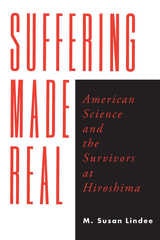
Suffering Made Real
American Science and the Survivors at HiroshimaM. Susan Lindee
University of Chicago Press, 1994
Suffering Made Real is the first comprehensive history of the ABCC's research on how radiation affected the survivors of the atomic bomb. Arguing that Cold War politics and cultural values fundamentally shaped the work of the ABCC, M. Susan Lindee tells the compelling story of a project that raised disturbing questions about the ethical implications of using human subjects in scientific research.
How did the politics of the emerging Cold War affect the scientists' biomedical research and findings? How did the ABCC document and publicly present the effects of radiation? Why did the ABCC refuse to provide medical treatment to the survivors? Through a detailed examination of ABCC policies, archival materials, the minutes of committee meetings, newspaper accounts, and interviews with ABCC scientists, Lindee explores how political and cultural interests were reflected in the day-to-day operations of this controversial research program.
Set against a period of conflicting views of nuclear weapons and nuclear power, Suffering Made Real follows the course of a politically charged research program and reveals in detail how politics and cultural values can shape the conduct, results, and uses of science.

Summa Technologiae
Stanislaw Lem
University of Minnesota Press, 2014
The Polish writer Stanislaw Lem is best known to English-speaking readers as the author of the 1961 science fiction novel Solaris, adapted into a meditative film by Andrei Tarkovsky in 1972 and remade in 2002 by Steven Soderbergh. Throughout his writings, comprising dozens of science fiction novels and short stories, Lem offered deeply philosophical and bitingly satirical reflections on the limitations of both science and humanity.
In Summa Technologiae—his major work of nonfiction, first published in 1964 and now available in English for the first time—Lem produced an engaging and caustically logical philosophical treatise about human and nonhuman life in its past, present, and future forms. After five decades Summa Technologiae has lost none of its intellectual or critical significance. Indeed, many of Lem’s conjectures about future technologies have now come true: from artificial intelligence, bionics, and nanotechnology to the dangers of information overload, the concept underlying Internet search engines, and the idea of virtual reality. More important for its continued relevance, however, is Lem’s rigorous investigation into the parallel development of biological and technical evolution and his conclusion that technology will outlive humanity.
Preceding Richard Dawkins’s understanding of evolution as a blind watchmaker by more than two decades, Lem posits evolution as opportunistic, shortsighted, extravagant, and illogical. Strikingly original and still timely, Summa Technologiae resonates with a wide range of contemporary debates about information and new media, the life sciences, and the emerging relationship between technology and humanity.
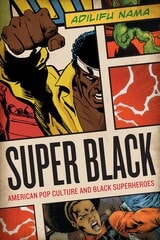
Super Black
American Pop Culture and Black SuperheroesBy Adilifu Nama
University of Texas Press, 2011
Winner, American Book Award, Before Columbus Foundation, 2012
Super Black places the appearance of black superheroes alongside broad and sweeping cultural trends in American politics and pop culture, which reveals how black superheroes are not disposable pop products, but rather a fascinating racial phenomenon through which futuristic expressions and fantastic visions of black racial identity and symbolic political meaning are presented. Adilifu Nama sees the value—and finds new avenues for exploring racial identity—in black superheroes who are often dismissed as sidekicks, imitators of established white heroes, or are accused of having no role outside of blaxploitation film contexts.
Nama examines seminal black comic book superheroes such as Black Panther, Black Lightning, Storm, Luke Cage, Blade, the Falcon, Nubia, and others, some of whom also appear on the small and large screens, as well as how the imaginary black superhero has come to life in the image of President Barack Obama. Super Black explores how black superheroes are a powerful source of racial meaning, narrative, and imagination in American society that express a myriad of racial assumptions, political perspectives, and fantastic (re)imaginings of black identity. The book also demonstrates how these figures overtly represent or implicitly signify social discourse and accepted wisdom concerning notions of racial reciprocity, equality, forgiveness, and ultimately, racial justice.
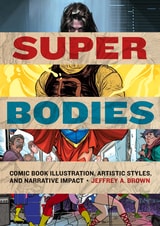
Super Bodies
Comic Book Illustration, Artistic Styles, and Narrative ImpactJeffrey A. Brown
University of Texas Press, 2023
Finalist — San Diego Comic-Con International 2024 Eisner Award in Best Academic/Scholarly Work
2024 MPCA/ACA Best Book for Use in the Classroom, Midwest Popular Culture Association / Midwest American Culture Association (MPCA/ACA)
An examination of the art in superhero comics and how style influences comic narratives.
For many, the idea of comic book art implies simplistic four-color renderings of stiff characters slugging it out. In fact, modern superhero comic books showcase a range of complex artistic styles, with diverse connotations. Leading comics scholar Jeffrey A. Brown assesses six distinct approaches to superhero illustration—idealism, realism, cute, retro, grotesque, and noir—examining how each visually represents the superhero as a symbolic construct freighted with meaning.
Whereas comic book studies tend to focus on text and narrative, Super Bodies gives overdue credit to the artwork, which is not only a principal source of the appeal of comic books but also central to the values these works embody. Brown argues that superheroes are to be taken not as representations of people but as iconic types, and the art conveys this. Even the most realistic comic illustrations are designed to suggest not persons but ideas—ideas about bodies and societies. Thus the appearance of superheroes both directly and indirectly influences the story being told as well as the opinions readers form concerning justice, authority, gender, puberty, sexuality, ethnicity, violence, and other concepts central to political and cultural life.

SuperVision
An Introduction to the Surveillance SocietyJohn Gilliom and Torin Monahan
University of Chicago Press, 2012
We live in a surveillance society. Anyone who uses a credit card, cell phone, or even search engines to navigate the Web is being monitored and assessed—and often in ways that are imperceptible to us. The first general introduction to the growing field of surveillance studies, SuperVision uses examples drawn from everyday technologies to show how surveillance is used, who is using it, and how it affects our world.
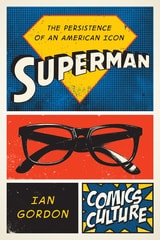
Superman
The Persistence of an American IconGordon, Ian
Rutgers University Press, 2017
Superman: Persistence of an American Icon examines the many iterations of the character in comic books, comic strips, radio series, movie serials, feature films, television shows, animation, toys, and collectibles over the past eight decades. Demonstrating how Superman’s iconic popularity cannot be attributed to any single creator or text, comics expert Ian Gordon embarks on a deeper consideration of cultural mythmaking as a collective and dynamic process. He also outlines the often contentious relationships between the various parties who have contributed to the Superman mythos, including corporate executives, comics writers, artists, nostalgic commentators, and collectors.
Armed with an encyclopedic knowledge of Superman’s appearances in comics and other media, Gordon also digs into comics archives to reveal the prominent role that fans have played in remembering, interpreting, and reimagining Superman’s iconography. Gordon considers how comics, film, and TV producers have taken advantage of fan engagement and nostalgia when selling Superman products. Investigating a character who is equally an icon of American culture, fan culture, and consumer culture, Superman thus offers a provocative analysis of mythmaking in the modern era.
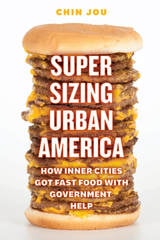
Supersizing Urban America
How Inner Cities Got Fast Food with Government HelpChin Jou
University of Chicago Press, 2017
What doesn’t get mentioned in all this? The fact that the federal government helped create the obesity crisis in the first place—especially where it is strikingly acute, among urban African-American communities. Supersizing Urban America reveals the little-known story of how the U.S. government got into the business of encouraging fast food in inner cities, with unforeseen consequences we are only beginning to understand. Chin Jou begins her story in the late 1960s, when predominantly African-American neighborhoods went from having no fast food chain restaurants to being littered with them. She uncovers the federal policies that have helped to subsidize that expansion, including loan guarantees to fast food franchisees, programs intended to promote minority entrepreneurship, and urban revitalization initiatives. During this time, fast food companies also began to relentlessly market to urban African-American consumers. An unintended consequence of these developments was that low-income minority communities were disproportionately affected by the obesity epidemic.
In the first book about the U.S. government’s problematic role in promoting fast food in inner-city America, Jou tells a riveting story of the food industry, obesity, and race relations in America that is essential to understanding health and obesity in contemporary urban America.

Suq
Geertz on the MarketClifford Geertz
HAU, 2022
Originally published in 1979, Clifford Geertz’s essay on the Moroccan bazaar is a classic ethnographic account of the interplay of economic, social, and religious lives in the bustle of transaction. Drawing on years of fieldwork in the Middle Atlas town of Sefrou, Geertz explores how actors from diverse backgrounds assess the worth and meaning of other people’s wares, words, and ways of doing business. He shows how the search for market information, so central to the theorization of markets by economists, is here based on careful appraisals of social relations, embedded in understandings of the broader institutional environment of the market town and its hinterlands. With a richness of insights procured for generations of readers, Geertz’s essay on the sūq is a model of and for the craft of ethnographic theory. Long out of print, it is republished here in a stand-alone edition introduced by Lawrence Rosen.

Surfer Girls in the New World Order
Krista Comer
Duke University Press, 2010