Results by title
4038 books match the query 'Social aspects' and 325 start with s

Surgery Junkies
Wellness and Pathology in Cosmetic CulturePitts-Taylor, Victoria
Rutgers University Press, 2007
Surplus
The Politics of Production and the Strategies of Everyday LifeChristopher T. Morehart
University Press of Colorado, 2015
The concept of surplus captures the politics of production and also conveys the active material means by which people develop the strategies to navigate everyday life. Surplus: The Politics of Production and the Strategies of Everyday Life examines how surpluses affected ancient economies, governments, and households in civilizations across Mesoamerica, the Southwest United States, the Andes, Northern Europe, West Africa, Mesopotamia, and eastern Asia.
A hallmark of archaeological research on sociopolitical complexity, surplus is central to theories of political inequality and institutional finance. This book investigates surplus as a macro-scalar process on which states or other complex political formations depend and considers how past people—differentially positioned based on age, class, gender, ethnicity, role, and goal—produced, modified, and mobilized their social and physical worlds.
Placing the concept of surplus at the forefront of archaeological discussions on production, consumption, power, strategy, and change, this volume reaches beyond conventional ways of thinking about top-down or bottom-up models and offers a comparative framework to examine surplus, generating new questions and methodologies to elucidate the social and political economies of the past.
Contributors include Douglas J. Bolender, James A. Brown, Cathy L. Costin, Kristin De Lucia, Timothy Earle, John E. Kelly, Heather M. L. Miller, Christopher R. Moore, Christopher T. Morehart, Neil L. Norman, Ann B. Stahl, Victor D. Thompson, T. L. Thurston, and E. Christian Wells.

Surrender
Feminist Rhetoric and Ethics in Love and IllnessJessica Restaino
Southern Illinois University Press, 2019
One of Library Journal's Top 20 Best-Selling Language Titles of 2019
In an ethnographic study spanning the last years of research collaborator and friend Susan Lundy Maute’s life with terminal breast cancer, author Jessica Restaino argues the interpretative challenges posed by research and writing amid illness and intimacy demand a methodological break from accepted genres and established practices of knowledge making. Restaino searches their experiences—recorded in interviews, informal writings, and correspondence—to discover a rhetoric of love and illness. She encourages a synthesis of methods and the acceptance of a reversal of roles—researcher and researched, writer and written-about—and emphasizes the relevancy of methodological diversity, the necessity of the personal, and the analytical richness of unpredictability and risk in being who we are in our scholarship at any given moment.
Bringing together critical analysis, qualitative-style research methods, close reading, Surrender: Feminist Rhetoric and Ethics inLove and Illness resists traditional ideas about academic writing and invites others to pursue collaborations that subvert accepted approaches to representation, textual production, and subjectivity. Restaino demonstrates a way of writing—the rendering of the academic text itself—that suggests how we do our work has resonance for what we produce. She offers framing questions for use by others interested in doing similar kinds of scholarship that may frighten, overwhelm, or confound. This book deepens our understanding of subjectivity and the gains made by feminist resistance to conventional concepts of objectivity in research collaborations.
Surrogate Humanity
Race, Robots, and the Politics of Technological FuturesNeda Atanasoski and Kalindi Vora
Duke University Press, 2019
Surveillance in the Time of Insecurity
Monahan, Torin
Rutgers University Press, 2010
Surveillance in the Time of Insecurity fuses advanced theoretical accounts of state power and neoliberalism with original research from the social settings in which insecurity dynamics play out in the new century. Torin Monahan explores the counterterrorism-themed show 24, Rapture fiction, traffic control centers, security conferences, public housing, and gated communities, and examines how each manifests complex relationships of inequality, insecurity, and surveillance. Alleviating insecurity requires that we confront its mythic dimensions, the politics inherent in new configurations of security provision, and the structural obstacles to achieving equality in societies.

Surveillance, Transparency, and Democracy
Public Administration in the Information AgeAkhlaque Haque
University of Alabama Press, 2015
Exploring the delicate balance between technological innovation, government transparency, and democratic freedom.
In this well-informed yet anxious age, public administrators have constructed vast cisterns that collect and interpret a meteoric shower of facts. Akhlaque Haque demonstrates that this pervasive use and increasing dependence on information technology (IT) enables sophisticated and well-intentioned public services that nevertheless risk deforming public policy decision-making and sees a contradiction inherent in a public that seeks services that require a level of data collection that in turn triggers fears of a tyrannical police state.
The author posits that IT’s potential as a tool for human development depends on how civil servants and citizens actively engage in identifying desired outcomes, map IT solutions to those outcomes, and routinize the applications of those solutions. This leads to his call for the development of entrepreneurs who generate innovative solutions to critical human needs and problems. In his powerful summary, he recaps possible answers to the question: What is the best way a public institution can apply technology to improving the human condition?
Engrossing, challenging, and timely, Surveillance, Transparency, and Democracy is essential reading for both policy makers as well as the great majority of readers and citizens engaged in contemporary arguments about the role of government, public health and security, individual privacy, data collection, and surveillance.
Survival City
Adventures among the Ruins of Atomic AmericaTom Vanderbilt
University of Chicago Press, 2002
On the road to Survival City, Tom Vanderbilt maps the visible and invisible legacies of the cold war, exhuming the blueprints for the apocalypse we once envisioned and chronicling a time when we all lived at ground zero. In this road trip among ruined missile silos, atomic storage bunkers, and secret test sites, a lost battleground emerges amid the architecture of the 1950s, accompanied by Walter Cotten’s stunning photographs. Survival City looks deep into the national soul, unearthing the dreams and fears that drove us during the latter half of the twentieth century.
“A crucial and dazzling book, masterful, and for me at least, intoxicating.”—Dave Eggers
“A genuinely engaging book, perhaps because [Vanderbilt] is skillful at conveying his own sense of engagement to the reader.”—Los Angeles Times
“A retracing of Dr. Strangelove as ordinary life.”—Greil Marcus, Bookforum

Surviving Alex
A Mother’s Story of Love, Loss, and AddictionPatricia A. Roos
Rutgers University Press, 2024
Weaving together a personal narrative and a sociological perspective, Surviving Alex movingly describes how even children from “good families” fall prey to addiction, and recounts the hellish toll it takes on families. Drawing from interviews with Alex’s friends, family members, therapists, teachers, and police officers—as well as files from his stays in hospitals, rehab facilities, and jails—Roos paints a compelling portrait of a young man whose life veered between happiness, anxiety, success, and despair. And as she explores how a punitive system failed her son, she calls for a community of action that would improve care for substance users and reduce addiction, realigning public health policy to address the overdose crisis.

Surviving Climate Change
The Struggle to Avert Global CatastropheEdited by David Cromwell and Mark Levene
Pluto Press, 2007
Governments and business keep reassuring the public they are going to fix the problem. This book brings together some leading activists who disagree. They expose the inertia, denial, deception -- even threats to our civil liberties -- which comprise mainstream responses from civil and military policy makers, and from opinion formers in the media, corporations and academia.
An epochal change is called for in the way we all engage with the climate crisis. Key to that change is Aubrey Meyer's proposed Contraction and Convergence framework for limiting global carbon emissions. This book, which also includes contributions by Mayer Hillman and George Marshall, is a powerful and vital guide to how mass mobilisation can avert the looming catastrophe.
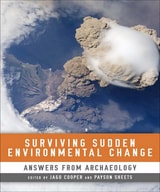
Surviving Sudden Environmental Change
Answers From ArchaeologyJago Cooper
University Press of Colorado, 2012

Surviving the ICE Age
Children of Immigrants in New YorkJoanna Dreby
Russell Sage Foundation, 2025
Dreby shows that a restrictive approach to immigration creates problems over time and across generations. These issues occur regardless of one’s citizenship status and go beyond deportations. Despite having pride in their heritage, her interviewees did not talk much about immigration. She refers to this unwillingness—and at times, inability—to speak about immigration as silencing. Silencing in a community or family is often intended to protect children, but this can leave them with little information about their backgrounds and status, leading to fear and anxiety instead. Self-silencing often resulted from traumatic experiences tied to enforcement episodes, which sometimes took the form of memory loss or emotional withholding. Dreby finds that experiences with the immigration system that disrupted relationships in a child’s household arising from family separations, moves, or changing roles in the family had especially long-term effects, causing, at times, ongoing mental health issues. Even the risk of immigration involvement left some young adults feeling vulnerable and undermined their sense of safety and security as U.S. citizens.
Dreby also highlights stories that offer hope. Young adults developed strategies to persevere, and children who grew up in communities and families that openly talked about migration felt empowered and fared much better, especially when they had access to resources, such as adequate food and shelter, mental health services, and community support. Dreby calls for policies and practices to mitigate the harms of restrictive migratory control on children’s wellbeing, such avoiding the arrest of parents in front of children and ensuring that U.S. citizen children’s interests are considered in immigration court without their direct involvement.
Surviving the ICE Age details the generational harms caused by U.S. immigration policy and offers suggestions for a better way forward.

Suspicion
Vaccines, Hesitancy, and the Affective Politics of Protection in BarbadosNicole Charles
Duke University Press, 2021
Duke University Press Scholars of Color First Book Award recipient
Sustainability for the Forgotten
Gary E. Machlis
University of Utah Press, 2024
Sustainability for the Forgotten is an incendiary book that confronts the history, policies, and practices of sustainability. It interrogates the usefulness of current sustainability approaches for the poorest of the poor, the chronic underclass, victims of natural disasters, refugees, the oppressed, and asks, how can we do better? With examples that range from the coffeelands of El Salvador to the coal country of American Appalachia, from the streets of Detroit to refugee camps in Greece and the upscale metro centers of the affluent, sustainability is examined with a critical eye and with an emphasis on insuring that the forgotten are heard.
At once well-researched and passionate, wide-ranging and sharply focused, Sustainability for the Forgotten is unlike any other book on the sustainability movement. Written with a distinctive voice that is reasoned, unflinching, and often poetic, the book challenges the sustainability movement to follow "a just and necessary path." The result is a provocative statement on the future of sustainability and a call to action that is ultimately hopeful.
Sustainable Capitalism
Essential Work for the AnthropoceneEdited by Inara Scott
University of Utah Press, 2024
Sustainable Capitalism takes on the challenge of sustainability from a uniquely interdisciplinary and diverse perspective, offering both theory and tools for action. Topics range from an analysis of the foundations and definition of capitalism to the specific regulatory mechanisms that may be necessary to rein in its current, unsustainable trajectory. Readers will find nuanced and important analyses of options and potential outcomes that are not available in any other work. This book is essential reading for anyone concerned about the path we are on and how we might improve the lives of people around the globe.
https://www.sustainablecapitalismbook.com/
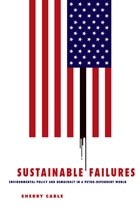
Sustainable Failures
Environmental Policy and Democracy in a Petro-dependent WorldSherry Cable
Temple University Press, 2012
Environmental policies fail in conspicuous and egregious ways to sustain the natural resource base and protect citizens from production-generated risky exposures. In her engaging study, Sustainable Failures, Sherry Cable asks, why does environmental policy seem to be a contributing cause rather than a partial solution to environmental problems?
Melding a biophysical science perspective of environmental processes with sociological insights into human behavior, Cable examines the people, policies, and issues of petrochemical dependence and broader environment questions. She insists that our present policies around the manufacture and use of petroleum products violate rudimentary ecological principles—and do so in complicated ways.
Sustainable Failures is a blistering wake-up call to what is at stake not only regarding the failure of policy outcomes and grievous natural resource depletion and pollution, but also concerning democracy and ecological survival, and eventually, potentially, the existence of our species.
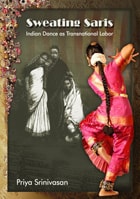
Sweating Saris
Indian Dance as Transnational LaborPriya Srinivasan
Temple University Press, 2011
A groundbreaking book that seeks to understand dance as labor, Sweating Saris examines dancers not just as aesthetic bodies but as transnational migrant workers and wage earners who negotiate citizenship and gender issues.
Srinivasan merges ethnography, history, critical race theory, performance and post-colonial studies among other disciplines to investigate the embodied experience of Indian dance. The dancers’ sweat stained and soaked saris, the aching limbs are emblematic of global circulations of labor, bodies, capital, and industrial goods. Thus the sweating sari of the dancer stands in for her unrecognized labor.
Srinivasan shifts away from the usual emphasis on Indian women dancers as culture bearers of the Indian nation. She asks us to reframe the movements of late nineteenth century transnational Nautch Indian dancers to the foremother of modern dance Ruth St. Denis in the early twentieth century to contemporary teenage dancers in Southern California, proposing a transformative theory of dance, gendered-labor, and citizenship that is far-reaching.

Sweet Air
Modernism, Regionalism, and American Popular SongEdward Comentale
University of Illinois Press, 2013

Sweet Dreams
The World of Patsy ClineEdited by Warren R. Hofstra
University of Illinois Press, 2013

Sweet, Tart, and Golden
Apples in the Midwestern ImaginationLucy M. Long
University of Illinois Press, 2026
Lively and surprising, Sweet, Tart, and Golden blends food history with on-the-ground exploration to tell the multifaceted story of the apple.

Swift Viewing
The Popular Life of Subliminal InfluenceCharles R. Acland
Duke University Press, 2012

Swim Pretty
Aquatic Spectacles and the Performance of Race, Gender, and NatureJennifer A. Kokai
Southern Illinois University Press, 2017
Examining dramatic works in water and performances at four water parks, Kokai shows that the evolution of these works and performances helps us better understand our ever-changing relationship with the oceans and their inhabitants. Kokai sorts the regard for and harnessing of water in aquatic spectacles into three categories—natural, tamed, and domesticated—and discusses the ways in which these modes of water are engaged in the performances throug an aesthetics of descension. Ultimately, this study links the uncritical love of aquatic spectacles to a disregard for the rights of marine animals and lack of concern for the marine environment.

Swinging Single
Representing Sexuality in the 1960sHilary Radner
University of Minnesota Press, 1999

Swinging the Machine
Modernity, Technology, and African American Culture between the World WarsJoel Dinerstein
University of Massachusetts Press, 2003
In any age and any given society, cultural practices reflect the material circumstances of people's everyday lives. According to Joel Dinerstein, it was no different in America between the two World Wars—an era sometimes known as the “machine age”—when innovative forms of music and dance helped a newly urbanized population cope with the increased mechanization of modern life. Grand spectacles such as the Ziegfeld Follies and the movies of Busby Berkeley captured the American ethos of mass production, with chorus girls as the cogs of these fast, flowing pleasure vehicles.
Yet it was African American culture, Dinerstein argues, that ultimately provided the means of aesthetic adaptation to the accelerated tempo of modernity. Drawing on a legacy of engagement with and resistance to technological change, with deep roots in West African dance and music, black artists developed new cultural forms that sought to humanize machines. In “The Ballad of John Henry,” the epic toast “Shine,” and countless blues songs, African Americans first addressed the challenge of industrialization. Jazz musicians drew on the symbol of the train within this tradition to create a set of train-derived aural motifs and rhythms, harnessing mechanical power to cultural forms. Tap dance and the lindy hop brought machine aesthetics to the human body, while the new rhythm section of big band swing mimicked the industrial soundscape of northern cities. In Dinerstein's view, the capacity of these artistic innovations to replicate the inherent qualities of the machine-speed, power, repetition, flow, precision-helps explain both their enormous popularity and social function in American life.
SynergiCity
Reinventing the Postindustrial CityEdited by Paul Hardin Kapp and Paul J. Armstrong
University of Illinois Press, 2012
Synthetic Worlds
The Business and Culture of Online GamesEdward Castronova
University of Chicago Press, 2006
In Synthetic Worlds, Edward Castronova offers the first comprehensive look at the online game industry, exploring its implications for business and culture alike. He starts with the players, giving us a revealing look into the everyday lives of the gamers—outlining what they do in their synthetic worlds and why. He then describes the economies inside these worlds to show how they might dramatically affect real world financial systems, from potential disruptions of markets to new business horizons. Ultimately, he explores the long-term social consequences of online games: If players can inhabit worlds that are more alluring and gratifying than reality, then how can the real world ever compete? Will a day ever come when we spend more time in these synthetic worlds than in our own? Or even more startling, will a day ever come when such questions no longer sound alarmist but instead seem obsolete?
With more than ten million active players worldwide—and with Microsoft and Sony pouring hundreds of millions of dollars into video game development—online games have become too big to ignore. Synthetic Worlds spearheads our efforts to come to terms with this virtual reality and its concrete effects.
“Synthetic Worlds is a surprisingly profound book about the social, political, and economic issues arising from the emergence of vast multiplayer games on the Internet. What Castronova has realized is that these games, where players contribute considerable labor in exchange for things they value, are not merely like real economies, they are real economies, displaying inflation, fraud, Chinese sweatshops, and some surprising in-game innovations.”—Tim Harford, Chronicle of Higher Education