Results by title
28164 books match the query 'History' and 1838 start with s
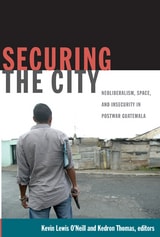
Securing the City
Neoliberalism, Space, and Insecurity in Postwar GuatemalaKevin Lewis O Neill and Kedron Thomas, eds.
Duke University Press, 2011
Contributors. Peter Benson, Manuela Camus, Avery Dickins de Girón, Edward F. Fischer, Deborah Levenson, Thomas Offit, Kevin Lewis O’Neill, Kedron Thomas, Rodrigo José Véliz

Security Integration in Europe
How Knowledge-based Networks Are Transforming the European UnionMai'a K. Davis Cross
University of Michigan Press, 2013
The European Union has made remarkable, unprecedented advances in both external and internal security integration. "Epistemic communities" of ambassadors, military generals, scientists, and other experts who supersede national governments in the diplomacy of security decision making are taking advantage of their shared expertise, common culture, professional norms, and frequent meetings to forge new levels of collaboration. Mai'a K. Davis Cross brings together numerous personal interviews and recent government documents across five separate case studies to construct a microsociological account of how EU governance really works and what future role the EU is likely to play internationally.
Seduction, Sophistry, and the Woman with the Rhetorical Figure
Michelle Ballif
Southern Illinois University Press, 2000
The rhetorical tradition, Michelle Ballif asserts, is based on the systematic exclusion of sophistry. In keeping with Aristotle’s prescription, rhetoric continues to be a counterpart to dialectic, a handmaiden to the pursuit of truth—even if that truth is merely probable.
According to Ballif, this search for truth manifests itself among current rhetoric and composition scholars in the form of an assumption that language is primarily communicative (i.e., that language can represent truth more or less faithfully). Ballif shows how invested we are in the notion of truth, in the idea that language represents truth, and in the assumption that the speaking/writing subject has, or should have, some essential relation to truth.
Provocatively, Ballif questions why the profession wants to retain these beliefs in the face of vociferous arguments from "new rhetorics" that the discipline no longer posits a foundational self or truth, and in the face of the poststructuralist critique, which has demonstrated that founding truth is always accomplished by first positing and then negating an “other.” As an alternative to this negative and violent rhetorical process, Ballif suggests a turn to sophistry as embodied in the figure of Woman, one with the power to seduce us (literally, to lead astray) from our truth and our demand for it.
This figuration of Woman, however, is not the dialectical other used to sustain the identity and privilege of Man. On the contrary, this Woman is an Other Woman: A Third Woman as a Third Sophistic practice that escapes Plato’s binary (philosophic rhetoric vs. sophistry) and renders the distinction between truth and deception incalculable. Ballif examines three figurations of the Third Woman as Third Sophistic as offered by Gorgias, Friedrich Nietzsche, and Jean Baudrillard.
Seductive Journey
American Tourists in France from Jefferson to the Jazz AgeHarvey Levenstein
University of Chicago Press, 2000
Levenstein begins in 1786, when Thomas Jefferson instructed young upper-class American men to travel overseas for self-improvement rather than debauchery. Inspired by these sentiments, many men crossed the Atlantic to develop "taste" and refinement. However, the introduction of the transatlantic steamship in the mid-nineteenth century opened France to people further down the class ladder. As the upper class distanced themselves from the lower-class travelers, tourism in search of culture gave way to the tourism of "conspicuous leisure," sex, and sensuality. Cultural tourism became identified with social-climbing upper-middle-class women. In the 1920s, prohibition in America and a new middle class intent on "having fun" helped make drunken sprees in Paris more enticing than trudging through the Louvre. Bitter outbursts of French anti-Americanism failed to jolt the American ideal of a sensual, happy-go-lucky France, full of joie de vivre. It remained Americans' favorite overseas destination.
From Fragonard to foie gras, the delicious details of this story of how American visitors to France responded to changing notions of leisure and blazed the trail for modern mass tourism makes for delightful, thought-provoking reading.
"...a thoroughly readable and highly likable book."—Deirdre Blair, New York Times Book Review
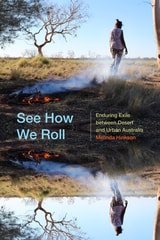
See How We Roll
Enduring Exile between Desert and Urban AustraliaMelinda Hinkson
Duke University Press, 2021
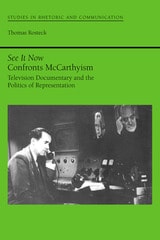
See It Now Confronts McCarthyism
Television Documentary and the Politics of RepresentationThomas Rosteck
University of Alabama Press, 1994
See It Now, Edward R. Murrow and Fred W. Friendly’s early documentary television program, has come to be recognized as the exemplar of nonfiction television. One important element in its reputation is a series of four telecasts directly dealing with abuses of McCarthyism and the Red Scare. This book is about those programs, but it is also about the early 1950s in America, the troubled era in which these programs were broadcast. This book is, then, both cultural history and media analysis.
As media analysis, this book seeks to understand the symbolic form, the aesthetic construction, and the subsequent experience that these four programs offered viewers. This sort of critical analysis is a development of recent vintage in American media studies. Whereas a decade ago television and the media were studied largely through an empiricist social scientific paradigm, now humanistic approaches to media discourses engage the interest of scholars in history, rhetoric and communication, political science, anthropology, and American studies. As case study, then, this book bridges classical humanist and contemporary mass media approaches, and as we go, I shall essay the utility of humanistic methods for the understanding and explication of mass media that is primarily visual in nature.
As cultural history, this book seeks to illuminate a unique era in the recent American past. My aim is to understand the programs as articulations of public “common sense” and as artifacts that help convey this common sense. Thus, a second theme of this book will be to locate-through the analysis of public discourse cast in the television documentary form—an American ideology: a set of “templates” that both ground the programs and reveal the cultural assumptions of the historical period.
In addition, from a slightly different historical perspective, our increased understanding of these See It Now broadcasts gives us an appreciation of the development of the television industry and the genre of television documentary. Coming at a time when few Americans had television sets, these See It Now programs coincided with an exponential increase in television ownership and popularity. As an elaborate defense of free speech for the medium, these documentaries may have helped to establish autonomy and a direction for a nascent broadcasting industry. More specifically, as the paradigm for the television documentary and as the first regularly scheduled documentary series, these See It Now programs shaped expectations and set the benchmark to which all nonfiction television, from Twentieth Century to White Paper to Sixty Minutes, has been compared. Thus, a third theme will be the implications of these seminal programs for media institutions and for the genre of television news documentary.
See Me Naked
Black Women Defining Pleasure in the Interwar EraTara T. Green
Rutgers University Press, 2022
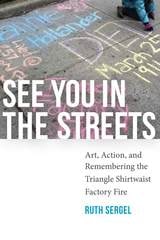
See You in the Streets
Art, Action, and Remembering the Triangle Shirtwaist Factory FireRuth Sergel
University of Iowa Press, 2016
In 1911, a fire at the Triangle Shirtwaist Factory in New York City took the lives of 146 workers, most of them young immigrant women and girls. Their deaths galvanized a movement for social and economic justice then, but today’s laborers continue to battle dire working conditions. How can we bring the lessons of the Triangle fire back into practice today? For artist Ruth Sergel, the answer was to fuse art, activism, and collective memory to create a large-scale public commemoration that invites broad participation and incites civic engagement. See You in the Streets showcases her work.
It all began modestly in 2004 with Chalk, an invitation to all New Yorkers to remember the 146 victims of the fire by inscribing their names and ages in chalk in front of their former homes. This project inspired Sergel to found the Remember the Triangle Fire Coalition, a broad alliance of artists and activists, universities and unions—more than 250 partners nationwide—to mark the 2011 centennial of the infamous blaze. Putting the coalition together and figuring what to do and how to do it were not easy. This book provides a lively account of the unexpected partnerships, false steps, joyous collective actions, and sustainability of such large public works. Much more than an object lesson from the past, See You in the Streets offers an exuberant perspective on building a social art practice and doing public history through argument and agitation, creativity and celebration with an engaged public.

Seed of Sarah
Memoirs of a SurvivorJudith Magyar Isaacson
University of Illinois Press, 1990

Seeds in Soil
Planting a Garden and Finding Your RootsSusan Apps-Bodilly
Wisconsin Historical Society Press, 2022
natural curiosity about nature. Seeds in Soil includes all the details to start planting and growing, whether working with a whole yard, a community or school garden, or just a balcony.
Chapters feature advice for selecting the seeds and tools to get started; ideas for planning and being creative in the garden; and tips for harvesting, storing, and cooking with fresh produce. Written by a second-grade teacher, the book includes engaging lessons about the science of climate, soil, and pollinators; and connections to history through the stories of First Nations and immigrant gardeners. Told through the author’s family stories and experience, Seeds in Soil will get kids having fun in the garden while digging, planting, growing, and finding their roots.

Seeds of Hate
How America's Flawed Middle East Policy Ignited the JihadLawrence Pintak
Pluto Press, 2003

Seeds of Power
Environmental Injustice and Genetically Modified Soybeans in ArgentinaAmalia Leguizamón
Duke University Press, 2020
Seeds of Tomorrow
Nurturing Roots of Oneida GovernanceEdited by Rebecca M. Webster and Lois Stevens
University of Wisconsin Press, 2026
This indispensable and unique volume is at once a history of and a pathfinder for the future of the Great Law, the governing principles behind the long-standing Haudenosaunee Confederacy. Focused on the Duck Creek Oneida people of Wisconsin, Seeds of Tomorrow draws together a wide range of tribal voices, from elders and community members to young people and academic experts. This collection chronicles the history of the Haudenosaunee Confederacy’s revolutionary governing principles, outlines the current state of tribal government, and proposes a vision for a political future that draws on traditional Indigenous practices and knowledge. This guide toward stronger sovereignty, revitalized community ties, and a healthier and more self-determined future based on traditional structures of governance is indigenization in practice: a model not just for Duck Creek Oneida but for Indigenous nations everywhere.
Contributors: Kenzie Allen, Marley Atkinson, Marena Bridges, Robert “Bob” Brown, Breann Clark, Julie Clark, Carol Cornelius, Margaret Cornelius, Randy Cornelius, Michele Doxtater, Richard “Lotni” Elm-Hill, Jennifer “Jen” Falck, William Gollnick, Joie Guiterrez, Gerald L. Hill, Jo Anne House, Toni M. House, Nicholas Metoxen, Paul Ninham, Saniya Ninham, John III Powless, Mark Powless, Nina Powless, Artley Skenandore, Lois Stevens, Vernon Stevens, Amelia “Mia” Webster, Grace Webster, Hunter D. Webster, Rebecca M. Webster, Arthur Wilbur, Jameson Wilson

Seedtime of Reform
American Social Service and Social Action, 1918-1933Clarke A. Chambers
University of Minnesota Press, 1963
Seedtime of Reform was first published in 1963. Minnesota Archive Editions uses digital technology to make long-unavailable books once again accessible, and are published unaltered from the original University of Minnesota Press editions.
This is a detailed history of the social welfare movement in the United States during the period from the end of World War I to the inauguration of President Franklin D. Roosevelt, an era which most historians characterize as one of normalcy and reaction. In his book Professor Chambers demonstrates that this was actually a seedtime of reform, a period when the groundwork was laid for many of the sweeping social changes which were to take place under the New Deal.
While it is true, as the author points out, that the years from 1918 to 1933 were not hospitable to the cause of reform, it was during these years that reform leaders and welfare workers (and the associations and agencies they directed) elaborated new theories and programs of action to alleviate, prevent, and overcome certain persisting social ills. Although little was constructively achieved until new political leadership, operating in the context of acute and prolonged economic crisis, acted in the 1930s, much of what we identify as the New Deal was rooted not only in prewar progressivism but in the research, agitation, and welfare services of the 1920s as well. Reformers and welfare workers made especially significant contributions in the areas of housing, social security, public works, federal responsibility for dependent groups in society, and working conditions.
Seedtime on the Cumberland
Harriette Simpson Arnow
Michigan State University Press, 2013

Seeing Baya
Portrait of an Algerian Artist in ParisAlice Kaplan
University of Chicago Press, 2024
On a flower farm in colonial Algeria, a servant and field worker known as Baya escaped the drudgery of her labor by coloring the skirts in fashion magazines. Three years later, in November 1947, her paintings and fanciful clay beasts were featured in a solo show in Paris. She wasn’t yet sixteen years old. In this first biography of Baya, Alice Kaplan tells the story of a young woman seemingly trapped in subsistence who becomes a sensation in the French capital, then mysteriously fades from the history of modern art—only to reemerge after independence as an icon of Algerian artistic heritage.
The toast of Paris for the 1947 season, Baya inspired colonialist fantasies about her “primitive” genius as well as genuine appreciation. She was featured in newspapers, on the radio, and in a newsreel; her art was praised by Breton and Camus, Marchand and Braque. At the dawn of Algerian liberation, her appearance in Paris was used to stage the illusion of French-Algerian friendship, while horrific French massacres in Algeria were still fresh in memory.
Kaplan uncovers the central figures in Baya’s life and the role they played in her artistic career. Among the most poignant was Marguerite Caminat-McEwen-Benhoura, who took Baya from her sister’s farm to Algiers, where Baya worked as Marguerite’s maid and was given paint and brushes. A complex and endearing character, Marguerite—and her Pygmalion ambitions—was decisive in shaping Baya’s destiny. Kaplan also looks closely at Baya’s earliest paintings with an eye to their themes, their palette and design, and their enduring influence.
In vivid prose that brings Baya’s story into the present, Kaplan’s book, the fruit of scrupulous research in Algiers, Blida, Paris, and Provence, allows us to see in a whole new light the beloved artist who signed her paintings simply “Baya.”
Seeing Green
The Use and Abuse of American Environmental ImagesFinis Dunaway
University of Chicago Press, 2015
Finis Dunaway closes that gap with Seeing Green. Considering a wide array of images—including pictures in popular magazines, television news, advertisements, cartoons, films, and political posters—he shows how popular environmentalism has been entwined with mass media spectacles of crisis. Beginning with radioactive fallout and pesticides during the 1960s and ending with global warming today, he focuses on key moments in which media images provoked environmental anxiety but also prescribed limited forms of action. Moreover, he shows how the media have blamed individual consumers for environmental degradation and thus deflected attention from corporate and government responsibility. Ultimately, Dunaway argues, iconic images have impeded efforts to realize—or even imagine—sustainable visions of the future.
Generously illustrated, this innovative book will appeal to anyone interested in the history of environmentalism or in the power of the media to shape our politics and public life.

Seeing Like a Citizen
Decolonization, Development, and the Making of Kenya, 1945–1980Kara Moskowitz
Ohio University Press, 2019
In Seeing Like a Citizen, Kara Moskowitz approaches Kenya’s late colonial and early postcolonial eras as a single period of political, economic, and social transition. In focusing on rural Kenyans—the vast majority of the populace and the main targets of development interventions—as they actively sought access to aid, she offers new insights into the texture of political life in decolonizing Kenya and the early postcolonial world.
Using multisited archival sources and oral histories focused on the western Rift Valley, Seeing Like a Citizen makes three fundamental contributions to our understanding of African and Kenyan history. First, it challenges the widely accepted idea of the gatekeeper state, revealing that state control remained limited and that the postcolonial state was an internally varied and often dissonant institution. Second, it transforms our understanding of postcolonial citizenship, showing that its balance of rights and duties was neither claimed nor imposed, but negotiated and differentiated. Third, it reorients Kenyan historiography away from central Kenya and elite postcolonial politics. The result is a powerful investigation of experiences of independence, of the meaning and form of development, and of how global political practices were composed and recomposed on the ground in local settings.
Seeing Like a Rover
How Robots, Teams, and Images Craft Knowledge of MarsJanet Vertesi
University of Chicago Press, 2015
With Seeing Like a Rover, Janet Vertesi takes us behind the scenes to reveal the work that goes into creating our knowledge of Mars. Every photograph that the Rovers take, she shows, must be processed, manipulated, and interpreted—and all that comes after team members negotiate with each other about what they should even be taking photographs of in the first place. Vertesi’s account of the inspiringly successful Rover project reveals science in action, a world where digital processing uncovers scientific truths, where images are used to craft consensus, and where team members develop an uncanny intimacy with the sensory apparatus of a robot that is millions of miles away. Ultimately, Vertesi shows, every image taken by the Mars Rovers is not merely a picture of Mars—it’s a portrait of the whole Rover team, as well.
Seeing New Worlds
Henry David Thoreau and Nineteenth-Century Natural ScienceLaura Dassow Walls
University of Wisconsin Press, 1995
Thoreau was a poet, a naturalist, a major American writer. Was he also a scientist? He was, Laura Dassow Walls suggests. Her book, the first to consider Thoreau as a serious and committed scientist, will change the way we understand his accomplishment and the place of science in American culture.
Walls reveals that the scientific texts of Thoreau’s day deeply influenced his best work, from Walden to the Journal to the late natural history essays. Here we see how, just when literature and science were splitting into the “two cultures” we know now, Thoreau attempted to heal the growing rift. Walls shows how his commitment to Alexander von Humboldt’s scientific approach resulted in not only his “marriage” of poetry and science but also his distinctively patterned nature studies. In the first critical study of his “The Dispersion of Seeds” since its publication in 1993, she exposes evidence that Thoreau was using Darwinian modes of reasoning years before the appearance of Origin of Species.
This book offers a powerful argument against the critical tradition that opposes a dry, mechanistic science to a warm, “organic” Romanticism. Instead, Thoreau’s experience reveals the complex interaction between Romanticism and the dynamic, law-seeking science of its day. Drawing on recent work in the theory and philosophy of science as well as literary history and theory, Seeing New Worlds bridges today’s “two cultures” in hopes of stimulating a fuller consideration of representations of nature.
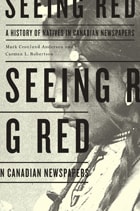
Seeing Red
A History of Natives in Canadian NewspapersMark Cronlund Anderson
University of Manitoba Press, 2011

Seeing Sarah Bernhardt
Performance and Silent FilmVictoria Duckett
University of Illinois Press, 2015
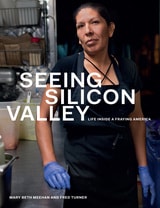
Seeing Silicon Valley
Life inside a Fraying AmericaMary Beth Meehan and Fred Turner
University of Chicago Press, 2021
It’s hard to imagine a place more central to American mythology today than Silicon Valley. To outsiders, the region glitters with the promise of extraordinary wealth and innovation. But behind this image lies another Silicon Valley, one segregated by race, class, and nationality in complex and contradictory ways. Its beautiful landscape lies atop underground streams of pollutants left behind by decades of technological innovation, and while its billionaires live in compounds, surrounded by redwood trees and security fences, its service workers live in their cars.
With arresting photography and intimate stories, Seeing Silicon Valley makes this hidden world visible. Instead of young entrepreneurs striving for efficiency in minimalist corporate campuses, we see portraits of struggle—families displaced by an impossible real estate market, workers striving for a living wage, and communities harmed by environmental degradation. If the fate of Silicon Valley is the fate of America—as so many of its boosters claim—then this book gives us an unvarnished look into the future.
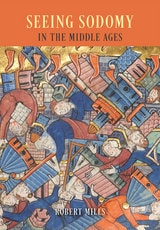
Seeing Sodomy in the Middle Ages
Robert Mills
University of Chicago Press, 2015
In Seeing Sodomy in the Middle Ages, Robert Mills explores the relationship between sodomy and motifs of vision and visibility in medieval culture, on the one hand, and those categories we today call gender and sexuality, on the other. Challenging the view that ideas about sexual and gender dissidence were too confused to congeal into a coherent form in the Middle Ages, Mills demonstrates that sodomy had a rich, multimedia presence in the period—and that a flexible approach to questions of terminology sheds new light on the many forms this presence took. Among the topics that Mills covers are depictions of the practices of sodomites in illuminated Bibles; motifs of gender transformation and sex change as envisioned by medieval artists and commentators on Ovid; sexual relations in religious houses and other enclosed spaces; and the applicability of modern categories such as “transgender,” “butch” and “femme,” or “sexual orientation” to medieval culture.
Taking in a multitude of images, texts, and methodologies, this book will be of interest to all scholars, regardless of discipline, who engage with gender and sexuality in their work.
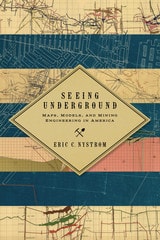
Seeing Underground
Maps, Models, and Mining Engineering in AmericaEric C. Nystrom
University of Nevada Press, 2014
Starting in the late nineteenth century, mining engineers developed a new set of practices, artifacts, and discourses to visualize complex, pitch-dark three-dimensional spaces. These maps and models became necessary tools in creating and controlling those spaces. They made mining more understandable, predictable, and profitable. Nystrom shows that this new visual culture was crucial to specific developments in American mining, such as implementing new safety regulations after the Avondale, Pennsylvania fire of 1869 killed 110 men and boys; understanding complex geology, as in the rich ores of Butte, Montana; and settling high-stakes litigation, such as the Tonopah, Nevada, Jim Butler v. West End lawsuit, which reached the US Supreme Court.
Nystrom demonstrates that these neglected artifacts of the nineteenth and early twentieth centuries have much to teach us today. The development of a visual culture helped create a new professional class of mining engineers and changed how mining was done. Seeing Undergound is the winner of the 2015 Mining History Association’s Clark Spence Award for the best book on mining history.
Seeing Witness
Visuality and the Ethics of TestimonyJane Blocker
University of Minnesota Press, 2009
Unearthing the meaning of witnessing in contemporary art and politics
The act of bearing witness can reveal much, but what about the figure of the witness itself? As contemporary culture is increasingly dominated by surveillance, the witness—whether artist, historian, scientist, government official, or ordinary citizen—has become empowered in realms from art to politics.
In Seeing Witness, Jane Blocker challenges the implicit authority of witnessing through the examination of a series of contemporary artworks, all of which make the act of witnessing visible, open to inspection and critique. Considering such artists as Marina Abramović, James Luna, Felix Gonzalez-Torres, Eduardo Kac, and Ann Hamilton, Blocker investigates the artists and spectators who look, the technologies they look with, and the forms of power and moral authority that permit their viewing. Going beyond particular traumatic or sensational events, Blocker contemplates the politics of witnessing and argues that the witness represents a morally unique—and even problematic—position of privilege. Separating Seeing Witness from previous literature on the subject, she finds that the visual is inherent in witnessing and asserts that contemporary art is integral to questioning and understanding how witnessing is mobilized in culture today.
Seeing and Being Seen
The Q'eqchi' Maya of Livingston, Guatemala, and BeyondBy Hilary E. Kahn
University of Texas Press, 2006
The practice of morality and the formation of identity among an indigenous Latin American culture are framed in a pioneering ethnography of sight that attempts to reverse the trend of anthropological fieldwork and theory overshadowing one another.
In this vital and richly detailed work, methodology and theory are treated as complementary partners as the author explores the dynamic Mayan customs of the Q'eqchi' people living in the cultural crossroads of Livingston, Guatemala. Here, Q'eqchi', Ladino, and Garifuna (Caribbean-coast Afro-Indians) societies interact among themselves and with others ranging from government officials to capitalists to contemporary tourists.
The fieldwork explores the politics of sight and incorporates a video camera operated by multiple people—the author and the Q'eqchi' people themselves—to watch unobtrusively the traditions, rituals, and everyday actions that exemplify the long-standing moral concepts guiding the Q'eqchi' in their relationships and tribulations. Sharing the camera lens, as well as the lens of ethnographic authority, allows the author to slip into the world of the Q'eqchi' and capture their moral, social, political, economic, and spiritual constructs shaped by history, ancestry, external forces, and time itself.
A comprehensive history of the Q'eqchi' illustrates how these former plantation laborers migrated to lands far from their Mayan ancestral homes to co-exist as one of several competing cultures, and what impact this had on maintaining continuity in their identities, moral codes of conduct, and perception of the changing outside world.
With the innovative use of visual methods and theories, the author's reflexive, sensory-oriented ethnographic approach makes this a study that itself becomes a reflection of the complex set of social structures embodied in its subject.
Seeing by Electricity
The Emergence of Television, 1878-1939Doron Galili
Duke University Press, 2020

Seeing the Elephant
RAW RECRUITS AT THE BATTLE OF SHILOHJoseph Allan Frank and George A. Reaves
University of Illinois Press, 1989
Drawing on the letters, diaries, and other reminiscences of these raw recruits on both sides of the conflict, “Seeing the Elephant” gives a vivid and valuable primary account of the terrible struggle.
From the wide range of voices included in this volume emerges a nuanced picture of the psychology and motivations of the novice soldiers and the ways in which their attitudes toward the war were affected by their experiences at Shiloh.
Seeing the Past with Computers
Experiments with Augmented Reality and Computer Vision for HistoryKevin Kee and Timothy Compeau, Editors
University of Michigan Press, 2019
Seeing the Past with Computers is a collection of twelve thought-pieces on the current and potential uses of augmented reality and computer vision in historical research, teaching, and presentation. The experts gathered here reflect upon their experiences working with new technologies, share their ideas for best practices, and assess the implications of—and imagine future possibilities for—new methods of historical study. Among the experimental topics they explore are the use of augmented reality that empowers students to challenge the presentation of historical material in their textbooks; the application of seeing computers to unlock unusual cultural knowledge, such as the secrets of vaudevillian stage magic; hacking facial recognition technology to reveal victims of racism in a century-old Australian archive; and rebuilding the soundscape of an Iron Age village with aural augmented reality.
This volume is a valuable resource for scholars and students of history and the digital humanities more broadly. It will inspire them to apply innovative methods to open new paths for conducting and sharing their own research.
Seeking Community In Global City
Guatemalans & Salvadorans In Los AngelesNora Hamilton
Temple University Press, 2001
Based on twenty years of work with the Los Angeles Central American community and filled with facts, figures, and personal narratives, Seeking Community in a Global City presents this saga from many perspectives. The authors examine the forces in Central America that sent thousands of people streaming across international borders. They discuss economic, political, and demographic changes in the Los Angeles region and the difficulties the new immigrants faced in negotiating a new, urban environment. They look at family roles, networking, work strategies, and inter-ethnic relations. But they also consider policy issues and alliances, changing expectations, shifting priorities, and the reciprocal effect of the migrants and the city on each other.

Seeking Rights from the Left
Gender, Sexuality, and the Latin American Pink TideElisabeth Jay Friedman
Duke University Press, 2018
Contributors: Sonia E. Alvarez, María Constanza Diaz, Rachel Elfenbein, Elisabeth Jay Friedman, Niki Johnson, Victoria Keller, Edurne Larracoechea Bohigas, Amy Lind, Marlise Matos, Shawnna Mullenax, Ana Laura Rodríguez Gustá, Diego Sempol, Constanza Tabbush, Gwynn Thomas, Catalina Trebisacce, Annie Wilkinson
Seeking Sakyamuni
South Asia in the Formation of Modern Japanese BuddhismRichard M. Jaffe
University of Chicago Press, 2019
Seeking a New Majority
The Republican Party and American Politics, 1960-1980Robert Mason
Vanderbilt University Press, 2013
Seeking a New Majority assembles an international group of scholars to move beyond the ideas and activities of party leaders who have hitherto received the bulk of historical attention. It illuminates how the Republican Party expanded its regional base, especially in the South, appealed to new constituencies ranging from blue-collar workers to Christian fundamentalists, and enhanced the political appeal of conservatism. It also examines how Republicans engaged in a remarkable organizational and intellectual mobilization to challenge Democratic Party dominance--in search of a new majority.

Seeking the One Great Remedy
Francis George Shaw and Nineteenth-Century ReformLorien Foote
Ohio University Press, 2003
A radical abolitionist and early feminist, Francis George Shaw (1809–1882) was a prominent figure in American reform and intellectual circles for five decades. He rejected capitalism in favor of a popular utopian socialist movement; during the Civil War and Reconstruction, he applied his radical principles to the Northern war effort and to freedmen’s organizations.
A partnership with Henry George in the late 1870s provided an international audience for Shaw’s alternative vision of society. Seeking the One Great Remedy is the biography of this remarkable and influential man. In compelling detail, author Lorien Foote depicts the many aspects and exploits of the Shaw family. Their activities provide a perspective on the course of American reform that calls into question previous interpretations of the reform movement of this period.
Francis George Shaw is perhaps best known as the father of Robert Gould Shaw, subject of the movie Glory. Francis and his wife, Sarah Blake Shaw, achieved considerable notoriety for their activities, including their effort to shape public opinion during the Civil War. Turning the tragic death of their son into a public relations and propaganda triumph, they altered Northern opinion about the war and shaped a historical perception of the famous Massachusetts Fifty-fourth that continues today.
Seeking the One Great Remedy argues that social radicalism was pervasive among elite reformers before and after the Civil War and finds in the dramatic story of Francis George Shaw a model of that cause.
Seems Like Murder Here
Southern Violence and the Blues TraditionAdam Gussow
University of Chicago Press, 2002
Seems Like Murder Here offers a revealing new account of the blues tradition. Far from mere laments about lost loves and hard times, the blues emerge in this provocative study as vital responses to spectacle lynchings and the violent realities of African American life in the Jim Crow South. With brilliant interpretations of both classic songs and literary works, from the autobiographies of W. C. Handy, David Honeyboy Edwards, and B. B. King to the poetry of Langston Hughes and the novels of Zora Neale Hurston, Seems Like Murder Here will transform our understanding of the blues and its enduring power.
Segregating Cities
An Arnold R. Hirsch ReaderArnold R. Hirsch
University of Chicago Press, 2026
Arnold R. Hirsch (1949–2018) was one of the preeminent urban historians of his generation, a reputation cemented by his landmark book, Making the Second Ghetto. With compelling clarity, Hirsch demonstrated that segregation is not the inevitable result of individual choices, natural tendencies, or cultural traits—it is a structural phenomenon, reinforced on every level by state power.
Segregating Cities collects the author’s key essays, some previously unpublished, to reveal a more complete picture of a remarkable scholar and his exploration of race, place, politics, and policy in the twentieth-century American city. Together, these essays can help us see segregation for what it is, so that we can then begin to truly work to overcome it.
Segregating Sound
Inventing Folk and Pop Music in the Age of Jim CrowKarl Hagstrom Miller
Duke University Press, 2010
In a cultural history filled with musicians, listeners, scholars, and business people, Miller describes how folklore studies and the music industry helped to create a “musical color line,” a cultural parallel to the physical color line that came to define the Jim Crow South. Segregated sound emerged slowly through the interactions of southern and northern musicians, record companies that sought to penetrate new markets across the South and the globe, and academic folklorists who attempted to tap southern music for evidence about the history of human civilization. Contending that people’s musical worlds were defined less by who they were than by the music that they heard, Miller challenges assumptions about the relation of race, music, and the market.
Segregation Games
Boston, Busing, and the Making of Red Sox NationDavid Faflik
University of Massachusetts Press, 2026
A cultural history of race, resistance, and representation in a city divided by politics and play
When outfielder Bernie Carbo joined the Red Sox in 1974, he brought with him a toy gorilla named Mighty Joe Young that became the team’s unofficial mascot for several players and many in the local press. This seemingly innocent stuffed animal was introduced within a baseball team notorious for its stubborn discrimination, and during a particularly fraught era of racial discord in Boston. That June, after years of activism from the city’s Black community, Judge W. Arthur Garrity Jr. ruled that Boston must address the segregation of its schools through redistricting and busing. The ensuing racial animus to these policies led some of the city’s white residents to throw bananas and chant monkey sounds at African American students as they integrated the predominantly white South Boston High School. In this agitated atmosphere, cultural symbols like the Red Sox’s Mighty Joe Young mirrored and amplified the heightened racial tensions of Boston’s busing crisis.
Situated at the intersection of US cultural and social history, Segregation Games examines the surprising ties in 1970s Boston between the racial segregation of the city’s schools and the racial controversies expressed on and off the field of “Red Sox Nation.” “I found out in the black community why they don’t come out [to Fenway Park],” explained Black player Reggie Smith of his experiences with the Red Sox and the city during this period. “The team was the last to get Black players, and some of the things I hear out in the stands make me sick.” To understand these connections, Faflik erases the lines between politics and sport, which routinely blurred in a city suffused with an anti-Black racism that was both deceptively subtle and fiercely overt.
Drawing upon deep archival research from sources that have largely been ignored, such as the Black press of the time, Faflik offers a carefully nuanced portrait of Boston’s cultural life at a pivotal moment in the city’s history.
Segregation
A Global History of Divided CitiesCarl H. Nightingale
University of Chicago Press, 2012
When we think of segregation, what often comes to mind is apartheid South Africa, or the American South in the age of Jim Crow—two societies fundamentally premised on the concept of the separation of the races. But as Carl H. Nightingale shows us in this magisterial history, segregation is everywhere, deforming cities and societies worldwide.
Starting with segregation’s ancient roots, and what the archaeological evidence reveals about humanity’s long-standing use of urban divisions to reinforce political and economic inequality, Nightingale then moves to the world of European colonialism. It was there, he shows, segregation based on color—and eventually on race—took hold; the British East India Company, for example, split Calcutta into “White Town” and “Black Town.” As we follow Nightingale’s story around the globe, we see that division replicated from Hong Kong to Nairobi, Baltimore to San Francisco, and more. The turn of the twentieth century saw the most aggressive segregation movements yet, as white communities almost everywhere set to rearranging whole cities along racial lines. Nightingale focuses closely on two striking examples: Johannesburg, with its state-sponsored separation, and Chicago, in which the goal of segregation was advanced by the more subtle methods of real estate markets and housing policy.
For the first time ever, the majority of humans live in cities, and nearly all those cities bear the scars of segregation. This unprecedented, ambitious history lays bare our troubled past, and sets us on the path to imagining the better, more equal cities of the future.
Seized with the Temper of the Times
Identity and Rebellion in Pre-Revolutionary AmericaAbby Chandler
Westholme Publishing, 2023
In Seized with the Temper of the Times Identity and Rebellion in Pre-Revolutionary America, historian Abby Chandler explores, as never before, the complex local and transatlantic tensions which infused the early imperial crisis. She argues that colonial responses to the Stamp Act were rooted in local tensions and that the Regulator Rebellion was fueled by trans-Atlantic tensions. These two paradoxes, a local crisis cast as imperial affair and an imperial affair cast as local crisis, tell a very different story than the one to which we are accustomed. Without pre-existing local tensions, the fury of the Stamp Act crisis might not have spilled over during the summer of 1765, and, without the added strains of the imperial crisis, the Regulator Rebellion might not have lasted for five years. The questions about the intersecting roles of local and imperial/federal interests and identities raised during both the Stamp Act crisis and the Regulator Rebellion would also continue to inform political thought in Rhode Island and North Carolina in the coming decades. Both colonies had long histories of challenges to their autonomy and their residents embraced the coming revolution before many of their counterparts, but they would also be reluctant participants in the rising union envisioned by the framers of the Constitution.
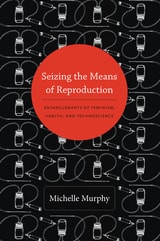
Seizing the Means of Reproduction
Entanglements of Feminism, Health, and TechnoscienceM. Murphy
Duke University Press, 2012
Murphy traces the transnational circulation of cheap, do-it-yourself health interventions, highlighting the uneasy links between economic logics, new forms of racialized governance, U.S. imperialism, family planning, and the rise of NGOs. In the twenty-first century, feminist health projects have followed complex and discomforting itineraries. The practices and ideologies of alternative health projects have found their way into World Bank guidelines, state policies, and commodified research. While the particular moment of U.S. feminism in the shadow of Cold War and postcolonialism has passed, its dynamics continue to inform the ways that health is governed and politicized today.
Select Orations
Martha Gregory of Nazianzus
Catholic University of America Press, 2003

Selected Epigrams
Martial, Translated with notes by Susan McLean, Introduction by Marc Kleijwegt
University of Wisconsin Press, 2014

Selected Letters
Isabella d’Este
Iter Press, 2017
Isabella d’Este (1474–1539), daughter of the Este dukes of Ferrara and wife of Marchese Francesco II Gonzaga of Mantua, co-regent of the Gonzaga state, art collector, musician, diplomat, dynastic mother, traveler, reader, gardener, fashion innovator, and consummate politician, was also, as this volume attests, a prolific letter writer with a highly developed epistolary network. Presented here for the first time in any language is a representative selection from over 16,000 letters sent by Isabella to addressees across a wide social spectrum. Together, they paint a nuanced and colorful portrait of a brilliant and influential female protagonist of early modern European society.

Selected Letters of Edmund Burke
Edmund Burke
University of Chicago Press, 1984

Selected Letters, 1514-1543
Maria Salviati de’ Medici
Iter Press, 2022
In recent years, there has been an upsurge of interest in Maria Salviati de’ Medici, specifically, in her role in Medici governance and her relationships with other members of the Medici court. Maria Salviati’s surviving correspondence documents a life spent close to the centers of Medici power in Florence and Rome, giving witness to its failures, resurrection, and eventual triumph. Presented here for the first time in English, this book is a representative sample of Maria’s surviving letters that document her remarkable life through a tumultuous period of Italian Renaissance history. While she earned the exasperation of some, she gained the respect of many more. Maria ended her life as an influential dowager, powerful intercessor for local Tuscans of all strata, and wise elder in Duke Cosimo I’s court. The first critical, analytical, biographical work on Maria Salviati de’ Medici’s life and letter-writing in English.
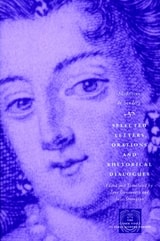
Selected Letters, Orations, and Rhetorical Dialogues
Madeleine de Scudery
University of Chicago Press, 2004
Selected Letters, Orations, and Rhetorical Dialogues is a careful selection of Scudéry's shorter writings, emphasizing her abilities as a rhetorical theorist, orator, essayist, and letter writer. It provides the first English translations of some of Scudéry's Amorous Letters, only recently identified as her work, as well as selections from her Famous Women, or Heroic Speeches, and her series of Conversations. The book will be of great interest to scholars of the history of rhetoric, French literature, and women's studies.

Selected Papers, Volume 7
The Non-Radial Oscillations of Stars in General Relativity and Other WritingsS. Chandrasekhar
University of Chicago Press, 1997
world through the eyes of one of the twentieth century's most brilliant
and sensitive scientists. Conceived by Chandrasekhar as a supplement to
his Selected Papers, this volume begins with eight papers he
wrote with Valeria Ferrari on the non-radial oscillations of stars. It
then explores some of the themes addressed in Truth and Beauty,
with meditations on the aesthetics of science and the world it examines.
Highlights include: "The Series Paintings of Claude Monet and the
Landscape of General Relativity," "The Perception of Beauty and the
Pursuit of Science," "On Reading Newton's Principia at Age Past
Eighty," and personal recollections of Indira Gandhi, Jawaharlal Nehru,
and others.
Selected Papers, Volume 7 paints a picture of Chandra's universe,
filled with stars and galaxies, but with space for poetics, paintings,
and politics.
The late S. Chandrasekhar was best known for his discovery of the upper
limit to the mass of a white dwarf star, for which he received the Nobel
Prize in Physics in 1983. He was the author of many books, including
The Mathematical Theory of Black Holes and, most recently,
Newton's Principia for the Common Reader.

Selected Philosophical and Scientific Writings
Emilie Du Châtelet
University of Chicago Press, 2009
Though most historians remember her as the mistress of Voltaire, Emilie Du Châtelet (1706–49) was an accomplished writer in her own right, who published multiple editions of her scientific writings during her lifetime, as well as a translation of Newton’s Principia Mathematica that is still the standard edition of that work in French. Had she been a man, her reputation as a member of the eighteenth-century French intellectual elite would have been assured.
In the 1970s, feminist historians of science began the slow work of recovering Du Châtelet’s writings and her contributions to history and philosophy. For this edition, Judith P. Zinsser has selected key sections from Du Châtelet’s published and unpublished works, as well as related correspondence, part of her little-known critique of the Old and New Testaments, and a treatise on happiness that is a refreshingly uncensored piece of autobiography—making all of them available for the first time in English. The resulting volume will recover Châtelet’s place in the pantheon of French letters and culture.