Results by title
187 books match the query '1951-' and 26 start with t
Terry Sanford
Politics, Progress, and Outrageous AmbitionsHoward E. Covington Jr. and Marion A. Ellis
Duke University Press, 1999
After defeating a segregationist campaign in 1960 to win the governorship, Sanford used his years in office to boost public education and advance race relations. A decade later, at the height of tumult on American campuses, Sanford assumed the presidency of Duke University and led it to its position as one of the top universities in the nation. During his more than fifty years as a public servant he was associated with presidents John F. Kennedy, Lyndon B. Johnson, Richard Nixon, and Jimmy Carter. Sanford was a presidential candidate himself in 1972 and 1976, and he won election to the United States Senate in 1986 where his international commission produced an economic recovery plan for Central America. As one of the last New Deal Democrats in the Senate, he remained passionate about the opportunity for leaders to use government to improve people’s lives.
Terry Sanford draws on Sanford’s considerable private and public archive as well as on the recollections of Sanford himself and his family, colleagues, and friends. This biography offers a unique perspective on North Carolina life, politics, political personalities, and the shifting public allegiances of the second half of the twentieth century that transformed life both in North Carolina and throughout the American South.
Testimony
Death of a Guatemalan VillageVictor Montejo
Northwestern University Press, 1987
The "Puerto Rican Problem" in Postwar New York City
Edgardo Meléndez
Rutgers University Press, 2023

The Best of Fisher
28 years of Editorial Cartoons from Faubus to ClintonGeorge Fisher
University of Arkansas Press, 1993
The Boy from Altheimer
From the Depression to the BoardroomWilliam H. Bowen
University of Arkansas Press, 2006
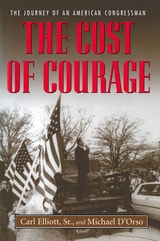
The Cost of Courage
The Journey of an American CongressmanCarl Elliott
University of Alabama Press, 2001
This deeply moving story chronicles the tenacity and vision that carried Carl Elliott from the hills of northwest Alabama to eight distinguished terms in the United States House of Representatives.
Born in a log cabin on a tenant farm in 1913, Carl Elliott worked his way through The University of Alabama during the Great Depression and was elected to Congress in 1948. With a no-nonsense philosophy of fairness and equal opportunity, he established himself as one of the most effective members of the House of Representatives during the 1950s. He was a progressive Democrat and he fought hard for the dirt farmers and coal miners he grew up with and who sent him to Congress.
In an era when racial segregationists dominated southern politics, Elliott worked with many of the important political leaders of the 20th century, including Presidents Truman, Eisenhower, and Kennedy and powerful House Speaker Sam Rayburn. He was instrumental in passing the National Defense Education Act of 1958, which continues to provide college loans to more than 20 million Americans. But his brave stand against racism and George Wallace in the 1966 Alabama gubernatorial race ruined him professionally (he never returned to elected office) and financially (he cashed in his congressional pension to help fund the campaign). Even as a destitute invalid in his old age, however, Elliott kept his dignity and integrity intact.
The life story of Carl Elliott is full of humor and wry wisdom and explains how he made his way across a stage as big as America, influencing its politics and future, and then emerged, belatedly, as an unsung hero of the fight for civil rights and equality.
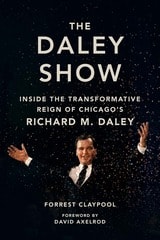
The Daley Show
Inside the Transformative Reign of Chicago's Richard M. DaleyForrest Claypool; Foreword by David Axelrod
University of Illinois Press, 2024
American cities once had mayors who actually governed.
For twenty-two years, Richard M. Daley ran Chicago with the type of authority that is unthinkable today. He reshaped downtown, triggered a jobs boom, delivered the iconic Millennium Park, turned around troubled public schools, and slashed violent crime to 40-year lows. He outfoxed Republican legislators to retain control of O’Hare Airport and expand it into the nation’s premier international aviation hub. Leveraging carefully built national political ties, he sidelined a powerful nemesis to tear down Chicago’s infamous public housing projects.
Rebuilding parts of his father’s legendary political machine through brazen (and illegal) patronage deals, he centralized power to a remarkable degree, cut deals behind closed doors, racked up piles of debt, and made long-term bets whose consequences are still unfolding.
This is not simply a biography. It is a challenge to contemporary urban orthodoxy:
Do cities thrive because of strong, decisive leaders—or despite them?
Through vivid storytelling, this book exposes how Daley consolidated power, aligned business and labor, navigated crises, survived damaging scandals, and imposed discipline on a sprawling city. It dares readers to reconsider what kind of leadership modern American cities truly need.
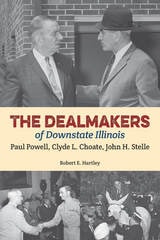
The Dealmakers of Downstate Illinois
Paul Powell, Clyde L. Choate, John H. StelleRobert E. Hartley
Southern Illinois University Press, 2016
Many people are unaware that from 1945 to 1975, downstate lawmakers dominated the Illinois political arena. In The Dealmakers of Downstate Illinois, Robert E. Hartley details the lives and contributions of three influential southern Illinois politicians, Paul Powell, Clyde Choate, and John Stelle. He describes how these “dealmakers” were able to work with Democrats and Republicans throughout the state to bring jobs and facilities to their region. Using a variety of coalitions, they maintained downstate political strength in the face of growing Chicago influence.
Hartley traces the personal histories of Powell, Choate, and Stelle, shows how they teamed up to advance a downstate political agenda, and reviews their challenges and successes. Beginning with an account of early experiences, including the battlefield courage that earned Choate the Medal of Honor as well as Stelle’s World War I experience and later entrepreneurship, the book continues with an exploration of the groundwork for their collaborative legislative agenda and their roles in the growth of Southern Illinois University and the passage of income tax legislation. Hartley reviews the importance of Powell’s relationship with Governor Stratton, Choate’s leadership of the 1972 Democratic National Convention and his relationships with Governor Walker and with Chicago interests.
The Dealmakers of Downstate Illinois is a vivid, straightforward tale of fighting in the legislative chambers, backstabbing behind the scenes, and trading special favors for votes in pursuit of not only personal gain but also the advancement of a regional agenda.
The Disappearing South?
Studies in Regional Change and ContinuityRobert P. Steed
University of Alabama Press, 1990
There is widespread agreement that the South has changed dramatically since the end of World War II—the essays in The Disappearing South address the ongoing debate
There is widespread agreement that the South has changed dramatically since the end of World War II. Social, demographic, economic, and political changes have altered significantly the region long considered the nation’s most distinctive. There is less agreement, however, about the extent to which the forces of nationalization have eroded the major elements of Southern distinctiveness. Although this volume does not purport to settle the debate on Southern political change, it does present a variety of recent evidence that helps put this important debate into perspective. In the process it helps clarify the contemporary politics of the South for readers ranging from the scholar to the more casual observer.
The essays in The Disappearing South address the ongoing debate. Contributors, in addition to the editors, include E. Lee Bernick, Earl Black, Merle Black, Lewis Bowman, Edward G. Carmines, Patrick Cotter, Thomas Eamon, Douglas G. Feig, John C. Green, James L. Guth, William E. Hulbary, Anne E. Kelley, Lyman A. Kellstedt, David M. Olson, John Shelton Reed, Harold Stanley, James G. Stovall, John Theilmann, Stephen H. Wainscott, and Allen Wilhite.
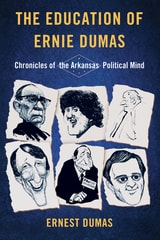
The Education of Ernie Dumas
Chronicles of the Arkansas Political MindErnest Dumas
Butler Center for Arkansas Studies, 2019
Beginning with the defeat of Governor Francis Cherry by the son of a hillbilly socialist at the end of the Joe McCarthy era, Dumas traces the development of a modernist political cast that eventually produced Arkansas’s first president of the United States. It follows the seed from 1978 that would germinate into the second impeachment of an American president.
Dumas has written for newspapers and about politics for sixty-three years, since 1954, the year that the stolid Cherry fell to Orval Eugene Faubus. The book is a political memoir that describes not only his education in the ways of politicians but the politicians’ own education and miseducation in how you win voters and then how you get things done.
It is mostly a collection of untold stories, often deeply personal, that reveal the inner struggles and sometimes the tribulations of the state’s leaders—Cherry, Faubus, Winthrop Rockefeller, Dale Bumpers, David Pryor, John McClellan, J. William Fulbright, Bill Clinton, Jim Guy Tucker, and others.
The Gentleman from Illinois
Stories from Forty Years of Elective Public ServiceAlan J. Dixon
Southern Illinois University Press, 2013
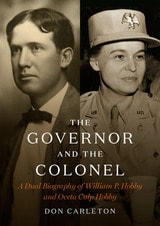
The Governor and the Colonel
A Dual Biography of William P. Hobby and Oveta Culp HobbyBy Don Carleton
University of Texas Press, 2020
William P. “Will” Hobby Sr. and Oveta Culp Hobby were one of the most influential couples in Texas history. Both were major public figures, with Will serving as governor of Texas and Oveta as the first commander of the Women’s Army Corps and later as the second woman to serve in a presidential cabinet. Together, they built a pioneering media empire centered on the Houston Post and their broadcast properties, and they played a significant role in the transformation of Houston into the fourth largest city in the United States. Don Carleton’s dual biography details their personal and professional relationship—defined by a shared dedication to public service—and the important roles they each played in local, state, and national events throughout the twentieth century.
This deeply researched book not only details this historically significant partnership, but also explores the close relationships between the Hobbys and key figures in twentieth-century history, from Texas legends such as LBJ, Sam Rayburn, and Jesse Jones, to national icons, including the Roosevelts, President Eisenhower, and the Rockefellers. Carleton's chronicle reveals the undeniable impact of the Hobbys on journalistic and political history in the United States.
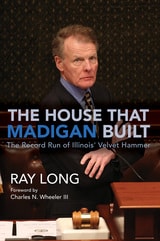
The House That Madigan Built
The Record Run of Illinois' Velvet HammerRay Long. Foreword by Charles N. Wheeler III
University of Illinois Press, 2022
Veteran reporter Ray Long draws on four decades of observing state government to provide the definitive political analysis of Michael Madigan. Secretive, intimidating, shrewd, power-hungry--Madigan mesmerized his admirers and often left his opponents too beaten down to oppose him. Long vividly recreates the battles that defined the Madigan era, from stunning James Thompson with a lightning-strike tax increase, to pressing for a pension overhaul that ultimately failed in the courts, to steering the House toward the Rod Blagojevich impeachment. Long also shines a light on the machinery that kept the Speaker in power. Head of a patronage army, Madigan ruthlessly used his influence and fundraising prowess to reward loyalists and aid his daughter’s electoral fortunes. At the same time, he reshaped bills to guarantee he and his Democratic troops shared in the partisan spoils of his legislative victories. Yet Madigan’s position as the state’s seemingly invulnerable power broker could not survive scandals among his close associates and the widespread belief that his time as Speaker had finally reached its end.
Unsparing and authoritative, The House That Madigan Built is the page-turning account of one the most powerful politicians in Illinois history.
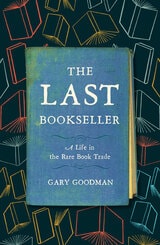
The Last Bookseller
A Life in the Rare Book TradeGary Goodman
University of Minnesota Press, 2023
A wry, unvarnished chronicle of a career in the rare book trade—now in paperback
When Gary Goodman wandered into a run-down, used-book shop that was going out of business in East St. Paul in 1982, he had no idea the visit would change his life. He walked in as a psychiatric counselor and walked out as the store’s new owner. In The Last Bookseller Goodman describes his sometimes desperate, sometimes hilarious career as a used and rare book dealer in Minnesota—the early struggles, the travels to estate sales and book fairs, the remarkable finds, and the bibliophiles, forgers, book thieves, and book hoarders he met along the way.
Here we meet the infamous St. Paul Book Bandit, Stephen Blumberg, who stole 24,000 rare books worth more than fifty million dollars; John Jenkins, the Texas rare book dealer who (probably) was murdered while standing in the middle of the Colorado River; and the eccentric Melvin McCosh, who filled his dilapidated Lake Minnetonka mansion with half a million books. In 1990, with a couple of partners, Goodman opened St. Croix Antiquarian Books in Stillwater, one of the Twin Cities region’s most venerable bookshops until it closed in 2017. This store became so successful and inspired so many other booksellers to move to town that Richard Booth, founder of the “book town” movement in Hay-on-Wye in Wales, declared Stillwater the First Book Town in North America.
The internet changed the book business forever, and Goodman details how, after 2000, the internet made stores like his obsolete. In the 1990s, the Twin Cities had nearly fifty secondhand bookshops; today, there are fewer than ten. As both a memoir and a history of booksellers and book scouts, criminals and collectors, The Last Bookseller offers an ultimately poignant account of the used and rare book business during its final Golden Age.
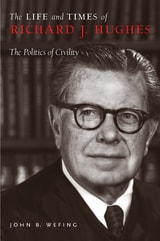
The Life and Times of Richard J. Hughes
The Politics of CivilityWefing, John B
Rutgers University Press, 2009
This biography illuminates the governor's accomplishments between 1962 and 1970, including the creation of the Hackensack Meadowlands Commission, formation of the county college system, establishment of stringent antipollution laws, design of the public defender system, and the adoption of a New Jersey sales tax, as well as his pivotal role during the Newark riots. As chief justice, Hughes faced difficult issuesùschool funding, low and moderate income housing needs, freedom of speech, and his decision in the rightto-die case involving Karen Ann Quinlan. With a career characterized by liberal activism, Hughes also contributed nationally and internationally, from serving as host of the 1964 Democratic National Convention to monitoring elections in South Vietnam.
John B. Wefing's research includes interviews with prominent politicians and leaders who worked with Hughes at various points in his career. The result is a rich story of a public servant who possessed a true ability to work with members of both political parties and played a significant role in shaping modern New Jersey.
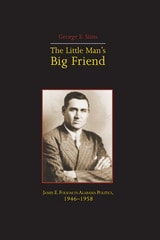
The Little Mans Big Friend
James E. Folsom in Alabama Politics, 1946-1958George E. Sims
University of Alabama Press, 1985
At the end of World War II changing economic and social forces transformed the lives of Alabamians, whose political leaders had built careers on localistic politics shaped by established economic and governmental interests. Into this context strolled “Big Jim”—six feet eight inches tall—with his corn-shuck mop, wooden suds bucket, and a promise to scrub out the Capitol. Ridiculed by his opponents, Folsom advertised his progressive program in every crossroads community.
As governor, Folsom faced a legislature dominated by local politicians whom he had bypassed during the campaign, and although he won approval of some bills, legislative opposition made his administration a four-year filibuster.
Not until 1955, after his election to a second term, did Folsom become an effective leader. Tying programs for expanded services to the local interests of the legislators, he won approval for road construction, “old-age pensions,” industrial development, and reorganization of the state docks. But the lawmakers balked at constitutional reform.
As his reform efforts met defeat during 1956, Folsom was losing his ability to lead. He refused to exploit racial tensions, and the rise of the civil rights movement undermined his popularity among whites. Unwilling to discipline his aides and supporters, his administration became notorious for petty graft. By 1958 aspiring candidates kept their distance from Folsom. “Big Jim” attempted a comeback in the 1962 campaign, but he was never again to hold public office.

The Maverick and the Machine
Governor Dan Walker Tells His StoryDan Walker
Southern Illinois University Press, 2007
Best Memoir of 2008, San Diego Book Awards
Illinois State Historical Society Certificate of Excellence, 2008

The Moon, Come to Earth
Dispatches from LisbonPhilip Graham
University of Chicago Press, 2009
A dispatch from a foreign land, when crafted by an attentive and skilled writer, can be magical, transmitting pleasure, drama, and seductive strangeness.
In The Moon, Come to Earth, Philip Graham offers an expanded edition of a popular series of dispatches originally published on McSweeney’s, an exuberant yet introspective account of a year’s sojourn in Lisbon with his wife and daughter. Casting his attentive gaze on scenes as broad as a citywide arts festival and as small as a single paving stone in a cobbled walk, Graham renders Lisbon from a perspective that varies between wide-eyed and knowing; though he’s unquestionably not a tourist, at the same time he knows he will never be a local. So his lyrical accounts reveal his struggles with (and love of) the Portuguese language, an awkward meeting with Nobel laureate José Saramago, being trapped in a budding soccer riot, and his daughter’s challenging transition to adolescence while attending a Portuguese school—but he also waxes loving about Portugal’s saudade-drenched music, its inventive cuisine, and its vibrant literary culture. And through his humorous, self-deprecating, and wistful explorations, we come to know Graham himself, and his wife and daughter, so that when an unexpected crisis hits his family, we can’t help but ache alongside them.
A thoughtful, finely wrought celebration of the moment-to-moment excitement of diving deep into another culture and confronting one’s secret selves, The Moon, Come to Earth is literary travel writing of a rare intimacy and immediacy.
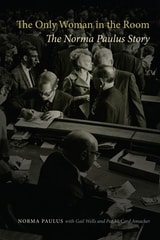
The Only Woman in the Room
The Norma Paulus StoryNorma Paulus
Oregon State University Press, 2017
Paulus came from a family of Roosevelt Democrats, but when a friend campaigned for a Republican seat in the state legislature, she switched parties. As she put it, “The Republicans were in politics for all the right reasons.” Amid the nationwide political upheavals of the late 1960s, Oregon’s Republicans, led by popular governor Tom McCall, seemed to be her kind of people—principled, pragmatic, and committed to education, the environment, and equality for all citizens under the law.
Paulus’s appointment by Governor McCall to the Marion-Polk Boundary Commission in 1969, a precursor to Oregon’s urban growth boundaries, helped launched her on a long and distinguished career of public service. She ran successfully for the Oregon House of Representatives in 1970, the first women to do so in the district. After three terms in the House, where she championed environmental causes, women’s rights and government transparency, she was elected Oregon’s Secretary of State in 1976—the first woman to hold that office and be elected to a statewide office in Oregon. She was the Republican candidate for governor in 1986, served a stint on the Northwest Power and Conservation Council, went on to become Oregon’s superintendent of public instruction, and headed the Oregon Historical Society.
During her years of public service, spanning the 1970s through the early 2000s, Norma Paulus occupied a distinctive niche in Oregon’s progressive political ecosystem. Her vivid personality and strong convictions endeared her to a broad swath of citizens. Beautiful and opinionated, charming and forceful, Paulus was widely covered in statewide and national newspapers and television during her eventful, sometimes controversial career. Now, The Only Woman in the Room sums up her life and work in a lively, anecdotal history that will appeal to historians, political scientists, newshounds, and ordinary citizens alike.
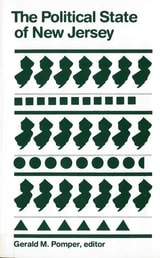
The Political State of New Jersey
Edited by Gerald M. Pomper
Rutgers University Press, 1986
A major theme of this book is the emergence of the state government as a significant factor in New Jersey political life. Only recently has the state, as opposed to local or private institutions, become a dominant influence. This trend is evident in the political culture and political parties, the legislature, the governor's office and the courts, the state's finances, and in the agencies for education, environmental protection, and economic development.
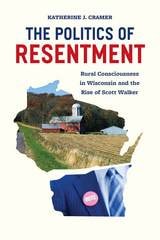
The Politics of Resentment
Rural Consciousness in Wisconsin and the Rise of Scott WalkerKatherine J. Cramer
University of Chicago Press, 2016
With The Politics of Resentment, Katherine J. Cramer uncovers an oft-overlooked piece of the puzzle: rural political consciousness and the resentment of the “liberal elite.” Rural voters are distrustful that politicians will respect the distinct values of their communities and allocate a fair share of resources. What can look like disagreements about basic political principles are therefore actually rooted in something even more fundamental: who we are as people and how closely a candidate’s social identity matches our own. Using Scott Walker and Wisconsin’s prominent and protracted debate about the appropriate role of government, Cramer illuminates the contours of rural consciousness, showing how place-based identities profoundly influence how people understand politics, regardless of whether urban politicians and their supporters really do shortchange or look down on those living in the country.
The Politics of Resentment shows that rural resentment—no less than partisanship, race, or class—plays a major role in dividing America against itself.
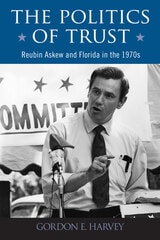
The Politics of Trust
Reubin Askew and Florida in the 1970sGordon E. Harvey
University of Alabama Press, 2015
Askew rose to power on a wave of “New South” leadership that hoped to advance the Democratic Party beyond the intransigent torpor of southern politics since the Civil War. He hoped to replace appeals to white supremacy with a vision of a more diverse and inclusive party. Following his election in Florida, other New South leaders such as Georgia’s Jimmy Carter, Arkansas’s Dale Bumpers, and South Carolina’s John C. West all came to power.
Audacious and gifted, Askew was one of six children raised by a single mother in Pensacola. As he worked his way up through the ranks of the state legislature, few in Florida except his constituents knew his name when he challenged Republic incumbent Claude R. Kirk Jr. on a populist platform promising higher corporate taxes. When he won, he inaugurated a series of reforms, including a new 5 percent corporate income tax; lower consumer, property, and school taxes; a review of penal statutes; environmental protections; higher welfare benefits; and workers’ compensation to previously uncovered migrant laborers.
Touting honesty, candor, and transparency, Askew dubbed his administration “government in the sunshine.” Harvey demonstrates that Askew’s success was not in spite of his penchant for bold, sometimes unpopular stances, but rather because his mix of unvarnished candor, sober ethics, and religious faith won the trust of the diverse peoples of his state.
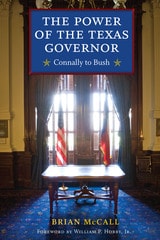
The Power of the Texas Governor
Connally to BushBy Brian McCall
University of Texas Press, 2009
George W. Bush called it "the best job in the world," yet many would argue that the Texas governorship is a weak office. Given few enumerated powers by the Texas Constitution, the governor must build a successful relationship with the state legislature—sometimes led by a powerful lieutenant governor or speaker of the opposing party—to advance his or her policy agenda. Yet despite the limitations on the office and the power of the legislative branch, many governors have had a significant impact on major aspects of Texas's public life—government, economic development, education, and insurance reform among them. How do Texas governors gain the power to govern effectively?
The Power of the Texas Governor takes a fresh look at the state's chief executives, from John Connally to George W. Bush, to discover how various governors have overcome the institutional limitations of the office. Delving into the governors' election campaigns and successes and failures in office, Brian McCall makes a convincing case that the strength of a governor's personality—in particular, his or her highly developed social skills—can translate into real political power. He shows, for example, how governors such as Ann Richards and George W. Bush forged personal relationships with individual legislators to achieve their policy goals. Filled with revealing insights and anecdotes from key players in each administration, The Power of the Texas Governor offers new perspectives on leadership and valuable lessons on the use of power.
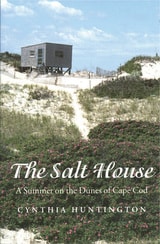
The Salt House
A Summer on the Dunes of Cape CodCynthia Huntington
Dartmouth College Press, 2003

The Sculpture of Robyn Horn
Robyn Horn
University of Arkansas Press, 2018
The essays and images in The Sculpture of Robyn Horn sketch the industrious career of this Little Rock, Arkansas-based sculptor, illuminating her attention to geometry, physics, and the philosophy of design, and exploring the context and origin of the various series—Geodes, Millstones, Standing Stones, and Slipping Stones, among others—that characterize her body of work.
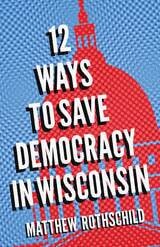
Twelve Ways to Save Democracy in Wisconsin
Matthew Rothschild
University of Wisconsin Press, 2021
From tightening campaign finance laws and banning gerrymandering to rooting out structural racism and moving toward economic equality, each chapter focuses on one of the dozen reforms that are required to heal democracy within the state. Rothschild provides an in-depth rationale for each, dismantling the counterarguments against them and exploring the complexities involved in implementing them. He offers concrete proposals and action items for grassroots organizers and concerned community advocates to restore constituent control of state politics. This pocket-sized handbook is essential for politically aware citizens as well as journalists and watchdogs who see Wisconsin as a crucial battleground state and political bellwether for the nation.