Results by title
64 books match the query 'African Diaspora' and 15 start with t
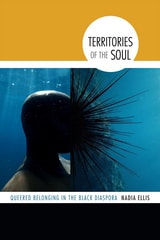
Territories of the Soul
Queered Belonging in the Black DiasporaNadia Ellis
Duke University Press, 2015
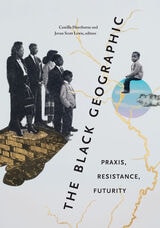
The Black Geographic
Praxis, Resistance, FuturityCamilla Hawthorne and Jovan Scott Lewis, editors
Duke University Press, 2023
Contributors. Anna Livia Brand, C.N.E. Corbin, Lindsey Dillon, Chiyuma Elliott, Ampson Hagan, Camilla Hawthorne, Matthew Jordan-Miller Kenyatta, Jovan Scott Lewis, Judith Madera, Jordanna Matlon, Solange Muñoz, Diana Negrín, Danielle Purifoy, Sharita Towne
The Digital Black Atlantic
Roopika Risam
University of Minnesota Press, 2021
Exploring the intersections of digital humanities and African diaspora studies
How can scholars use digital tools to better understand the African diaspora across time, space, and disciplines? And how can African diaspora studies inform the practices of digital humanities? These questions are at the heart of this timely collection of essays about the relationship between digital humanities and Black Atlantic studies, offering critical insights into race, migration, media, and scholarly knowledge production.
The Digital Black Atlantic spans the African diaspora’s range—from Africa to North America, Europe, and the Caribbean—while its essayists span academic fields—from history and literary studies to musicology, game studies, and library and information studies. This transnational and interdisciplinary breadth is complemented by essays that focus on specific sites and digital humanities projects throughout the Black Atlantic. Covering key debates, The Digital Black Atlantic asks theoretical and practical questions about the ways that researchers and teachers of the African diaspora negotiate digital methods to explore a broad range of cultural forms including social media, open access libraries, digital music production, and video games. The volume further highlights contributions of African diaspora studies to digital humanities, such as politics and representation, power and authorship, the ephemerality of memory, and the vestiges of colonialist ideologies.
Grounded in contemporary theory and praxis, The Digital Black Atlantic puts the digital humanities into conversation with African diaspora studies in crucial ways that advance both.
Contributors: Alexandrina Agloro, Arizona State U; Abdul Alkalimat; Suzan Alteri, U of Florida; Paul Barrett, U of Guelph; Sayan Bhattacharyya, Singapore U of Technology and Design; Agata Błoch, Institute of History of Polish Academy of Sciences; Michał Bojanowski, Kozminski U; Sonya Donaldson, New Jersey City U; Anne Donlon; Laurent Dubois, Duke U; Amy E. Earhart, Texas A&M U; Schuyler Esprit, U of the West Indies; Demival Vasques Filho, U of Auckland, New Zealand; David Kirkland Garner; Alex Gil, Columbia U; Kaiama L. Glover, Barnard College, Columbia U; D. Fox Harrell, MIT; Hélène Huet, U of Florida; Mary Caton Lingold, Virginia Commonwealth U; Angel David Nieves, San Diego State U; Danielle Olson, MIT; Tunde Opeibi (Ope-Davies), U of Lagos, Nigeria; Jamila Moore Pewu, California State U, Fullerton; Anne Rice, Lehman College, CUNY; Sercan Şengün, Northeastern U; Janneken Smucker, West Chester U; Laurie N.Taylor, U of Florida; Toniesha L. Taylor, Texas Southern U.

The Fixer
Visa Lottery ChroniclesCharles Piot with Kodjo Nicolas Batema
Duke University Press, 2019
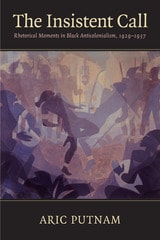
The Insistent Call
Rhetorical Moments in Black Anticolonialism, 1929-1937Aric Putnam
University of Massachusetts Press, 2012
Throughout the nineteenth century, African heritage played an important role in black America, as personal memories and cultural practices continued to shape the everyday experience of people of African descent living under the shadow of slavery. Resisting efforts to de-Africanize their values, customs, and beliefs, Black Americans invoked their African roots in public arguments about their identity and place in the “new” world. At the outset of the twentieth century many still saw Africa primarily as the source of a common cultural and spiritual past. But after the 1920s, the meaning of African heritage changed as people of African descent expressed new relationships between themselves, the United States, and the African Diaspora.
In The Insistent Call, Aric Putnam studies the rhetoric of newspapers, literature, and political pamphlets that expressed this shift. He demonstrates that as people of African descent debated the United States' occupation of Haiti, the Liberian labor crisis, and the Italian invasion of Ethiopia, they formed a new collective identity, one that understood the African Diaspora in primarily political rather than cultural terms. In addition to uncovering a neglected period in the history of Black rhetoric, Putnam shows how rhetoric that articulates the interests of a population not defined by the boundaries of a state can still motivate collective action and influence policies.
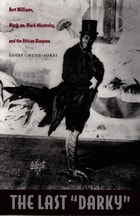
The Last "Darky"
Bert Williams, Black-on-Black Minstrelsy, and the African DiasporaLouis Chude-Sokei
Duke University Press, 2006
Chude-Sokei makes the crucial argument that Williams’s minstrelsy negotiated the place of black immigrants in the cultural hotbed of New York City and was replicated throughout the African diaspora, from the Caribbean to Africa itself. Williams was born in the Bahamas. When performing the “darky,” he was actually masquerading as an African American. This black-on-black minstrelsy thus challenged emergent racial constructions equating “black” with African American and marginalizing the many diasporic blacks in New York. It also dramatized the practice of passing for African American common among non-American blacks in an African American–dominated Harlem. Exploring the thought of figures such as Booker T. Washington, W. E. B. Du Bois, Marcus Garvey, and Claude McKay, Chude-Sokei situates black-on-black minstrelsy at the center of burgeoning modernist discourses of assimilation, separatism, race militancy, carnival, and internationalism. While these discourses were engaged with the question of representing the “Negro” in the context of white racism, through black-on-black minstrelsy they were also deployed against the growing international influence of African American culture and politics in the twentieth century.
The Marcus Garvey and Universal Negro Improvement Association Papers, Volume XI
The Caribbean Diaspora, 1910–1920Marcus Garvey
Duke University Press, 2011
Praise for the Previous Volumes:
“The Marcus Garvey and Universal Negro Improvement Association Papers will take its place among the most important records of the Afro-American experience. . . . ‘The Marcus Garvey Papers’ lays the groundwork for a long overdue reassessment of Marcus Garvey and the legacy of racial pride, nationalism and concern with Africa he bequeathed to today’s black community.”—Eric Foner, the New York Times Book Review
“Until the publication of The Marcus Garvey and Universal Negro Improvement Association Papers, many of the documents necessary for a full assessment of Garvey’s thought or of his movement’s significance have not been easily accessible. Robert A. Hill and his staff . . . have gathered over 30,000 documents from libraries and other sources in many countries. . . . The Garvey papers will reshape our understanding of the history of black nationalism and perhaps increase our understanding of contemporary black politics.”—Clayborne Carson, the Nation
“Now is our chance, through these important volumes, to finally begin to come to terms with the significance of Garvey’s complex, fascinating career and the meaning of the movement he built.”—Lawrence W. Levine, the New Republic
The Marcus Garvey and Universal Negro Improvement Association Papers, Volume XII
The Caribbean Diaspora, 1920-1921Marcus Garvey
Duke University Press, 2014
Volume XII highlights the centrality of the Caribbean people not only to the convention, but also to the movement. The reports to the convention discussed the range of social and economic conditions obtaining in the Caribbean, particularly their impact on racial conditions. The quality of the discussions and debates were impressive. Contained in these reports are some of the earliest and most clearly enunciated statements in defense of social and political freedom in the Caribbean. These documents form an underappreciated and still underutilized record of the political awakening of Caribbean people of African descent.
The Marcus Garvey and Universal Negro Improvement Association Papers, Volume XIII
The Caribbean Diaspora, 1921-1922, Volume 13Marcus Garvey
Duke University Press, 2016
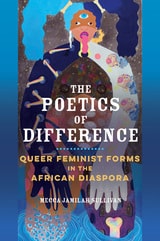
The Poetics of Difference
Queer Feminist Forms in the African DiasporaMecca Jamilah Sullivan
University of Illinois Press, 2021
From Audre Lorde, Ntozake Shange, and Bessie Head, to Zanele Muholi, Suzan-Lori Parks, and Missy Elliott, Black women writers and artists across the African Diaspora have developed nuanced and complex creative forms. Mecca Jamilah Sullivan ventures into the unexplored spaces of black women’s queer creative theorizing to learn its languages and read the textures of its forms. Moving beyond fixed notions, Sullivan points to a space of queer imagination where black women invent new languages, spaces, and genres to speak the many names of difference. Black women’s literary cultures have long theorized the complexities surrounding nation and class, the indeterminacy of gender and race, and the multiple meanings of sexuality. Yet their ideas and work remain obscure in the face of indifference from Western scholarship.
Innovative and timely, The Poetics of Difference illuminates understudied queer contours of black women’s writing.
The Predicament of Blackness
Postcolonial Ghana and the Politics of RaceJemima Pierre
University of Chicago Press, 2012

The Specter and the Speculative
Afterlives and Archives in the African DiasporaMae G. Henderson
Rutgers University Press, 2024
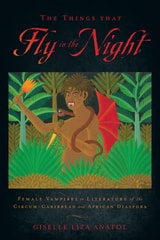
The Things That Fly in the Night
Female Vampires in Literature of the Circum-Caribbean and African DiasporaGiselle Liza Anatol
Rutgers University Press, 2015
This book is available as an audio book (https://www.abantuaudio.com/books/1197052/The-Things-That-Fly-in-the-Night).
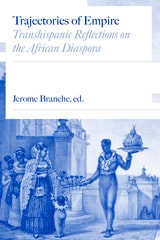
Trajectories of Empire
Transhispanic Reflections on the African DiasporaJerome C. Branche
Vanderbilt University Press, 2022
The book’s chapters explore what Blackness means in the so-called racial democracies of Brazil and Cuba today. Among the historical narratives and themes it covers are the role of medical science in the objectification and nullification of Black female personhood during slavery in nineteenth-century Brazil; the protocols of portraiture in the colonial period that, in including enslaved individuals, pictorially highlight and freeze their supposed inferiority vis-à-vis their owners; and those aspects of discourse that promote colonial capture and oppression in terms of evangelization and the saving of souls, or simply create the discursive template as early as the fifteenth century, for their continued alienation and marginalization across generations.
Trajectories of Empire’s contributions come from the fields of literary criticism, visual culture, history, anthropology, popular culture (rap), and cultural studies. As the product of an interdisciplinary collective, this book will be of interest to scholars in Iberian or Hispanic studies, Africana studies, postcolonial studies, and transatlantic studies, as well as the general public.
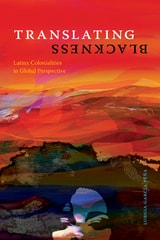
Translating Blackness
Latinx Colonialities in Global PerspectiveLorgia García Peña
Duke University Press, 2022