Results by title
336 books match the query 'Age' and 71 start with t

TV Museum
Contemporary Art and the Age of TelevisionMaeve Connolly
Intellect Books, 2014
Lavishly illustrated and with in-depth discussion of over fifty canonical and contemporary artworks, TV Museum offers a new approach to the analysis of television’s place within contemporary art and culture.

Taylored Lives
Narrative Productions in the Age of Taylor, Veblen, and FordMartha Banta
University of Chicago Press, 1993

Technology for the Process
Teaching Academic Writing to Multilingual Students in the Age of AIM. Sidury Christiansen and Qian Du
University of Michigan Press, 2027
As digital tools and artificial intelligence (AI) reshape how writing is taught and learned, instructors face new questions about how to integrate technology without losing sight of sound pedagogy. Technology for the Process offers a research-informed and practice-driven response. Written by experienced writing teachers, the book presents ready-to-use, adaptable, classroom-tested approaches for teaching academic writing to multilingual students through purposeful use of digital tools, including generative AI. Rather than treating technology as an add-on or a substitute for instruction, the book shows how it can meaningfully support writing as a process: from generating ideas and revising drafts to making rhetorical decisions and developing academic voice. Designed for university-level and adult learning contexts, this book serves as both a practical resource and a thoughtful guide for educators, librarians, and institutions seeking accessible, effective, and sustainable approaches to writing instruction in the age of AI.
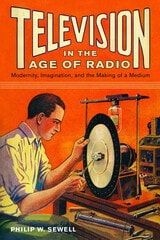
Television in the Age of Radio
Modernity, Imagination, and the Making of a MediumSewell, Philip W
Rutgers University Press, 2014
Television existed for a long time before it became commonplace in American homes. Even as cars, jazz, film, and radio heralded the modern age, television haunted the modern imagination. During the 1920s and 1930s, U.S. television was a topic of conversation and speculation. Was it technically feasible? Could it be commercially viable? What would it look like? How might it serve the public interest? And what was its place in the modern future? These questions were not just asked by the American public, but also posed by the people intimately involved in television’s creation. Their answers may have been self-serving, but they were also statements of aspiration. Idealistic imaginations of the medium and its impact on social relations became a de facto plan for moving beyond film and radio into a new era.
In Television in the Age of Radio, Philip W. Sewell offers a unique account of how television came to be—not just from technical innovations or institutional struggles, but from cultural concerns that were central to the rise of industrial modernity. This book provides sustained investigations of the values of early television amateurs and enthusiasts, the fervors and worries about competing technologies, and the ambitions for programming that together helped mold the medium.
Sewell presents a major revision of the history of television, telling us about the nature of new media and how hopes for the future pull together diverse perspectives that shape technologies, industries, and audiences.
Ten Is the Age of Darkness
The Black BildungsromanGeta LeSeur
University of Missouri Press, 1995
In Ten Is the Age of Darkness, Geta LeSeur explores how black authors of the United States and English- speaking Caribbean have taken a European literary tradition and adapted it to fit their own needs for self-expression. LeSeur begins by defining the structure and models of the European genre of the bildungsroman, then proceeds to show how the circumstances of colonialism, oppression, race, class, and gender make the maturing experiences of selected young black protagonists different from those of their white counterparts.
Examining the parallels and differences in attitudes toward childhood in the West Indies and the United States, as well as the writers' individual perspectives in each work of fiction, LeSeur reaches intriguing conclusions about family life, community participation in the nurturing of children, the timing and severity of the youngsters' confrontation of adult society, and the role played by race in the journey toward adulthood.
LeSeur's readings of African American novels provide new insights into the work of Langston Hughes, James Baldwin, Toni Morrison, Paule Marshall, and Richard Wright, among others. When read as examples of the bildungsroman rather than simply as chronicles of black experiences, these works reveal an even deeper significance and have a more powerful impact. LeSeur convincingly demonstrates that such African American novels as Baldwin's Go Tell It on the Mountain, Wright's Black Boy, and Morrison's The Bluest Eye concentrate to a large extent on protest, while such African West Indian works as George Lamming's In the Castle of My Skin, Austin Clarke's Amongst Thistles and Thorns, Jamaica Kincaid's Annie John, and Erna Brodber's Jane and Louisa Will Soon Come Home reflect a more naive, healthy re-creation of what childhood can and should be, despite economic and physical impoverishment. She also gives a special space within the genre to Paule Marshall's BrownGirl, Brownstones and Ntozake Shange's Betsey Brown and the importance of "woman time," "woman voice," and mothers.
While enlarging our understanding of both the similarities and the differences in the black experiences of the Carribean and American youngsters coming of age, Ten Is the Age of Darkness also suggests that children of color in similar spheres share many common experiences. LeSeur concludes that the bildungsromane by black writers provide uniquely revealing contributions to the Afro-World literary canon and point the way for others to examine literary pieces in Third World communities of color.
Testing Deaf Students in an Age of Accountability
Robert C. Johnson
Gallaudet University Press, 2008
Despite the idealism represented by the No Child Left Behind law’s mandate for accountability in education, deaf students historically and on average have performed far below grade level on standardized tests. To resolve this contradiction in deaf education, this collection presents a spectrum of perspectives from a diverse corps of education experts to suggest a constructive synthesis of worthy ideals, hard realities, and pragmatic solutions. Contributors to this study include volume editors Robert C. Johnson and Ross E. Mitchell, Ed Bosso, Michael Bello, Betsy J. Case, Patrick Costello, Stephanie W. Cawthon, Joseph E. Fischgrund, Courtney Foster, Christopher Johnstone, Michael Jones, Jana Lollis, Pat Moore, Barbara Raimondo, Suzanne Recane, Richard C. Steffan, Jr., Sandra J. Thompson, Martha L. Thurlow, and Elizabeth Towles-Reeves.
These noted educators and researchers employ experiences from Massachusetts, Delaware, Maryland, North Carolina, Illinois and California to support their findings about the dilemma facing deaf students and their teachers. They assess the intent and flexibility of federal law; achievement data regarding deaf students; potential accommodations and universal design to make tests more accessible; possible alternatives for deaf student not ready for conventional assessments; accounts of varying degrees of cooperation and conflict between schools and state education departments; and the day-to-day efforts of teachers and school administrators to help deaf students measure up to the new standards. By presenting these wide-ranging insights together, Testing Deaf Students in an Age of Accountability provides a unique opportunity to create genuine means to educate deaf students for the only test that matters, that of life.
The Age and Stage of George L. Fox, 1825-1877
1825-1877Laurence Senelick
University of Iowa Press, 1999
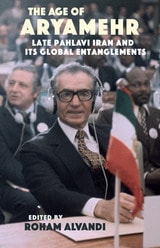
The Age of Aryamehr
Late Pahlavi Iran and Its Global EntanglementsEdited by Roham Alvandi
Gingko, 2025
The reign of the last Shah of Iran, Mohammad Reza Pahlavi (1941–79), marked the high point of Iran’s global interconnectedness. Never before had Iranians felt the impact of global political, social, economic, and cultural forces so intimately in their national and daily lives, nor had Iranian actors played such an important global role – on battlefields, barricades, and in board rooms far beyond Iran’s borders. Iranian intellectuals, technocrats, politicians, workers, artists, and students alike were influenced by the global ideas, movements, markets, and conflicts that they also helped to shape.
From the launch of the Shah’s White Revolution in 1963 to his overthrow in the popular revolution of 1978–79, Iran saw the longest period of sustained economic growth that the country had ever experienced. An entire generation took its cue from the shift from oil consumption to oil production to dream of, and aspire to, a modernized Iran, and the history of Iran in this period has tended to be presented as a prologue to the revolution. Those histories usually locate the political, social, and cultural origins of the revolution firmly within a national context, into which global actors intruded as Iranian actors retreated. While engaging with that national narrative, this volume is concerned with Iran’s place in the global history of the 1960s and ’70s. It examines and highlights the transnational threads that connected Pahlavi Iran to the world, from global traffic in modern art and narcotics to the embrace of American social science by Iranian technocrats and the encounter of European intellectuals with the Iranian Revolution.
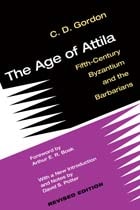
The Age of Attila
Fifth-Century Byzantium and the BarbariansC.D. Gordon
University of Michigan Press, 2013
This book describes the tragic and bloody collapse of Roman civilization in the West in the fifth century and the near ruin of the Eastern Roman Empire. The hundred years from the death of Theodosius I to the conquest of Italy by Theodoric the Ostrogoth were years of chaos, havoc, and destruction. In the East we see the confusion of the imperial government, the palace intrigues, and the sinister role of the palace eunuchs—but survival. The events are dramatically described by eyewitnesses to the disasters—the Byzantine historians Priscus, Malchus, Olympiodorus, John of Antioch, and Candidus. The contemporary accounts are translated into English and provided with a running commentary by C. D. Gordon to form a continuous narrative of an age of turmoil—the Age of Attila.
David S. Potter has added translations of significant passages not in the original volume. He has also added extensive new notes to place the book in the contemporary study of the ancient world, as well as a new bibliography and a concordance with modern editions.
“David Potter’s re-edition, really updating, expanding, reshaping, and refreshing Colin Gordon's classic Age of Attila is a very welcome development. The Age of Attila, in Potter's expanded version, provides in English the most important literary sources for the immensely important period of the transition or decline, depending on one's view, of the Roman empire to the post-Roman kingdoms in the West, and for Roman history in the fifth century CE in general. This decisive century has always been hotly debated, but rising interest in economic history and a new wave of Attila books make this an especially fortuitous moment to have Gordon anew: no historian, no student of the later Roman Empire will be able to live without David Potter's edition of Gordon's Age of Attila!”
—Susanna Elm, University of California, Berkeley
“It has been half a century since C. D. Gordon published this valuable introduction to the fifth century, a narrative reconstituted from the fragmentary but tantalizing sources remaining for the period. David Potter has revitalized this classic work, updating it with reference to the latest critical editions and rewriting its notes to take account of recent scholarship. The book provides an excellent entry point into a world that saw the western Roman Empire crumble, Byzantium rise from its remains, and the barbarian peoples of central and western Eurasia reshape human history.”
—Noel Lenski, University of Colorado Boulder
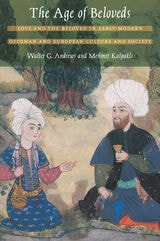
The Age of Beloveds
Love and the Beloved in Early-Modern Ottoman and European Culture and SocietyWalter G. Andrews and Mehmet Kalpakli
Duke University Press, 2005
The authors show that the “age of beloveds” was not just an Ottoman, eastern European, or Islamic phenomenon. It extended into western Europe as well, pervading the cultures of Venice, Florence, Rome, and London during the same period. Andrews and Kalpakli contend that in an age dominated by absolute rulers and troubled by war, cultural change, and religious upheaval, the attachments of dependent courtiers and the longings of anxious commoners aroused an intense interest in love and the beloved. The Age of Beloveds reveals new commonalities in the cultural history of two worlds long seen as radically different.

The Age of Discovery
Alan Michael Parker
Tupelo Press, 2020
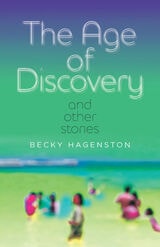
The Age of Discovery and Other Stories
Becky Hagenston
The Ohio State University Press, 2021
“These ingenious stories are so funny and sparkling and slyly inventive that their pain catches you by surprise, like a sunburn after a day at the beach.”—Eric Puchner
Winner, 2022 Mississippi Institute for Arts and Letters Prize for Best Fiction
In Becky Hagenston’s fourth collection, the real and the fantastic collide in stories that span from Mississippi to Europe, and from the recent past to the near future. The characters are sex-toy sellers, internet trolls, parents, students, and babysitters—all trying to make sense of a world where nothing is quite what it appears to be. A service robot makes increasingly disturbing requests. A middle school teacher is accused of witchcraft—and realizes the accusations might be true. Two college students devise a way to avoid getting hit on in bars. A baker finds bizarre anomalies in his sourdough. A librarian follows her dead ex-husband through the Atlanta airport. In these stories, men and women confront grief, danger, loneliness, and sometimes—the strangest discovery of all—unexpected joy. Hagenston delivers a collection that is, at its weird and shining heart, about people discovering what—for better or worse—they are capable of.
The Age of Eclecticism
Literature and Culture in Britain, 1815–1885Christine Bolus-Reichert
The Ohio State University Press, 2009
The Age of Economic Measurement
2001 Supplement, Volume 33Judy Klein and Mary S. Morgan
Duke University Press, 0
The Age of Everything
How Science Explores the PastMatthew Hedman
University of Chicago Press, 2007
Hedman details, for example, how interdisciplinary studies of the Great Pyramids of Egypt can determine exactly when and how these incredible structures were built. He shows how the remains of humble trees can illuminate how the surface of the sun has changed over the past ten millennia. And he also explores how the origins of the earth, solar system, and universe are being discerned with help from rocks that fall from the sky, the light from distant stars, and even the static seen on television sets.
Covering a wide range of time scales, from the Big Bang to human history, The Age of Everything is a provocative and far-ranging look at how science has determined the age of everything from modern mammals to the oldest stars, and will be indispensable for all armchair time travelers.
“We are used to being told confidently of an enormous, measurable past: that some collection of dusty bones is tens of thousands of years old, or that astronomical bodies have an age of some billions. But how exactly do scientists come to know these things? That is the subject of this quite fascinating book. . . . As told by Hedman, an astronomer, each story is a marvel of compressed exegesis that takes into account some of the most modern and intriguing hypotheses.”—Steven Poole, Guardian
The Age of Experiences
Harnessing Happiness to Build a New EconomyBenjamin Kline Hunnicutt
Temple University Press, 2020
In The Age of Experiences, Benjamin Kline Hunnicutt examines how the advance of happiness science is impacting the economy, making possible new experience-products that really make people happy and help forward-looking businesses expand and develop new technologies. In today’s marketplace there is less interest in goods and services and more interest in buying and selling personal improvements and experiences. Hunnicutt traces how this historical shift in consumption to the “softer” technologies of happiness represents not only a change in the modern understanding of progress, but also a practical, economic transformation, profoundly shaping our work and the ordering of our life goals.
Based on incisive historical research, Hunnicutt demonstrates that we have begun to turn from material wealth to focus on the enrichment of our personal and social lives. The Age of Experiences shows how industry, technology, and the general public are just beginning to realize the potential of the new economy. Exploring the broader implications of this historical shift, Hunnicutt concludes that the new demand for experiences will result in the reduction of work time, the growth of jobs, and the regeneration of virtue—altogether an increasingly healthy public life.
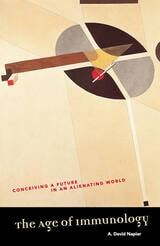
The Age of Immunology
Conceiving a Future in an Alienating WorldA. David Napier
University of Chicago Press, 2003
To illustrate these destructive consequences, Napier likens the current craze for embracing diversity and the use of politically correct speech to a cultural potluck to which we each bring different dishes, but at which no one can eat unless they abide by the same rules. Similarly, loaning money to developing nations serves as a tool both to make the peoples in those nations more like us and to maintain them in the nonthreatening status of distant dependents. To break free of the resulting downward spiral of homogenization and self-focus, Napier suggests that we instead adopt a new defining concept based on embryology, in which development and self-growth take place through a process of incorporation and transformation. In this effort he suggests that we have much to learn from non-Western peoples, such as the Balinese, whose ritual practices require them to take on the considerable risk of injecting into their selves the potential dangers of otherness—and in so doing ultimately strengthen themselves as well as their society.
The Age of Immunology, with its combination of philosophy, history, and cultural inquiry, will be seen as a manifesto for a new age and a new way of thinking about the world and our place in it.
The Age of Johnson
A Scholarly Annual (Volume 24)Jack Lynch
Bucknell University Press, 2021
The move to a new publisher has given The Age of Johnson: A Scholarly Annual the opportunity to recommit to what it does best: present to a wide readership cant-free scholarly articles and essays and searching book reviews, all featuring a wide variety of approaches, written by both seasoned scholars and relative newcomers. Volume 24 features commentary on a range of Johnsonian topics: his reaction to Milton, his relation to the Allen family, his notes in his edition of Shakespeare, his use of Oliver Goldsmith in his Dictionary, and his always fascinating Nachleben. The volume also includes articles on topics of strong interest to Johnson: penal reform, Charlotte Lennox's professional literary career, and the "conjectural history" of Homer in the eighteenth century.
For more than two decades, The Age of Johnson has presented a vast corpus of Johnsonian studies "in the broadest sense," as founding editor Paul J. Korshin put it in the preface to Volume 1, and it has retained the interest of a wide readership. In thousands of pages of articles, review essays, and reviews, The Age of Johnson has made a permanent contribution to our understanding of the eighteenth century, and particularly of Samuel Johnson, his circle, and his interests, and has also served as an outlet for writers who are not academics but have something important to say about the eighteenth century.
ISSN 0884-5816.
The Age of Johnson
A Scholarly Annual (Volume 25)Jack Lynch
Bucknell University Press, 2025
Published by Bucknell University Press. Distributed worldwide by Rutgers University Press.
ISSN 0884-5816
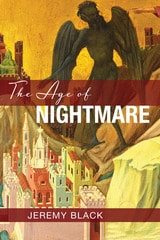
The Age of Nightmare
The Gothic and British Culture, 1750–1900Jeremy Black
St. Augustine's Press, 2022
Black's understanding of the Gothic writer is a remarkable contribution to the legacy of British literature and the novel at large. Once again, in Black thoroughness meets fidelity and the reader is overcome with his own insights into the period on the merit of Black's efforts.
In The Weight of Words Series, Black is devoted to the preservation of the memory of British literary genius, and in so doing he is carving out a niche for himself. As in the Gothic novel where landscapes give quarter to influences that seem to interact with the human fates that freely wander in, reading Black is an experience of suddenly finding oneself in possession of an education, and his allure takes a cue from the horrific Gothic tempt.
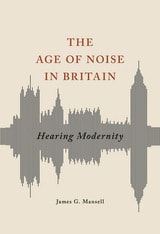
The Age of Noise in Britain
Hearing ModernityJames G Mansell
University of Illinois Press, 2017
The Age of Sex
Custom, Law, and Ritual in Twentieth-Century East AfricaCorrie Decker
University of Wisconsin Press, 2025
In The Age of Sex, Decker demonstrates how maturation became defined as the hypothetical moment when a girl becomes a woman capable of engaging in heterosexual activity and a boy becomes a man imbued with the right and responsibility to have heterosexual intercourse. Colonial ethnographic studies reduced complex precolonial rites of passage to “puberty rites” fixated on these sexual transformations. The resulting stereotypes influenced, in turn, how colonial and postcolonial court officials decided age-of-consent and other sex crime cases. Court rituals thus legally transformed girls into women by ruling on their sexual maturity and boys into men by sentencing them to corporal punishment, marking their acceptance of heterosexual responsibilities.
The Age of Strict Construction
a History of the Growth of Federal Power, 1789-1861Peter Zavodnyik
Catholic University of America Press, 2007
The Age of Subtlety
Nature and Rhetorical Conceits in Early Modern EuropeJavier Patiño Loira
University of Delaware Press, 2024
The Age of the Cathedrals
Art and Society, 980-1420Georges Duby
University of Chicago Press, 1981
"If Age of the Cathedrals has a fault, it is that Professor Duby knows too much, has too many new ideas and takes such a delight in setting them out. . . insights whiz to and fro like meteorites."—John Russell, New York Times Book Review
The Age of the Gods
Christopher Dawson
Catholic University of America Press, 2012
The Age of the World Target
Self-Referentiality in War, Theory, and Comparative WorkRey Chow
Duke University Press, 2006
The Argument about Things in the 1980s
Goods and Garbage in an Age of NeoliberalismTim Jelfs
West Virginia University Press, 2018
Tim Jelfs’s The Argument about Things in the 1980s considers all this and more in a broad study of the literature and culture of the “long 1980s.” It contributes to of-the-moment scholarly debate about material culture, high finance, and ecological degradation, shedding new light on the complex relationship between neoliberalism and cultural life.
The Bourgeois Virtues
Ethics for an Age of CommerceDeirdre Nansen McCloskey
University of Chicago Press, 2006
McCloskey’s sweeping, charming, and even humorous survey of ethical thought and economic realities—from Plato to Barbara Ehrenreich—overturns every assumption we have about being bourgeois. Can you be virtuous and bourgeois? Do markets improve ethics? Has capitalism made us better as well as richer? Yes, yes, and yes, argues McCloskey, who takes on centuries of capitalism’s critics with her erudition and sheer scope of knowledge. Applying a new tradition of “virtue ethics” to our lives in modern economies, she affirms American capitalism without ignoring its faults and celebrates the bourgeois lives we actually live, without supposing that they must be lives without ethical foundations.
High Noon, Kant, Bill Murray, the modern novel, van Gogh, and of course economics and the economy all come into play in a book that can only be described as a monumental project and a life’s work. The Bourgeois Virtues is nothing less than a dazzling reinterpretation of Western intellectual history, a dead-serious reply to the critics of capitalism—and a surprising page-turner.
The British Conservative Party in the Age of Universal Suffrage
Popular Conservatism, 1918-1929Neal R. McCrillis
The Ohio State University Press, 1900
The Colonial Spanish-American City
Urban Life in the Age of Atlantic CapitalismBy Jay Kinsbruner
University of Texas Press, 2005
The colonial Spanish-American city, like its counterpart across the Atlantic, was an outgrowth of commercial enterprise. A center of entrepreneurial activity and wealth, it drew people seeking a better life, with more educational, occupational, commercial, bureaucratic, and marital possibilities than were available in the rural regions of the Spanish colonies. Indeed, the Spanish-American city represented hope and opportunity, although not for everyone.
In this authoritative work, Jay Kinsbruner draws on many sources to offer the first history and interpretation in English of the colonial Spanish-American city. After an overview of pre-Columbian cities, he devotes chapters to many important aspects of the colonial city, including its governance and administrative structure, physical form, economy, and social and family life. Kinsbruner's overarching thesis is that the Spanish-American city evolved as a circumstance of trans-Atlantic capitalism. Underpinning this thesis is his view that there were no plebeians in the colonial city. He calls for a class interpretation, with an emphasis on the lower-middle class. His study also explores the active roles of women, many of them heads of households, in the colonial Spanish-American city.
The Divided North
Black and White Families in the Age of SlaveryCarol Gardner
University of Massachusetts Press, 2025
Winner, 2026 New England Historical Association James P. Hanlan Book Prize
Finalist, 2026 New England Society Book Award in Nonfiction
Reuben Ruby and Nathaniel Gordon II were born eleven months apart in 1798 and 1799 and spent much of their boyhoods roaming the noisy, bustling waterfront of Portland, Maine. They lived just blocks from one another, attended school together, and went to the same church with their families. But they were worlds apart, separated by family, culture, and race. Reuben Ruby was Black and Nathaniel Gordon was White.
The Rubys became prominent antislavery activists, equal rights advocates, and operatives on the Underground Railroad. Their neighbors, the Gordons, became well-to-do ship masters, owners, and merchants: among them, the most notorious American slave ship captain of the century, Nathaniel Gordon III. As activists, sea captains, businessmen, prospectors, and politicians, members of these two families traveled to New York, California, Texas, Louisiana, Africa, Haiti, and Brazil, where their experiences were shaped by their racial identities. At home in the “Free North,” they faced social and political divisions nearly as sharp as those they encountered elsewhere.
To understand the issues that divided nineteenth-century America—and, in many ways, still divide the nation—few have looked to the far North. In this compelling narrative history and intimate dual-family biography, Carol Gardner traces the Rubys and Gordons as they navigate the turbulent 1800s. As families and individuals, they demonstrate that the North was a critical proving ground for American notions of freedom and equality, as telling as any town, plantation, or battlefield in the South. Their experiences help reveal what it meant to live in a free state during the age of slavery, with all the promise, disappointment, irony, and hope that the notion entailed.

The English Virtuoso
Art, Medicine, and Antiquarianism in the Age of EmpiricismCraig Ashley Hanson
University of Chicago Press, 2009
At the heart of this profoundly interdisciplinary study lies the Royal Society of London for the Improvement of Natural Knowledge, which from its founding in 1660 served as the major professional organization for London’s leading physicians, many of them prominent virtuosi. Craig Ashley Hanson reveals that a vital art audience emerged from the Royal Society—whose members assembled many of the period’s most important nonaristocratic collections—a century before most accounts date the establishment of an institutional base for the arts in England. Unearthing the fascinating stories of an impressive cast of characters, Hanson establishes a new foundation for understanding both the relationship between British art and science and the artistic accomplishments of the late eighteenth and nineteenth centuries.
The Familiar Letter as a Literary Genre in the Age of Pushkin
William Mills Todd III
Northwestern University Press, 1999
The Five to Seven Year Shift
The Age of Reason and ResponsibilityEdited by Arnold J. Sameroff and Marshall M. Haith
University of Chicago Press, 1996
Leading researchers in neurology, sociology, anthropology, education, and psychology assess what is now commonly known as the five to seven year shift. They consider how development is influenced by changes in neurobiological subsystems; cognition, emotion, and self-concept; concerns with peers and families; and school and cultural practices. They find that important transitions in behavior and environment do take place in this period, and are best described in terms of the qualitative increase in complexity due to interactions among ecological systems.
This volume increases our understanding of both child development and the study and treatment of children at home and at school. It will interest researchers, clinicians, and students of psychology and education.
The Great Beyond
Art in the Age of AnnihilationPhilip D. Beidler
University of Alabama Press, 2022
Essays mapping how modern art confronts mortality in an age of war and annihilation.
While much about modernism remains up for debate, there can be no dispute about the connection between modernist art and death. The long modern moment was and is an age of war, genocide, and annihilation. Two world wars killed perhaps as many as 100 million people, through combat, famine, holocaust, and ghastly attacks on civilians. The ongoing COVID-19 pandemic is the fifth global pandemic since 1918, with more than a half-million American deaths and counting.
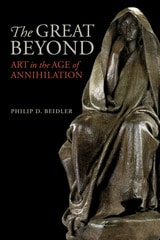
It can hardly come as a surprise, then, that many of the touchstones of modernism reflect on death and devastation. In Philip D. Beidler’s exploration of the modernist canon, he illuminates how these singular voices looked extinction in the eye and tried to reckon with our finitude—and their own. The Great Beyond: Art in the Age of Annihilation catalogs through lively prose an eclectic selection of artists, writers, and thinkers. In 16 essays, Beidler takes nuanced and surprising approaches to well-studied figures—the haunting sculpture by Saint-Gaudens commissioned by Henry Adams for his late wife; Luchino Visconti’s adaptation of Mann’s Death in Venice; and the author’s own long fascination with Beckett’s Waiting for Godot.
The threads and recurring motifs that emerge through Beidler’s analysis bridge the different media, genres, and timeframes of the works under consideration. Protomodernists Crane and Twain connect with near-contemporary voices like Sebald and Morrison. Robert MacFarlane’s 21st-century nonfiction about what lies underneath the earth echoes the Furerbunker and the poetry of Gertrud Kolmar. Learned but lively, somber but not grim, The Great Beyond is not a comfortable read, but it is in a way comforting. In tracing how his subjects confronted nothingness, be it personal or global, Beidler draws a brilliant map of how we see the end of the road.
The Great Machines
Poems and Songs from the Age of the American RailroadRobert Hedin
University of Iowa Press, 1996
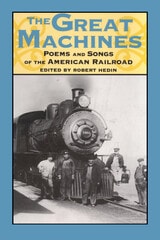
Here, for the first time, is a feast for anyone who has ever been beguiled by the trains that formerly thrummed through the landscapes of our lives. This entertaining and evocative anthology presents the amazing variety of poems and songs written about the American railroad in the last century and a half. Comprised of selections from both oral and written traditions, the volume celebrates the historical and cultural significance of this marvel of engineering skills. Hedin's anthology allows all readers, from the most avid railroad buff to anyone who has fond memories of train travel, to enjoy the romance of trains.
The Homesick Phone Book
Addressing Rhetorics in the Age of Perpetual ConflictCynthia Haynes
Southern Illinois University Press, 2016
Terrorist attacks, war, and mass shootings by individuals occur on a daily basis all over the world. In The Homesick Phone Book, author Cynthia Haynes examines the relationship of rhetoric to such atrocities. Aiming to disrupt conventional modes of rhetoric, logic, argument, and the teaching of writing, Haynes illuminates rhetoric’s ties to horrific acts of violence and the state of perpetual conflict around the world, both in the Holocaust era and more recently.
Each chapter, marked by a physical address, functions as a kind of expanded phone book entry, with a discussion of violent events at a particular location giving way to explorations of larger questions related to rhetoric and violence. At the core of the work is Haynes’s call for a writing pedagogy based on abstraction that would allow students to appeal to emotional and ethical grounds in composing arguments. Written in a lyrical style, the book weaves rhetorical theories, poetics, philosophy, works of art, and personal experience into a complex, compelling, and innovative mode of writing.
Ultimately, The Homesick Phone Book demonstrates how scholars of rhetoric and writing studies can break their dependence on conventional argument and logic to discover what might be possible if we dive into and become lost within the very concepts and events that frighten and terrorize us.
The Human Body in the Age of Catastrophe
Brittleness, Integration, Science, and the Great WarStefanos Geroulanos and Todd Meyers
University of Chicago Press, 2018
In The Human Body in the Age of Catastrophe, Stefanos Geroulanos and Todd Meyers uncover a fascinating story of how medical scientists came to conceptualize the body as an integrated yet brittle whole. Responding to the harrowing experience of the Great War, the medical community sought conceptual frameworks to understand bodily shock, brain injury, and the vast differences in patient responses they occasioned. Geroulanos and Meyers carefully trace how this emerging constellation of ideas became essential for thinking about integration, individuality, fragility, and collapse far beyond medicine: in fields as diverse as anthropology, political economy, psychoanalysis, and cybernetics.
Moving effortlessly between the history of medicine and intellectual history, The Human Body in the Age of Catastrophe is an intriguing look into the conceptual underpinnings of the world the Great War ushered in.
The Humanities in the Age of Information and Post-Truth
Edited by Ignacio López-Calvo and Christina Lux
Northwestern University Press, 2019
While the reader may suspect that these types of lucubration are a desperate reaction to decreased public funding for the humanities worldwide, a decreased enrollment of students, or anxiety over the future of our profession, there is in this volume a coherent argument for the continued need, perhaps more now than ever, to invest in humanities education if we are to have informed and socially conscious citizens rather than just willing consumers and obedient workers. Furthermore, the essays prove that the humanities and the arts are, after all, not a luxury but an integral part of a complete scholarly education.
The Humanities in the Age of Technology
Ciriaco Morón Arroyo
Catholic University of America Press, 2002
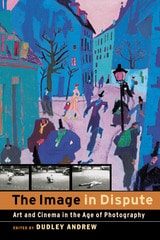
The Image in Dispute
Art and Cinema in the Age of PhotographyEdited by Dudley Andrew
University of Texas Press, 1997
Photography, cinema, and video have irrevocably changed the ways in which we view and interpret images. Indeed, the mechanical reproduction of images was a central preoccupation of twentieth-century philosopher Walter Benjamin, who recognized that film would become a vehicle not only for the entertainment of the masses but also for consumerism and even communism and fascism.
In this volume, experts in film studies and art history take up the debate, begun by Benjamin, about the power and scope of the image in a secular age. Part I aims to bring Benjamin's concerns to life in essays that evoke specific aspects and moments of the visual culture he would have known. Part II focuses on precise instances of friction within the traditional arts brought on by this century's changes in the value and mission of images. Part III goes straight to the image technologies themselves—photography, cinema, and video—to isolate distinctive features of the visual cultures they help constitute.
As we advance into the postmodern era, in which images play an ever more central role in conveying perceptions and information, this anthology provides a crucial context for understanding the apparently irreversible shift from words to images that characterized the modernist period. It will be important reading for everyone in cultural studies, film and media studies, and art history.
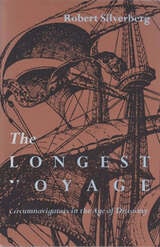
The Longest Voyage
Circumnavigators in the Age of DiscoveryRobert Silverberg
Ohio University Press, 1997
From the intense and brooding Magellan and the glamorous and dashing Sir Francis Drake; to Thomas Cavendish, who set off to plunder Spain’s American gold and the Dutch circumnavigators, whose numbers included pirates as well as explorers and merchants, Robert Silverberg captures the adventures and seafaring exploits of a bygone era.
Over the course of a century, European circumnavigators in small ships charted the coast of the New World and explored the Pacific Ocean. Characterized by fierce nationalism, competitiveness, and bloodshed, The Longest Voyage: Circumnavigators in the Age of Discovery captures the drama, danger, and personalities in the colorful story of the first voyages around the world. These accounts begin with Magellan’s unprecedented 1519–22 circumnavigation, providing an immediate, exciting, and intimate glimpse into that historic venture. The story includes frequent threats of mutiny; the nearly unendurable extremes of heat, cold, hunger, thirst, and fatigue; the fear, tedium, and moments of despair; the discoveries of exotic new peoples and strange new lands; and, finally, Magellan’s own dramatic death during a fanatical attempt to convert native Philippine islanders to Christianity.
Capturing the total context of political climate and historical change that made the Age of Discovery one of excitement and drama, Silverberg brings a motley crew of early ocean explorers vividly to life.
The Meanings of Age
Selected PapersBernice L. Neugarten
University of Chicago Press, 1996
Carefully edited by Dail Neugarten, each chapter presents the reader with Bernice Neugarten's original formulations on topics such as age norms and age constraints, the changing meanings of age, and age neutral social policy. Including four previously unpublished papers, The Meanings of Age will be of interest to scholars, students, and practitioners of psychology, education, law, medicine, social policy, and gerontology.
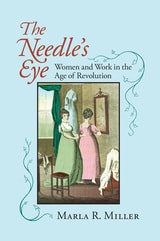
The Needle's Eye
Women and Work in the Age of RevolutionMarla R. Miller
University of Massachusetts Press, 2006
In this book, Marla R. Miller illuminates the significance of women's work in the clothing trades of the early Republic. Drawing on diaries, letters, reminiscences, ledgers, and material culture, she explores the contours of working women's lives in rural New England, offering a nuanced view of their varied ranks and roles—skilled and unskilled, black and white, artisanal and laboring—as producers and consumers, clients and craftswomen, employers and employees. By plumbing hierarchies of power and skill, Miller explains how needlework shaped and reflected the circumstances of real women's lives, at once drawing them together and setting them apart.
The heart of the book brings into focus the entwined experiences of six women who lived in and around Hadley, Massachusetts, a thriving agricultural village nestled in a bend in the Connecticut River about halfway between the Connecticut and Vermont borders. Miller's examination of their distinct yet overlapping worlds reveals the myriad ways that the circumstances of everyday lives positioned women in relationship to one another, enlarging and limiting opportunities and shaping the trajectories of days, years, and lifetimes in ways both large and small. The Needle's Eye reveals not only how these women thought about their work, but how they thought about their world.
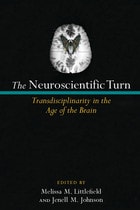
The Neuroscientific Turn
Transdisciplinarity in the Age of the BrainMelissa M. Littlefield and Jenell M. Johnson, editors
University of Michigan Press, 2012
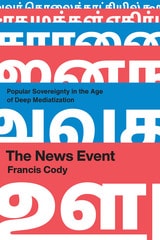
The News Event
Popular Sovereignty in the Age of Deep MediatizationFrancis Cody
University of Chicago Press, 2023
Not merely the act of representing events with words or images, a “news event” is the reciprocal relationship between the events being reported in the news and the event of the news coverage itself. In The News Event, Francis Cody focuses on how imaginaries of popular sovereignty have been remade through the production and experience of such events. Political sovereignty is thoroughly mediated by the production of news, and subjects invested in the idea of democracy are remarkably reflexive about the role of publicly circulating images and texts in the very constitution of their subjectivity. The law comes to stand as both a limit and positive condition in this process of event making, where acts of legal and extralegal repression of publication can also become the stuff of news about news makers. When the subjects of news inhabit multiple participant roles in the unfolding of public events, when the very technologies of recording and circulating events themselves become news, the act of representing a political event becomes difficult to disentangle from that of participating in it. This, Cody argues, is the crisis of contemporary news making: the news can no longer claim exteriority to the world on which it reports.
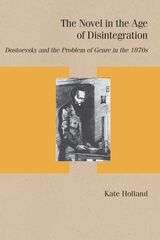
The Novel in the Age of Disintegration
Dostoevsky and the Problem of Genre in the 1870sKate Holland
Northwestern University Press, 2013
Scholars have long been fascinated by the creative struggles with genre manifested throughout Dostoevsky’s career. In The Novel in the Age of Disintegration, Kate Holland brings historical context to bear, showing that Dostoevsky wanted to use the form of the novel as a means of depicting disintegration brought on by various crises in Russian society in the 1860s. This required him to reinvent the genre. At the same time he sought to infuse his novels with the capacity to inspire belief in social and spiritual reintegration, so he returned to some older conventions of a society that was already becoming outmoded.
In thoughtful readings of Demons, The Adolescent, A Writer’s Diary, and The Brothers Karamazov, Holland delineates Dostoevsky’s struggle to adapt a genre to the reality of the present, with all its upheavals, while maintaining a utopian vision of Russia’s future mission.
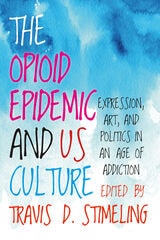
The Opioid Epidemic and US Culture
Expression, Art, and Politics in an Age of AddictionTravis D. Stimeling
West Virginia University Press, 2020
Written for an audience of people working on the front lines of the opioid crisis, the book is essential reading for social workers, addiction counselors, halfway house managers, and people with opioid use disorder. It will also appeal to the community of scholars interested in understanding how aesthetics shape our engagement with critical social issues, particularly in the fields of literary and film criticism, museum studies, and ethnomusicology.
The Protean Self
Human Resilience in an Age of FragmentationRobert Jay Lifton
University of Chicago Press, 1999