Results by title
664 books match the query 'Ancient & Classical' and 172 start with t
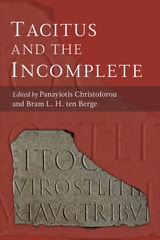
Tacitus and the Incomplete
Edited by Panayiotis Christoforou and Bram L. H. ten Berge
University of Michigan Press, 2026
Widely regarded as ancient Rome’s greatest historian, Tacitus has shaped much of early modern and modern thought on Rome and its emperors. Substantial portions of his major historical works Histories and Annals, however, have not survived, depriving us of his account of crucial episodes and developments in Rome's early imperial history. This first-of-its-kind volume seeks to fill those gaps, using a range of historical and linguistic approaches to reconstruct the missing portions of Tacitus’ work. The volume offers reconstructions of the fragmentary Tacitean emperors (Augustus, Caligula, Nero, Vespasian, Titus, and Domitian) and of important lost episodes such as the destruction of the Temple of Jerusalem and the eruption of Mt. Vesuvius.
By utilizing the concept of incompleteness as a narrative tool, Tacitus and the Incomplete provides novel insights into what Tacitus’ oeuvre might have been like if the lost books had survived, and also expands on recent work on counterfactual historiography, the influence of hindsight on historical writing, the use of prolepsis and other narrative techniques, and on the limitations of historiography in the imperial period.
Taking Her Seriously
Penelope and the Plot of Homer's OdysseyRichard Heitman
University of Michigan Press, 2005
---Choice
---Bryn Mawr Classical Review
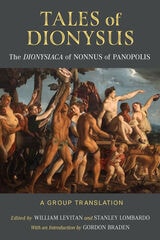
Tales of Dionysus
The Dionysiaca of Nonnus of PanopolisEdited by William Levitan and Stanley Lombardo
University of Michigan Press, 2022
Tales of Dionysus is the first English verse translation of one of the most extraordinary poems of the Greek literary tradition, the Dionysiaca of Nonnus of Panopolis. By any standard, the Dionysiaca is a formidable work. It is by far the longest poem surviving from the classical world, a massive mythological epic stretching to over 20,000 lines, written in the tradition of Homer, using Homer’s verse, Homer’s language, his narrative turns and motifs, and invoking his ancient Muses. But it is also the last ancient epic to follow a Homeric model, composed so late in fact that it stands as close in time to the Renaissance as it does to archaic Greece. Like its titular hero, Dionysus, with his fluidity of forms, names, and divine incarnations, the poem itself is continually shifting shape. Out of its formal epic frame spills a tumult of ancient literary types: tragedy, elegy, didactic, panegyric, pastoral idyll, and the novel are all parts of this gigantic enterprise, each genre coming to the fore one after the other.
Tales of Dionysus brings together forty-two translators from a wide range of backgrounds, with different experiences and different potential relationships to the text of Nonnus’ poem. All work in their own styles and with their own individual approaches to the poem, to translation, and to poetic form. This variety turns Tales of Dionysus into a showcase of the multiple possibilities open to classical translation in the contemporary world.
Talking Classics
The Shock of the OldMary Beard
University of Chicago Press, 2026
Why the ongoing fascination with the ancient world? This witty, approachable book asks why—for better or (sometimes) worse—antiquity continues to exert such a powerful hold on the contemporary imagination. Recalling a formative childhood encounter with a four-thousand-year-old piece of bread in a museum, Beard introduces the idea of thauma, or wonder, that kick-started a lifetime engaging with classics. It was not the canonical “greats” of ancient literature and art that initially drew her in, she confesses, but rather the more intimate, messy, and humdrum evidence of daily life in the remote past.
Confronting the uses and abuses of symbols of the ancient world, Beard reminds us that the traditions and “masterpieces” of Greece and Rome have certainly been politicized, but they belong to neither the left nor the right. Happily, no one owns the past. She warns us not to let a sense of reverence or overfamiliarity dampen the “shock of the old,” arguing that one of the most important things that classics teach us is how to grapple with complicated and controversial things. “The Greeks and Romans are long dead, they cannot answer back, and you can say what you like about them,” she reminds readers. “The simple fact that classics belong to none of us can offer a safe space to argue about the most difficult debates we face now.”
Beard welcomes everyone into classics. “It is not compulsory to be excited by the ancient world,” she writes. “But it can be a shame not to be.” This charming, sharp, and readable book from one of the world’s most entertaining classicists offers something for both new and established fans of classics, bringing new wonder and curiosity to even the most ancient of ideas.
Talking Classics
The Shock of the OldMary Beard
University of Chicago Press, 2026
Why the ongoing fascination with the ancient world? This witty, approachable book asks why—for better or (sometimes) worse—antiquity continues to exert such a powerful hold on the contemporary imagination. Recalling a formative childhood encounter with a four-thousand-year-old piece of bread in a museum, Beard introduces the idea of thauma, or wonder, that kick-started a lifetime engaging with classics. It was not the canonical “greats” of ancient literature and art that initially drew her in, she confesses, but rather the more intimate, messy, and humdrum evidence of daily life in the remote past.
Confronting the uses and abuses of symbols of the ancient world, Beard reminds us that the traditions and “masterpieces” of Greece and Rome have certainly been politicized, but they belong to neither the left nor the right. Happily, no one owns the past. She warns us not to let a sense of reverence or overfamiliarity dampen the “shock of the old,” arguing that one of the most important things that classics teach us is how to grapple with complicated and controversial things. “The Greeks and Romans are long dead, they cannot answer back, and you can say what you like about them,” she reminds readers. “The simple fact that classics belong to none of us can offer a safe space to argue about the most difficult debates we face now.”
Beard welcomes everyone into classics. “It is not compulsory to be excited by the ancient world,” she writes. “But it can be a shame not to be.” This charming, sharp, and readable book from one of the world’s most entertaining classicists offers something for both new and established fans of classics, bringing new wonder and curiosity to even the most ancient of ideas.
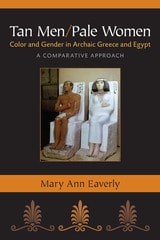
Tan Men/Pale Women
Color and Gender in Archaic Greece and Egypt, a Comparative ApproachMary Ann Eaverly
University of Michigan Press, 2013
One of the most obvious stylistic features of Athenian black-figure vase painting is the use of color to differentiate women from men. By comparing ancient art in Egypt and Greece, Tan Men/Pale Women uncovers the complex history behind the use of color to distinguish between genders, without focusing on race. Author Mary Ann Eaverly considers the significance of this overlooked aspect of ancient art as an indicator of underlying societal ideals about the role and status of women. Such a commonplace method of gender differentiation proved to be a complex and multivalent method for expressing ideas about the relationship between men and women, a method flexible enough to encompass differing worldviews of Pharaonic Egypt and Archaic Greece. Does the standard indoor/outdoor explanation—women are light because they stay indoors—hold true everywhere, or even, in fact, in Greece? How “natural” is color-based gender differentiation, and, more critically, what relationship does color-based gender differentiation have to views about women and the construction of gender identity in the ancient societies that use it?
The depiction of dark men and light women can, as in Egypt, symbolize reconcilable opposites and, as in Greece, seemingly irreconcilable opposites where women are regarded as a distinct species from men. Eaverly challenges traditional ideas about color and gender in ancient Greek painting, reveals an important strategy used by Egyptian artists to support pharaonic ideology and the role of women as complementary opposites to men, and demonstrates that rather than representing an actual difference, skin color marks a society’s ideological view of the varied roles of male and female.
Tarpeia
Workings of a Roman MythTara S. Welch
The Ohio State University Press, 2015
Welch demonstrates how ancient thinkers used Tarpeia’s myth to highlight matters of ethics, gender, ethnicity, political authority, language, conquest, and tradition. This cluster of themes reveals that Tarpeia’s myth is not primarily about what it means to be human, but rather what it means to be Roman. Thus Tarpeia’s story spans centuries, distances, genres, and modes of communication—Rome itself did. No Greek city-state could admit such continuity, and Greece was never so constant. In this way, though Tarpeia has a dozen Greek cousins whose stories are similar to hers, hers is a powerfully Roman myth, even for the Greeks who told her tale. She is token, totem, and symbol of Rome.
Textual Rivals
Self-Presentation in Herodotus’ HistoriesDavid Branscome
University of Michigan Press, 2013
Textual Rivals studies some of the most debated issues in Herodotean scholarship. One such is Herodotus’ self-presentation: the conspicuousness of his authorial persona is one of the most remarkable features of his Histories. So frequently does he interject first-person comments into the narrative that Herodotus at times almost becomes a character within his own text.
Important issues are tied to Herodotus’ self-presentation. First is the narrator’s relationship to truth: to what extent does he expect readers to trust his narrative? While judgments regarding Herodotus’ overall veracity have often been damning, scholars have begun to concentrate on how Herodotus presents his truthfulness. Second is the precise genre Herodotus means to create with his work. Excluding the anachronistic term historian, exactly what would Herodotus have called himself, as author? Third is the presence of “self-referential” characters, whose actions often mirror Herodotus’ as narrator/researcher, in the Histories.
David Branscome’s investigative text points to the rival inquirers in Herodotus’ Histories as a key to unraveling these interpretive problems. The rival inquirers are self-referential characters Herodotus uses to further his authorial self-presentation. Through the contrast Herodotus draws between his own exacting standards as an inquirer and the often questionable standards of those rivals, Herodotus underlines just how truthful readers should find his own work.
Textual Rivals speaks to those interested in Greek history and historiography, narratology, and ethnography. Those in the growing ranks of Herodotus fans will find much to invite and intrigue.
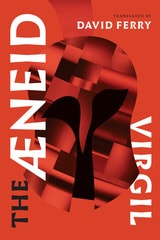
The Aeneid
Virgil
University of Chicago Press, 2017
The paperback and e-book editions include a new introduction by Richard F. Thomas, along with a new glossary of names that makes the book even more accessible for students and for general readers coming to the Aeneid for the first time who may need help acclimating to Virgil’s world.
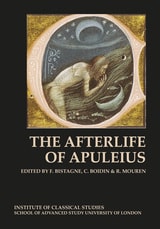
The Afterlife of Apuleius
Edited by F. Bistagne, C. Boidin, and R. Mouren
University of London Press, 2020
The volume gathers the proceedings of an international conference held in March 2016 at the Warburg Institute in London, in association with the Institute of Classical Studies. It includes both diachronic overviews and specific case-studies. A first series of papers focuses on The Golden Ass and its historical and geographical diffusion, from High Medieval Europe to early modern Mexico. The oriental connections of the book are also taken into account. The second part of the book examines the textual and visual destiny of Psyche’s story from the Apuleian fabula to allegorical retellings, in poetical or philosophical books and on stage. As the third series of essays indicates, the fortunes of the book led many ancient and early modern writers and translators to use it as a canonical model for reflections about the status of fiction. It also became, mostly around the beginning of the fifteenth century, a major linguistic and stylistic reference for lexicographers and neo-Latin writers. The last papers of the book deal with Renaissance polemics about "‘Apuleianism" and the role of editors and commentators.
This is the sixth and last of the volumes in the series of ‘Afterlives’ of the Classics, which is being produced jointly by the Institute of Classical Studies and the Warburg Institute.
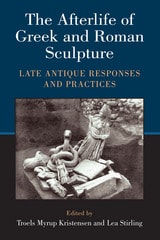
The Afterlife of Greek and Roman Sculpture
Late Antique Responses and PracticesTroels Myrup Kristensen and Lea Stirling, editors
University of Michigan Press, 2016

The Afterlife of Plutarch
Edited by John North and Peter Mack
University of London Press, 2018
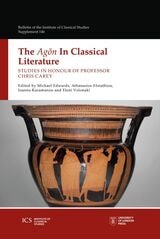
The Agon in Classical Literature
Studies in Honour of Professor Chris CareyEdited by Michael Edwards, Athanasios Efstathiou, Ioanna Karamanou, and Eleni Volonaki
University of London Press, 2022
The papers collected in this volume are offered by colleagues and former students in honor of Chris Carey, emeritus professor of Greek at University College London. The multifaceted topic of the agon, or contest of word, and its varying representations in Greek literature aptly corresponds to the outstanding variety of Carey’s research interests, which include the works of Homer, lyric poetry, drama, law, rhetoric, and historiography. This volume sets out to reflect on facets of the agon across these literary genres and the pivotal role of competition in ancient Greek thought. It aims to explore the wide range of agonal dynamics, and their generic and cultural value, as well as stimulating fresh discussions under a broad spectrum of theoretical and methodological approaches.
The Ancient Egyptian Pyramid Texts
James P. Allen
SBL Press, 2005
The Ancient Egyptian Pyramid Texts, Second Edition
James P. Allen
SBL Press, 2015
Completely revised and updated
James P. Allen provides a translation of the oldest corpus of ancient Egyptian religious texts from the six royal pyramids of the Fifth and Sixth Dynasties (ca. 2350–2150 BCE). Allen’s revisions take into account recent advances in the understanding of Egyptian grammar.
Features:
- Sequential translations based on all available sources, including texts newly discovered in the last decade
- Texts numbered according to the most widely used numbering system with new numbers from the latest 2013 concordance
- Translations reflect the primarily atemporal verbal system of Old Egyptian, which conveys the timeless quality that the text’s authors understood the texts to have
The Animal Part
Human and Other Animals in the Poetic ImaginationMark Payne
University of Chicago Press, 2010
How can literary imagination help us engage with the lives of other animals? The question represents one of the liveliest areas of inquiry in the humanities, and Mark Payne seeks to answer it by exploring the relationship between human beings and other animals in writings from antiquity to the present. Ranging from ancient Greek poets to modernists like Ezra Pound and William Carlos Williams, Payne considers how writers have used verse to communicate the experience of animal suffering, created analogies between human and animal societies, and imagined the kind of knowledge that would be possible if human beings could see themselves as animals see them.
The Animal Part also makes substantial contributions to the emerging discourse of the posthumanities. Payne offers detailed accounts of the tenuousness of the idea of the human in ancient literature and philosophy and then goes on to argue that close reading must remain a central practice of literary study if posthumanism is to articulate its own prehistory. For it is only through fine-grained literary interpretation that we can recover the poetic thinking about animals that has always existed alongside philosophical constructions of the human. In sum, The Animal Part marks a breakthrough in animal studies and offers a significant contribution to comparative poetics.
The Argument of the Action
Essays on Greek Poetry and PhilosophySeth Benardete
University of Chicago Press, 2000
This volume brings together Seth Benardete’s studies of Hesiod, Homer, and Greek tragedy, eleven Platonic dialogues, and Aristotle’s Metaphysics.
The Argument of the Action spans four decades of Seth Benardete’s work, documenting its impressive range. Benardete’s philosophic reading of the poets and his poetic reading of the philosophers share a common ground, guided by the key he found in the Platonic dialogue: probing the meaning of speeches embedded in deeds, he uncovers the unifying intention of the work by tracing the way it unfolds through a movement of its own. Benardete’s original interpretations of the classics are the fruit of this discovery of the “argument of the action.”

The Art of Eastern India, 300-800
Frederick M. Asher
University of Minnesota Press, 1980
The Art of Eastern India, 300–800 was first published in 1980. Minnesota Archive Editions uses digital technology to make long-unavailable books once again accessible, and are published unaltered from the original University of Minnesota Press editions.
Though scholars have extensive knowledge of the art that flourished during Pala rule in Eastern India (ca. 800-1200), little is known about Eastern Indian art during the preceding 500 years. This half-millennium includes the period of the Gupta dynasty and the two centuries that bridge Gupta and Pala rule, when no single dynasty long maintained control of Eastern India. In this study, Frederick M. Asher challenges arthistorical assumptions about Pala art — that it is a new school virtually without links to earlier art 00 by demonstrating that sculpture during the Gupta period and the subsequent three centuries evolved along lines that connect it with Pala art. In so doing, he draws attention to important sculptures, most of them never previously studied, that tell us not only about an unexplored period in Indian art but also about broader aspects of the cultural history and geography of Eastern India.
Asher's work is based on field research in Bihar, West Bengal, and Bangladesh. There he gave special attention to the sites of once-flourishing Buddhist monasteries and to Hindu images still worshipped in village India. The author's photographs of the bronze, terra cotta, and stone sculptures, and his detailed text, provide a virtual catalogue raisonne of the known works of the period.
Asher's analyses of the images and his attributions of dates to them are based upon close attention to artistic style and iconography, and the study of dynastic and social history, contemporary travelers' reports, and religious history. Drawing together these diverse strands of information, he describes the evolution of art forms over a long period in which there was little apparent historic unity. John M. Rosenfield, professor of art history at Harvard University and author of The Art of the Kushans, says, of The Art of Eastern India,"The scholarship is scrupulously detailed and careful . . . [The book] is in the finest tradition of classical scholarship, and will be consulted or several generations."
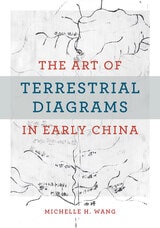
The Art of Terrestrial Diagrams in Early China
Michelle H. Wang
University of Chicago Press, 2023
This is the first English-language monograph on the early history of maps in China, centering on those found in three tombs that date from the fourth to the second century BCE and constitute the entire known corpus of early Chinese maps (ditu). More than a millennium separates them from the next available map in the early twelfth century CE. Unlike extant studies that draw heavily from the history of cartography, this book offers an alternative perspective by mobilizing methods from art history, archaeology, material culture, religion, and philosophy. It examines the diversity of forms and functions in early Chinese ditu to argue that these pictures did not simply represent natural topography and built environments, but rather made and remade worlds for the living and the dead. Wang explores the multifaceted and multifunctional diagrammatic tradition of rendering space in early China.
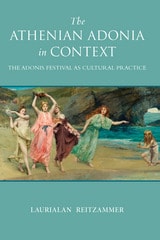
The Athenian Adonia in Context
The Adonis Festival as Cultural PracticeLaurialan Reitzammer
University of Wisconsin Press, 2018
Reitzammer uncovers correlations of the Adonia to Athenian wedding rituals and civic funeral oration and provides illuminating evidence that the festival was a significant cultural template for such diverse works as Aristophanes’ drama Lysistrata and Plato’s dialogue Phaedrus. Her fresh approach is a timely contribution to studies of the ways gender and sexuality intersect with religion and ritual in ancient Greece.
The Author of the Prometheus Bound
By C. J. Herington
University of Texas Press, 1970
The Prometheus Bound has proved to be both the most problematic and the most influential of extant Greek tragedies. Especially during the past two hundred years the character here created has transcended the boundaries of nationality, ideology, and race: Goethe, Shelley, Marx, and—to judge by other published translations—modern Russia and China have in turn been fascinated by this being who is tortured by the gods for furthering the progress of humanity. Yet the interpretation of the play itself and its relation to the group of now-lost plays with which it was originally produced continue to arouse violent controversy. At the center of the controversy stand the questions, raised with increasing urgency during the twentieth century, whether the play is by Aeschylus at all and when it was written.
This monograph attempts a systematic answer to these questions. It first surveys the general conditions of the authenticity problem as they appeared after the redating of Aeschylus’ Supplices. Next, it catalogues in detail the stylistic, metrical, and thematic features of the Prometheus that have been supposed to tell against Aeschylus’ authorship. Finally, it suggests that these phenomena will not make sense on the assumption that the play was written by anyone other than Aeschylus, and that the date of composition must fall after the Oresteia, in the last two years of Aeschylus’ life. Given this definite context and date, many of the apparent problems of the Prometheus Bound either fall away or at least can be more precisely formulated by reference to the other extant tragedies of Aeschylus’ latest phase.
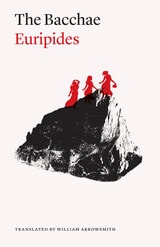
The Bacchae
Euripides
University of Chicago Press, 2013
A stand-alone edition of Euripides’s The Bacchae taken from Chicago’s renowned translations of the Greek tragedies.
Dionysus, son of Zeus, has journeyed to the land of his birth expecting to be received as a god. After being rejected by his kin, he turns to the women of Thebes, driving them into a delirious frenzy. Dressed in animal skins and crowned with leaves, they roam wild in the hills as the king tries to restore order—with horrifying results.
Written in the final years of Euripides’s life and first staged posthumously, The Bacchae is presented here in William Arrowsmith’s energetic translation, drawn from the authoritative third edition of the University of Chicago Press’s Complete Greek Tragedies series. An introduction by Mark Griffith and Glenn W. Most provides essential information about The Bacchae’s first production, plot, and reception in antiquity, and an appendix presents Arrowsmith’s hypothetical reconstruction of fifty lines missing from the denouement of the play.

The Bakkhai
Robert Euripides
University of Massachusetts Press, 1978
The Being of the Beautiful
Plato's Theaetetus, Sophist, and StatesmanPlato
University of Chicago Press, 1984
“The translations are masterpieces of literalness. . . . They are honest, accurate, and give the reader a wonderful sense of the Greek.”—Drew A. Hyland, Review of Metaphysics
The Best of the Grammarians
Aristarchus of Samothrace on the IliadFrancesca Schironi
University of Michigan Press, 2018
Francesca Schironi presents a more robust picture of Aristarchus as a scholar than anyone has offered previously. Based on her analysis of over 4,300 fragments from his commentary on the Iliad, she reconstructs Aristarchus’ methodology and its relationship to earlier scholarship, especially Aristotelian poetics. Schironi departs from the standard commentary on individual fragments, and instead organizes them by topic to produce a rigorous scholarly examination of how Aristarchus worked.
Combining the accuracy and detail of traditional philology with a big-picture study of recurrent patterns and methodological trends across Aristarchus’ work, this volume offers a new approach to scholarship in Alexandrian and classical philology. It will be the go-to reference book on this topic for many years to come, and will usher in a new way of addressing the highly technical work of ancient scholars without losing philological accuracy. This book will be valuable to classicists and philologists interested in Homer and Homeric criticism in antiquity, Hellenistic scholarship, and ancient literary criticism.
The Birthday Book
Censorinus
University of Chicago Press, 2006
Nearly 2,000 years ago, the Roman scholar Censorinus bestowed upon his best friend a charming birthday present: The Birthday Book, which appears here in its long-awaited first English translation. Laying out everything he knew about birthdays, the book starts simply, but by the conclusion of this brief yet brilliant gem, Censorinus has sketched a glorious vision of a universe ruled by harmony and order, where the microcosm of the child in the womb corresponds to the macrocosm of the planets. Alternately serious and playful, Censorinus touches on music, history, astronomy, astrology, and every aspect of time as it was understood in third-century Rome. He also provides ancient answers to perennial questions: Why does the day begin at midnight? Where did Leap Year come from? Which came first, the chicken or the egg?
Embodying the proverbial gift that keeps on giving, The Birthday Book has long been treasured by scientists, poets, and scholars, and Holt Parker’s graceful and lively new translation—accompanied by an illuminating introduction and detailed notes—is itself a present for Latinists, historians of science, and anyone looking for an unusual birthday gift.
The Brutus Revival
Parricide and Tyrranicide During the RenaissanceManfredi Piccolomini
Southern Illinois University Press, 1991
In a discussion of the Renaissance revival of classical culture, Piccolomini considers the period’s mythologizing of Brutus, Caesar’s assassin. He cites Dante as the initiator of an important literary, dramatic, political, and artistic theme and explains how the historical Brutus was changed by literature and theatre into a symbol of the just citizen rebelling against the unjust tyrant.
Piccolomini discusses several Renaissance political conspiracies modeled after Brutus’ act and explores how those conspiracies, in turn, formed the basis for the theme’s recurrence in Italian, French, and English theatre of the period.
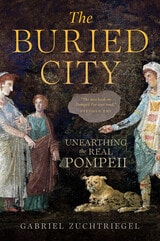
The Buried City
Unearthing the Real PompeiiGabriel Zuchtriegel
University of Chicago Press, 2025
In The Buried City, Gabriel Zuchtriegel takes us on a behind-the-scenes tour of Pompeii and reveals new archaeological finds that are being unearthed at the site’s biggest dig in a generation. As director of the Pompeii Archaeological Park, Zuchtriegel presents a uniquely intimate perspective on this city that was tragically destroyed and frozen in time by the eruption of Mount Vesuvius in 79 CE. Among the ruins, we find unmade beds, dishes left drying, and bodies of victims encased in ash, but Zuchtriegel shows that we’ve only begun to understand this fascinating place, as a third of the site remains unexcavated.
Zuchtriegel leads us into the heart of the city, reconstructing Pompeii as it would have been, showing us who lived there, what mattered to them, and what happened in their final hours. The Buried City reveals the latest discoveries unearthed at Pompeii—including a banquet hall with murals of Greek gods, a fresco of what appears to be a pizza, and the remains of individuals crushed by debris—all buried for almost two thousand years. Zuchtriegel offers a vivid portrait of this World Heritage site as a vibrant and diverse city, connecting us to a past that is much closer than we think and inviting us to reflect on our role as keepers of the site and its history.
The Buried City
Unearthing the Real PompeiiGabriel Zuchtriegel
University of Chicago Press, 2025
The director of the Pompeii Archaeological Park offers a vivid view of daily life in the lost city, shares the latest discoveries, and reflects on preserving heritage.
In The Buried City, Gabriel Zuchtriegel takes us on a behind-the-scenes tour of Pompeii and reveals new archaeological finds that are being unearthed at the site’s biggest dig in a generation. As director of the Pompeii Archaeological Park, Zuchtriegel presents a uniquely intimate perspective on this city that was tragically destroyed and frozen in time by the eruption of Mount Vesuvius in 79 CE. Among the ruins, we find unmade beds, dishes left drying, and bodies of victims encased in ash, but Zuchtriegel shows that we’ve only begun to understand this fascinating place, as a third of the site remains unexcavated.
Zuchtriegel leads us into the heart of the city, reconstructing Pompeii as it would have been, showing us who lived there, what mattered to them, and what happened in their final hours. The Buried City reveals the latest discoveries unearthed at Pompeii—including a banquet hall with murals of Greek gods, a fresco of what appears to be a pizza, and the remains of individuals crushed by debris—all buried for almost two thousand years. Zuchtriegel offers a vivid portrait of this World Heritage site as a vibrant and diverse city, connecting us to a past that is much closer than we think and inviting us to reflect on our role as keepers of the site and its history.
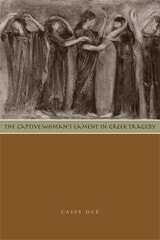
The Captive Woman's Lament in Greek Tragedy
By Casey Dué
University of Texas Press, 2006
The laments of captive women found in extant Athenian tragedy constitute a fundamentally subversive aspect of Greek drama. In performances supported by and intended for the male citizens of Athens, the songs of the captive women at the Dionysia gave a voice to classes who otherwise would have been marginalized and silenced in Athenian society: women, foreigners, and the enslaved. The Captive Woman's Lament in Greek Tragedy addresses the possible meanings ancient audiences might have attached to these songs. Casey Dué challenges long-held assumptions about the opposition between Greeks and barbarians in Greek thought by suggesting that, in viewing the plight of the captive women, Athenian audiences extended pity to those least like themselves. Dué asserts that tragic playwrights often used the lament to create an empathetic link that blurred the line between Greek and barbarian.
After a brief overview of the role of lamentation in both modern and classical traditions, Dué focuses on the dramatic portrayal of women captured in the Trojan War, tracing their portrayal through time from the Homeric epics to Euripides' Athenian stage. The author shows how these laments evolved in their significance with the growth of the Athenian Empire. She concludes that while the Athenian polis may have created a merciless empire outside the theater, inside the theater they found themselves confronted by the essential similarities between themselves and those they sought to conquer.
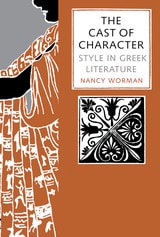
The Cast of Character
Style in Greek LiteratureBy Nancy Worman
University of Texas Press, 2003
Well before Aristotle's Rhetoric elucidated the elements of verbal style that give writing its persuasive power, Greek poets and prose authors understood the importance of style in creating compelling characters to engage an audience. And because their works were composed in predominantly oral settings, their sense of style included not only the characters' manner of speaking, but also their appearance and deportment. From Homeric epic to classical tragedy and oratory, verbal and visual cues work hand-in-hand to create distinctive styles for literary characters.
In this book, Nancy Worman investigates the development and evolution of ideas about style in archaic and classical literature through a study of representations of Odysseus and Helen. She demonstrates that, as liars and imitators, pleasing storytellers, and adept users of costume, these two figures are especially skillful manipulators of style. In tracing the way literary representations of them changed through time—from Homer's positive portrayal of their subtle self-presentations to the sharply polarized portrayals of these same subtleties in classical tragedy and oratory—Worman also uncovers a nascent awareness among the Greek writers that style may be used not only to persuade but also to distract and deceive.
The Chreia and Ancient Rhetoric
Commentaries on Aphthonius's ProgymnasmataRonald F. Hock
SBL Press, 2012
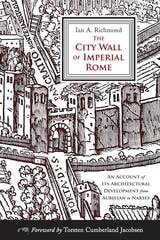
The City Wall of Imperial Rome
An Account of Its Architectural Development from Aurelian to NarsesIan A. Richmond
Westholme Publishing, 2013
The City Wall of Imperial Rome: An Account of Its Architectural Development from Aurelian to Narses by Sir Ian A. Richmond was first published in 1930 and reprinted in facsimile in 1971. This scarce, essential work on the imperial fortifications of Rome has lost none of its relevance since its original publication. Despite the Wall’s great importance for our understanding of Roman fortifications, there have been no further major investigations. Rome had originally been fortified by the old Servian Wall, built during the Republican period in the late fourth century BC. The city expanded greatly over the centuries and by the time of the emperor Augustus (27 BC–14 AD) little trace of the wall remained. However, there was not a need for a protective wall until the crisis of the third century AD, when barbarian tribes in 270 broke into northern Italy. In response to this new threat, the Aurelian Walls were constructed between 271 and 275 to protect the capital against barbarian raids. The walls enclosed all of Rome on both sides of the Tiber River—an area of about 5.3 square miles— and ran for some 12.5 miles. The construction project was one of the greatest in the history of the city of Rome and the walls were built in a remarkably short time, with the emperor Aurelian himself overseeing the project. Initially, the main aim of the wall was not to withstand prolonged siege warfare but to deter barbarian invaders who were insufficiently equipped for siege warfare. Later, emperor Honorius improved both the walls and gates, so that Rome could withstand a real siege and be defended by a smaller garrison. During the time of the Gothic War (535–552), five thousand Roman troops withstood a year-long siege by an estimated 150,000 Goths due to the strength of the walls. When Rome was captured in 545 by the Ostrogothic king Totila, part of the walls were deliberately destroyed to prevent the Romans from ever using them again. The Aurelian Walls remain remarkably well preserved today, due largely to their constant use as Rome’s primary fortification until the nineteenth century. The walls are the largest monument of ancient Rome still to be seen in the city. In this new edition, Late Antiquity specialist Torsten Cumberland Jacobsen provides current information about the state of the walls and their preservation, an updated bibliography, and an essay about Sir Richmond and his career.
The Classical Gardens of Shanghai
Shelly Bryant
Hong Kong University Press, 2016
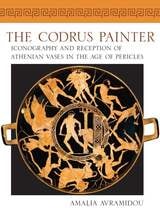
The Codrus Painter
Iconography and Reception of Athenian Vases in the Age of PericlesAmalia Avramidou
University of Wisconsin Press, 2011
The Codrus Painter was a painter of cups and vases in fifth-century B.C.E. Athens with a distinctive style; he is named after Codrus, a legendary Athenian king depicted on one of his most characteristic vases. He was active as an artist during the rule of Pericles, as the Parthenon was built and then as the troubled times of the Peloponnesian War began. In contrast to the work of fellow artists of his day, the vases of the Codrus Painter appear to have been created almost exclusively for export to markets outside Athens and Greece, especially to the Etruscans in central Italy and to points further west.
Amalia Avramidou offers a thoroughly researched, amply illustrated study of the Codrus Painter that also comments on the mythology, religion, arts, athletics, and daily life of Greece depicted on his vases. She evaluates his style and the defining characteristics of his own hand and of the minor painters associated with him. Examining the subject matter, figure types, and motifs on the vases, she compares them with sculptural works produced during the same period. Avramidou’s iconographic analysis not only encompasses the cultural milieu of the Athenian metropolis, but also offers an original and intriguing perspective on the adoption, meaning, and use of imported Attic vases among the Etruscans.
The Collection of Antiquities of the American Academy in Rome
Larissa Bonfante and Helen Nagy, editors
University of Michigan Press, 2016
The Commerce of War
Exchange and Social Order in Latin EpicNeil Coffee
University of Chicago Press, 2009
Latin epics such as Virgil’s Aeneid, Lucan’s Civil War, and Statius’s Thebaid addressed Roman aristocrats whose dealings in gifts, favors, and payments defined their conceptions of social order. In The Commerce of War, Neil Coffee argues that these exchanges play a central yet overlooked role in epic depictions of Roman society.
Tracing the collapse of an aristocratic worldview across all three poems, Coffee highlights the distinction they draw between reciprocal gift giving among elites and the more problematic behaviors of buying and selling. In the Aeneid, customary gift and favor exchanges are undermined by characters who view human interaction as short-term and commodity-driven. The Civil War takes the next logical step, illuminating how Romans cope once commercial greed has supplanted traditional values. Concluding with the Thebaid, which focuses on the problems of excessive consumption rather than exchange, Coffee closes his powerful case that these poems constitute far-reaching critiques of Roman society during its transition from republic to empire.
The Community Rule
A Critical Edition with TranslationSarianna Metso
SBL Press, 2019
An authoritative critical edition
The discovery and translation of the Dead Sea Scrolls transformed our understanding of the life and history of ancient Jewish communities when both rabbinic Judaism and early Christianity were emerging. As part of this rich discovery, the Community Rule serves to illuminate the religious beliefs and practices as well as the organizational rules of the group behind the Dead Sea Scrolls. However, there is no single, unified text of the Community Rule; rather, multiple manuscripts of the Community Rule show considerable variation and highlight the work of ancient Jewish scribes and their intentional literary development of the text. In this volume, Sarianna Metso brings together the surviving evidence in a new edition that presents a critically established Hebrew text with an introduction and an English translation.
Features:
- A critical apparatus and textual notes
- All the surviving evidence of the Community Rule
- A new method for presenting complex developments and transmission history of ancient texts

The Complete Greek Tragedies, Volume 1
AeschylusEdited by David Grene and Richmond Lattimore
University of Chicago Press, 1992
For the Centennial Edition two of the original translations have been replaced. In the original publication David Grene translated only one of the three Theban plays, Oedipus the King. Now he has added his own translations of the remaining two, Oedipus at Colonus and Antigone, thus bringing a new unity of tone and style to this group. Grene has also revised his earlier translation of Prometheus Bound and rendered some of the former prose sections in verse. These new translations replace the originals included in the paperback volumes Sophocles I (which contains all three Theban plays), Aeschylus II, Greek Tragedies, Volume I, and Greek Tragedies, Volume III, all of which are now being published in second editions.
All other volumes contain the translations of the tragedies of Aeschylus, Sophocles, and Euripides for the most part from the original versions first published in the 1940s and 1950s. These translations have been the choice of generations of teachers and students, selling in the past forty years over three million copies.
The Complete Greek Tragedies, Volume 2
SophoclesEdited by David Grene and Richmond Lattimore
University of Chicago Press, 1992
For the Centennial Edition two of the original translations have been replaced. In the original publication David Grene translated only one of the three Theban plays, Oedipus the King. Now he has added his own translations of the remaining two, Oedipus at Colonus and Antigone, thus bringing a new unity of tone and style to this group. Grene has also revised his earlier translation of Prometheus Bound and rendered some of the former prose sections in verse. These new translations replace the originals included in the paperback volumes Sophocles I (which contains all three Theban plays), Aeschylus II, Greek Tragedies, Volume I, and Greek Tragedies, Volume III, all of which are now being published in second editions.
All other volumes contain the translations of the tragedies of Aeschylus, Sophocles, and Euripides for the most part from the original versions first published in the 1940s and 1950s. These translations have been the choice of generations of teachers and students, selling in the past forty years over three million copies.
The Complete Greek Tragedies, Volume 3
EuripidesEdited by David Grene and Richmond Lattimore
University of Chicago Press, 1992
For the Centennial Edition two of the original translations have been replaced. In the original publication David Grene translated only one of the three Theban plays, Oedipus the King. Now he has added his own translations of the remaining two, Oedipus at Colonus and Antigone, thus bringing a new unity of tone and style to this group. Grene has also revised his earlier translation of Prometheus Bound and rendered some of the former prose sections in verse. These new translations replace the originals included in the paperback volumes Sophocles I (which contains all three Theban plays), Aeschylus II, Greek Tragedies, Volume I, and Greek Tragedies, Volume III, all of which are now being published in second editions.
All other volumes contain the translations of the tragedies of Aeschylus, Sophocles, and Euripides for the most part from the original versions first published in the 1940s and 1950s. These translations have been the choice of generations of teachers and students, selling in the past forty years over three million copies.
The Complete Greek Tragedies, Volume 4
EuripidesEdited by David Grene and Richmond Lattimore
University of Chicago Press, 1992
For the Centennial Edition two of the original translations have been replaced. In the original publication David Grene translated only one of the three Theban plays, Oedipus the King. Now he has added his own translations of the remaining two, Oedipus at Colonus and Antigone, thus bringing a new unity of tone and style to this group. Grene has also revised his earlier translation of Prometheus Bound and rendered some of the former prose sections in verse. These new translations replace the originals included in the paperback volumes Sophocles I (which contains all three Theban plays), Aeschylus II, Greek Tragedies, Volume I, and Greek Tragedies, Volume III, all of which are now being published in second editions.
All other volumes contain the translations of the tragedies of Aeschylus, Sophocles, and Euripides for the most part from the original versions first published in the 1940s and 1950s. These translations have been the choice of generations of teachers and students, selling in the past forty years over three million copies.
The Complete Greek Tragedies
Aeschylus IEdited by David Grene and Richmond Lattimore
University of Chicago Press, 1969
"This is it. No qualifications. Go out and buy it everybody."—Kenneth Rexroth, The Nation
"The translations deliberately avoid the highly wrought and affectedly poetic; their idiom is contemporary....They have life and speed and suppleness of phrase."—Times Education Supplement
"These translations belong to our time. A keen poetic sensibility repeatedly quickens them; and without this inner fire the most academically flawless rendering is dead."—Warren D. Anderson, American Oxonian
"The critical commentaries and the versions themselves...are fresh, unpretentious, above all, functional."—Commonweal
"Grene is one of the great translators."—Conor Cruise O'Brien, London Sunday Times
"Richmond Lattimore is that rara avis in our age, the classical scholar who is at the same time an accomplished poet."—Dudley Fitts, New York Times Book Review
The Complete Greek Tragedies
Aeschylus IIEdited by David Grene and Richmond Lattimore
University of Chicago Press, 1991
For the Centennial Edition two of the original translations have been replaced. In the original publication David Grene translated only one of the three Theban plays, Oedipus the King. Now he has added his own translations of the remaining two, Oedipus at Colonus and Antigone, thus bringing a new unity of tone and style to this group. Grene has also revised his earlier translation of Prometheus Bound and rendered some of the former prose sections in verse. These new translations replace the originals included in the paperback volumes Sophocles I (which contains all three Theban plays), Aeschylus II, Greek Tragedies, Volume I, and Greek Tragedies, Volume III, all of which are now being published in second editions.
All other volumes contain the translations of the tragedies of Aeschylus, Sophocles, and Euripides for the most part from the original versions first published in the 1940s and 1950s. These translations have been the choice of generations of teachers and students, selling in the past forty years over three million copies.
The Complete Greek Tragedies
Euripides IEdited by David Grene and Richmond Lattimore
University of Chicago Press, 1955
The Complete Greek Tragedies
Euripides IIEdited by David Grene and Richmond Lattimore
University of Chicago Press, 1956
The Complete Greek Tragedies
Euripides IIIEdited by David Grene and Richmond Lattimore
University of Chicago Press, 1992
"These authoritative translations consign all other complete collections to the wastebasket."—Robert Brustein, The New Republic
"This is it. No qualifications. Go out and buy it everybody."—Kenneth Rexroth, The Nation
"The translations deliberately avoid the highly wrought and affectedly poetic; their idiom is contemporary....They have life and speed and suppleness of phrase."—Times Education Supplement
"These translations belong to our time. A keen poetic sensibility repeatedly quickens them; and without this inner fire the most academically flawless rendering is dead."—Warren D. Anderson, American Oxonian
"The critical commentaries and the versions themselves...are fresh, unpretentious, above all, functional."—Commonweal
"Grene is one of the great translators."—Conor Cruise O'Brien, London Sunday Times
"Richmond Lattimore is that rara avis in our age, the classical scholar who is at the same time an accomplished poet."—Dudley Fitts, New York Times Book Review
The Complete Greek Tragedies
Euripides IVEdited by David Grene and Richmond Lattimore
University of Chicago Press, 1968
The Complete Greek Tragedies
Euripides VEdited by David Grene and Richmond Lattimore
University of Chicago Press, 1969
The Complete Greek Tragedies
Sophocles IEdited by David Grene
University of Chicago Press, 1991
"This is it. No qualifications. Go out and buy it everybody."—Kenneth Rexroth, The Nation
"The translations deliberately avoid the highly wrought and affectedly poetic; their idiom is contemporary....They have life and speed and suppleness of phrase."—Times Education Supplement
"These translations belong to our time. A keen poetic sensibility repeatedly quickens them; and without this inner fire the most academically flawless rendering is dead."—Warren D. Anderson, American Oxonian
"The critical commentaries and the versions themselves...are fresh, unpretentious, above all, functional."—Commonweal
"Grene is one of the great translators."—Conor Cruise O'Brien, London Sunday Times
"Richmond Lattimore is that rara avis in our age, the classical scholar who is at the same time an accomplished poet."—Dudley Fitts, New York Times Book Review