Results by title
76 books match the query 'Animal rights' and 13 start with t
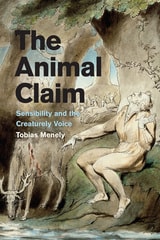
The Animal Claim
Sensibility and the Creaturely VoiceTobias Menely
University of Chicago Press, 2015
In the Restoration and eighteenth century, philosophers emphasized the role of sympathy in collective life and began regarding the passionate expression humans share with animals, rather than the spoken or written word, as the elemental medium of community. Menely shows how poetry came to represent this creaturely voice and, by virtue of this advocacy, facilitated the development of a viable discourse of animal rights in the emerging public sphere. Placing sensibility in dialogue with classical and early-modern antecedents as well as contemporary animal studies, The Animal Claim uncovers crucial connections between eighteenth-century poetry; theories of communication; and post-absolutist, rights-based politics.
The Ethical Case against Animal Experiments
Andrew Linzey, Clair Linzey
University of Illinois Press, 2018
The Ethical Case against Animal Experiments begins with the Oxford Centre for Animal Ethics's groundbreaking and comprehensive ethical critique of the practice of animal experiments. A second section offers original writings that engage with, and elaborate on, aspects of the Oxford Centre report. The essayists explore historical, philosophical, and personal perspectives that range from animal experiments in classical times to the place of necessity in animal research to one researcher's painful journey from researcher to opponent.
A devastating look at a contemporary moral crisis, The Ethical Case against Animal Experiments melds logic and compassion to mount a powerful challenge to human cruelty.
The Global Guide to Animal Protection
Edited by Andrew Linzey
University of Illinois Press, 2013
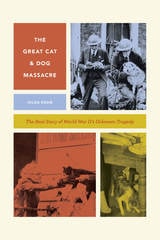
The Great Cat and Dog Massacre
The Real Story of World War Two's Unknown TragedyHilda Kean
University of Chicago Press, 2017
In The Great Cat and Dog Massacre, Hilda Kean unearths the history, piecing together the compelling story of the life—and death—of Britain’s wartime animal companions. She explains that fear of imminent Nazi bombing and the desire to do something to prepare for war led Britons to sew blackout curtains, dig up flower beds for vegetable patches, send their children away to the countryside—and kill the family pet, in theory sparing them the suffering of a bombing raid. Kean’s narrative is gripping, unfolding through stories of shared experiences of bombing, food restrictions, sheltering, and mutual support. Soon pets became key to the war effort, providing emotional assistance and helping people to survive—a contribution for which the animals gained government recognition.
Drawing extensively on new research from animal charities, state archives, diaries, and family stories, Kean does more than tell a virtually forgotten story. She complicates our understanding of World War II as a “good war” fought by a nation of “good” people. Accessibly written and generously illustrated, Kean’s account of this forgotten aspect of British history moves animals to center stage—forcing us to rethink our assumptions about ourselves and the animals with whom we share our homes.
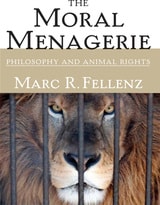
The Moral Menagerie
PHILOSOPHY AND ANIMAL RIGHTSMarc R. Fellenz
University of Illinois Press, 2006
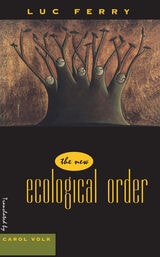
The New Ecological Order
Luc Ferry
University of Chicago Press, 1995
Traditional ecological movements, or "democratic ecology," seek to protect the environment of human societies; they are pragmatic and reformist. But another movement has become the refuge both of nostalgic counterrevolutionaries and of leftist illusions. This is "deep ecology." Its followers go beyond practical critiques of human greed and waste: they call into question the very possibility of human coexistence with nature. The human species is no longer at the center of the world, but subject to a new god called Nature. For these purists, man can only soil the harmony of the universe. In order to secure natural equilibrium, the only solution is to grant rights to animals, to trees, and to rocks.
Ferry launches his critique by examining early European legal cases concerning the status and rights of animals, including a few notorious cases where animals were brought to trial, found guilty, and publicly hanged. He then demonstrates that German Romanticism embraced certain key ideas of the deep ecology movement concerning the protection of animals and the environment. Later adopted by the Nazis, many of these ideas point to a profoundly antihumanistic component of deep ecology that is compatible with totalitarianism.
Ferry shows how deep ecology casts aside all the gains of human autonomy since the Enlightenment. He deciphers the philosophical and political assumptions of a movement that threatens to infantalize human society by preying on the fear of the authority of a new theological-political order. Far from denying our "duty in relation to nature," The New Ecological Order offers a bracing caution—against the dangers of environmental claims and, more important, against the threat to democracy contained in the deep ecology doctrine when pushed to its extreme.
"A book of intellectual power, full of insights, invention, and not without temerity, from one of the best political philosophers today."—Le Figaro
"Few books have analyzed in depth this phenomenon of the ecological movement as the most recent book by Luc Ferry has done. . . . It is a book that absolutely must be read."—Le Point

The Rights of the Defenseless
Protecting Animals and Children in Gilded Age AmericaSusan J. Pearson
University of Chicago Press, 2011
In 1877, the American Humane Society was formed as the national organization for animal and child protection. Thirty years later, there were 354 anticruelty organizations chartered in the United States, nearly 200 of which were similarly invested in the welfare of both humans and animals. In The Rights of the Defenseless, Susan J. Pearson seeks to understand the institutional, cultural, legal, and political significance of the perceived bond between these two kinds of helpless creatures, and the attempts made to protect them.
Unlike many of today’s humane organizations, those Pearson follows were delegated police powers to make arrests and bring cases of cruelty to animals and children before local magistrates. Those whom they prosecuted were subject to fines, jail time, and the removal of either animal or child from their possession. Pearson explores the limits of and motivation behind this power and argues that while these reformers claimed nothing more than sympathy with the helpless and a desire to protect their rights, they turned “cruelty” into a social problem, stretched government resources, and expanded the state through private associations. The first book to explore these dual organizations and their storied history, The Rights of the Defenseless will appeal broadly to reform-minded historians and social theorists alike.
The Three Ethologies
A Positive Vision for Rebuilding Human-Animal RelationshipsMatthew Calarco
University of Chicago Press, 2024
The Three Ethologies offers a fresh, affirmative vision for rebuilding human-animal relations. Venturing beyond the usual scholarly and activist emphasis on restricting harm, Matthew Calarco develops a new philosophy for understanding animal behavior—a practice known as ethology—through three distinct but interrelated lenses: mental ethology, which rebuilds individual subjectivity; social ethology, which rethinks our communal relations; and environmental ethology, which reconfigures our relationship to the land we co-inhabit with our animal kin. Drawing on developments in philosophy, (eco)feminist theory, critical geography, Indigenous studies, and the environmental humanities, Calarco casts an inspiring vision of how ethological living can help us to reimagine our ideas about goodness, truth, and beauty.
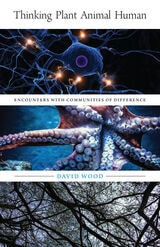
Thinking Plant Animal Human
Encounters with Communities of DifferenceDavid Wood
University of Minnesota Press, 2020
Collected essays by a leading philosopher situating the question of the animal in the broader context of a relational ontology
There is a revolution under way in our thinking about animals and, indeed, life in general, particularly in the West. The very words man, animal, and life have turned into flimsy conceptual husks—impediments to thinking about the issues in which they are embroiled. David Wood was a founding member of the early 1970s Oxford Group of philosophers promoting animal rights; he also directed Ecology Action (UK). Thinking Plant Animal Human is the first collection of this major philosopher’s influential essays on “animals,” bringing together his many discussions of nonhuman life, including the classic “Thinking with Cats.”
Exploring our connections with cats, goats, and sand crabs, Thinking Plant Animal Human introduces the idea of “kinnibalism” (the eating of mammals is eating our own kin), reflects on the idea of homo sapiens, and explores the place of animals both in art and in children’s stories. Finally, and with a special focus on trees, the book delves into remarkable contemporary efforts to rescue plants from philosophical neglect and to rethink and reevaluate their status. Repeatedly bubbling to the surface is the remarkable strangeness of other forms of life, a strangeness that extends to the human.
Wood shows that the best way of resisting simplistic classification is to attend to our manifold relationships with other living beings. It is not anthropocentric to focus on such relationships; they cast light in complex ways on the living communities of which we are part, and exploring them recoils profoundly on our understanding of ourselves.
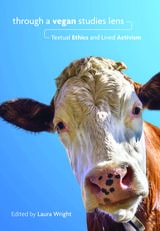
Through a Vegan Studies Lens
Textual Ethics and Lived ActivismLaura Wright
University of Nevada Press, 2019
Veganism is a practice that allows for environmentally responsible consumer choices that are viewed, particularly in the West, as oppositional to an economy that is largely dependent upon big agriculture. This groundbreaking collection exposes this disruption, critiques it, and offers a new roadmap for navigating and reimaging popular culture representations on veganism. These essays engage a wide variety of political, historical, and cultural issues, including contemporary political and social circumstances, emergent veganism in Eastern Europe, climate change, and the Syrian refugee crisis, among other topics.
Through a Vegan Studies Lens significantly furthers the conversation of what a vegan studies perspective can be and illustrates why it should be an integral part of cultural studies and critical theory. Vegan studies is inclusive, refusing to ignore the displacement, abuse, and mistreatment of nonhuman animals. It also looks to ignite conversations about cultural oppression.
Toward Better Problems
New Perspectives on Abortion, Animal Rights, the Environment, and JusticeAnthony Weston
Temple University Press, 1992
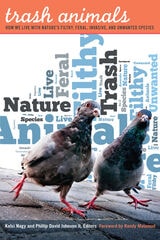
Trash Animals
How We Live with Nature’s Filthy, Feral, Invasive, and Unwanted SpeciesKelsi Nagy
University of Minnesota Press, 2013
Why are some species admired or beloved while others are despised? An eagle or hawk circling overhead inspires awe while urban pigeons shuffling underfoot are kicked away in revulsion. Fly fishermen consider carp an unwelcome trash fish, even though the trout they hope to catch are often equally non-native. Wolves and coyotes are feared and hunted in numbers wildly disproportionate to the dangers they pose to humans and livestock.
In Trash Animals, a diverse group of environmental writers explores the natural history of wildlife species deemed filthy, unwanted, invasive, or worthless, highlighting the vexed relationship humans have with such creatures. Each essay focuses on a so-called trash species—gulls, coyotes, carp, cockroaches, magpies, prairie dogs, and lubber grasshoppers, among others—examining the biology and behavior of each in contrast to the assumptions widely held about them. Identifying such animals as trash tells us nothing about problematic wildlife but rather reveals more about human expectations of, and frustrations with, the natural world.
By establishing the unique place that maligned species occupy in the contemporary landscape and in our imagination, the contributors challenge us to look closely at these animals, to reimagine our ethics of engagement with such wildlife, and to question the violence with which we treat them. Perhaps our attitudes reveal more about humans than they do about the animals.
Contributors: Bruce Barcott; Charles Bergman, Pacific Lutheran U; James E. Bishop, Young Harris College; Andrew D. Blechman; Michael P. Branch, U of Nevada, Reno; Lisa Couturier; Carolyn Kraus, U of Michigan–Dearborn; Jeffrey A. Lockwood, U of Wyoming; Kyhl Lyndgaard, Marlboro College; Charles Mitchell, Elmira College; Kathleen D. Moore, Oregon State U; Catherine Puckett; Bernard Quetchenbach, Montana State U, Billings; Christina Robertson, U of Nevada, Reno; Gavan P. L. Watson, U of Guelph, Ontario, Canada.

Trixy
A NovelElizabeth Stuart Phelps, Edited and with an introduction by Emily E. VanDette
Northwestern University Press, 2019
Trixy is a 1904 novel by the best-selling but largely forgotten American author and women’s rights activist Elizabeth Stuart Phelps. The book decries the then common practice of vivisection, or scientific experiments on live animals. In Trixy, contemporary readers can trace the roots of the early animal rights movement in Phelps’s influential campaign to introduce legislation to regulate or end this practice. Phelps not only presents a narrative polemic against the cruelty of vivisection but argues that training young doctors in it makes them bad physicians. Emily E. VanDette’s introduction demonstrates that Phelps’s protest writing, which included fiction, pamphlets, essays, and speeches, was well ahead of its time.
Though not well known today, Phelps’s 1868 spiritualist novel, The Gates Ajar, which offered a comforting view of the afterlife to readers traumatized by the Civil War, was the century’s second best-selling American novel, surpassed only by Uncle Tom’s Cabin. Recently scholars and readers have begun to reexamine Phelps’s significance. As contemporary authors, including Peter Singer, Jonathan Safran Foer, Donna J. Haraway, Gary L. Francione, and Carol J. Adams, have extended her vision, they have also created new audiences for her work.