Results by title
133 books match the query 'Argentina' and 21 start with t
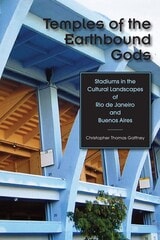
Temples of the Earthbound Gods
Stadiums in the Cultural Landscapes of Rio de Janeiro and Buenos AiresBy Christopher Thomas Gaffney
University of Texas Press, 2008
In Rio de Janeiro, the spiritual home of world football, and Buenos Aires, where a popular soccer club president was recently elected mayor, the game is an integral part of national identity. Using the football stadium as an illuminating cultural lens, Temples of the Earthbound Gods examines many aspects of urban culture that play out within these monumental architectural forms, including spirituality, violence, rigid social norms, anarchy, and also expressions of sexuality and gender.
Tracing the history of the game in Brazil and Argentina through colonial influences as well as indigenous ball courts in Mayan, Aztec, Zapotec, Mixtec, and Olmec societies, Christopher Gaffney's study spans both ancient and contemporary worlds, linking the development of stadiums to urbanization and the consolidation of nation building in two of Latin America's most intriguing megacities.
The Ailing City
Health, Tuberculosis, and Culture in Buenos Aires, 1870–1950Diego Armus
Duke University Press, 2011
The Argentina Reader
History, Culture, PoliticsGabriela Nouzeilles and Graciela Montaldo, eds.
Duke University Press, 2002
This diverse collection brings together songs, articles, comic strips, scholarly essays, poems, and short stories. Most pieces are by Argentines. More than forty of the texts have never before appeared in English. The Argentina Reader contains photographs from Argentina’s National Archives and images of artwork by some of the country’s most talented painters and sculptors. Many selections deal with the history of indigenous Argentines, workers, women, blacks, and other groups often ignored in descriptions of the country. At the same time, the book includes excerpts by or about such major political figures as José de San Martín and Juan Perón. Pieces from literary and social figures virtually unknown in the United States appear alongside those by more well-known writers such as Jorge Luis Borges, Ricardo Piglia, and Julio Cortázar.
The Argentina Reader covers the Spanish colonial regime; the years of nation building following Argentina’s independence from Spain in 1810; and the sweeping progress of economic growth and cultural change that made Argentina, by the turn of the twentieth century, the most modern country in Latin America. The bulk of the collection focuses on the twentieth century: on the popular movements that enabled Peronism and the revolutionary dreams of the 1960s and 1970s; on the dictatorship from 1976 to 1983 and the accompanying culture of terror and resistance; and, finally, on the contradictory and disconcerting tendencies unleashed by the principles of neoliberalism and the new global economy. The book also includes a list of suggestions for further reading.
The Argentina Reader is an invaluable resource for those interested in learning about Argentine history and culture, whether in the classroom or in preparation for travel in Argentina.
The Argentine Folklore Movement
Sugar Elites, Criollo Workers, and the Politics of Cultural Nationalism, 1900–1955Oscar Chamosa
University of Arizona Press, 2010
Oscar Chamosa combines intellectual history with ethnographic and sociocultural analysis to reconstruct the process by which mestizo culture—in Argentina called criollo culture—came to occupy the center of national folklore in a country that portrayed itself as the only white nation in South America. The author finds that the conservative plantation owners—the “sugar elites”—who exploited the criollo peasants sponsored the folklore movement that romanticized them as the archetypes of nationhood. Ironically, many of the composers and folk singers who participated in the landowner-sponsored movement adhered to revolutionary and reformist ideologies and denounced the exploitation to which those criollo peasants were subjected. Chamosa argues that, rather than debilitating the movement, these opposing and contradictory ideologies permitted its triumph and explain, in part, the enduring romanticizing of rural life and criollo culture, essential components of Argentine nationalism.
The book not only reveals the political motivations of culture in Argentina and Latin America but also has implications for understanding the articulation of local culture with national politics and entertainment markets that characterizes contemporary cultural processes worldwide today.
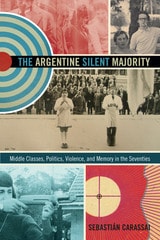
The Argentine Silent Majority
Middle Classes, Politics, Violence, and Memory in the SeventiesSebastián Carassai
Duke University Press, 2014
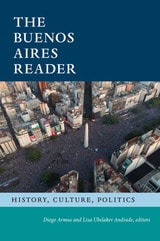
The Buenos Aires Reader
History, Culture, PoliticsDiego Armus and Lisa Ubelaker Andrade, editors
Duke University Press, 2024

The Bureaucrats of Buenos Aires, 1769-1810
Amor al Real ServicioSusan Migden Socolow
Duke University Press, 1988
The late eighteenth century was a critical time for the southernmost regions of Latin America, for in this period they became a separate political entity, the Viceroyalty of the Rio de la Plata. Socolow's work, part of a continuing study of the political, economic, and social elites of the emerging city of Buenos Aires, here considers the bureaucracy put into place by the Bourbon reforms. The author examines the professional and personal circumstances of all bureaucrats, from the high-ranking heads of agencies to the more lowly clerks, contrasting their expectations and their actual experiences. She pays particular attention to their recruitment, promotion, salary, and retirement, as well as their marriage and kinship relationships in the local society.
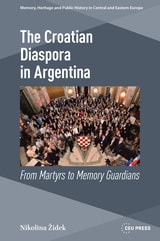
The Croatian Diaspora in Argentina
From Martyrs to Memory GuardiansNikolina Zidek
Central European University Press, 2026
Drawing on archival research and oral testimonies, Nikolina .idek explores how intergenerational memory shaped identity across time. She shows how the community preserved its origins while adapting to new realities, ultimately transforming into “planetary Croats” who use social media and transnational networks to connect with Croatia and the global diaspora.
The International Monetary Fund and Latin America
The Argentine Puzzle in ContextClaudia Kedar
Temple University Press, 2013
The International Monetary Fund (IMF) has played a critical role in the global economy since the postwar era. But, claims Claudia Kedar, behind the strictly economic aspects of the IMF’s intervention, there are influential interactions between IMF technocrats and local economists—even when countries are not borrowing money.
In The International Monetary Fund and Latin America, Kedar seeks to expose the motivations and constraints of the operations of both the IMF and borrowers. With access to never-before-seen archive materials, Kedar reveals both the routine and behind-the-scenes practices that have depicted International Monetary Fund–Latin American relations in general and the asymmetrical IMF-Argentina relations in particular.
Kedar also analyzes the “routine of dependency” that characterizes IMF-borrower relations with several Latin American countries such as Chile, Peru, and Brazil. The International Monetary Fund and Latin America shows how debtor countries have adopted IMF’s policies during past decades and why Latin American leaders today largely refrain from knocking at the IMF’s doors again.
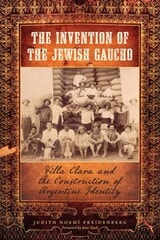
The Invention of the Jewish Gaucho
Villa Clara and the Construction of Argentine IdentityBy Judith Noemí Freidenberg
University of Texas Press, 2009
By the mid-twentieth century, Eastern European Jews had become one of Argentina's largest minorities. Some represented a wave of immigration begun two generations before; many settled in the province of Entre Ríos and founded an agricultural colony. Taking its title from the resulting hybrid of acculturation, The Invention of the Jewish Gaucho examines the lives of these settlers, who represented a merger between native cowboy identities and homeland memories.
The arrival of these immigrants in what would be the village of Villa Clara coincided with the nation's new sense of liberated nationhood. In a meticulous rendition of Villa Clara's social history, Judith Freidenberg interweaves ethnographic and historical information to understand the saga of European immigrants drawn by Argentine open-door policies in the nineteenth century and its impact on the current transformation of immigration into multicultural discourses in the twenty-first century. Using Villa Clara as a case study, Freidenberg demonstrates the broad power of political processes in the construction of ethnic, class, and national identities. The Invention of the Jewish Gaucho draws on life histories, archives, material culture, and performances of heritage to enhance our understanding of a singular population—and to transform our approach to social memory itself.
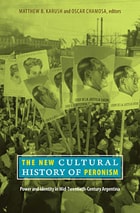
The New Cultural History of Peronism
Power and Identity in Mid-Twentieth-Century ArgentinaMatthew B. Karush and Oscar Chamosa, eds.
Duke University Press, 2010
Situating Peronism within the broad arc of twentieth-century Argentine cultural change, the contributors focus on the interplay of cultural traditions, official policies, commercial imperatives, and popular perceptions. They describe how the Perón regime’s rhetoric and representations helped to produce new ideas of national and collective identity. At the same time, they show how Argentines pursued their interests through their engagement with the Peronist project, and, in so doing, pushed the regime in new directions. While the volume’s emphasis is on the first Perón presidency, one contributor explores the origins of the regime and two others consider Peronism’s transformations in subsequent years. The essays address topics including mass culture and melodrama, folk music, pageants, social respectability, architecture, and the intense emotional investment inspired by Peronism. They examine the experiences of women, indigenous groups, middle-class anti-Peronists, internal migrants, academics, and workers. By illuminating the connections between the state and popular consciousness, The New Cultural History of Peronism exposes the contradictions and ambivalences that have characterized Argentine populism.
Contributors: Anahi Ballent, Oscar Chamosa, María Damilakou, Eduardo Elena, Matthew B. Karush, Diana Lenton, Mirta Zaida Lobato, Natalia Milanesio, Mariano Ben Plotkin, César Seveso, Lizel Tornay

The Other Toscanini
The Life and Works of Hector PanizzaDe Fillippi Sebastiano
University of North Texas Press, 2019
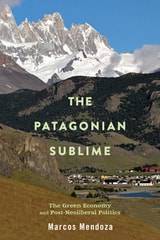
The Patagonian Sublime
The Green Economy and Post-Neoliberal PoliticsMendoza, Marcos
Rutgers University Press, 2019
Mendoza explores the fraught intersection of the green economy with the New Left politics of the Néstor Kirchner and Cristina Fernández de Kirchner governments. Mendoza documents the strategies of capitalist development, national representation, and political rule embedded in the “green productivist” agenda pursued by Kirchner and Fernández. Mendoza shows how Andean Patagonian communities have responded to the challenges of community-based conservation, the fashioning of wilderness zones, and the drive to create place-based monopolies that allow ecotourism destinations to compete in the global consumer economy.
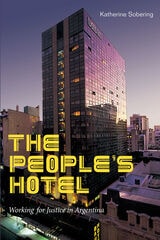
The People's Hotel
Working for Justice in ArgentinaKatherine Sobering
Duke University Press, 2022

The Reappeared
Argentine Former Political PrisonersPark, Rebekah
Rutgers University Press, 2014
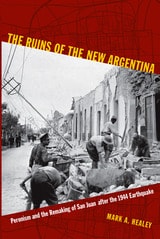
The Ruins of the New Argentina
Peronism and the Remaking of San Juan after the 1944 EarthquakeMark A. Healey
Duke University Press, 2011
The Socialist Party of Argentina, 1890–1930
By Richard J. Walter
University of Texas Press, 1977
In the early part of the twentieth century, Argentina's Socialist Party became the largest and most effective socialist organization in Latin America. Richard J. Walter's interpretive study begins with the party's origins in the 1890s, traces its development through 1912, and then offers a comprehensive analysis of its activities and programs during the almost two decades of civilian, democratic government that ended with the military coup of 1930. His aim has been to provide a detailed case study of a Latin American political party within a specific historical context.
The work gives particular attention to the nature of party leadership, internal party organization, attempts to win the support of the Argentine working class, party activities in national elections and the National Congress, and internal disputes and divisions. In discussing these topics, Walter draws heavily on government documents, including national and municipal censuses, ministerial reports, and the Argentine Congressional Record. He also makes extensive use of national and party newspapers and journals, political memoirs, and collections of essays by party leaders.
Walter concludes that the party enjoyed relative electoral and legislative success because of efficient organization, capable leadership, and specific, well-reasoned programs. On the other hand, it failed to create a firm working-class base or to extend its influence much beyond Buenos Aires, mainly because of its inability to relate adequately to the needs of the proletariat and to the growth of nationalist sentiment. The analysis of these successes and failures also provides an important background for understanding the rise to power of Juan Perón and Peronism.

The Tango Machine
Musical Culture in the Age of ExpediencyMorgan James Luker
University of Chicago Press, 2016
Luker traces the diverse and often contradictory ways tango is used in Argentina in activities ranging from state cultural policy-making to its export abroad as a cultural emblem, from the expanding nonprofit arts sector to tango-themed urban renewal projects. He shows how projects such as these are not peripheral to an otherwise “real” tango—they are the absolutely central means by which the values of this musical culture are cultivated. By richly detailing the interdependence of aesthetic value and the regimes of cultural management, this book sheds light on core conceptual challenges facing critical music scholarship today.
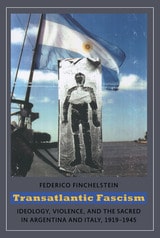
Transatlantic Fascism
Ideology, Violence, and the Sacred in Argentina and Italy, 1919-1945Federico Finchelstein
Duke University Press, 2010
As Finchelstein explains, nacionalismo, the right-wing ideology that developed in Argentina, was not the wholesale imitation of Italian fascism that Mussolini wished it to be. Argentine nacionalistas conflated Catholicism and fascism, making the bold claim that their movement had a central place in God’s designs for their country. Finchelstein explores the fraught efforts of nationalistas to develop a “sacred” ideological doctrine and political program, and he scrutinizes their debates about Nazism, the Spanish Civil War, imperialism, anti-Semitism, and anticommunism. Transatlantic Fascism shows how right-wing groups constructed a distinctive Argentine fascism by appropriating some elements of the Italian model and rejecting others. It reveals the specifically local ways that a global ideology such as fascism crossed national borders.

Trauma, Taboo, and Truth-Telling
Listening to Silences in Postdictatorship ArgentinaNancy J. Gates-Madsen
University of Wisconsin Press, 2018
Nancy J. Gates-Madsen reads between the lines of Argentine cultural texts (fiction, drama, testimonial narrative, telenovela, documentary film) to explore the fundamental role of silence—the unsaid—in the expression of trauma. Her careful examination of the interplay between textual and contextual silences illuminates public debate about the meaning of memory in Argentina—which stories are being told and, more important, which are being silenced. The imposition of silence is not limited to the military domain or its apologists, she shows; the human rights community also perpetuates and creates taboos.
Troubling Gender
Youth and Cumbia in Argentina's Music SceneAuthored by Pablo Vila and Pablo Semán, contributions by Eloísa Martín and María Julia Carozzi
Temple University Press, 2011
Cumbia villera—literally, cumbia from the shantytowns— is a musical genre quite popular with Argentine youth who frequent urban dance halls. Its songs are known for having highly sexualized lyrics— about girls dancing provocatively or experiencing erotic pleasure. The songs exhibit the tensions at play in the different ways people relate to this musical genre.
In Troubling Gender, noted sociologists Pablo Vila and Pablo Semán scrutinize the music's lyrics and the singers' and dancers' performances. At the same time, the authors conduct in-depth interviews to examine the ways males construct and appropriate cumbia's lyrics, and how females identify, appropriate, and playfully and critically manipulate the same misogynistic songs.
Addressing the relationship between this form of music and the wider social, political, and economic changes that influence the lives of urban youth, Troubling Gender argues that the music both reflects and influences the ways in which women's and men's roles are changing in Argentine society.