Results by title
109 books match the query 'Artificial intelligence' and 18 start with t
Technologies for Healthcare 4.0
From AI and IoT to blockchainKarthik Ramamurthy
The Institution of Engineering and Technology, 2023
Tell Me a Story
Narrative and IntelligenceRoger C. Schank
Northwestern University Press, 1995
The Birth of Computer Vision
James E. Dobson
University of Minnesota Press, 2023
A revealing genealogy of image-recognition techniques and technologies
Today’s most advanced neural networks and sophisticated image-analysis methods come from 1950s and ’60s Cold War culture—and many biases and ways of understanding the world from that era persist along with them. Aerial surveillance and reconnaissance shaped all of the technologies that we now refer to as computer vision, including facial recognition. The Birth of Computer Vision uncovers these histories and finds connections between the algorithms, people, and politics at the core of automating perception today.
James E. Dobson reveals how new forms of computerized surveillance systems, high-tech policing, and automated decision-making systems have become entangled, functioning together as a new technological apparatus of social control. Tracing the development of a series of important computer-vision algorithms, he uncovers the ideas, worrisome military origins, and lingering goals reproduced within the code and the products based on it, examining how they became linked to one another and repurposed for domestic and commercial uses. Dobson includes analysis of the Shakey Project, which produced the first semi-autonomous robot, and the impact of student protest in the early 1970s at Stanford University, as well as recovering the computer vision–related aspects of Frank Rosenblatt’s Perceptron as the crucial link between machine learning and computer vision.
Motivated by the ongoing use of these major algorithms and methods, The Birth of Computer Vision chronicles the foundations of computer vision and artificial intelligence, its major transformations, and the questionable legacy of its origins.
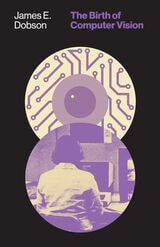
Cover alt text: Two overlapping circles in cream and violet, with black background. Top is a printed circuit with camera eye; below a person at a 1977 computer.
The Book of Minds
How to Understand Ourselves and Other Beings, from Animals to AI to AliensPhilip Ball
University of Chicago Press, 2022
Sciences from zoology to astrobiology, computer science to neuroscience, are seeking to understand minds in their own distinct disciplinary realms. Taking a uniquely broad view of minds and where to find them—including in plants, aliens, and God—Philip Ball pulls the pieces together to explore what sorts of minds we might expect to find in the universe. In so doing, he offers for the first time a unified way of thinking about what minds are and what they can do, by locating them in what he calls the “space of possible minds.” By identifying and mapping out properties of mind without prioritizing the human, Ball sheds new light on a host of fascinating questions: What moral rights should we afford animals, and can we understand their thoughts? Should we worry that AI is going to take over society? If there are intelligent aliens out there, how could we communicate with them? Should we? Understanding the space of possible minds also reveals ways of making advances in understanding some of the most challenging questions in contemporary science: What is thought? What is consciousness? And what (if anything) is free will?
Informed by conversations with leading researchers, Ball’s brilliant survey of current views about the nature and existence of minds is more mind-expanding than we could imagine. In this fascinating panorama of other minds, we come to better know our own.
The Convergence of AI, IoT, Smart Sensors and Remote Sensing for Sustainable Smart Environment Applications
Chaker Abdelaziz Kerrache
The Institution of Engineering and Technology, 2026
The Economics of Artificial Intelligence
An AgendaEdited by Ajay Agrawal, Joshua Gans, and Avi Goldfarb
University of Chicago Press, 2019
Contributors:
Daron Acemoglu, Massachusetts Institute of Technology
Philippe Aghion, Collège de France
Ajay Agrawal, University of Toronto
Susan Athey, Stanford University
James Bessen, Boston University School of Law
Erik Brynjolfsson, MIT Sloan School of Management
Colin F. Camerer, California Institute of Technology
Judith Chevalier, Yale School of Management
Iain M. Cockburn, Boston University
Tyler Cowen, George Mason University
Jason Furman, Harvard Kennedy School
Patrick Francois, University of British Columbia
Alberto Galasso, University of Toronto
Joshua Gans, University of Toronto
Avi Goldfarb, University of Toronto
Austan Goolsbee, University of Chicago Booth School of Business
Rebecca Henderson, Harvard Business School
Ginger Zhe Jin, University of Maryland
Benjamin F. Jones, Northwestern University
Charles I. Jones, Stanford University
Daniel Kahneman, Princeton University
Anton Korinek, Johns Hopkins University
Mara Lederman, University of Toronto
Hong Luo, Harvard Business School
John McHale, National University of Ireland
Paul R. Milgrom, Stanford University
Matthew Mitchell, University of Toronto
Alexander Oettl, Georgia Institute of Technology
Andrea Prat, Columbia Business School
Manav Raj, New York University
Pascual Restrepo, Boston University
Daniel Rock, MIT Sloan School of Management
Jeffrey D. Sachs, Columbia University
Robert Seamans, New York University
Scott Stern, MIT Sloan School of Management
Betsey Stevenson, University of Michigan
Joseph E. Stiglitz. Columbia University
Chad Syverson, University of Chicago Booth School of Business
Matt Taddy, University of Chicago Booth School of Business
Steven Tadelis, University of California, Berkeley
Manuel Trajtenberg, Tel Aviv University
Daniel Trefler, University of Toronto
Catherine Tucker, MIT Sloan School of Management
Hal Varian, University of California, Berkeley
The Economics of Artificial Intelligence
Health Care ChallengesEdited by Ajay Agrawal, Joshua Gans, Avi Goldfarb, and Catherine E. Tucker
University of Chicago Press, 2024
A timely investigation of the potential economic effects, both realized and unrealized, of artificial intelligence within the United States healthcare system.
In sweeping conversations about the impact of artificial intelligence on many sectors of the economy, healthcare has received relatively little attention. Yet it seems unlikely that an industry that represents nearly one-fifth of the economy could escape the efficiency and cost-driven disruptions of AI.
The Economics of Artificial Intelligence: Health Care Challenges brings together contributions from health economists, physicians, philosophers, and scholars in law, public health, and machine learning to identify the primary barriers to entry of AI in the healthcare sector. Across original papers and in wide-ranging responses, the contributors analyze barriers of four types: incentives, management, data availability, and regulation. They also suggest that AI has the potential to improve outcomes and lower costs. Understanding both the benefits of and barriers to AI adoption is essential for designing policies that will affect the evolution of the healthcare system.
The Economics of Transformative AI
Edited by Ajay Agrawal, Erik Brynjolfsson, and Anton Korinek
University of Chicago Press, 2026
A thought-provoking examination of how AI might either spur or harm human economic progress.
What happens to an economy when machines can think as well as, or even better than, humans? The Economics of Transformative AI tackles this issue, which is one of the most consequential economic questions of our time. This book brings together sixteen research studies from top economists that look closely at how transformative AI reshapes everything from innovation and market structure to employment, inequality, and human purpose. They explore both opportunities, such as personalized algorithmic assistance, accelerated scientific discovery, and new forms of organization, and profound challenges, including potential labor displacement, rising concentration of power, changes in the information ecosystem, and even possible existential risks to humanity.
The studies in this volume develop economic frameworks for understanding the conditions under which AI might enhance or undermine human flourishing. They offer policymakers, researchers, and business leaders the analytical tools needed to prepare for the potential economic transformations ahead.
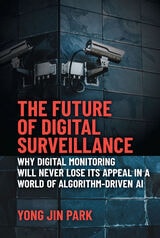
The Future of Digital Surveillance
Why Digital Monitoring Will Never Lose Its Appeal in a World of Algorithm-Driven AIYong Jin Park
University of Michigan Press, 2021
Are humans hard-wired to make good decisions about managing their privacy in an increasingly public world? Or are we helpless victims of surveillance through our use of invasive digital media? Exploring the chasm between the tyranny of surveillance and the ideal of privacy, this book traces the origins of personal data collection in digital technologies including artificial intelligence (AI) embedded in social network sites, search engines, mobile apps, the web, and email. The Future of Digital Surveillance argues against a technologically deterministic view—digital technologies by nature do not cause surveillance. Instead, the shaping of surveillance technologies is embedded in a complex set of individual psychology, institutional behaviors, and policy principles.
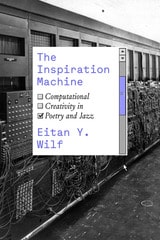
The Inspiration Machine
Computational Creativity in Poetry and JazzEitan Y. Wilf
University of Chicago Press, 2023
In The Inspiration Machine, Eitan Y. Wilf explores the transformative potentials that digital technology opens up for creative practice through three ethnographic cases, two with jazz musicians and one with a group of poets. At times dissatisfied with the limitations of human creativity, these artists do not turn to computerized algorithms merely to execute their preconceived ideas. Rather, they approach them as creative partners, delegating to them different degrees of agentive control and artistic decision-making in the hopes of finding inspiration in their output and thereby expanding their own creative horizons.
The algorithms these artists develop and use, however, remain rooted in and haunted by the specific social predicaments and human shortfalls that they were intended to overcome. Experiments in the digital thus hold an important lesson: although Wilf’s interlocutors returned from their adventures with computational creativity with modified, novel, and enriched capacities and predilections, they also gained a renewed appreciation for, and at times a desire to re-inhabit, non-digital creativity. In examining the potentials and pitfalls of seemingly autonomous digital technologies in the realm of art, Wilf shows that computational solutions to the real or imagined insufficiencies of human practice are best developed in relation to, rather than away from, the social and cultural contexts that gave rise to those insufficiencies, in the first place.
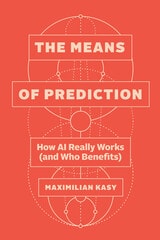
The Means of Prediction
How AI Really Works (and Who Benefits)Maximilian Kasy
University of Chicago Press, 2025
AI is inescapable, from its mundane uses online to its increasingly consequential decision-making in courtrooms, job interviews, and wars. The ubiquity of AI is so great that it might produce public resignation—a sense that the technology is our shared fate.
As economist Maximilian Kasy shows in The Means of Prediction, artificial intelligence, far from being an unstoppable force, is irrevocably shaped by human decisions—choices made to date by the ownership class that steers its development and deployment. Kasy shows that the technology of AI is ultimately not that complex. It is insidious, however, in its capacity to steer results to its owners’ wants and ends. Kasy clearly and accessibly explains the fundamental principles on which AI works, and, in doing so, reveals that the real conflict isn’t between humans and machines, but between those who control the machines and the rest of us.
The Means of Prediction offers a powerful vision of the future of AI: a future not shaped by technology, but by the technology’s owners. Amid a deluge of debates about technical details, new possibilities, and social problems, Kasy cuts to the core issue: Who controls AI’s objectives, and how is this control maintained? The answer lies in what he calls “the means of prediction,” or the essential resources required for building AI systems: data, computing power, expertise, and energy. As Kasy shows, in a world already defined by inequality, one of humanity’s most consequential technologies has been and will be steered by those already in power.
Against those stakes, Kasy offers an elegant framework both for understanding AI’s capabilities and for designing its public control. He makes a compelling case for democratic control over AI objectives as the answer to mounting concerns about AI's risks and harms. The Means of Prediction is a revelation, both an expert undressing of a technology that has masqueraded as more complicated and a compelling call for public oversight of this transformative technology.
The Means of Prediction
How AI Really Works (and Who Benefits)Maximilian Kasy
University of Chicago Press, 2025
An eye-opening examination of how power—not technology—will define life with AI.
AI is inescapable, from its mundane uses online to its increasingly consequential decision-making in courtrooms, job interviews, and wars. The ubiquity of AI is so great that it might produce public resignation—a sense that the technology is our shared fate.
As economist Maximilian Kasy shows in The Means of Prediction, artificial intelligence, far from being an unstoppable force, is irrevocably shaped by human decisions—choices made to date by the ownership class that steers its development and deployment. Kasy shows that the technology of AI is ultimately not that complex. It is insidious, however, in its capacity to steer results to its owners’ wants and ends. Kasy clearly and accessibly explains the fundamental principles on which AI works, and, in doing so, reveals that the real conflict isn’t between humans and machines, but between those who control the machines and the rest of us.
The Means of Prediction offers a powerful vision of the future of AI: a future not shaped by technology, but by the technology’s owners. Amid a deluge of debates about technical details, new possibilities, and social problems, Kasy cuts to the core issue: Who controls AI’s objectives, and how is this control maintained? The answer lies in what he calls “the means of prediction,” or the essential resources required for building AI systems: data, computing power, expertise, and energy. As Kasy shows, in a world already defined by inequality, one of humanity’s most consequential technologies has been and will be steered by those already in power.
Against those stakes, Kasy offers an elegant framework both for understanding AI’s capabilities and for designing its public control. He makes a compelling case for democratic control over AI objectives as the answer to mounting concerns about AI's risks and harms. The Means of Prediction is a revelation, both an expert undressing of a technology that has masqueraded as more complicated and a compelling call for public oversight of this transformative technology.

The Political Economy of Artificial Intelligence
Edited by Ajay Agrawal, Joshua Gans, Avi Goldfarb, and Catherine E. Tucker
University of Chicago Press, 2026
An authoritative look at how artificial intelligence both shapes and is shaped by the political and economic forces of the modern world.
As the effects of artificial intelligence are felt across economies and societies, many of its ramifications are still emerging. This volume brings together economists and political scientists to examine how AI intersects with regulation, military power, and political identity—offering analytical frameworks and identifying key open questions for future research.
The contributions address topics such as the allocation of property rights for AI inputs, trade-offs among alternative regulatory regimes, and the role of interest groups in shaping the technology’s trajectory. They explore how AI-related capabilities influence military effectiveness, resource allocation, and bargaining power among nations, and consider AI’s effects on political preferences, from the influence of AI-curated information on polarization to the implications of targeted political advertising and personalized education for national identity formation. The volume highlights key trade-offs that arise in AI’s political economy, and points toward empirical strategies and theoretical models that can advance understanding in this emerging field.
Drawing on diverse disciplinary perspectives, the collection provides a foundation for rigorous inquiry into how AI both shapes and is shaped by political and economic forces.

The Posthuman Condition
Consciousness Beyond the BrainRobert Pepperell
Intellect Books, 2009
Synthetic creativity, organic computers, genetic modification, intelligent machines--such ideas are deeply challenging to many of our traditional assumptions about human uniqueness and superiority. But, ironically, it is our very capacity for technological invention that has secured us so dominant a position in the world which may lead ultimately to (as some have put it) 'The End of Man'. If we are really capable of creating entities that exceed our own skills and intellect then the consequences for humanity are almost inconceivable. Nevertheless, we must now face up to the possibility that attributes like intelligence and consciousness may be synthesised in non-human entities--perhaps within our lifetime. Would such entities have human-like emotions; would they have a sense of their own being?
The Posthuman Condition argues that such questions are difficult to tackle given the concepts of human existence that we have inherited from humanism, many of which can no longer be sustained. New theories about nature and the operation of the universe arising from sophisticated computer modelling are starting to demonstrate the profound interconnections between all things in reality where previously we had seen only separations. This has implications for traditional views of the human condition, consciousness, the way we look at art, and for some of the oldest problems in philosophy.
First published in the 1990s, this important text has been completely revised by the author with the addition of new sections and illustrations.
For further information see: www.post-human.net
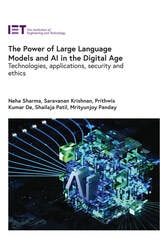
The Power of Large Language Models and AI in the Digital Age
Technologies, applications, security and ethicsNeha Sharma
The Institution of Engineering and Technology, 2026
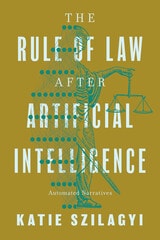
The Rule of Law After Artificial Intelligence
Automated NarrativesKatie Szilagyi
University of Chicago Press, 2026
A timely investigation of what is at stake when AI takes legal decision-making out of human hands.
Artificial intelligence is proliferating in many professions, and the legal field is no exception. In The Rule of Law After Artificial Intelligence, Katie Szilagyi investigates the philosophical and practical implications of using AI in legal spaces, beginning with several fundamental questions: What is the law supposed to do, and from where does it derive its authority? Would law still achieve these aims if automated? How might automation affect the rule of law’s integrity and democratic institutions’ operations?
Blending legal philosophy, applied case studies, and insights from both critical legal scholarship and science and technology studies, Szilagyi argues that law and storytelling are deeply connected. Through creating and contesting the law, we make sense of the information around us and generate narratives about our collective world. These narratives are not static: legal precedent evolves, and legal deliberation on hard cases can help to resolve unclear or unprecedented social issues.
Szilagyi demonstrates that technological innovations make the rule of law vulnerable because large language models and machine learning undermine the visioning function of legal narratives, collapsing exercises of legal interpretation into mere administration. Datafication of law—built on the biased data of our cultural past—threatens longstanding legal ideals, lessens the constraints against abuses of power by private actors, and hamstrings society’s ability to reach a more egalitarian future. Szilagyi argues instead for centering narratives within the law and, in turn, rediscovering the tales the law tells us about who we are.

The Tbilisi Symposium on Logic, Language and Computation
Selected PapersEdited by Jonathan Ginzburg, Zurab Khasidashvili, Carl Vogel, Jean-Jacques Lévy,
CSLI, 1998
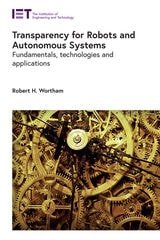
Transparency for Robots and Autonomous Systems
Fundamentals, technologies and applicationsRobert H. Wortham
The Institution of Engineering and Technology, 2020