Results by title
428 books match the query 'Authorship' and 96 start with t
Tales Out of School
Selected InterviewsRobert Creeley
University of Michigan Press, 1994

Tales of the Field
On Writing EthnographyJohn Van Maanen
University of Chicago Press, 1988
For more than twenty years, John Van Maanen’s Tales of the Field has been a definitive reference and guide for students, scholars, and practitioners of ethnography and beyond. Originally published in 1988, it was the one of the first works to detail and critically analyze the various styles and narrative conventions associated with written representations of culture. This is a book about the deskwork of fieldwork and the various ways culture is put forth in print. The core of the work is an extended discussion and illustration of three forms or genres of cultural representation—realist tales, confessional tales, and impressionist tales. The novel issues raised in Tales concern authorial voice, style, truth, objectivity, and point-of-view. Over the years, the work has both reflected and shaped changes in the field of ethnography.
In this second edition, Van Maanen’s substantial new Epilogue charts and illuminates changes in the field since the book’s first publication. Refreshingly humorous and accessible, Tales of the Field remains an invaluable introduction to novices learning the trade of fieldwork and a cornerstone of reference for veteran ethnographers.
Tales of the Field
On Writing Ethnography, Second EditionJohn Van Maanen
University of Chicago Press, 2011
For more than twenty years, John Van Maanen’s Tales of the Field has been a definitive reference and guide for students, scholars, and practitioners of ethnography and beyond. Originally published in 1988, it was the one of the first works to detail and critically analyze the various styles and narrative conventions associated with written representations of culture. This is a book about the deskwork of fieldwork and the various ways culture is put forth in print. The core of the work is an extended discussion and illustration of three forms or genres of cultural representation—realist tales, confessional tales, and impressionist tales. The novel issues raised in Tales concern authorial voice, style, truth, objectivity, and point-of-view. Over the years, the work has both reflected and shaped changes in the field of ethnography.
In this second edition, Van Maanen’s substantial new Epilogue charts and illuminates changes in the field since the book’s first publication. Refreshingly humorous and accessible, Tales of the Field remains an invaluable introduction to novices learning the trade of fieldwork and a cornerstone of reference for veteran ethnographers.
Talk Poetry
Poems and Interviews with Nine American PoetsDavid Baker
University of Arkansas Press, 2012
Talking All Morning
Robert Bly
University of Michigan Press, 1980
Talking about Detective Fiction
P. D. James
Bodleian Library Publishing, 2009
Telling a Research Story
Writing a Literature ReviewChristine B. Feak and John M. Swales
University of Michigan Press, 2009
Telling a Research Story: Writing a Literature Review is concerned with the writing of a literature review and is not designed to address any of the preliminary processes leading up to the actual writing of the literature review.
This volume represents a revision and expansion of the material on writing literature reviews that appeared in English in Today's Research World.
This volume progresses from general to specific issues in the writing of literature reviews. It opens with some orientations that raise awareness of the issues that surround the telling of a research story. Issues of structure and matters of language, style, and rhetoric are then discussed. Sections on metadiscourse, citation, and paraphrasing and summarizing are included.
The Anonymous Renaissance
Cultures of Discretion in Tudor-Stuart EnglandMarcy L. North
University of Chicago Press, 2003
The Renaissance was in many ways the beginning of modern and self-conscious authorship, a time when individual genius was celebrated and an author's name could become a book trade commodity. Why, then, did anonymous authorship flourish during the Renaissance rather than disappear? In addressing this puzzle, Marcy L. North reveals the rich history and popularity of anonymity during this period.
The book trade, she argues, created many intriguing and paradoxical uses for anonymity, even as the authorial name became more marketable. Among ecclesiastical debaters, for instance, anonymity worked to conceal identity, but it could also be used to identify the moral character of the author being concealed. In court and coterie circles, meanwhile, authors turned name suppression into a tool for the preservation of social boundaries. Finally, in both print and manuscript, anonymity promised to liberate an authentic female voice, and yet made it impossible to authenticate the gender of an author. In sum, the writers and book producers who helped to create England's literary culture viewed anonymity as a meaningful and useful practice.
Written with clarity and grace, The Anonymous Renaissance will fill a prominent gap in the study of authorship and English literary history.
The Answers Are Inside the Mountains
Meditations on the Writing LifeWilliam Stafford, Edited by Paul Merchant & Vincent Wixon
University of Michigan Press, 2003
In this fourth collection of reflections on writing and the writing life, the late William Stafford's lifelong refusal to separate his work from the task of living responsibly -- "What a person is shows up in what a person does" -- rings clear.
The Answers Are Inside the Mountains collects unpublished interviews, poems, articles, aphorisms, and writing exercises from this great American man of letters and hugely prolific author, who kept a journal for nearly half a century and produced over 20,000 poems -- a staggering output by any standard.
The book begins with the words "To overwhelm by rightness," a phrase evoking the two demands Stafford made on himself: to write daily, and to live uprightly. The Answers Are Inside the Mountains lives up to those deceptively simple ethics, and confirms William Stafford's enduringly important voice for our uncertain age.
William Stafford (1914-93) authored more than thirty-five books of poetry and prose, including the highly acclaimed Writing the Australian Crawl, You Must Revise Your Life, Crossing Unmarked Snow: Further Views on the Writer's Vocation, and Traveling Through the Dark, winner of the National Book Award for Poetry.
The Art of Creative Research
A Field Guide for WritersPhilip Gerard
University of Chicago Press, 2017
The Art of Creative Research helps writers take this natural inclination to explore and observe and turn it into a workable—and enjoyable—research plan. It shows that research shouldn’t be seen as a dry, plodding aspect of writing. Instead, it’s an art that all writers can master, one that unearths surprises and fuels imagination. This lends authenticity to fiction and poetry as well as nonfiction.
Philip Gerard distills the process into fundamental questions: How do you conduct research? And what can you do with the information you gather? He covers both in-person research and work in archives and illustrates how the different types of research can be incorporated into stories, poems, and essays using examples from a wide range of writers in addition to those from his own projects. Throughout, Gerard brings knowledge from his seasoned background into play, drawing on his experiences as a reporter and a writer of both fiction and nonfiction. His enthusiasm for adventure is infectious and will inspire writers to step away from the keyboard and into the world.
“Research can take you to that golden intersection where the personal meets the public, the private crosses the universal, where the best literature lives,” Gerard writes. With his masterly guidance, anyone can become an expert in artful investigation.
The Art of Criticism
Henry James on the Theory and the Practice of FictionHenry James
University of Chicago Press, 1986
The editors have provided what James himself emphasized in his literary criticism—the text's context. Each selection is framed by an editorial commentary and notes which give its biographical, bibliographical, and critical background and cite other references in James' work to the topic discussed. This framework, along with the editors' introduction, gives the reader a sense of the place of these pieces in the history of criticism.
The Author's Due
Printing and the Prehistory of CopyrightJoseph Loewenstein
University of Chicago Press, 2002
As Loewenstein shows, copyright is a form of monopoly that developed alongside a range of related protections such as commercial trusts, manufacturing patents, and censorship, and cannot be understood apart from them. The regulation of the press pitted competing interests and rival monopolistic structures against one another—guildmembers and nonprofessionals, printers and booksellers, authors and publishers. These struggles, in turn, crucially shaped the literary and intellectual practices of early modern authors, as well as early capitalist economic organization.
With its probing look at the origins of modern copyright, The Author's Due will prove to be a watershed for historians, literary critics, and legal scholars alike.
The Author's Handbook
Franklynn Peterson and Judi Kesselman-Turkel
University of Wisconsin Press, 2006
Providing essential guidance for both aspiring and experienced authors, the second edition of The Author’s Handbook is a valuable resource for writers of all levels. Extensively updated and expanded to account for significant changes in the publishing industry, The Author’s Handbook outlines effective techniques to develop marketable book ideas, research those ideas, and write a manuscript—either fiction or nonfiction—for publication. The authors provide many tips on topics that include choosing a publisher, negotiating contracts, understanding legal matters, and promoting your work. With this guide, the reader will gain insight into virtually every aspect of publishing.
The Authorship of Place
A Cultural Geography of the New Chinese CinemasDennis Lo
Hong Kong University Press, 2020

The Blond Box
Toby Olson
University of Alabama Press, 2003
The Body of Poetry
Essays on Women, Form, and the Poetic SelfAnnie Finch
University of Michigan Press, 2005
The Business of Being a Writer
Jane Friedman
University of Chicago Press, 2018
The Business of Being a Writer offers the business education writers need but so rarely receive. It is meant for early-career writers looking to develop a realistic set of expectations about making money from their work or for working writers who want a better understanding of the industry. Writers will gain a comprehensive picture of how the publishing world works—from queries and agents to blogging and advertising—and will learn how they can best position themselves for success over the long term.
Jane Friedman has more than twenty years of experience in the publishing industry, with an emphasis on digital media strategy for authors and publishers. She is encouraging without sugarcoating, blending years of research with practical advice that will help writers market themselves and maximize their writing-related income. It will leave them empowered, confident, and ready to turn their craft into a career.
The Business of Being a Writer, Second Edition
Jane Friedman
University of Chicago Press, 2025
Writers talk about their work in many ways: as an art, as a calling, as a lifestyle. Too often missing from these conversations is the fact that writing is also a business, and those who want to make a living from their writing must understand the basic business principles underlying the industry. The Business of Being a Writer offers the business education writers need but so rarely receive.
Jane Friedman is one of today’s leading experts on the publishing industry. Through her website, social media presence, online courses, email newsletters, and other media, she helps writers understand how to navigate the industry with confidence and intentionality. This book advises writers on how to build a platform in a way that aligns with their values, how to spot critical mindset issues that might sabotage their efforts before they even begin, how to publish strategically, and what it means to diversify income streams beyond book sales. For this second edition, Friedman has updated every topic to reflect how the industry has evolved over the past half decade. New features include a section on business and legal issues commonly faced by writers, exercises at the end of each chapter, and a wealth of sample materials posted on a companion website.
Reaching beyond the mechanical aspects of publishing, The Business of Being a Writer will help both new and experienced writers approach their careers with the same creative spirit as their writing. Friedman is encouraging without sugarcoating reality, blending years of research with practical advice that will help writers market themselves and maximize their writing-related income. Her book will leave them empowered, confident, and ready to turn their craft into a sustainable career.
The Chicago Manual of Style, 15th Edition
Edited by University of Chicago Press Staff
University of Chicago Press, 2003
In the 1890s, a proofreader at the University of Chicago Press prepared a single sheet of typographic fundamentals intended as a guide for the University community. That sheet grew into a pamphlet, and the pamphlet grew into a book—the first edition of the Manual of Style, published in 1906. Now in its fifteenth edition, The Chicago Manual of Style—the essential reference for authors, editors, proofreaders, indexers, copywriters, designers, and publishers in any field—is more comprehensive and easier to use than ever before.
Those who work with words know how dramatically publishing has changed in the past decade, with technology now informing and influencing every stage of the writing and publishing process. In creating the fifteenth edition of the Manual, Chicago's renowned editorial staff drew on direct experience of these changes, as well as on the recommendations of the Manual's first advisory board, composed of a distinguished group of scholars, authors, and professionals from a wide range of publishing and business environments.
Every aspect of coverage has been examined and brought up to date—from publishing formats to editorial style and method, from documentation of electronic sources to book design and production, and everything in between. In addition to books, the Manual now also treats journals and electronic publications. All chapters are written for the electronic age, with advice on how to prepare and edit manuscripts online, handle copyright and permissions issues raised by technology, use new methods of preparing mathematical copy, and cite electronic and online sources.
A new chapter covers American English grammar and usage, outlining the grammatical structure of English, showing how to put words and phrases together to achieve clarity, and identifying common errors. The two chapters on documentation have been reorganized and updated: the first now describes the two main systems preferred by Chicago, and the second discusses specific elements and subject matter, with examples of both systems. Coverage of design and manufacturing has been streamlined to reflect what writers and editors need to know about current procedures. And, to make it easier to search for information, each numbered paragraph throughout the Manual is now introduced by a descriptive heading.
Clear, concise, and replete with commonsense advice, The Chicago Manual of Style, fifteenth edition, offers the wisdom of a hundred years of editorial practice while including a wealth of new topics and updated perspectives. For anyone who works with words, whether on a page or computer screen, this continues to be the one reference book you simply must have.
What's new in the Fifteenth Edition:
* Updated material throughout to reflect current style, technology, and professional practice
* Scope expanded to include journals and electronic publications
* Comprehensive new chapter on American English grammar and usage by Bryan A. Garner (author of A Dictionary of Modern American Usage)
* Updated and rewritten chapter on preparing mathematical copy
* Reorganized and updated chapters on documentation, including guidance on citing electronic sources
* Streamlined coverage of current design and production processes, with a glossary of key terms
* Descriptive headings on all numbered paragraphs for ease of reference
* New diagrams of the editing and production processes for both books and journals, keyed to chapter discussions
* New, expanded Web site with special tools and features for Manual users at www.chicagomanualofstyle.org.
The Chicago Manual of Style, 16th Edition
Edited by University of Chicago Press Staff
University of Chicago Press, 2010
**The 16th edition of The Chicago Manual of Style has been superseded by the 17th edition.**
While digital technologies have revolutionized the publishing world in the twenty-first century, one thing still remains true: The Chicago Manual of Style is the authoritative, trusted source that writers, editors, and publishers turn to for guidance on style and process. For the sixteenth edition, every aspect of coverage has been reconsidered to reflect how publishing professionals work today. Though processes may change, the Manual continues to offer the clear, well-considered style and usage advice it has for more than a century.
The sixteenth edition offers expanded information on producing electronic publications, including web-based content and e-books. An updated appendix on production and digital technology demystifies the process of electronic workflow and offers a primer on the use of XML markup, and a revised glossary includes a host of terms associated with electronic as well as print publishing. The Chicago system of documentation has been streamlined and adapted for a variety of online and digital sources. Figures and tables are updated throughout the book—including a return to the Manual’s popular hyphenation table and new, comprehensive listings of Unicode numbers for special characters.
The Chicago Manual of Style, 17th Edition
The University of Chicago Press Editorial Staff
University of Chicago Press, 2017
In the seven years since the previous edition debuted, we have seen an extraordinary evolution in the way we create and share knowledge. This seventeenth edition of The Chicago Manual of Style has been prepared with an eye toward how we find, create, and cite information that readers are as likely to access from their pockets as from a bookshelf. It offers updated guidelines on electronic workflows and publication formats, tools for PDF annotation and citation management, web accessibility standards, and effective use of metadata, abstracts, and keywords. It recognizes the needs of those who are self-publishing or following open access or Creative Commons publishing models. The citation chapters reflect the ever-expanding universe of electronic sources—including social media posts and comments, private messages, and app content—and also offer updated guidelines on such issues as DOIs, time stamps, and e-book locators.
Other improvements are independent of technological change. The chapter on grammar and usage includes an expanded glossary of problematic words and phrases and a new section on syntax as well as updated guidance on gender-neutral pronouns and bias-free language. Key sections on punctuation and basic citation style have been reorganized and clarified. To facilitate navigation, headings and paragraph titles have been revised and clarified throughout. And the bibliography has been updated and expanded to include the latest and best resources available.
This edition continues to reflect expert insights gathered from Chicago’s own staff and from an advisory board of publishing experts from across the profession. It also includes suggestions inspired by emails, calls, and even tweets from readers. No matter how much the means of communication change, The Chicago Manual of Style remains the ultimate resource for those who care about getting the details right.
The Chicago Manual of Style, 18th Edition
The University of Chicago Press Editorial Staff
University of Chicago Press, 2024
Much has happened in the years since the publication of the seventeenth edition of The Chicago Manual of Style. The world has transformed, and the Manual has risen to meet the moment. The eighteenth edition of this classic guide for writers, editors, and publishers is the most extensive revision in two decades.
Every chapter has been reexamined with diversity and accessibility in mind, and major changes include updated and expanded coverage of pronoun use and inclusive language, revised guidelines on capitalization, a broader range of examples, new coverage of Indigenous languages, and expanded advice on making publications accessible to people with disabilities. The Manual’s traditional focus on nonfiction has been expanded to include fiction and other creative genres in coverage of topics such as punctuation and dialogue, and the needs of self-published authors receive wider attention.
The citation chapters have been thoroughly reorganized for the benefit of new and experienced users alike, and the key concepts for editing mathematics have been integrated into the chapters where they will be most useful to generalists. Evolving technologies—from open-access publishing models to AI—are covered throughout. And naturally, there are some well-considered updates to familiar rules, including changes intended to align the Manual’s recommendations more closely with real-world usage.
As with every new edition, devotees of the Manual will find much to discover and ponder.
The Construction of Authorship
Textual Appropriation in Law and LiteratureMartha Woodmansee and Peter Jaszi, eds.
Duke University Press, 1994
These essays, illustrating cultural studies in action, are aggressively interdisciplinary and wide-ranging in topic and approach. Questions of collective and collaborative authorship in both contemporary and early modern contexts are addressed. Other topics include moral theory and authorship; copyright and the balance between competing interests of authors and the public; problems of international copyright; musical sampling and its impact on "fair use" doctrine; cinematic authorship; quotation and libel; alternative views of authorship as exemplified by nineteenth-century women's clubs and by the Renaissance commonplace book; authorship in relation to broadcast media and to the teaching of writing; and the material dimension of authorship as demonstrated by Milton's publishing contract.
Contributors. Rosemary J. Coombe, Margreta de Grazia, Marvin D'Lugo, John Feather, N. N. Feltes, Ann Ruggles Gere, Peter Jaszi, Gerhard Joseph, Peter Lindenbaum, Andrea A. Lunsford and Lisa Ede, Jeffrey A. Masten, Thomas Pfau, Monroe E. Price and Malla Pollack, Mark Rose, Marlon B. Ross, David Sanjek, Thomas Streeter, Jim Swan, Max W. Thomas, Martha Woodmansee, Alfred C. Yen
The Construction of Negotiated Meaning
A Social Cognitive Theory of WritingLinda Flower
Southern Illinois University Press, 1994
Based on five years of close observation of students, writing and collaborative planning—the practice in which student writers take the roles of planner and supporter to help each other develop a more rhetorically sophisticated writing plan—foremost cognitive composition researcher Linda Flower redefines writing in terms of an interactive social and cognitive process and proposes a convincing and compelling theory of the construction of negotiated meaning.
Flower seeks to describe how writers construct meaning. Supported by the emerging body of social and cognitive research in rhetoric, education, and psychology, she portrays meaning making as a literate act and a constructive process. She challenges traditional definitions of literacy, adding to that concept the elements of social literate practices and personal literate acts. In Flower’s view, this social cognitive process is a source of tension and conflict among the multiple forces that shape meaning: the social and cultural context, the demands of discourse, and the writer’s own goals and knowledge.
Flower outlines a generative theory of conflict. With this conflict central to her theory of the construction of negotiated meaning, she examines negotiation as an alternative to the metaphors of reproduction and conversation. It is through negotiation, Flower argues, that social expectations, discourse conventions, and the writer’s personal goals and knowledge become inner voices. The tension among these forces often creates the hidden logic behind student writing. In response to these conflicting voices, writers sometimes rise to the active negotiation of meaning, creating meaning in the interplay of alternatives, opportunities, and constraints.
The Country of the Pointed Firs and Other Stories
Sarah Orne Jewett
University of New Hampshire Press, 1997
The Country of the Pointed Firs (1896) is Sarah Orne Jewett's most popular book. In its elegantly constructed sketches, a worldly, anonymous writer spends the summer in a tiny Maine fishing village where she hopes to find peace and solitude. As she gains the acceptance and trust of her hosts, the community's power and complexity are slowly revealed. While its episodes portray the difficulty and loneliness of rural life, they also display its dignity and strength, particularly as expressed in the bonds between women: mothers, daughters, and friends.
This centennial edition contains a facsimile of the original text, thereby restoring the novel to Jewett's own version, which had been considerably altered in other published versions, plus four related stories. Further enhancing the importance of this volume is editor Sarah Way Sherman's introduction, which includes a sketch of Jewett's life and professional development, a commentary on textual accuracy, and a discussion of the book's themes and techniques as well as its historical context.
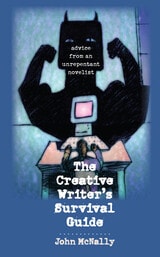
The Creative Writer's Survival Guide
Advice from an Unrepentant NovelistJohn McNally
University of Iowa Press, 2010
Beginning with “The Writer’s Wonderland—Or: A Warning” and ending with “You’ve Published a Book—Now What?” The Creative Writer’s Survival Guide is a must-read for creative-writing students and teachers, conference participants, and aspiring writers of every stamp. Directed primarily at fiction writers but suitable for writers of all genres, John McNally’s guide is a comprehensive, take-no-prisoners blunt, highly idiosyncratic, and delightfully subjective take on the writing life.
McNally has earned the right to dispense advice on this subject. He has published three novels, two collections of short fiction, and hundreds of individual stories and essays. He has edited six anthologies and worked with editors at university presses, commercial houses, and small presses. He has earned three degrees, including an MFA from the Iowa Writers’ Workshop, and taught writing to thousands of students at nine different universities. But he has received far more rejections than acceptances, has endured years of underpaid adjunct work, and is presently hard at work on a novel for which he has no guarantee of publication. In other words, he’s been at the writing game long enough to rack up plenty of the highs and lows that translate into an invaluable guide for anyone who wants to become a writer or anyone who is already a writer but doesn’t know how to take the next step toward the writing life.
In the sections The Decision to Become a Writer, Education and the Writer, Getting Published, Publicity, Employment for Writers, and The Writer’s Life, McNally wrestles with writing degrees and graduate programs, the nuts and bolts of agents and query letters and critics, book signings and other ways to promote your book, alcohol and other home remedies, and jobs for writers from adjunct to tenure-track. Chapters such as “What Have You Ever Done That’s Worth Writing About?” “Can Writing Be Taught?” “Rejection: Putting It in Perspective,” “Writing as a Competitive Sport,” “Seven Types of MLA Interview Committees,” “Money and the Writer,” and the all-important “Talking about Writing vs. Writing” cover a vast range of writerly topics from learning your craft to making a living at it. McNally acts as the writer’s friendly drill sergeant, relentlessly honest but bracingly cheerful as he issues his curmudgeonly marching orders. Alternately cranky and philosophical, full of to-the-point anecdotes and honest advice instead of wonkish facts and figures, The Creative Writer’s Survival Guide is a snarky, truthful, and immensely helpful map to being a writer in today’s complex world.
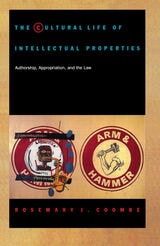
The Cultural Life of Intellectual Properties
Authorship, Appropriation, and the LawRosemary J. Coombe
Duke University Press, 1998
Although such artifacts are ubiquitous in contemporary culture, little attention has been paid to the impact of intellectual property law in everyday life or to how ownership of specific intellectual properties is determined and exercised. Drawing on a wide range of cases, disputes, and local struggles, Coombe examines these issues and dismantles the legal assumption that the meaning and value of a text or image is produced exclusively by an individual author or that authorship has a single point of origin. In the process, she examines controversies that include the service of turbanned Sikhs in the Royal Canadian Mounted Police and the use of the term Olympic in reference to the proposed gay Olympic Games. Other chapters discuss the appropriation of such celebrity images as the Marx brothers, Judy Garland, Dolly Parton, James Dean, and Luke Skywalker; the conflict over team names such as the Washington Redskins; and the opposition of indigenous peoples to stereotypical Native American insignia proffered by the entertainment industry. Ultimately, she makes a case for redefining the political in commodified cultural environments.
Significant for its insights into the political significance of current intellectual property law, this book also provides new perspectives on debates in cultural anthropology, cultural studies, and political theory. It will therefore interest both a wide scholarly and a general audience.
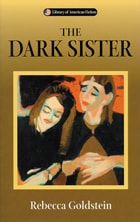
The Dark Sister
Rebecca Goldstein
University of Wisconsin Press, 2004
If you like the fiction of Henry James, the psychology of his brother William, and have a taste for Gothic mysteries you will enjoy The Dark Sister. The novel is a curious mixture of the Victorian repressiveness about sex, intricate stories within stories, and Jewish humor.
With a new afterword
The Deaths of the Author
Reading and Writing in TimeJane Gallop
Duke University Press, 2011
The Disabled Child
Memoirs of a Normal FutureAmanda Apgar
University of Michigan Press, 2023
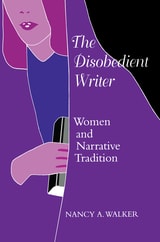
The Disobedient Writer
Women and Narrative TraditionBy Nancy A. Walker
University of Texas Press, 1995
For centuries, women who aspired to write had to enter a largely male literary tradition that offered few, if any, literary forms in which to express their perspectives on lived experience. Since the nineteenth century, however, women writers and readers have been producing "disobedient" counter-narratives that, while clearly making reference to the original texts, overturn their basic assumptions.
This book looks at both canonical and non-canonical works, over a variety of fiction and nonfiction genres, that offer counter-readings of familiar Western narratives. Nancy Walker begins by probing women's revisions of two narrative traditions pervasive in Western culture: the biblical story of Adam and Eve, and the traditional fairy tales that have served as paradigms of women's behavior and expectations. She goes on to examine the works of a wide range of writers, from contemporaries Marilynne Robinson, Ursula Le Guin, Anne Sexton, Fay Weldon, Angela Carter, and Margaret Atwood to precursors Caroline Kirkland, Fanny Fern, Mary De Morgan, Mary Louisa Molesworth, Edith Nesbit, and Evelyn Sharp.
The Dramatic Writer's Companion, Second Edition
Tools to Develop Characters, Cause Scenes, and Build StoriesWill Dunne
University of Chicago Press, 2017
Having spent decades working with dramatists to refine and expand their existing plays and screenplays, Dunne effortlessly blends condensed dramatic theory with specific action steps—over sixty workshop-tested exercises that can be adapted to virtually any individual writing process and dramatic script. Dunne’s in-depth method is both instinctual and intellectual, allowing writers to discover new actions for their characters and new directions for their stories. The exercises can be used by those just starting the writing process and by those who have scripts already in development. With each exercise rooted in real-life issues from Dunne’s workshops, readers of this companion will find the combined experiences of more than fifteen hundred workshops in a single guide.
This second edition is fully aligned with a brand-new companion book, Character, Scene, and Story, which offers forty-two additional activities to help writers more fully develop their scripts. The two books include cross-references between related exercises, though each volume can also stand alone.
No ordinary guide to plotting, this handbook centers on the principle that character is key. “The character is not something added to the scene or to the story,” writes Dunne. “Rather, the character is the scene. The character is the story.” With this new edition, Dunne’s remarkable creative method will continue to be the go-to source for anyone hoping to take their story to the stage.
The Dramatic Writer's Companion
Tools to Develop Characters, Cause Scenes, and Build StoriesWill Dunne
University of Chicago Press, 2009
Moss Hart once said that you never really learn how to write a play; you only learn how to write this play. Crafted with that adage in mind, The Dramatic Writer’s Companion is designed to help writers explore their own ideas in order to develop the script in front of them. No ordinary guide to plotting, this handbook starts with the principle that character is key. “The character is not something added to the scene or to the story,” writes author Will Dunne. “Rather, the character is the scene. The character is the story.”
Having spent decades working with dramatists to refine and expand their existing plays and screenplays, Dunne effortlessly blends condensed dramatic theory with specific action steps—over sixty workshop-tested exercises that can be adapted to virtually any individual writing process and dramatic script. Dunne’s in-depth method is both instinctual and intellectual, allowing writers to discover new actions for their characters and new directions for their stories.
Dunne’s own experience is a crucial element of this guide. His plays have been selected by the Eugene O’Neill Theatre Center for three U.S. National Playwrights Conferences and have earned numerous honors, including a Charles MacArthur Fellowship, four Bay Area Theatre Critics Circle Awards, and two Drama-Logue Playwriting Awards. Thousands of individuals have already benefited from his workshops, and The Dramatic Writer’s Companion promises to bring his remarkable creative method to an even wider audience.
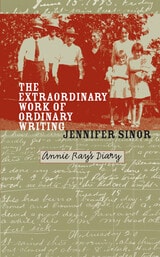
The Extraordinary Work of Ordinary Writing
Annie Ray's DiaryJennifer Sinor
University of Iowa Press, 2002
Exciting and beautifully crafted, The Extraordinary Work of Ordinary Writing provides an entirely new way of viewing “ordinary writing,” the everyday writing we typically ignore or dismiss. It takes as its center the diary of Jennifer Sinor's great-great-great-aunt Annie Ray, a woman who homesteaded in the Dakotas in the late nineteenth century. Diaries such as this have long been ignored by scholars, who prefer instead to focus on diaries with literary features. Reading diaries through this lens gives privileged status to those that are coherently crafted and ignores the very diaries that define the form through their relentless inscription of dailiness.
Annie Ray’s diary is not literary. By considering her ordinary writing as a site of complex and strategic negotiations among the writer, the form of writing, and dominant cultural scripts, Sinor makes visible the extraordinary work of the ordinary writer and the sophistication of these texts. In providing a way to read diaries outside the limits and conventions of literature, she challenges our approaches to other texts as well. Furthermore, because ordinary writing is not crafted for aesthetic reception (in contrast to autobiography proper, memoirs, and literary diaries), it is a productive site for investigating how both writing and culture get made every day.
The book is truly original in its form: nontraditional, storied, creative. Sinor, an accomplished creative writer, includes her own memories as extended metaphors in partnership with critical texts along with excerpts from her aunt's diary. The Extraordinary Work of Ordinary Writing will be a fascinating text for students of creative writing as well as of women's studies and diaries.
The Far Edges of the Fourth Genre
An Anthology of Explorations in Creative NonfictionSean Prentiss
Michigan State University Press, 2014
Contributors: Nancer Ballard, H. Lee Barnes, Kim Barnes, Mary Clearman Blew, Joy Castro, Robin Hemley, Judith Kitchen, Brenda Miller, Ander Monson, Dinty W. Moore, Sean Prentiss, Lia Purpura, Erik Reece, Jonathan Rovner, Bob Shacochis, and Joe Wilkins.
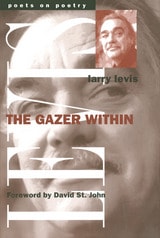
The Gazer Within
Larry Levis
University of Michigan Press, 2001
David St. John's foreword speaks eloquently of Levis's enduring legacy: "Of the poets of his generation, Larry Levis spoke most powerfully of what it means to be a poet at this historical moment. With the same majesty he brought to his poetry, Larry Levis engaged his readers with the most subtle and disturbing questions of the self to be found in the prose--essays, reviews or interviews--of any contemporary American poet. Broadly international in his scope and deeply personal in his reflections, Levis addressed poetic concerns that are both immediate and timeless. For many of us who struggle with these issues, Larry Levis's prose on poetry stands as some of the most capacious to be found since Randell Jarrell's."
The late Larry Levis was the author of six volumes of poetry. He was Director of the Creative Writing Program, University of Utah; Professor of English, Virginia Commonwealth University; and also taught at the Iowa Writers Workshop.
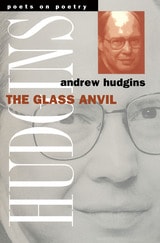
The Glass Anvil
Andrew Hudgins
University of Michigan Press, 1997
Finally coming to rest on an examination of his own autobiography, The Glass Hammer, Hudgins reveals some of the ways he lied in that book--and some of the reasons for doing so. In a lighthearted manner, he manages to throw both light--and shadow--on the autobiography as a literary form. Amid charming anecdotes of his Southern upbringing, The Glass Anvil vividly records the depth of Hudgins's fascination with language, particularly as it mingles with the important issues of his life--religion, racism, Southern literature, and narrative poetry. This fascination is further documented in a free-wheeling interview which closes the book.
Engaging and amusing reading, The Glass Anvil will appeal to readers interested in contemporary poetry and Southern literature.
Andrew Hudgins's books include The Never Ending, After the Lost War: A Narrative, Saints and Strangers, and most recently The Glass Hammer. He is Professor of English, University of Cincinnati.
The Hopwood Lectures
Edited and with an introduction by Nicholas Delbanco
University of Michigan Press, 2009
The prestigious Hopwood Creative Writing Awards were established in 1931 from a bequest of the will of Avery Hopwood, a University of Michigan graduate and one of the most popular and successful dramatists of his time. Hopwood left one-fifth of his estate to his alma mater, an endowment that now awards approximately $135,000 each year in prize money. Annual awards are offered to both undergraduate and graduate students in drama, screenplay, nonfiction, novel, short fiction, and poetry. Among the program's most famous recipients are Robert Hayden, Arthur Miller, Frank O'Hara, and Marge Piercy.
In addition to the prize ceremony, the Hopwood Awards are celebrated each year with a lecture delivered by a prominent literary figure. Past Hopwood speakers include such luminaries as Saul Bellow, Richard Ford, Louise Glück, Nadine Gordimer, Robert Hass, Norman Mailer, Joyce Carol Oates, and John Crowe Ransom. Their speeches have been collected in five previous volumes published by the University of Michigan Press over the past half-century: The Writer and His Craft: The Hopwood Lectures 1932-1952, edited by Roy W. Cowden; To The Young Writer: Hopwood Lectures, Second Series, edited by A. L. Bader; The Writer's Craft, edited by Robert A. Martin; Speaking of Writing: Selected Hopwood Lectures, edited by Nicholas Delbanco; and The Writing Life: The Hopwood Lectures, Fifth Series, edited by Nicholas Delbanco.
The present collection contains the ten lectures delivered since the last publication and includes work by Andrea Barrett, Charles Baxter, Mary Gordon, Donald Hall, Richard Howard, Lawrence Kasdan, Susan Orlean, Susan Stamberg, and Edmund White. The tenth lecture was delivered in spring 2008 by Charles Johnson.
Nicholas Delbanco is Robert Frost Collegiate Professor of English Language and Literature and Chair of the Hopwood Committee. Delbanco is the author of twenty books of fiction and nonfiction, including, most recently, Spring and Fall: A Novel. As editor he has compiled the work of, among others, John Gardner and Bernard Malamud. In addition to directing the MFA Program and the Hopwood Awards Program at the University of Michigan, he has served as Chair of the Fiction Panel for the National Book Awards and has received a Guggenheim Fellowship and, twice, a National Endowment for the Arts Writing Fellowship. He lives in Ann Arbor, Michigan.
The Hundreds
Lauren Berlant and Kathleen Stewart
Duke University Press, 2019
The Imposter's Guide to Writing About Literature
Suzanne Manizza Roszak
Rutgers University Press, 0
A handbook for students of literature with particular attention to all those who have ever been made to feel like outsiders in our field, The Imposter’s Guide to Writing About Literature democratizes access to the knowledge necessary for successful professionalization—and especially publication—within literary studies.
The Language of Fiction
A Writer’s StylebookBrian Shawver
University Press of New England, 2013
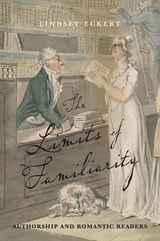
The Limits of Familiarity
Authorship and Romantic ReadersLindsey Eckert
Bucknell University Press, 2022
What did Wordsworth wear, and where did he walk? Who was Byron’s new mistress, and how did his marriage fare? Answers—sometimes accurate, sometimes not—were tantalizingly at the ready in the Romantic era, when confessional poetry, romans à clef, personal essays, and gossip columns offered readers exceptional access to well-known authors. But at what point did familiarity become overfamiliarity? Widely recognized as a social virtue, familiarity—a feeling of emotional closeness or comforting predictability—could also be dangerous, vulgar, or boring. In The Limits of Familiarity, Eckert persuasively argues that such concerns shaped literary production in the Romantic period. Bringing together reception studies, celebrity studies, and literary history to reveal how anxieties about familiarity shaped both Romanticism and conceptions of authorship, this book encourages us to reflect in our own fraught historical moment on the distinction between telling all and telling all too much.
The Lover of a Subversive Is Also a Subversive
Essays and CommentariesMartín Espada
University of Michigan Press, 2010
Prior praise for Martín Espada:
"Political poetry at its finest…with his soaring lyrics, Espada broadens our appreciation not only of poetry but of resistance itself."
---The Progressive
"(Espada) writes beautiful poems about terrible realities."
---San Francisco Chronicle
A volume in the Poets on Poetry series, which collects critical works by contemporary poets, gathering together the articles, interviews, and book reviews by which they have articulated the poetics of a new generation.
This collection of essays on poetry and politics comes from the man the New York Times predicted would become "the Latino poet of his generation" and whom Sandra Cisneros called "the Pablo Neruda of North American authors."
Martín Espada defends what Walt Whitman called, "the rights of them the others are down upon." He invokes the spirit of poet-advocates such as Whitman and Edgar Lee Masters to explore his own history as a poet and tenant lawyer in Boston's Latino community. He celebrates the poets of Puerto Rico, imprisoned for espousing the cause of independence, and the poets of the Bronx, writing bilingual poems in the voices of the dead.
Espada writes of forgotten places and reminds us of the poet's responsibility to remember, as Pablo Neruda remembers the anonymous builders of Machu Picchu or Sterling Brown remembers the slave uprising of Nat Turner. He argues that poets should embrace the role of Shelley's "unacknowledged legislator" in their work as writers and in their lives as citizens. He challenges the conventional wisdom that poetry and politics are mutually exclusive, and rejects the poetics of self-marginalization, in keeping with Adrian Mitchell's dictum that, "most people ignore most poetry because most poetry ignores most people."
Martín Espada has published seventeen books as a poet, editor, and translator. The Republic of Poetry, a collection of poems, received a Paterson Award for Sustained Literary Achievement and was a finalist for the Pulitzer Prize. Imagine the Angels of Bread won an American Book Award and was a finalist for the National Book Critics Circle Award. He has received numerous fellowships and awards, including a Guggenheim Fellowship and the National Hispanic Cultural Center Literary Award. Espada is a Professor of English at the University of Massachusetts-Amherst.
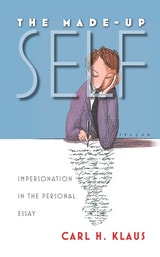
The Made-Up Self
Impersonation in the Personal EssayCarl H. Klaus
University of Iowa Press, 2010
The human presence that animates the personal essay is surely one of the most beguiling of literary phenomena, for it comes across in so familiar a voice that it’s easy to believe we are listening to the author rather than a textual stand-in. But the “person” in a personal essay is always a written construct, a fabricated character, its confessions and reminiscences as rehearsed as those of any novelist. In this first book-length study of the personal essay, Carl Klaus unpacks this made-up self and the manifold ways in which a wide range of essayists and essays have brought it to life.
By reconceiving the most fundamental aspect of the personal essay—the I of the essayist—Klaus demonstrates that this seemingly uncontrived form of writing is inherently problematic, not willfully devious but bordering upon the world of fiction. He develops this key idea by explaining how structure, style, and voice determine the nature of a persona and our perception of it in the works of such essayists as Michel de Montaigne, Charles Lamb, E. B. White, and Virginia Woolf. Realizing that this persona is shaped by the force of culture and the impress of personal experience, he explores the effects of both upon the point of view, content, and voice of such essayists as George Orwell, Nancy Mairs, Richard Rodriguez, and Alice Walker. Throughout, in full command of the history of the essay, he calls up numerous passages in which essayists themselves acknowledge the element of impersonation in their work, drawing upon the perspectives of Joan Didion, Edward Hoagland, Joyce Carol Oates, Leslie Marmon Silko, Scott Russell Sanders, Annie Dillard, Vivian Gornick, Loren Eiseley, James Baldwin, and a host of other literary guides.
Finally, adding yet another layer to the made-up self, Klaus succumbs to his addiction to the personal essay by placing some of the different selves that various essayists have called forth in him within the essays that he has crafted so carefully for this book. Making his way from one essay to the next with a persona variously learned, whimsical, and poignant, he enacts the palimpsest of ways in which the made-up self comes to life in the work of a single essayist. Thus over the course of this highly original, beautifully structured study, the personal essay is revealed to be more complex than many readers have supposed. With its lively analyses and illuminating examples, The Made-Up Self will speak to anyone who wishes to understand—or to write—personal essays.
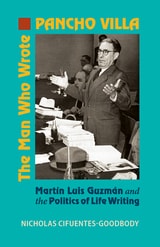
The Man Who Wrote Pancho Villa
Martin Luis Guzman and the Politics of Life WritingNicholas Cifuentes-Goodbody
Vanderbilt University Press, 2016
The Man Who Wrote Pancho Villa places Guzman's work in a biographical context, shedding light on the immediate motivations behind his writing in a given moment and the subsequent ways in which he rewrote or repackaged the material. Despite his efforts to establish a definitive reading of his life and literature, Guzman was unable to control that interpretation as audiences became less tolerant of the glaring omissions in his self-portrait.
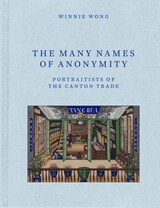
The Many Names of Anonymity
Portraitists of the Canton TradeWinnie Wong
University of Chicago Press, 2025
Challenging contemporary procedures for establishing attribution, chronology, and authenticity in Chinese art, Winnie Wong explores the means, methods, and stakes of recovering the names of an anonymous community of artists. To examine how Western art history has misconstrued and miscategorized names and identities in Chinese art, she looks to conflicting features of modernity: the European attachment of singular names to individuals and their works, and the Chinese use of socially contingent names that often are not attached to material labor and sometimes operate against it. Wong charts the genealogy of this naming problem by bringing to life the artists of the Qing Empire’s trade with Europeans at the port of Guangzhou, centering on a group of portraitists known by names that were recorded in a pidgin language: Chin Qua, Chit Qua, Spoilum, Lam Qua, and Ting Qua.
Many of these paintings survive today, yet scholars have identified only a handful of the painters’ identities. Pushing against Western norms that have shaped our understanding of authorship, Wong reveals that these artists shared names, created works in multiples, and signed their pieces with different names or none at all. This lavishly illustrated volume explores portraiture across media, including unfired clay, reverse painting on glass, watercolor on paper, oil on canvas, and the daguerreotype, to propose new ways of studying anonymity, copying, and the emergence of author names in the Sino-European visual culture of the long eighteenth century.
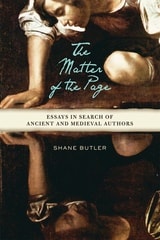
The Matter of the Page
Essays in Search of Ancient and Medieval AuthorsShane Butler
University of Wisconsin Press, 2010
Ancient and medieval literary texts often call attention to their existence as physical objects. Shane Butler helps us to understand why. Arguing that writing has always been as much a material struggle as an intellectual one, The Matter of the Page offers timely lessons for the digital age about how creativity works and why literature moves us.
Butler begins with some considerations about the materiality of the literary text, both as a process (the draft) and a product (the book), and he traces the curious history of “the page” from scroll to manuscript codex to printed book and beyond. He then offers a series of unforgettable portraits of authors at work: Thucydides struggling to describe his own diseased body; Vergil ready to burn an epic poem he could not finish; Lucretius wrestling with words even as he fights the madness that will drive him to suicide; Cicero mesmerized by the thought of erasing his entire career; Seneca plumbing the depths of the soul in the wax of his tablets; and Dhuoda, who sees the book she writes as a door, a tunnel, a womb. Butler reveals how the work of writing transformed each of these authors into his or her own first reader, and he explains what this metamorphosis teaches us about how we too should read.
All Greek and Latin quotations are translated into English and technical matters are carefully explained for general readers, with scholarly details in the notes.
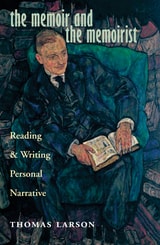
The Memoir and the Memoirist
Reading and Writing Personal NarrativeThomas Larson
Ohio University Press, 2007
The memoir is the most popular and expressive literary form of our time. Writers embrace the memoir and readers devour it, propelling many memoirs by relative unknowns to the top of the best-seller list. Writing programs challenge authors to disclose themselves in personal narrative. Memoir and personal narrative urge writers to face the intimacies of the self and ask what is true.
In The Memoir and the Memoirist, critic and memoirist Thomas Larson explores the craft and purpose of writing this new form. Larson guides the reader from the autobiography and the personal essay to the memoir—a genre focused on a particularly emotional relationship in the author’s past, an intimate story concerned more with who is remembering, and why, than with what is remembered.
The Memoir and the Memoirist touches on the nuances of memory, of finding and telling the truth, and of disclosing one’s deepest self. It explores the craft and purpose of personal narrative by looking in detail at more than a dozen examples by writers such as Mary Karr, Frank McCourt, Dave Eggers, Elizabeth Wurtzel, Mark Doty, Nuala O’Faolain, Rick Bragg, and Joseph Lelyveld to show what they reveal about themselves. Larson also opens up his own writing and that of his students to demonstrate the hidden mechanics of the writing process.
For both the interested reader of memoir and the writer wrestling with the craft, The Memoir and the Memoirist provides guidance and insight into the many facets of this provocative and popular art form.
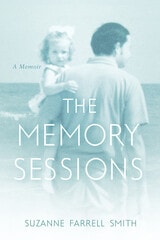
The Memory Sessions
Suzanne Farrell Smith
Bucknell University Press, 2019
Published by Bucknell University Press. Distributed worldwide by Rutgers University Press.
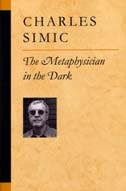
The Metaphysician in the Dark
Charles Simic
University of Michigan Press, 2003
Often, he addresses poetry itself. Among the pieces here are appreciations of Mark Strand, James Merrill, John Ashbery, and James Tate, each evaluated with a keen eye tempered by a generous spirit. Other essays discuss Joseph Brodsky, Czeslaw Milosz, and Vasko Popa; to these writers he brings the understanding available only to those who can read them in the original. In considering Brodsky's translations, for instance, he offers insights regarding not only the poet himself but the very nature of language. Elsewhere, he peers into poetry's past and its future: as a vessel of memory, a witness to history, and a mirror of human experience.
But perhaps the greatest pleasures afforded by The Metaphysician in the Dark, as he styles himself with a beguiling mix of modesty and irony, appear when Simic goes further afield. His look at the deadpan comedy of Buster Keaton is as revealing of the author as of the actor and his craft; his perusal of a Heironymous Bosch altarpiece captures both the painter's sense of apocalypse and a riotous joy in the piling of detail upon detail; his review of a book on Joseph Cornell examines how obsession becomes art. He is fluently familiar with subjects as diverse as Saul Bellow's novels and Aberlardo Morell's extraordinary camera obscura photographs. Yet when he takes the gloves off, as in two essays on the Serbia of Slobodan Milosevic, his outrage is as forceful as his pride is strong in his own Serbian heritage.
Each of the two dozen essays here reflects a sophistication irresistible in its simplicity; taken together, they display a questing intelligence and a panorama of life and art.
Charles Simic is an acclaimed poet, novelist, essayist and teacher. Winner of a MacArthur Fellowship and a Pulitzer Prize, he is the author of more than twenty volumes of poetry and six books of prose, as well as numerous translations. He is Distinguished University Professor of English at the University of New Hampshire, where he has taught since 1973.