Results by title
169 books match the query 'Auto-narrator' and 39 start with t
The Accidental Equalizer
How Luck Determines Pay after CollegeJessi Streib
University of Chicago Press, 2023
A startling discovery—that job market success after college is largely random—forces a reappraisal of education, opportunity, and the American dream.
As a gateway to economic opportunity, a college degree is viewed by many as America’s great equalizer. And it’s true: wealthier, more connected, and seemingly better-qualified students earn exactly the same pay as their less privileged peers. Yet, the reasons why may have little to do with bootstraps or self-improvement—it might just be dumb luck. That’s what sociologist Jessi Streib proposes in The Accidental Equalizer, a conclusion she reaches after interviewing dozens of hiring agents and job-seeking graduates.
Streib finds that luck shapes the hiring process from start to finish in a way that limits class privilege in the job market. Employers hide information about how to get ahead and force students to guess which jobs pay the most and how best to obtain them. Without clear routes to success, graduates from all class backgrounds face the same odds at high pay. The Accidental Equalizer is a frank appraisal of how this “luckocracy” works and its implications for the future of higher education and the middle class. Although this system is far from eliminating American inequality, Streib shows that it may just be the best opportunity structure we have—for better and for worse.
The American Adam
Innocence, Tragedy, and Tradition in the Nineteenth CenturyR. W. B. Lewis
University of Chicago Press, 1959
Intellectual history is viewed in this book as a series of "great conversations"—dramatic dialogues in which a culture's spokesmen wrestle with the leading questions of their times. In nineteenth-century America the great argument centered about De Crèvecoeur's "new man," the American, an innocent Adam in a bright new world dissociating himself from the historic past. Mr. Lewis reveals this vital preoccupation as a pervasive, transforming ingredient of the American mind, illuminating history and theology as well as art, shaping the consciousness of lesser thinkers as fully as it shaped the giants of the age. He traces the Adamic theme in the writings of Emerson, Thoreau, Hawthorne, Melville, Henry James, and others, and in an Epilogue he exposes their continuing spirit in the works of F. Scott Fitzgerald, William Faulkner, Ralph Ellison, J. D. Salinger, and Saul Bellow.
The American Supreme Court, Sixth Edition
Robert G. McCloskey and Sanford Levinson
University of Chicago Press, 2016
For more than fifty years, Robert G. McCloskey’s classic work on the Supreme Court’s role in constructing the US Constitution has introduced generations of students to the workings of our nation’s highest court.
As in prior editions, McCloskey’s original text remains unchanged. In his historical interpretation, he argues that the strength of the Court has always been its sensitivity to the changing political scene, as well as its reluctance to stray too far from the main currents of public sentiment. In this new edition, Sanford Levinson extends McCloskey’s magisterial treatment to address developments since the 2010 election, including the Supreme Court’s decisions regarding the Defense of Marriage Act, the Affordable Care Act, and gay marriage.
The best and most concise account of the Supreme Court and its place in American politics, McCloskey's wonderfully readable book is an essential guide to the past, present, and future prospects of this institution.

The Black Tax
150 Years of Theft, Exploitation, and Dispossession in AmericaAndrew W. Kahrl
University of Chicago Press, 2024
Revealing a history that is deep, broad, and infuriating, The Black Tax casts a bold light on the racist practices long hidden in the shadows of America’s tax regimes.
American taxation is unfair, and it is most unfair to the very people who critically need its support. Not only do taxpayers with fewer resources—less wealth, power, and land—pay more than the well-off, but they are forced to fight for their rights within an unjust system that undermines any attempts to improve their position or economic standing. In The Black Tax, Andrew W. Kahrl reveals the shocking history and ruinous consequences of inequitable and predatory tax laws in this country—above all, widespread and devastating racial dispossession.
Throughout the twentieth century, African Americans acquired substantial amounts of property nationwide. But racist practices, obscure processes, and outright theft diminished their holdings and their power. Of these, Kahrl shows, few were more powerful, or more quietly destructive, than property taxes. He examines all the structural features and hidden traps within America’s tax system that have forced Black Americans to pay more for less and stripped them of their land and investments, and he reveals the staggering cost. The story of America’s now enormous concentration of wealth at the top—and the equally enormous absence of wealth among most Black households—has its roots here.
Kahrl exposes the painful history of these practices, from Reconstruction up to the present, and tells, for the first time, the story of Black Americans’ experiences as taxpayers and their fight for a more fair and equitable system for raising and spending the public’s money. This is a history that deepens our understanding of the disadvantages and persistent inequalities that African American households continue to face and reveals hidden engines of economic inequality in America. Detailing the hows and whys of America’s profoundly unequal tax system, The Black Tax equips readers with the knowledge needed to combat inequality and injustice today.
The Channels of Student Activism
How the Left and Right Are Winning (and Losing) in Campus Politics TodayAmy J. Binder and Jeffrey L. Kidder
University of Chicago Press, 2022
This is an auto-narrated audiobook edition of this book.
An eye-opening analysis of collegiate activism and its effects on the divisions in contemporary American politics.
The past six years have been marked by a contentious political atmosphere that has touched every arena of public life, including higher education. Though most college campuses are considered ideologically progressive, how can it be that the right has been so successful in mobilizing young people even in these environments?
As Amy J. Binder and Jeffrey L. Kidder show in this surprising analysis of the relationship between political activism on college campuses and the broader US political landscape, while liberal students often outnumber conservatives on college campuses, liberal campus organizing remains removed from national institutions that effectively engage students after graduation. And though they are usually in the minority, conservative student groups have strong ties to national right-leaning organizations, which provide funds and expertise, as well as job opportunities and avenues for involvement after graduation. Though the left is more prominent on campus, the right has built a much more effective system for mobilizing ongoing engagement. What’s more, the conservative college ecosystem has worked to increase the number of political provocations on campus and lower the public’s trust in higher education.
In analyzing collegiate activism from the left, right, and center, The Channels of Student Activism shows exactly how politically engaged college students are channeled into two distinct forms of mobilization and why that has profound consequences for the future of American politics.
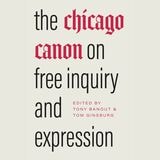
The Chicago Canon on Free Inquiry and Expression
Edited by Tony Banout and Tom Ginsburg
University of Chicago Press, 2024
A collection of texts that provide the foundation for the University of Chicago’s longstanding tradition of free expression, principles that are at the center of current debates within higher education and society more broadly.
Free inquiry and expression are hotly contested, both on campus and in social and political life. Since its founding in the late nineteenth century, the University of Chicago has been at the forefront of conversations around free speech and academic freedom in higher education. The University’s approach to free expression grew from a sterling reputation as a research university as well as a commitment to American pragmatism and democratic progress, all of which depended on what its first president referred to as the “complete freedom of speech on all subjects.” In 2015, more than 100 years later, then University provost and president J. D. Isaacs and Robert Zimmer echoed this commitment, releasing a statement by a faculty committee led by law professor Geoffrey R. Stone that has come to be known as the Chicago Principles, now adopted or endorsed by one hundred US colleges and universities. These principles are just a part of the long-standing dialogue at the University of Chicago around freedom of expression—its meaning and limits. The Chicago Canon on Free Inquiry and Expression brings together exemplary documents – some published for the first time here – that explain and situate this ongoing conversation with an introductory essay that brings the tradition to light.
Throughout waves of historical and societal challenges, this first principle of free expression has required rearticulation and new interpretations. The documents gathered here include, among others, William Rainey Harper’s “Freedom of Speech” (1900), the Kalven Committee’s report on the University’s role in political and social action (1967), and Geoffrey R. Stone’s “Free Speech on Campus: A Challenge of Our Times” (2016). Together, the writings of the canon reveal how the Chicago tradition is neither static nor stagnant, but a vibrant experiment; a lively struggle to understand, practice, and advance free inquiry and expression.
At a time of nationwide campus speech debates, engaging with these texts and the questions they raise is essential to sustaining an environment of broad intellectual and ideological diversity. This book offers a blueprint for the future of higher education’s vital work and points to the civic value of free expression.
The Cholera Years
The United States in 1832, 1849, and 1866Charles E. Rosenberg
University of Chicago Press, 1987
Cholera was the classic epidemic disease of the nineteenth century, as the plague had been for the fourteenth. Its defeat was a reflection not only of progress in medical knowledge but of enduring changes in American social thought. Rosenberg has focused his study on New York City, the most highly developed center of this new society. Carefully documented, full of descriptive detail, yet written with an urgent sense of the drama of the epidemic years, this narrative is as absorbing for general audiences as it is for the medical historian. In a new Afterword, Rosenberg discusses changes in historical method and concerns since the original publication of The Cholera Years.
"A major work of interpretation of medical and social thought . . . this volume is also to be commended for its skillful, absorbing presentation of the background and the effects of this dread disease."—I.B. Cohen, New York Times
"The Cholera Years is a masterful analysis of the moral and social interest attached to epidemic disease, providing generally applicable insights into how the connections between social change, changes in knowledge and changes in technical practice may be conceived."—Steven Shapin, Times Literary Supplement
"In a way that is all too rarely done, Rosenberg has skillfully interwoven medical, social, and intellectual history to show how medicine and society interacted and changed during the 19th century. The history of medicine here takes its rightful place in the tapestry of human history."—John B. Blake, Science
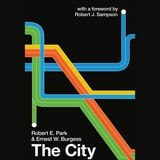
The City
Robert E. Park and Ernest W. Burgess
University of Chicago Press, 2019
First published in 1925, The City is a trailblazing text in urban history, urban sociology, and urban studies. Its innovative combination of ethnographic observation and social science theory epitomized the Chicago school of sociology. Robert E. Park, Ernest W. Burgess, and their collaborators were among the first to document the interplay between urban individuals and larger social structures and institutions, seeking patterns within the city’s riot of people, events, and influences. As sociologist Robert J. Sampson notes in his new foreword, though much has changed since The City was first published, we can still benefit from its charge to explain where and why individuals and social groups live as they do.
The Constitution of the United States
A Primer for the PeopleDavid P. Currie
University of Chicago Press, 2000
A masterly introduction to the United States Constitution, this slim book leads the reader through a concise overview of the document's individual articles and amendments. With clear and accessible language, Currie then examines each of the three branches of the federal government and explains the relation between the federal and state governments. He analyzes those constitutional provisions that are designed to protect citizens from governmental interference, such as the due process and equal protection clauses and the confusing first amendment provisions respecting the separation of church and state, and includes discussions of judicial review and freedom of speech and of the press.
A sympathetic yet critical guide, Currie's book enables students and laypersons to understand one of the cornerstones of the Western political tradition. The second edition, along with an updated chronology and bibliography, incorporates the Supreme Court decisions over the past decade that have affected constitutional interpretation.
"Superb . . . highly recommended for those seeking a reliable, understandable, and useful introduction to our constitution."—Appellate Practice Journal and Update
The Constitutional Bind
How Americans Came to Idolize a Document That Fails ThemAziz Rana
University of Chicago Press, 2024
This is an auto-narrated audiobook version of this book.
An eye-opening account of how Americans came to revere the Constitution and what this reverence has meant domestically and around the world.
Some Americans today worry that the Federal Constitution is ill-equipped to respond to mounting democratic threats and may even exacerbate the worst features of American politics. Yet for as long as anyone can remember, the Constitution has occupied a quasi-mythical status in American political culture, which ties ideals of liberty and equality to assumptions about the inherent goodness of the text’s design. The Constitutional Bind explores how a flawed document came to be so glorified and how this has impacted American life.
In a pathbreaking retelling of the American experience, Aziz Rana shows that today’s reverential constitutional culture is a distinctively twentieth-century phenomenon. Rana connects this widespread idolization to another relatively recent development: the rise of US global dominance. Ultimately, such veneration has had far-reaching consequences: despite offering a unifying language of reform, it has also unleashed an interventionist national security state abroad while undermining the possibility of deeper change at home.
Revealing how the current constitutional order was forged over the twentieth century, The Constitutional Bind also sheds light on an array of movement activists—in Black, Indigenous, feminist, labor, and immigrant politics—who struggled to imagine different constitutional horizons. As time passed, these voices of opposition were excised from memory. Today, they offer essential insights.
The Cost of Inclusion
How Student Conformity Leads to Inequality on College CampusesBlake R. Silver
University of Chicago Press, 2020
Young people are told that college is a place where they will “find themselves” by engaging with diversity and making friendships that will last a lifetime. This vision of an inclusive, diverse social experience is a fundamental part of the image colleges sell potential students. But what really happens when students arrive on campus and enter this new social world? The Cost of Inclusion delves into this rich moment to explore the ways students seek out a sense of belonging and the sacrifices they make to fit in.
Blake R. Silver spent a year immersed in student life at a large public university. He trained with the Cardio Club, hung out with the Learning Community, and hosted service events with the Volunteer Collective. Through these day-to-day interactions, he witnessed how students sought belonging and built their social worlds on campus. Over time, Silver realized that these students only achieved inclusion at significant cost. To fit in among new peers, they clung to or were pushed into raced and gendered cultural assumptions about behavior, becoming “the cool guy,” “the nice girl,” “the funny one,” “the leader,” “the intellectual,” or “the mom of the group.” Instead of developing dynamic identities, they crafted and adhered to a cookie-cutter self, one that was rigid and two-dimensional. Silver found that these students were ill-prepared for the challenges of a diverse college campus, and that they had little guidance from their university on how to navigate the trials of social engagement or the pressures to conform. While colleges are focused on increasing the diversity of their enrolled student body, Silver’s findings show that they need to take a hard look at how they are failing to support inclusion once students arrive on campus.
The Crucible of Desegregation
The Uncertain Search for Educational EqualityR. Shep Melnick
University of Chicago Press, 2023
Examines the patchwork evolution of school desegregation policy.
In 1954, the Supreme Court delivered the landmark decision of Brown v. Board of Education—establishing the right to attend a desegregated school as a national constitutional right—but the decision contained fundamental ambiguities. The Supreme Court has never offered a clear definition of what desegregation means or laid out a framework for evaluating competing interpretations. In The Crucible of Desegregation, R. Shep Melnick examines the evolution of federal school desegregation policy from 1954 through the termination of desegregation orders in the first decades of the twenty-first century, combining legal analysis with a focus on institutional relations, particularly the interactions between federal judges and administrators. Melnick argues that years of ambiguous, inconsistent, and meandering Court decisions left lower court judges adrift, forced to apply contradictory Supreme Court precedents in a wide variety of highly charged political and educational contexts. As a result, desegregation policy has been a patchwork, with lower court judges playing a crucial role and with little opportunity to analyze what worked and what didn’t. The Crucible of Desegregation reveals persistent patterns and disagreements that continue to roil education policy.
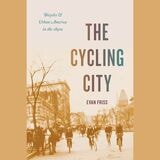
The Cycling City
Bicycles and Urban America in the 1890sEvan Friss
University of Chicago Press, 2015
Cycling has experienced a renaissance in the United States, as cities around the country promote the bicycle as an alternative means of transportation. In the process, debates about the nature of bicycles—where they belong, how they should be ridden, how cities should or should not accommodate them—have played out in the media, on city streets, and in city halls. Very few people recognize, however, that these questions are more than a century old.
The Cycling City is a sharp history of the bicycle’s rise and fall in the late nineteenth century. In the 1890s, American cities were home to more cyclists, more cycling infrastructure, more bicycle friendly legislation, and a richer cycling culture than anywhere else in the world. Evan Friss unearths the hidden history of the cycling city, demonstrating that diverse groups of cyclists managed to remap cities with new roads, paths, and laws, challenge social conventions, and even dream up a new urban ideal inspired by the bicycle. When cities were chaotic and filthy, bicycle advocates imagined an improved landscape in which pollution was negligible, transportation was silent and rapid, leisure spaces were democratic, and the divisions between city and country were blurred. Friss argues that when the utopian vision of a cycling city faded by the turn of the century, its death paved the way for today’s car-centric cities—and ended the prospect of a true American cycling city ever being built.
The Digital Factory
The Human Labor of AutomationMoritz Altenried
University of Chicago Press, 2022
This is an auto-narrated audiobook edition of this book.
The Digital Factory reveals the hidden human labor that supports today’s digital capitalism.
The workers of today’s digital factory include those in Amazon warehouses, delivery drivers, Chinese gaming workers, Filipino content moderators, and rural American search engine optimizers. Repetitive yet stressful, boring yet often emotionally demanding, these jobs require little formal qualification, but can demand a large degree of skills and knowledge. This work is often hidden behind the supposed magic of algorithms and thought to be automated, but it is in fact highly dependent on human labor.
The workers of today’s digital factory are not as far removed from a typical auto assembly line as we might think. Moritz Altenried takes us inside today’s digital factories, showing that they take very different forms, including gig economy platforms, video games, and Amazon warehouses. As Altenried shows, these digital factories often share surprising similarities with factories from the industrial age. As globalized capitalism and digital technology continue to transform labor around the world, Altenried offers a timely and poignant exploration of how these changes are restructuring the social division of labor and its geographies as well as the stratifications and lines of struggle.
The Feeling of Forgetting
Christianity, Race, and Violence in AmericaJohn Corrigan
University of Chicago Press, 2023
A provocative examination of how religious practices of forgetting drive white Christian nationalism.
The dual traumas of colonialism and slavery are still felt by Native Americans and African Americans as victims of ongoing violence toward people of color today. In The Feeling of Forgetting, John Corrigan calls attention to the trauma experienced by white Americans as perpetrators of this violence. By tracing memory’s role in American Christianity, Corrigan shows how contemporary white Christian nationalism is motivated by a widespread effort to forget the role race plays in American society. White trauma, Corrigan argues, courses through American culture like an underground river that sometimes bursts forth into brutality, terrorism, and insurrection. Tracing the river to its source is a necessary first step toward healing.
The Firm, the Market, and the Law
R. H. Coase
University of Chicago Press, 1987
Few other economists have been read and cited as often as R.H. Coase has been, even though, as he admits, "most economists have a different way of looking at economic problems and do not share my conception of the nature of our subject." Coase's particular interest has been that part of economic theory that deals with firms, industries, and markets—what is known as price theory or microeconomics. He has always urged his fellow economists to examine the foundations on which their theory exists, and this volume collects some of his classic articles probing those very foundations. "The Nature of the Firm" (1937) introduced the then-revolutionary concept of transaction costs into economic theory. "The Problem of Social Cost" (1960) further developed this concept, emphasizing the effect of the law on the working of the economic system. The remaining papers and new introductory essay clarify and extend Coarse's arguments and address his critics.
"These essays bear rereading. Coase's careful attention to actual institutions not only offers deep insight into economics but also provides the best argument for Coase's methodological position. The clarity of the exposition and the elegance of the style also make them a pleasure to read and a model worthy of emulation."—Lewis A. Kornhauser, Journal of Economic Literature
Ronald H. Coase was awarded the Nobel Prize in Economic Science in 1991.
The Floating University
Experience, Empire, and the Politics of KnowledgeTamson Pietsch
University of Chicago Press, 2023
This is an auto-narrated audiobook edition of this book.
The Floating University sheds light on a story of optimism and imperialist ambition in the 1920s.In 1926, New York University professor James E. Lough—an educational reformer with big dreams—embarked on a bold experiment he called the Floating University. Lough believed that taking five hundred American college students around the globe by ship would not only make them better citizens of the world but would demonstrate a model for responsible and productive education amid the unprecedented dangers, new technologies, and social upheavals of the post–World War I world. But the Floating University’s maiden voyage was also its last: when the ship and its passengers returned home, the project was branded a failure—the antics of students in hotel bars and port city back alleys that received worldwide press coverage were judged incompatible with educational attainment, and Lough was fired and even put under investigation by the State Department.
In her new book, Tamson Pietsch excavates a rich and meaningful picture of Lough’s grand ambition, its origins, and how it reveals an early-twentieth-century America increasingly defined both by its imperialism and the professionalization of its higher education system. As Pietsch argues, this voyage—powered by an internationalist worldview—traced the expanding tentacles of US power, even as it tried to model a new kind of experiential education. She shows that this apparent educational failure actually exposes a much larger contest over what kind of knowledge should underpin university authority, one in which direct personal experience came into conflict with academic expertise. After a journey that included stops at nearly fifty international ports and visits with figures ranging from Mussolini to Gandhi, what the students aboard the Floating University brought home was not so much knowledge of the greater world as a demonstration of their nation’s rapidly growing imperial power.
The Great American Transit Disaster
A Century of Austerity, Auto-Centric Planning, and White FlightNicholas Dagen Bloom
University of Chicago Press, 2023
A potent re-examination of America’s history of public disinvestment in mass transit.
Many a scholar and policy analyst has lamented American dependence on cars and the corresponding lack of federal investment in public transportation throughout the latter decades of the twentieth century. But as Nicholas Dagen Bloom shows in The Great American Transit Disaster, our transit networks are so bad for a very simple reason: we wanted it this way.
Focusing on Baltimore, Atlanta, Chicago, Detroit, Boston, and San Francisco, Bloom provides overwhelming evidence that transit disinvestment was a choice rather than destiny. He pinpoints three major factors that led to the decline of public transit in the United States: municipal austerity policies that denied most transit agencies the funding to sustain high-quality service; the encouragement of auto-centric planning; and white flight from dense city centers to far-flung suburbs. As Bloom makes clear, these local public policy decisions were not the product of a nefarious auto industry or any other grand conspiracy—all were widely supported by voters, who effectively shut out options for transit-friendly futures. With this book, Bloom seeks not only to dispel our accepted transit myths but hopefully to lay new tracks for today’s conversations about public transportation funding.
The Importance of Being Urban
Designing the Progressive School District, 1890-1940David A. Gamson
University of Chicago Press, 2019
From the 1890s through World War II, the greatest hopes of American progressive reformers lay not in the government, the markets, or other seats of power but in urban school districts and classrooms. The Importance of Being Urban focuses on four western school systems—in Denver, Oakland, Portland, and Seattle—and their efforts to reconfigure public education in the face of rapid industrialization and the perceived perils of the modern city. In an era of accelerated immigration, shifting economic foundations, and widespread municipal shake-ups, reformers argued that the urban school district could provide the broad blend of social, cultural, and educational services needed to prepare students for twentieth-century life. These school districts were a crucial force not only in orchestrating educational change, but in delivering on the promise of democracy. David A. Gamson’s book provides eye-opening views of the histories of American education, urban politics, and the Progressive Era.
The Jack-Roller
A Delinquent Boy's Own StoryClifford R. Shaw
University of Chicago Press, 1966
The Jack-Roller tells the story of Stanley, a pseudonym Clifford Shaw gave to his informant and co-author, Michael Peter Majer. Stanley was sixteen years old when Shaw met him in 1923 and had recently been released from the Illinois State Reformatory at Pontiac, after serving a one-year sentence for burglary and jack-rolling (mugging),
Vivid, authentic, this is the autobiography of a delinquent—his experiences, influences, attitudes, and values. The Jack-Roller helped to establish the life-history or "own story" as an important instrument of sociological research. The book remains as relevant today to the study and treatment of juvenile delinquency and maladjustment as it was when originally published in 1930.
The Limits of Critique
Rita Felski
University of Chicago Press, 2015
Why must critics unmask and demystify literary works? Why do they believe that language is always withholding some truth, that the critic’s task is to reveal the unsaid or repressed? In this book, Rita Felski examines critique, the dominant form of interpretation in literary studies, and situates it as but one method among many, a method with strong allure—but also definite limits.
Felski argues that critique is a sensibility best captured by Paul Ricoeur’s phrase “the hermeneutics of suspicion.” She shows how this suspicion toward texts forecloses many potential readings while providing no guarantee of rigorous or radical thought. Instead, she suggests, literary scholars should try what she calls “postcritical reading”: rather than looking behind a text for hidden causes and motives, literary scholars should place themselves in front of it and reflect on what it suggests and makes possible.
By bringing critique down to earth and exploring new modes of interpretation, The Limits of Critique offers a fresh approach to the relationship between artistic works and the social world.
The Market and Other Orders
F. A. Hayek
University of Chicago Press, 2013
In addition to his groundbreaking contributions to pure economic theory, F. A. Hayek also closely examined the ways in which the knowledge of many individual market participants could culminate in an overall order of economic activity. His attempts to come to terms with the “knowledge problem” thread through his career and comprise the writings collected in the fifteenth volume of the University of Chicago Press’s Collected Works of F. A. Hayek series.
The Market and Other Orders brings together more than twenty works spanning almost forty years that consider this question. Consisting of speeches, essays, and lectures, including Hayek’s 1974 Nobel lecture, “The Pretense of Knowledge,” the works in this volume draw on a broad range of perspectives, including the philosophy of science, the physiology of the brain, legal theory, and political philosophy. Taking readers from Hayek’s early development of the idea of spontaneous order in economics through his integration of this insight into political theory and other disciplines, the book culminates with Hayek’s integration of his work on these topics into an overarching social theory that accounts for spontaneous order in the variety of complex systems that Hayek studied throughout his career.
Edited by renowned Hayek scholar Bruce Caldwell, who also contributes a masterly introduction that provides biographical and historical context, The Market and Other Orders forms the definitive compilation of Hayek’s work on spontaneous order.
The Menace of Prosperity
New York City and the Struggle for Economic Development, 1865–1981Daniel Wortel-London
University of Chicago Press, 2025
Upends entrenched thinking about cities, demonstrating how urban economies are defined—or constrained—by the fiscal imagination of policymakers, activists, and residents.
Many local policymakers make decisions based on a deep-seated belief: what’s good for the rich is good for cities. Convinced that local finances depend on attracting wealthy firms and residents, municipal governments lavish public subsidies on their behalf. Whatever form this strategy takes—tax-exempt apartments, corporate incentives, debt-financed mega projects—its rationale remains consistent and assumed to be true. But this wasn’t always the case. Between the 1870s and the 1970s, a wide range of activists, citizens, and intellectuals in New York City connected local fiscal crises to the greed and waste of the rich. These figures saw other routes to development, possibilities rooted in alternate ideas about what was fiscally viable.
In The Menace of Prosperity, Daniel Wortel-London argues that urban economics and politics are shaped by what he terms the “fiscal imagination” of policymakers, activists, advocates, and other figures. His survey of New York City during a period of explosive growth shows how residents went beyond the limits of redistributive liberalism to imagine how their communities could become economically viable without the largesse of the wealthy. Their strategies—which included cooperatives, public housing, land-value taxation, public utilities, and more—centered the needs and capabilities of ordinary residents as the basis for local economies that were both prosperous and just.
Overturning stale axioms about economic policy, The Menace of Prosperity shows that not all growth is productive for cities. Wortel-London’s ambitious history demonstrates the range of options we’ve abandoned and hints at the economic frameworks we could still realize—and the more democratic cities that might result.
The New Female Antihero
The Disruptive Women of Twenty-First-Century US TelevisionSarah Hagelin and Gillian Silverman
University of Chicago Press, 2022
The New Female Antihero examines the hard-edged spies, ruthless queens, and entitled slackers of twenty-first-century television.
The last ten years have seen a shift in television storytelling toward increasingly complex storylines and characters. In this study, Sarah Hagelin and Gillian Silverman zoom in on a key figure in this transformation: the archetype of the female antihero. Far from the sunny, sincere, plucky persona once demanded of female characters, the new female antihero is often selfish and deeply unlikeable.
In this entertaining and insightful study, Hagelin and Silverman explore the meanings of this profound change in the role of women characters. In the dramas of the new millennium, they show, the female antihero is ambitious, conniving, even murderous; in comedies, she is self-centered, self-sabotaging, and anti-aspirational. Across genres, these female protagonists eschew the part of good girl or role model. In their rejection of social responsibility, female antiheroes thus represent a more profound threat to the status quo than do their male counterparts. From the devious schemers of Game of Thrones, The Americans, Scandal, and Homeland, to the joyful failures of Girls, Broad City, Insecure, and SMILF, female antiheroes register a deep ambivalence about the promises of liberal feminism. They push back against the myth of the modern-day super-woman—she who “has it all”—and in so doing, they give us new ways of imagining women’s lives in contemporary America.
The Pandemic Workplace
How We Learned to Be Citizens in the OfficeIlana Gershon
University of Chicago Press, 2024
A provocative book arguing that the workplace is where we learn to live democratically.
In The Pandemic Workplace, anthropologist Ilana Gershon turns her attention to the US workplace and how it changed—and changed us—during the pandemic. She argues that the unprecedented organizational challenges of the pandemic forced us to radically reexamine our attitudes about work and to think more deeply about how values clash in the workplace. These changes also led us as workers to engage more with the contracts that bind us as we rethought when and how we allow others to tell us what to do.
Based on over two hundred interviews, Gershon’s book reveals how negotiating these tensions during the pandemic made the workplace into a laboratory for democratic living—the key place where Americans are learning how to develop effective political strategies and think about the common good. Exploring the explicit and unspoken ways we are governed (and govern others) at work, this accessible book shows how the workplace teaches us to be democratic citizens.
The Policing Machine
Enforcement, Endorsements, and the Illusion of Public InputTony Cheng
University of Chicago Press, 2024
A revelatory look at how the NYPD has resisted change through strategic and selective community engagement.
The past few years have seen Americans express passionate demands for police transformation. But even as discussion of no-knock warrants, chokeholds, and body cameras has exploded, any changes to police procedures have only led to the same outcomes. Despite calls for increased accountability, police departments have successfully stonewalled change.
In The Policing Machine, Tony Cheng reveals the stages of that resistance, offering a close look at the deep engagement strategies that NYPD precincts have developed with only subsets of the community in order to counter any truly meaningful, democratic oversight. Cheng spent nearly two years in an unprecedented effort to understand the who and how of police-community relationship building in New York City, documenting the many ways the police strategically distributed power and privilege within the community to increase their own public legitimacy without sacrificing their organizational independence. By setting up community councils that are conveniently run by police allies, handing out favors to local churches that will promote the police to their parishioners, and offering additional support to institutions friendly to the police, the NYPD, like police departments all over the country, cultivates political capital through a strategic politics that involves distributing public resources, offering regulatory leniency, and deploying coercive force. The fundamental challenge with police-community relationships, Cheng shows, is not to build them. It is that they already exist and are motivated by a machinery designed to stymie reform.
The Political Development of American Debt Relief
Emily Zackin and Chloe N. Thurston
University of Chicago Press, 2024
This is an auto-narrated audiobook version of this book.
A political history of the rise and fall of American debt relief.
Americans have a long history with debt. They also have a long history of mobilizing for debt relief. Throughout the nineteenth century, indebted citizens demanded government protection from their financial burdens, challenging readings of the Constitution that exalted property rights at the expense of the vulnerable. Their appeals shaped the country’s periodic experiments with state debt relief and federal bankruptcy law, constituting a pre-industrial safety net. Yet, the twentieth century saw the erosion of debtor politics and the eventual retrenchment of bankruptcy protections.
The Political Development of American Debt Relief traces how geographic, sectoral, and racial politics shaped debtor activism over time, enhancing our understanding of state-building, constitutionalism, and social policy.
The Price of Misfortune
Rights and Wrongs in Indebted AmericaDaniel Platt
University of Chicago Press, 2023
A history of the struggle for debtors’ rights from the Civil War to the Great Depression
What can be taken from someone who has borrowed money and cannot repay? What do the victims of misfortune owe to their lenders, and what can they keep for themselves? The answers to those questions, immensely important for debtors, creditors, and society at large, have changed over time. The Price of Misfortune examines the cause of debtors’ rights in the modern United States and the struggles of reformers who fought to establish financial freedoms in law.
Daniel Platt shows how, in the wake of the Civil War, a range of advocates drew potent analogies between slavery, imprisonment for debt, and the experiences of wage garnishment and property foreclosure. He traces the ways those analogies were used to campaign for bold new protections for debtors, keeping them secure in their labor, property, and personhood. Yet, as Platt demonstrates, those reforms tended to assume as their ideal borrower someone who was white, propertied, and male. In subsequent decades, the emancipatory promise of debtors’ rights would be tested as women, wage earners, and African Americans seized on their language to challenge other structural inequalities: the dependency of marriage, the exploitation of industrial capitalism, and the oppression of Jim Crow. By reconstructing these forgotten developments—and recovering the experiences of indebted farmwives, sharecroppers, and wage workers—The Price of Misfortune narrates a new history of inequality, coercion, and law amid the early financialization of American capitalism.
The Prince
Second EditionNiccolò Machiavelli
University of Chicago Press, 1998
The most famous book on politics ever written, The Prince remains as lively and shocking today as when it was written almost five hundred years ago. Initially denounced as a collection of sinister maxims and a recommendation of tyranny, it has more recently been defended as the first scientific treatment of politics as it is practiced rather than as it ought to be practiced. Harvey C. Mansfield's brilliant translation of this classic work, along with the new materials added for this edition, make it the definitive version of The Prince, indispensable to scholars, students, and those interested in the dark art of politics.
This revised edition of Mansfield's acclaimed translation features an updated bibliography, a substantial glossary, an analytic introduction, a chronology of Machiavelli's life, and a map of Italy in Machiavelli's time.
"Of the other available [translations], that of Harvey C. Mansfield makes the necessary compromises between exactness and readability, as well as providing an excellent introduction and notes."—Clifford Orwin, The Wall Street Journal
"Mansfield's work . . . is worth acquiring as the best combination of accuracy and readability."—Choice
"There is good reason to assert that Machiavelli has met his match in Mansfield. . . . [He] is ready to read Machiavelli as he demands to be read—plainly and boldly, but also cautiously."—John Gueguen, The Sixteenth Century Journal
The Response to Industrialism, 1885-1914
Samuel P. Hays
University of Chicago Press, 1995
In this new edition, Samuel P. Hays expands the scope of his pioneering account of the ways in which Americans reacted to industrialism during its early years from 1885 to 1914. Hays now deepens his coverage of cultural transformations in a study well known for its concise treatment of political and economic movements.
Hays draws on the vast knowledge of America's urban and social history that has been developed over the last thirty-eight years to make the second edition an unusually well-rounded study. He enhances the original coverage of politics, labor, and business with new accounts of the growth of cities, the rise of modern values, cultural conflicts with Native Americans and foreign nations, and changing roles for women, African-Americans, education, religion, medicine, law, and leisure. The result is a tightly woven portrait of America in transition that underscores the effects of impersonal market forces and greater personal freedom on individuals and chronicles such changes as the rise of social inequality, shifting power, in the legal system, the expansion of the federal government, and the formation of the Populist, Progressive, and Socialist parties.
The School and Society and The Child and the Curriculum
John Dewey
University of Chicago Press, 1990
This edition brings Dewey's educational theory into sharp focus, framing his two classic works by frank assessments, past and present, of the practical applications of Dewey's ideas. In addition to a substantial introduction in which Philip W. Jackson explains why more of Dewey's ideas haven't been put into practice, this edition restores a "lost" chapter, dropped from the book by Dewey in 1915.
The Science of Reading
Information, Media, and Mind in Modern AmericaAdrian Johns
University of Chicago Press, 2023
For the first time, the story of how and why we have plumbed the mysteries of reading, and why it matters today.
Reading is perhaps the essential practice of modern civilization. For centuries, it has been seen as key to both personal fulfillment and social progress, and millions today depend on it to participate fully in our society. Yet, at its heart, reading is a surprisingly elusive practice. This book tells for the first time the story of how American scientists and others have sought to understand reading, and, by understanding it, to improve how people do it.
Starting around 1900, researchers—convinced of the urgent need to comprehend a practice central to industrial democracy—began to devise instruments and experiments to investigate what happened to people when they read. They traced how a good reader’s eyes moved across a page of printed characters, and they asked how their mind apprehended meanings as they did so. In schools across the country, millions of Americans learned to read through the application of this science of reading. At the same time, workers fanned out across the land to extend the science of reading into the social realm, mapping the very geography of information for the first time. Their pioneering efforts revealed that the nation’s most pressing problems were rooted in drastic informational inequities, between North and South, city and country, and white and Black—and they suggested ways to tackle those problems.
Today, much of how we experience our information society reflects the influence of these enterprises. This book explains both how the science of reading shaped our age and why, with so-called reading wars still plaguing schools across the nation, it remains bitterly contested.
The War of 1812
Harry L. Coles
University of Chicago Press, 1966
"A balanced analysis of tactics and strategy, this book also summarizes succinctly and clearly recent scholarship on causes and describes briefly the war's military, economic, and political consequences. Coles has surveyed thoroughly the existing literature but arrives at a number of independent judgments. It is the best single-volume account of the war in all its aspects. In recounting sea battles, Coles puts aside the patriotic blinders that have for so long prevented a sensible understanding of American capabilities and strategic necessities; thus American naval victories are put in a proper perspective. And in dealing with land engagements, he has shunned the mocking and amused attitude which has so often passed for historical judgment. Undergraduates will be stimulated by the hints of modern parallels and will find useful the excellent annotated bibliography and simple maps."—Choice
The World of Juliette Kinzie
Chicago before the FireAnn Durkin Keating
University of Chicago Press, 2019
When Juliette Kinzie first visited Chicago in 1831, it was anything but a city. An outpost in the shadow of Fort Dearborn, it had no streets, no sidewalks, no schools, no river-spanning bridges. And with two hundred disconnected residents, it lacked any sense of community. In the decades that followed, not only did Juliette witness the city’s transition from Indian country to industrial center, but she was instrumental in its development.
Juliette is one of Chicago’s forgotten founders. Early Chicago is often presented as “a man’s city,” but women like Juliette worked to create an urban and urbane world, often within their own parlors. With The World of Juliette Kinzie, we finally get to experience the rise of Chicago from the view of one of its most important founding mothers.
Ann Durkin Keating, one of the foremost experts on nineteenth-century Chicago, offers a moving portrait of a trailblazing and complicated woman. Keating takes us to the corner of Cass and Michigan (now Wabash and Hubbard), Juliette’s home base. Through Juliette’s eyes, our understanding of early Chicago expands from a city of boosters and speculators to include the world that women created in and between households. We see the development of Chicago society, first inspired by cities in the East and later coming into its own midwestern ways. We also see the city become a community, as it developed its intertwined religious, social, educational, and cultural institutions. Keating draws on a wealth of sources, including hundreds of Juliette’s personal letters, allowing Juliette to tell much of her story in her own words.
Juliette’s death in 1870, just a year before the infamous fire, seemed almost prescient. She left her beloved Chicago right before the physical city as she knew it vanished in flames. But now her history lives on. The World of Juliette Kinzie offers a new perspective on Chicago’s past and is a fitting tribute to one of the first women historians in the United States.
To Live Peaceably Together
The American Friends Service Committee's Campaign for Open HousingTracy E. K'Meyer
University of Chicago Press, 2022
This is an auto-narrated audiobook edition of this book.
A groundbreaking look at how a predominantly white faith-based group reset the terms of the fight to integrate US cities.
The bitterly tangled webs of race and housing in the postwar United States hardly suffer from a lack of scholarly attention. But Tracy K’Meyer’s To Live Peaceably Together delivers something truly new to the field: a lively examination of a predominantly white faith-based group—the Quaker-aligned American Friends Service Committee (AFSC)—that took a unique and ultimately influential approach to cultivating wider acceptance of residential integration. Built upon detailed stories of AFSC activists and the obstacles they encountered in their work in Chicago, Philadelphia, and Richmond, California, To Live Peaceably Together is an engaging and timely account of how the organization allied itself to a cause that demanded constant learning, reassessment, and self-critique. K’Meyer details the spiritual and humanist motivations behind the AFSC, its members’ shifting strategies as they came to better understand structural inequality, and how those strategies were eventually adopted by a variety of other groups. Her fine-grained investigation of the cultural ramifications of housing struggles provides a fresh look at the last seventy years of racial activism.
Touchy Subject
The History and Philosophy of Sex EducationLauren Bialystok and Lisa M. F. Andersen
University of Chicago Press, 2022
A case for sex education that puts it in historical and philosophical context.
In the United States, sex education is more than just an uncomfortable rite of passage: it's a political hobby horse that is increasingly out of touch with young people’s needs. In Touchy Subject, philosopher Lauren Bialystok and historian Lisa M. F. Andersen unpack debates over sex education, explaining why it’s worth fighting for, what points of consensus we can build upon, and what sort of sex education schools should pursue in the future.
Andersen surveys the history of school-based sex education in the United States, describing the key question driving reform in each era. In turn, Bialystok analyzes the controversies over sex education to make sense of the arguments and offer advice about how to make educational choices today. Together, Bialystok and Andersen argue for a novel framework, Democratic Humanistic Sexuality Education, which exceeds the current conception of “comprehensive sex education” while making room for contextual variation. More than giving an honest run-down of the birds and the bees, sex education should respond to the features of young people’s evolving worlds, especially the digital world, and the inequities that put some students at much higher risk of sexual harm than others. Throughout the book, the authors show how sex education has progressed and how the very concept of “progress” remains contestable.

Trade-Offs
An Introduction to Economic ReasoningHarold Winter
University of Chicago Press, 2023
This is an auto-narrated audiobook edition of this book.
The highly engaging introduction to thinking like an economist, updated for a new generation of readers.
When economists wrestle with any social issue—be it unemployment, inflation, healthcare, or crime and punishment—they do so impersonally. The big question for them is: what are the costs and benefits, or trade-offs, of the solutions to such matters? These trade-offs constitute the core of how economists see the world—and make the policies that govern it.
Trade-Offs is an introduction to the economic approach of analyzing controversial policy issues. A useful introduction to the various factors that inform public opinion and policymaking, Trade-Offs is composed of case studies on topics drawn from across contemporary law and society.
Intellectually stimulating yet accessible and entertaining, Trade-Offs will be appreciated by students of economics, public policy, health administration, political science, and law, as well as by anyone following current social policy debates.
Trapped in America's Safety Net
One Family's StruggleAndrea Louise Campbell
University of Chicago Press, 2014
When Andrea Louise Campbell’s sister-in-law, Marcella Wagner, was run off the freeway by a hit-and-run driver, she was seven-and-a-half months pregnant. She survived—and, miraculously, the baby was born healthy. But that’s where the good news ends. Marcella was left paralyzed from the chest down. This accident was much more than just a physical and emotional tragedy. Like so many Americans—50 million, or one-sixth of the country’s population—neither Marcella nor her husband, Dave, who works for a small business, had health insurance. On the day of the accident, she was on her way to class for the nursing program through which she hoped to secure one of the few remaining jobs in the area with the promise of employer-provided insurance. Instead, the accident plunged the young family into the tangled web of means-tested social assistance.
As a social policy scholar, Campbell thought she knew a lot about means-tested assistance programs. What she quickly learned was that missing from most government manuals and scholarly analyses was an understanding of how these programs actually affect the lives of the people who depend on them. Using Marcella and Dave’s situation as a case in point, she reveals their many shortcomings in Trapped in America’s Safety Net. Because American safety net programs are designed for the poor, Marcella and Dave first had to spend down their assets and drop their income to near-poverty level before qualifying for help. What’s more, to remain eligible, they will have to stay under these strictures for the rest of their lives, meaning they are barred from doing many of the things middle-class families are encouraged to do: Save for retirement. Develop an emergency fund. Take advantage of tax-free college savings. And, while Marcella and Dave’s story is tragic, the financial precariousness they endured even before the accident is all too common in America, where the prevalence of low-income work and unequal access to education have generated vast—and growing—economic inequality. The implementation of Obamacare has cut the number of uninsured and underinsured and reduced some of the disparities in coverage, but it continues to leave too many people open to tremendous risk.
Behind the statistics and beyond the ideological battles are human beings whose lives are stunted by policies that purport to help them. In showing how and why this happens, Trapped in America’s Safety Net offers a way to change it.
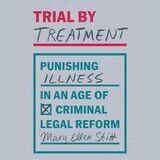
Trial by Treatment
Punishing Illness in an Age of Criminal Legal ReformMary Ellen Stitt
University of Chicago Press, 2025
This is an auto-narrated audiobook version of this book.
A troubling account of the unexpected impacts of treatment-based alternatives to criminal punishment.
Every year, courts send hundreds of thousands of people to treatment-based programs as alternatives to traditional punishment. These alternatives—known as ‘diversion programs’—are widely celebrated as reforms that reduce the punishment of the mentally ill. But in Trial by Treatment, Mary Ellen Stitt shows that they have, in fact, expanded the reach of the criminal legal system and its power over the lives of the most vulnerable.
The inner workings of diversion programs are obscure, partially by design, and data on outcomes is hard to come by. Stitt draws on two years of fieldwork in criminal courtrooms and court-mandated treatment sessions, as well as an original national dataset, in-depth interviews, and experimental survey data, to document the hidden impacts of diversion. She shows that placing mental healthcare under the control of the courts has helped to legitimize the criminalization of illness, warped treatment environments, and amplified inequalities in punishment. In vivid and humanizing detail, Trial by Treatment shows how reforms that keep power and discretion in the same hands can entrench the very problems they promised to solve.