Results by title
159 books match the query 'Birds' and 37 start with t
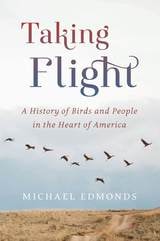
Taking Flight
A History of Birds and People in the Heart of AmericaMichael Edmonds
Wisconsin Historical Society Press, 2018
Today, more than fifty million Americans traipse through wetlands at dawn, endure clouds of mosquitoes, and brave freezing autumn winds just to catch a glimpse of a bird. The human desire to connect with winged creatures defies age and generation. In the Midwest, humans and birds have lived together for more than twelve thousand years. Taking Flight explores how and why people have worshipped, feared, studied, hunted, eaten, and protected the birds that surrounded them.
Author and birder Michael Edmonds has combed archaeological reports, missionaries’ journals, travelers’ letters, early scientific treatises, the memoirs of American Indian elders, and the folklore of hunters, farmers, and formerly enslaved people throughout the Midwest to reveal how our ancestors thought about the very same birds we see today. Whether you’re a casual bird-watcher, a hard-core life-lister, or simply someone who loves the outdoors, you’ll look at birds differently after reading this book.
Tales of a Low-Rent Birder
By Pete Dunne
University of Texas Press, 1994
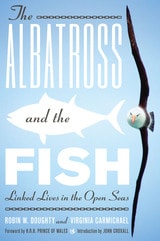
The Albatross and the Fish
Linked Lives in the Open SeasBy Robin W. Doughty and Virginia Carmichael
University of Texas Press, 2011
Breeding on remote ocean islands and spending much of its life foraging for food across vast stretches of seemingly empty seas, the albatross remains a legend for most people. And yet, humans are threatening the albatross family to such an extent that it is currently the most threatened bird group in the world. In this extensively researched, highly readable book, Robin W. Doughty and Virginia Carmichael tell the story of a potentially catastrophic extinction that has been interrupted by an unlikely alliance of governments, conservation groups, and fishermen.
Doughty and Carmichael authoritatively establish that the albatross's fate is linked to the fate of two of the highest-value table fish, Bluefin Tuna and Patagonian Toothfish, which are threatened by unregulated commercial harvesting. The authors tell us that commercial fishing techniques are annually killing tens of thousands of albatrosses. And the authors explain how the breeding biology of albatrosses makes them unable to replenish their numbers at the rate they are being depleted. Doughty and Carmichael set the albatross's fate in the larger context of threats facing the ocean commons, ranging from industrial overfishing to our habit of dumping chemicals, solid waste, and plastic trash into the open seas. They also highlight the efforts of dedicated individuals, environmental groups, fishery management bodies, and governments who are working for seabird and fish conservation and demonstrate that these efforts can lead to sustainable solutions for the iconic seabirds and the entire ocean ecosystem.
The Alliterative Morte Arthure
The Owl and the Nightingale and Five Other Middle English PoemsJohn Gardner
Southern Illinois University Press, 1973
Poets of every age deal with roughly the same human emotions, and for the experienced reader poetry is interesting or not depending upon the moment-by-moment intensity of its appeal. This skillful rendering by John Gardner of seven Middle English poems into sparklingly modern verse translation—most of them for the first time—represents a selection of poems that, generally, have real artistic value but are so difficult to read in the original that they are not as well known as they deserve to be. The seven poems are: The Alliterative Morte Arthure, Winner and Waster, The Parliament of the Three Ages, Summer Sunday, The Debate of Body and Soul, The Thrush and the Nightingale,and The Owl and the Nightingale.
The first four poems represent high points in the alliterative renaissance of the fourteenth century. Morte Arthure,here translated for the first time in its entirety into modern verse, is the only heroic romance in Middle English—a work roughly in the same genre as the French Song of Roland. The other three poems have been included in the anthology as further poetic examples.
With his employment of extensive comments and notes on the poems, Gardner provides a wealth of aids to appreciation and understanding of his outstanding translations. The anthology will be of interest to general readers as well as to students.
The American Bird Conservancy Guide to Bird Conservation
Daniel J. Lebbin, Michael J. Parr, and George H. Fenwick
University of Chicago Press, 2010
Whether we live in cities, in the suburbs, or in the country, birds are ubiquitous features of daily life, so much so that we often take them for granted. But even the casual observer is aware that birds don’t fill our skies in the number they once did. That awareness has spawned conservation action that has led to notable successes, including the recovery of some of the nation’s most emblematic species, such as the Bald Eagle, Brown Pelican, Whooping Crane, and Peregrine Falcon. Despite this, a third of all American bird species are in trouble—in many cases, they’re in imminent danger of extinction. The most authoritative account ever published of the threats these species face, The American Bird Conservancy Guide to Bird Conservation will be the definitive book on the subject.
The Guide presents for the first time anywhere a classification system and threat analysis for bird habitats in the United States, the most thorough and scientifically credible assessment of threats to birds published to date, as well as a new list of birds of conservation concern. Filled with beautiful color illustrations and original range maps, the Guide is a timely, important, and inspiring reference for birders and anyone else interested in conserving North America’s avian fauna. But this book is far more than another shout of crisis. The Guide also lays out a concrete and achievable plan of long-term action to safeguard our country’s rich bird life. Ultimately, it is an argument for hope. Whether you spend your early weekend mornings crouched in silence with binoculars in hand, hoping to check another species off your list, or you’ve never given much thought to bird conservation, you’ll appreciate the visual power and intellectual scope of these pages.
The Art of Migration
Birds, Insects, and the Changing Seasons in ChicagolandPaintings by Peggy Macnamara
University of Chicago Press, 2013
As the only artist in residence at the Field Museum, Peggy Macnamara has a unique vantage point for studying these patterns and capturing their distinctive traits. Her magnificent watercolor illustrations capture flocks, movement, and species-specific details. The illustrations are accompanied by text from museum staff and include details such as natural histories, notable features for identification, behavior, and how species have adapted to environmental changes. The book follows a gentle seasonal sequence and includes chapters on studying migration, artist’s notes on illustrating wildlife, and tips on the best ways to watch for birds and insects in the Chicago area.
A perfect balance of science and art, The Art of Migration will prompt us to marvel anew at the remarkable spectacle going on around us.
The Art of the Bird
The History of Ornithological Art through Forty ArtistsRoger J. Lederer
University of Chicago Press, 2019
The Behavior of Texas Birds
By Kent Rylander
University of Texas Press, 2002
Whether it's the sudden, plunging dives of Brown Pelicans, the singing and aerial displays of Northern Mockingbirds, or the communal nesting of Purple Martins, innate and learned behaviors are some of the most fascinating things to observe in Texas birds. Even casual birdwatchers eventually ask, "why do they do that?" while serious birders and ornithologists seek to understand all the behaviors involved in feeding, flying, mating, and rearing young. But until now, it has been hard to find this information in one handy source.
In this comprehensive, yet easy-to-use book, Kent Rylander distills data from many sources to provide an authoritative guide to the behavior of Texas birds. He begins by explaining the principles of animal behavior and illustrating how they can be applied to interpreting bird behaviors in the field. The majority of the book is devoted to accounts of more than 400 species of birds that are most likely to be encountered by Texas birdwatchers. Each account describes such behaviors as feeding, courtship, parenting, and other behaviors that are significant for that species. References to interesting and important articles from scientific journals are incorporated in the species accounts where appropriate, and line drawings illustrate some of the behaviors described.
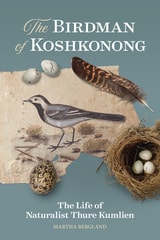
The Birdman of Koshkonong
The Life of Naturalist Thure KumlienMartha Bergland
Wisconsin Historical Society Press, 2021
For all of his achievements, Kumlien never gained the widespread notoriety of Wisconsin naturalists John Muir, Increase Lapham, or Aldo Leopold. Kumlien did his work behind the scenes, content to spend his days in the marshes and swamps rather than in the public eye. He once wrote that he was not “cut out for pretensions and show in the world.” Yet, his detailed observations of Wisconsin’s natural world—including the impact of early agriculture on the environment—were hugely important to the fields of ornithology and botany. As this carefully researched and lovingly rendered biography proves, Thure Kumlien deserves to be remembered as one of Wisconsin’s most influential naturalists.

The Birds of Arizona
Allan R. Phillips
University of Arizona Press, 1964
The Birds of Michigan
Norman A. Wood
University of Michigan Press, 1951
The Birds of Paradise
A NovelPaul Scott
University of Chicago Press, 2013
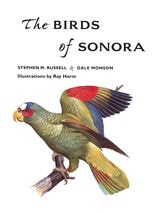
The Birds of Sonora
Stephen M. Russell
University of Arizona Press, 1998
The Birds of Sonora describes all the species known from that state and includes information on distribution, seasonal patterns of occurrence, abundance, and habitats. The first book of its kind in more than half a century to treat birds of this Mexican state immediately south of Arizona, it also contains details of nesting activity for breeding species, provides insight into factors influencing distribution, and notes historical changes in status. Each account is accompanied by a range map depicting the bird's range in Sonora—valuable information not available from any other source and useful to anyone interested in the distribution and ecology of North American birds. Drawings by internationally known wildlife artist Ray Harm enhance many of the entries.
Because other books on Mexican birds don't treat Sonora in detail, The Birds of Sonora is an indispensable resource for birders, and its background descriptions of Sonoran geography, climate, and habitats also make it a key reference for conservation and land use planning. A useful companion to field guides, it is a narrative account that puts readers in touch with birds of this important biogeographic area.
The Birds of Washtenaw County, Michigan
Michael A. Kielb, John M. Swales, and Richard A. Wolinski
University of Michigan Press, 1993
The Birds of Washtenaw County, Michigan provides a comprehensive account of the birdlife in Washtenaw County. Situated to the west of Detroit in southeast Michigan, the county has an exceptionally rich history of ornithological study, fueled by the activists of numerous amateur birdwatchers and by the interests of two major universities.
Frequency accounts of the 267 species recorded in the county during the last 15 years are framed by a discussion of the topographical history of the county. In addition, the authors present notes on another 30 species not seen in the county since 1976. A comprehensive site guide offers suggestions of the optimal locals and times to try to find the birds.
Michael A. Kielb has studied birds in Michigan for over 15 years and teaches classes on birds at the Matthaei Botanical Gardens in Ann Arbor and the College of Du Page in Illinois. He also leads bird-watching tours throughout the Americas and is currently a Research Associate in the Reproductive Sciences Program at the University of Michigan.
John M. Swales first became interested in birds while teaching in the Sudan and has been exploring the birdlife of Washtenaw County since arriving at the University of Michigan in 1985. He is Professor of Linguistics and Director of the English Language Institute, University of Michigan.
Richard A. Wolinski has been studying birds of Washtenaw County for nearly two decades. He is a staff biologist with an engineering firm in southeast Michigan.
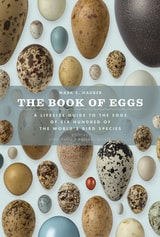
The Book of Eggs
A Life-Size Guide to the Eggs of Six Hundred of the World's Bird SpeciesMark E. Hauber
University of Chicago Press, 2014
The Book of Eggs introduces readers to eggs from six hundred species—some endangered or extinct—from around the world and housed mostly at Chicago’s Field Museum of Natural History. Organized by habitat and taxonomy, the entries include newly commissioned photographs that reproduce each egg in full color and at actual size, as well as distribution maps and drawings and descriptions of the birds and their nests where the eggs are kept warm. Birds’ eggs are some of the most colorful and variable natural products in the wild, and each entry is also accompanied by a brief description that includes evolutionary explanations for the wide variety of colors and patterns, from camouflage designed to protect against predation, to thermoregulatory adaptations, to adjustments for the circumstances of a particular habitat or season. Throughout the book are fascinating facts to pique the curiosity of binocular-toting birdwatchers and budding amateurs alike. Female mallards, for instance, invest more energy to produce larger eggs when faced with the genetic windfall of an attractive mate. Some seabirds, like the cliff-dwelling guillemot, have adapted to produce long, pointed eggs, whose uneven weight distribution prevents them from rolling off rocky ledges into the sea.
A visually stunning and scientifically engaging guide to six hundred of the most intriguing eggs, from the pea-sized progeny of the smallest of hummingbirds to the eggs of the largest living bird, the ostrich, which can weigh up to five pounds, The Book of Eggs offers readers a rare, up-close look at these remarkable forms of animal life.
The Devil’s Cormorant
A Natural HistoryRichard J. King
University Press of New England, 2014
The Falcon Experience
A Flight with Chicago’s Field MuseumIllustrations by Peggy Macnamara; Written by Katie Macnamara
Northwestern University Press, 2026
A joyful, educational flight from the halls of Chicago’s Field Museum to the nests of mighty peregrine falcons
Rosie the Tarantula, famous for her adventure in the corridors and collections of Chicago’s celebrated Field Museum of Natural History, is back. This time, Rosie is focused not on spiders, but on falcons! The Falcon Experience brings us with Rosie as she follows Mary Hennen, the museum’s real-life peregrine program director, giving children and parents alike a front-row seat to the lives of these majestic birds and the scientist who cares for them. Rosie learns how falcons fly, hunt, eat, mate, construct nests and raise chicks (via the peregrine webcam!) in unexpected and challenging places in the city. Mary’s teachings also show how humans can be the key to helping our natural environment.
Beautifully illustrated with watercolors by renowned Field Museum artist-in-residence Peggy Macnamara, The Falcon Experience is told by Peggy’s daughter, author and educator Katie Macnamara, in rhyme ideal for reading aloud to children. This keepsake-quality book will delight budding young scientists and their families while providing a colorful, interactive experience with one of Chicago’s foremost cultural institutions.
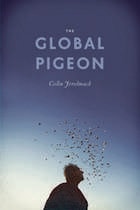
The Global Pigeon
Colin Jerolmack
University of Chicago Press, 2013
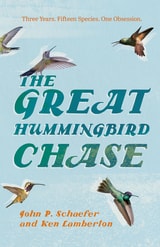
The Great Hummingbird Chase
John P. Schaefer and Ken Lamberton
University of Arizona Press, 2027
Southern Arizona is a world-renown hummingbird destination. The Great Hummingbird Chase chronicles John P. Schaefer and Ken Lamberton’s passionate quest to photograph all fifteen of Arizona’s hummingbird species.
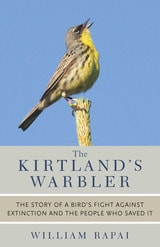
The Kirtland's Warbler
The Story of a Bird's Fight Against Extinction and the People Who Saved ItWilliam Rapai
University of Michigan Press, 2013
At a time when the world is seeing its species rapidly go extinct, the Kirtland's warbler is not just a survivor, it's a rock star. The Kirtland's warbler is the rarest warbler species in North America and will always be rare because of its persnickety nesting preferences. But when the total population fell below 400 birds in the 1970s and 1980s---driven largely by a loss of habitat and the introduction of a parasite---a small group of dedicated biologists, researchers, and volunteers vowed to save the Kirtland's warbler despite long odds. This is the story of the warbler's survival and gradual recovery, the people and policies that kept it from extinction, and the ongoing challenges that may again jeopardize the bird's future.
In The Kirtland's Warbler, William Rapai explores the bird's fascinating natural history as well as the complex and evolving relationships between the warbler, its environment, its human protectors, and state and federal policies that today threaten to eradicate decades of work done on the species' behalf. Beginning with an account of the warbler's discovery in the mid-nineteenth century and ornithologists' desperate hunt for information on the elusive new species, the book goes on to examine the dramatic events that quickly led to the warbler's precarious status and its eventual emergence as a lightning rod for controversy.
The Kirtland's warbler is often described as a "bird of fire" for its preference for nesting in areas cleared by wildfire. But it also warrants the name for the passion it ignites in humans. Both tragic and uplifting, the story of this intriguing bird is a stirring example of how strong leadership, vision, commitment, sustained effort, and cooperation can come together to protect our natural world.
The Language of Birds
Norbert Scheuer
Haus Publishing, 2018
As visceral horrors and everyday banalities of the war threaten to engulf Paul, he, like his great-great-grandfather, finds his very own refuge in Afghanistan’s natural world. In a diary filled with exquisite drawings of birds and ruminations on the life he left behind, Paul describes his experiences living with two comrades who are fighting their own demons and his befriending of an Afghan man, Nassim, as well as his dreams of escaping the restrictive base camp and visiting the shores of a lake visible from the lookout tower. But when he finally reaches the lake one night, he finds himself in the midst of a chain of events that, with his increasingly fragile state of mind, has dramatic—and ultimately heartbreaking—consequences.
A meditative novel that shows a new side to the conflict in Afghanistan, The Language of Birds takes a moving look at the all-too-human costs of war and questions what it truly means to fight for freedom.
The Names of Birds
Daniel Wolff
Four Way Books, 2015
The Nighthawk's Evening
Notes of a Field BiologistGretchen N. Newberry
Oregon State University Press, 2021
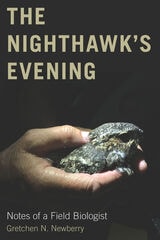
This acrobatic, night-flying bird nests on rooftops and flocks in the thousands as it migrates from Alaska to Argentina and back every year. Nighthawks are strange animals, reptiles with feathers, sleepy during the day, but quick, agile, and especially adept at survival. They have the ability to withstand extreme temperatures and adapt to many habitats, but they are struggling for survival in the Anthropocene.
Newberry’s story focuses on the bird itself—its complex conservation status and cultural significance—and the larger, often hidden world of nocturnal animals. Along the way, she gives readers insight into the daily life of a scientist, especially one who works primarily at night. The Nighthawk’s Evening uses one scientist and one species to explore the challenges, disappointments, and successes of scientific research and conservation efforts. An accessible work of science, it will appeal to birders, students, wildlife managers, and anyone who is fascinated by urban wildlife.
The Origin and Distribution of Birds in Coastal Alaska and British Columbia
The Lost Manuscript of Ornithologist Harry S. SwarthChristopher W. Swarth
Oregon State University Press, 2022
In 2019, Christopher Swarth, Harry’s grandson and a scientist in his own right, discovered the forgotten manuscript. This book includes the original unpublished manuscript, accompanied by contextual essays from contemporary ornithologists who examine the impact and relevance of Swarth’s research on coastal bird diversity, fox sparrow migration, and the systematic puzzle of the timberline sparrow. Expedition maps display field camps and exploration routes, and species checklists illustrate the variety of birds observed at key field sites. To bring additional color and insight, The Origin and Distribution of Birds in Coastal Alaska and British Columbia also includes excerpts from Harry Swarth’s field notes, a comprehensive list of Harry Swarth’s publications, and a glossary with historic and contemporary bird names. Naturalists, ornithologists, birders, and all those who want to learn more about the natural history of the region will delight in the rediscovery of this long-lost treasure.
The Peregrine Returns
The Art and Architecture of an Urban Raptor RecoveryMary Hennen with Peggy Macnamara
University of Chicago Press, 2017
In The Peregrine Returns, Mary Hennen gives wings to this extraordinary conservation success story. Drawing on the beautiful watercolors of Field Museum artist-in-residence Peggy Macnamara and photos by Field Museum research assistant Stephanie Ware, as well as her own decades of work with peregrines, Hennen uses a program in Chicago as a case study for the peregrines’ journey from their devastating decline to the discovery of its cause (a thinning of eggshells caused by a by-product of DDT), through to recovery, revealing how the urban landscape has played an essential role in enabling falcons to return to the wild—and how people are now learning to live in close proximity to these captivating raptors.
Both a model for conservation programs across the country and an eye-opening look at the many creatures with which we share our homes, this richly illustrated story is an inspiring example of how urban architecture can serve not only our cities’ human inhabitants, but also their wild ones.
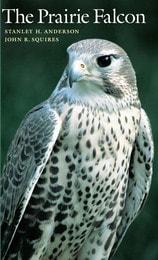
The Prairie Falcon
By Stanley H. Anderson and John R. Squires
University of Texas Press, 1997
Skillful hunters beautiful in flight, Prairie Falcons inhabit the rocky cliffs of the American West. These raptors range from southern Canada and northern North Dakota to Baja California, Arizona, New Mexico, western and northern Texas, and southeastern Coahuila, Mexico.
This is the first book for a wide audience devoted exclusively to the Prairie Falcon. Stanley Anderson and John Squires cover all aspects of the falcon's life history from mating and rearing young to hunting behaviors and the yearly migration cycle. They provide complete descriptive characteristics for identifying Prairie Falcons and also compare them to other raptors, especially the closely related Peregrine Falcon.
In addition, the authors recount the long association of falcons with people, which may extend back as far as 2000 BC. They describe the practice of falconry from the Middle Ages until today. And they assess the threats to Prairie Falcons posed by human activities, from pesticide use and destruction of habitat to disruption of the breeding cycle by careless birdwatchers.
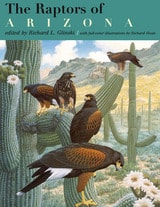
The Raptors of Arizona
Edited by Richard L. Glinski, with full-color illustrations by Richard Sloan
University of Arizona Press, 1998
Arizona's raptors are found in an unrivaled diversity of habitats, from saguaro cactus forests where tiny Elf Owls nest to the Vermilion Cliffs, where the gigantic California Condor was introduced in 1996. Yet many species live in habitats that are now jeopardized by degradation or development, making an understanding and appreciation of raptors crucial to their survival.
The Raptors of Arizona brings together the knowledge and insights of 29 raptor and wildlife authorities who provide original information and syntheses on Arizona's 42 raptor species, with an emphasis on aspects of their natural history in Arizona. A chapter on each bird includes its description, a range map, and information on its distribution, habitat, life history, and status. Additional chapters cover conservation, habitats, where and when to watch raptors, and the sport of falconry. The book is enhanced by 42 full-color illustrations by Richard Sloan, one of the premier wildlife artists in North America, whose paintings were commissioned by the Arizona Wildlife Foundation specifically for this project. Co-published with the Arizona Game and Fish Department.
The Raptors of Iowa
James F. Landenberger, Dean M. Roosa, Jon W. Stravers, Bruce Ehresman, Rich Patterson
University of Iowa Press, 2013
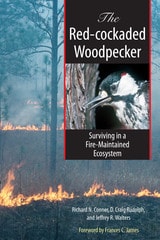
The Red-cockaded Woodpecker
Surviving in a Fire-Maintained EcosystemBy Richard Conner, D. Craig Rudolph, and Jeffrey R. Walters
University of Texas Press, 2001
Though small among its woodpecker relatives, the Red-cockaded Woodpecker poses a huge dilemma for its human neighbors. Uniquely adapted to live in the old-growth pine forests of the southeastern United States, the Red-cockaded Woodpecker has nearly disappeared as the forests have been cleared for agricultural, commercial, and residential uses over the last two centuries. Today, it waits at a crossroads. Scientific management practices could restore the woodpecker's habitat and population, but the imperative to convert old-growth forests to other uses remains.
In this book, three of the leading experts on the Red-cockaded Woodpecker offer a comprehensive overview of all that is currently known about its biology and natural history and about the ecology of the fire-maintained forests it requires for survival. As the most visible endangered species in the Southeast, and the one whose conservation impacts the largest land area, the Red-cockaded Woodpecker holds a compelling interest not only for ornithologists, but also for wildlife managers, foresters, developers, environmentalists, and government officials. For all of these groups, this book will be the essential resource for learning more about the Red-cockaded Woodpecker and ensuring its survival.
The Scientific Nomenclature of Birds in the Upper Midwest
James Sandrock and Jean C. Prior
University of Iowa Press, 2014
The authors examine the roots, stems, and construction of scientific names from their classical Latin and Greek or other linguistic origins. The translations of these words and insights into their sources yield quirky, tantalizing facts about the people, geography, habitat, and mythology behind bird names. Each entry also includes the bird’s common name as well as local or regional names. Beginning birders confused by scientific names as well as more experienced birders curious about such names will find that the book opens unexpected connections into linguistic, historical, biological, artistic, biographical, and even aesthetic realms.
Highlighting the obvious and not-so-obvious links between birds and language, this practical guide continues a long scholarly tradition of such books by and for those afoot in the field. Whether you are hiking with binoculars or watching a backyard bird feeder or reading at home, The Scientific Nomenclature of Birds in the Upper Midwest will greatly enhance your appreciation of birds.
The Sphere of Birds
Ciaran Berry
Southern Illinois University Press, 2008
The Sphere of Birds, Ciaran Berry’s debut collection of poems, effortlessly moves back and forth between here and there, then and now, the personal and the historic, the modern and the mythic.
Berry imagines the transatlantic journeys of John James Audubonand reveals his own heartfelt experience moving from his first house. The poems take as their subject such varied experiences as an eye exam in Manhattan and chasing rabbits around a beach in Donegal. These poems have a strong sense of place, whether it’s the imagined space of Coney Island in 1903 or the playground of Berry’s childhood convent school.
The Sphere of Birds delights in forging unlikely links, earthed in the stuff of paintings and in the lives of poets, artists, and the occasional saint. Drawing on the poet’s life in Ireland and the United States, the poems explore the joy and grief found in those places.
Moving from rural Ireland to the heart of New York City, from local detail to historical specifics, and from the experienced occasion to the imagined or interpreted event, Berry’s poems effectively master shifts in both time and space. Berry delves into the lives of artists, obscure historical figures, and other poets for inspiration. He embraces elements of both Irish and American poetry, paying tribute as much to the spirit of Larry Levis as to that of W. B. Yeats.
Accessible, immediate, and visceral, The Sphere of Birds offers a musicality that is increasingly rare in contemporary poetry.

The Status and Distribution of New Jersey's Birds
Leck, Charles F
Rutgers University Press, 1984
The Turkey
AN AMERICAN STORYAndrew F. Smith
University of Illinois Press, 2006
“Talking turkey” about the bird you thought you knew
Fondly remembered as the centerpiece of family Thanksgiving reunions, the turkey is a cultural symbol as well as a multi-billion dollar industry. As a bird, dinner, commodity, and as a national icon, the turkey has become as American as the bald eagle (with which it actually competed for supremacy on national insignias).
Food historian Andrew F. Smith’s sweeping and multifaceted history of Meleagris gallopavo separates fact from fiction, serving as both a solid historical reference and a fascinating general read. With his characteristic wit and insatiable curiosity, Smith presents the turkey in ten courses, beginning with the bird itself (actually several different species of turkey) flying through the wild. The Turkey subsequently includes discussions of practically every aspect of the iconic bird, including the wild turkey in early America, how it came to be called “turkey,” domestication, turkey mating habits, expansion into Europe, stuffing, conditions in modern industrial turkey factories, its surprising commercial history of boom and bust, and its eventual ascension to holiday mainstay.
As one of the easiest of foods to cook, the turkey’s culinary possibilities have been widely explored if little noted. The second half of the book collects an amazing array of over one hundred historical and modern turkey recipes from across America and Europe. From sandwiches to salmagundi, you’ll find detailed instructions on nearly every variation on the turkey. Historians will enjoy a look back at the varied appetites of their ancestors and seasoned cooks will have an opportunity to reintroduce a familiar food in forgotten ways.
The Unauthorized Audubon
Anita Skeen and Laura B. DeLind
Michigan State University Press, 2014
The Winged
An Upper Missouri River Ethno-ornithologyKaitlyn Chandler, Wendi Field Murray, María Nieves Zedeño, Samrat Clements, and Robert James
University of Arizona Press, 2017
The Missouri River Basin is home to thousands of bird species that migrate across the Great Plains of North America each year, marking the seasonal cycle and filling the air with their song. In time immemorial, Native inhabitants of this vast region established alliances with birds that helped them to connect with the gods, to learn the workings of nature, and to live well.
This book integrates published and archival sources covering archaeology, ethnohistory, historical ethnography, folklore, and interviews with elders from the Blackfoot, Assiniboine, Mandan, Hidatsa, Arikara, and Crow communities to explore how relationships between people and birds are situated in contemporary practice, and what has fostered its cultural persistence. Native principles of ecological and cosmological knowledge are brought into focus to highlight specific beliefs, practices, and concerns associated with individual bird species, bird parts, bird objects, the natural and cultural landscapes that birds and people cohabit, and the future of this ancient alliance.
Detailed descriptions critical to ethnohistorians and ethnobiologists are accompanied by thirty-four color images. A unique contribution, The Winged expands our understanding of sets of interrelated dependencies or entanglements between bird and human agents, and it steps beyond traditional scientific and anthropological distinctions between humans and animals to reveal the intricate and eminently social character of these interactions.
They Tell of Birds
Chaucer, Spenser, Milton, DraytonBy Thomas P. Harrison
University of Texas Press, 1956
Thomas P. Harrison here combines a lifelong interest in birds with a professional study of literature. This book, a study of birds as they are presented by four great English poets, inquires into the extent and sources of their knowledge of birds and analyzes the methods by which they adapted that knowledge for poetic purposes. The interrelationships of their poetry are also discussed, providing a new basis for comparison of four poets whose work is closely linked on other grounds remote from natural history.
The first chapter reviews representative figures and works of the centuries preceding the Renaissance and illustrates the medieval poetic conventions about birds that influenced the four poets. The remaining chapters treat each poet and his works in detail, comparing their use of this area of the natural world. The book concludes with an index of bird allusions in the works of the four poets, with occasional quotations illustrating the manner in which the traditional or observed habits of particular birds were put to poetic use. The book is illustrated with medieval and Renaissance illustrations of birds.
In this careful treatment of an important element of the poets’ works, Harrison has indicated the larger picture of their attitudes toward and use of the natural world about them. Accordingly, it might be said to constitute a chapter on the relationship of poetry and science at a crucial period in the history of thought.
For much of his material, Harrison journeyed to England, where, among other research activities, he visited museums of natural history and bird sanctuaries throughout the country.
Primarily intended for students of literature, They Tell of Birds will also be of interest to ornithologists in its presentation of the beliefs of antiquity and the Middle Ages about particular birds. For, as the distinguished ornithologist E. M. Nicholson has said: “We owe to poets a wealth of records of living wild birds long before scientific ornithology had started.”
Twelve Hundred Miles by Horse and Burro
J. Stokley Ligon and New Mexico’s First Breeding Bird SurveyHarley G. Shaw and Mara E. Weisenberger
University of Arizona Press, 2011
As it turns out, the trek was Ligon's first job with the US Biological Survey, and it did not go entirely undocumented. The breeding bird population report that eventually resulted from the journey, photographs from glass plate negatives, and—perhaps most enticingly—Ligon's own personal diary from these travels are presented here. Not just a compelling account of the expedition itself, the materials and insights found in this volume also reveal aspects of Ligon's family history, his early interest in wildlife, and the development of the wilderness skills needed to undertake such a survey.
Using his original itinerary and handwritten report, the authors of this book revisited many of the places that Ligon surveyed and in a few cases were even able to locate and repeat Ligon's early photographs. Combined with a discussion of the conditions of birds and other wildlife then and now, this volume serves as a useful tool for understanding how wildlife numbers, distribution, and habitats changed in New Mexico over the course of the twentieth century.
Birding enthusiasts, historians, naturalists, and even armchair adventurers will all find something to love in this chronicle of a young man from a West Texas ranching family with a driving ambition to be a professional naturalist and writer.