Results by title
82 books match the query 'Birdwatching Guides' and 18 start with t
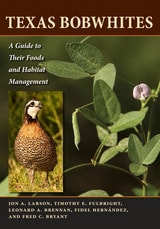
Texas Bobwhites
A Guide to Their Foods and Habitat ManagementBy Jon A. Larson, Timothy E. Fulbright, Leonard A. Brennan, Fidel Hernández, and Fred C. Bryant
University of Texas Press, 2010
Northern bobwhites are one of the most popular game birds in the United States. In Texas alone, nearly 100,000 hunters take to the field each fall and winter to pursue wild bobwhite quail. Texas is arguably the last remaining state with sufficient habitat to provide quail-hunting opportunities on a grand scale, and Texas ranchers with good bobwhite habitat often generate a greater proportion of their income from fees paid by quail hunters than from livestock production. Managing and expanding bobwhite habitat makes good sense economically, and it benefits the environment as well. The rangelands and woodlands of Texas that produce quail also support scores of other species of wildlife.
Texas Bobwhites is a field guide to the seeds commonly eaten by northern bobwhites, as well as a handbook for conserving and improving northern bobwhite habitat. It provides identifying characteristics for the seeds of 91 species of grasses, forbs, woody plants, and succulents. Each seed description includes a close-up and a scale photo of the seed and the plant that produces it, along with a range map. Using this information, hunters can readily identify concentrations of plants that are most likely to attract quail. Landowners and rangeland managers will greatly benefit from the book's state-of-the-art guidance for habitat management and restoration, including improving habitat dominated by invasive and nonnative grasses.
The American Bird Conservancy Guide to Bird Conservation
Daniel J. Lebbin, Michael J. Parr, and George H. Fenwick
University of Chicago Press, 2010
Whether we live in cities, in the suburbs, or in the country, birds are ubiquitous features of daily life, so much so that we often take them for granted. But even the casual observer is aware that birds don’t fill our skies in the number they once did. That awareness has spawned conservation action that has led to notable successes, including the recovery of some of the nation’s most emblematic species, such as the Bald Eagle, Brown Pelican, Whooping Crane, and Peregrine Falcon. Despite this, a third of all American bird species are in trouble—in many cases, they’re in imminent danger of extinction. The most authoritative account ever published of the threats these species face, The American Bird Conservancy Guide to Bird Conservation will be the definitive book on the subject.
The Guide presents for the first time anywhere a classification system and threat analysis for bird habitats in the United States, the most thorough and scientifically credible assessment of threats to birds published to date, as well as a new list of birds of conservation concern. Filled with beautiful color illustrations and original range maps, the Guide is a timely, important, and inspiring reference for birders and anyone else interested in conserving North America’s avian fauna. But this book is far more than another shout of crisis. The Guide also lays out a concrete and achievable plan of long-term action to safeguard our country’s rich bird life. Ultimately, it is an argument for hope. Whether you spend your early weekend mornings crouched in silence with binoculars in hand, hoping to check another species off your list, or you’ve never given much thought to bird conservation, you’ll appreciate the visual power and intellectual scope of these pages.
The American Robin
By Roland H. Wauer
University of Texas Press, 1999
The American Robin is North America's most widespread songbird, with a range extending from Alaska, Canada, and Newfoundland to the highlands of Mexico and Guatemala. Its ruddy red breast and cheerful song have also made it one of our most beloved birds—as American as apple pie, as familiar a harbinger of spring as the first daffodil. Connecticut, Michigan, and Wisconsin have chosen the American Robin as their state bird, while a pair of robins grace the Canadian two dollar bill.
In this book, Roland Wauer offers a complete natural history of the American Robin for a popular audience. Combining his own observations as a field naturalist with data gleaned from the scientific literature, he describes the American Robin from every angle—appearance and biology, distribution, behavior, life cycle, and enemies and threats. In addition, he explores the legends and lore surrounding robins and offers suggestions for attracting them to your yard.
The Behavior of Texas Birds
By Kent Rylander
University of Texas Press, 2002
Whether it's the sudden, plunging dives of Brown Pelicans, the singing and aerial displays of Northern Mockingbirds, or the communal nesting of Purple Martins, innate and learned behaviors are some of the most fascinating things to observe in Texas birds. Even casual birdwatchers eventually ask, "why do they do that?" while serious birders and ornithologists seek to understand all the behaviors involved in feeding, flying, mating, and rearing young. But until now, it has been hard to find this information in one handy source.
In this comprehensive, yet easy-to-use book, Kent Rylander distills data from many sources to provide an authoritative guide to the behavior of Texas birds. He begins by explaining the principles of animal behavior and illustrating how they can be applied to interpreting bird behaviors in the field. The majority of the book is devoted to accounts of more than 400 species of birds that are most likely to be encountered by Texas birdwatchers. Each account describes such behaviors as feeding, courtship, parenting, and other behaviors that are significant for that species. References to interesting and important articles from scientific journals are incorporated in the species accounts where appropriate, and line drawings illustrate some of the behaviors described.
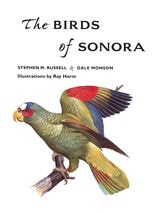
The Birds of Sonora
Stephen M. Russell
University of Arizona Press, 1998
The Birds of Sonora describes all the species known from that state and includes information on distribution, seasonal patterns of occurrence, abundance, and habitats. The first book of its kind in more than half a century to treat birds of this Mexican state immediately south of Arizona, it also contains details of nesting activity for breeding species, provides insight into factors influencing distribution, and notes historical changes in status. Each account is accompanied by a range map depicting the bird's range in Sonora—valuable information not available from any other source and useful to anyone interested in the distribution and ecology of North American birds. Drawings by internationally known wildlife artist Ray Harm enhance many of the entries.
Because other books on Mexican birds don't treat Sonora in detail, The Birds of Sonora is an indispensable resource for birders, and its background descriptions of Sonoran geography, climate, and habitats also make it a key reference for conservation and land use planning. A useful companion to field guides, it is a narrative account that puts readers in touch with birds of this important biogeographic area.
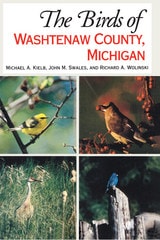
The Birds of Washtenaw County, Michigan
Michael A. Kielb, John M. Swales, and Richard A. Wolinski
University of Michigan Press, 1993
The Birds of Washtenaw County, Michigan provides a comprehensive account of the birdlife in Washtenaw County. Situated to the west of Detroit in southeast Michigan, the county has an exceptionally rich history of ornithological study, fueled by the activists of numerous amateur birdwatchers and by the interests of two major universities.
Frequency accounts of the 267 species recorded in the county during the last 15 years are framed by a discussion of the topographical history of the county. In addition, the authors present notes on another 30 species not seen in the county since 1976. A comprehensive site guide offers suggestions of the optimal locals and times to try to find the birds.
Michael A. Kielb has studied birds in Michigan for over 15 years and teaches classes on birds at the Matthaei Botanical Gardens in Ann Arbor and the College of Du Page in Illinois. He also leads bird-watching tours throughout the Americas and is currently a Research Associate in the Reproductive Sciences Program at the University of Michigan.
John M. Swales first became interested in birds while teaching in the Sudan and has been exploring the birdlife of Washtenaw County since arriving at the University of Michigan in 1985. He is Professor of Linguistics and Director of the English Language Institute, University of Michigan.
Richard A. Wolinski has been studying birds of Washtenaw County for nearly two decades. He is a staff biologist with an engineering firm in southeast Michigan.
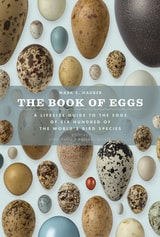
The Book of Eggs
A Life-Size Guide to the Eggs of Six Hundred of the World's Bird SpeciesMark E. Hauber
University of Chicago Press, 2014
The Book of Eggs introduces readers to eggs from six hundred species—some endangered or extinct—from around the world and housed mostly at Chicago’s Field Museum of Natural History. Organized by habitat and taxonomy, the entries include newly commissioned photographs that reproduce each egg in full color and at actual size, as well as distribution maps and drawings and descriptions of the birds and their nests where the eggs are kept warm. Birds’ eggs are some of the most colorful and variable natural products in the wild, and each entry is also accompanied by a brief description that includes evolutionary explanations for the wide variety of colors and patterns, from camouflage designed to protect against predation, to thermoregulatory adaptations, to adjustments for the circumstances of a particular habitat or season. Throughout the book are fascinating facts to pique the curiosity of binocular-toting birdwatchers and budding amateurs alike. Female mallards, for instance, invest more energy to produce larger eggs when faced with the genetic windfall of an attractive mate. Some seabirds, like the cliff-dwelling guillemot, have adapted to produce long, pointed eggs, whose uneven weight distribution prevents them from rolling off rocky ledges into the sea.
A visually stunning and scientifically engaging guide to six hundred of the most intriguing eggs, from the pea-sized progeny of the smallest of hummingbirds to the eggs of the largest living bird, the ostrich, which can weigh up to five pounds, The Book of Eggs offers readers a rare, up-close look at these remarkable forms of animal life.
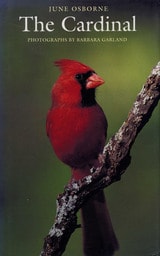
The Cardinal
Text by June Osborne, Photos by Barbara Garland
University of Texas Press, 1992
In this inviting guide, June Osborne and Barbara Garland follow a year in the life of the Northern Cardinal with a fact-filled text and glowing color photographs. They describe how cardinals stake out territory and choose mates, find a nesting site and incubate their eggs, feed the young and prepare them for full-fledged independence. The Cardinal also explores the special relationship that humans have with their favorite redbirds. Osborne traces the symbolic use of cardinals as state birds (Illinois, Indiana, Kentucky, North Carolina, Ohio, Virginia, and West Virginia) and athletic mascots and shows how they appear on everything from postage stamps to Christmas cards, as well as in fine art, literature, and Native American folklore.
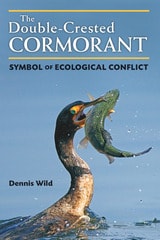
The Double-Crested Cormorant
Symbol of Ecological ConflictDennis Wild
University of Michigan Press, 2012
This is the story of the survival, recovery, astonishing success, and controversial status of the double-crested cormorant. After surviving near extinction driven by DDT and other contaminants from the 1940s through the early 1970s, the cormorant has made an unprecedented comeback from mere dozens to a population in the millions, bringing the bird again into direct conflict with humans. Hated for its colonial nesting behavior; the changes it brings to landscapes; and especially its competition with commercial and sports fishers, fisheries, and fish farmers throughout the Great Lakes and Mississippi Delta regions, the cormorant continues to be persecuted by various means, including the shotgun.
In The Double-Crested Cormorant, Dennis Wild brings together the biological, social, legal, and international aspects of the cormorant's world to give a complete and balanced view of one of the Great Lakes' and perhaps North America's most misunderstood species. In addition to taking a detailed look at the complex natural history of the cormorant, the book explores the implications of congressional acts and international treaties, the workings and philosophies of state and federal wildlife agencies, the unrelenting efforts of aquaculture and fishing interests to "cull" cormorant numbers to "acceptable" levels, and the reactions and visions of conservation groups. Wild examines both popular preconceptions about cormorants (what kinds of fish they eat and how much) and the effectiveness of ongoing efforts to control the cormorant population. Finally, the book delves into the question of climate and terrain changes, their consequences for cormorants, the new territories to which the birds must adapt, and the conflicts this species is likely to face going forward.
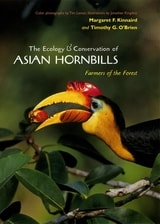
The Ecology and Conservation of Asian Hornbills
Farmers of the ForestMargaret F. Kinnaird and Timothy G. O'Brien
University of Chicago Press, 2008
Building on fourteen years of research, Margaret F. Kinnaird and Timothy G. O’Brien offer in Ecology and Conservation of Asian Hornbills the most up-to-date information on the evolution, reproduction, feeding ecology, and movement patterns of thirty-one species of Asian hornbills. The authors address questions of ecological functionality, ecosystem services, and keystone relationships, as well as the disturbing influence of forest loss and fragmentation on hornbills. Complemented by superb full-color images by renowned photographer Tim Laman that provide rare glimpses of hornbills in their native habitat and black-and-white illustrations by Jonathan Kingdon that highlight the intriguing aspects of hornbill behavior, Ecology and Conservation of Asian Hornbills will stand tall in the pantheon of natural history studies for years to come.
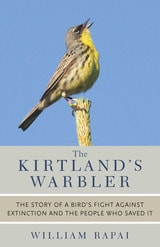
The Kirtland's Warbler
The Story of a Bird's Fight Against Extinction and the People Who Saved ItWilliam Rapai
University of Michigan Press, 2013
At a time when the world is seeing its species rapidly go extinct, the Kirtland's warbler is not just a survivor, it's a rock star. The Kirtland's warbler is the rarest warbler species in North America and will always be rare because of its persnickety nesting preferences. But when the total population fell below 400 birds in the 1970s and 1980s---driven largely by a loss of habitat and the introduction of a parasite---a small group of dedicated biologists, researchers, and volunteers vowed to save the Kirtland's warbler despite long odds. This is the story of the warbler's survival and gradual recovery, the people and policies that kept it from extinction, and the ongoing challenges that may again jeopardize the bird's future.
In The Kirtland's Warbler, William Rapai explores the bird's fascinating natural history as well as the complex and evolving relationships between the warbler, its environment, its human protectors, and state and federal policies that today threaten to eradicate decades of work done on the species' behalf. Beginning with an account of the warbler's discovery in the mid-nineteenth century and ornithologists' desperate hunt for information on the elusive new species, the book goes on to examine the dramatic events that quickly led to the warbler's precarious status and its eventual emergence as a lightning rod for controversy.
The Kirtland's warbler is often described as a "bird of fire" for its preference for nesting in areas cleared by wildfire. But it also warrants the name for the passion it ignites in humans. Both tragic and uplifting, the story of this intriguing bird is a stirring example of how strong leadership, vision, commitment, sustained effort, and cooperation can come together to protect our natural world.
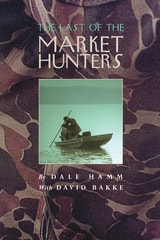
The Last of the Market Hunters
Dale Hamm with David Bakke
Southern Illinois University Press, 1996
Duck hunting has changed greatly since the days of unlimited duck kills, as the limit of fifty ducks a day established in 1902 has fallen to the present three. A legitimate hunter now, Dale Hamm learned the art of market hunting—taking waterfowl out of season and selling them to restaurants—from his father during the l920s. During the l930s and l940s, he kept his family alive by market hunting. At the peak of his career, Hamm poached every private hunting club along the Illinois River from Havana to Beardstown.
After market hunting died out, Hamm became a legendary and almost respected—albeit controversial—character on the Illinois backwaters. He was eventually invited to hunt on the same clubs from which he had once been chased at the point of a shotgun. He hunted with judges, sheriffs, and the head of undercover operations for the Illinois Department of Conservation, all of whom knew of his reputation. He passed on to these hunting partners a lifetime of outdoor knowledge gained from slogging through mud, falling through ice, hunting ducks at three o’clock in the morning, dodging game wardens, and running the world’s only floating tavern.
"I always said if anyone ever cut open one of us Hamms, all they’d find was duck or fish," Hamm once said of his family. Now in his eighties, Hamm still carries a pellet from a shotgun in his chin to remind him of a shotgun blast that ricocheted off the water and into his face. Bakke notes that it is appropriate that a man who spent his life with a shotgun in his hands should carry a bit of buckshot wherever he goes.
Everyone who ever met Dale Hamm has a story about him. His own story is that of a one-of-a-kind character who, in his later years, used his considerable outdoor savvy to conserve the natural resources he once savaged. "His time and kind are gone," Bakke notes, "and there will never be another like him."
This book will be of interest to anyone who has ever been hunting—or who enjoys reading about colorful people and times that exist no more.
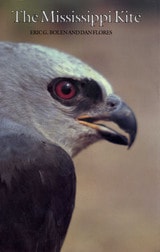
The Mississippi Kite
Portrait of a Southern HawkBy Eric Bolen and Dan Flores
University of Texas Press, 1993
Floating on air currents over rural countryside and open city spaces, the Mississippi Kite presents a familiar sight to many people across the southern United States, although this graceful hawk is not well known by name. This engaging natural history, illustrated with superb color photographs, provides all a bird watcher needs to become acquainted with the kite, its life cycle, and its fascinating history with humans.
Under various folk names, including Blue Darter, Grasshopper Hawk, and Mosquito Hawk, the Mississippi Kite ranges throughout the southern United States from the coasts of the Carolinas to the plains of the Southwest. The authors describe all aspects of the kite's life cycle, from breeding and nesting, raising young, and hunting and feeding to the kite's annual winter migration to South America. They also trace its intriguing relationship with humans, from its discovery by Europeans in the nineteenth century to the present day.
For bird lovers and ornithologists alike, The Mississippi Kite will be an essential introduction to a bird well worth knowing. A special section on conservation and a selection of references for further reading complement the text.
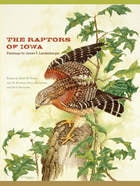
The Raptors of Iowa
James F. Landenberger, Dean M. Roosa, Jon W. Stravers, Bruce Ehresman, Rich Patterson
University of Iowa Press, 2013
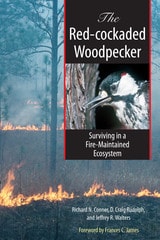
The Red-cockaded Woodpecker
Surviving in a Fire-Maintained EcosystemBy Richard Conner, D. Craig Rudolph, and Jeffrey R. Walters
University of Texas Press, 2001
Though small among its woodpecker relatives, the Red-cockaded Woodpecker poses a huge dilemma for its human neighbors. Uniquely adapted to live in the old-growth pine forests of the southeastern United States, the Red-cockaded Woodpecker has nearly disappeared as the forests have been cleared for agricultural, commercial, and residential uses over the last two centuries. Today, it waits at a crossroads. Scientific management practices could restore the woodpecker's habitat and population, but the imperative to convert old-growth forests to other uses remains.
In this book, three of the leading experts on the Red-cockaded Woodpecker offer a comprehensive overview of all that is currently known about its biology and natural history and about the ecology of the fire-maintained forests it requires for survival. As the most visible endangered species in the Southeast, and the one whose conservation impacts the largest land area, the Red-cockaded Woodpecker holds a compelling interest not only for ornithologists, but also for wildlife managers, foresters, developers, environmentalists, and government officials. For all of these groups, this book will be the essential resource for learning more about the Red-cockaded Woodpecker and ensuring its survival.
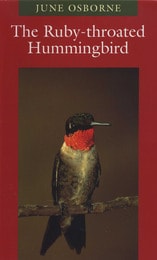
The Ruby-throated Hummingbird
By June Osborne
University of Texas Press, 1998
There is no mistaking a hummingbird. Even people who hardly know a robin from a sparrow recognize that flash of iridescent feathers and the distinctive hovering flight. So popular have "hummers" become that even casual birdwatchers now travel great distances to hummingbird hot spots to see masses of birds in their annual migrations.
In this invitingly written book, June Osborne paints a fully detailed portrait of perhaps the best-known hummingbird in the United States, the ruby-throat. Drawing from her own birdwatching experiences, she offers an "up close and personal" look at a female ruby-throat building her nest and rearing young, as well as an account of a day in the life of a male ruby-throat and stories of the hummers' migrations between their summer breeding grounds in the United States and Canada and their winter homes in Mexico and Central America.
In addition to this life history, Osborne recounts early hummingbird sightings and tells how the bird received its common and scientific names. After an overview of hummingbirds' distinctive ways of feeding, flying, and conserving energy, she offers a detailed description of the ruby-throat that will help you tell females from males, immature birds from adults, and ruby-throats from similar species. Osborne also takes you on a visit to the "Hummer/Bird Celebration!" at Rockport, reviews hummingbird banding programs, and explains how to attract hummingbirds to your yard or apartment balcony.
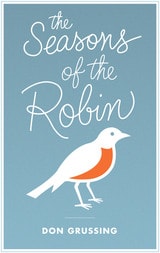
The Seasons of the Robin
By Don Grussing
University of Texas Press, 2009
In a small nest in a large oak tree, the drama begins. A young American Robin breaks open his shell and emerges into a world that will provide the warmth of sunny days and the life-threatening chill of cold, rainy nights; the satisfaction of a full stomach and the danger of sudden predator attacks; and the chance to mature into an adult robin who'll begin the cycle of life all over again come next spring.
In The Seasons of the Robin, Don Grussing tells the uncommon life story of one of the most common birds, the North American Robin. Written as fiction to capture the high drama that goes on unnoticed right outside our windows, the book follows a young male robin through the first year of life. From his perspective, we experience many common episodes of a bird's life—struggling to get out of the egg; awkwardly attempting to master flight; learning to avoid predators; migrating for the first time; returning home; establishing a territory; finding a mate; and beginning the cycle again. This creative approach of presenting natural history through a fictional, yet factually based, story allows us to experience the spine-tingling, nerve-wracking, adrenaline-flowing excitement that is so much a part of the life of every wild thing. As Don Grussing concludes in his preface, "Once you experience the world through a robin's eyes, I hope you'll look at every wild thing with new appreciation and respect for what they accomplish by living."

Travels and Traditions of Waterfowl
H. Albert Hochbaum
University of Minnesota Press, 1967
Travels and Traditions of Waterfowl was first published in 1967. Minnesota Archive Editions uses digital technology to make long-unavailable books once again accessible, and are published unaltered from the original University of Minnesota Press editions.
With the combined talents of naturalist, writer, and artist, H. Albert Hochbaum captures the varying moods of earth and sky and spirit of flight. For many years as director of the Delta Waterfowl Research Station in Manitoba, Canada, he has observed the ways of the waterfowl. In this book he portrays and discusses the flights and habits of the birds he has watched in the vast marsh country—the wild ducks, geese, and swans of North America.
This book is the winner of a publication award of the Wildlife Society. It is recommended by the American Association for the Advancement of Science in its AAAS Science Book List for Young Artists.