Results by title
83 books match the query 'Birth' and 32 start with t

The 1922 General Election Reconsidered
High Politics and the Birth of the Modern British ElectionG.H. Bennett
University of London Press, 2025
The 1922 General Election was more than just another political contest; it was the turning point that shaped the modern British electoral landscape. In The 1922 General Election Reconsidered, G.H. Bennett revisits this pivotal moment with fresh insight, drawing on newly available archival materials and digitized resources to decipher the high-stakes maneuvering and backroom negotiations that defined the campaign. Covering the dramatic collapse of the Lloyd George coalition and the intricate web of party alliances and local political machinations, this book captures the election in unprecedented detail.
Bennett studies the key players and the seismic shifts that emerged in the wake of the vote. He also looks into how informal cooperation between parties blurred political lines and how media speculation shaped public perceptions. By placing the election in both its immediate and long-term context, The 1922 General Election Reconsidered is a compelling reconsideration of an often-overlooked moment in British political history that continues to influence elections a century later.

The Birth of American Tourism
New York, the Hudson Valley, and American Culture, 1790-1835Richard H. Gassan
University of Massachusetts Press, 2008
According to Gassan, the origins of American tourism in the Hudson Valley can be traced to a confluence of historical accidents, including the proximity of the region to the most rapidly growing financial and population center in the country, with its expanding middle class, and the remarkable beauty of the valley itself. But other developments also played a role, from the proliferation of hotels to accommodate tourists, to the construction of an efficient transportation network to get them to their destinations, to the creation of a set of cultural attractions that invested their experience with meaning. In the works of Washington Irving and James Fenimore Cooper and the paintings of Thomas Cole and others of the Hudson River School, travelers in the region encountered the nation's first literary and artistic movements. Tourism thus did more than provide an escape from the routines of everyday urban life; it also helped Americans of the early republic shape a sense of national identity.

The Birth of Capitalism
A 21st Century PerspectiveHenry Heller
Pluto Press, 2011
In the light of the deepening crisis of capitalism and continued non-Western capitalist accumulation, Henry Heller re-examines the debates surrounding the transition from feudalism to capitalism in Europe and elsewhere.
Focusing on arguments about the origin, nature and sustainability of capitalism, Heller offers a new reading of the historical evidence and a critical interrogation of the transition debate. He advances the idea that capitalism must be understood as a political as well as an economic entity. This book breathes new life into the scholarship, taking issue with the excessively economistic approach of Robert Brenner, which has gained increasing support over the last ten years. It concludes that the future of capitalism is more threatened than ever before.
The new insights in this book make it essential reading for engaged students and scholars of political economy and history.

The Birth of Computer Vision
James E. Dobson
University of Minnesota Press, 2023
A revealing genealogy of image-recognition techniques and technologies
Today’s most advanced neural networks and sophisticated image-analysis methods come from 1950s and ’60s Cold War culture—and many biases and ways of understanding the world from that era persist along with them. Aerial surveillance and reconnaissance shaped all of the technologies that we now refer to as computer vision, including facial recognition. The Birth of Computer Vision uncovers these histories and finds connections between the algorithms, people, and politics at the core of automating perception today.
James E. Dobson reveals how new forms of computerized surveillance systems, high-tech policing, and automated decision-making systems have become entangled, functioning together as a new technological apparatus of social control. Tracing the development of a series of important computer-vision algorithms, he uncovers the ideas, worrisome military origins, and lingering goals reproduced within the code and the products based on it, examining how they became linked to one another and repurposed for domestic and commercial uses. Dobson includes analysis of the Shakey Project, which produced the first semi-autonomous robot, and the impact of student protest in the early 1970s at Stanford University, as well as recovering the computer vision–related aspects of Frank Rosenblatt’s Perceptron as the crucial link between machine learning and computer vision.
Motivated by the ongoing use of these major algorithms and methods, The Birth of Computer Vision chronicles the foundations of computer vision and artificial intelligence, its major transformations, and the questionable legacy of its origins.
Cover alt text: Two overlapping circles in cream and violet, with black background. Top is a printed circuit with camera eye; below a person at a 1977 computer.
The Birth of Doubt
Confronting Uncertainty in Early Rabbinic LiteratureMoshe Halbertal
SBL Press, 2020
A systematic attempt to understand the rabbinic world through its approach to confronting uncertainty
In the history of halakhah, the treatment of uncertainty became one of the most complex fields of intense study. In his latest book, Moshe Halbertal focuses on examining the point of origin of the study of uncertainty in early rabbinic literature, including the Mishnah, Tosefta, and halakhic midrashim. Halbertal explores instructions concerning how to behave in situations of uncertainty ranging from matters of ritual purity, to lineage and marriage, to monetary law, and to the laws of forbidden foods. This examination of the rules of uncertainty introduced in early rabbinic literature reveals that these rules were not aimed at avoiding but rather at dwelling in the midst of uncertainty, thus rejecting the sectarian isolationism that sought to minimize a community’s experience of and friction with uncertainty.
Features:
- A thorough investigation of the principles concerning how to behave in cases of uncertainty
- An examination of two distinct modes for coping with uncertainty

The Birth of Emma K.
Zsolt Láng
Seagull Books, 2022
The Birth of Emma K., a collection of twelve short stories rich with magic, introduces English-language readers to one of the most vibrant and original voices in contemporary Hungarian literature. Zsolt Láng’s new collection opens with God sitting on a bench looking over Budapest; later, a Hungarian man who has stumbled into a Romanian music theory class suddenly finds he is able to speak expertly about Hungarian composer Béla Bartok—and in perfect Romanian; and even later, against all odds, the embryo of Emma fights for her future life from within the womb. Drifting between melancholic and witty, in sentences that are winding, subtle, and colloquial, Láng’s stories are deeply rooted in Transylvanian culture and history. Reminiscent of the best writings of Irish modernist masters such as Samuel Beckett and Flann O’Brien, The Birth of Emma K. presents an unforgettable collage of human nature.

The Birth of Energy
Fossil Fuels, Thermodynamics, and the Politics of WorkCara New Daggett
Duke University Press, 2019
The Birth of Head Start
Preschool Education Policies in the Kennedy and Johnson AdministrationsMaris A. Vinovskis
University of Chicago Press, 2005
Policymakers proposing to reform Head Start often invoke its origins to justify their position, but until now no comprehensive political history of the program has existed. Maris A. Vinovskis here provides an in-depth look at the nation's largest and best known—yet politically challenged—early education program. The Birth of Head Start sets the record straight on the program's intended aims, documenting key decisions made during its formative years. While previous accounts of Head Start have neglected the contributions of important participants such as federal education officials and members of Congress, Vinovskis's history is the first to consider the relationship between politics and policymaking and how this interaction has shaped the program. This thorough and incisive book will be essential for policymakers and legislators interested in prekindergarten education and will inform future discussions on early intervention services for disadvantaged children.
The Birth of Insight
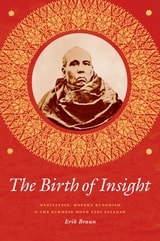
Meditation, Modern Buddhism, and the Burmese Monk Ledi SayadawErik Braun
University of Chicago Press, 2013
Braun focuses on the Burmese monk Ledi Sayadaw, a pivotal architect of modern insight meditation, and explores Ledi’s popularization of the study of crucial Buddhist philosophical texts in the early twentieth century. By promoting the study of such abstruse texts, Braun shows, Ledi was able to standardize and simplify meditation methods and make them widely accessible—in part to protect Buddhism in Burma after the British takeover in 1885. Braun also addresses the question of what really constitutes the “modern” in colonial and postcolonial forms of Buddhism, arguing that the emergence of this type of meditation was caused by precolonial factors in Burmese culture as well as the disruptive forces of the colonial era. Offering a readable narrative of the life and legacy of one of modern Buddhism’s most important figures, The Birth of Insight provides an original account of the development of mass meditation.
The Birth of Purgatory
Jacques Le Goff
University of Chicago Press, 1984
The Birth of Sense
Generative Passivity in Merleau-Ponty’s PhilosophyDon Beith
Ohio University Press, 2018
In The Birth of Sense, Don Beith proposes a new concept of generative passivity, the idea that our organic, psychological, and social activities take time to develop into sense. More than being a limit, passivity marks out the way in which organisms, persons, and interbodily systems take time in order to manifest a coherent sense. Beith situates his argument within contemporary debates about evolution, developmental biology, scientific causal explanations, psychology, postmodernism, social constructivism, and critical race theory. Drawing on empirical studies and phenomenological reflections, Beith argues that in nature, novel meaning emerges prior to any type of constituting activity or deterministic plan.
The Birth of Sense is an original phenomenological investigation in the style of Maurice Merleau-Ponty, and it demonstrates that the French philosopher’s works cohere around the notion that life is radically expressive. While Merleau-Ponty’s early works are widely interpreted as arguing for the primacy of human consciousness, Beith argues that a pivotal redefinition of passivity is already under way here, and extends throughout Merleau-Ponty’s corpus. This work introduces new concepts in contemporary philosophy to interrogate how organic development involves spontaneous expression, how personhood emerges from this bodily growth, and how our interpersonal human life remains rooted in, and often thwarted by, domains of bodily expressivity.

The Birth of Solidarity
The History of the French Welfare StateFrançois Ewald
Duke University Press, 2020

The Birth of Territory
Stuart Elden
University of Chicago Press, 2013
The Birth of Theater from the Spirit of Philosophy
Nietzsche and the Modern DramaDavid Kornhaber
Northwestern University Press, 2016
The Birth of Theory
Andrew Cole
University of Chicago Press, 2014
By uncovering these theoretical filiations across time, The Birth of Theory will not only change the way we read Hegel, but also the way we think about the histories of theory. With chapters that powerfully reanimate the overly familiar topics of ideology, commodity fetishism, and political economy, along with a groundbreaking reinterpretation of Hegel’s famous master/slave dialectic, The Birth of Theory places the disciplines of philosophy, literature, and history in conversation with one another in an unprecedented way. Daring to reconcile the sworn enemies of Hegelianism and Deleuzianism, this timely book will revitalize dialectics for the twenty-first century.
The Birth of Whiteness
Race and the Emergence of United States CinemaEdited by Daniel Leonard Bernardi
Rutgers University Press, 1996
As indelible components of the history of the United States, race and racism have permeated nearly all aspects of life: cultural, economic, political, and social. In this first anthology on race in early cinema, fourteen scholars examine the origins, dynamics, and ramifications of racism and Eurocentrism and the resistance to both during the early years of American motion pictures. Any discussion of racial themes and practices in any arena inevitably begins with the definition of race. Is race an innate and biologically determined "essence" or is it a culturally constructed category? Is the question irrelevant? Perhaps race exists as an ever-changing historical and social formation that, regardless of any standard definition, involves exploitation, degradation, and struggle. In his introduction, Daniel Bernardi writes that "early cinema has been a clear partner in the hegemonic struggle over the meaning of race" and that it was steadfastly aligned with a Eurocentric world view at the expense of those who didn't count as white.
The contributors to this work tackle these problems and address such subjects as biological determinism, miscegenation, Manifest Destiny, assimilation, and nativism and their impact on early cinema. Analyses of The Birth of a Nation, Romona, Nanook of the North and Madame Butterfly and the directorial styles of D. W. Griffith, Oscar Micheaux, and Edwin Porter are included in the volume.
The Birth of the Archive
A History of KnowledgeMarkus Friedrich, translated by John Noël Dillon
University of Michigan Press, 2018
Friedrich provides an essential background to the history of archives over the centuries and enriches the story of their evolution with chapters on key sociocultural aspects of European archival culture. He discusses their meaning and symbolism in European thought, early modern conceptions of the archive’s function, and questions of access and usability. Exploring the close, often vexed relationship between archives and political power, Friedrich illustrates the vulnerability of archives to political upheaval and war. He concludes with an introspective look at how historians used their knowledge of and work with archives to create distinct representations of themselves and their craft.
The Birth of the Archive engages with scholarship in political history, the history of mentalities, conceptions of space, historiography, and the history of everyday life in early modern Europe. It has much to offer for specialists and scholars, while the jargon-free prose of this translation is also accessible to the general reader.
The Birth of the Penitentiary in Latin America
Essays on Criminology, Prison Reform, and Social Control, 1830-1940Edited by Ricardo D. Salvatore and Carlos Aguirre
University of Texas Press, 1996
Opening a new area in Latin American studies, The Birth of the Penitentiary in Latin America showcases the most recent historical outlooks on prison reform and criminology in the Latin American context. The essays in this collection shed new light on the discourse and practice of prison reform, the interpretive shifts induced by the spread of criminological science, and the links between them and competing discourses about class, race, nation, and gender. The book shows how the seemingly clear redemptive purpose of the penitentiary project was eventually contradicted by conflicting views about imprisonment, the pervasiveness of traditional forms of repression and control, and resistance from the lower classes.
The essays are unified by their attempt to view the penitentiary (as well as the variety of representations conveyed by the different reform movements favoring its adoption) as an interpretive moment, revealing of the ideology, class fractures, and contradictory nature of modernity in Latin America. As such, the book should be of interest not only to scholars concerned with criminal justice history, but also to a wide range of readers interested in modernization, social identities, and the discursive articulation of social conflict. The collection also offers an up-to-date sampling of new historical approaches to the study of criminal justice history, illuminates crucial aspects of the Latin American modernization process, and contrasts the Latin American cases with the better known European and North American experiences with prison reform.
The Birth of the Republic, 1763-89
Edmund S. Morgan
University of Chicago Press, 1992
In one remarkable quarter-century, thirteen quarrelsome colonies were transformed into a nation. Edmund S. Morgan's classic account of the Revolutionary period shows how the challenge of British taxation started the Americans on a search for constitutional principles to protect their freedom and eventually led to the Revolution.
Morgan demonstrates that these principles were not abstract doctrines of political theory but grew instead out of the immediate needs and experiences of the colonists. They were held with passionate conviction, and incorporated, finally, into the constitutions of the new American states and of the United States.
Though the basic theme of the book and his assessment of what the Revolution achieved remain the same, Morgan has updated the revised edition of The Birth of the Republic (1977) to include some textual and stylistic changes as well as a substantial revision of the Bibliographic Note.
The Birth of the Republic, 1763-89, Fourth Edition
Edmund S. Morgan
University of Chicago Press, 2012
A Pulitzer Prize winner's classic, compact, authoritative account of the origins of America
In The Birth of the Republic, 1763–89, Edmund S. Morgan shows how the challenge of British taxation started Americans on a search for constitutional principles to protect their freedom, and eventually led to the Revolution. By demonstrating that the founding fathers’ political philosophy was not grounded in theory, but rather grew out of their own immediate needs, Morgan paints a vivid portrait of how the founders’ own experiences shaped their passionate convictions, and these in turn were incorporated into the Constitution and other governmental documents. The Birth of the Republic is the classic account of the beginnings of the American government, and in this fourth edition the original text is supplemented with a new foreword by Joseph J. Ellis and a historiographic essay by Rosemarie Zagarri.This book is the perfect introduction for students or general readers wanting to learn more about the events that led to the American republic.

The Birth of the State
Ancient Egypt, Mesopotamia, India and ChinaPetr Charvát
Karolinum Press, 2013

The Birth of the World as We Know It
Or TeiresiasMeredith Steinbach
Northwestern University Press, 1996
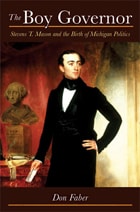
The Boy Governor
Stevens T. Mason and the Birth of Michigan PoliticsDon Faber
University of Michigan Press, 2012
In 1831, Stevens T. Mason was named Secretary of the Michigan Territory at the tender age of 19, two years before he could even vote. The youngest presidential appointee in American history, Mason quickly stamped his persona on Michigan life in large letters. After championing the territory's successful push for statehood without congressional authorization, he would defend his new state's border in open defiance of the country's political elite and then orchestrate its expansion through the annexation of the Upper Peninsula---all before his official election as Michigan's first governor at age 24, the youngest chief executive in any state's history.
The Boy Governor tells the complete story of this dominant political figure in Michigan's early development. Capturing Mason's youthful idealism and visionary accomplishments, including his advocacy for a strong state university and legislating for the creation of the Soo Locks, this biography renders a vivid portrait of Michigan's first governor---his conflicts, his desires, and his sense of patriotism. This book will appeal to anyone with a love of American history and interest in the many, larger-than-life personalities that battled on the political stage during the Jacksonian era.
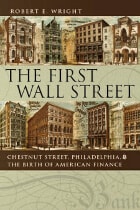
The First Wall Street
Chestnut Street, Philadelphia, and the Birth of American FinanceRobert E. Wright
University of Chicago Press, 2005
The First Wall Street recounts the fascinating history of Chestnut Street and its forgotten role in the birth of American finance. According to Robert E. Wright, Philadelphia, known for its cultivation of liberty and freedom, blossomed into a financial epicenter during the nation's colonial period. The continent's most prodigious minds and talented financiers flocked to Philly in droves, and by the eve of the Revolution, the Quaker City was the most financially sophisticated region in North America. The First Wall Street reveals how the city played a leading role in the financing of the American Revolution and emerged from that titanic struggle with not just the wealth it forged in the crucible of war, but an invaluable amount of human capital as well.
This capital helped make Philadelphia home to the Bank of the United States, the U.S. Mint, an active securities exchange, and several banks and insurance companies—all clustered in or around Chestnut Street. But as the decades passed, financial institutions were lured to New York, and by the late 1820s only the powerful Second Bank of the United States upheld Philadelphia's financial stature. But when Andrew Jackson vetoed its charter, he sealed the fate of Chestnut Street forever—and of Wall Street too.
Finely nuanced and elegantly written, The First Wall Street will appeal to anyone interested in the history of the United States and the origins of its unrivaled economy.
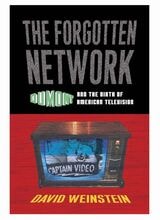
The Forgotten Network
DuMont and the Birth of American TelevisionDavid Weinstein
Temple University Press, 2006
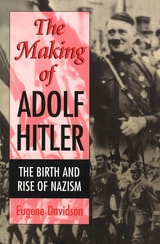
The Making of Adolf Hitler
The Birth and Rise of NazismEugene Davidson
University of Missouri Press, 1997
The harsh Armistice terms of 1918, the short-lived Weimar Republic, Hindenburg's senile vacillations, and behind-the-scene power plays form the backbone of this excellent study covering German history during the first three-and-a-half decades of the century.
The Malthusian Moment
Global Population Growth and the Birth of American EnvironmentalismRobertson, Thomas
Rutgers University Press, 2012
Weaving together the international and the domestic in creative new ways, The Malthusian Moment charts the explosion of Malthusian thinking in the United States from World War I to Earth Day 1970, then traces the just-as-surprising decline in concern beginning in the mid-1970s. In addition to offering an unconventional look at World War II and the Cold War through a balanced study of the environmental movement’s most contentious theory, the book sheds new light on some of the big stories of postwar American life: the rise of consumption, the growth of the federal government, urban and suburban problems, the civil rights and women’s movements, the role of scientists in a democracy, new attitudes about sex and sexuality, and the emergence of the “New Right.”

The Pseudoscience Wars
Immanuel Velikovsky and the Birth of the Modern FringeMichael D. Gordin
University of Chicago Press, 2012
The Renaissance Restored
Paintings Conservation and the Birth of Modern Art History in Nineteenth-Century EuropeMatthew Hayes
J. Paul Getty Trust, The, 2021
Repairing works of art and writing about them—the practices that became art conservation and art history—share a common ancestry. By the nineteenth century the two fields had become inseparably linked. While the art historical scholarship of this period has been widely studied, its restoration practices have received less scrutiny—until now.
This book charts the intersections between art history and conservation in the treatment of Italian Renaissance paintings in nineteenth-century Europe. Initial chapters discuss the restoration of works by Giotto and Titian, framed by the contemporary scholarship of art historians such as Jacob Burckhardt, G. B. Cavalcaselle, and Joseph Crowe that was redefining the earlier age. Subsequent chapters recount how paintings conservation was integrated into museum settings. The narrative uses period texts, unpublished archival materials, and historical photographs in probing how paintings looked at a time when scholars were writing the foundational texts of art history, and how contemporary restorers were negotiating the appearances of these works. The book proposes a model for a new conservation history, object focused yet enriched by consideration of a wider cultural horizon.
The Subject in Art
Portraiture and the Birth of the ModernCatherine M. Soussloff
Duke University Press, 2006
Soussloff combines a historically grounded examination of art and art historical thinking in Vienna with subsequent theories of portraiture and a careful historiography of philosophical and psychoanalytic approaches to human consciousness from Hegel to Sartre and from Freud to Lacan. She chronicles the emergence of a social theory of art among the art historians of the Vienna School, demonstrates how the Expressionist painter Oskar Kokoschka depicted the Jewish subject, and explores the development of pictorialist photography. Reflecting on the implications of the visualized, modern subject for textual and linguistic analyses of subjectivity, Soussloff concludes that the Viennese art historians, photographers, and painters will henceforth have to be recognized as precursors to such better-known theorists of the subject as Sartre, Foucault, and Lacan.

Traveler, Scholar, Political Adventurer
A Transylvanian Baron at the Birth of Albanian Independence: The memoirs of Franz NopcsaFranz Nopcsa
Central European University Press, 2014
Twain, Alcott, and the Birth of the Adolescent Reform Novel
Roberta S. Trites
University of Iowa Press, 2007