Results by title
178 books match the query 'Book' and 121 start with t
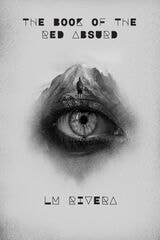
THE BOOK OF THE RED ABSURD
L.M. Rivera
Omnidawn, 2026
LM Rivera’s THE BOOK OF THE RED ABSURD is a poetic autobiography seen through the lens of literature, cinema, theory, history, mythology, and demonology. Presenting themselves in a sort of kinship with academic traditions, these poems move beyond scholarly preciousness to uncover something deeper, stranger, and more honest. This collection is a descent into an absurdist avant-garde performance, immersing the reader in the head of “red” experiences—those with sensations of extremity, despair, amusement, and derision. Here we find a heart laid bare through poetry that aims for the deadliest parts and dances wildly along the way.
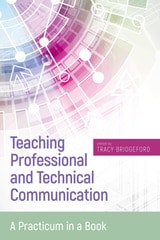
Teaching Professional and Technical Communication
A Practicum in a BookTracy Bridgeford
Utah State University Press, 2018
This practicum features chapters by prominent PTC scholars and teachers on rhetoric, style, ethics, design, usability, genre, and other central concerns of PTC programs. Each chapter includes a scenario or personal narrative of teaching a particular topic, provides a theoretical basis for interpreting the narrative, illustrates the practical aspects of the approach, describes relevant assignments, and presents a list of questions to prompt pedagogical discussions.
Teaching Professional and Technical Communication is not a compendium of best practices but instead offers a practical collection of rich, detailed narratives that show inexperienced PTC instructors how to work most effectively in the classroom.
Contributors: Pam Estes Brewer, Eva Brumberger, Dave Clark, Paul Dombrowski, James M. Dubinsky, Peter S. England, David K. Farkas, Brent Henze, Tharon W. Howard, Dan Jones, Karla Saari Kitalong, Traci Nathans-Kelly, Christine G. Nicometo, Kirk St.Amant
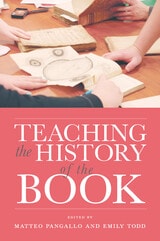
Teaching the History of the Book
Edited by Matteo Pangallo and Emily B. Todd
University of Massachusetts Press, 2023
With original contributions from a diverse range of teachers, scholars, and practitioners in literary studies, history, book arts, library science, language studies, and archives, Teaching the History of the Book is the first collection of its kind dedicated to book history pedagogy. Presenting a variety of methods for teaching book history both as its own subject and as an approach to other material, each chapter describes lessons, courses, and programs centered on the latest and best ways of teaching undergraduate and graduate students.
Expansive and instructive, this volume introduces ways of helping students consider how texts were produced, circulated, and received, with chapters that cover effective ways to organize courses devoted to book history, classroom activities that draw on this subject in other courses, and an overview of selected print and digital tools. Contributors, many of whom are leading figures in the field, utilize their own classroom experiences to bring to life some of the rich possibilities for teaching book history in the twenty-first century.
In addition to the volume editors, contributors include Ryan Cordell, Brigitte Fielder, Barbara Hochman, Leslie Howsam, Matthew Kirschenbaum, Clare Mullaney, Kate Ozment, Leah Price, Jonathan Rose, Jonathan Senchyne, Sarah Wadsworth, and others.
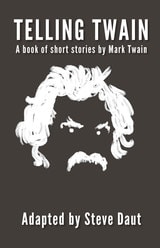
Telling Twain
A book of short stories by Mark TwainSteve Daut
Parkhurst Brothers, Inc., 2019
The Basket Woman
A Book Of Indian TalesMary Austin
University of Nevada Press, 1999
The Book as Instrument
Stéphane Mallarmé, the Artist's Book, and the Transformation of Print CultureAnna Sigrídur Arnar
University of Chicago Press, 2011
Stéphane Mallarmé (1842–98) was a French Symbolist poet, theorist, and teacher whose ideas and legendary salons set the stage for twentieth-century experimentation in poetry, music, theater and art. A canonical figure in the legacy of modernism, Mallarmé was also a lifelong champion of the book as both a literary endeavor and a carefully crafted material object.
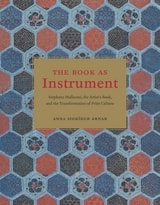
In The Book as Instrument, Anna Sigrídur Arnar explores how this object functioned for Mallarmé and his artistic circle, arguing that the book became a strategic site for encouraging a modern public to actively partake in the creative act, an idea that informed later twentieth-century developments such as conceptual and performance art. Arnar demonstrates that Mallarmé was invested in creating radically empowering reading experiences, and the diverse modalities he proposed for both reading and looking anticipate interactive media prevalent in today’s culture. In describing the world of books, visual culture, and mass media of the late nineteenth century, Arnar touches upon an array of themes that continues to preoccupy us in our own moment, including speculations on the future of the book. Enhanced by gorgeous illustrations, The Book as Instrument is sure to fascinate anyone interested in the ever-vibrant experiment between word and image that makes the page and the multi-sensory pleasures of reading.
The Book of Acts
Charles Raith II
Catholic University of America Press, 2019
The Book of American Windsor Furniture
Styles and TechnologiesJohn Kassay
University of Massachusetts Press, 1998
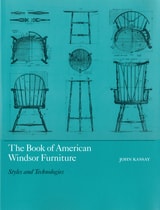
Combining comfort, simplicity, and craftsmanship, Windsor chairs have long been prized by collectors. Introduced from England in the early 1700s, the Windsor style took hold in America first as seating for the well-to-do and later as the favorite chair of the general population. Included in the Windsor family are stools, tables, settees, high chairs, cradles, and candle stands, but the greatest variety is found in the chairs, which range from comb-back to bow-back to step-down versions. Their makers took advantage of the natural properties of different woods for particular components of the chairs, employing hickory, red oak, or ash for bent parts, maple for turnings, and pine for seats.
Kassay meticulously documents all of these features and styles with drawings so accurate and precise that amateur furniture makers can use them as blueprints for creating Windsor reproductions. The drawings are complemented by narrative descriptions, photographs, and a list of measured parts for each of the pieces under discussion.

The Book of Apollonius
Translated by Raymond L. Grismer and Elizabeth Atkins
University of Minnesota Press, 1936
The Book of Apollonius was first published in 1936. Minnesota Archive Editions uses digital technology to make long-unavailable books once again accessible, and are published unaltered from the original University of Minnesota Press editions.
No other English translation of this famous thirteenth-century Spanish narrative poem is available, in either poetry or prose. The present translators have put it into a form that reproduces most faithfully the quaint and naïve quality of the original Libro de Apolonio, the story of which appears in Book Eight of John Gower's Confessio Amantis and in Shakespeare's Pericles.
The reader who is not a specialist in medieval or Spanish literature will find here a lush uncensored tale of mad adventure. If he will give himself up to the spell of its child-like spirit, he will find himself led on through such "faery lands forlorn" as the untrammeled imagination has immemorially loved to create. The story parades before him storms, shipwrecks, kidnappings, pirates, supposed deaths, miraculous escapes and survivals. Beginning in a theme that runs through dramatic literature from Oedipus Rex through The Cenci to The Barretts of Wimpole Street,the plot reveals the misfortunes that furiously pursue Apollonius, king of Tyre, after he tries to woo the daughter of King Antiochus away from her father. Forced to flee for his life, Apollonius plunges from adventure to adventure, until incredible reunions and transports of joy bring the tale to a conventional happy ending.
The translators' Introduction gives an account of the use of the Apollonius material in Old French, Provençal, Anglo-Saxon, German, and other literatures, as well as tracing the history of the poem from its source in a lost Greek romance.
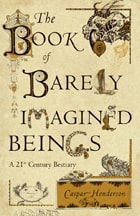
The Book of Barely Imagined Beings
A 21st Century BestiaryCaspar Henderson
University of Chicago Press, 2013
With The Book of Barely Imagined Beings, Caspar Henderson offers readers a fascinating, beautifully produced modern-day menagerie. But whereas medieval bestiaries were often based on folklore and myth, the creatures that abound in Henderson’s book—from the axolotl to the zebrafish—are, with one exception, very much with us, albeit sometimes in depleted numbers. The Book of Barely Imagined Beings transports readers to a world of real creatures that seem as if they should be made up—that are somehow more astonishing than anything we might have imagined. The yeti crab, for example, uses its furry claws to farm the bacteria on which it feeds. The waterbear, meanwhile, is among nature’s “extreme survivors,” able to withstand a week unprotected in outer space. These and other strange and surprising species invite readers to reflect on what we value—or fail to value—and what we might change.
A powerful combination of wit, cutting-edge natural history, and philosophical meditation, The Book of Barely Imagined Beings is an infectious and inspiring celebration of the sheer ingenuity and variety of life in a time of crisis and change.
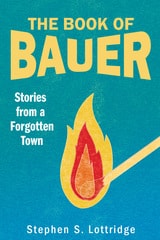
The Book of Bauer
Stories from a Forgotten TownStephen S. Lottridge
University of Utah Press, 2023
Graffiti-covered industrial concrete ruins are all that remain today to remind us of the lives, adventures, and human relationships that once animated Bauer, Utah. Located just south of Tooele, across the Oquirrh Mountains west of the Salt Lake Valley, Bauer was abandoned in 1979 and declared a toxic waste site. The Book of Bauer: Stories from a Forgotten Town brings it back to life, evoking mid-twentieth century family and community in that company town as seen through the eyes of an observant adolescent boy.
Presenting a dramatic snapshot of life in Bauer in narrative autobiographical form, the book recalls the fate of hundreds of derelict mining towns throughout the mountain and sagebrush West. With vivid prose and intimate observation, The Book of Bauer offers an unparalleled memoir of small-town life in Utah and the Great Basin.
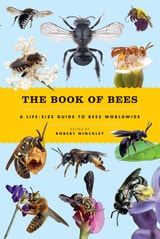
The Book of Bees
A Life-Size Guide to Bees WorldwideEdited by Robert Minckley
University of Chicago Press, 2026
Including more than four hundred species from all seven recognized biological families, a beautiful visual celebration of bee species the world over.
The honeycombs, hives, dancing, and royalty of bee colonies have long captured the public’s imagination, but there’s far more to these insects. There are over 20,000 bee species, but only a handful have colonies approaching the organization of the familiar western honeybee. The typical bee, if there is one, is solitary. It nests in the ground or a stem and has seven to fifteen offspring that develop and emerge the following year, long after their mother has died. These solitary species vary tremendously in the flowers they visit, how they collect pollen and nectar, the architecture of their nests, and how males strategize to find mates. Furthermore, another 17% of all bee species are well-armored parasites, often with striking colors and an array of tactics for attacking other bees.
Bees’ keystone contribution, as pollinators, to the human food supply and to the proper function of ecosystems far exceeds their numbers. From the emerald-green dilemma orchid bee to the spined leafcutter cuckoo, The Book of Bees celebrates bee species worldwide, highlighting a broad range of their diversity to illustrate how different they are in behavior, life history, and interactions with flowers and humans. Each entry includes a distribution map, a table of essential information, a section on related species, and a description of the species’ importance in terms of taxonomy, rarity, behavior, and scientific significance. Striking photos show the bees at their actual size and are also enlarged to showcase intricate details.
This wide-ranging exploration of social, solitary, and parasitic bees offers fascinating insights into their remarkable lives, fostering greater appreciation of their ecological importance and the need for their conservation.

The Book of Beetles, Second Edition
A Life-Size Guide to Six Hundred of Nature’s GemsEdited by Patrice Bouchard and Arthur V. Evans
University of Chicago Press, 2026
An up-to-date, exquisitely illustrated guide to six hundred of the world’s beguiling beetles.
When renowned British geneticist J. B. S. Haldane was asked what could be inferred about God from a study of his works, Haldane replied, “An inordinate fondness for beetles.” With more than 440,000 known species, and scientific estimates that millions more have yet to be identified, their abundance is indisputable, as is their variety. They range from the delightful summer firefly to the one-hundred-gram Goliath beetle. Beetles offer a dazzling array of shapes, sizes, and colors that entice scientists and collectors across the globe.
In a new updated edition, The Book of Beetles celebrates the beauty and diversity of this marvelous group of insects. The book includes six hundred significant beetle species, and each entry features a distribution map, basic biology, feeding habits, and information on cultural and economic significance. The beetles appear both at their actual size and enlarged to show details, such as the sextet of spots that distinguish the six-spotted tiger beetle or the jagged ridges of the mandibles on the giant jawed sawyer beetle. With updates to the common names, distribution, classification, or photographs for nearly five hundred entries, this edition offers the latest science and accessibly written, descriptive text that will appeal to researchers and armchair coleopterists alike.
The humble beetle continues to grow in popularity, taking center stage in biodiversity studies, sustainable agriculture programs, and even the dining rooms of adventurous and eco-conscious chefs. The Book of Beetles is the authoritative reference on these remarkably adaptable and beautiful creatures.
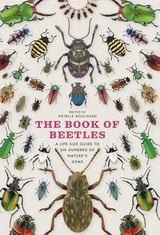
The Book of Beetles
A Life-Size Guide to Six Hundred of Nature's GemsPatrice Bouchard
University of Chicago Press, 2014
The Book of Beetles celebrates the beauty and diversity of this marvelous insect. Six hundred significant beetle species are covered, with each entry featuring a distribution map, basic biology, conservation status, and information on cultural and economic significance. Full-color photos show the beetles both at their actual size and enlarged to show details, such as the sextet of spots that distinguish the six-spotted tiger beetle or the jagged ridges of the giant-jawed sawyer beetle. Based in the most up-to-date science and accessibly written, the descriptive text will appeal to researchers and armchair coleopterists alike.
The humble beetle continues to grow in popularity, taking center stage in biodiversity studies, sustainable agriculture programs, and even the dining rooms of adventurous and eco-conscious chefs. The Book of Beetles is certain to become the authoritative reference on these remarkably adaptable and beautiful creatures.
The Book of Before and After
The Liturgy of the Hours of the Church of the EastAndrew Younan
Catholic University of America Press, 2025
The Book of Casey Adair
Ken Harvey
University of Wisconsin Press, 2021
Three years later Casey is an educator in Boston, trying to balance finding his voice as an AIDS activist, dealing with an intolerant headmaster, and rebuilding a relationship with his daughter. As dear friends fall ill to the virus, he struggles to understand how his many identities—father, teacher, caretaker, dissident, lover, husband—can coexist. In a world that asks so much of us, what is our responsibility to others and ourselves?
The Book of Caterpillars
A Life-Size Guide to Six Hundred Species from around the WorldEdited by David G. James
University of Chicago Press, 2017
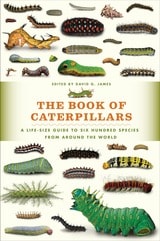
The Book of Caterpillars unveils the mysteries of six hundred species from around the world, introducing readers to the complexity and beauty of these underappreciated insects. With the advent of high-quality digital macrophotography, the world of caterpillars is finally opening up. The book presents a wealth of stunning imagery that showcases the astonishing diversity of caterpillar design, structure, coloration, and patterning. Each entry also features a two-tone engraving of the adult specimen, emphasizing the wing patterns and shades, as well as a population distribution map and table of essential information that includes their habitat, typical host plants, and conservation status. Throughout the book are fascinating facts that will enthrall expert entomologists and curious collectors alike.
A visually rich and scientifically accurate guide to six hundred of the world’s most peculiar caterpillars, this volume presents readers with a rare, detailed look at these intriguing forms of insect life.
The Book of Commentary / Unquiet Garden of the Soul
Alexander Kluge
Seagull Books, 2023
The Book of Commentary / Unquiet Garden of the Soul confronts the reader with questions of existential meaning, questions rendered all the more potent by the backdrop of the Coronavirus pandemic: How fragile are we as human beings? How fragile are our societies? What is a “self,” an “I,” a “community”? How are we to orient ourselves? And what, if any, role does commentary play? In a fashion that will be familiar to longtime admirers of Alexander Kluge, the book stretches both back in time to the medieval glossators of Bologna and forward into interstellar space with imagined travel to the moon Europa. Kluge’s characteristic brief, vignette-like prose passages are interspersed with images from his own film work and QR codes, forming a highly engaging, thoroughly contemporary read.
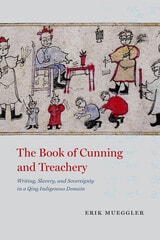
The Book of Cunning and Treachery
Writing, Slavery, and Sovereignty in a Qing Indigenous DomainErik Mueggler
University of Chicago Press, 2027
An ethnographic history of one of the dozens of indigenous domains that occupied China’s border regions during the Qing dynasty and before.
Erik Mueggler’s The Book of Cunning and Treachery is an ethnographic history of a chiefly household that ruled one of the many indigenous domains scattered through upland southwest China during the late Ming and Qing dynasties. The imperial colonization of this region proceeded by way of defeating indigenous polities and absorbing them into a system of indirect governance. In this system, indigenous chieftains inherited power over multiethnic domains, subject to ratification by the imperial court. Mueggler tracks the history of two crucial yet unexamined archives pertaining to this household—a trove of Chinese-language legal, military, and administrative documents, and hundreds of ritual manuals, histories, and morality books written in the indigenous Né script—to show how the chiefly house reproduced itself through these languages, each with its own forms of ritual, recitation, and inscription.
As Mueggler demonstrates, through different forms of access to writing in Chinese and Né, male and female chieftains, domestic slaves, enslaved bondsmen, bonded tenants, chiefly concubines, and more existed in a complex ecology of relations. House and domain were governed through a dynamic process in which residents continuously worked out the status hierarchies that animated their relations with one another as well as the relations between the chiefly house and the local administrative system. This groundbreaking book provides a compelling account of the intertwined problems of writing, slavery, and sovereignty, as well as a vivid portrait of the unique form that indigenous jurisdiction took in this era.
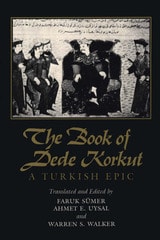
The Book of Dede Korkut
A Turkish EpicTranslated and edited by Faruk Sümer, Ahmet E. Uysal, and Warren S. Walker
University of Texas Press, 1972
One of the oldest surviving pieces of Turkish literature, The Book of Dede Korkut can be traced to tenth-century origins. Now considered the national epic of Turkey, it is the heritage of the ancient Oghuz Turks and was composed as they migrated westward from their homeland in Central Asia to the Middle East, eventually to settle in Anatolia. Who its primary creator was no one knows, the titular bard, Dede Korkut, being more a symbol of Turkish minstrelsy than a verifiable author. The songs and tales of countless minstrels lay behind The Book of Dede Korkut, and in its oral form the epic was undoubtedly subject to frequent improvisation by individual performers. Partly in prose, partly in verse, these legends were sung or chanted in the courts and camps of political and military leaders. Even after they had been recorded in written form, they remained part of an oral tradition.
The present edition is the first complete text in English. The translators provide an excellent introduction to the language and background of the legends as well as a history of Dede Korkut scholarship. These outstanding tales will be of interest to all students of world mythology and folklore.
The Book of Divine Works
Nathaniel M. St. Hildegard of Bingen
Catholic University of America Press, 2018
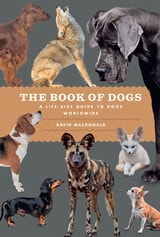
The Book of Dogs
A Life-Size Guide to Canids WorldwideDavid W. Macdonald
University of Chicago Press, 2026
For all dog lovers, a stunningly illustrated and scientifically informed global guide to our beloved canine companions and their wild kin.
Dogs are spectacularly diverse. From the world’s smallest wild canid, the diminutive fennec fox, to the majestic grey wolf, and from the towering great Dane to the tiny Chihuahua, The Book of Dogs celebrates the connections between humans’ best friends, their ancestors, and their wild cousins, offering insights into both wild and domestic canines and profiling every related species in the dog family Canidae as well as the vast variety of domestic dog breeds.
No other book so comprehensively and globally covers the most widespread family of carnivore species, helping to show that humans’ companions are part of a much larger animal world. Leading canid expert and award-winning author David W. Macdonald accessibly explains developments in the study of genetics to reveal the ancestry of modern canids and the astonishing hybridization among them. In addition to showcasing the diversity of our planet’s dogs, the book presents the latest research on the ecology, behavior, and society of wild dog species. These compelling descriptions with beautiful photographs—including life-size snout images of each of the thirty-seven wild canid species and over two hundred global breeds—offer readers of The Book of Dogs a chance to meet and understand our companions and their kin like never before.
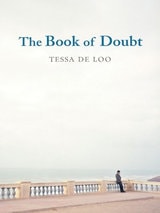
The Book of Doubt
Tessa de Loo
Haus Publishing, 2011
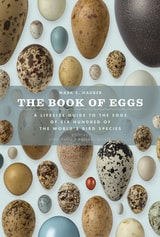
The Book of Eggs
A Life-Size Guide to the Eggs of Six Hundred of the World's Bird SpeciesMark E. Hauber
University of Chicago Press, 2014
The Book of Eggs introduces readers to eggs from six hundred species—some endangered or extinct—from around the world and housed mostly at Chicago’s Field Museum of Natural History. Organized by habitat and taxonomy, the entries include newly commissioned photographs that reproduce each egg in full color and at actual size, as well as distribution maps and drawings and descriptions of the birds and their nests where the eggs are kept warm. Birds’ eggs are some of the most colorful and variable natural products in the wild, and each entry is also accompanied by a brief description that includes evolutionary explanations for the wide variety of colors and patterns, from camouflage designed to protect against predation, to thermoregulatory adaptations, to adjustments for the circumstances of a particular habitat or season. Throughout the book are fascinating facts to pique the curiosity of binocular-toting birdwatchers and budding amateurs alike. Female mallards, for instance, invest more energy to produce larger eggs when faced with the genetic windfall of an attractive mate. Some seabirds, like the cliff-dwelling guillemot, have adapted to produce long, pointed eggs, whose uneven weight distribution prevents them from rolling off rocky ledges into the sea.
A visually stunning and scientifically engaging guide to six hundred of the most intriguing eggs, from the pea-sized progeny of the smallest of hummingbirds to the eggs of the largest living bird, the ostrich, which can weigh up to five pounds, The Book of Eggs offers readers a rare, up-close look at these remarkable forms of animal life.
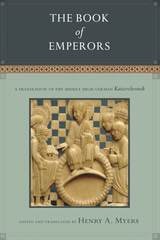
The Book of Emperors
A Translation of the Middle High German KaiserchronikHenry A. Myers
West Virginia University Press, 2013
The Kaiserchronik (c.1152–1165) is the first verse chronicle to have been written in a language other than Latin. This story recounts the exploits of the Roman, Byzantine, Carolingian, and Holy Roman kings and rulers, from the establishment of Rome to the start of the Second Crusade. As an early example of popular history, it was written for a non-monastic audience who would have preferred to read, or may only have been able to read, in German. As a rhymed chronicle, its combined use of the styles of language found within a vernacular epic and a factual treaty was a German innovation. The Book of Emperors is the first complete translation of the Kaiserchronik from Middle High German to English. It is a rich resource not only for medieval German scholars and students, but also for those working in early cultural studies. It brings together an understanding of the conception of kingship in the German Middle Ages, from the relationship between emperor and king, to the moral, theological, and legal foundations of claims and legitimacy and the medieval epistemological approaches to historiography. This translation includes a substantial introduction that discusses the historical and philological context of the work, as well as the themes of power and kingship. Each chapter begins with a brief introduction that distinguishes historical truths from the epic fiction found within the original text.
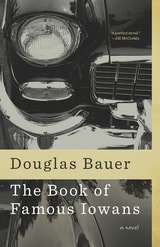
The Book of Famous Iowans
A NovelDouglas Bauer
University of Iowa Press, 2014
But mostly what Will summons up in his intimate remembrance are those few catastrophic days in early June when he was “three months shy of twelve,” more than a decade after his parents have married and returned to the Vaughns’ home place, where Lewis farms his family’s land. For it is during those days that Leanne’s affair with a local man named Bobby Markum becomes known—first to Lewis and then, in a fiercely dramatic public confrontation, to young Will, to his beloved Grandmother Vaughn, and by nightfall to all the citizens of the town. The knowledge of such scandal, in so small a place, sets off a series of highly charged reactions, vivid consequences that surely determine the fates of every member of this unforgettable family.
A tale of memory and hero worship and the restless pulse of longing, The Book of Famous Iowans examines those forces that define not only a state made up of a physical geography, but more important, those states of the wholly human spirit.
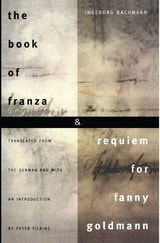
The Book of Franza and Requiem for Fanny Goldmann
Ingeborg Bachmann, translated from the German by Peter Filkins
Northwestern University Press, 2010
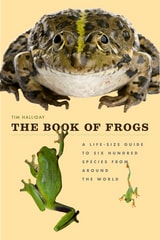
The Book of Frogs
A Life-Size Guide to Six Hundred Species from around the WorldTim Halliday
University of Chicago Press, 2015
The Book of Frogs commemorates the diversity and magnificence of all of these creatures, and many more. Six hundred of nature’s most fascinating frog species are displayed, with each entry including a distribution map, sketches of the frogs, species identification, natural history, and conservation status. Life-size color photos show the frogs at their actual size—including the colossal seven-pound Goliath Frog. Accessibly written by expert Tim Halliday and containing the most up-to-date information, The Book of Frogs will captivate both veteran researchers and amateur herpetologists.
As frogs increasingly make headlines for their troubling worldwide decline, the importance of these fascinating creatures to their ecosystems remains underappreciated. The Book of Frogs brings readers face to face with six hundred astonishingly unique and irreplaceable species that display a diverse array of adaptations to habitats that are under threat of destruction throughout the world.
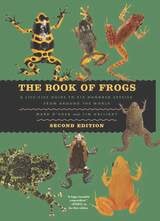
The Book of Frogs
A Life-Size Guide to Six Hundred Species from around the World, Second EditionMark O'Shea and Tim Halliday
University of Chicago Press, 2025
With almost nine thousand known species, frogs display a stunning array of forms and behaviors. A single gram of the toxin produced by the skin of the Golden Poison Frog can kill one hundred thousand people. Male Darwin’s Frogs carry their tadpoles in their vocal sacs for sixty days before coughing them out into the world. And the Wood Frogs of North America freeze every winter, reanimating in the spring.
The Book of Frogs documents the diversity and magnificence of all these anurans and many more. Readers meet six hundred of nature’s most fascinating frogs, with each entry including a distribution map, illustrations, species identification, natural history, and conservation status. Color photos show the frogs at their actual size—from Papua New Guinea’s diminutive Paedophryne amauensis, smaller than a coin, to Cameroon’s colossal Goliath Frog, heavier than some dogs. Written by experts Mark O’Shea and Tim Halliday and containing updated information on one hundred species and nearly twenty new entries, this revised edition will enthrall both veteran researchers and amateur herpetologists.
As frogs increasingly make headlines for their troubling worldwide decline, The Book of Frogs brings readers face to face with six hundred astonishingly unique and irreplaceable species that display a diverse array of adaptations to habitats that are ever changing.
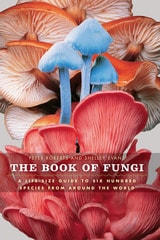
The Book of Fungi
A Life-Size Guide to Six Hundred Species from around the WorldPeter Roberts and Shelley Evans
University of Chicago Press, 2011
Colorful, mysterious, and often fantastically shaped, fungi have been a source of wonder and fascination since the earliest hunter-gatherers first foraged for them. Today there are few, if any, places on Earth where fungi have not found themselves a home. And these highly specialized organisms are an indispensable part of the great chain of life. They not only partner in symbiotic relationships with over ninety percent of the world’s trees and flowering plant species, they also recycle and create humus, the fertile soil from which such flora receive their nutrition. Some fungi are parasites or saprotrophs; many are poisonous and, yes, hallucinogenic; others possess life-enhancing properties that can be tapped for pharmaceutical products; while a delicious few are prized by epicureans and gourmands worldwide.
In this lavishly illustrated volume, six hundred fungi from around the globe get their full due. Each species here is reproduced at its actual size, in full color, and is accompanied by a scientific explanation of its distribution, habitat, association, abundance, growth form, spore color, and edibility. Location maps give at-a-glance indications of each species’ known global distribution, and specially commissioned engravings show different fruitbody forms and provide the vital statistics of height and diameter. With information on the characteristics, distinguishing features, and occasionally bizarre habits of these fungi, readers will find in this book the common and the conspicuous, the unfamiliar and the odd. There is a fungal predator, for instance, that hunts its prey with lassos, and several that set traps, including one that entices sows by releasing the pheromones of a wild boar.
Mushrooms, morels, puffballs, toadstools, truffles, chanterelles—fungi from habitats spanning the poles and the tropics, from the highest mountains to our own backyards—are all on display in this definitive work.

The Book of Hours of the Armenian Church Zamagirk
English Translation, Contexts and PerspectivesMichael Daniel Findikyan
Catholic University of America Press, 2027
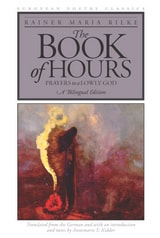
The Book of Hours
Prayers to a Lowly GodRainer Maria Rilke
Northwestern University Press, 2001
Rilke penned The Book of Hours between 1899 and 1903 in three parts. Readers and experts alike consider the collection among Rilke's most important and enduring works.
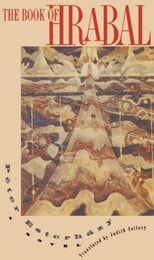
The Book of Hrabal
Peter Esterhazy, translated from the Czech by Judith Sollosy
Northwestern University Press, 1994
Named a New York Times Notable Book of 1994
Winner of 1995 The New York Times Review Notable Books
An elaborate, elegant homage to the great Czech storyteller Bohumil Hrabal (author of Closely Watched Trains), The Book of Hrabal is also a farewell to the years of communism in Eastern Europe and a glowing paean to the mixed blessings of domestic life. Anna, blues-singing housewife and mother of three, addresses her reminiscences and reflections to Hrabal. They swing from domestic matters, to accounts of the injustices suffered by her family during the Stalinist 1950s and the police harassment in subsequent years, to her husband's crazy ideas. He frets over his current project, a book celebrating Hrabal, but seems unable to write it. Meanwhile, two angels, undercover as secret policemen, shadow the household-communicating via walkie-talkie-to prevent Anna from aborting her fourth child. God himself (aka Bruno) enters the scene; he chats with Hrabal, takes saxophone lessons from an irreverent Charlie Parker (unfortunately even this doesn't cure his tone-deaf ear), and tries to play the saxophone to dissuade her from ending the pregnancy.
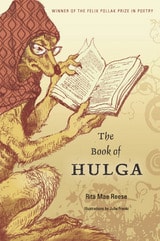
The Book of Hulga
Rita Mae Reese, Illustrations by Julie Franki
University of Wisconsin Press, 2016
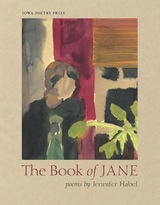
The Book of Jane
Jennifer Habel
University of Iowa Press, 2020
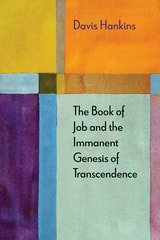
The Book of Job and the Immanent Genesis of Transcendence
Davis Hankins
Northwestern University Press, 2014
Winner of the 2017 Manfred Lautenschlaeger Award for Theological Promise
Job is often understood to be a trite folktale about human limitation in the face of confounding and absolute transcendence. On the contrary, Hankins demonstrates that Job is a drama about the struggle to create a just and viable life in a material world that is ontologically incomplete and consequently open to radical, unpredictable transformation. Job’s abiding legacy for any future materialist theology becomes clear as Hankins analyzes Job’s dramatizations of a transcendence that is not externally opposed to but that emerges from an ontologically incomplete material world.
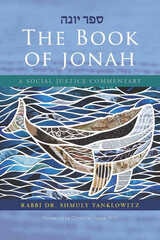
The Book of Jonah
A Social Justice CommentaryRabbi Dr. Shmuly Yanklowitz
Central Conference of American Rabbis, 2020
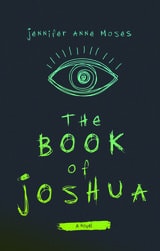
The Book of Joshua
Jennifer Anne Moses
University of Wisconsin Press, 2018
Once a popular long-distance runner, Josh is now flabby, frustrated, and furious about returning to his New Jersey high scho ol to repeat his senior year. Forced to attend meetings with other "underage weirdos," he sinks into his loneliness. But when Josh meets Elizabeth Rinaldi, things begin to change. The only other new student in his class, she has a scar on her forehead, a Southern accent, and an attitude. Sharing a status as outcasts and an aptitude for snark, Josh and Elizabeth help each other escape their pasts.
The Book of Joshua weaves an unforgettable story from family secrets, friendship, faith, love, and redemption. It brings readers deeply into the lives of those who suffer from mental illness, as well as the friends and family affected by it.
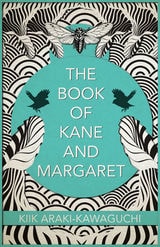
The Book of Kane and Margaret
A NovelKiik Araki-Kawaguchi, Illustrations by Gautam Rangan
University of Alabama Press, 2020
WINNER OF FC2’S RONALD SUKENICK INNOVATIVE FICTION PRIZE
A novel about two teenage lovers who disrupt a World War II internment camp in Arizona
Kane Araki and Margaret Morri are not only the names of teenage lovers living in a World War II Japanese relocation camp. Kane Araki is also the name of a man who, mysteriously, sprouts a pair of black raven’s wings overnight. Margaret Morri is the name of the aging healer who treats embarrassing conditions (smelly feet and excessive flatulence). It’s also the name of an eleven-year-old girl who communes with the devil, trading human teeth for divine wishes.
In The Book of Kane and Margaret, dozens of Kane Arakis and Margaret Morris populate the Canal and Butte camp divisions in Gila River. Amidst their daily rituals and family dramas, they find ways to stage quiet revolutions against a domestic colonial experience. Some internees slip through barbed wire fences to meet for love affairs. Others attempt to smuggle whiskey, pornography, birds, dogs, horses, and unearthly insects into their family barracks. And another seeks a way to submerge the internment camp in Pacific seawater.
The Book of Korean Poetry
Songs of Shilla and KoryoKevin O'Rourke
University of Iowa Press, 2006
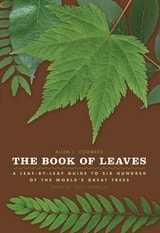
The Book of Leaves
A Leaf-by-Leaf Guide to Six Hundred of the World's Great TreesAllen J. Coombes
University of Chicago Press, 2010
Of all our childhood memories, few are quite as thrilling, or as tactile, as those of climbing trees. Scampering up the rough trunk, spying on the world from the cool green shelter of the canopy, lying on a limb and looking up through the leaves at the summer sun almost made it seem as if we were made for trees, and trees for us.Even in adulthood, trees retain their power, from the refreshing way their waves of green break the monotony of a cityscape to the way their autumn transformations take our breath away.
In this lavishly illustrated volume, the trees that have enriched our lives finally get their full due, through a focus on the humble leaves that serve, in a sense, as their public face. The Book of Leaves offers a visually stunning and scientifically engaging guide to six hundred of the most impressive and beautiful leaves from around the world. Each leaf is reproduced here at its actual size, in full color, and is accompanied by an explanation of the range, distribution, abundance, and habitat of the tree on which it’s found. Brief scientific and historical accounts of each tree and related species include fun-filled facts and anecdotes that broaden its portrait.
The Henry’s Maple, for instance, found in China and named for an Irish doctor who collected leaves there, bears little initial resemblance to the statuesque maples of North America, from its diminutive stature to its unusual trifoliolate leaves. Or the Mediterranean Olive, which has been known to live for more than 1,500 years and whose short, narrow leaves only fall after two or three years, pushed out in stages by the emergence of younger leaves.
From the familiar friends of our backyards to the giants of deep woods, The Book of Leaves brings the forest to life—and to our living rooms—as never before.

The Book of Life
Joseph Campana
Tupelo Press, 2019
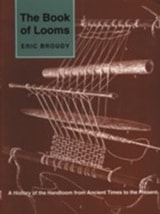
The Book of Looms
A History of the Handloom from Ancient Times to the PresentEric Broudy
University Press of New England, 1993
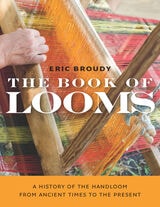
The Book of Looms
A History of the Handloom from Ancient Times to the PresentEric Broudy
Brandeis University Press, 2021
The handloom—often no more than a bundle of sticks and a few lengths of cordage—has been known to almost all cultures for thousands of years. Eric Broudy places the wide variety of handlooms in their historical context. What influenced their development? How did they travel from one geographic area to another? Were they invented independently by different cultures? How have modern cultures improved on ancient weaving skills and methods? Broudy shows how virtually every culture has woven on handlooms. He highlights the incredible technical achievement of early cultures that created magnificent textiles with the crudest of tools and demonstrates that modern technology has done nothing to surpass their skill or inventiveness.
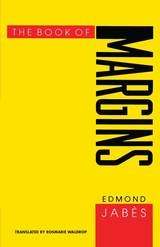
The Book of Margins
Edmond Jabès
University of Chicago Press, 1993
In The Book of Margins, his most critical as well as most accessible book, Jabès is again concerned with the questions that inform all of his work: the nature of writing, of silence, of God and the Book. Jabès considers the work of several of his contemporaries, including Georges Bataille, Maurice Blanchot, Roger Caillois, Paul Celan, Jacques Derrida, Michel Leiris, Emmanuel Lévinas, Pier Paolo Pasolini, and his translator, Rosmarie Waldrop. This book will be important reading for students of Jewish literature, French literature, and literature of the modern and postmodern ages.
Born in Cairo in 1912, Edmond Jabès lived in France from 1956 until his death in 1991. His extensively translated and widely honored works include The Book of Questions and The Book of Shares. Both of these were translated into English by Rosmarie Waldrop, who is also a poet.
Religion and Postmodernism series
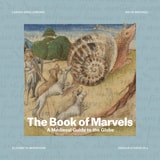
The Book of Marvels
A Medieval Guide to the GlobeLarisa Grollemond
J. Paul Getty Trust, The, 2024
From the classical encyclopedias of Pliny to famous tales such as The Travels of Marco Polo, historical travel writing has had a lasting impact, despite the fact that it was based on a curious mixture of truth, legend, and outright superstition. One foundational medieval source that expands on the ancient idea of the “wonders of the world” is the fifteenth-century French Book of the Marvels of the World, an illustrated guide to the globe filled with oddities, curiosities, and wonders—tales of fantasy and reality intended for the medieval armchair traveler. The fifty-six locales featured in the manuscript are presented in a manner that suggests authority and objectivity but are rife with stereotypes and mischaracterizations, meant to simultaneously instill a sense of wonder and fear in readers.
In The Book of Marvels, the authors explore the tradition of encyclopedias and travel writing, examining the various sources for geographic knowledge in the Middle Ages. They look closely at the manuscript copies of the French text and its complex images, delving into their origins, style, content, and meaning. Ultimately, this volume seeks to unpack how medieval white Christian Europeans saw their world and how the fear of difference—so pervasive in society today—is part of a long tradition stretching back millennia.
This volume is published to accompany an exhibition on view at the J. Paul Getty Museum at the Getty Center from June 11 to September 1, 2024, and at the Morgan Library & Museum from January 24 to May 25, 2025.
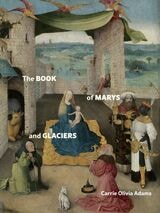
The Book of Marys and Glaciers
Carrie Olivia Adams
Tupelo Press, 2026
The poems collected in The Book of Marys and Glaciers traverse both the psychological and physical landscape to explore the too-muchness and overwhelm that categorizes our demand-driven age. The longest series, “Dust Cover,” is a meditation on deserts of all kinds—geographic, urban, celestial, domestic, and linguistic. The poems themselves enact their own ideas of space and emptiness, building to a work that grain after grain becomes heavy as a whole. In contrast, the title sequence “The Book of Marys and Glaciers” is an expansive work of feminist ecopoetics that asks questions about the role of women as mothers, religious figures, friends, and lovers in a society that rarely makes room for quietude anymore.
Altogether, the poems are controlled, precise investigations and interrogations of the ideas and images we take for granted.
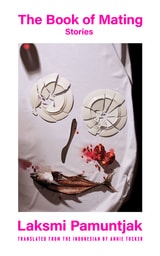
The Book of Mating
StoriesLaksmi Pamuntjak, Annie Tucker
Northwestern University Press, 2027
Winner of the Humanities in Translation Prize
The Book of Mating is a masterfully translated collection of stories in which Indonesian women explore the full spectrum of mating: marital, sexual, and spiritual; forced and free; transcendent, ruinous, and mundane. Laksmi Pamuntjak portrays both the constraints and opportunities facing women caught between the enduring restrictions of local norms and hierarchies and the tantalizing promises of globalized modern life, between internalized myths and social realities.
An experimental melding of Pamuntjak’s creative, journalistic, and activist work, these stories read as urgent dispatches from the Indonesian archipelago and diaspora—and as universal narratives of women’s lived experiences. Annie Tucker’s nuanced translation takes us from the prison island of Buru and the Bogor Botanical Gardens to Paris’s Left Bank, offering a polyphonic testament to the universal fight for women’s autonomy over their bodies and their lives.
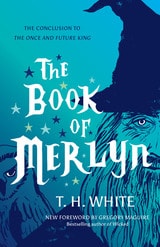
The Book of Merlyn
The Conclusion to The Once and Future KingBy T. H. White, foreword by Gregory Maguire, prologue by Sylvia Townsend Warner, illustrations by Trevor Stubley
University of Texas Press, 2018
This magical account of King Arthur’s last night on earth, rediscovered in a collection of T. H. White’s papers at the Harry Ransom Center at the University of Texas at Austin, spent twenty-six weeks on the New York Times bestseller list following its publication in 1977. While preparing for his final, fatal battle with his bastard son, Mordred, Arthur returns to the Animal Council with Merlyn, where the deliberations center on ways to abolish war. More self-revealing than any other of White’s books, Merlyn shows his mind at work as he agonized over whether to join the fight against Nazi Germany while penning the epic that would become The Once and Future King. The Book of Merlyn has been cited as a major influence by such illustrious writers as Kazuo Ishiguro, J. K. Rowling, Helen Macdonald, Neil Gaiman, and Lev Grossman.
“Arriving from beyond the curve of time and apparently from the grave, The Book of Merlyn stirs its own pages, saying, wait: you didn’t get the whole story. . . . It gives us a final glimpse of those two immortal characters, Wart and Merlyn, up close, slo-mo, with a considered and affectionate scrutiny. The book is an elegiac posting from a master storyteller of the twentieth century. Its reissue in our next century is just as welcome as when it first arrived forty years ago. . . . Certainly the moral questions about the military use of force perplex the world still. . . . The efficacy of treaties, the trading of insults among the potentates of the day, the testing of weapons, the weaponizing of trade—these strategies are still front and center. Rather terrifyingly so. We do well to revisit what that old schoolteacher of children, Merlyn, has been trying to point out to us about power and responsibility.”
—Gregory Maguire, from the foreword
The Book of Merlyn
The Unpublished Conclusion to The Once and Future KingBy T. H. White
University of Texas Press, 1977