Results by title
79 books match the query 'Books' and 32 start with t
Teaching the History of the Book
Edited by Matteo Pangallo and Emily B. Todd
University of Massachusetts Press, 2023
With original contributions from a diverse range of teachers, scholars, and practitioners in literary studies, history, book arts, library science, language studies, and archives, Teaching the History of the Book is the first collection of its kind dedicated to book history pedagogy. Presenting a variety of methods for teaching book history both as its own subject and as an approach to other material, each chapter describes lessons, courses, and programs centered on the latest and best ways of teaching undergraduate and graduate students.
Expansive and instructive, this volume introduces ways of helping students consider how texts were produced, circulated, and received, with chapters that cover effective ways to organize courses devoted to book history, classroom activities that draw on this subject in other courses, and an overview of selected print and digital tools. Contributors, many of whom are leading figures in the field, utilize their own classroom experiences to bring to life some of the rich possibilities for teaching book history in the twenty-first century.
In addition to the volume editors, contributors include Ryan Cordell, Brigitte Fielder, Barbara Hochman, Leslie Howsam, Matthew Kirschenbaum, Clare Mullaney, Kate Ozment, Leah Price, Jonathan Rose, Jonathan Senchyne, Sarah Wadsworth, and others.
Ten Books That Shaped the British Empire
Creating an Imperial CommonsAntionette Burton and Isabel Hofmeyr, eds.
Duke University Press, 2014
Contributors. Tony Ballantyne, Elleke Boehmer, Catherine Hall, Isabel Hofmeyr, Aaron Kamugisha, Marilyn Lake, Charlotte Macdonald, Derek Peterson, Mrinalini Sinha, Tridip Suhrud, André du Toit
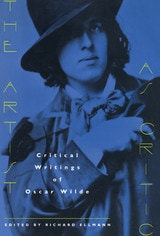
The Artist as Critic
Critical Writings of Oscar WildeOscar Wilde
University of Chicago Press, 1982
Included in Richard Ellmann's impressive collection of Wilde's criticism, The Artist as Critic, is a wide selection of Wilde's book reviews as well as such famous longer works as "The Portrait of Mr. W.H.," "The Soul Man under Socialism," and the four essays which make up Intentions. The Artist as Critic will satisfy any Wilde fan's yearning for an essential reading of his critical work.
"Wilde . . . emerges now as not only brilliant but also revolutionary, one of the great thinkers of dangerous thoughts."—Walter Allen, New York Times Book Review
"The best of Wilde's nonfictional prose can be found in The Artist as Critic."—Michael Dirda, Washington Post Book World
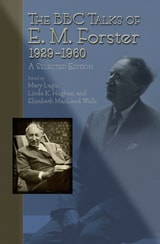
The BBC Talks of E.M. Forster, 1929-1960
A Selected EditionEdited by Mary Lago, Linda K. Hughes & Elizabeth MacLeod Walls
University of Missouri Press, 2008
Spanning three decades and a host of subjects, E. M. Forster’s radio broadcasts for the BBC were a major contribution to British cultural history, yet today they are rarely acknowledged by scholars of his life and work. But in their day they reached a larger audience than his fiction and established him as a household figure not only in Britain but also in the farthest reaches of its Empire.
As a frequent contributor to the BBC, Forster generally adhered to literary topics but did not shy away from social commentary. This book offers a new appreciation of his vitality and public importance through seventy annotated broadcasts that present him not only as a literary critic but also as a political activist, an advocate for India, and a wary yet cooperative ally of a colonialist government during World War II.
Gathering material either not in print or, if recast as essays, widely scattered, The BBC Talks of E. M. Forster reveals aspects of Forster’s intellect that have been given short shrift in previous studies. Nearly half the scripts date from 1941 to 1945 and provide an eyewitness account of war from a distinguished perspective. Forster comments on how the arts gallantly survived the blitz—even taking his listeners to the theater as bombing threats loom—and in other cases protests government interference in private life or the limits on free expression caused by the wartime paper shortage.
In these scripts, Forster casts a cosmopolitan eye on contemporary literature from James Joyce to John Steinbeck and provides early exposure for young writers and composers. He also enlarges the scope of European art by pairing Jane Austen or C. S. Lewis with Indian writers and offers pointed comments on contemporary literati such as Aldous Huxley and T. S. Eliot. Annotations to each piece identify Forster’s references and trace his revisions from script to broadcast, while the book’s introduction places his emergence as a distinctive radio voice within the historical, creative, and institutional contexts of broadcasting in his day.
This significant body of writing, too long overlooked, traces Forster’s evolution from novelist to adroit cultural critic and shows how a man who was never comfortable with machines played an important role in shaping a new medium. The BBC Talks of E. M. Forster situates Forster as one of the most poignant voices of the twentieth century as it offers new insight into a nation transfigured by war.
The Big Question
David Lehman
University of Michigan Press, 1995
The Big Question leads off with a major essay explaining and exploring the concept of postmodernism. The next sections include pieces about poetry and fiction, lives and letters, and criticism and controversy.
Other "big questions" addressed include political correctness, the genre of literary biography, academic life and deconstruction. There is a humorous piece on poetry "slams" and the whole "downtown" poetry scene, a feisty op-ed column (on the deconstruction of the Gettysburg Address), a pair of wickedly satirical poems, as well as a group of exceptional book reviews.
The subjects covered range from Philip Larkin to Philip Roth- from the greatest poetry hoax of the twentieth century (which took place in Australia during World War II) to Charles Dickens's unfinished last novel- and from nineteenthth-century American poetry to the political career of Martin Heidegger.
David Lehman is a poet and author of Signs of the Times: Deconstruction and the Fall of Paul de Man. He is series editor of the celebrated Best American Poetry anthology.
The Book by Design
The Remarkable Story of the World's Greatest InventionEdited by P.J.M. Marks and Stephen Parkin
University of Chicago Press, 2023
For centuries across the world, books have been created as objects of beauty, with bookmakers lavishing great care on their paper, binding materials, illustrations, and lettering.
The Book by Design, featuring an array of books from the British Library's collection, focuses on the sensory experience of holding and reading these objects. Each selection represents a specific moment in the development of what we know today as the book—from scrolls and bound illuminated manuscripts to paperbacks and formatted digital information. These range from the seventh century to the present and include examples from China, Japan, Southeast Asia, the Middle East, Europe, and North America, in addition to a look at book traditions in Africa and Oceania. John James Audubon’s Birds of America, the works of Chaucer, Russian Futurist books, limited editions, historic copies of the Qur’an and the Bible, mass-market paperbacks, and more come together to tell the visual, tactile, artistic, and cultural history of books.
Expert curators and specialists explore these books from the perspective of design and manufacturing, original art photographs offer vivid representations of their textures and materials, and graphics detail the size and specifications of each book. Offering a wide-ranging look at the creation and use of books, illustrated with hundreds of color images, this volume is itself an object of beauty.
The City of God, Books I–VII
Saint Augustine
Catholic University of America Press, 1952

The Civil War in Books
AN ANALYTICAL BIBLIOGRAPHYDavid J. Eicher
University of Illinois Press, 1997
Gary Gallagher's foreword traces the development of Civil War bibliographies and declares that Eicher's annotation exceeds that of any previous comprehensive volume. The Civil War in Books, Gallagher believes, is "precisely the type of guide" that has been needed. The first full-scale, fully-annotated bibliography on the Civil War to appear in more than thirty years, Eicher's The Civil War in Books is a remarkable compendium of the best reading available about the worst conflict ever to strike the United States. The bibliography, the most valuable reference book on the subject since The Civil War Day by Day, will be essential for college and university libraries, dealers in rare and secondhand books, and Civil War buffs.
The Codex and Crafts in Late Antiquity
Georgios Boudalis
Bard Graduate Center, 2018
The Collected Letters of Thomas and Jane Welsh Carlyle
January 1854-June 1855, Volume 29Kenneth J. Fielding, Ian Campbell, Sheila McIntosh, and David Sorensen
Duke University Press, 0
Back volumes are available for purchase. To ensure that you don't miss a single issue, subscribe to The Collected Letters of Thomas and Jane Welsh Carlyle today. For more information, click here.
Volume 29 resumes themes begun in earlier letters: Thomas's flirtatious exchanges with Lady Ashburton, the recent death of his mother, the improvement of his soundproof room, and his struggle to pursue his research for Frederick the Great. Other notable items include Dickens's dedication of Hard Times to Thomas and Thomas's support of G. H. Lewes during the scandal over Lewes's affair with George Eliot. The highlight of the volume is a passionate and humorous letter by Jane, subtitled "Budget of a Femme Incomprise," in which she defends the rising cost of running their house.
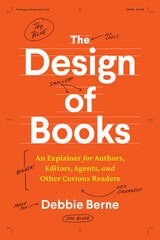
The Design of Books
An Explainer for Authors, Editors, Agents, and Other Curious ReadersDebbie Berne
University of Chicago Press, 2024
Design is central to the appeal, messaging, and usefulness of books, but to most readers, it’s mysterious or even invisible. Through interiors as well as covers, designers provide structure and information that shape the meaning and experience of books. In The Design of Books, Debbie Berne shines a light on the conventions and processes of her profession, revealing both the aesthetic and market-driven decisions designers consider to make books readable and beautiful. In clear, unstuffy language, Berne reveals how books are put together, with discussions of production considerations, typography and fonts, page layouts, use of images and color, special issues for ebooks, and the very face of each book: the cover.
The Design of Books speaks to readers and directly to books’ creators—authors, editors, and other publishing professionals—helping them to become more informed partners in the design of their projects. Berne lays out the practical steps at each stage of the design process, providing insight into who does what when and offering advice for authors on how to be effective advocates for their ideas while also letting go and trusting their manuscripts with teams of professionals. She includes guidance as well for self-publishing authors, including where to find a designer, what to expect from that relationship, and how to art direct your own book.
Throughout, Berne teaches how understanding the whats, hows, and whys of book design heightens our appreciation of these cherished objects and helps everyone involved in the process to create more functional, desirable, and wonderful books.
The Divine Institutes, Books I–VII
Catholic University of America Press, 1964
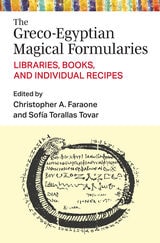
The Greco-Egyptian Magical Formularies
Libraries, Books, and Individual RecipesEdited by Christopher A. Faraone and Sofía Torallas Tovar
University of Michigan Press, 2022
In Greco-Roman Egypt, recipes for magical undertaking, called magical formularies, commonly existed for love potions, curses, attempts to best business rivals—many of the same challenges that modern people might face. In The Greco-Egyptian Magical Formularies: Libraries, Books, and Individual Recipes, volume editors Christopher Faraone and Sofia Torallas Tovar present a series of essays by scholars involved in a multiyear project to reedit and translate the various magical handbooks that were inscribed in the Roman period in the Greek or Egyptian languages. For the first time, the material remains of these papyrus rolls and codices are closely examined, revealing important information about the production of books in Egypt, the scribal culture in which they were produced, and the traffic in single recipes copied from them. Especially important for historians of the book and the Christian Bible are new insights in the historical shift from roll to codex, complicated methods of inscribing the bilingual papyri (in which the Greek script is written left to right and the demotic script right to left), and the new realization that several of the longest extant handbooks are clearly compilations of two or more shorter handbooks, which may have come from different places. The essays also reexamine and rethink the idea that these handbooks came from the personal libraries of practicing magicians or temple scriptoria, in one case going so far as to suggest that two of the handbooks had literary pretensions of a sort and were designed to be read for pleasure rather than for quotidian use in making magical recipes.
The Hours of Marie de Medici
A FacsimileMarie de Medici
Bodleian Library Publishing, 2016
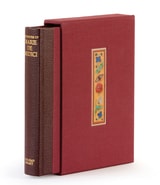
At the turn of the fifteenth century, private devotionals became a specialty of the renowned Ghent–Bruges illuminators. Wealthy patrons who commissioned work from these artists often spared no expense in the presentation of their personal prayer books, or “books of hours,” from detailed decoration to luxurious bindings and embroidery.
This manuscript owes its name to the French queen, Marie de Medici, widow of King Henri IV. The manuscript was painted by an artist known as the David Master, one of the renowned Flemish illuminators of the sixteenth century. Fine architectural interiors, gorgeous landscapes, and detailed city scenes form the subjects of three full-size illuminations and forty-two full-page miniatures. It is one of the finest examples of medieval illumination in a personal prayer book and the most copiously illustrated work of the David Master to survive.
Together with a scholarly introduction that gives an overview of Flemish illumination and examines each of the illustrations in detail, this full-color facsimile limited edition, bound in linen with a leather quarter binding and beautifully presented in a slipcase, faithfully reproduces all 176 leaves of the original manuscript.
The Intimacy of Paper in Early and Nineteenth-Century American Literature
Jonathan Senchyne
University of Massachusetts Press, 2020
The Intimacy of Paper in Early and Nineteenth-Century American Literature reveals that book history and literary studies are mutually constitutive and proposes a new literary periodization based on materiality and paper production. In unpacking this history and connecting it to cultural and literary representations, Senchyne also explores how the textuality of paper has been used to make social and political claims about gender, labor, and race.
The Labor of Literature
Democracy and Literary Culture in Modern ChileJane D. Griffin
University of Massachusetts Press, 2016
By examining alternative literary publications, Griffin recasts the seventeen-year Pinochet dictatorship as a time of editorial experimentation despite widespread cultural oppression and shows how grassroots cultural activism has challenged government-approved corporate publishing models throughout the postdictatorship period. Griffin's work also points to the growing importance of autogestión, or do-it-yourself cultural production, where individuals combine artisanal forms with new technologies to make and share creative work on a global scale.
The Last Bookseller
A Life in the Rare Book TradeGary Goodman
University of Minnesota Press, 2023
A wry, unvarnished chronicle of a career in the rare book trade—now in paperback
When Gary Goodman wandered into a run-down, used-book shop that was going out of business in East St. Paul in 1982, he had no idea the visit would change his life. He walked in as a psychiatric counselor and walked out as the store’s new owner. In The Last Bookseller Goodman describes his sometimes desperate, sometimes hilarious career as a used and rare book dealer in Minnesota—the early struggles, the travels to estate sales and book fairs, the remarkable finds, and the bibliophiles, forgers, book thieves, and book hoarders he met along the way.
Here we meet the infamous St. Paul Book Bandit, Stephen Blumberg, who stole 24,000 rare books worth more than fifty million dollars; John Jenkins, the Texas rare book dealer who (probably) was murdered while standing in the middle of the Colorado River; and the eccentric Melvin McCosh, who filled his dilapidated Lake Minnetonka mansion with half a million books. In 1990, with a couple of partners, Goodman opened St. Croix Antiquarian Books in Stillwater, one of the Twin Cities region’s most venerable bookshops until it closed in 2017. This store became so successful and inspired so many other booksellers to move to town that Richard Booth, founder of the “book town” movement in Hay-on-Wye in Wales, declared Stillwater the First Book Town in North America.
The internet changed the book business forever, and Goodman details how, after 2000, the internet made stores like his obsolete. In the 1990s, the Twin Cities had nearly fifty secondhand bookshops; today, there are fewer than ten. As both a memoir and a history of booksellers and book scouts, criminals and collectors, The Last Bookseller offers an ultimately poignant account of the used and rare book business during its final Golden Age.
The Making of Shakespeare's First Folio
Emma Smith
Bodleian Library Publishing, 2015
The Making of Shakespeare’s First Folio offers the first comprehensive biography of the earliest collected edition of Shakespeare’s plays. In November 1623, the book arrived in the bookshop of the London publisher Edward Blount at the Black Bear. Long in the making, Master William Shakespeare’s Comedies, Histories, and Tragedies—as the First Folio was then known—appeared seven years after Shakespeare’s death. Nearly one thousand pages in length, the collection comprised thirty-six plays, half of which had never been previously published. Emma Smith tells the story of the First Folio’s origins, locating it within the social and political context of Jacobean London and bringing in the latest scholarship on the seventeenth-century book trade.
Extensively illustrated, The Making of Shakespeare’s First Folio is a landmark addition to the copious literature on Shakespeare. It will shed much-needed light on the birth of the First Folio—of which fewer than 250 copies remain—and the birth of Shakespeare’s towering reputation.
The Modern Movement
A TLS CompanionEdited by John Gross
University of Chicago Press, 1993
In The Modern Movement, John Gross has assembled an entertaining selection of 155 articles and reviews about and by the great figures of literary modernism. The focus is on twelve key modernist writers: W. B. Yeats, Ezra Pound, D. H. Lawrence, James Joyce, T. S. Eliot, Wyndham Lewis, Virginia Wolf, W. H. Auden, Marcel Proust, Thomas Mann, Rainer Maria Rilke, and Franz Kafka. Another section gathers ten reviews and articles by Eliot and Woolf on then current writers and writing. In addition, there are more general articles on literary trends and issues by such prominent writers and critics as Anthony Burgess, Wallace Stevens, Anthony Powell, and Erich Heller.
This fascinating array reveals early opinions on what have come to be the classics of modernist literature. Readers will be treated to astute and often surprising opinions of their favorite writers on the most important literature of this century.
The Nature of the Book
Print and Knowledge in the MakingAdrian Johns
University of Chicago Press, 1998
"A compelling exposition of how authors, printers, booksellers and readers competed for power over the printed page. . . . The richness of Mr. Johns's book lies in the splendid detail he has collected to describe the world of books in the first two centuries after the printing press arrived in England."—Alberto Manguel, Washington Times
"[A] mammoth and stimulating account of the place of print in the history of knowledge. . . . Johns has written a tremendously learned primer."—D. Graham Burnett, New Republic
"A detailed, engrossing, and genuinely eye-opening account of the formative stages of the print culture. . . . This is scholarship at its best."—Merle Rubin, Christian Science Monitor
"The most lucid and persuasive account of the new kind of knowledge produced by print. . . . A work to rank alongside McLuhan."—John Sutherland, The Independent
"Entertainingly written. . . . The most comprehensive account available . . . well documented and engaging."—Ian Maclean, Times Literary Supplement
The Odes of Horace
A FacsimileWilliam Morris
Bodleian Library Publishing, 2016
The Power of Words
Anglo-Saxon Studies Presented to Donald G. Scragg on his Seventieth BirthdayANGLO-SAXON STUDIES PRESENTED TO DONALD G. SCRAGG ON HIS SEVENTIETH BIRTHDAYHugh Magennis
West Virginia University Press, 2006
The Power of Words: Anglo-Saxon Studies Presented to Donald G. Scragg on his Seventieth Birthday edited by Jonathan Wilcox and Hugh Magennis will find its place on the same shelf with these and other such valuable tomes in the discipline. This is a complex and carefully edited book, that showcases the work of some of Professor Scragg’s best students and most admiring professional friends. The contents range from several studies in homiletic literature, one of Professor Scragg’s own passions, to other of his pursuits, including editing theory and orthography. These are not, however, derivative essays that recommend a single adjustment in a reading or to a source study; instead, they are studies that do what Professor Scragg himself did: they observe clues to larger realities, and they point the way to a broader comprehension of our discipline and its several methodologies.
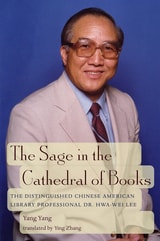
The Sage in the Cathedral of Books
The Distinguished Chinese American Library Professional Dr. Hwa-Wei LeeYang Yang
Ohio University Press, 2016
The biography of Dr. Hwa-Wei Lee, who was awarded the highly prestigious Melvil Dewey Medal by the American Library Association in 2015, will be welcomed by readers interested in knowing not only more about Lee’s personal achievements and contributions in librarianship but also about the rapid changes in the library profession in general. The biography, written by Ms. Yang Yang of China Central Television in Beijing, was first published in Chinese in China in 2011. It was republished in Taiwan with added information in 2014. This English edition, translated by Dr. Ying Zhang of the Universityof California in Irvine, was updated by Lee.
Throughout his childhood and youth, Lee experienced tremendous hardship during the brutal Sino-Japanese War and then the Chinese civil war, described in the first three chapters. After arriving in the United States as a graduate student from Taiwan in 1957, he struggled to realize the American dream by studying hard and working diligently in the field of librarianship for nearly half a century.
The biography explores Lee’s career at major academic libraries, beginning at the University of Pittsburgh to his retirement from Ohio University, including his seven years of library directorship at the Asian Institute of Technology in Bangkok, Thailand, under the sponsorship of the U.S. Agency for International Development. After his first retirement, Lee was invited by OCLC to become a Visiting Distinguished Scholar. From there he was appointed Chief of the Asian Division at the Library of Congress and retired for the second time in 2008.
The biography also highlights Lee’s contributions in international librarianship, especially in the promotion of library cooperation between the United States and China.
The Search for the Codex Cardona
Arnold J. Bauer
Duke University Press, 2009
Bauer first saw the Codex Cardona in 1985 in the Crocker Nuclear Laboratory at the University of California, Davis, where scholars from Stanford and the University of California were attempting to establish its authenticity. Allowed to gently lift a few pages of this ancient treasure, Bauer was hooked. By 1986, the Codex had again disappeared from public view. Bauer’s curiosity about the Codex and its whereabouts led him down many forking paths—from California to Seville and Mexico City, to the Firestone Library in Princeton, to the Getty Museum in Los Angeles and Christie’s in New York—and it brought him in contact with an international cast of curators, agents, charlatans, and erudite book dealers. The Search for the Codex Cardona is a mystery that touches on issues of cultural patrimony, the workings of the rare books and manuscripts trade, the uncertainty of archives and evidence, and the ephemerality of the past and its remains.
The Smell of Books
A Cultural-Historical Study of Olfactory Perception in LiteratureHans J. Rindisbacher
University of Michigan Press, 1993
Rindisbacher examines the works of the German Expressionists and of Baudelaire, Huxley, Rimbaud, Wilde, and Turgenev, as well as Holocaust memoirs and contemporary German books such as Patrick Suskind’s Das Parfum and Christa Wolf’s Storfall. He demonstrates that the sense of smell, which has heretofore occupied a position at the bottom of the sensory hierarchy, plays a consequential role in romantic, modern, and contemporary European and Russian literature.
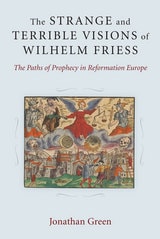
The Strange and Terrible Visions of Wilhelm Friess
The Paths of Prophecy in Reformation EuropeJonathan Green
University of Michigan Press, 2014
Dutch scholars have recognized that Frans Fraet was executed for printing a prognostication by Willem de Vriese, but this prognostication was thought to be lost. A few scholars of sixteenth-century German apocalypticism have briefly noted the prophecies of Wilhelm Friess but have not studied them in depth. The Strange and Terrible Visions of Wilhelm Friess is the first to connect de Vriese and Friess, as well as recognize the prophecy of Wilhelm Friess as an adaptation of a French version of theVademecum of Johannes de Rupescissa, making these pamphlets by far the most widespread source for Rupescissa’s apocalyptic thought in Reformation Germany. The book explains the connection between the first and second prophecies of Wilhelm Friess and discovers the Calvinist context of the second prophecy and its connection to Johann Fischart, one of the most important German writers of the time.
Jonathan Green provides a study of how textual history interacts with print history in early modern pamphlets and proposes a model of how early modern prophecies were created and transmitted. The Strange and Terrible Visions of Wilhelm Friess makes important contributions to the study of early modern German and Dutch literature, apocalypticism and confessionalization during the Reformation, and the history of printing in the sixteenth century.

The Use of Books and Libraries
Harold Russell
University of Minnesota Press, 1933
The Whole Book
Cultural Perspectives on the Medieval MiscellanyStephen G. Nichols and Siegfried Wenzel, Editors
University of Michigan Press, 1996
This group of papers, edited by two well-known scholars of the medieval world, offers both general and particular approaches to the issues surrounding manuscripts produced in the medieval habit of "miscellany," works of seemingly diverse natures bound together into one volume. Julia Boffey investigates how certain poetical miscellanies came to be assembled, for example, while Sylvia Huot suggests that the miscellany had many different sorts of function and significance. Siegfried Wenzel considers a taxonomy of such collections, and A. S. G. Edwards' paper considers Bodleian Selden B.24 as an example of how the notions of canon, authorship, and attribution might come into play. Ann Matter's final chapter offers the notion that what we call "miscellanies" are likely to have an internal logic that we have been trained to miss, but can come to understand. Other contributors are Ralph Hanna III, Georg Knauer, Stephen Nichols, James J. O'Donnell, and Barbara A. Shailor.
Because The Whole Book deals not only with the content of miscellanies but also with contemporary literary principles, this volume will be of interest to a wide circle of literary critics and historians, as well as to students of the survival of literature and of cultural values.
Stephen G. Nichols is James M. Beall Professor of French and Chair of the Department of French, The Johns Hopkins University. Siegfried Wenzel is Professor of English, University of Pennsylvania.
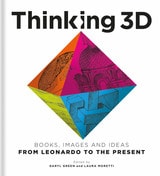
Thinking 3D
Books, Images and Ideas from Leonardo to the PresentEdited by Daryl Green and Laura Moretti
Bodleian Library Publishing, 2019
Through essays on some of the world’s greatest artists and thinkers—such as Leonardo da Vinci, Luca Pacioli, Andreas Vesalius, Johann Kepler, Galileo Galilei, William Hunter, and many more—this book tells the story of how of we learned to communicate three-dimensional forms on the two-dimensional page. It features some of Leonardo da Vinci’s ground-breaking drawings now in the Royal Collections and British Library as well as extraordinary anatomical illustrations, early paper engineering such as volvelles and flaps, beautiful architectural plans, and even views of the moon. With in-depth analysis of more than forty manuscripts and books, Thinking 3D also reveals the impact that developing techniques had on artists and draftsmen throughout time and across space, culminating in the latest innovations in computer software and 3D printing.
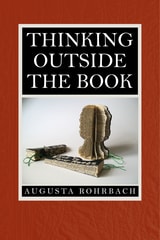
Thinking Outside the Book
Augusta Rohrbach
University of Massachusetts Press, 2014
In Thinking Outside the Book, Augusta Rohrbach works through the increasing convergences between digital humanities and literary studies to explore the meaning and primacy of the book as a literary, material, and cultural artifact. Rohrbach assembles a rather unlikely cohort of nineteenth-century women writers—Jane Johnston Schoolcraft, Sojourner Truth, Hannah Crafts, Augusta Evans, and Mary Chesnut—to consider the publishing culture of their period from the perspective of our current digital age, bringing together scholarly concepts from both print culture and new media studies.
In nineteenth-century America, women from a variety of racial and class affiliations were bombarding the print market with their literary productions, taking advantage of burgeoning rates of literacy and advances in publishing technology. Their work challenged prevailing modes of authorship and continues to do so today. Each chapter of Thinking Outside the Book positions a focal figure as both paradigmatic and problematic within the context of key terms that define the study of the book. In lieu of terms such as literacy, authorship, publication, edition, and editor, Rohrbach develops an alternate typology that includes mediation, memory, history, testimony, and loss. Recognizing that the field spans radio, cinema, television, and the Internet, she draws comparisons to the present day, when Web 2.0 allows writers from varying backgrounds and positions to seek out readers without “gatekeepers” limiting their exposure.
More than a literary history, this book takes up theories of recovery, literacy, authorship, narrative, the book, and new media in connection with race, gender, class, and region.
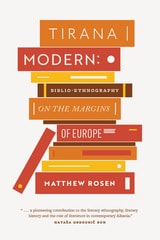
Tirana Modern
Biblio-Ethnography on the Margins of EuropeMatthew Rosen
Vanderbilt University Press, 2022
Drawing on material collected through fieldwork with a community of readers, writers, and translators attached to the independent Albanian publisher Pika pa sipërfaqe (Point without Surface), Tirana Modern provides a tightly focused ethnography of literary culture in Albania that brings into relief the more general dialectic between social imagination and social reality as mediated by reading and literature.
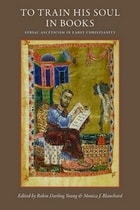
To Train His Soul in Books
Syriac Asceticism in Early ChristianityRobin Darling Young
Catholic University of America Press, 2011