Results by title
57 books match the query 'Business Ethics' and 10 start with t
Technological Turf Wars
A Case Study of the Computer Antivirus IndustryJessica Johnston
Temple University Press, 2008
In Technological Turf Wars, Jessica Johnston analyzes the tensions and political dilemmas that coexist in the interrelationship among science, technology and society. Illustrating how computer security is as concerned with social relationships as it is with technology, Johnston provides an illuminating ethnography that considers corporate culture and the workplace environment of the antivirus industry.
Using a qualitative, interdisciplinary approach, which combines organizational and security studies with critical and social analysis of science and technology, Johnston questions the motivations, contradictions and negotiations of antivirus professionals. She examines the tensions between the service ethics and profit motives—does the industry release viruses to generate demand for antivirus software?—and considers the dynamics within companies by looking at facets such as gender bias and power politics. Technological Turf Wars is an informed, enlightened and entertaining view of how the production of computer security technology is fraught with social issues.
Templeton Plan
21 Steps to Personal Success and Real HappinessSir John Templeton
Templeton Press, 2013
The Bourgeois Virtues
Ethics for an Age of CommerceDeirdre Nansen McCloskey
University of Chicago Press, 2006
McCloskey’s sweeping, charming, and even humorous survey of ethical thought and economic realities—from Plato to Barbara Ehrenreich—overturns every assumption we have about being bourgeois. Can you be virtuous and bourgeois? Do markets improve ethics? Has capitalism made us better as well as richer? Yes, yes, and yes, argues McCloskey, who takes on centuries of capitalism’s critics with her erudition and sheer scope of knowledge. Applying a new tradition of “virtue ethics” to our lives in modern economies, she affirms American capitalism without ignoring its faults and celebrates the bourgeois lives we actually live, without supposing that they must be lives without ethical foundations.
High Noon, Kant, Bill Murray, the modern novel, van Gogh, and of course economics and the economy all come into play in a book that can only be described as a monumental project and a life’s work. The Bourgeois Virtues is nothing less than a dazzling reinterpretation of Western intellectual history, a dead-serious reply to the critics of capitalism—and a surprising page-turner.
The Heller Social Impact Case Collection
Reimagining Capitalism through Case-Based LearningEdited by Carole Carlson, Matthew Kriegsman, and Joel Cutcher-Gershenfeld
Brandeis University Press, 2023
At a time of deep and pervasive global challenges, future CEOs and administrators need to apply management principles to social impact cases. Today, top business schools across the country are meeting the moment, teaching courses about socially responsible investing and debating ways companies can stem the effects of climate change.
The case studies collected here are an invaluable resource for today’s students and tomorrow’s leaders. Chapters address an array of business sectors, including consumer goods, finance, health care, higher education, manufacturing, nongovernmental organizations, social services, and transportation. A teacher’s guide is available online to educators.
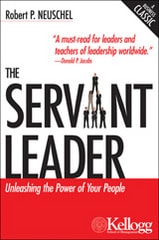
The Servant Leader
Unleashing the Power of Your PeopleRobert P. Neuschel
Northwestern University Press, 2005
He asks: what steps might we take to revitalize the quality and strength of our leadership? He then forcefully and straightforwardly gives an outline of what he believes are the major changes in leadership we must bring about. As a professor of management and strategy, and earlier, as a director and senior partner at a major consulting firm, and as a captain in the U. S. Army, Neuschel observed the best of leadership, and practiced it. He shares his insights with us in The Servant Leader.
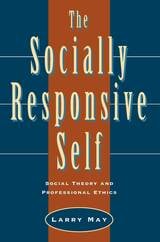
The Socially Responsive Self
Social Theory and Professional EthicsLarry May
University of Chicago Press, 1996
Applying his theory of responsibility to professional ethics, May contends that current methods of professional socialization should be changed so that professionals are not expected to ignore considerations of personal well-being, family, or community. For instance, lawyers should not place client loyalty above concerns for the common good; doctors should not place the physical well-being of patients above their mental and spiritual well-being; scientists and engineers should not feel obliged to blow the whistle on fraud and corruption unless their professional groups protect them from retaliation.
This book should prove provocative reading for philosophers, political scientists, social theorists, professionals of many stripes, and ethicists.
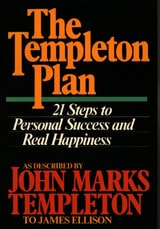
The Templeton Plan
21 Steps to Personal Success and Real HappinessJohn Marks Templeton
Templeton Press, 2011
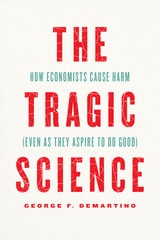
The Tragic Science
How Economists Cause Harm (Even as They Aspire to Do Good)George F. DeMartino
University of Chicago Press, 2022
The practice of economics, as economists will tell you, is a powerful force for good. Economists are the guardians of the world’s economies and financial systems. The applications of economic theory can alleviate poverty, reduce disease, and promote sustainability.
While this narrative has been successfully propagated by economists, it belies a more challenging truth: economic interventions, including those economists deem successful, also cause harm. Sometimes the harm is manageable and short-lived. But just as often the harm is deep, enduring, and even irreparable. And too often the harm falls on those least able to survive it.
In The Tragic Science, George F. DeMartino says what economists have too long repressed: that economists do great harm even as they aspire to do good. Economist-induced harm, DeMartino shows, results in part from economists’ “irreparable ignorance”—from the fact that they know far less than they tend to believe they know—and from disciplinary training that treats the human tolls of economic policies and interventions as simply the costs of promoting social betterment. DeMartino details the complicated nature of economic harm, explores economists’ frequent failure to recognize it, and makes a sobering case for professional humility and for genuine respect for those who stand to be harmed by economists’ practice.
At a moment in history when the economics profession holds enormous power, DeMartino’s work demonstrates the downside of its influence and the responsibility facing those who practice the tragic science.

This Little Kiddy Went to Market
The Corporate Capture of ChildhoodSharon Beder, Wendy Varney, and Richard Gosden
Pluto Press, 2009
This book investigates the way that corporations are strategically shaping children to be under-aged hyperconsumers as well as the submissive employees and uncritical citizens of the future.
Sharon Beder shows how marketers and advertisers are targeting ever younger children in a relentless campaign, transforming children's play into a commercial opportunity and taking advantage of childish anxieties.
Beder investigates the corporate relations and ideals that infiltrate every aspect of our lives. She presents an alarming picture of how a child's social development -- through education, health care and nutrition -- has become an ordered conveyor belt of consumerist conditioning. Focusing on education in particular, Beder explains how businesses are taking control of more and more aspects of schooling, not only for profit but to erode state schooling and promote business values. Similarly, she shows how 'difficult' children are taught from an early age that pharmaceuticals can be used to discipline them or to make them 'happy'.
Trust and Distrust In Organizations
Dilemmas and ApproachesRoderick M. Kramer
Russell Sage Foundation, 2004