Results by title
547 books match the query 'California' and 98 start with t
Taking It to the Streets
The Social Protest Theater of Luis Valdez and Amiri BarakaHarry J. Elam, Jr.
University of Michigan Press, 2001
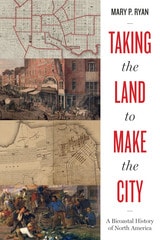
Taking the Land to Make the City
A Bicoastal History of North AmericaBy Mary P. Ryan
University of Texas Press, 2019
The history of the United States is often told as a movement westward, beginning at the Atlantic coast and following farmers across the continent. But cities played an equally important role in the country’s formation. Towns sprung up along the Pacific as well as the Atlantic, as Spaniards and Englishmen took Indian land and converted it into private property. In this reworking of early American history, Mary P. Ryan shows how cities—specifically San Francisco and Baltimore—were essential parties to the creation of the republics of the United States and Mexico.
Baltimore and San Francisco share common roots as early trading centers whose coastal locations immersed them in an international circulation of goods and ideas. Ryan traces their beginnings back to the first human habitation of each area, showing how the juggernaut toward capitalism and nation-building could not commence until Europeans had taken the land for city building. She then recounts how Mexican ayuntamientos and Anglo American city councils pioneered a prescient form of municipal sovereignty that served as both a crucible for democracy and a handmaid of capitalism. Moving into the nineteenth century, Ryan shows how the citizens of Baltimore and San Francisco molded landscape forms associated with the modern city: the gridded downtown, rudimentary streetcar suburbs, and outlying great parks. This history culminates in the era of the Civil War when the economic engines of cities helped forge the East and the West into one nation.
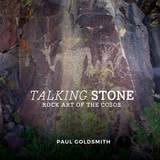
Talking Stone
Rock Art of the CososPaul Goldsmith
University of Utah Press, 2017
Hidden away in the canyons of a highly restricted military base on the edge of the Mojave Desert is the largest concentration of rock art in North America, possibly in the world. Images of animals, shamans, and puzzling abstract forms were pecked and painted on stone over thousands of years by a now long-gone culture. Talking Stone: Rock Art of the Cosos is a multivocal investigation of this art.
Acclaimed cinematographer Paul Goldsmith takes the reader on a visual journey through this limited access area with more than 160 stunning color photographs. The book is structured around Goldsmith’s treks into the remote desert canyons and his meetings with archaeologists, Native Americans, a psychologist, an artist, bow hunters, and the commanding officer in charge of the military base. The result is a visually striking book that gives the viewer a personal and visceral experience of this enigmatic art.
Includes 160 color photographs.
Teach the Free Man
StoriesPeter Nathaniel Malae
Ohio University Press, 2007
The twelve stories in Teach the Free Man mark the impressive debut of Peter Nathaniel Malae. The subject of incarceration thematically links the stories, yet their range extends beyond the prison’s barbed wire and iron bars. Avoiding sensationalism, Malae exposes the heart and soul in those dark, seemingly inaccessible corridors of the human experience.
The stories, often raw and startlingly honest, are distinguished by the colloquial voices of California’s prison inmates, who, despite their physical and cultural isolation, confront dilemmas with which we can all identify: the choice to show courage against peer pressure; the search for individual rights within a bureaucracy; and the desperate desire for honor in the face of great sacrifice. These stories present polished and poetic examples of finding something redemptive in the least among us.
The book’s epigraph by W. H. Auden, from which the book takes its title, exemplifies the spirit of these dynamic stories:
In the deserts of the heart
Let the healing fountain start.
In the prison of his days
Teach the free man how to praise.
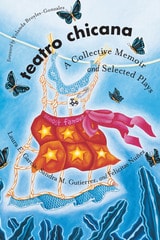
Teatro Chicana
A Collective Memoir and Selected PlaysEdited by Laura E. Garcia, Sandra M. Gutierrez, and Felicitas Nuñez
University of Texas Press, 2008
Winner, Susan Koppelman Award, Best Edited Volume in Women's Studies in Popular and American Culture, 2008
The 1970s and 1980s saw the awakening of social awareness and political activism in Mexican-American communities. In San Diego, a group of Chicana women participated in a political theatre group whose plays addressed social, gender, and political issues of the working class and the Chicano Movement. In this collective memoir, seventeen women who were a part of Teatro de las Chicanas (later known as Teatro Laboral and Teatro Raíces) come together to share why they joined the theatre and how it transformed their lives. Teatro Chicana tells the story of this troupe through chapters featuring the history and present-day story of each of the main actors and writers, as well as excerpts from the group's materials and seven of their original short scripts.
Techniques of Pleasure
BDSM and the Circuits of SexualityMargot Weiss
Duke University Press, 2012
Tehrangeles Dreaming
Intimacy and Imagination in Southern California's Iranian Pop MusicFarzaneh Hemmasi
Duke University Press, 2020
That Constant Coyote
California StoriesGerald W. Haslam
University of Nevada Press, 1990
That Constant Coyote contains twenty-five stories in all, nineteen selections previously published and six new pieces. The stories included in this anthology tell us what life is like in the regions of California and the West where drudgery characterizes each day, where menudo para desayuno or biscuits and gravy replace champagne brunch. Delve into these pages and you will quickly find a set of fascinating characters who inhabit "the other California"—a place Haslam knows well and so deftly describes. Foreword by Ann Ronald. Western Literature Series.
The Accidental Archives of the Royal Chicano Air Force
By Stephanie Sauer
University of Texas Press, 2016
How do you write a history of a group that has been written out of history? In The Accidental Archives of the Royal Chicano Air Force, world-famous archaeologist La Stef and the clandestine Con Sapos Archaeological Collective track down the “facts” about the elusive RCAF, the Rebel Chicano Art Front that, through an understandable mix-up with the Royal Canadian Air Force, became the Royal Chicano Air Force.
La Stef and her fellow archaeologists document the plight and locura que cura of the RCAF, a group renowned for its fleet of adobe airplanes, ongoing subversive performance stance, and key role as poster makers for the United Farm Workers Union during the height of the Chicano civil rights movement. As the Con Sapos team uncovers tensions between fact and fiction in historical consciousness and public memory, they abandon didactic instruction and strive instead to offer a historiography in which various cultural paradigms already intersect seamlessly and on equal ground. That they often fail to navigate the blurred lines between “objective” Western archival sciences and Indigenous/Chicana/o cosmologies reflects the very human predicament of documenting the histories of complicated New Worlds everywhere. Uniquely blending art history, oral history, cultural studies, and anthropology, The Accidental Archives of the Royal Chicano Air Force suspends historical realities and leaps through epochs and between conversations with various historical figures, both dead and alive, to offer readers an intimate experience of RCAF history.

The Anti-Chinese Movement in California
Elmer Clarence Sandmeyer. Foreword and supplementary bibliographies by Roger Daniels
University of Illinois Press, 1991
The Archaeology Of The Donner Party
Donald L Hardesty
University of Nevada Press, 2005
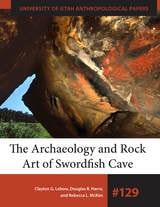
The Archaeology and Rock Art of Swordfish Cave
Clayton G. Lebow
University of Utah Press, 2015
Swordfish Cave is a well-known rock art site located on Vandenberg Air Force Base in south central California. Named for the swordfish painted on its wall, the cave is a sacred Chumash site. It was under threat from various processes and required measures to conserve it. Nearly all of the cave’s interior was excavated to create a rock art viewing area. That effort revealed previously unknown rock art and made it possible to closely examine how early occupants used the space inside the cave. They identified three periods of human use, including an initial occupation around 3,550 years ago, an occupation about 660 years later, and a final Native American occupation that occurred much later, between A.D. 1787 and 1804. The discovery of tools used to make the pictographs linked the art to the two early occupations, pushing back the generally understood antiquity of rock art on California’s Central Coast by more than 2,000 years.
Two aspects make this study unusual: datable materials associated with rock art and complete removal of cave deposits. Well illustrated with photographs, maps, and drawings of both the art itself and the excavations and materials revealed therein, the book presents a rare opportunity to directly link archaeology and rock art and to examine the spatial organization of prehistoric human habitation.
The Archaeology of Refuge and Recourse
Coast Miwok Resilience and Indigenous Hinterlands in Colonial CaliforniaTsim D. Schneider
University of Arizona Press, 2021
Applying theories of place and landscape, social memory, and mobility to the analysis of six archaeological sites, Tsim D. Schneider argues for a new direction in the archaeology of colonialism. This book offers insight about the critical and ongoing relationships Indigenous people maintained to their homelands despite colonization and systematic destruction of their cultural sites.
Schneider is a citizen of the Federated Indians of Graton Rancheria, the sovereign and federally recognized tribe of Coast Miwok and Southern Pomo people whose ancestral homelands and homewaters are the central focus of The Archaeology of Refuge and Recourse. Viewing this colonial narrative from an Indigenous perspective, Schneider focuses on the nearly one quarter of Coast Miwok people who survived the missions and created outlets within and beyond colonial settlements to resist and endure colonialism.
Fleeing these colonial missions and other establishments and taking refuge around the San Francisco Bay Area, Coast Miwok people sought to protect their identities by remaining connected to culturally and historically significant places. Mobility and a sense of place further enabled Coast Miwok people to find recourse and make decisions about their future through selective participation in colonial projects. In this book, Tsim D. Schneider argues that these distancing and familiarizing efforts contribute to the resilience of Coast Miwok communities and a sense of relevance and belonging to stolen lands and waters. Facing death, violence, and the pervading uncertainty of change, Indigenous people of the Marin Peninsula balanced the pull and persistence of place against the unknown possibilities of a dynamic colonial landscape and the forward-thinking required to survive. History, change, and the future can be read in the story of Coast Miwok people.
The Basket Woman
A Book Of Indian TalesMary Austin
University of Nevada Press, 1999
The Body in Bodega Bay
A Nora Barnes and Toby Sandler MysteryBetsy Draine and Michael Hinden
University of Wisconsin Press, 2014
Local tales about Hitchcock’s famous film, and some digging into the region’s past as a Russian outpost, provide Toby and Nora with clues to the existence of a lost masterpiece. Convinced that this forgotten work may hold the key to the murder, Nora and Toby set out to find it. When Nora’s trouble-prone sister Angie arrives, events take a surprising turn, leading to the uncanny realm of angel reading and putting Nora and her family in danger. As Nora and Toby investigate matters both criminal and otherworldly, Nora realizes that some mysteries in life may be too deep to solve.
The Bonds of Inequality
Debt and the Making of the American CityDestin Jenkins
University of Chicago Press, 2021
In this passionate and deeply researched book, Destin Jenkins shows in vivid detail how, beyond the borrowing decisions of American cities and beneath their quotidian infrastructure, there lurks a world of politics and finance that is rarely seen, let alone understood. Focusing on San Francisco, The Bonds of Inequality offers a singular view of the postwar city, one where the dynamics that drove its creation encompassed not only local politicians but also banks, credit rating firms, insurance companies, and the national municipal bond market. Moving between the local and the national, The Bonds of Inequality uncovers how racial inequalities in San Francisco were intrinsically tied to municipal finance arrangements and how these arrangements were central in determining the distribution of resources in the city. By homing in on financing and its imperatives, Jenkins boldly rewrites the history of modern American cities, revealing the hidden strings that bind debt and power, race and inequity, democracy and capitalism.
The Borders Within
Encounters Between Mexico and the U.S.Douglas Monroy
University of Arizona Press, 2008
Douglas Monroy, a noted Mexican American historian, has for many years pondered the historical and cultural intertwinings of the two nations. Here, in beautifully crafted essays, he reflects on some of the many ways in which the citizens of the two countries have misunderstood each other.
Putting himself— and his own quest for understanding—directly into his work, he contemplates the missions of California; the differences between “liberal” and “traditional” societies; the meanings of words like Mexican, Chicano, and Latino; and even the significance of avocados and bathing suits. In thought-provoking chapters, he considers why Native Americans didn’t embrace Catholicism, why NAFTA isn’t working the way it was supposed to, and why Mexicans and their neighbors to the north tell themselves different versions of the same historical events.
In his own thoughtful way, Monroy is an explorer. Rather than trying to conquer new lands, however, his goal is to gain new insights. He wants to comprehend two cultures that are bound to each other without fully recognizing their bonds. Along with Monroy, readers will discover that borders, when we stop and really think about it, are drawn more deeply in our minds than on any maps.
The California Days of Ralph Waldo Emerson
Brian C. Wilson
University of Massachusetts Press, 2022
In the spring of 1871, Ralph Waldo Emerson boarded a train in Concord, Massachusetts, bound for a month-and-a-half-long tour of California—an interlude that became one of the highlights of his life. On their journey across the American West, he and his companions would take in breathtaking vistas in the Rockies and along the Pacific Coast, speak with a young John Muir in the Yosemite Valley, stop off in Salt Lake City for a meeting with Brigham Young, and encounter a diversity of communities and cultures that would challenge their Yankee prejudices.
Based on original research employing newly discovered documents, The California Days of Ralph Waldo Emerson maps the public story of this group’s travels onto the private story of Emerson’s final years, as aphasia set in and increasingly robbed him of his words. Engaging and compelling, this travelogue makes it clear that Emerson was still capable of wonder, surprise, and friendship, debunking the presumed darkness of his last decade.
The Casual
Downplaying Art Since California ConceptualismJacob Stewart-Halevy
University of Chicago Press, 2026
Moving away from making objects, and turning instead to staging scenes, the artists associated with California Conceptualism—including Eleanor Antin, John Baldessari, David Lamelas, Tony Ramos, Ilene Segalove, and William Wegman—behaved indifferently toward their art, denied making it and knowing what it was about, and displayed a lack of concern for its future. Their casual attitude and aesthetic transformed relationships between artists, critics, and viewers, separating those who could recognize these practices from those who could not.
Contemporary artists have continued this trajectory, finding new ways to act casually through their “stance.” In the humanities, this term is often taken to mean the beliefs, values, and intentions of authors, and it has offered a useful way to think about how artists position themselves toward their work and audiences. Jacob Stewart-Halevy builds on recent social theory to show how artists, critics, and other members of the art world wield stance to make sense of artworks and their social circumstances, arguing that, through the rise of conceptual art, stance has come to supplement—and in some cases replace—the aesthetic quality of artworks.
The Changs Next Door to the Díazes
Remapping Race in Suburban CaliforniaWendy Cheng
University of Minnesota Press, 2013
U.S. suburbs are typically imagined to be predominantly white communities, but this is increasingly untrue in many parts of the country. Examining a multiracial suburb that is decidedly nonwhite, Wendy Cheng unpacks questions of how identity—especially racial identity—is shaped by place. She offers an in-depth portrait, enriched by nearly seventy interviews, of the San Gabriel Valley, not far from downtown Los Angeles, where approximately 60 percent of residents are Asian American and more than 30 percent are Latino. At first glance, the cities of the San Gabriel Valley look like stereotypical suburbs, but almost no one who lives there is white.
The Changs Next Door to the Díazes reveals how a distinct culture is being fashioned in, and simultaneously reshaping, an environment of strip malls, multifamily housing, and faux Mediterranean tract homes. Informed by her interviews as well as extensive analysis of three episodic case studies, Cheng argues that people’s daily experiences—in neighborhoods, schools, civic organizations, and public space—deeply influence their racial consciousness. In the San Gabriel Valley, racial ideologies are being reformulated by these encounters. Cheng views everyday landscapes as crucial terrains through which racial hierarchies are learned, instantiated, and transformed. She terms the process “regional racial formation,” through which locally accepted racial orders and hierarchies complicate and often challenge prevailing notions of race.
There is a place-specific state of mind here, Cheng finds. Understanding the processes of racial formation in the San Gabriel Valley in the contemporary moment is important in itself but also has larger value as a model for considering the spatial dimensions of racial formation and the significant demographic shifts taking place across the national landscape.
The City Aroused
Queer Places and Urban Redevelopment in Postwar San FranciscoDamon Scott
University of Texas Press, 2023
A history of San Francisco that studies change in the postwar urban landscape in relation to the city's queer culture.
The City Aroused is a lively history of urban development and its influence on queer political identity in postwar San Francisco. By reconstructing the planning and queer history of waterfront drinking establishments, Damon Scott shows that urban renewal was a catalyst for community organizing among racially diverse operators and patrons with far-reaching implications for the national gay rights movement.
Following the exclusion of suspected homosexuals from the maritime trades in West Coast ports in the early 1950s, seamen’s hangouts in the city came to resemble gay bars. Local officials responded by containing the influx of gay men to a strip of bars on the central waterfront while also making plans to raze and rebuild the area. This practice ended when city redevelopment officials began acquiring land in the early 1960s. Aided by law enforcement, they put these queer social clubs out of business, replacing them with heteronormative, desexualized land uses that served larger postwar urban development goals. Scott argues that this shift from queer containment to displacement aroused a collective response among gay and transgender drinking publics who united in solidarity to secure a place in the rapidly changing urban landscape.
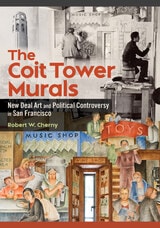
The Coit Tower Murals
New Deal Art and Political Controversy in San FranciscoRobert W. Cherny
University of Illinois Press, 2024
Created in 1934, the Coit Tower murals were sponsored by the Public Works of Art Project (PWAP), the first of the New Deal art programs. Twenty-five master artists and their assistants worked there, most of them in buon fresco, Nearly all of them drew upon the palette and style of Diego Rivera. The project boosted the careers of Victor Arnautoff, Lucien Labaudt, Bernard Zakheim, and others, but Communist symbols in a few murals sparked the first of many national controversies over New Deal art.
Sixty full-color photographs illustrate Robert Cherny’s history of the murals from their conception and completion through their evolution into a beloved San Francisco landmark. Cherny traces and critiques the treatment of the murals by art critics and historians. He also probes the legacies of Coit Tower and the PWAP before surveying San Francisco’s recent controversies over New Deal murals.
An engaging account of an artistic landmark, The Coit Tower Murals tells the full story behind a public art masterpiece.

The Color of Strangers, the Color of Friends
Alan Peshkin
University of Chicago Press, 1991
"Peshkin strikes a hopeful chord, revealing what social encounters among ethnic groups—at their best—can be like in America."—Education Digest
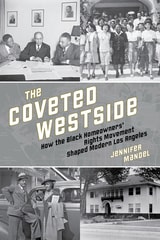
The Coveted Westside
How the Black Homeowners' Rights Movement Shaped Modern Los AngelesJennifer Mandel
University of Nevada Press, 2022
Mandel exposes the enduring struggle between Whites determined to establish their hegemony and create residential heterogeneity in the growing city, and people of color equally determined to obtain full access to the city and the opportunities, including residential, that it offered. Not only does this book document the Black homeowners’ fight against housing discrimination, it shares personal accounts of Blacks’ efforts to settle in the highly desirable Westside of Los Angeles. Mandel explores the White-derived social and legal mechanisms that created this segregated city and the African American-led movement that challenged efforts to block access to fair housing.

The Cow with Ear Tag #1389
Kathryn Gillespie
University of Chicago Press, 2018
The Culture of Public Problems
Drinking-Driving and the Symbolic OrderJoseph R. Gusfield
University of Chicago Press, 1980
"A sophisticated and thoughtful critic. . . . Gusfield argues that the 'myth of the killer drunk' is a creation of the 'public culture of law.' . . . Through its dramatic development and condemnation of the anti-social character of the drinking-driver, the public law strengthens the illusion of moral consensus in American society and celebrates the virtues of a sober and orderly world."—James D. Orcutt, Sociology and Social Research
"Joseph Gusfield denies neither the role of alcohol in highway accidents nor the need to do something about it. His point is that the research we conduct on drinking-driving and the laws we make to inhibit it tells us more about our moral order than about the effects of drinking-driving itself. Many will object to this conclusion, but none can ignore it. Indeed, the book will put many scientific and legal experts on the defensive as they face Gusfield's massive erudition, pointed analysis and criticism, and powerful argumentation. In The Culture of Public Problems, Gusfield presents the experts, and us, with a masterpiece of sociological reasoning."—Barry Schwartz, American Journal of Sociology
This book is truly an outstanding achievement. . . . It is sociology of science, sociology of law, sociology of deviance, and sociology of knowledge. Sociologists generally should find the book of great theoretical interest, and it should stimulate personal reflection on their assumptions about science and the kind of consciousness it creates. They will also find that the book is a delight to read."—William B. Bankston, Social Forces
The Dark Tree
Jazz and the Community Arts in Los AngelesSteven L. Isoardi
Duke University Press, 2023
The Devil's Fruit
Farmworkers, Health, and Environmental JusticeDvera I. Saxton
Rutgers University Press, 2021

The Earps Invade Southern California
Bootlegging Los Angeles, Santa Monica, and the Old Soldiers' HomeDon Chaput
University of North Texas Press, 2020
The End of Eden
Agrarian Spaces and the Rise of the California Social NovelTerry Beers
University of Nevada Press, 2018
Drawing on history and cultural theory, The End of Eden traces the rise of the California social novel, its embrace of the agrarian dream, and its ambivalence about technology and the development it enables. It relies on various cultural conceptions of space, among them, the American Public Land Survey (the source of the “grid” allotments shaping homestead claims), Mexican-era diseños, and Native American traditions that defined a fluid relationship between human beings and the land.
This animation of four California social novels of the late eighteenth and early nineteenth centuries demonstrates how conflicts over space and place signify cultural conflict. It is deeply informed by the author’s understanding of historical land issues. The works include Joaquin Miller’s Unwritten History: Life Amongst the Modocs, Helen Hunt Jackson’s Ramona, Frank Norris’ The Octopus, and Mary Austin’s The Ford.
Miller’s Unwritten History: Life Amongst the Modocs and Jackson’s Ramona examine the tragic but inevitable consequences for native people of making space—inhabited already by Native American and Hispanic populations—safe for Americans who pursue the agrarian dream without regard to its effects upon those who claim prior tenure on the land. Norris’ The Octopus and Austin’s The Ford examine the murkier story of trying to preserve or to reclaim the agrarian dream when confronted by the unchecked materialist interests of American capitalism.
A wide-reaching interdisciplinary approach to various cultural conceptions of space, The End of Eden provides a crucial understanding of the conflicts depicted in social novels that lament the ways in which land is allocated and developed, the ways in which American agrarianism—and its promise of local, sustainable land use—is undermined, and how it applies to contemporary California. In an era where California confronts, yet again, the complicated patterns of land use: fracking, water use and water rights, coastal regulation and management, and agribusiness, this groundbreaking work provides an ever-relevant context.
The Enforcers
How Little-Known Trade Reporters Exposed the Keating Five and Advanced Business JournalismRob Wells with a foreword by David Cay Johnston
University of Illinois Press, 2019
The First Suburban Chinatown
The Remaking of Monterey Park, CaliforniaTimothy P. Fong
Temple University Press, 1994
Monterey Park, California, only eight miles east of downtown Los Angeles, was dubbed by the media as the "First Suburban Chinatown." The city was a predominantly white middle-class bedroom community in the 1970s when large numbers of Chinese immigrants transformed it into a bustling international boomtown. It is now the only city in the United States with a majority Asian American population. Timothy P. Fong examines the demographic, economic, social, and cultural changes taking place there, and the political reactions to the change.
Fong, a former journalist, reports on how pervasive anti-Asian sentiment fueled a series of initiatives intended to strengthen "community control," including a movement to make English the official language. Recounting the internal strife and the beginnings of recovery, Fong explores how race and ethnicity issues are used as political organizing tools and weapons.
In the series Asian American History and Culture, edited by Sucheng Chan, David Palumbo-Liu, Michael Omi, K. Scott Wong, and Linda Trinh Võ.
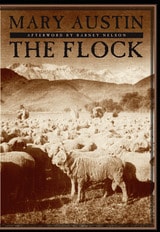
The Flock
Mary Austin
University of Nevada Press, 2001
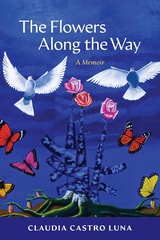
The Flowers Along the Way
A MemoirClaudia Castro Luna
Northwestern University Press, 2026
Passionately demonstrating the dormant trauma of political violence and the redemption waiting beyond it
From El Salvador’s lush countryside to the streets of Oakland, California, a young mother wrestles with the intersecting forces of memory, history, and language in order to chart a new path for herself and her growing family. Fleeing political unrest and civil war violence in El Salvador, fourteen-year-old Claudia Castro Luna arrived in the United States with her family in 1981. Two decades later, holding her two-year-old and pregnant with her second child, she survives a public shooting by hiding behind shrubs in front of her house in Oakland. This event unleashes disorienting and traumatic memories, plunging her into a journey of discovery as she grapples with PTSD, recovers family stories, and begins to make sense of all that was torn asunder within her by the experiences of war and emigration. Beauty, longing, fear, and joy entwine in this powerful story of love, self-determination, and the search for home.
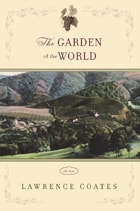
The Garden of the World
Lawrence Coates
University of Nevada Press, 2012
California’s Santa Clara Valley was once home to a vigorous wine industry. The Garden of the World is the tale of a pioneer winemaking family headed by Paul Tourneau, a fiercely ambitious vintner determined to make the finest wines in California. His plans are disrupted by a phylloxera epidemic at the beginning of the twentieth century, the trials of national Prohibition, and the bitter alienation of his older son. Played out against the vividly depicted seasonal rhythms of vineyard life, this is a moving saga of betrayal, loss, and the harsh consequences of unbreakable ambition.
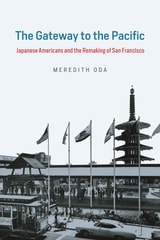
The Gateway to the Pacific
Japanese Americans and the Remaking of San FranciscoMeredith Oda
University of Chicago Press, 2018
Focusing on the development of the Center, Meredith Oda shows how this multilayered story was embedded within a larger story of the changing institutions and ideas that were shaping the city. During these formative decades, Oda argues, San Francisco’s relations with and ideas about Japan were being forged within the intimate, local sites of civic and community life. This shift took many forms, including changes in city leadership, new municipal institutions, and especially transformations in the built environment. Newly friendly relations between Japan and the United States also meant that Japanese Americans found fresh, if highly constrained, job and community prospects just as the city’s African Americans struggled against rising barriers. San Francisco’s story is an inherently local one, but it also a broader story of a city collectively, if not cooperatively, reimagining its place in a global economy.
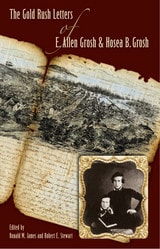
The Gold Rush Letters of E. Allen Grosh and Hosea B. Grosh
Ronald M. James
University of Nevada Press, 2016
The Groshes’ letters are rich in color and important historical details. Generously annotated and with an introduction that provides a context for the brothers’ career and the setting in which they tried to make their fortune, these documents powerfully depict the often harsh realities of Gold Rush life and society.
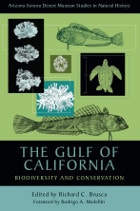
The Gulf of California
Biodiversity and ConservationRichard C. Brusca
University of Arizona Press, 2010
Few places in the world can claim such a diversity of species as the Gulf of California (Sea of Cortez), with its 6,000 recorded animal species estimated to be half the number actually living in its waters. So rich are the Gulf's water that over a half-million tons of seafood are taken from them annually—and this figure does not count the wasted by-catch, which would triple or quadruple that tonnage. This timely book provides a benchmark for understanding the Gulf's extraordinary diversity, how it is threatened, and in what ways it is—or should be—protected.
In spite of its dazzling richness, most of the Gulf's coastline now harbors but a pale shadow of the diversity that existed just a half-century ago. Recommendations based on sound, careful science must guide Mexico in moving forward to protect the Gulf of California.
This edited volume contains contributions by twenty-four Gulf of California experts, from both sides of the U.S.-Mexico border. From the origins of the Gulf to its physical and chemical characteristics, from urgently needed conservation alternatives for fisheries and the entire Gulf ecosystem to information about its invertebrates, fishes, cetaceans, and sea turtles, this thought-provoking book provides new insights and clear paths to achieve sustainable use solidly based on robust science. The interdisciplinary, international cooperation involved in creating this much-needed collection provides a model for achieving success in answering critically important questions about a precious but rapidly disappearing ecological treasure.
The High School
Sports, Spirit, and Citizens, 1903-2024Michael A. Messner
Rutgers University Press, 2025
In The High School, acclaimed sociologist Michael A. Messner reads through 120 years of El Gabilan, the yearbook from his own alma mater, Salinas High School in California, where his father taught and coached. Treating the yearbooks as a historical archive, Messner makes surprising discoveries about the school he thought he knew so well. For example, over fifty years before Title IX, the earliest yearbooks gave equal spotlights to boys’ and girls’ athletics, while the cheerleaders were all boys.
Tracing American life and culture from 1903 to 2024, Messner illuminates shifts in social practices at his high school that reflect broader changes in American culture across the twentieth century. The High School spotlights how the meanings and iconography of certain activities have changed radically over the decades, even as the “sports spirit complex”—involving athletes, cheerleaders, band members, and community boosters—has remained a central part of the high school experience. By exploring evolving sports cultures, socioeconomic conditions, racial demographics, and gender norms, Messner offers a fresh perspective on a defining feature of American teenage life.
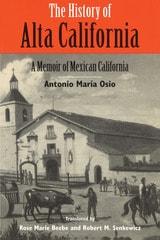
The History of Alta California
A Memoir of Mexican CaliforniaAntonio María Osio, Translated, Edited, and Annotated by Rose Marie Beebe and Robert M. Senkewicz
University of Wisconsin Press, 1996
Osio wrote his History in 1851, conveying with immediacy and detail the years of the U.S.-Mexican War of 1846–1848 and the social upheaval that followed. As he witnesses California’s territorial transition from Mexico to the United States, he recalls with pride the achievements of Mexican California in earlier decades and writes critically of the onset of U.S. influence and imperialism. Unable to endure life as foreigners in their home of twenty-seven years, Osio and his family left Alta California for Mexico in 1852.
Osio’s account predates by a quarter century the better-known reminiscences of Mariano Guadalupe Vallejo and Juan Bautista Alvarado and the memoirs of Californios dictated to Hubert Howe Bancroft’s staff in the 1870s. Editors Rose Marie Beebe and Robert M. Senkewicz have provided an accurate, complete translation of Osio’s original manuscript, and their helpful introduction and notes offer further details of Osio’s life and of society in Alta California.
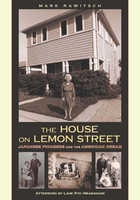
The House on Lemon Street
Japanese Pioneers and the American DreamMark Rawitsch
University Press of Colorado, 2013
Bringing this little-known story to light, The House on Lemon Street details the Haradas' decision to fight for the American dream. Chronicling their experiences from their immigration to the United States through their legal battle over their home, their incarceration during World War II, and their lives after the war, this book tells the story of the family's participation in the struggle for human and civil rights, social justice, property and legal rights, and fair treatment of immigrants in the United States.
The Harada family's quest for acceptance illuminates the deep underpinnings of anti-Asian animus, which set the stage for Executive Order 9066, and recognizes fundamental elements of our nation's anti-immigrant history that continue to shape the American story. It will be worthwhile for anyone interested in the Japanese American experience in the twentieth century, immigration history, public history, and law.
This publication was made possible with the support of Naomi, Kathleen, Ken, and Paul Harada, who donated funds in memory of their father, Harold Shigetaka Harada, honoring his quest for justice and civil rights. Additional support for this publication was also provided, in part, by UCLA's Aratani Endowed Chair as well as Wallace T. Kido, Joel B. Klein, Elizabeth A. Uno, and Rosalind K. Uno.
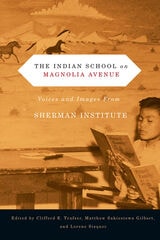
The Indian School on Magnolia Avenue
Voices and Images from Sherman InstituteEdited by Clifford E. Trafzer, Matthew Sakiestewa, and Lorene Sisquoc
Oregon State University Press, 2012
In 1902, the federal government opened Sherman Institute in Riverside, California, to transform American Indian students into productive farmers, carpenters, homemakers, nurses, cooks, and seamstresses. Indian students helped build the school and worked daily at Sherman; teachers provided vocational education and placed them in employment through the Outing Program.
Contributors to The Indian School on Magnolia Avenue have drawn on documents held at the Sherman Indian Museum to explore topics such as the building of Sherman, the school’s Mission architecture, the nursing program, the Special Five-Year Navajo Program, the Sherman cemetery, and a photo essay depicting life at the school.
Despite the fact that Indian boarding schools—with their agenda of cultural genocide— prevented students from speaking their languages, singing their songs, and practicing their religions, most students learned to read, write, and speak English, and most survived to benefit themselves and contribute to the well-being of Indian people.
Scholars and general readers in the fields of Native American studies, history, education, public policy, and historical photography will find
The Indian School on Magnolia Avenue an indispensable volume.
The Kikuchi Diary
Chronicle from an American Concentration CampCharles Kikuchi
University of Illinois Press, 1973
The King of Lighting Fixtures
StoriesDaniel A. Olivas
University of Arizona Press, 2017
The characters here represent all walks of L.A. life—from Satan’s reluctant Craigslist roommate to a young girl coping with trauma at her brother’s wake—and their tales ebb and flow among various styles, including magical realism, social realism, and speculative fiction. Like a jazz album, they glide and bop, tease and illuminate, sadden and hearten as they navigate effortlessly from meta to fabulist, from flash fiction to longer, more complex narratives.
These are literary sketches of a Los Angeles that will surprise, connect, and disrupt readers wherever they may live.
The Korean-American Dream
Portraits of a Successful Immigrant CommunityJames Flanigan
University of Nevada Press, 2018
In The Korean-American Dream, respected and distinguished business journalist James Flanigan uncovers the struggles and contributions of the people who have made Los Angeles the largest Korean city outside of Seoul.
This intimate account illustrates how Korean immigrants have preserved their culture and history as well as adapted to the American culture of E Pluribus Unum, the radical promise of “out of many, one.” Flanigan shows how Los Angeles emerged as a capital of the Asia Pacific region.
At less than 2 million, Korean Americans are a relatively small group compared to new Americans from China, the Philippines, and India. But with energy and drive, they are building landmarks in New York as well as L.A., lobbying for causes in Washington, founding businesses, heading universities and hospitals, and holding public office in all parts of the U.S.
Flanigan’s compelling narrative told largely through personal interviews provides a front-row seat to the economic, business, and cultural developments of the Korean American Community. At a time of spirited debate about immigration, their energy and ambition serve as a ringing reminder of the promise of the American mosaic.
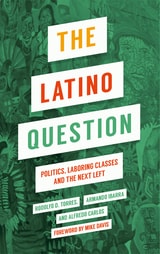
The Latino Question
Politics, Laboring Classes and the Next LeftRodolfo D. Torres
Pluto Press, 2018
In a radical alternative to the dominant orthodoxy in Latino political studies, Rodolfo D. Torres, Armando Ibarra, and Alfredo Carlos emphasize the importance of political economy for understanding Latino politics, culture, and social issues. Written in an accessible style, the authors draw from extensive original research and several critical traditions—including Karl Marx, Antonio Gramsci, and Michel Foucault—to make crucial links between socio-economic and culture-based approaches for understanding the politics of race and ethnicity in capitalist society. Notably, they present front-line evidence of how some Mexican communities across America are not only resisting, but also reinventing and transforming the predominant economic ideas. The Latino Question will be essential for anyone hoping to understand the changes in Latino communities in America today.

The Letters of Mina Harker
Dodie Bellamy; with a new Forward by Dennis Cooper
University of Wisconsin Press, 2004
Bigger-than-life, half goddess, half Bette Davis, Mina sends letter after letter to friends and co-conspirators, holding her reader captive through a display of illusion and longing. Juggling quivering vulnerability on one hand and gossip on the other, Mina spoofs and consumes and spews back up demented reembodiments of trash media and high theory alike. It's all fodder for her ravenous libido and "a messy ambiguous place where pathology meets pleasure." Sensuous and captivating, The Letters of Mina Harker describes one woman's struggles finding the right words to explain her desires and fears without confining herself to one identity.
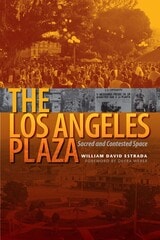
The Los Angeles Plaza
Sacred and Contested SpaceBy William David Estrada
University of Texas Press, 2008
2008 — Gold Award in Californiana – California Book Awards – Commonwealth Club of California
2010 — NACCS Book Award – National Association for Chicana and Chicano Studies
City plazas worldwide are centers of cultural expression and artistic display. They are settings for everyday urban life where daily interactions, economic exchanges, and informal conversations occur, thereby creating a socially meaningful place at the core of a city.
At the heart of historic Los Angeles, the Plaza represents a quintessential public space where real and imagined narratives overlap and provide as many questions as answers about the development of the city and what it means to be an Angeleno. The author, a social and cultural historian who specializes in nineteenth- and early twentieth-century Los Angeles, is well suited to explore the complex history and modern-day relevance of the Los Angeles Plaza. From its indigenous and colonial origins to the present day, Estrada explores the subject from an interdisciplinary and multiethnic perspective, delving into the pages of local newspapers, diaries and letters, and the personal memories of former and present Plaza residents, in order to examine the spatial and social dimensions of the Plaza over an extended period of time.
The author contributes to the growing historiography of Los Angeles by providing a groundbreaking analysis of the original core of the city that covers a long span of time, space, and social relations. He examines the impact of change on the lives of ordinary people in a specific place, and how this change reflects the larger story of the city.
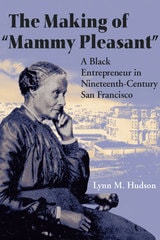
The Making of "Mammy Pleasant"
A Black Entrepreneur in Nineteenth-Century San FranciscoLynn M. Hudson
University of Illinois Press, 2002
Investigating Mary Ellen Pleasant's convoluted legacy
Mary Ellen Pleasant arrived in Gold Rush-era San Francisco a free black woman with abolitionist convictions and a predilection for entrepreneurial success. Behind the convenient and trusted disguise of "Mammy," she transformed domestic labor into enterprise, amassed remarkable real estate, wealth, and power, and gained notoriety for her work in fighting Jim Crow.
Pleasant's legacy is steeped in scandals and lore. Was she a voodoo queen who traded in sexual secrets? A madam? A murderer? In The Making of "Mammy Pleasant," Lynn M. Hudson examines the folklore of Pleasant's real and imagined powers. Emphasizing the significance of her life in the context of how it has been interpreted or ignored in the larger trends of American history, Hudson integrates fact and speculation culled from periodicals, court cases, diaries, letters, Pleasant's interviews with the San Francisco press, and various biographical and fictional accounts.
Addressing the lack of a historical record of black women's lives, the author argues that the silences and mysteries of Pleasant's past, whether never recorded or intentionally omitted, reveal as much about her life as what has been documented. Through Pleasant's life, Hudson also interrogates the constructions of race, gender, and sexuality during the formative years of California's economy and challenges popular mythology about the liberatory sexual culture of the American West.
The Man Who Swam into History
The (Mostly) True Story of My Jewish FamilyBy Robert A. Rosenstone
University of Texas Press, 2005
The story begins with a grandfather who heroically escaped from Russia by swimming the Pruth River to Romania—or did he? Then there are stories of another grandfather who kept a lifelong mistress; grandmothers who were ignored except in the kitchen; migrations legal and illegal from Eastern Europe to Canada to California; racketeers on one side of the family and Communists on the other; and a West Coast adolescence in the McCarthy years. All of these (mostly true) stories form a Jewish family's history, a tale of dislocation and assimilation. But in the hands of award-winning historian Robert Rosenstone, they become much more. The fragments of memory so beautifully preserved in The Man Who Swam into History add unforgettable, human characters to the now familiar story of the Jewish diaspora in the twentieth century.
This combination memoir/short story collection recounts the Rosenstone family's passage from Romania to America. Robert Rosenstone tells the story not as a single, linear narrative, but through "tales, sequences, windows, moments, and fragments resurrected from the lives of three generations in my two parental families, set in five countries on two continents over the period of almost a century." This more literary and personal approach allows Rosenstone's relatives to emerge as distinct personalities, voices who quarrel and gossip, share their dreams and fears, and maintain the ties of a loving, if eccentric, family. Among the genre of "coming to America" tales, The Man Who Swam into History is a work of unique vision, one that both records and reconstructs the past even as it continuously—and humorously—questions the truth of its own assertions.