Results by title
80 books match the query 'Catalogs' and 12 start with t
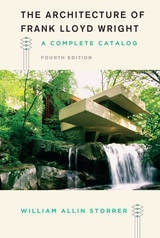
The Architecture of Frank Lloyd Wright, Fourth Edition
A Complete CatalogWilliam Allin Storrer
University of Chicago Press, 2017
William Allin Storrer is one of the experts leading this charge, and his definitive guide, The Architecture of Frank Lloyd Wright, has long been the resource of choice for anyone interested in Wright. Thanks to the work of Storrer and his colleagues at the Rediscovering Wright Project, thirty-seven new sites have recently been identified as the work of Wright. Together with more photos, updated and expanded entries, and a new essay on the evolution of Wright’s unparalleled architectural style, this new edition is the most comprehensive and authoritative catalog available.
Organized chronologically, the catalog includes full-color photos, location information, and historical and architectural background for all of Wright’s extant structures in the United States and abroad, as well as entries for works that have been demolished over the years. A geographic listing makes it easy for traveling Wright fans to find nearby structures and a new key indicates whether a site is open to the public.
Publishing for Wright’s sesquicentennial, this new edition will be a trusted companion for anyone embarking on their own journeys through the wonder and genius of Frank Lloyd Wright.
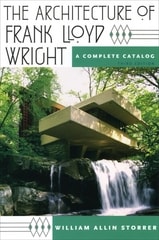
The Architecture of Frank Lloyd Wright
A Complete CatalogWilliam Allin Storrer
University of Chicago Press, 2002
This edition includes a number of new features. It provides information on Frank Lloyd Wright buildings discovered since the first edition. It features full-color photographs to highlight those buildings that remain essentially as they were first built. To facilitate its use as a convenient field guide, this durable flexibound edition gives full addresses with each entry, as well as GPS coordinates, and offers maps giving the shortest route to each building. Preserving the chronological order of past editions, the catalog allows readers to trace the progression of Frank Lloyd Wright's built designs from the early Prairie school works to the last building constructed to Wright's specifications on the original site—the Aime and Norman Lykes residence.
The Architecture of Frank Lloyd Wright will be indispensable for anyone fascinated with Wright's unique architectural genius.
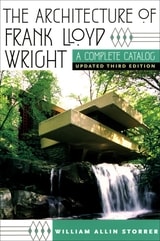
The Architecture of Frank Lloyd Wright
A Complete Catalog, Updated 3rd EditionWilliam Allin Storrer
University of Chicago Press, 2007
This updated third edition revisits each of Wright’s extant structures, tracing the architect’s development from his Prairie works, such as the Frederick Robie house in Chicago, to the last building constructed to his specifications, the magnificent Aime and Norman Lykes residence in Arizona. Renowned expert William Storrer deftly incorporates a series of key revisions and brings each structure’s history up to the present day, as some buildings have been refurbished, some moved, and others sadly abandoned or destroyed by natural disasters like Hurricane Katrina—including the James Charnley bungalow in Ocean Springs, Mississippi.
Organized chronologically, this updated third edition features full-color photographs of all extant work along with a description of each building and its history. Storrer also provides full addresses, GPS coordinates, and maps of locations throughout the United States, England, and Japan, indicating the shortest route to each building—perfect for Wright aficionados on the go.
From Fallingwater to the Guggenheim, Frank Lloyd Wright is the undisputed master of American architecture. Now fully revised, The Architecture of Frank Lloyd Wright: A Complete Catalog will be indispensable for anyone fascinated with the architect’s unique genius.

The Brummer Collection of Medieval Art
Duke University Museum of ArtCaroline Bruzelius and with Jill Meredith
Duke University Press, 1991
Five studies by leading art scholars focus on key works in the collection and contribute to a new understanding of the origins of many of the pieces. Two introductory essays comment on the character of the collection as a whole, its acquisition by Duke University, and its conservation. Finally, the catalog section discusses the more important pieces in the collection and is followed by a checklist of entries and smaller photographs of all other objects.
Contributors. Ilene H. Forsyth, Jean M. French, Dorothy F. Glass, Dieter Kimpel, Jill Meredith, Linda S. Roundhill
The Ceramic Sequence of the Holmul Region, Guatemala
Michael G. Callaghan and Nina Neivens de Estrada
University of Arizona Press, 2016
The Ceramic Sequence of the Holmul Region, Guatemala illustrates the archaeological ceramics of these prehistoric Maya sites in a study that provides a theoretical starting point for answering questions related to mid- and high-level issues of archaeological method and theory in the Maya area and larger Mesoamerica. The researchers’ ceramic sequence, which uses the method of type:variety-mode classification, spans approximately 1,600 years and encompasses nine ceramic complexes and one sub-complex. The highly illustrated book is formatted as a catalog of the types of ceramics in a chronological framework.
The authors undertook this study with three objectives: to create a temporal-spatial framework for archaeological sites in the politically important Holmul region, to relate this framework to other Maya sites, and to use type:variety-mode data to address specific questions of ancient Maya social practice and process during each ceramic complex.
Specific questions addressed in this volume include the adoption of pottery as early as 800 BC at the sites of Holmul and Cival during the Middle Preclassic period, the creation of the first orange polychrome pottery, the ideological and political influence from sites in Mexico during the Early Classic period, and the demographic and political collapse of lowland Maya polities between AD 800 and AD 830.
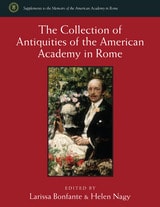
The Collection of Antiquities of the American Academy in Rome
Larissa Bonfante and Helen Nagy, editors
University of Michigan Press, 2016
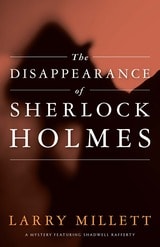
The Disappearance of Sherlock Holmes
Larry Millett
University of Minnesota Press, 2012
SHERLOCK HOLMES DISAPPEARS, POLICE SUSPECT FAMED DETECTIVE IN KIDNAPPING AND MURDER reads a New York headline. So begins the fifth mystery in Larry Millett’s series.
A letter, written in a secret cipher he recognizes all too well, reveals that an old foe of Holmes—a murderer he once captured after an incredible duel of wits—is back, has kidnapped his previous victim’s widow, and is now impersonating Holmes himself. Holmes must once again match wits with a particularly cunning adversary, one whose hatred of Holmes has seemingly become the killer’s single greatest obsession.
Chasing the kidnapper from London to New York to Chicago, Holmes and Watson race to keep up. Every move Holmes makes is expected; every trap proves elusive. Only with the assistance of his American cohort, the saloonkeeper Shadwell Rafferty, can Holmes hope to settle the score once and for all—or be framed for the crime himself.

The Neal-Schuman Guide to Recommended Children's Books and Media for Use with Every Elementary Subject
American Library Association, 2010
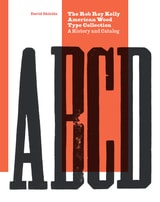
The Rob Roy Kelly American Wood Type Collection
A History and CatalogDavid Shields
University of Texas Press, 2022
2023 50 Books | 50 Covers Award, The American Institute of Graphic Arts (AIGA)
2024 Honorable Mention, Design Awards, Graphis
2024 Finalist, Typography Competition, Communication Arts Magazine
A beautifully illustrated exploration of the Rob Roy Kelly American Wood Type Collection.
The Rob Roy Kelly Wood Type Collection is a comprehensive collection of wood type manufactured and used for printing in nineteenth-century America. Comprising nearly 150 typefaces of various sizes and styles, it was amassed by noted design educator and historian Rob Roy Kelly starting in 1957 and is now held by the University of Texas. Although Kelly himself published a 1969 book on wood type and nineteenth-century typographic history, there has been little written about the creation of the wood type forms, the collection, or Kelly.
In this book, David Shields rigorously updates and expands upon Kelly’s historical information about the types, clarifying the collection’s exact composition and providing a better understanding of the stylistic development of wood type forms during the nineteenth century. Using rich materials from the period, Shields provides a stunning visual context that complements the textual history of each typeface. He also highlights the non-typographic material in the collection—such as borders, rules, ornaments, and image cuts—that have not been previously examined. Featuring over 300 color illustrations, this written history and catalog is bound to spark renewed interest in the collection and its broader typographic period.
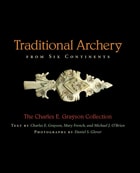
Traditional Archery from Six Continents
The Charles E. Grayson CollectionText by Charles E. Grayson, Mary French, Michael J. O'Brien, & Photos by Daniel
University of Missouri Press, 2007
As a major hunting tool and weapon, the bow changed human history around the world, and its diverse forms reflect the cultures that adopted it. Those variations can be seen in the Charles E. Grayson Archery Collection housed at the University of Missouri–Columbia Museum of Anthropology, one of the largest and most comprehensive assemblages of archery-related materials in the world. This handsome book offers a unique look at archery as it has been practiced through the ages.
Drawing on a collection of more than five thousand bows, arrows, and associated paraphernalia, Traditional Archery from Six Continents presents color photographs and descriptions of some three hundred items—including quivers, thumb rings, and more—that represent traditional archery practices and customs from around the world. From the Chinese “monkey bow” to the English longbow, the artifacts are organized by region, taking in equipment from Asia, the Middle East, Africa, the Americas, and Europe used over the past five hundred years.
The book’s introduction provides an overview of traditional archery and its nomenclature, and chapter essays situate the items in their historical, cultural, and technological contexts. Plate descriptions note materials, construction methods, dimensions, and temporal and cultural affiliations. The sharp, detailed photographs will enable users to identify the geographic or cultural origins of other pieces by visual comparison. Additional illustrations show how archery equipment has been used in various settings such as hunting, warfare, and sport.
These superb representations from a masterful collection constitute a complete introduction to worldwide archery and mark the first wide-ranging survey of European and non-European archery equipment. Traditional Archery from Six Continents will be the standard reference work in the study of archery, indispensable for students of material culture or general readers interested in the history of this timeless art.
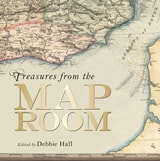
Treasures from the Map Room
A Journey through the Bodleian CollectionsEdited by Debbie Hall
Bodleian Library Publishing, 2016
Treasures from the Map Room publishes seventy-five extraordinary examples from this collection, housed in the Map Room at the newly renovated Weston Library. The maps reproduced in Treasures range from the fourteenth to the twenty-first century. Among them are the fourteenth-century Gough Map, the earliest road map of Great Britain that achieved a remarkable level of accuracy and detail for its time; fifteenth-century portolan charts intended for maritime navigation; the Selden Map of China, the earliest Chinese map to show shipping routes; and an important early map from the medieval Islamic Book of Curiosities. The book also includes a great many recent examples, including J. R. R. Tolkien’s map of Middle Earth and C. S. Lewis’s map of Narnia. Debbie Hall takes readers back in time to uncover the fascinating story of each treasure, from a map plotting outbreaks of cholera to a jigsaw map of India from the 1850s and silk escape maps carried by pilots flying missions over occupied Europe during World War II.
With lavish full-color photography and descriptions of each map’s provenance, purpose, and creation, Treasures from the Map Room is a beautiful and informative catalog of this remarkable collection.
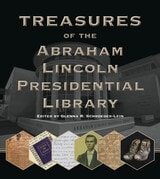
Treasures of the Abraham Lincoln Presidential Library
Edited by Glenna R. Schroeder-Lein
Southern Illinois University Press, 2014
Illinois State Historical Society Superior Achievement Award 2015
The Abraham Lincoln Presidential Library in Springfield, Illinois, houses a trove of invaluable historical resources concerning all aspects of the Prairie State’s past. Treasures of the Abraham Lincoln Presidential Library commemorates the institution’s 125-year history, as well as its contributions to scholarship and education by highlighting a selection of eighty-five treasures from among more than twelve million items in the library’s collections.
After opening with a historical overview and extensive chronology of the Library, the volume organizes the treasures by various topics, including items that illustrate various locations and materials relating to business, the mid-nineteenth century and the Civil War, World Wars I and II, the oldest items, unusual treasures, ethnicity, and art. From the Gettysburg Address, Abraham and Mary Lincoln’s letters, and Governor Dan Walker’s boots to a Deering Harvester Company catalog, WPA publications, and an Adlai Stevenson I campaign hat, each entry includes a thorough description of the item, one or more images, and a discussion of its history and how the library acquired it, if known. Other treasures include the Thomas Yates General Store daybook, Dubin Pullman car materials, Civil War newspapers, a Lincoln coffin photograph, the Mary Lincoln insanity verdict, the Directory of Sangamon County’s Colored Citizens, andLincoln’s stovepipe hat.
To highlight the academic importance of the Library, nineteen researchers share how study in the Library’s collections proved essential to their projects. Although these treasures only scrape the surface of the vast holdings of the Abraham Lincoln Presidential Library, together they epitomize the rich, varied, and sometimes quirky resources available to both serious scholars and curious tourists alike at this valuable cultural institution.