77 books match the query 'Characters' and 13 start with t
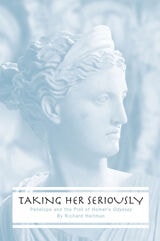
cover of Taking Her Seriously: Penelope and the Plot of Homer's Odyssey

Taking Her Seriously

Penelope and the Plot of Homer's Odyssey

Richard Heitman

University of Michigan Press, 2005

"[Heitman] provides a sensitive critical study of the Odyssey in which he strives to better appreciate the poem by focusing on the familial interactions in Ithaca . . . Heitman's interpretations . . . are unfailingly clear and thought-provoking. Highly recommended."
---Choice
"It is an example of a neat and valuable contribution which is both intelligible to non-specialists and inspiring for psychologists and classicists. It demonstrates that research into Homer still is . . . capable of extracting ever-new exciting ideas from Homer's texts."
---Bryn Mawr Classical Review
Taking Her Seriously is a reevaluation of Penelope, one of the most universally admired female characters in Western classical literature. Casting her in a new light, Richard Heitman emphasizes the courage, steadfastness, and integrity of this iconic figure while she faces potentially tragic decisions.
Homer's treatment of events in Ithaca and the motivations of Penelope throughout the denser books of the Odyssey reveals a complicated, serious, independent, and insightful thinker whose actions are crucial to guaranteeing the well-being of her home and a safe future for her son, and for Odysseus as well.
Through this thematic approach to the text, Penelope comes into focus as a loving wife whose role is far more important than passive fidelity to a wandering husband. Her integrity and wisdom in Odysseus' absence set the stage for his violent and triumphant return, and secure her place as a female role model in even the most modern of contexts.
Richard Heitman is Assistant Professor of Classics and Philosophy at Carthage College.
[more]
cover of Tennyson'S Characters: "Strange Faces, Other Minds"

Tennyson'S Characters

"Strange Faces, Other Minds"

David Goslee

University of Iowa Press, 1989

Scholars since Paden have commented on the anxieties embedded in Tennyson's poetry, but this is the first study to examine them systematically. Within each poem Goslee discovers a vulnerable authorial presence threatened by some Other—a personification of divine, sexual, or natural power—which encroaches upon it from the fringes of the poem's imaginative universe. This Other is always interpreted, humanized, or conciliated by some mediating figure, yet the more effectively the mediator confronts an otherwise alien cosmos, the more alien he or she becomes to the authorial presence.

Goslee's approach toward understanding the conflict between Tennyson and the characters he creates includes elements of formalism, psychodynamics, and literary history without being narrowly confined to any one of these. His subtle, elegant reading mediates between those critics who stress authorial intention (e.g., Reed's Perception and Design) and the growing number of critics who follow E. D. H. Johnson in claiming that Tennyson wrote more subversively than he wanted to admit. This original, highly suggestive volume will be important for all Victorian scholars and literary critics.
[more]
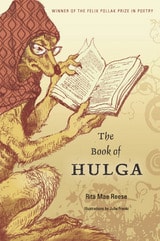
cover of The Book of Hulga

The Book of Hulga

Rita Mae Reese, Illustrations by Julie Franki

University of Wisconsin Press, 2016
The Book of Hulga speculates—with humor, tenderness, and a brutal precision—on a character that Flannery O’Connor envisioned but did not live long enough to write: “the angular intellectual proud woman approaching God inch by inch with ground teeth.” These striking poems look to the same sources that O’Connor sought out, from Gerard Manley Hopkins to Edgar Allan Poe to Simone Weil. Original illustrations by Julie Franki further illuminate Reese’s imaginative verse biography of a modern-day hillbilly saint.
[more]
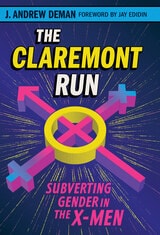
cover of The Claremont Run: Subverting Gender in the X-Men

The Claremont Run

Subverting Gender in the X-Men

J. Andrew Deman; Foreword by Jay Edidin

University of Texas Press, 2023

Winner — 2024 Will Eisner Comic Industry Awards in Best Academic/Scholarly Work, announced at San Diego Comic-Con International (2024)

A data-driven deep dive into a legendary comics author’s subversion of gender norms within the bestselling comic of its time.


By the time Chris Claremont’s run as author of Uncanny X-Men ended in 1991, he had changed comic books forever. During his sixteen years writing the series, Claremont revitalized a franchise on the verge of collapse, shaping the X-Men who appear in today’s Hollywood blockbusters. But, more than that, he told a new kind of story, using his growing platform to articulate transgressive ideas about gender nonconformity, toxic masculinity, and female empowerment.

J. Andrew Deman’s investigation pairs close reading and quantitative analysis to examine gender representation, content, characters, and story structure. The Claremont Run compares several hundred issues of Uncanny X-Men with a thousand other Marvel comics to provide a comprehensive account of Claremont’s sophisticated and progressive gender politics. Claremont’s X-Men upended gender norms: where female characters historically served as mere eye candy, Claremont’s had leading roles and complex, evolving personalities. Perhaps more surprisingly, his male superheroes defied and complicated standards of masculinity. Groundbreaking in their time, Claremont’s comics challenged readers to see the real world differently and transformed pop culture in the process.
[more]
cover of The Eve/Hagar Paradigm in the Fiction of Quince Duncan

The Eve/Hagar Paradigm in the Fiction of Quince Duncan

Dellite Martin-Ogunsola

University of Missouri Press, 2004
Born in Costa Rica in 1940, Quince Duncan has penned an impressive body of work, including novels, short stories, essays, and literary and cultural criticism. Despite his reputation as Costa Rica’s leading novelist, Duncan remains one of the least studied writers. Dellita Martin-Ogunsola seeks to remedy this inequity with The Eve/Hagar Paradigm in the Fiction of Quince Duncan.
In this first book-length study in English devoted to Duncan’s work, Martin-Ogunsola explores the issues of race, class, and gender in five of Duncan’s major works published during the 1970s. Focusing primarily on the roles of women, Martin-Ogunsola uses the figures of Eve and the Egyptian slave Hagar to provide, through metaphor, an in-depth analysis of the female characters portrayed in Duncan’s prose. Specifically, the Eve/Hagar paradigm is employed to examine how the essential characteristics of femininity play out in the context of ethnicity and caste. The book begins with Dawn Song (1970), the story of Antillean immigrants struggling with migration, oppression, and resistance while adapting to a new environment, and continues through Dead-End Street (1979), a novel exploring the ramifications of the myth, perpetrated through history, that defines Costa Rica in terms of Euro-Hispanic culture.  
Martin-Ogunsola illustrates Duncan’s use of a female presence that challenges the traditional treatment of women in literature. Spanning the period between the initial settlement of the Atlantic region of Costa Rica during the early years of the twentieth century to the 1948 Costa Rican Civil War, Martin-Ogunsola’s book invites the reader to view the world through the eyes of Duncan’s female characters.
            TheEve/Hagar Paradigmin the Fiction of Quince Duncan examines some of the most compelling issues of contemporary Latin American literature and illustrates how a prominent Costa Rican writer deconstructs the stereotype of woman as wife/lover/slave. In the process, Duncan finds his own voice. Exposing aspects of Costa Rican society that have historically been kept in the shadows, this volume makes a significant contribution to our knowledge of the Latin American literary canon.
[more]
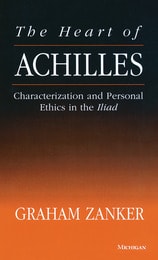
cover of The Heart of Achilles: Characterization and Personal Ethics in the Iliad

The Heart of Achilles

Characterization and Personal Ethics in the Iliad

Graham Zanker

University of Michigan Press, 1996

In The Heart of Achilles, Graham Zanker addresses the task of reconstructing the ethical thought-world in which the characters of the Iliad live and move. It is only against this background, Zanker argues, that we can convincingly place the ethical status of the heroes and their actions. This in turn helps us to form a comprehensive view of the Iliad'scharacterization of its people, especially that of Achilles, by examining all his responses to the question of allegiance, the value of heroic prowess, and of life itself.
"[Zanker] investigates altruistic behavior in the epic with professional sophistication but in a way that makes his investigation available to a wide audience from undergraduates to advanced scholars. . . . [A] very useful interpretative study." --Choice
Graham Zanker is Senior Lecturer in Classics, University of Canterbury, New Zealand.
[more]
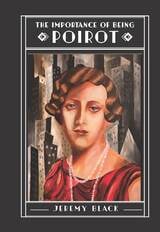
cover of The Importance of Being Poirot

The Importance of Being Poirot

Jeremy Black

St. Augustine's Press, 2021

Written by the renowned British historian who has been described as both utterly thorough and humanely delicate, Jeremy Black offers a guided tour through the mind of Agatha Christie and life during the Great World Wars. His incomparable treatment of literary craft developing alongside global military engagement nearly overshadows the natural draw of the crime drama that is the subject of his book. Indeed, the “prurience and sensationalism” of crime is not as exciting as Black’s aptitude for drawing the reality from the fiction (and periphery sources), giving Christie a much louder voice than she might ever have dreamed. If Christie is also moralist and mirror to her times, Black here plays his part as the detective and reveals layers of previously unmined truths in her stories.

Hercule Poirot as a character is masterfully imagined, but Black shows us how he is inseparable from Christie’s turbulent and changing world. He also illuminates significant social commentary in Christie’s fiction, and in so doing Black often uses his authority to vindicate Christie’s work from hastily, at times stupidly, applied labels and interpretations. He is especially magnificent in his chapters, “Xenophobia” and “The Sixties.” Black nevertheless gives due recognition to Christie’s critics when they have something relevant and reasonable to say, and hence the reader finds yet another service in Black’s comprehensive review of the reviewers over the expanse of Christie’s writing career.

For all this, Black proves himself to be a worthy history-teller because he can aptly ‘detect’ the meaning of stories that seeks to answer the past and guide the present. His erudition runs much deeper than his ability to navigate the stores of resources available on the subject, and the reader gets a glimpse of this early on when in the introduction he proffers his own defense for writing about the importance of a Hercule Poirot. Black writes, “the notion of crime had a moral component from the outset, and notably so in terms of the struggle between Good and Evil, and in the detection of the latter. Indeed, it is this detection that is the basis of the most powerful strand of detection story, because Evil disguises its purposes. It has to do so in a world and humanity made fundamentally benign and moral by God.” The Golden Age of detective novels represents much more than a triumph of a literary genre. It is in its own right a story of how the challenge to address the problem of evil was accepted. Its convergence with the plot-rich narrative of the twentieth century in the modern age renders Black’s account a thrilling masterpiece, seducing historians to read fiction and crime junkies to read more history.
 
[more]
cover of The Ivory Tower, Harry Potter, and Beyond: More Essays on the Works of J. K. Rowling

The Ivory Tower, Harry Potter, and Beyond

More Essays on the Works of J. K. Rowling

Edited with an Introduction by Lana A. Whited

University of Missouri Press, 2024
In her follow-up to The Ivory Tower and Harry Potter, Lana A. Whited has compiled a new collection of essays analyzing the books, films, and other media by J. K. Rowling. This includes pieces on the Harry Potter books and movies, Fantastic Beasts and Where to Find Them (films), The Cursed Child (play), as well as her writing outside the wizarding universe, such as The Ickabog, The Casual Vacancy, and the Cormoran Strike series. Many of the chapters explore works that influenced the Harry Potter series, including Classical epic, Shakespearian comedy and tragedy, and Arthurian myth. In addition to literary comparison, the volume delves into topics like political authoritarianism, distrust of the media, racial and social justice, and developments in fandom. It’s fair to say that much has changed in regard to Harry Potter and J. K. Rowling scholarship in the twenty years since the first volume’s publication. While it was once considered a universally beloved book series, the relationship between HP and its fans has grown more complicated in recent years. As its readers have grown older and Rowling’s reputation has wavered in the public eye, Whited and her contributors consider the complicated legacy of Harry Potter and its author and explore how the series will evolve in the next twenty years.
[more]
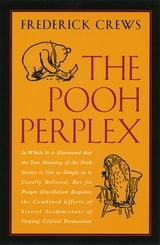
cover of The Pooh Perplex

The Pooh Perplex

Frederick Crews

University of Chicago Press, 2003
In this devastatingly funny classic, Frederick Crews skewers the ego-inflated pretensions of the schools and practitioners of literary criticism popular in the 1960s, including Freudians, Aristotelians, and New Critics. Modeled on the "casebooks" often used in freshman English classes at the time, The Pooh Perplex contains twelve essays written in different critical voices, complete with ridiculous footnotes, tongue-in-cheek "questions and study projects," and hilarious biographical notes on the contributors. This edition contains a new preface by the author that compares literary theory then and now and identifies some of the real-life critics who were spoofed in certain chapters.
[more]
cover of The Secret Marriage of Sherlock Holmes and Other Eccentric Readings

The Secret Marriage of Sherlock Holmes and Other Eccentric Readings

Michael Atkinson

University of Michigan Press, 1998

The Secret Marriage of Sherlock Holmes is about reading, a process that we take for granted. But Sherlock Holmes, the cultural icon to whose exploits Michael Atkinson gives new readings, became famous by taking nothing for granted. Holmes's adventures can be read in new ways, including ways that he himself would have found startling, but which can give contemporary readers satisfaction. In clear, accessible prose that will engage specialists and lay readers alike, Atkinson engages in "a series of flirtations" with nine of Arthur Conan Doyle's favorite detective fictions, using the tools of modern literary theory, from depth psychology to deconstruction. Bluebeard, the kundalini serpent, and Conan Doyle's mother pop up alongside Jung, Nietzsche, and Derrida as guides to new understandings of these classic stories. Just as Holmes uses treatises on tobacco ash and tattoos to give fresh readings to puzzling facts, Atkinson employs widely different critical strategies to unravel the mysteries of reading itself.
 
"What a delightful book! This is surely the most interesting writing you will ever read about Sherlock Holmes, but it is much more. Michael Atkinson gives us literary criticism at its best: the sheer fun of watching a bold and imaginative reader breathe into well-loved, but well-worn, fictions new and enchanting life. Atkinson's mind races as nimbly as Holmes's own, and he makes the stories our hansom cab through human nature itself. A tour de force!"
---Norman N. Holland, author of Murder in a Dephi Seminar
 
"A book that speaks directly to readers. . . Atkinson sees far beneath the surface of the Sherlock stories to provide fascinating commentary."
---Cincinnati Post

"Atkinson demonstrates a love and knowledge of the Holmes stories. . . I would recommend The Secret Marriage of Sherlock Holmes enthusiastically to any lover of the Canon who is prepared to have their perceptions widened."
---Mystery Writers of America
 
Michael Atkinson is Professor of English and Comparative Literature, University of Cincinnati.
 
[more]
cover of The Secret of the Hardy Boys: Leslie McFarlane and the Stratemeyer Syndicate

The Secret of the Hardy Boys

Leslie McFarlane and the Stratemeyer Syndicate

Marilyn S. Greenwald

Ohio University Press, 2004

For generations of readers, the Hardy Boys were the creations of the legendary Franklin W. Dixon—except Dixon never existed. Behind the iconic series stood the Stratemeyer Syndicate, a powerhouse of children’s publishing, and one gifted but largely unrecognized writer: Leslie McFarlane.

In The Secret of the Hardy Boys, acclaimed biographer Marilyn S. Greenwald uncovers the remarkable story of the man who first brought Frank and Joe Hardy to life. A young Canadian journalist with ambitions beyond formula fiction, McFarlane infused the Syndicate’s rigid plots with wit, atmosphere, and narrative vitality—helping to shape one of the most enduring franchises in children’s literature.

Bound by contract and reluctant to claim authorship, McFarlane kept his role a secret for decades, receiving little financial reward for books that sold in the millions. Yet his story is far from one of regret. Drawing on extensive research, Greenwald paints a vivid portrait of a versatile writer who navigated the shifting landscape of twentieth-century media, from pulp magazines to radio and film.

Rich in literary history and human insight, The Secret of the Hardy Boys is both a revealing behind-the-scenes account of a cultural phenomenon and an inspiring testament to creativity, resilience, and the quiet architects of beloved stories.
[more]
cover of The Stranger from Omaha: Travel Narratives in the Cinema of Alexander Payne

The Stranger from Omaha

Travel Narratives in the Cinema of Alexander Payne

Jason Sperb

University of Texas Press, 2025

The first in-depth analysis of the films of Alexander Payne through the lenses of authorship, tourism, and leisure.

With the films Election, About Schmidt, Sideways, Nebraska, and The Holdovers, Alexander Payne has carved out an unusual role in American cinema as a bankable auteur. There is something about Payne’s neurotics and searchers, his working stiffs and disillusioned idealists—something funny, moving, and filled with insight.

Jason Sperb dissects Payne’s oeuvre, focusing on the director’s penchant for travel narratives. Payne’s films usually center on male protagonists discontent with the emotional and material realities of the day-to-day and seeking satisfaction in some literal or metaphorical elsewhere. But their attempts to escape wind up perpetuating, rather than alleviating, the imbalance between labor and leisure that structures modern life. In this sense, Sperb argues, Payne’s characters are akin to tourists, searching for fleeting glimpses of the fulfillment they dream about. Examining themes of masculinity, nostalgia, whiteness, and class, The Stranger from Omaha is the first auteur study devoted to Payne’s delicately balanced cinematic world. An outsider even in his own heartland, Payne proves to be an artist working at a clarifying remove—a witness to the American condition, observing from just enough distance.
[more]
cover of The Twisted Mind: Madness In Melville'S Fiction

The Twisted Mind

Madness In Melville'S Fiction

Paul Mccarthy

University of Iowa Press, 1990

Madness in Herman Melville's Fiction
Paul McCarthy

"Though madness has been a consistent topic in considerations of Melville's work, this is the first full-scale treatment of the subject. It is in a sense, then, a pioneering work that will no doubt receive widespread attention."

—William B. Dillingham
[more]