Results by title
50 books match the query 'Child' and 12 start with t

TV Violence and the Child
Evolution and Fate of the Surgeon General's ReportDouglass Cater
Russell Sage Foundation, 1975
The Child as Natural Phenomenologist
Primal and Primary Experience in Merleau-Ponty's PsychologyTalia Welsh
Northwestern University Press, 2013
Welsh demonstrates Merleau-Ponty’s unique conception of the child’s development as inherently organized, meaningful, and engaged with the world, contrary to views that see the child as largely internally preoccupied and driven by instinctual demands. Welsh finds that Merleau-Ponty’s ideas about human psychology remain relevant in today’s growing field of child studies and that they provide important insights for philosophers, sociologists, and psychologists to better understand the human condition.
The Child to Come
Life after the Human CatastropheRebekah Sheldon
University of Minnesota Press, 2016
Generation Anthropocene. Storms of My Grandchildren. Our Children’s Trust. Why do these and other attempts to imagine the planet’s uncertain future return us—again and again—to the image of the child? In The Child to Come, Rebekah Sheldon demonstrates the pervasive conjunction of the imperiled child and the threatened Earth and blisteringly critiques the logic of catastrophe that serves as its motive and its method.
Sheldon explores representations of this perilous future and the new figurations of the child that have arisen in response to it. Analyzing catastrophe discourse from the 1960s to the present—books by Joanna Russ, Margaret Atwood, and Cormac McCarthy; films and television series including Southland Tales, Battlestar Galactica, and Children of Men; and popular environmentalism—Sheldon finds the child standing in the place of the human species, coordinating its safe passage into the future through the promise of one more generation. Yet, she contends, the child figure emerges bound to the very forces of nonhuman vitality he was forged to contain.
Bringing together queer theory, ecocriticism, and science studies, The Child to Come draws on and extends arguments in childhood studies about the interweaving of the child with the life sciences. Sheldon reveals that neither life nor the child are what they used to be. Under pressure from ecological change, artificial reproductive technology, genetic engineering, and the neoliberalization of the economy, the queerly human child signals something new: the biopolitics of reproduction. By promising the pliability of the body’s vitality, the pregnant woman and the sacred child have become the paradigmatic figures for twenty-first century biopolitics.
The Child
An Encyclopedic CompanionRichard A. Shweder, Editor in Chief
University of Chicago Press, 2009
The Child: An Encyclopedic Companion offers both parents and professionals access to the best scholarship from all areas of child studies in a remarkable one-volume reference.
Bringing together contemporary research on children and childhood from pediatrics, child psychology, childhood studies, education, sociology, history, law, anthropology, and other related areas, The Child contains more than 500 articles—all written by experts in their fields and overseen by a panel of distinguished editors led by anthropologist Richard A. Shweder. Each entry provides a concise and accessible synopsis of the topic at hand. For example, the entry “Adoption” begins with a general definition, followed by a detailed look at adoption in different cultures and at different times, a summary of the associated mental and developmental issues that can arise, and an overview of applicable legal and public policy.
While presenting certain universal facts about children’s development from birth through adolescence, the entries also address the many worlds of childhood both within the United States and around the globe. They consider the ways that in which race, ethnicity, gender, socioeconomic status, and cultural traditions of child rearing can affect children’s experiences of physical and mental health, education, and family. Alongside the topical entries, The Child includes more than forty “Imagining Each Other” essays, which focus on the particular experiences of children in different cultures. In “Work before Play for Yucatec Maya Children,” for example, readers learn of the work responsibilities of some modern-day Mexican children, while in “A Hindu Brahman Boy Is Born Again,” they witness a coming-of-age ritual in contemporary India.
Compiled by some of the most distinguished child development researchers in the world, The Child will broaden the current scope of knowledge on children and childhood. It is an unparalleled resource for parents, social workers, researchers, educators, and others who work with children.

The Development of Children’s Concepts of Causal Relations
Jean Deutsche
University of Minnesota Press, 1937
The Development of Reasoning in Children with Normal and Defective Hearing
Mildred Templin
University of Minnesota Press, 1950
The Effect of Praise and Competition on the Persisting Behavior of Kindergarten Children
Theta Wolf
University of Minnesota Press, 1939
The Mental Growth of Children From Two to Fourteen Years
A Study of the Predictive Value of the Minnesota Preschool ScalesFlorence Goodenough
University of Minnesota Press, 1942
The Science of Play
How to Build Playgrounds That Enhance Children's DevelopmentSusan G. Solomon
University Press of New England, 2014
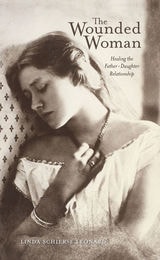
The Wounded Woman
Healing the Father-Daughter RelationshipLinda Schierse Leonard
Ohio University Press, 1982
This book is an invaluable key to self-understanding. Using examples from her own life and the lives of her clients, as well as from dreams, fairy tales, myths, films, and literature, Linda Schierse Leonard, a Jungian analyst, exposes the wound of the spirit that both men and women of our culture bear—a wound that is grounded in a poor relationship between masculine and feminine principles.
Leonard speculates that when a father is wounded in his own psychological development, he is not able to give his daughter the care and guidance she needs. Inheriting this wound, she may find that her ability to express herself professionally, intellectually, sexually, and socially is impaired. On a broader scale, Leonard discusses how women compensate for cultural devaluation, resorting to passive submission (“the Eternal Girl”), or a defensive imitation of the masculine (“the Armored Amazon”).
The Wounded Woman shows that by understanding the father-daughter wound and working to transform it psychologically, it is possible to achieve a fruitful, caring relationship between men and women, between fathers and daughters, a relationship that honors both the mutuality and the uniqueness of the sexes.
The Young Child and His Parents
A Study of One-Hundred CasesJosephine Foster
University of Minnesota Press, 1929

Thou Shalt Not Be Aware
Society's Betrayal of the ChildAlice Miller
Pluto Press, 1998