Results by title
267 books match the query 'Children' and 41 start with t
Taking Juvenile Justice Seriously
Developmental Insights and System ChallengesChristopher J. Sullivan
Temple University Press, 2019
The juvenile justice system navigates a high degree of variation in youthful offenders. While professionals with insights about reform and adolescent development consider the risks, the needs, and the patterns of delinquency of youth, too little attention is paid to the responses and practicalities of a system that is both complex and limited in its resources.
In his essential book, Taking Juvenile Justice Seriously, Christopher Sullivan systematically analyzes key facets of justice-involved youth populations and parses cases to better understand core developmental influences that affect delinquency. He takes a comprehensive look at aspects of the life-course affected by juvenile justice as well as at the juvenile justice system’s operations and its multifaceted mission of delivering both treatment and sanctions to a varied population of youths.
Taking Juvenile Justice Seriously first provides an overview of the youth who encounter the system, then describes its present operations and obstacles, synthesizes relevant developmental insights, and reviews current practices. Drawing on research, theory, and evidence regarding innovative policies, Sullivan offers a series of well-grounded recommendations that suggest how to potentially—and realistically—implement a more effective juvenile justice system that would benefit all.
Talking with the Children of God
Prophecy and Transformation in a Radical Religious GroupGordon Shepherd and Gary Shepherd
University of Illinois Press, 2010
Grounded in direct, systematic observation by neutral observers, Talking with the Children of God is a unique study of the radical religious movement now known as The Family International. The book draws on extraordinarily candid interviews with the group's leaders and administrative staff. In revealing new information about the organization's history, beliefs, and use of prophecy, Gordon Shepherd and Gary Shepherd offer a highly detailed case study that is both an antidote to sensationalized coverage of the group and a means for understanding the transformational practices of new religious movements in general.
One of the most controversial groups emerging from the Jesus People movement of the 1960s, the Family originally was known as The Children of God. Under leader David Berg, members proclaimed an apocalyptic "Endtime," shunned secular occupations, lived communally, and adopted unusual sexual practices that led to abuse scandals in the 1970s and 1980s. Following Berg's death in 1994, the organization began to dramatically alter its evangelization efforts and decision-making processes.
Talking with the Children of God builds a picture of a complex organization with ten thousand core members worldwide, including details on the lives, careers, and responsibilities of the second generation and their efforts to defend their faith. The authors summarize the Family's history and beliefs as well as its controversial past. In particular, they analyze the organization's use of prophecy--or channeled revelations from Jesus and other spiritual beings--for making decisions and setting policy, revealing how this essentially democratic process works and how it shapes Family life and culture.
These remarkable insights are the result of sixteen years of surveys and field observations conducted in Family member homes in sixteen countries, plus four days of face-to-face interviews with Family leaders and organizational staff. The volume also includes condensed transcripts of the interviews with analysis by Shepherd and Shepherd.
Targeting Investments in Children
Fighting Poverty When Resources Are LimitedEdited by Phillip B. Levine and David J. Zimmerman
University of Chicago Press, 2010
A substantial number of American children experience poverty: about 17 percent of those under the age of eighteen meet the government’s definition, and the proportion is even greater within minority groups. Childhood poverty can have lifelong effects, resulting in poor educational, labor market, and physical and mental health outcomes for adults. These problems have long been recognized, and there are numerous programs designed to alleviate or even eliminate poverty; as these programs compete for scarce resources, it is important to develop a clear view of their impact as tools for poverty alleviation.
Targeting Investments in Children tackles the problem of evaluating these programs by examining them using a common metric: their impact on earnings in adulthood. The volume’s contributors explore a variety of issues, such as the effect of interventions targeted at children of different ages, and study a range of programs, including child care, after-school care, and drug prevention. The results will be invaluable to educational leaders and researchers as well as policy makers.
Teaching Fear
How We Learn to Fear Crime and Why It MattersNicole E. Rader
Temple University Press, 2023
Where do lessons of “stranger danger” and safety come from—and do they apply differently for women? A gender-fear paradox shows that although women are less likely to be victims of most crimes (sexual assault aside), their fear of crime is greater. Moreover, girls and women—especially White women—are taught to fear the wrong things and given impossible tools to prevent victimization. In Teaching Fear, Nicole Rader zooms in on the social learning process, tracing the ways that families, schools, and the media have become obsessed with crime myths, especially regarding girls and women.
Based on in-depth research and family studies, Rader reveals the dubious and dangerous origins of many of the most prominent safety guidelines that teach young girls to be more afraid of crime. These guidelines carry over to adulthood, influencing women’s behaviors and the way they order their worlds, with dangerous consequences. As women teach their learned behavior and conditioned fear to others, gendered crime myths are recirculated from generation to generation, making them a staple in our society.
Teaching Fear includes suggestions for taking precautionary measures and crime prevention strategies. Rader also provides guidance for instilling safety values and demonstrating how we can “teach fear better” to break this cycle and truly create greater security.
The Age of Sex
Custom, Law, and Ritual in Twentieth-Century East AfricaCorrie Decker
University of Wisconsin Press, 2025
In The Age of Sex, Decker demonstrates how maturation became defined as the hypothetical moment when a girl becomes a woman capable of engaging in heterosexual activity and a boy becomes a man imbued with the right and responsibility to have heterosexual intercourse. Colonial ethnographic studies reduced complex precolonial rites of passage to “puberty rites” fixated on these sexual transformations. The resulting stereotypes influenced, in turn, how colonial and postcolonial court officials decided age-of-consent and other sex crime cases. Court rituals thus legally transformed girls into women by ruling on their sexual maturity and boys into men by sentencing them to corporal punishment, marking their acceptance of heterosexual responsibilities.
The American Child
A Cultural Studies ReaderLevander, Caroline F
Rutgers University Press, 2003
Although the volume is grounded heavily in the literary, it draws on other disciplines, revealing that representations of children and childhood are not isolated artifacts but cultural productions that in turn affect the social climates around them. Essayists look at games, pets, adolescent sexuality, death, family relations, and key texts such as The Adventures of Huckleberry Finn and the movie Pocahontas; they reveal the ways in which the figure of the child operates as a rich vehicle for writers to consider evolving ideas of nation and the diverse role of citizens within it.

The Best in Children's Books
The University of Chicago Guide to Children's Literature, 1973-78Zena Sutherland
University of Chicago Press, 1980
The Best in Children's Books
The University of Chicago Guide to Children's Literature, 1979-84Zena Sutherland
University of Chicago Press, 1986
This volume carries on the tradition established by Zena Sutherland's two earlier collections covering the periods from 1966 to 1972 and 1973 to 1978. Her 1973 edition of The Best in Children's Books was cited by the American School Board Journal as one of the outstanding books of the year in education.

The Blood of the Lamb
A NovelPeter De Vries
University of Chicago Press, 2005
One of John Green's "favorite books ever," a powerful, moving novel of family, parenthood, and loss
The most poignant of all Peter De Vries's novels, The Blood of the Lamb is also the most autobiographical. It follows the life of Don Wanderhop from his childhood in an immigrant Calvinist family living in Chicago in the 1950s through the loss of a brother, his faith, his wife, and finally his daughter-a tragedy drawn directly from De Vries's own life. Despite its foundation in misfortune, The Blood of the Lamb offers glimpses of the comic sensibility for which De Vries was famous. Engaging directly with the reader in a manner that buttresses the personal intimacy of the story, De Vries writes with a remarkableblend of grief, love, wit, and fury.
The Child Cases
How America's Religious Exemption Laws Harm ChildrenAlan Rogers
University of Massachusetts Press, 2014
When a four-year-old California girl died on March 9, 1984, the state charged her mother with involuntary manslaughter because she failed to provide her daughter with medical care, choosing instead to rely on spiritual healing. During the next few years, a half dozen other children of Christian Science parents died under similar circumstances. The children's deaths and the parents' trials drew national attention, highlighting a deeply rooted, legal/political struggle to define religious freedom.
Through close analysis of these seven cases, legal historian Alan Rogers explores the conflict between religious principles and secular laws that seek to protect children from abuse and neglect. Christian Scientists argued—often with the support of mainline religious groups—that the First Amendment's “free exercise” clause protected religious belief and behavior. Insisting that their spiritual care was at least as effective as medical treatment, they thus maintained that parents of seriously ill children had a constitutional right to reject medical care.
Congress and state legislatures confirmed this interpretation by inserting religious exemption provisos into child abuse laws. Yet when parental prayer failed and a child died, prosecutors were able to win manslaughter convictions by arguing—as the U.S. Supreme Court had held for more than a century—that religious belief could not trump a neutral, generally applicable law. Children's advocates then carried this message to state legislatures, eventually winning repeal of religious exemption provisions in a handful of states.
The Child before the Court
Judgment, Citizenship, and the ConstitutionTimothy Barouch
University of Alabama Press, 2021
A study that challenges our notions about citizenship and judgment by considering the place of children in historical and contemporary legal discourse.
Many of the most controversial political issues of our time focus on the actions and well-being of children such as Greta Thunberg’s climate movement; youth activists standing up for racial justice, safe schools, and an equitable economy; and the furor over separating migrant children from their families. When do we treat children as competent citizens, when do we treat them as dependents in need of protection, and why?
The Child before the Court: Judgment, Citizenship, and the Constitution provides answers to these foundational questions. It analyzes landmark US Supreme Court cases involving children’s free speech and due process rights and argues that our ideas about civic and legal judgment are deeply contested concepts instead of simple character traits. These cases serve as analytic touchstones for these problems, and the Court’s opinions seemingly articulate clear rules through a pragmatic balancing of interests.
Timothy Barouch shows how these cases continually reshape constitutional thought, breaking from a vocabulary of wardship and recasting the child as a liberal individual. He analyzes these legal opinions as judicial novelizations and focuses on their rhetorical markers: the range of tropes, idioms, figures, and arguments that emerge across nearly two centuries of jurisprudence in this important but oft-neglected area. The careful and subtle readings of these cases demonstrate how judicial representations of the child provide key resources for thinking about the child as citizen and, more broadly, citizenship itself. It serves as a bold call to think through the relationship between the liberal individual and the problem of civic judgment as it manifests in public culture in a wide array of contexts at a time when liberal democracy is under siege.
The Child to Come
Life after the Human CatastropheRebekah Sheldon
University of Minnesota Press, 2016
Generation Anthropocene. Storms of My Grandchildren. Our Children’s Trust. Why do these and other attempts to imagine the planet’s uncertain future return us—again and again—to the image of the child? In The Child to Come, Rebekah Sheldon demonstrates the pervasive conjunction of the imperiled child and the threatened Earth and blisteringly critiques the logic of catastrophe that serves as its motive and its method.
Sheldon explores representations of this perilous future and the new figurations of the child that have arisen in response to it. Analyzing catastrophe discourse from the 1960s to the present—books by Joanna Russ, Margaret Atwood, and Cormac McCarthy; films and television series including Southland Tales, Battlestar Galactica, and Children of Men; and popular environmentalism—Sheldon finds the child standing in the place of the human species, coordinating its safe passage into the future through the promise of one more generation. Yet, she contends, the child figure emerges bound to the very forces of nonhuman vitality he was forged to contain.
Bringing together queer theory, ecocriticism, and science studies, The Child to Come draws on and extends arguments in childhood studies about the interweaving of the child with the life sciences. Sheldon reveals that neither life nor the child are what they used to be. Under pressure from ecological change, artificial reproductive technology, genetic engineering, and the neoliberalization of the economy, the queerly human child signals something new: the biopolitics of reproduction. By promising the pliability of the body’s vitality, the pregnant woman and the sacred child have become the paradigmatic figures for twenty-first century biopolitics.
The Child
An Encyclopedic CompanionRichard A. Shweder, Editor in Chief
University of Chicago Press, 2009
The Child: An Encyclopedic Companion offers both parents and professionals access to the best scholarship from all areas of child studies in a remarkable one-volume reference.
Bringing together contemporary research on children and childhood from pediatrics, child psychology, childhood studies, education, sociology, history, law, anthropology, and other related areas, The Child contains more than 500 articles—all written by experts in their fields and overseen by a panel of distinguished editors led by anthropologist Richard A. Shweder. Each entry provides a concise and accessible synopsis of the topic at hand. For example, the entry “Adoption” begins with a general definition, followed by a detailed look at adoption in different cultures and at different times, a summary of the associated mental and developmental issues that can arise, and an overview of applicable legal and public policy.
While presenting certain universal facts about children’s development from birth through adolescence, the entries also address the many worlds of childhood both within the United States and around the globe. They consider the ways that in which race, ethnicity, gender, socioeconomic status, and cultural traditions of child rearing can affect children’s experiences of physical and mental health, education, and family. Alongside the topical entries, The Child includes more than forty “Imagining Each Other” essays, which focus on the particular experiences of children in different cultures. In “Work before Play for Yucatec Maya Children,” for example, readers learn of the work responsibilities of some modern-day Mexican children, while in “A Hindu Brahman Boy Is Born Again,” they witness a coming-of-age ritual in contemporary India.
Compiled by some of the most distinguished child development researchers in the world, The Child will broaden the current scope of knowledge on children and childhood. It is an unparalleled resource for parents, social workers, researchers, educators, and others who work with children.
The Children Of Africa Confront AIDS
From Vulnerability To PossibilityArvind Singhal
Ohio University Press, 2003
The Children in Child Health
Negotiating Young Lives and Health in New ZealandJulie Spray
Rutgers University Press, 2020
In the unique context of indigenous Māori and migrant Pacific children in postcolonial New Zealand, Julie Spray explores the intertwining issues of epidemic disease, malnutrition, stress, violence, self-harm, and death to address the problem of how scholars and policy-makers alike can recognize and respond to children as social actors in their health. The Children in Child Health innovatively combines perspectives from childhood studies, medical anthropology, and public health and policy together with evocative ethnography to show how a deep understanding of children’s worlds can change our approach to their care.
The Children of 1965
On Writing, and Not Writing, as an Asian AmericanMin Hyoung Song
Duke University Press, 2013
The Children of God
"The Family": Studies in Contemporary ReligionsJ. Gordon Melton
Signature Books, 1997
The Children of Light and the Children of Darkness
A Vindication of Democracy and a Critique of Its Traditional DefenseReinhold Niebuhr
University of Chicago Press, 2011
The Children of Light and the Children of Darkness, first published in 1944, is considered one of the most profound and relevant works by the influential theologian Reinhold Niebuhr, and certainly the fullest statement of his political philosophy. Written and first read during the prolonged, tragic world war between totalitarian and democratic forces, Niebuhr’s book took up the timely question of how democracy as a political system could best be defended.
Most proponents of democracy, Niebuhr claimed, were “children of light,” who had optimistic but naïve ideas about how society could be rid of evil and governed by enlightened reason. They needed, he believed, to absorb some of the wisdom and strength of the “children of darkness,” whose ruthless cynicism and corrupt, anti-democratic politics should otherwise be repudiated. He argued for a prudent, liberal understanding of human society that took the measure of every group’s self-interest and was chastened by a realistic understanding of the limits of power. It is in the foreword to this book that he wrote, “Man’s capacity for justice makes democracy possible; but man’s inclination to injustice makes democracy necessary.”

The Children of Time
Causality, Entropy, BecomingRemy Lestienne
University of Illinois Press, 1995
the urbane idiom of a French scholar." -- J. T. Fraser, founder,
International Society for the Study of Time
"This is the book for those of us who couldn't wade completely through
Hawking's A Brief History of Time and now have it collecting dust
on our bookshelves. Well written, thought-provoking, and, most important,
understandable." -- Michael Epstein, analytical spectroscopist/chemist,
National Institute of Standards and Technology
What is time? Does it really pass? These and other fascinating questions
about the nature of time animate a continuing philosophical and scientific
debate. In this popular French book, now available for the first time
in English; my Lestienne moves to make the bewildering concepts
of time accessible--and interesting. He uses Galileo, Newton, Einstein,
and others to demonstrate how the concepts of causality and entropy became
so pervasive that they eventually were substituted for time itself. He
also shows how recent advances in astronomy, particle physics, developmental
life sciences, and the neurosciences are helping to shape a new philosophical
vision of time.
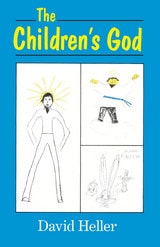
The Children's God
David Heller
University of Chicago Press, 1986
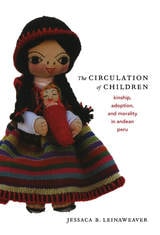
The Circulation of Children
Kinship, Adoption, and Morality in Andean PeruJessaca B. Leinaweaver
Duke University Press, 2008
Leinaweaver provides insight into the emotional and material factors that bring together and separate indigenous Andean families in the highland city of Ayacucho. She describes how child circulation is intimately linked to survival in the city, which has had to withstand colonialism, economic isolation, and the devastating civil war unleashed by the Shining Path. Leinaweaver examines the practice from the perspective of parents who send their children to live in other households, the adults who receive them, and the children themselves. She relates child circulation to international laws and norms regarding children’s rights, adoptions, and orphans, and to Peru’s history of racial conflict and violence. Given that history, Leinaweaver maintains that it is not surprising that child circulation, a practice associated with Peru’s impoverished indigenous community, is alternately ignored, tolerated, or condemned by the state.
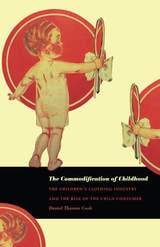
The Commodification of Childhood
The Children’s Clothing Industry and the Rise of the Child ConsumerDaniel Thomas Cook
Duke University Press, 2004
The Commodification of Childhood begins with the publication of the children’s wear industry’s first trade journal, The Infants’ Department, in 1917 and extends into the early 1960s, by which time the changes Cook chronicles were largely complete. Analyzing trade journals and other documentary sources, Cook shows how the industry created a market by developing and promulgating new understandings of the “nature,” needs, and motivations of the child consumer. He discusses various ways that discursive constructions of the consuming child were made material: in the creation of separate children’s clothing departments, in their segmentation and layout by age and gender gradations (such as infant, toddler, boys, girls, tweens, and teens), in merchants’ treatment of children as individuals on the retail floor, and in displays designed to appeal directly to children. Ultimately, The Commodification of Childhood provides a compelling argument that any consideration of “the child” must necessarily take into account how childhood came to be understood through, and structured by, a market idiom.

The Development of Reasoning in Children with Normal and Defective Hearing
Mildred Templin
University of Minnesota Press, 1950
The Erosion of Childhood
Valerie Polakow
University of Chicago Press, 1992
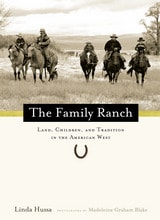
The Family Ranch
Land, Children, and Tradition in the American WestLinda Hussa
University of Nevada Press, 2010
Ranch families in the twenty-first century face many challenges, from competition with government-subsidized agribusiness corporations to tax laws that encourage development over agriculture and prevent the smooth transfer of land from one generation to the next. As a stabilizing force in the American West, ranch families play a critical role in our country, perhaps more so today than ever before, yet their stories have rarely been told. They contribute to our nation with the food they raise, the environments they protect, and the resources they manage, and they preserve our western heritage while holding the West open for the rest of us. In The Family Ranch, award-winning author Linda Hussa offers readers a personal, inside view into the lives of six diverse ranching families and the land that shapes their days and nights. Photographer Madeleine Graham Blake provides engaging and often moving images that portray each family at work and at play. With chapters on the critical issues that face each of them—from grazing rights and water use, to children's education and the emerging rural marketplace—these family profiles are set in a larger context. This is family ranching as it is now, a tracing of how it always was, but made far more complex in modern times. By combining their traditions with the tools of modern technology, these people strengthen the ideal of family and give the business of ranching a vibrant and viable future.The Family Ranch is rich in remarkable stories of what happens when parents, children, work, and nature come together for a lifetime of commitment. It speaks to urban and rural people in important ways, illuminating the realities of the western ranch and the people who make their living, and their lives, on it. Essential reading for people who love the West and care about its future. The Family Ranch inspires thoughts about tradition, values, and responsibility that are applicable to all communities.
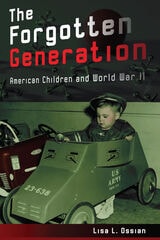
The Forgotten Generation
American Children and World War IILisa L. Ossian
University of Missouri Press, 2021
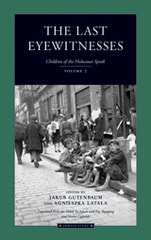
The Last Eyewitnesses, Volume 2
The Children of the Holocaust SpeakJakub Gutenbaum and Agnieszka Latala
Northwestern University Press, 2005
This book serves as a memorial to loved ones who do not even have a grave, as well as a tribute to those who risked their lives and families to save a Jewish child. A wide variety of experiences during the Nazi occupation of Poland are related with wrenching simplicity and candor, experiences that illustrate horrors and deprivation, but also present examples of courage and compassion.
These recollections-whether of hiding in forests or camouflaged bunkers, fighting with groups of partisans, enduring the horrors of concentration camps, or living in fear under disguised identities-serve as eloquent testimony to the depth, diversity, and richness of humanity under siege and offer a powerful lesson for future generations. Written by people who remained in Poland after the war, these accounts convey a great immediacy; the authors are not removed from the environment in which these experiences took place. The psychological impact on these child survivors and the difficulties they encountered even after the war are very poignant. The passing years have brought urgency to the publication of these stories, as those who wrote them are the last surviving eyewitnesses of these tumultuous events.
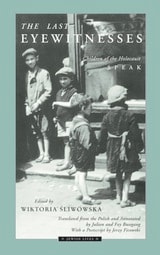
The Last Eyewitnesses
Children of the Holocaust SpeakWiktoria Sliwowska
Northwestern University Press, 1998
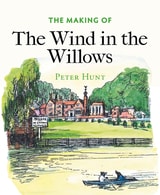
The Making of The Wind in the Willows
Peter Hunt
Bodleian Library Publishing, 2018
Peter Hunt explores the unusual trajectory of The Wind in the Willows through previously unpublished archival materials, original drawings, and fan letters (including one from Theodore Roosevelt). He identifies the colleagues and friends on whom Grahame is thought to have based the characters of Mole, Rat, Badger, and Toad, and explores the literary genres of boating, caravanning, and motoring on which the author drew. He also recounts the extraordinary correspondence surrounding the book’s first publication and the influence of two determined women—publisher’s agent Constance Smedley and the author’s wife, Elspeth Grahame—who helped turn the book into the classic for children we know and love today. Generously illustrated throughout, this book celebrates one of the most beloved works of children’s literature ever published.
The Mental Growth of Children From Two to Fourteen Years
A Study of the Predictive Value of the Minnesota Preschool ScalesFlorence Goodenough
University of Minnesota Press, 1942

The Neal-Schuman Guide to Recommended Children's Books and Media for Use with Every Elementary Subject
American Library Association, 2010
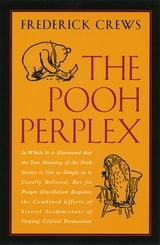
The Pooh Perplex
Frederick Crews
University of Chicago Press, 2003
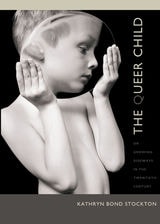
The Queer Child, or Growing Sideways in the Twentieth Century
Kathryn Bond Stockton
Duke University Press, 2009
Engaging and challenging the work of sociologists, legal theorists, and historians, Stockton coins the term “growing sideways” to describe ways of growing that defy the usual sense of growing “up” in a linear trajectory toward full stature, marriage, reproduction, and the relinquishing of childish ways. Growing sideways is a mode of irregular growth involving odd lingerings, wayward paths, and fertile delays. Contending that children’s queerness is rendered and explored best in fictional forms, including literature, film, and television, Stockton offers dazzling readings of works ranging from novels by Henry James, Radclyffe Hall, Virginia Woolf, Djuna Barnes, and Vladimir Nabokov to the movies Guess Who’s Coming to Dinner, The Hanging Garden, Heavenly Creatures, Hoop Dreams, and the 2005 remake of Willy Wonka and the Chocolate Factory. The result is a fascinating look at children’s masochism, their interactions with pedophiles and animals, their unfathomable, hazy motives (leading them at times into sex, seduction, delinquency, and murder), their interracial appetites, and their love of consumption and destruction through the alluring economy of candy.
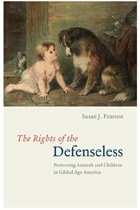
The Rights of the Defenseless
Protecting Animals and Children in Gilded Age AmericaSusan J. Pearson
University of Chicago Press, 2011
In 1877, the American Humane Society was formed as the national organization for animal and child protection. Thirty years later, there were 354 anticruelty organizations chartered in the United States, nearly 200 of which were similarly invested in the welfare of both humans and animals. In The Rights of the Defenseless, Susan J. Pearson seeks to understand the institutional, cultural, legal, and political significance of the perceived bond between these two kinds of helpless creatures, and the attempts made to protect them.
Unlike many of today’s humane organizations, those Pearson follows were delegated police powers to make arrests and bring cases of cruelty to animals and children before local magistrates. Those whom they prosecuted were subject to fines, jail time, and the removal of either animal or child from their possession. Pearson explores the limits of and motivation behind this power and argues that while these reformers claimed nothing more than sympathy with the helpless and a desire to protect their rights, they turned “cruelty” into a social problem, stretched government resources, and expanded the state through private associations. The first book to explore these dual organizations and their storied history, The Rights of the Defenseless will appeal broadly to reform-minded historians and social theorists alike.
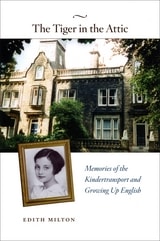
The Tiger in the Attic
Memories of the Kindertransport and Growing Up EnglishEdith Milton
University of Chicago Press, 2006
In this illuminating chronicle, Edith describes how she struggled to fit in and to conquer self-doubts about her German identity. Her realistic portrayal of the seemingly mundane yet historically momentous details of daily life during World War II slowly reveals istelf as a hopeful story about the kindness and generosity of strangers. She paints an account rich with colorful characters and intense relationships, uncanny close calls and unnerving bouts of luck that led to survival. Edith's journey between cultures continues with her final passage to America—yet another chapter in her life that required adjustment to a new world—allowing her, as she narrates it here, to visit her past as an exile all over again.
The Tiger in the Attic is a literary gem from a skilled fiction writer, the story of a thoughtful and observant child growing up against the backdrop of the most dangerous and decisive moment in modern European history. Offering a unique perspective on Holocaust studies, this book is both an exceptional and universal story of a young German-Jewish girl caught between worlds.
“Milton is brilliant at the small stroke . . . as well as broader ones.”—Alana Newhouse, New York Times Book Review
The Uncaring, Intricate World
A Field Diary, Zambezi Valley, 1984-1985Pamela Reynolds
Duke University Press, 2019
The Unwanted Child
The Fate of Foundlings, Orphans, and Juvenile Criminals in Early Modern GermanyJoel F. Harrington
University of Chicago Press, 2009
The baby abandoned on the doorstep is a phenomenon that has virtually disappeared from our experience, but in the early modern world, unwanted children were a very real problem for parents, government officials, and society. The Unwanted Child skillfully recreates sixteenth-century Nuremberg to explore what befell abandoned, neglected, abused, or delinquent children in this critical period.
Joel F. Harrington tackles this question by focusing on the stories of five individuals. In vivid and poignant detail, he recounts the experiences of an unmarried mother-to-be, a roaming mercenary who drifts in and out of his children’s lives, a civic leader handling the government’s response to problems arising from unwanted children, a homeless teenager turned prolific thief, and orphaned twins who enter state care at the age of nine. Braiding together these compelling portraits, Harrington uncovers and analyzes the key elements that link them, including the impact of war and the vital importance of informal networks among women. From the harrowing to the inspiring, The Unwanted Child paints a gripping picture of life on the streets five centuries ago.
Time for Childhoods
Young Poets and Questions of AgencyRachel Conrad
University of Massachusetts Press, 2020
Time for Childhoods presents a selection of striking twentieth-and twenty-first-century American poetry written by young people, and highlights how young poets imagined and shaped time for their own poetic purposes. Through close engagement with archival materials, as well as select interviews and correspondence with adult mentors, Conrad discerns how young writers figured social realities and political and racial injustices, and discusses what important advocates such as Gwendolyn Brooks and June Jordan can teach us about supporting the agency of young poets. This essential study demonstrates that young poets have much to contribute to ongoing conversations about time and power.
Tired of Weeping
Mother Love, Child Death, and Poverty in Guinea-BissauJonina Einarsdottir
University of Wisconsin Press, 2004
Too Many Children Left Behind
The U.S. Achievement Gap in Comparative PerspectiveBRUCE BRADBURY is associate professor at the Social Policy Research Centre at the University of New South Wales, Australia. MILES CORAK is professor of economics at the Graduate School of Public and International Affairs at the University of Ottawa. JANE WALDFOGFEL is professor of social work and public affairs at the Columbia University School of Social Work and visiting professor at the Centre for Analysis of Social Exclusion at the London School of Economics and Political Science. ELIZABETH WASHBROOK is lecturer in Quantitative Methods for Education at the Graduate School of Education and a member of the Centre for Multilevel Modelling at the University of Bristol, United Kingdom.
Russell Sage Foundation, 2015
The belief that with hard work and determination, all children have the opportunity to succeed in life is a cherished part of the American Dream. Yet, increased inequality in America has made that dream more difficult for many to obtain. In Too Many Children Left Behind, an international team of social scientists assesses how social mobility varies in the United States compared with Australia, Canada, and the United Kingdom. Bruce Bradbury, Miles Corak, Jane Waldfogel, and Elizabeth Washbrook show that the academic achievement gap between disadvantaged American children and their more advantaged peers is far greater than in other wealthy countries, with serious consequences for their future life outcomes. With education the key to expanding opportunities for those born into low socioeconomic status families, Too Many Children Left Behind helps us better understand educational disparities and how to reduce them.
Analyzing data on 8,000 school children in the United States, the authors demonstrate that disadvantages that begin early in life have long lasting effects on academic performance. The social inequalities that children experience before they start school contribute to a large gap in test scores between low- and high-SES students later in life. Many children from low-SES backgrounds lack critical resources, including books, high-quality child care, and other goods and services that foster the stimulating environment necessary for cognitive development. The authors find that not only is a child’s academic success deeply tied to his or her family background, but that this class-based achievement gap does not narrow as the child proceeds through school.
The authors compare test score gaps from the United States with those from three other countries and find smaller achievement gaps and greater social mobility in all three, particularly in Canada. The wider availability of public resources for disadvantaged children in those countries facilitates the early child development that is fundamental for academic success. All three countries provide stronger social services than the United States, including universal health insurance, universal preschool, paid parental leave, and other supports. The authors conclude that the United States could narrow its achievement gap by adopting public policies that expand support for children in the form of tax credits, parenting programs, and pre-K.
With economic inequalities limiting the futures of millions of children, Too Many Children Left Behind is a timely study that uses global evidence to show how the United States can do more to level the playing field.
Transgenerational Media Industries
Adults, Children, and the Reproduction of CultureDerek Johnson
University of Michigan Press, 2019
Derek Johnson presents an innovative perspective that looks beyond the simple category of “kids’ media” to consider how entertainment industry strategies invite producers and consumers alike to cross boundaries between adulthood and childhood, professional and amateur, new media and old. Revealing the social norms, reproductive ideals, and labor hierarchies on which such transformations depend, he identifies the lines of authority and power around which legacy media institutions like television, comics, and toys imagine their futures in a digital age. Johnson proposes that it is not strategies of media production, but of media reproduction, that are most essential in this context. To understand these critical intersections, he investigates transgenerational industry practice in television co-viewing, recruitment of adult comic readers as youth outreach ambassadors, media professionals’ identification with childhood, the branded management of adult fans of LEGO, and the labor of child YouTube video creators. These dynamic relationships may appear to disrupt generational and industry boundaries alike. However, by considering who media industries empower when generating the future in these reproductive terms and who they leave out, Johnson ultimately demonstrates how their strategies reinforce existing power structures.
This book makes vital contributions to media studies in its fresh approach to the intersections of adulthood and childhood, its attention to the relationship between legacy and digital media industries, and its advancement of dialogue between media production and consumption researchers. It will interest scholars in media industry studies and across media studies more broadly, with particular appeal to those concerned about the current and future reach of media industries into our lives.