Results by title
153 books match the query 'Cities and towns' and 29 start with t
THE MYSTERIES OF THE GREAT CITY
THE POLITICS OF URBAN DESIGN, 1877-1937JOHN FAIRFIELD
The Ohio State University Press, 1997
The Mysteries of the Great City examines the physical, cultural, and political transformations of the American city between the Gilded Age and the New Deal. Focusing on New York, Chicago, and Cincinnati, John Fairfield demonstrates that these transformations before and after the advent of city planning were the result of political decisions influenced by corporate and private wealth.
The expansion and reorganization of the great city stood out as the most visible symbol of the transformation. The new metropolitan form, with its skyscraping business center, industrial satellites, crowded working-class neighborhoods, and exclusive suburbs, embodied an emerging corporate order. But the metropolis also disguised the new order and gave it an apparent physical implacability and inevitability that obscured the role of choice in its creation and therefore placed it beyond criticism. Fairfield unravels the mysteries of the new form to reveal the centrality of power and politics in urban design.
While acknowledging that a great many factors shaped urban development, Fairfield underscores the decisive role of human design. He argues that American cities, both before and after the advent of professional planning, have always been in some measure “planned.” Discussing such figures as Frederick Law Olmsted, Henry George, Daniel Burnham, Frederic Howe, Edward Bassett, Robert E. Park, and Louis Wirth, Fairfield illuminates the political and intellectual conflicts among advocates of alternative paths of urban development.
The Mysteries of the Great City will enlighten all readers interested in the development of cities, particularly urban historians and planners. In pointing to the Gilded Age as a period of great possibilities of progressive reform, this study will also reward readers interested in the historical foundations of our modern society.
The City Moves West
Economic and Industrial Growth in Central West TexasBy Robert L. Martin
University of Texas Press, 1969
Where water supply, railway transportation, and oil reserves have been abundant, towns in central West Texas have prospered; where these resources are few, settlements have maintained only slight growth or disappeared entirely. Supporting his conclusions with profuse statistical evidence, Robert L. Martin traces the economic development of six major towns in the area, all with over 10,000 residents in 1960: Lamesa, Snyder, Sweetwater, Big Spring, Midland, and Odessa.
Ranching brought the first settlers to West Texas in the 1870s and dominated the economy until 1900. In the 1880s farmers began to arrive, and between 1900 and 1930 agricultural production replaced ranching as the most important industry.
With the influx of population came the railroad, and small settlements were established along its route. Those with sufficient water supply prospered and, as counties were organized, became county seats and supply centers for the surrounding agricultural regions.
The land could not support a large agricultural population, and agriculture-related manufactures soon drew population to the towns. However, it was not until the oil discoveries of the 1920's that the modern city emerged. After World War II, oil production and oil-related industries generated great wealth and caused a boom in population growth and urban development. Despite the growth in prosperity, the economy is precariously balanced. Urban centers dependent on oil—an industry of limited life—have matured in an area without sufficient water or agricultural resources to support them. Martin concludes that, without careful planning and a solution to the water problem, these cities could some day become ghost towns on the plains.
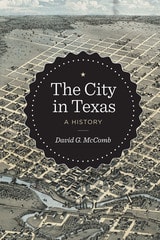
The City in Texas
A HistoryBy David McComb
University of Texas Press, 2015
Texans love the idea of wide-open spaces and, before World War II, the majority of the state’s people did live and work on the land. Between 1940 and 1950, however, the balance shifted from rural to urban, and today 88 percent of Texans live in cities and embrace the amenities of urban culture. The rise of Texas cities is a fascinating story that has not been previously told. Yet it is essential for understanding both the state’s history and its contemporary character.
In The City in Texas, acclaimed historian David G. McComb chronicles the evolution of urban Texas from the Spanish Conquest to the present. Writing in lively, sometimes humorous and provocative prose, he describes how commerce and politics were the early engines of city growth, followed by post–Civil War cattle shipping, oil discovery, lumbering, and military needs. McComb emphasizes that the most transformative agent in city development was the railroad. This technology—accompanied by telegraphs that accelerated the spread of information and mechanical clocks that altered concepts of time—revolutionized transportation, enforced corporate organization, dictated town location, organized space and architecture, and influenced thought. McComb also thoroughly explores the post–World War II growth of San Antonio, Dallas, Fort Worth, Austin, and Houston as incubators for businesses, educational and cultural institutions, and health care centers.
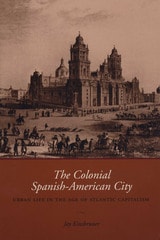
The Colonial Spanish-American City
Urban Life in the Age of Atlantic CapitalismBy Jay Kinsbruner
University of Texas Press, 2005
The colonial Spanish-American city, like its counterpart across the Atlantic, was an outgrowth of commercial enterprise. A center of entrepreneurial activity and wealth, it drew people seeking a better life, with more educational, occupational, commercial, bureaucratic, and marital possibilities than were available in the rural regions of the Spanish colonies. Indeed, the Spanish-American city represented hope and opportunity, although not for everyone.
In this authoritative work, Jay Kinsbruner draws on many sources to offer the first history and interpretation in English of the colonial Spanish-American city. After an overview of pre-Columbian cities, he devotes chapters to many important aspects of the colonial city, including its governance and administrative structure, physical form, economy, and social and family life. Kinsbruner's overarching thesis is that the Spanish-American city evolved as a circumstance of trans-Atlantic capitalism. Underpinning this thesis is his view that there were no plebeians in the colonial city. He calls for a class interpretation, with an emphasis on the lower-middle class. His study also explores the active roles of women, many of them heads of households, in the colonial Spanish-American city.
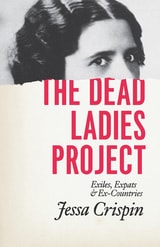
The Dead Ladies Project
Exiles, Expats, and Ex-CountriesJessa Crispin
University of Chicago Press, 2015
The Dead Ladies Project is an account of that journey—but it’s also much, much more. Fascinated by exile, Crispin travels an itinerary of key locations in its literary map, of places that have drawn writers who needed to break free from their origins and start afresh. As she reflects on William James struggling through despair in Berlin, Nora Barnacle dependant on and dependable for James Joyce in Trieste, Maud Gonne fomenting revolution and fostering myth in Dublin, or Igor Stravinsky starting over from nothing in Switzerland, Crispin interweaves biography, incisive literary analysis, and personal experience into a rich meditation on the complicated interactions of place, personality, and society that can make escape and reinvention such an attractive, even intoxicating proposition.
Personal and profane, funny and fervent, The Dead Ladies Project ranges from the nineteenth century to the present, from historical figures to brand-new hangovers, in search, ultimately, of an answer to a bedrock question: How does a person decide how to live their life?
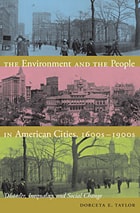
The Environment and the People in American Cities, 1600s-1900s
Disorder, Inequality, and Social ChangeDorceta E. Taylor
Duke University Press, 2009
Taylor traces the progression of several major thrusts in urban environmental activism, including the alleviation of poverty; sanitary reform and public health; safe, affordable, and adequate housing; parks, playgrounds, and open space; occupational health and safety; consumer protection (food and product safety); and land use and urban planning. At the same time, she presents a historical analysis of the ways race, class, and gender shaped experiences and perceptions of the environment as well as environmental activism and the construction of environmental discourses. Throughout her analysis, Taylor illuminates connections between the social and environmental conflicts of the past and those of the present. She describes the displacement of people of color for the production of natural open space for the white and wealthy, the close proximity between garbage and communities of color in early America, the cozy relationship between middle-class environmentalists and the business community, and the continuous resistance against environmental inequalities on the part of ordinary residents from marginal communities.
The First Urban Churches 1
Methodological FoundationsJames R. Harrison
SBL Press, 2015
A fresh look at early urban churches
This collection of essays examines the urban context of early Christian churches in the first-century Roman world. A city-by-city investigation of the early churches in the New Testament clarifies the challenges, threats, and opportunities that urban living provided for early Christians. Readers will come away with a better understanding of how scholars assemble an accurate picture of the cities in which the first Christians flourished.
Features:
- Analysis of urban evidence of the inscriptions, papyri, archaeological remains, coins, and iconography
- Discussion of how to use different types of evidence responsibly
- Outline of what constitutes proper methodological use for establishing a nuanced, informed portrait of ancient urban life
The First Urban Churches 2
Roman CorinthJames R. Harrison
SBL Press, 2016
Investigate the challenges, threats, and opportunities experienced by the early church
Volume two of The First Urban Churches focuses on the urban context of Christian churches in first-century Roman Corinth. An investigation of the material evidence of Corinth helps readers today understand properly the challenges, threats, and opportunities that the early Corinthian believers faced in the city. The essays demonstrate decisively the difference that such an approach makes in grappling with the meaning and context of the Corinthian epistles in the New Testament.
Features:
- Analysis of urban evidence of the inscriptions, papyri, archaeological remains, coins, and iconography
- Proposed reeconstructions of the past and its social, religious, and political significance
- A nuanced, informed portrait of ancient urban life in Corinth
The First Urban Churches 3
EphesusJames R. Harrison
SBL Press, 2018
Investigate the challenges, threats, and opportunities experienced by the early church in Ephesus
The third installment of The First Urban Churches focuses on the urban context of Christian churches in first-century Ephesus. As with previous volumes, contributors illustrate how an investigation of the material evidence will help readers understand properly the challenges, threats, and opportunities that the early Ephesian believers faced in that city. Brad Bitner, James R. Harrison, Michael Haxby, Fredrick J. Long, Guy M. Rogers, Michael Theophilos, Paul Trebilco, and Stephan Witetschek demonstrate decisively the difference that such an approach makes in grappling with the meaning and context of the New Testament writings, particularly Ephesians, Acts, and Revelation.
Features
- Analysis of urban evidence of the inscriptions, papyri, archaeological remains, coins, and iconography
- Proposed reconstructions of the past and its social, religious and political significance
- A nuanced, informed portrait of ancient urban life in Ephesus
The First Urban Churches 4
Roman PhilippiJames R. Harrison
SBL Press, 2018
Investigate the challenges and opportunities experienced by the early church
This fourth installment of The First Urban Churches, edited by James R. Harrison and L. L. Welborn, focuses on the urban context of Christian churches in first-century Roman Philippi. The international team of New Testament and classical scholars contributing to the volume present essays that use inscriptions, papyri, archaeological remains, coins, and iconography to examine the rivalries, imperial context, and ecclesial setting of the Philippian church.
Features:
- Analysis of the material and epigraphic evidence relating to first- and second-century CE Roman Philippi
- Examination of important passages from Philippians within their ancient urban context
- Investigation of the social composition and membership of the Philippian church from the archaeological and documentary evidence
The First Urban Churches 5
Colossae, Hierapolis, and LaodiceaJames R. Harrison
SBL Press, 2019
A fresh examination of early Christianity by an international team of New Testament and classical scholars
Volume 5 of The First Urban Churches investigates the urban context of Christian churches in first-century Roman Colossae, Hierapolis, and Laodicea. Building on the methodologies introduced in the first volume and supplementing the in-depth studies of Corinth, Ephesus, and Philippi (vols. 2-4), essays in this volume challenge readers to reexamine preconceived understandings of the early church and to grapple with the meaning and context of Christianity in its first-century Roman colonial context.
Features:
- Analysis of urban evidence found in inscriptions, papyri, archaeological remains, coins, and iconography
- Proposed reconstructions of the past and its social, religious, and political significance
- A nuanced, informed portrait of ancient urban life in the cities of the Lycus Valley
The First Urban Churches 6
Rome and OstiaJames R. Harrison
SBL Press, 2021
An examination of early Roman Christianity by New Testament and classical scholars
Building on the methodologies introduced in the first volume of The First Urban Churches and supplementing the in-depth studies of Corinth, Ephesus, Philippi, Colossae, Hierapolis, and Laodicea (vols. 2–5), essays in this volume challenge readers to reexamine what we know about the early church within Rome and the port city of Ostia. In the introductory section of the book, James R. Harrison discusses the material and documentary evidence of both cities, which sets the stage for the essays that follow. In the second section, Mary Jane Cuyler, James R. Harrison, Richard Last, Annelies Moeser, Thomas A. Robinson, Michael P. Theophilos, and L. L. Welborn examine a range of topics, including the Ostian Synagogue, Romans 1:2–4 against the backdrop of Julio-Claudian adoption and apotheosis traditions, and the epistle of 1 Clement. In the final section of this volume, Jutta Dresken-Welland and Mark Reasoner engage Peter Lampe’s magnum opus From Paul to Valentinus; Lampe wraps up the section and the volume with a response. Throughout, readers are provided with a rich demonstration of how the material evidence of the city of Rome illuminates the emergence of Roman Christianity, especially in the first century CE.
The First Urban Churches 7
ThessalonicaJames R. Harrison
SBL Press, 2022
The First Urban Churches 7 includes essays focused on the development of early Christianity from the mid-first century through the sixth century CE in the ancient Macedonian city of Thessalonica. An international group of contributors traces the emergence of Thessalonica’s house churches through a close study of the archaeological remains, inscriptions, coins, iconography, and Paul’s two letters to the Thessalonians. After a detailed introduction to the city, including the first comprehensive epigraphic profile of Thessalonica from the Hellenistic age to the Roman Empire, topics discussed include the Roman emperor’s divine honors, coins and inscriptions as sources of imperial propaganda, Thessalonian family bonds, Paul’s apostolic self-image, the role of music at Thessalonica and in early Christianity, and Paul’s response to the Thessalonian Jewish community. Contributors include D. Clint Burnett, Alan H. Cadwallader, Rosemary Canavan, James R. Harrison, Julien M. Ogereau, Isaac T. Soon, Angela Standhartinger, Michael P. Theophilos, and Joel R. White.
The First Urban Churches 8
Galatia and LycaoniaJames R. Harrison
SBL Press, 2025
The Lettered City
Angel Rama
Duke University Press, 1996
Starting with the colonial period, Rama undertakes a historical analysis of the hegemonic influences of the written word. He explores the place of writing and urbanization in the imperial designs of the Iberian colonialists and views the city both as a rational order of signs representative of Enlightenment progress and as the site where the Old World is transformed—according to detailed written instructions—in the New. His analysis continues by recounting the social and political challenges faced by the letrados as their roles in society widened to include those of journalist, fiction writer, essayist, and political leader, and how those roles changed through the independence movements of the nineteenth century. The coming of the twentieth century, and especially the gradual emergence of a mass reading public, brought further challenges. Through a discussion of the currents and countercurrents in turn-of-the-century literary life, Rama shows how the city of letters was finally “revolutionized.”
Already crucial in setting the terms for debate concerning the complex relationships among intellectuals, national formations, and the state, this elegantly written and translated work will be read by Latin American scholars in a wide range of disciplines, and by students and scholars in the fields of anthropology, cultural geography, and postcolonial studies.
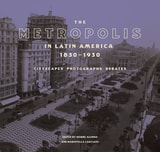
The Metropolis in Latin America, 1830-1930
Cityscapes, Photographs, DebatesIdurre Alonso
J. Paul Getty Trust, The, 2021
In the century between 1830 and 1930, following independence from Spain and Portugal, major cities in Latin America experienced large-scale growth, with the development of a new urban bourgeois elite interested in projects of modernization and rapid industrialization. At the same time, the lower classes were eradicated from old city districts and deported to the outskirts. The Metropolis in Latin America, 1830–1930 surveys this expansion, focusing on six capital cities—Havana, Mexico City, Rio de Janeiro, Buenos Aires, Santiago de Chile, and Lima—as it examines sociopolitical histories, town planning, art and architecture, photography, and film in relation to the metropolis.
Drawing from the Getty Research Institute’s vast collection of books, prints, and photographs from this period, largely unpublished until now, this volume reveals the cities’ changes through urban panoramas, plans depicting new neighborhoods, and photographs of novel transportation systems, public amenities, civic spaces, and more. It illustrates the transformation of colonial cities into the monumental modern metropolises that, by the end of the 1920s, provided fertile ground for the emergence of today’s Latin American megalopolis.
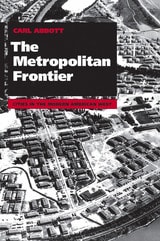
The Metropolitan Frontier
Cities in the Modern American WestCarl Abbott
University of Arizona Press, 1993
The Metropolitan Frontier places this last half-century of Western history in its urban context, making it the first comprehensive overview of urban growth in the region. Integrating the urban experience of all nineteen Western states, Carl Abbott ranges for evidence from Honolulu to Houston and from Fargo to Fairbanks to show how Western cities organize the region's vast spaces and connect them to the even larger sphere of the world economy. His survey moves from economic change to social and political response, examining the initial boom of the 1940s, the process of change in the following decades, and the ultimate impact of Western cities on their environments, on the Western regional character, and on national identity.
Today, a steadily decreasing number of Western workers are engaged in rural industries, but Western cities continue to grow. As ecological and social crises begin to affect those cities, Abbott’s study will prove required reading for historians, geographers, sociologists, urban planners, and all citizens concerned with America’s future.
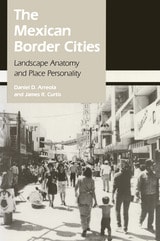
The Mexican Border Cities
Landscape Anatomy and Place PersonalityDaniel D. Arreola and James R. Curtis
University of Arizona Press, 1993
The Mexican Border Cities draws on extensive field research to examine eighteen settlements along the 2,000-mile border, ranging from towns of less than 10,000 people to dynamic metropolises of nearly a million. The authors chronicle the cities' growth and compare their urban structure, analyzing them in terms of tourist districts, commercial landscapes, residential areas, and industrial and transportation quarters.
Arreola and Curtis contend that, despite their proximity to the United States, the border cities are fundamentally Mexican places, as distinguished by their cultural landscapes, including town plan, land-use pattern, and building fabric. Their study, richly illustrated with over 75 maps and photographs, offers a provocative and insightful interpretation of the geographic anatomy and personality of these fascinating—and rapidly changing—communities.
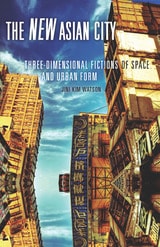
The New Asian City
Three-Dimensional Fictions of Space and Urban FormJini Kim Watson
University of Minnesota Press, 2011
Under Jini Kim Watson’s scrutiny, the Asian Tiger metropolises of Seoul, Taipei, and Singapore reveal a surprising residue of the colonial environment. Drawing on a wide array of literary, filmic, and political works, and juxtaposing close readings of the built environment, Watson demonstrates how processes of migration and construction in the hypergrowth urbanscapes of the Pacific Rim crystallize the psychic and political dramas of their colonized past and globalized present.
Examining how newly constructed spaces—including expressways, high-rises, factory zones, department stores, and government buildings—become figured within fictional and political texts uncovers how massive transformations of citizenries and cities were rationalized, perceived, and fictionalized. Watson shows how literature, film, and poetry have described and challenged contemporary Asian metropolises, especially around the formation of gendered and laboring subjects in these new spaces. She suggests that by embracing the postwar growth-at-any-cost imperative, they have buttressed the nationalist enterprise along neocolonial lines.
The New Asian City provides an innovative approach to how we might better understand the gleaming metropolises of the Pacific Rim. In doing so, it demonstrates how reading cultural production in conjunction with built environments can enrich our knowledge of the lived consequences of rapid economic and urban development.
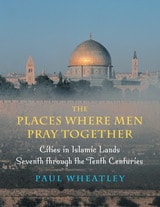
The Places Where Men Pray Together
Cities in Islamic Lands, Seventh through the Tenth CenturiesPaul Wheatley
University of Chicago Press, 2001
Building on the tenth-century geographer al-Maqdisi's writings on urban centers of the Islamic world, buttressed by extensive comparative material from roadbooks, topographies, histories, adab literatures, and gazetteers of the time, Wheatley identifies the main functions of different Islamic urban centers. Chapters on each of the thirteen centers that al-Maqdisi identified, ranging from the Atlantic to the Indus and from the Caspian to the Sudan, form the heart of this book. In each case Wheatley shows how specific agglomeration and accessibility factors combined to make every city functionally distinct as a creator of effective space. He also demonstrates that, far from revolutionizing every aspect of life in these cities, the adoption of Islam often affected the development of these cities less than previously existing local traditions.
The Places Where Men Pray Together is a monumental work that will speak to scholars and readers across a broad variety of disciplines, from historians, anthropologists, and sociologists to religious historians, archaeologists, and geographers.
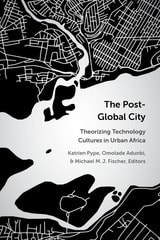
The Post-Global City
Theorizing Technology Cultures in Urban AfricaEditors: Katrien Pype, Omolade Adunbi and Michael M.J. Fischer
University of Michigan Press, 2026
The Post-Global City seeks to open a new field of analytical inquiry that examines knowledge production and technological developments in urban Africa rooted in local, historical realities, while also partaking in transnational, global processes. This work explores the ways in which urban residents have utilized technologies and networks to operate around, under, and beyond the state and the international “order,” and challenges the stereotypical images of Africa as a continent either devoid of technology or filled with either broken technologies or technologies from the Global North or Asia. This book focuses on accounts and critiques of new “Rising Africa” ideologies, examining megaprojects such as geothermal and hydroelectric plants with new networked startups that circumvent state and patriarchal hierarchies, women vendors selling online, youths designing and constructing oil refining technologies and tech startups working across diasporas.
Grounded in ethnographic fieldwork carried out in urban spaces in Nigeria, Kenya, the Democratic Republic of Congo, Sudan, Gabon, Cameroon, and Tanzania, The Post-Global City brings together voices from Africa, Europe, and the United States to inquire into the dialectics between technology and the urban on the African continent.
The Return of the Neighborhood as an Urban Strategy
Edited by Michael A. Pagano
University of Illinois Press, 2015
The topics focus on sustainable capital and societal investments in people and firms at the neighborhood level. Proposed solutions cover a range of possibilities for enhancing the quality of life for individuals, households, and neighborhoods. These include everything from microenterprises to factories; from social spaces for collective and social action to private facilities; from affordable housing and safety to gated communities; and from neighborhood public education to cooperative, charter, and private schools.
Contributors: Andy Clarno, Teresa Córdova, Nilda Flores-González, Pedro A. Noguera, Alice O'Connor, Mary Pattillo, Janet Smith, Nik Theodore, Elizabeth S. Todd-Breland, Stephanie Truchan, and Rachel Weber.
The Urban Apparatus
Mediapolitics and the CityReinhold Martin
University of Minnesota Press, 2017
Urbanization is a system of power and knowledge, and today’s city functions through the expansive material infrastructures of the urban order. In The Urban Apparatus, Reinhold Martin analyzes urbanization and the contemporary city in aesthetic, socioeconomic, and mediapolitical terms. He argues that understanding the city as infrastructure reveals urbanization to be a way of imparting functional, aesthetic, and cognitive order to a contradictory, doubly bound neoliberal regime.
Blending critical philosophy, political theory, and media theory, The Urban Apparatus explores how the aesthetics of cities and their political economies overlap. In a series of ten essays, with a detailed theoretical introduction, Martin explores questions related to urban life, drawn from a wide range of global topics—from the fiscal crisis in Detroit to speculative development in Mumbai to the landscape of Mars, from discussions of race and the environment to housing and economic inequality. Each essay proposes a particular “mediator” (or a material complex) that is shaped by imaginative practices, each answering the question “What is a city, today?”
The Urban Apparatus serves as an “urban” bookend to the architectural questions explored by Martin in his earlier book Utopia’s Ghost, and ultimately offers readers a way to think politically about urbanization.
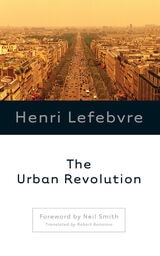
The Urban Revolution
Henri Lefebvre
University of Minnesota Press, 2003
Theorizing the City
The New Urban Anthropology ReaderLow, Setha M.
Rutgers University Press, 1999
Anthropological perspectives are not often represented in urban studies, even though many anthropologists have been contributing actively to theory and research on urban poverty, racism, globalization, and architecture. The New Urban Anthropology Reader corrects this omission by presenting 12 cross-cultural case studies focusing on the analysis of space and place.
Thousands of Broadways
Dreams and Nightmares of the American Small TownRobert Pinsky
University of Chicago Press, 2009
Broadway, the main street that runs through Robert Pinsky’s home town of Long Branch, New Jersey, was once like thousands of other main streets in small towns across the country. But for Pinsky, one of America’s most admired poets and its former Poet Laureate, this Broadway is the point of departure for a lively journey through the small towns of the American imagination. Thousands of Broadways explores the dreams and nightmares of such small towns—their welcoming yet suffocating, warm yet prejudicial character during their heyday, from the early nineteenth century through World War II.
The citizens of quintessential small towns know one another extensively and even intimately, but fail to recognize the geniuses and criminal minds in their midst. Bringing the works of such figures as Mark Twain, William Faulkner, Alfred Hitchcock, Thornton Wilder, Willa Cather, and Preston Sturges to bear on this paradox, as well as reflections on his own time growing up in a small town, Pinsky explores how such imperfect knowledge shields communities from the anonymity and alienation of modern life. Along the way, he also considers how small towns can be small minded—in some cases viciously judgmental and oppressively provincial. Ultimately, Pinsky examines the uneasy regard that creative talents like him often have toward the small towns that either nurtured or thwarted their artistic impulses.
Of living in a small town, Sherwood Anderson once wrote that "the sensation is one never to be forgotten. On all sides are ghosts, not of the dead, but of living people." Passionate, lyrical, and intensely moving, Thousands of Broadways is a rich exploration of this crucial theme in American literature by one of its most distinguished figures.
Toward One Oregon
Rural-Urban Interdependence and the Evolution of a StateMichael Hibbard
Oregon State University Press, 2011
Town and Country
Race Relations in an Urban-Rural Context, Arkansas, 1865–1905John Graves
University of Arkansas Press, 1990
A thoroughly researched and extensively documented look at race relations in Arkansas druing the forty years after the Civil War, Town and Country focuses on the gradual adjustment of black and white Arkansans to the new status of the freedman, in both society and law, after generations of practicing the racial etiquette of slavery.
John Graves examines the influences of the established agrarian culture on the developing racial practices of the urban centers, where many blacks living in the towns were able to gain prominence as doctors, lawyers, successful entrepreneurs, and political leaders. Despite the tension, conflict, and disputes within and between the voice of the government and the voice of the people in an arduous journey toward compromise, Arkansas was one of the most progressive states during Reconstruction in desegregating its people.
Town and Country makes a significant contribution to the history of the postwar South and its complex engagement with the race issue.
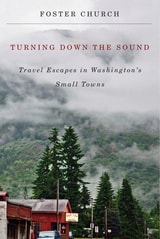
Turning Down the Sound
Travel Escapes in Washington's Small TownsFoster Church
Oregon State University Press, 2014
As in his previous book, Discovering Main Street: Travel Adventures in Small Towns of the Northwest, Church employs the finesse of his Pulitzer-Prize-winning journalism. He also shares his passion for encouraging tourists down less traveled paths—paths that curve beside valleys and wheat fields, travel along orchards and straits, and abut mountains and rivers.
Once inside these small towns, local flavors abound. Church reveals how each community’s unique character informs its hospitality and culture: In Morton, the abandoned Roxy movie theater was re-opened to host lectures and live performances. In the town of Palouse, a once-lonesome farming community in the Washington wheat country is now home to antiques shops and art galleries, and in Pomeroy, a pioneering legacy is celebrated in a lively annual festival.
With maps, photographs, and recommendations for more than thirty-five towns in all corners of the state, Turning Down the Sound vastly expands the resources available for readers and travelers keen on encountering what Church calls American tourism’s last frontier: its small towns.