Results by title
718 books match the query 'Civil rights' and 162 start with t
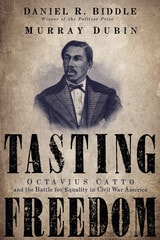
Tasting Freedom
Octavius Catto and the Battle for Equality in Civil War AmericaDaniel R. Biddle
Temple University Press, 2017
Octavius Valentine Catto was an orator who shared stages with Frederick Douglass, a second baseman on Philadelphia’s best black baseball team, a teacher at the city’s finest black school and an activist who fought in the state capital and on the streets for equal rights. With his racially-charged murder, the nation lost a civil rights pioneer—one who risked his life a century before Selma and Birmingham.
In Tasting Freedom Murray Dubin and Pulitzer Prize winner Dan Biddle painstakingly chronicle the life of this charismatic black leader—a “free” black whose freedom was in name only. Born in the American south, where slavery permeated everyday life, he moved north where he joined the fight to be truly free—free to vote, go to school, ride on streetcars, play baseball and even participate in July 4th celebrations.
Catto electrified a biracial audience in 1864 when he proclaimed, “There must come a change,” calling on free men and women to act and educate the newly freed slaves. With a group of other African Americans who called themselves a “band of brothers,” they challenged one injustice after another. Tasting Freedom presents the little-known stories of Catto and the men and women who struggled to change America.

Tatars of the Crimea
Duke University Press, 1988
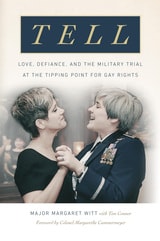
Tell
Love, Defiance, and the Military Trial at the Tipping Point for Gay RightsMajor Margaret Witt
University Press of New England, 2017
Texas Mexican Americans and Postwar Civil Rights
By Maggie Rivas-Rodriguez
University of Texas Press, 2015
The American Non-Dilemma
Racial Inequality Without RacismNancy DiTomaso
Russell Sage Foundation, 2013
The Art of Protest
Culture and Activism from the Civil Rights Movement to the PresentT.V. Reed
University of Minnesota Press, 2019
A second edition of the classic introduction to arts in social movements, fully updated and now including Black Lives Matter, Occupy Wall Street, and new digital and social media forms of cultural resistance
The Art of Protest, first published in 2006, was hailed as an “essential” introduction to progressive social movements in the United States and praised for its “fluid writing style” and “well-informed and insightful” contribution (Choice Magazine). Now thoroughly revised and updated, this new edition of T. V. Reed’s acclaimed work offers engaging accounts of ten key progressive movements in postwar America, from the African American struggle for civil rights beginning in the 1950s to Occupy Wall Street and Black Lives Matter in the twenty-first century.
Reed focuses on the artistic activities of these movements as a lively way to frame progressive social change and its cultural legacies: civil rights freedom songs, the street drama of the Black Panthers, revolutionary murals of the Chicano movement, poetry in women’s movements, the American Indian Movement’s use of film and video, anti-apartheid rock music, ACT UP’s visual art, digital arts in #Occupy, Black Lives Matter rap videos, and more.
Through the kaleidoscopic lens of artistic expression, Reed reveals how activism profoundly shapes popular cultural forms. For students and scholars of social change and those seeking to counter reactionary efforts to turn back the clock on social equality and justice, the new edition of The Art of Protest will be both informative and inspiring.
The Art of Protest
Culture and Activism from the Civil Rights Movement to the Streets of SeattleT.V. Reed
University of Minnesota Press, 2005
The Aware Saga
Civil Society and Public Morality in SingaporeEdited by Terence Chong
National University of Singapore Press, 2011
In this book, academics and public intellectuals examine the AWARE saga within the context of Singapore's civil society, considering the political and historical background and how the issues it raised relate to contemporary societal trends. In addition to documenting a milestone event for Singapore's civil society, the authors offer provocative interpretations that will interest a broad range of readers.

The Bill of Rights in the Modern State
Edited by Geoffrey R. Stone, Richard A. Epstein, and Cass R. Sunstein
University of Chicago Press, 1992
The contributors to this volume are among the most prominent constitutional scholars in the country. Most of the essays are grouped in pairs, each of which offers conflicting positions on current constitutional controversies, including property rights, freedom of religion, freedom of speech, levels of generality in constitutional interpreation, and unemumerated rights.
The contributors are: Bruce Ackerman, Mary E. Becker, Ronald Dworkin, Frank H. Easterbrook, Richard A. Epstein, Charles Fried, Mary Ann Glendon, Philip B. Kurland, Frank J. Michaelman, Michael W. McConnell, Richard A. Posner, Kathleen M. Sullivan, John Paul Stevens, David A. Strauss, and Cass R. Sunstein.
"A thoughtful and well coordinated set of exchanges between leading modern constitutional theorists about the most significant issues related to the Bill of Rights and the Welfare State. These issues are debated through penetrating essays by opposing theorists who get to the heart of these issues and provide significant answers to their debate opponents' points."—Thomas R. Van Dervort, Southeastern Political Review
The Biopolitics of Disability
Neoliberalism, Ablenationalism, and Peripheral EmbodimentDavid T. Mitchell with Sharon L. Snyder
University of Michigan Press, 2015
The Black Laws
Race and the Legal Process in Early OhioStephen Middleton
Ohio University Press, 2005
The Black Reproductive
Unfree Labor and Insurgent MotherhoodSara Clarke Kaplan
University of Minnesota Press, 2021
How Black women’s reproduction became integral to white supremacy, capitalism, and heteropatriarchy—and remains key to their dismantling
In the United States, slavery relied on the reproduction and other labors of unfree Black women. Nearly four centuries later, Black reproductivity remains a vital technology for the creation, negotiation, and transformation of sexualized and gendered racial categories. Yet even as Black reproduction has been deployed to resolve the conflicting demands of white supremacy, capitalism, and heteropatriarchy, Sara Clarke Kaplan argues that it also holds the potential to destabilize the oppressive systems it is supposed to maintain.
The Black Reproductive convenes Black literary and cultural studies with feminist and queer theory to read twentieth- and twenty-first-century texts and images alongside their pre-emancipation counterparts. These provocative, unexpected couplings include how Toni Morrison’s depiction of infanticide regenders Orlando Patterson’s theory of social death, and how Mary Prince’s eighteenth-century fugitive slave narrative is resignified through the representational paradoxes of Gayl Jones’s blues novel Corregidora. Throughout, Kaplan offers new perspectives on Black motherhood and gendered labor, from debates over the relationship between President Thomas Jefferson and Sally Hemings, to the demise of racist icon Aunt Jemima, to discussions of Black reproductive freedom and abortion.
The Black Reproductive gives vital insight into the historic and ongoing conditions of Black unfreedom, and points to the possibilities for a Black feminist practice of individual and collective freedom.
The Black Struggle for Public Schooling in Nineteenth-Century Illinois
Robert L. McCaul
Southern Illinois University Press, 1987
In the pre-Civil War and Civil War periods the Illinois black code deprived blacks of suffrage and court rights, and the Illinois Free Schools Act kept most black children out of public schooling. But, as McCaul documents, they did not sit idly by. They applied the concepts of “bargaining power” (rewarding, punishing, and dialectical) and the American ideal of “community” to participate in winning two major victories during this era.
By the use of dialectical power, exerted mainly via John Jones’ tract, The Black Laws of Illinois, they helped secure the repeal of the state’s black code; by means of punishing power, mainly through boycotts and ‘‘invasions,’’ they exerted pressures that brought a cancellation of the Chicago public school policy of racial segregation.
McCaul makes clear that the blacks’ struggle for school rights is but one of a number of such struggles waged by disadvantaged groups (women, senior citizens, ethnics, and immigrants). He postulates a “stage’’ pattern for the history of the black struggle—a pattern of efforts by federal and state courts to change laws and constitutions, followed by efforts to entice, force, or persuade local authorities to comply with the laws and constitutional articles and with the decrees of the courts.
The Black Tax
150 Years of Theft, Exploitation, and Dispossession in AmericaAndrew W. Kahrl
University of Chicago Press, 2024
American taxation is unfair, and it is most unfair to the very people who critically need its support. Not only do taxpayers with fewer resources—less wealth, power, and land—pay more than the well-off, but they are forced to fight for their rights within an unjust system that undermines any attempts to improve their position or economic standing. In The Black Tax, Andrew W. Kahrl reveals the shocking history and ruinous consequences of inequitable and predatory tax laws in this country—above all, widespread and devastating racial dispossession.
Throughout the twentieth century, African Americans acquired substantial amounts of property nationwide. But racist practices, obscure processes, and outright theft diminished their holdings and their power. Of these, Kahrl shows, few were more powerful, or more quietly destructive, than property taxes. He examines all the structural features and hidden traps within America’s tax system that have forced Black Americans to pay more for less and stripped them of their land and investments, and he reveals the staggering cost. The story of America’s now enormous concentration of wealth at the top—and the equally enormous absence of wealth among most Black households—has its roots here.
Kahrl exposes the painful history of these practices, from Reconstruction up to the present, and tells, for the first time, the story of Black Americans’ experiences as taxpayers and their fight for a more fair and equitable system for raising and spending the public’s money. This is a history that deepens our understanding of the disadvantages and persistent inequalities that African American households continue to face and reveals hidden engines of economic inequality in America. Detailing the hows and whys of America’s profoundly unequal tax system, The Black Tax equips readers with the knowledge needed to combat inequality and injustice today.
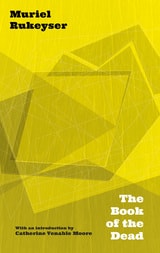
The Book of the Dead
Muriel Rukeyser
West Virginia University Press, 2018
Published for the first time alongside photographs by Nancy Naumburg, who accompanied Rukeyser to Gauley Bridge in 1936, this edition of The Book of the Dead includes an introduction by Catherine Venable Moore, whose writing on the topic has been anthologized in Best American Essays.
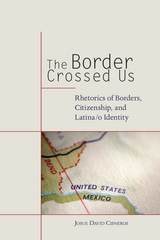
The Border Crossed Us
Rhetorics of Borders, Citizenship, and Latina/o IdentityJosue David Cisneros
University of Alabama Press, 2013
Explores efforts to restrict and expand notions of US citizenship as they relate specifically to the US-Mexico border and Latina/o identity.
Borders and citizenship go hand in hand. Borders define a nation as a territorial entity and create the parameters for national belonging. But the relationship between borders and citizenship breeds perpetual anxiety over the purported sanctity of the border, the security of a nation, and the integrity of civic identity.
In The Border Crossed Us, Josue David Cisneros addresses these themes as they relate to the US-Mexico border, arguing that issues ranging from the Mexican-American War of 1846–1848 to contemporary debates about Latina/o immigration and border security are negotiated rhetorically through public discourse. He explores these rhetorical battles through case studies of specific Latina/o struggles for civil rights and citizenship, including debates about Mexican American citizenship in the 1849 California Constitutional Convention, 1960s Chicana/o civil rights movements, and modern-day immigrant activism.
Cisneros posits that borders—both geographic and civic—have crossed and recrossed Latina/o communities throughout history (the book’s title derives from the popular activist chant, “We didn’t cross the border; the border crossed us!”) and that Latina/os in the United States have long contributed to, struggled with, and sought to cross or challenge the borders of belonging, including race, culture, language, and gender.
The Border Crossed Us illuminates the enduring significance and evolution of US borders and citizenship, and provides programmatic and theoretical suggestions for the continued study of these critical issues.
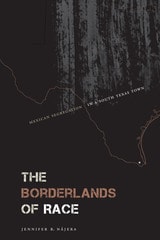
The Borderlands of Race
Mexican Segregation in a South Texas TownBy Jennifer R. Nájera
University of Texas Press, 2015
Throughout much of the twentieth century, Mexican Americans experienced segregation in many areas of public life, but the structure of Mexican segregation differed from the strict racial divides of the Jim Crow South. Factors such as higher socioeconomic status, lighter skin color, and Anglo cultural fluency allowed some Mexican Americans to gain limited access to the Anglo power structure. Paradoxically, however, this partial assimilation made full desegregation more difficult for the rest of the Mexican American community, which continued to experience informal segregation long after federal and state laws officially ended the practice.
In this historical ethnography, Jennifer R. Nájera offers a layered rendering and analysis of Mexican segregation in a South Texas community in the first half of the twentieth century. Using oral histories and local archives, she brings to life Mexican origin peoples’ experiences with segregation. Through their stories and supporting documentary evidence, Nájera shows how the ambiguous racial status of Mexican origin people allowed some of them to be exceptions to the rule of Anglo racial dominance. She demonstrates that while such exceptionality might suggest the permeability of the color line, in fact the selective and limited incorporation of Mexicans into Anglo society actually reinforced segregation by creating an illusion that the community had been integrated and no further changes were needed. Nájera also reveals how the actions of everyday people ultimately challenged racial/racist ideologies and created meaningful spaces for Mexicans in spheres historically dominated by Anglos.
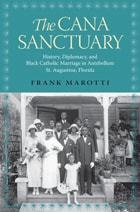
The Cana Sanctuary
History, Diplomacy, and Black Catholic Marriage in Antebellum St. Augustine, FloridaFrank Marotti, Jr.
University of Alabama Press, 2012
In the late seventeenth century a group of about a dozen escaped African slaves from the English colony of Carolina reached the Spanish settlement of St. Augustine. In a diplomatic bid for sanctuary, to avoid extradition and punishment, they requested the sacrament of Catholic baptism from the Spanish Catholic Church. Their negotiations brought about their baptism and with it their liberation. The Cana Sanctuary focuses on what author Frank Marotti terms “folk diplomacy”—political actions conducted by marginalized, non-state sectors of society—in this instance by formerly enslaved African Americans in antebellum East Florida. The book explores the unexpected transformations that occurred in seventeenth- and eighteenth-century St. Augustine as more and more ex-slaves arrived to find their previously disregarded civil rights upheld under sacred codes by an international, nongovernmental, authoritative organization.
With the Catholic Church acting as an equalizing, empowering force for escaped African slaves, the Spanish religious sanctuary policy became part of popular historical consciousness in East Florida. As such, it allowed for continual confrontations between the law of the Church and the law of the South. Tensions like these survived, ultimately lending themselves to an “Afro-Catholicism” sentiment that offered support for antislavery arguments.
The Capacity Contract
Intellectual Disability and the Question of CitizenshipStacy Clifford Simplican
University of Minnesota Press, 2015
In the first sustained examination of disability through the lens of political theory, The Capacity Contract shows how the exclusion of disabled people has shaped democratic politics. Stacy Clifford Simplican demonstrates how disability buttresses systems of domination based on race, sex, and gender. She exposes how democratic theory and politics have long blocked from political citizenship anyone whose cognitive capacity falls below a threshold level⎯marginalization with real-world repercussions on the implementation of disability rights today.
Simplican’s compelling ethnographic analysis of the self-advocacy movement describes the obstacles it faces. From the outside, the movement must confront stiff budget cuts and dwindling memberships; internally, self-advocates must find ways to demand political standing without reinforcing entrenched stigma against people with profound cognitive disabilities. And yet Simplican’s investigation also offers democratic theorists and disability activists a more emancipatory vision of democracy as it relates to disability⎯one that focuses on enabling people to engage in public and spontaneous action to disrupt exclusion and stigma.
Taking seriously democratic promises of equality and inclusion, The Capacity Contract rejects conceptions of political citizenship that privilege cognitive capacity and, instead, centers such citizenship on action that is accessible to all people.
The Chicago Canon on Free Inquiry and Expression
Edited by Tony Banout and Tom Ginsburg
University of Chicago Press, 2024
Free inquiry and expression are hotly contested, both on campus and in social and political life. Since its founding in the late nineteenth century, the University of Chicago has been at the forefront of conversations around free speech and academic freedom in higher education. The University’s approach to free expression grew from a sterling reputation as a research university as well as a commitment to American pragmatism and democratic progress, all of which depended on what its first president referred to as the “complete freedom of speech on all subjects.” In 2015, more than 100 years later, then University provost and president J. D. Isaacs and Robert Zimmer echoed this commitment, releasing a statement by a faculty committee led by law professor Geoffrey R. Stone that has come to be known as the Chicago Principles, now adopted or endorsed by one hundred US colleges and universities. These principles are just a part of the long-standing dialogue at the University of Chicago around freedom of expression—its meaning and limits. The Chicago Canon on Free Inquiry and Expression brings together exemplary documents – some published for the first time here – that explain and situate this ongoing conversation with an introductory essay that brings the tradition to light.
Throughout waves of historical and societal challenges, this first principle of free expression has required rearticulation and new interpretations. The documents gathered here include, among others, William Rainey Harper’s “Freedom of Speech” (1900), the Kalven Committee’s report on the University’s role in political and social action (1967), and Geoffrey R. Stone’s “Free Speech on Campus: A Challenge of Our Times” (2016). Together, the writings of the canon reveal how the Chicago tradition is neither static nor stagnant, but a vibrant experiment; a lively struggle to understand, practice, and advance free inquiry and expression.
At a time of nationwide campus speech debates, engaging with these texts and the questions they raise is essential to sustaining an environment of broad intellectual and ideological diversity. This book offers a blueprint for the future of higher education’s vital work and points to the civic value of free expression.
The Chicago Canon on Free Inquiry and Expression
Edited by Tony Banout and Tom Ginsburg
University of Chicago Press, 2024
A collection of texts that provide the foundation for the University of Chicago’s longstanding tradition of free expression, principles that are at the center of current debates within higher education and society more broadly.
Free inquiry and expression are hotly contested, both on campus and in social and political life. Since its founding in the late nineteenth century, the University of Chicago has been at the forefront of conversations around free speech and academic freedom in higher education. The University’s approach to free expression grew from a sterling reputation as a research university as well as a commitment to American pragmatism and democratic progress, all of which depended on what its first president referred to as the “complete freedom of speech on all subjects.” In 2015, more than 100 years later, then University provost and president J. D. Isaacs and Robert Zimmer echoed this commitment, releasing a statement by a faculty committee led by law professor Geoffrey R. Stone that has come to be known as the Chicago Principles, now adopted or endorsed by one hundred US colleges and universities. These principles are just a part of the long-standing dialogue at the University of Chicago around freedom of expression—its meaning and limits. The Chicago Canon on Free Inquiry and Expression brings together exemplary documents – some published for the first time here – that explain and situate this ongoing conversation with an introductory essay that brings the tradition to light.
Throughout waves of historical and societal challenges, this first principle of free expression has required rearticulation and new interpretations. The documents gathered here include, among others, William Rainey Harper’s “Freedom of Speech” (1900), the Kalven Committee’s report on the University’s role in political and social action (1967), and Geoffrey R. Stone’s “Free Speech on Campus: A Challenge of Our Times” (2016). Together, the writings of the canon reveal how the Chicago tradition is neither static nor stagnant, but a vibrant experiment; a lively struggle to understand, practice, and advance free inquiry and expression.
At a time of nationwide campus speech debates, engaging with these texts and the questions they raise is essential to sustaining an environment of broad intellectual and ideological diversity. This book offers a blueprint for the future of higher education’s vital work and points to the civic value of free expression.
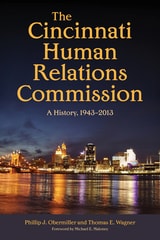
The Cincinnati Human Relations Commission
A History, 1943–2013Phillip J. Obermiller
Ohio University Press, 2018
In the summer of 1943, as World War II raged overseas, the United States also faced internal strife. Earlier that year, Detroit had erupted in a series of race riots that killed dozens and destroyed entire neighborhoods. Across the country, mayors and city councils sought to defuse racial tensions and promote nonviolent solutions to social and economic injustices. In Cincinnati, the result of those efforts was the Mayor’s Friendly Relations Committee, later renamed the Cincinnati Human Relations Commission (CHRC).
The Cincinnati Human Relations Commission: A History, 1943–2013, is a decade-by-decade chronicle of the agency: its accomplishments, challenges, and failures. The purpose of municipal human relations agencies like the CHRC was to give minority groups access to local government through internal advocacy, education, mediation, and persuasion—in clear contrast to the tactics of lawsuits, sit-ins, boycotts, and marches adopted by many external, nongovernmental organizations.
In compiling this history, Phillip J. Obermiller and Thomas E. Wagner have drawn on an extensive base of archival records, reports, speeches, and media sources. In addition, archival and contemporary interviews provide first-person insight into the events and personalities that shaped the agency and the history of civil rights in this midwestern city.
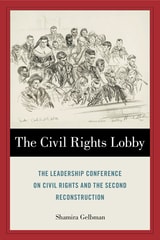
The Civil Rights Lobby
The Leadership Conference on Civil Rights and the Second ReconstructionShamira Gelbman
Temple University Press, 2021
As the lobbying arm of the civil rights movement, the Leadership Conference on Civil Rights (LCCR)—which has operated since the early 1950s—was instrumental in the historic legislative breakthroughs of the Second Reconstruction. The Civil Rights Lobby skillfully recounts the LCCR’s professional and grassroots lobbying that contributed to these signature civil rights policy achievements in the 1950s and ’60s.
Shamira Gelbman explains how the diversity of this interest group coalition both hindered and enabled lobbyists to generate broad-based support for reforms that often seemed risky to legislators. They coordinated their efforts by identifying common ground among member organizations, developing coalitional positions on substantive and strategic questions, and exhorting organizations to mobilize professional and grassroots lobbying resources accordingly. The result was to “speak with one booming voice” to ultimately help secure the passage of the Civil Rights Act of 1964.
The Civil Rights Lobby concludes by reprising key lessons from the LCCR’s organizational development and participation in civil rights policymaking. Gelbman suggests new directions for research on interest group coalitions and explores how the Leadership Conference’s experience sheds light on the politics of the Second Reconstruction.
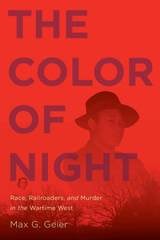
The Color of Night
Race, Railroaders, and Murder in the Wartime WestMax Geier
Oregon State University Press, 2015
In this deeply researched and detailed account, Geier explores how race, gender, and class affected the attitudes of local town-folk, law officers, and courtroom jurors toward Black trainmen on the West Coast, at a time when militarization skewed perceptions of virtue, status, and authority. He delves into the working conditions and experiences of unionized Black trainmen in their “home and away” lives in Los Angeles and Portland, while illuminating the different ways that they, and other residents of Oregon and southern California, responded to news of “Oregon’s murdered war bride.” Reporters, civil rights activists, and curiosity seekers transformed the trial and appeals process into a public melodrama.
The investigation, trial, and conviction of Robert Folkes galvanized civil rights activists, labor organizers, and community leaders into challenging the flawed judicial process and ultimately the death penalty in Oregon, serving as a catalyst for civil rights activism that bridged rural and urban divides. The Color of Night will appeal to “true crime” aficionados, and to anyone interested in the history of race and labor relations, working conditions, community priorities, and attitudes toward the death penalty in the first half of the 20th century.
The Color of Representation
Congressional Behavior and Black InterestsKenny J. Whitby
University of Michigan Press, 2000
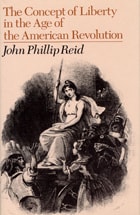
The Concept of Liberty in the Age of the American Revolution
John Phillip Reid
University of Chicago Press, 1988
As John Philip Reid goes on to make clear, "liberty" did not mean to the eighteenth-century mind what it means today. In the twentieth century, we take for granted certain rights—such as freedom of speech and freedom of the press—with which the state is forbidden to interfere. To the revolutionary generation, liberty was preserved by curbing its excesses. The concept of liberty taught not what the individual was free to do but what the rule of law permitted. Ultimately, liberty was law—the rule of law and the legalism of custom. The British constitution was the charter of liberty because it provided for the rule of law.
Drawing on an impressive command of the original materials, Reid traces the eighteenth-century notion of liberty to its source in the English common law. He goes on to show how previously problematic arguments involving the related concepts of licentiousness, slavery, arbitrary power, and property can also be fit into the common-law tradition. Throughout, he focuses on what liberty meant to the people who commented on and attempted to influence public affairs on both sides of the Atlantic. He shows the depth of pride in liberty—English liberty—that pervaded the age, and he also shows the extent—unmatched in any other era or among any other people—to which liberty both guided and motivated political and constitutional action.
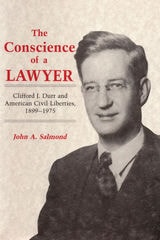
The Conscience of a Lawyer
Clifford J. Durr and American Civil Liberties, 1899–1975John A. Salmond
University of Alabama Press, 1990
A powerful portrait of principle and protest in the life of a Southern lawyer who stood for civil liberties.
Clifford Judkins Durr was an Alabama lawyer who played an important role in defending activists and other accused of disloyalty during the New Deal and McCarthy eras. His uncompromising commitment to civil liberties and civic decency caused him to often take unpopular positions.
In 1933, Durr moved to Washington to work as a lawyer for the Reconstruction Finance Corporation, a creation of Roosevelt’s new Democratic administration, becoming a dedicated New Dealer in the process. He was then appointed by President Franklin D. Roosevelt to the Federal Communications Commission (FCC), a politically sensitive position as FDR sought to counter the increasing power and concentration of broadcasters, many of whom were opponents of the New Deal. Durr resigned from the FCC in 1948 and after brief employment with the National Farmers Union in Colorado, the Durrs eventually returned to Montgomery, Alabama in the hope of returning to a more prosperous, less controversial life.
Durr continued to practice in Montgomery as counsel for black citizens whose rights had been violated and ultimately, in December, 1955, when police arrested Rosa Parks for refusing to give her bus seat to a white man he stepped in and lent his extensive legal prowess to her case and the continuing quest for civil rights. Closing his firm in 1964 Durr began to lecture in the United States and abroad. He died at his grandfather's farm in 1975.
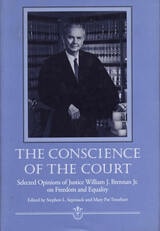
The Conscience of the Court
Selected Opinions of Justice William J. Brennan Jr. on Freedom and EqualityEdited by Stephen L. Sepinuck and Mary Pat Treuthart
Southern Illinois University Press, 1999
The Conscience of the Court celebrates the work of Justice William J. Brennan Jr., who served on the United States Supreme Court for thirty-four years (1956–1990).
Stephen L. Sepinuck and Mary Pat Treuthart introduce and present selected judicial opinions written by Justice Brennan on issues involving personal freedom, civil liberties, and equality. Brennan is ranked by many as the best writer ever to have served on the Supreme Court, and his written opinions depict real people, often in desperate, emotional situations. Remarkable for their clarity of analysis, for their eloquence, and for their forcefulness and persuasiveness, his opinions demonstrate that judicial thought need not be a proprietary enclave of lawyers or the intellectual elite.
The extended excerpts selected by Sepinuck and Treuthart highlight Brennan's approach to judicial decision making. Concerned always with how each decision would actually affect people's lives, Brennan possessed a rare quality of empathy. In Brennan, the editors note, "people and groups who lacked influence in society—Communists and flag burners, children and foreigners, criminal defendants and racial minorities"—found a champion they could count on "to listen to their causes and judge them unmoved by the passions of the politically powerful."
In their introduction to each opinion, the editors provide background facts, discuss how the excerpted opinion transformed the law or otherwise fit into the realm of constitutional jurisprudence, and delve into Justice Brennan's judicial philosophy, his method of constitutional interpretation, and the language he used.
The Constitution in Wartime
Beyond Alarmism and ComplacencyMark Tushnet, ed.
Duke University Press, 2005
Some of the essays are broad in scope, reflecting on national character, patriotism, and political theory; exploring whether war and republican government are compatible; and considering in what sense we can be said to be in wartime circumstances today. Others are more specific, examining the roles of Congress, the presidency, the courts, and the international legal community. Throughout the collection, balanced, unbiased analysis leads to some surprising conclusions, one of which is that wartime conditions have sometimes increased, rather than curtailed, civil rights and civil liberties. For instance, during the cold war, government officials regarded measures aimed at expanding African Americans’ freedom at home as crucial to improving America’s image abroad.
Contributors. Sotirios Barber, Mark Brandon, James E. Fleming, Mark Graber, Samuel Issacharoff, David Luban, Richard H. Pildes, Eric Posner, Peter Spiro, William Michael Treanor, Mark Tushnet, Adrian Vermeule
The Constitution of Liberty
F. A. Hayek
University of Chicago Press, 1978
"A reflective, often biting, commentary on the nature of our society and its dominant thought by one who is passionately opposed to the coercion of human beings by the arbitrary will of others, who puts liberty above welfare and is sanguine that greater welfare will thereby ensue."—Sidney Hook, New York Times Book Review
In this classic work Hayek restates the ideals of freedom that he believes have guided, and must continue to guide, the growth of Western civilization. Hayek's book, first published in 1960, urges us to clarify our beliefs in today's struggle of political ideologies.
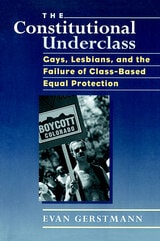
The Constitutional Underclass
Gays, Lesbians, and the Failure of Class-Based Equal ProtectionEvan Gerstmann
University of Chicago Press, 1999
The Court divides people into legal classes that receive varying levels of protection; gays and lesbians and other groups, such as the elderly and the poor, receive the least. Gerstmann reveals how these standards are used to favor certain groups over others, and also how Amendment 2 advocates used the Court's doctrine to convince voters that gays and lesbians were seeking "special rights" in Colorado.
Concluding with a call for wholesale reform of equal-protection jurisprudence, this book is essential reading for anyone interested in fair, coherent, and truly equal protection under the law.
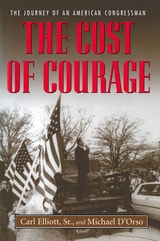
The Cost of Courage
The Journey of an American CongressmanCarl Elliott
University of Alabama Press, 2001
This deeply moving story chronicles the tenacity and vision that carried Carl Elliott from the hills of northwest Alabama to eight distinguished terms in the United States House of Representatives.
Born in a log cabin on a tenant farm in 1913, Carl Elliott worked his way through The University of Alabama during the Great Depression and was elected to Congress in 1948. With a no-nonsense philosophy of fairness and equal opportunity, he established himself as one of the most effective members of the House of Representatives during the 1950s. He was a progressive Democrat and he fought hard for the dirt farmers and coal miners he grew up with and who sent him to Congress.
In an era when racial segregationists dominated southern politics, Elliott worked with many of the important political leaders of the 20th century, including Presidents Truman, Eisenhower, and Kennedy and powerful House Speaker Sam Rayburn. He was instrumental in passing the National Defense Education Act of 1958, which continues to provide college loans to more than 20 million Americans. But his brave stand against racism and George Wallace in the 1966 Alabama gubernatorial race ruined him professionally (he never returned to elected office) and financially (he cashed in his congressional pension to help fund the campaign). Even as a destitute invalid in his old age, however, Elliott kept his dignity and integrity intact.
The life story of Carl Elliott is full of humor and wry wisdom and explains how he made his way across a stage as big as America, influencing its politics and future, and then emerged, belatedly, as an unsung hero of the fight for civil rights and equality.
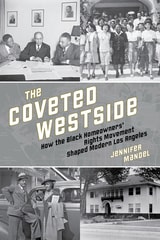
The Coveted Westside
How the Black Homeowners' Rights Movement Shaped Modern Los AngelesJennifer Mandel
University of Nevada Press, 2022
Mandel exposes the enduring struggle between Whites determined to establish their hegemony and create residential heterogeneity in the growing city, and people of color equally determined to obtain full access to the city and the opportunities, including residential, that it offered. Not only does this book document the Black homeowners’ fight against housing discrimination, it shares personal accounts of Blacks’ efforts to settle in the highly desirable Westside of Los Angeles. Mandel explores the White-derived social and legal mechanisms that created this segregated city and the African American-led movement that challenged efforts to block access to fair housing.
The Crucible of Desegregation
The Uncertain Search for Educational EqualityR. Shep Melnick
University of Chicago Press, 2023
In 1954, the Supreme Court delivered the landmark decision of Brown v. Board of Education—establishing the right to attend a desegregated school as a national constitutional right—but the decision contained fundamental ambiguities. The Supreme Court has never offered a clear definition of what desegregation means or laid out a framework for evaluating competing interpretations. In The Crucible of Desegregation, R. Shep Melnick examines the evolution of federal school desegregation policy from 1954 through the termination of desegregation orders in the first decades of the twenty-first century, combining legal analysis with a focus on institutional relations, particularly the interactions between federal judges and administrators. Melnick argues that years of ambiguous, inconsistent, and meandering Court decisions left lower court judges adrift, forced to apply contradictory Supreme Court precedents in a wide variety of highly charged political and educational contexts. As a result, desegregation policy has been a patchwork, with lower court judges playing a crucial role and with little opportunity to analyze what worked and what didn’t. The Crucible of Desegregation reveals persistent patterns and disagreements that continue to roil education policy.
The Crucible of Desegregation
The Uncertain Search for Educational EqualityR. Shep Melnick
University of Chicago Press, 2023
Examines the patchwork evolution of school desegregation policy.
In 1954, the Supreme Court delivered the landmark decision of Brown v. Board of Education—establishing the right to attend a desegregated school as a national constitutional right—but the decision contained fundamental ambiguities. The Supreme Court has never offered a clear definition of what desegregation means or laid out a framework for evaluating competing interpretations. In The Crucible of Desegregation, R. Shep Melnick examines the evolution of federal school desegregation policy from 1954 through the termination of desegregation orders in the first decades of the twenty-first century, combining legal analysis with a focus on institutional relations, particularly the interactions between federal judges and administrators. Melnick argues that years of ambiguous, inconsistent, and meandering Court decisions left lower court judges adrift, forced to apply contradictory Supreme Court precedents in a wide variety of highly charged political and educational contexts. As a result, desegregation policy has been a patchwork, with lower court judges playing a crucial role and with little opportunity to analyze what worked and what didn’t. The Crucible of Desegregation reveals persistent patterns and disagreements that continue to roil education policy.
The Crusade for Justice
Chicano Militancy and the Government's War on DissentErnesto B. Vigil
University of Wisconsin Press, 1999
This definitive account of the Chicano movement in 1960s Denver reveals the intolerance and brutality that inspired and accompanied the urban Chicano organization known as the Crusade for Justice. Ernesto Vigil, an expert in the discourse of radical movements of this time, joined the Crusade as a young draft resistor where he met Rodolfo “Corky” Gonzales, the founder of the CFJ. Vigil follows the movement chronologically from Gonzales’s early attempts to fight discrimination as a participant in local democratic politics to his radical stance as an organizer outside mainstream politics.
Drawing extensively upon FBI documentation that became available under the Freedom of Information Act, Vigil exposes massive surveillance of the Crusade for Justice by federal agents and local police and the damaging effects of such methods on ethnic liberation movements. Vigil complements these documents and the story of Gonzales’s development as a radical with the story of his personal involvement in the movement. The Crusade for Justice describes one of the most important Chicano organizations against prejudice.
The Dance of Freedom
Texas African Americans during ReconstructionBy Barry Crouch
University of Texas Press, 2007
This anthology brings together the late Barry A. Crouch's most important articles on the African American experience in Texas during Reconstruction. Grouped topically, the essays explore what freedom meant to the newly emancipated, how white Texans reacted to the freed slaves, and how Freedmen's Bureau agents and African American politicians worked to improve the lot of ordinary African American Texans. The volume also contains Crouch's seminal review of Reconstruction historiography, "Unmanacling Texas Reconstruction: A Twenty-Year Perspective." The introductory pieces by Arnoldo De Leon and Larry Madaras recapitulate Barry Crouch's scholarly career and pay tribute to his stature in the field of Reconstruction history.
The Dialectics of Legal Repression
Black Rebels Before the American Criminal CourtsIsaac D. Balbus
Russell Sage Foundation, 2015
The Dimensions of Tolerance
What Americans Believe About Civil LibertiesHerbert McClosky
Russell Sage Foundation, 1983
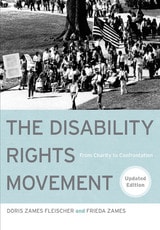
The Disability Rights Movement
From Charity to ConfrontationDoris Fleischer
Temple University Press, 2011
In this updated edition, Doris Zames Fleischer and Frieda Zames expand their encyclopedic history of the struggle for disability rights in the United States, to include the past ten years of disability rights activism.The book includes a new chapter on the evolving impact of the Americans with Disabilities Act, the continuing struggle for cross-disability civil and human rights, and the changing perceptions of disability.
The authors provide a probing analysis of such topics as deinstitutionalization, housing, health care, assisted suicide, employment, education, new technologies, disabled veterans, and disability culture.
Based on interviews with over one hundred activists, The Disability Rights Movement tells a complex and compelling story of an ongoing movement that seeks to create an equitable and diverse society, inclusive of people with disabilities.
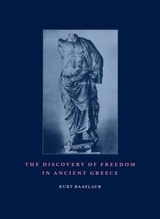
The Discovery of Freedom in Ancient Greece
Revised and Updated EditionKurt Raaflaub
University of Chicago Press, 2003
To find out, Raaflaub analyses ancient Greek texts from Homer to Thucydides in their social and political contexts. Archaic Greece, he concludes, had little use for the idea of political freedom; the concept arose instead during the great confrontation between Greeks and Persians in the early fifth century BCE. Raaflaub then examines the relationship of freedom with other concepts, such as equality, citizenship, and law, and pursues subsequent uses of the idea—often, paradoxically, as a tool of domination, propaganda, and ideology.
Raaflaub's book thus illuminates both the history of ancient Greek society and the evolution of one of humankind's most important values, and will be of great interest to anyone who wants to understand the conceptual fabric that still shapes our world views.
The Disenfranchisement of Ex-Felons
Elizabeth A. Hull, foreword by Representative John Conyers, Jr.
Temple University Press, 2006
The Disenfranchisement of Ex-Felons provides a comprehensive overview of the history, nature, and far-reaching sociological and political consequences of denying ex-felons the right to vote. Readers learn state practices in Florida and Ohio during the 2000 and 2004 presidential elections; arguments that have been used in court houses, legislatures, and the press to justify such practices; and attempts to reverse legislation through state and federal governments. In a timely appendix to the 2004 election, Elizabeth Hull makes her case that the battle for civil rights will not be won unless ex-felons, who have fulfilled their obligations to society, are restored the same rights afforded all other American citizens.
The Dred Scott Case
Historical and Contemporary Perspectives on Race and LawDavid Thomas Konig
Ohio University Press, 2010
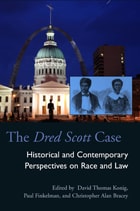
In 1846 two slaves, Dred and Harriet Scott, filed petitions for their freedom in the Old Courthouse in St. Louis, Missouri. As the first true civil rights case decided by the U.S. Supreme Court, Dred Scott v. Sandford raised issues that have not been fully resolved despite three amendments to the Constitution and more than a century and a half of litigation.
The Dred Scott Case: Historical and Contemporary Perspectives on Race and Law presents original research and the reflections of the nation’s leading scholars who gathered in St. Louis to mark the 150th anniversary of what was arguably the most infamous decision of the U.S. Supreme Court. The decision, which held that African Americans “had no rights” under the Constitution and that Congress had no authority to alter that, galvanized Americans and thrust the issue of race and law to the center of American politics. This collection of essays revisits the history of the case and its aftermath in American life and law. In a final section, the present-day justices of the Missouri Supreme Court offer their reflections on the process of judging and provide perspective on the misdeeds of their nineteenth-century predecessors who denied the Scotts their freedom.
Contributors: Austin Allen, Adam Arenson, John Baugh, Hon. Duane Benton, Christopher Alan Bracey, Alfred L. Brophy, Paul Finkelman, Louis Gerteis, Mark Graber, Daniel W. Hamilton, Cecil J. Hunt II, David Thomas Konig, Leland Ware, Hon. Michael A. Wolff
The Eagle Has Eyes
The FBI Surveillance of César Estrada Chávez of the United Farm Workers Union of America, 1965–1975José Angel Gutiérrez
Michigan State University Press, 2019
The Elaine Massacre and Arkansas
A Century of Atrocity and Resistance, 1819-1919Guy Lancaster
Butler Center for Arkansas Studies, 2018
We cannot fully understand what happened at Elaine without examining the one hundred years leading up to the massacre. An analysis of the years from 1819, when Arkansas officially became an American territory, to 1919 provides the historical foundation for understanding one of the bloodiest manifestations of racial violence in U.S. history.
During the antebellum years, slaveholders grew paranoid about possible “insurrections,” and after the Civil War and Emancipation, these fears lingered and led to numerous atrocities long before Elaine. At the same time, African Americans—particularly fieldworkers—worked to organize themselves to resist oppression, setting the stage for the farmers’ union that was the target for mob and military wrath during the Elaine Massacre.
These essays provide the larger history necessary for understanding what happened at Elaine in 1919—and thus provide a window into the current state of Arkansas and the nation at large. Contributors include Richard Buckelew, Nancy Snell Griffith, Matthew Hild, Adrienne Jones, Kelly Houston Jones, Cherisse Jones-Branch, Brian K. Mitchell, William H. Pruden III, and Steven Teske.
The Elusive Promise of Indigenous Development
Rights, Culture, StrategyKaren Engle
Duke University Press, 2010
Conceiving indigenous rights as cultural rights, Engle argues, has largely displaced or deferred many of the economic and political issues that initially motivated much indigenous advocacy. She contends that by asserting static, essentialized notions of indigenous culture, indigenous rights advocates have often made concessions that threaten to exclude many claimants, force others into norms of cultural cohesion, and limit indigenous economic, political, and territorial autonomy.
Engle explores one use of the right to culture outside the context of indigenous rights, through a discussion of a 1993 Colombian law granting collective land title to certain Afro-descendant communities. Following the aspirations for and disappointments in this law, Engle cautions advocates for marginalized communities against learning the wrong lessons from the recent struggles of indigenous peoples at the international level.
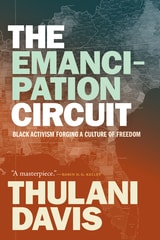
The Emancipation Circuit
Black Activism Forging a Culture of FreedomThulani Davis
Duke University Press, 2022
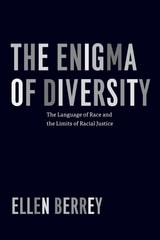
The Enigma of Diversity
The Language of Race and the Limits of Racial JusticeEllen Berrey
University of Chicago Press, 2015
Ellen Berrey digs deep into those questions in The Enigma of Diversity. Drawing on six years of fieldwork and historical sources dating back to the 1950s and making extensive use of three case studies from widely varying arenas—housing redevelopment in Chicago’s Rogers Park neighborhood, affirmative action in the University of Michigan’s admissions program, and the workings of the human resources department at a Fortune 500 company—Berrey explores the complicated, contradictory, and even troubling meanings and uses of diversity as it is invoked by different groups for different, often symbolic ends. In each case, diversity affirms inclusiveness, especially in the most coveted jobs and colleges, yet it resists fundamental change in the practices and cultures that are the foundation of social inequality. Berrey shows how this has led racial progress itself to be reimagined, transformed from a legal fight for fundamental rights to a celebration of the competitive advantages afforded by cultural differences.
Powerfully argued and surprising in its conclusions, The Enigma of Diversity reveals the true cost of the public embrace of diversity: the taming of demands for racial justice.
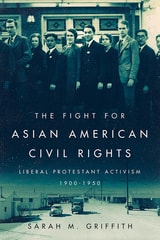
The Fight for Asian American Civil Rights
Liberal Protestant Activism, 1900-1950Sarah M Griffith
University of Illinois Press, 2018
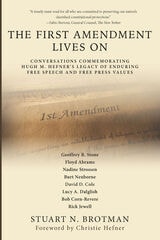
The First Amendment Lives On
Conversations Commemorating Hugh M. Hefner's Legacy of Enduring Free Speech and Free Press ValuesStuart N. Brotman
University of Missouri Press, 2022
Hugh M. Hefner’s legacy of enduring free speech and free press values is embodied in the Hugh M. Hefner First Amendment Awards, established in 1979, which honor leading First Amendment scholars and advocates. Hefner also had a lifelong interest in film censorship issues and supported teaching about them at the University of Southern California for 20 years. His deep commitment to these values was confirmed when the author was granted unrestricted access to over 3,000 personal scrapbooks, which Hefner had kept in order to track free speech and press issues during his lifetime.
The format of the book is an homage to the in-depth conversational interviews Hefner pioneered as the editor and publisher of Playboy magazine. Stuart Brotman conducted in-person conversations with eight persons who in their lifetimes have come to represent a “greatest generation” of free speech and free press scholars and advocates. Notably, these conversations include:
Geoffrey R. Stone
Floyd Abrams
Nadine Strossen
Burt Neuborne
David D. Cole
Lucy A. Dalglish
Bob Corn-Revere
Rick Jewell