Results by title
143 books match the query 'Class' and 27 start with t
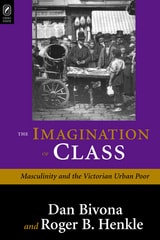
THE IMAGINATION OF CLASS
MASCULINITY AND THE VICTORIAN URBAN POORDan Bivona and Roger B. Henkle
The Ohio State University Press, 2006
Through carefully nuanced discussions of a variety of Victorian novelists, journalists, and sociological investigators (some well known, like Dickens, and others less well known, like Masterman and Greenwood), the book offers new insight into the role played by the imagination of the urban poor in the construction of Victorian middle class masculinity. Whereas many scholars have discussed the feminization of the poor, virtually no one has addressed how the poor have served as a site at which middle class men fashioned their own class and gender identity.
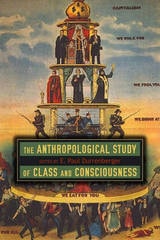
The Anthropological Study of Class and Consciousness
E. Paul Durrenberger
University Press of Colorado, 2012
Five central ideas unify the collection: the objective basis for class in different social orders; people's understanding of class in relation to race and gender; the relation of ideologies of class to realities of class; the U.S. managerial middle-class denial of class and emphasis on meritocracy in relation to increasing economic insecurity; and personal responses to economic insecurity and their political implications.
Anthropologists who want to understand the nature and dynamics of culture must also understand the nature and dynamics of class. The Anthropological Study of Class and Consciousness addresses the role of the concept of class as an analytical construct in anthropology and how it relates to culture. Although issues of social hierarchy have been studied in anthropology, class has not often been considered as a central element. Yet a better understanding of its role in shaping culture, consciousness, and people's awareness of their social and natural world would in turn lead to better understanding of major trends in social evolution as well as contemporary society. This book will be of great interest to students and scholars of anthropology, labor studies, ethnohistory, and sociology.

The Black Mecca Blueprint
Race, Class, and Place in Atlanta, GeorgiaJonathan P. Grant
Temple University Press, 2027
Black people have been on a continual search for freedom. Since their arrival in the West as exploited sources of labor, through the great migrations out of and back to the U.S. South, to repatriation efforts to Africa and throughout the Diaspora, they have been longing for place and to find or create a Mecca.
The Black Mecca Blueprint examines the current Black Mecca, Atlanta, Georgia. Jonathan Grant explores the dynamism of Black life in a “Black city,” homing in on race, class, and place and all their inherent complexities. He analyzes the ways place and city spaces are negotiated through power and class struggles and how various spaces, such as the Atlanta University Center and its reputation as a beacon, are recreated.
Drawing on in-depth interviews, hip hop music, cultural podcasts, stand-up comedy, archival research, media, autoethnographic data, and historiography, The Black Mecca Blueprint captures the beauty and burden of Atlanta while creating a blueprint that can be used to help devise more democratic cities across the U.S. and around the world.
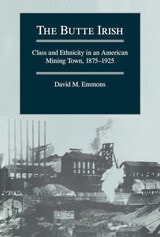
The Butte Irish
Class and Ethnicity in an American Mining Town, 1875-1925David M. Emmons
University of Illinois Press, 1989
From a treasure trove of "Irish stuff," the reports, minutes, and correspondence of the major Irish-American organizations in Butte, Emmons shows how the stalwart supporters of the RELA and the Ancient Order of Hiberians marched and drilled for Irish freedom---and how, as they ran the town, the miners' union, and the largest mining companies, they used this tradition of ethnic cooperation to ensure safe and steady work, Irish mines taking care of Irish miners. Butte was new, overwhelmingly Irish, and extraordinarily dangerous---the ideal place to test the seam between class and ethnicity.
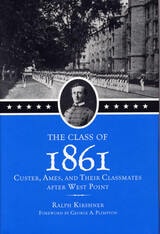
The Class of 1861
Custer, Ames, and Their Classmates after West PointRalph Kirshner
Southern Illinois University Press, 1999
Ralph Kirshner has provided a richly illustrated forum to enable the West Point class of 1861 to write its own autobiography. Through letters, journals, and published accounts, George Armstrong Custer, Adelbert Ames, and their classmates tell in their own words of their Civil War battles and of their varied careers after the war.
Two classes graduated from West Point in 1861 because of Lincoln's need of lieutenants: forty-five cadets in Ames's class in May and thirty-four in Custer's class in June. The cadets range from Henry Algernon du Pont, first in the class of May, whose ancestral home is now Winterthur Garden, to Custer, last in the class of June. “Only thirty-four graduated,” remarked Custer, “and of these thirty-three graduated above me.” West Point's mathematics professor and librarian Oliver Otis Howard, after whom Howard University is named, is also portrayed.
Other famous names from the class of 1861 are John Pelham, Emory Upton, Thomas L. Rosser, John Herbert Kelly (the youngest general in the Confederacy when appointed), Patrick O'Rorke (head of the class of June), Alonzo Cushing, Peter Hains, Edmund Kirby, John Adair (the only deserter in the class), and Judson Kilpatrick (great-grandfather of Gloria Vanderbilt). They describe West Point before the Civil War, the war years, including the Vicksburg campaign and the battle of Gettysburg, the courage and character of classmates, and the ending of the war.
Kirshner also highlights postwar lives, including Custer at Little Bighorn; Custer's rebel friend Rosser; John Whitney Barlow, who explored Yellowstone; du Pont, senator and author; Kilpatrick, playwright and diplomat; Orville E. Babcock, Grant's secretary until his indictment in the "Whiskey Ring"; Pierce M. B. Young, a Confederate general who became a diplomat; Hains, the only member of the class to serve on active duty in World War I; and Upton, "the class genius."
The Class of 1861, which features eighty-three photographs, includes a foreword by George Plimpton, editor of theParis Review and great-grandson of General Adelbert Ames.

The Common Ground of Womanhood
Class, Gender, and Working Girls' Clubs, 1884-1928Priscilla Murolo
University of Illinois Press, 1997
Working girls' clubs were a flash-point for class antagonisms yet also provided fertile ground for surprising cross-class alliances. Priscilla Murolo's nuanced study charts the shifting points of conflict and consensus between working women and their genteel club sponsors; working women and their male counterparts; and among working women of differing ethnic backgrounds.
The working girls' club movement lasted from the 1880s, when women poured into the industrial labor force, to the 1920s. Upper-class women initially governed the clubs, and activities converged around standards of "respectability" and the defense and uplift of the character of women who worked for wages. Later, the workers themselves presided over the leadership and shifted the clubs' focus to issues of labor reform, women's rights, and sisterhood across class lines.
A valuable and lucid study of the club movement, The Common Ground of Womanhood throws new light on broader trends in the history of women's alliances, social reform, gender conventions, and worker organizing.

The Conundrum of Class
Public Discourse on the Social Order in AmericaMartin J. Burke
University of Chicago Press, 1995
Surveying American political, social, and intellectual life from the late 17th to the end of the 19th century, Burke examines in detail the contested discourse about equality—the way Americans thought and wrote about class, class relations, and their meaning in society.
Burke explores a remarkable range of thought to establish the boundaries of class and the language used to describe it in the works of leading political figures, social reformers, and moral philosophers. He traces a shift from class as a legal category of ranks and orders to socio-economic divisions based on occupations and income. Throughout the century, he finds no permanent consensus about the meaning of class in America and instead describes a culture of conflicting ideas and opinions.
The Crossroads of Class and Gender
Industrial Homework, Subcontracting, and Household Dynamics in Mexico CityLourdes Benería and Martha Roldán
University of Chicago Press, 1987

The Culture of Cursilería
Bad Taste, Kitsch, and Class in Modern SpainNoel Valis
Duke University Press, 2002
Valis finds evidence in literature, cultural objects, and popular customs to
argue that cursilería has its roots in a sense of cultural inadequacy felt by the lower middle classes in nineteenth- and early-twentieth-century Spain. The Spain of this era, popularly viewed as the European power most resistant to economic and social modernization, is characterized by Valis as suffering from nostalgia for a bygone, romanticized society that structured itself on strict class delineations. With the development of an economic middle class during the latter half of the nineteenth century, these designations began to break down, and individuals across all levels of the middle class exaggerated their own social status in an attempt to protect their cultural capital. While the resulting manifestations of cursilería were often provincial, indeed backward, the concept was—and still is—closely associated with a sense of home. Ultimately, Valis shows how cursilería embodied the disparity between old ways and new, and how in its awkward manners, airs of pretension, and graceless anxieties it represents Spain's uneasy surrender to the forces of modernity.
The Culture of Cursilería will interest students and scholars of Latin America, cultural studies, Spanish literature, and modernity.
The Enigmatic Academy
Class, Bureaucracy, and Religion in American EducationChristian J. Churchill
Temple University Press, 2012
The Enigmatic Academy is a provocative look at the purpose and practice of education in America. Authors Christian Churchill and Gerald Levy use three case studies—a liberal arts college, a boarding school, and a Job Corps center—to illustrate how class, bureaucratic, and secular-religious dimensions of education prepare youth for participation in American foreign and domestic policy at all levels.
The authors describe how schools contribute to the formation of a bureaucratic character; how middle and upper class students are trained for leadership positions in corporations, government, and the military; and how the education of lower class students often serves more powerful classes and institutions.
Exploring how youth and their educators encounter the complexities of ideology and bureaucracy in school, The Enigmatic Academy deepens our understanding of the flawed redemptive relationship between education and society in the United States. Paradoxically, these three studied schools all prepare students to participate in a society whose values they oppose.

The Fallen Angel
Chastity, Class and Women's Reading, 1835–1880Sally Mitchell
University of Wisconsin Press, 1981
This book discusses the figure of the unchaste woman in a wide range of fiction written between 1835 and 1880; serious novels by Dickens, Mrs. Gaskell, Meredith, and George Eliot; popular novels that provided light reading for middle-class women (including books by Dinah Craik, Rhoda Broughton, and Ouida); sensational fiction; propaganda for social reform; and stories in cheap periodicals such as the Family Herald and the London Journal, which reached a different and far wider audience than either serious or popular novels.
The Future of Class in History
What's Left of the Social?Geoff Eley and Keith Nield
University of Michigan Press, 2007
Unifying concepts are essential when studying history. They provide students and scholars with ways to organize their thoughts, research, and writings. However, these concepts are also the focus of myriad conflicts within the field. Social history has experienced more than its share of such conflicts since its inception some forty years ago. In recent times the fields of “the social” and of “culture” have sometimes been presented as mutually exclusive and even hostile. Once again, conceptual innovation in history has been cast as a closure by which the new drives out the old: in this case, cultural history radically displacing social history. The Future of Class in History analyzes the effect of the conflict that followed the “turn to culture” in historical work by examining the use of class and demonstrates how practitioners in multiple fields can collaborate to produce the highest quality scholarship.
“Offers new ways of thinking about ‘class’ and ‘society’ in a world in which such categories have been radically called into question.”
—Sherry Ortner, University of California, Los Angeles
“Brilliantly charts social history’s past achievement, present dilemma, and future promise in a work distinguished by intellectual openness and generosity.”
—James A. Epstein, Vanderbilt University
“Eley and Nield seek to rescue the deluded follower of social history from the enormous condescension of the cultural turn. They succeed admirably, making the case for a new hybrid socio-cultural history.”
—Donald Reid, University of North Carolina at Chapel Hill
“This terrific double act has once again produced a text that demands to be read by all those tired of the juxtaposition of social and cultural histories and still interested in the problematic of class and the politics of its past and present.”
—James Vernon, University of California, Berkeley
“Eley and Nield tackle a contentious debate with a gracious plea for collaboration. Their strong desire to get past the ‘culture wars’ and to engage social and cultural historians in fruitful dialogue is a welcome move, stylishly executed.”
—Philippa Levine, University of Southern California
Geoff Eley is Professor of History at the University of Michigan.
Keith Nield is Professor Emeritus of History at the University of Hull.
The IQ Mythology
Class, Race, Gender, and InequalityElaine Mensh and Harry Mensh
Southern Illinois University Press, 1991
Ever since Alfred Binet carried out a 1904 commission from France’s minister of public instruction to devise a means for deciding which pupils should be sent to what would now be called special education classes, IQ scores have been used to label and track children. Those same scores have been cited as "proof" that different races, classes, and genders are of superior and inferior intelligence.
The Menshes make clear that from the beginning IQ tests have been fundamentally biased. Offered as a means for seeking solutions to social problems, the actual measurements have been used to maintain the status quo. Often the most telling comments are from the test-makers themselves, whether Binet ("little girls weak in orthography are strong in sewing and capable in the instruction concerning housekeeping; and, all things considered, this is more important for their future") or Wigdor and Garner ("naive use of intelligence tests . . . to place children of linguistic or racial minority status in special education programs will not be defensible in court").
Among the disturbing facts that the authors share is that there is mounting political pressure for more tests and testing despite a court trial in which the judge stated that "defendants’ expert witnesses, even those clearly affiliated with the companies that devise and distribute the standardized intelligence tests, agreed, with one exception, that we cannot truly define, much less measure, intelligence." The testing firms have responded to this carefully orchestrated need with new products that extend even to the IQ testing of three-month-old infants. The authors stress that, if the testers prevail, there is little doubt that these and similar tests would be used "ad infinitum to justify superior and inferior education along class and racial lines."
The Money Shot
Trash, Class, and the Making of TV Talk ShowsLaura Grindstaff
University of Chicago Press, 2002
From "classy" shows like Oprah to "trashy" shows like Jerry Springer, the key to a talk show's success is what Laura Grindstaff calls the money shot—moments when guests lose control and express joy, sorrow, rage, or remorse on camera. In this new work, Grindstaff takes us behind the scenes of daytime television talk shows, a genre focused on "real" stories told by "ordinary" people. Drawing on extensive interviews with producers and guests, her own attendance of dozens of live tapings around the country, and more than a year's experience working on two nationally televised shows, Grindstaff shows us how producers elicit dramatic performances from guests, why guests agree to participate, and the supporting roles played by studio audiences and experts.
Grindstaff traces the career of the money shot, examining how producers make stars and experts out of ordinary people, in the process reproducing old forms of cultural hierarchy and class inequality even while seeming to challenge them. She argues that the daytime talk show does give voice to people normally excluded from the media spotlight, but it lets them speak only in certain ways and under certain rules and conditions. Working to understand the genre from the inside rather than pass judgment on it from the outside, Grindstaff asks not just what talk shows can tell us about mass media, but also what they reveal about American culture more generally.
The New Chinese America
Class, Economy, and Social HierarchyZhao, Xiaojian
Rutgers University Press, 2010
In this detailed and comprehensive study of contemporary Chinese America, Xiaojian Zhao uses class analysis to illuminate the difficulties of everyday survival for poor and undocumented immigrants and analyzes the process through which social mobility occurs. Through ethnic ties, Chinese Americans have built an economy of their own in which entrepreneurs can maintain a competitive edge given their access to low-cost labor; workers who are shut out of the mainstream job market can find work and make a living; and consumers can enjoy high quality services at a great bargain. While the growth of the ethnic economy enhances ethnic bonds by increasing mutual dependencies among different groups of Chinese Americans, it also determines the limits of possibility for various individuals depending on their socioeconomic and immigration status.
The New Welfare Bureaucrats
Entanglements of Race, Class, and Policy ReformCeleste Watkins-Hayes
University of Chicago Press, 2009
As the recession worsens, more and more Americans must turn to welfare to make ends meet. Once inside the agency, the newly jobless will face a bureaucracy that has undergone massive change since the advent of welfare reform in 1996. A behind-the-scenes look at bureaucracy’s human face, The New Welfare Bureaucrats is a compelling study of welfare officers and how they navigate the increasingly tangled political and emotional terrain of their jobs.
Celeste Watkins-Hayes here reveals how welfare reform engendered a shift in focus for caseworkers from simply providing monetary aid to the much more complex process of helping recipients find work. Now both more intimately involved in their clients’ lives and wielding greater power over their well-being, welfare officers’ racial, class, and professional identities have become increasingly important factors in their work. Based on the author’s extensive fieldwork in two very different communities in the northeast, The New Welfare Bureaucrats is a boon to anyone looking to understand the impact of the institutional and policy changes wrought by welfare reform as well as the subtle social dynamics that shape the way welfare is meted out at the individual level.
The Patchwork City
Class, Space, and Politics in Metro ManilaMarco Z. Garrido
University of Chicago Press, 2019
The Patchwork City illuminates how segregation, class relations, and democracy are all intensely connected. It makes clear, ultimately, that class as a social structure is as indispensable to the study of Manila—and of many other cities of the Global South—as race is to the study of American cities.
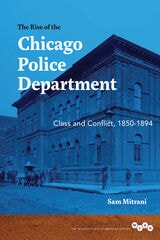
The Rise of the Chicago Police Department
Class and Conflict, 1850-1894Sam Mitrani
University of Illinois Press, 2013
In this book, Sam Mitrani cogently examines the making of the police department in Chicago, which by the late 1800s had grown into the most violent, turbulent city in America. Chicago was roiling with political and economic conflict, much of it rooted in class tensions, and the city's lawmakers and business elite fostered the growth of a professional municipal police force to protect capitalism, its assets, and their own positions in society. Together with city policymakers, the business elite united behind an ideology of order that would simultaneously justify the police force's existence and dictate its functions.
Tracing the Chicago police department's growth through events such as the 1855 Lager Beer riot, the Civil War, the May Day strikes, the 1877 railroad workers strike and riot, and the Haymarket violence in 1886, Mitrani demonstrates that this ideology of order both succeeded and failed in its aims. Recasting late nineteenth-century Chicago in terms of the struggle over order, this insightful history uncovers the modern police department's role in reconciling democracy with industrial capitalism.
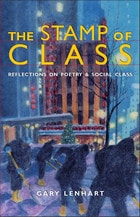
The Stamp of Class
Reflections on Poetry and Social ClassGary Lenhart
University of Michigan Press, 2005
-Lorenzo Thomas
The Stamp of Class explores the nature of reading poetry in the context of class and its themes and sheds new light on how this important yet little-heralded subject affects the poet's life and work.
While numerous works have taken up the question of race and gender as they relate to literary creation, this is the first book of its kind to probe the interplay between class and American poetry. Author Gary Lenhart considers poetry and class across a wide variety of time periods and poetic trends and reflects on a range of influential poets from the eighteenth to the twenty-first centuries.
The essays in The Stamp of Class deal with the question of class as reflected in the works of Tracie Morris, Tillie Olsen, Melvin Tolson, William Carlos Williams, Walt Whitman, and others. The work is rooted in the author's own experiences as a working-class poet and teacher and is the result of more than a decade of exploration.
Poet and scholar Gary Lenhart is Lecturer in English at Dartmouth College in Hanover, New Hampshire. His most recent books of poetry are Father and Son Night, Light Heart, and One at a Time. His essays and reviews have appeared in numerous magazines and journals, including the American Poetry Review, American Book Review, and Exquisite Corpse.
The Teacup Ministry and Other Stories
Subtle Boundaries of ClassBy Rhoda H. Halperin
University of Texas Press, 2001
In the global world of the twenty-first century, class boundaries are subtle and permeable, though real nonetheless. Markers of identity, authenticity, and belonging can change with a gesture or a glance, making people feel they do or don't belong in certain places, with certain people, at certain times. In these powerfully written ethnographic stories, Rhoda Halperin maps the boundaries of class by examining three themes: crossing class boundaries, class creativity, and class vulnerability.
In telling these stories, Halperin draws on a wealth of ethnographic experiences in this country and abroad. Her book challenges class stereotypes in ways that touch on universals across cultures and over time.
The Transformation of Old Age Security
Class and Politics in the American Welfare StateJill Quadagno
University of Chicago Press, 1988
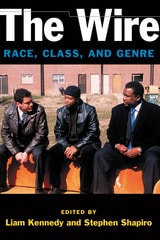
The Wire
Race, Class, and GenreEdited by Liam Kennedy and Stephen Shapiro
University of Michigan Press, 2012
Few other television series have received as much academic, media, and fan celebration as The Wire, which has been called the best dramatic series ever created. The show depicts the conflict between Baltimore's police and criminals to raise a warning about race; drug war policing; deindustrialization; and the inadequacies of America’s civic, educational, and political institutions. The show's unflinching explorations of a city in crisis and its nuanced portrayals of those affected make it a show all about race and class in America.
The essays in this volume offer a range of astute critical responses to this television phenomenon. More consistently than any other crime show of its generation, The Wire challenges viewers' perceptions of the racialization of urban space and the media conventions that support this. The Wire reminds us of just how remarkably restricted the grammar of race is on American television and related media, and of the normative codings of race---as identity, as landscape---across urban narratives, from documentary to entertainment media.
Those of Little Note
Gender, Race, and Class in Historical ArchaeologyElizabeth M. Scott
University of Arizona Press, 1994
I--Introduction
1. Through the Lens of Gender: Archaeology, Inequality, and Those "Of Little Note" / Elizabeth M. Scott
II--Native American and African American Communities
2. Cloth, Clothing, and Related Paraphernalia: A Key to Gender Visibility in the Archaeological Record of Russian America / Louise M. Jackson
3. "We Took Care of Each Other Like Families Were Meant To": Gender, Social Organization, and Wage Labor Among the Apache at Roosevelt / Everett Bassett
4. The House of the Black Burghardts: An Investigation of Race, Gender, and Class at the W. E. B. DuBois Boyhood Homesite / Nancy Ladd Muller
III--All Male and Predominantly Male Communities
5. "With Manly Courage": Reading the Construction of Gender in a 19th-Century Religious Community / Elizabeth Kryder-Reid
6. The Identification of Gender at Northern Military Sites of the Late 18th Century / David R. Starbuck
7. Class, Gender Strategies, and Material Culture in the Mining West / Donald L. Hardesty
IV--Working Women in Urban Communities
8. Mrs. Starr's Profession / Donna J. Seifert
9. Diversity and 19th-Century Domestic Reform: Relationships Among Classes and Ethnic Groups / Suzanne M. Spencer-Wood

Threadbare
Class and Crime in Urban AlaskaMary Kudenov
University of Alaska Press, 2017
Journalist Mary Kudenov set out to find the true stories behind this “end-of-the-road” culture. Through her essays, we meet Alaskans who live outside the common adventurer narrative: a recent graduate of a court-sponsored sobriety program, a long-timer in the Hiland Mountain Correctional Center for women, a slum-landlord’s emancipated teenage daughter, and even a post-rampage spree killer. Her subjects struggle with poverty and middle-class aspirations, education and minimum wage work, God and psychology. The result is a raw and startling collection of direct, ground-level reporting that will leave you deeply moved.

To Live and Die in America
Class, Power, Health and HealthcareRobert Chernomas and Ian Hudson
Pluto Press, 2013
To Live and Die in America details how the United States has among the worst indicators of health in the industrialised world and at the same time spends significantly more on its health care system than any other industrial nation.
Robert Chernomas and Ian Hudson explain this contradictory phenomenon as the product of the unique brand of capitalism that has developed in the US. It is this particular form of capitalism that created both the social and economic conditions that largely influence health outcomes and the inefficient, unpopular and inaccessible health care system that is incapable of dealing with them.
The authors argue that improving health in America requires a change in the conditions in which people live and work as well as a restructured health care system.
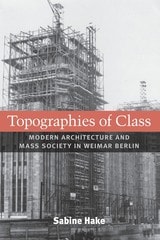
Topographies of Class
Modern Architecture and Mass Society in Weimar BerlinSabine Hake
University of Michigan Press, 2010
In Topographies of Class, Sabine Hake explores why Weimar Berlin has had such a powerful hold on the urban imagination. Approaching Weimar architectural culture from the perspective of mass discourse and class analysis, Hake examines the way in which architectural projects; debates; and representations in literature, photography, and film played a key role in establishing the terms under which contemporaries made sense of the rise of white-collar society.
Focusing on the so-called stabilization period, Topographies of Class maps out complex relationships between modern architecture and mass society, from Martin Wagner's planning initiatives and Erich Mendelsohn's functionalist buildings, to the most famous Berlin texts of the period, Alfred Döblin's city novel Berlin Alexanderplatz (1929) and Walter Ruttmann's city film Berlin, Symphony of the Big City (1927). Hake draws on critical, philosophical, literary, photographic, and filmic texts to reconstruct the urban imagination at a key point in the history of German modernity, making this the first study---in English or German---to take an interdisciplinary approach to the rich architectural culture of Weimar Berlin.
Sabine Hake is Professor and Texas Chair of German Literature and Culture at the University of Texas at Austin. She is the author of numerous books, including German National Cinema and Popular Cinema of the Third Reich.
Cover art: Construction of the Karstadt Department Store at Hermannplatz, Berlin-Neukölln. Courtesy Bildarchiv Preeussischer Kulturbesitz / Art Resource, NY
Transported to Botany Bay
Class, National Identity, and the Literary Figure of the Australian ConvictDorice Williams Elliott
Ohio University Press, 2019
Literary representations of British convicts exiled to Australia were the most likely way that the typical English reader would learn about the new colonies there. In Transported to Botany Bay, Dorice Williams Elliott examines how writers—from canonical ones such as Dickens and Trollope to others who were themselves convicts—used the figure of the felon exiled to Australia to construct class, race, and national identity as intertwined.
Even as England’s supposedly ancient social structure was preserved and venerated as the “true” England, the transportation of some 168,000 convicts facilitated the birth of a new nation with more fluid class relations for those who didn’t fit into the prevailing national image. In analyzing novels, broadsides, and first-person accounts, Elliott demonstrates how Britain linked class, race, and national identity at a key historical moment when it was still negotiating its relationship with its empire. The events and incidents depicted as taking place literally on the other side of the world, she argues, deeply affected people’s sense of their place in their own society, with transnational implications that are still relevant today.