Results by title
145 books match the query 'Classical' and 20 start with t
Tania León's Stride
A Polyrhythmic LifeAlejandro L. Madrid
University of Illinois Press, 2021
Nuanced and multifaceted, Tania León's Stride looks at the life, legacy, and milieu that created and sustained one of the most important figures in American classical music.

Televising Taste
Performing Classical Music on American ScreensBy Evelyn Kreutzer
Lever Press, 2027
Televising Taste: Performing Classical Music on American Screens explores how American television portrayed canonical European classical music in the Cold War era. Situating mid-century TV culture within a history of music visualization efforts, it complicates narratives about the postwar decades as a peak moment of polarity between “high” and “low” cultures, and between ideologies of consensus and rebellion. Drawing on discourse analysis, archival research, and the medium of videographic analysis, Evelyn Kreutzer suggests that the legacies of European classical music played an important part in the formation of an American national identity and that they were interwoven with and negotiated through popular media. Conjunctions of classical music and television occurred in dialogue with aspirations for cultural capital, which were attached to European classical music and inscribed into visions of American cultural literacy and citizenship. Simultaneously, these conjunctions responded to anxieties that popular culture and mass media would diminish “serious” music appreciation and turn audiences into passive consumers.
Through musical mediations on television, Televising Taste addresses larger ideological and historical implications of taste and canon politics, contributing a new interdisciplinary perspective on the interdependence of music and media cultures.
The American Stravinsky
The Style and Aesthetics of Copland's New American Music, the Early Works, 1921-1938Gayle Murchison
University of Michigan Press, 2013
One of the country's most enduringly successful composers, Aaron Copland created a distinctively American style and aesthetic in works for a diversity of genres and mediums, including ballet, opera, and film. Also active as a critic, mentor, advocate, and concert organizer, he played a decisive role in the growth of serious music in the Americas in the twentieth century.
In The American Stravinsky, Gayle Murchison closely analyzes selected works to discern the specific compositional techniques Copland used, and to understand the degree to which they derived from European models, particularly the influence of Igor Stravinsky. Murchison examines how Copland both Americanized these models and made them his own, thereby finding his own compositional voice. Murchison also discusses Copland's aesthetics of music and his ideas about its purpose and social function.
The Beethoven Violin Sonatas
History, Criticism, PerformanceEdited by Lewis Lockwood and Mark Kroll
University of Illinois Press, 2004
Lewis Lockwood and Mark Kroll's volume The Beethoven Violin Sonatas is the first scholarly book in English devoted exclusively to the Beethoven sonatas, and deals with them in unprecedented depth. It presents seven critical and historical essays by some of the most important American and European Beethoven specialists of our time. The authors examine the sonatas within the history of the genre, the social and cultural context in which they were written, their significance within Beethoven's life and works, and the issues they raise regarding performance practices of the period.
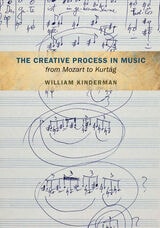
The Creative Process in Music from Mozart to Kurtag
William Kinderman
University of Illinois Press, 2012
Great music arouses wonder: how did the composer create such an original work of art? What was the artist's inspiration, and how did that idea become a reality? Cultural products inevitably arise from a context, a submerged landscape that is often not easily accessible. To bring such things to light, studies of the creative process find their cutting edge by probing beyond the surface, opening new perspectives on the apparently familiar.
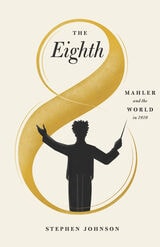
The Eighth
Mahler and the World in 1910Stephen Johnson
University of Chicago Press, 2020
September 12, 1910: The world premiere of Gustav Mahler’s Eighth Symphony and the artistic breakthrough for which the composer had yearned all his life. Munich’s new Musik Festhalle was filled to capacity on two successive evenings for the performances, which were received with rapturous applause. Representatives of many European royal houses were in attendance, along with an array of stars from the musical and literary world, including Thomas Mann and the young Arnold Schoenberg. Also present were Alma Mahler, the composer’s wife, and Alma’s longtime lover, the architect Walter Gropius. Knowledge of their relationship would precipitate an emotional crisis in Mahler that, compounded with his heart condition and the loss of his young daughter Maria, would lead to his premature death the next year.
In The Eighth, Stephen Johnson provides a masterful account of the symphony’s far-reaching consequences and its effect on composers, conductors, and writers of the time. The Eighth looks behind the scenes at the demanding one-week rehearsal period leading up to the premiere—something unheard of at the time—and provides fascinating insight into Mahler’s compositional habits, his busy life as a conductor, his philosophical and literary interests, and his personal and professional relationships. Johnson expertly contextualizes Mahler’s work among the prevailing attitudes and political climate of his age, considering the art, science, technology, and mass entertainment that informed the world in 1910. The Eighth is an absorbing history of a musical masterpiece and the troubled man who created it.
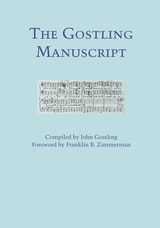
The Gostling Manuscript
Compiled by John Gostling
University of Texas Press, 1977
The rare and beautiful Gostling Manuscript is a primary source for the anthems of Henry Purcell and other major composers of the English Restoration period. Listed as missing since its sale to an anonymous buyer in 1935, the manuscript was eventually discovered in the Humanities Research Center at the University of Texas at Austin. This facsimile edition of the Gostling Manuscript (sometimes referred to by scholars as the "W. Kennedy Gostling Manuscript") made the document available to a wide audience for the first time in its history.
The anthems in this volume were assembled by the Reverend John Gostling, a celebrated bass soloist and an assiduous collector of the contemporary music of his day. His musical taste and editorial judgment, not to mention his skill as a copyist, were excellent. The Gostling Manuscript, completed around 1706, is considered essential for collating and editing some of the best anthems of the period. These sixty-four pieces, fair-copied in full score, include seventeen by Purcell; twenty-four by John Blow; four each by William Turner, Pelham Humfrey, and Jeremiah Clark; three each by Matthew Locke and Thomas Tudway; one by both William Child and Francis Pigott; and three arrangements by Henry Aldrich of anthems by Carissimi, Byrd, and Wise.
Gostling appended inscriptions to many of the pieces, giving the date and circumstances of composition, notes of considerable value to the musical historian. This folio-size facsimile edition will serve not only as an invaluable anthology but also as a unique and singularly helpful source of information about English musical life in the late seventeenth and early eighteenth centuries.
The foreword by Franklin B. Zimmerman provides a brief history of the Gostling Manuscript.
The Haydn Economy
Music, Aesthetics, and Commerce in the Late Eighteenth CenturyNicholas Mathew
University of Chicago Press, 2022
In this far-reaching work of music history and criticism, Nicholas Mathew reimagines the world of Joseph Haydn and his contemporaries, with its catastrophic upheavals and thrilling sense of potential. In the process, Mathew tackles critical questions of particular moment: how we tell the history of the European Enlightenment and Romanticism; the relation of late eighteenth-century culture to incipient capitalism and European colonialism; and how the modern market and modern aesthetic values were—and remain—inextricably entwined.
The Haydn Economy weaves a vibrant material history of Haydn’s career, extending from the sphere of the ancient Esterházy court to his frenetic years as an entrepreneur plying between London and Vienna to his final decade as a venerable musical celebrity, during which he witnessed the transformation of his legacy by a new generation of students and acolytes, Beethoven foremost among them. Ultimately, Mathew asserts, Haydn’s historical trajectory compels us to ask what we might retain from the cultural and political practices of European modernity—whether we can extract and preserve its moral promise from its moral failures. And it demands that we confront the deep histories of capitalism that continue to shape our beliefs about music, sound, and material culture.
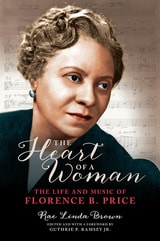
The Heart of a Woman
The Life and Music of Florence B. PriceRae Linda Brown. Edited and with a Foreword by Guthrie P. Ramsey Jr.
University of Illinois Press, 2020
Book Prize Winner of the International Alliance for Women in Music of the 2022 Pauline Alderman Awards for Outstanding Scholarship on Women in Music
The Heart of a Woman offers the first-ever biography of Florence B. Price, a composer whose career spanned both the Harlem and Chicago Renaissances, and the first African American woman to gain national recognition for her works.
Price's twenty-five years in Chicago formed the core of a working life that saw her create three hundred works in diverse genres, including symphonies and orchestral suites, art songs, vocal and choral music, and arrangements of spirituals. Through interviews and a wealth of material from public and private archives, Rae Linda Brown illuminates Price's major works while exploring the considerable depth of her achievement. Brown also traces the life of the extremely private individual from her childhood in Little Rock through her time at the New England Conservatory, her extensive teaching, and her struggles with racism, poverty, and professional jealousies. In addition, Brown provides musicians and scholars with dozens of musical examples.
The Italian Opera Singers in Mozart's Vienna
Dorothea Link
University of Illinois Press, 2022
Authoritative and insightful, The Italian Opera Singers in Mozart's Vienna offers a singular look at a musical milieu and a key to addressing the performance-practice problem of how to cast the Mozart roles today.
The Melodramatic Moment
Music and Theatrical Culture, 1790–1820Edited by Katherine G Hambridge and Jonathan Hicks
University of Chicago Press, 2018
This anthology proposes to address the sometimes bewilderingly broad understandings of melodrama by insisting on the historical specificity of its genesis on the stage in late-eighteenth-century Europe. Melodrama emerged during this time in the metropolitan centers of London, Paris, Vienna, and Berlin through stage adaptations of classical subjects and gothic novels, and they became famous for their use of passionate expression and spectacular scenery. Yet, as contributors to this volume emphasize, early melodramas also placed sound at center stage, through their distinctive—and often disconcerting—alternations between speech and music. This book draws out the melo of melodrama, showing the crucial dimensions of sound and music for a genre that permeates our dramatic, literary, and cinematic sensibilities today.
A richly interdisciplinary anthology, The Melodramatic Moment will open up new dialogues between musicology and literary and theater studies.
The Political Orchestra
The Vienna and Berlin Philharmonics during the Third ReichFritz Trümpi
University of Chicago Press, 2016
Trümpi looks first at the decades preceding National Socialist rule, when the competing orchestras, whose rivalry mirrored a larger rivalry between Berlin and Vienna, were called on to represent “superior” Austro-German music and were integrated into the administrative and social structures of their respective cities—becoming vulnerable to political manipulation in the process. He then turns to the Nazi period, when the orchestras came to play a major role in cultural policies. As he shows, the philharmonics, in their own unique ways, strengthened National Socialist dominance through their showcasing of Germanic culture in the mass media, performances for troops and the general public, and fictional representations in literature and film. Accompanying these propaganda efforts was an increasing politicization of the orchestras, which ranged from the dismissal of Jewish members to the programming of ideologically appropriate repertory—all in the name of racial and cultural purity.
Richly documented and refreshingly nuanced, The Political Orchestra is a bold exploration of the ties between music and politics under fascism.
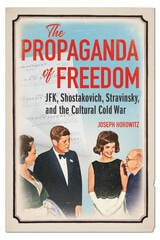
The Propaganda of Freedom
JFK, Shostakovich, Stravinsky, and the Cultural Cold WarJoseph Horowitz
University of Illinois Press, 2023
Eloquently extolled by President John F. Kennedy, the idea that only artists in free societies can produce great art became a bedrock assumption of the Cold War. That this conviction defied centuries of historical evidence--to say nothing of achievements within the Soviet Union--failed to impact impregnable cultural Cold War doctrine.
Joseph Horowitz writes: “That so many fine minds could have cheapened freedom by over-praising it, turning it into a reductionist propaganda mantra, is one measure of the intellectual cost of the Cold War.” He shows how the efforts of the CIA-funded Congress for Cultural Freedom were distorted by an anti-totalitarian “psychology of exile” traceable to its secretary general, the displaced Russian aristocrat/composer Nicolas Nabokov, and to Nabokov’s hero Igor Stravinsky.
In counterpoint, Horowitz investigates personal, social, and political factors that actually shape the creative act. He here focuses on Stravinsky, who in Los Angeles experienced a “freedom not to matter,” and Dmitri Shostakovich, who was both victim and beneficiary of Soviet cultural policies. He also takes a fresh look at cultural exchange and explores paradoxical similarities and differences framing the popularization of classical music in the Soviet Union and the United States. In closing, he assesses the Kennedy administration’s arts advocacy initiatives and their pertinence to today’s fraught American national identity.
Challenging long-entrenched myths, The Propaganda of Freedom newly explores the tangled relationship between the ideology of freedom and ideals of cultural achievement.
The Silent Musician
Why Conducting MattersMark Wigglesworth
University of Chicago Press, 2019
The Silent Musician deepens our understanding of what conductors do and why they matter. Neither an instruction manual for conductors, nor a history of conducting, the book instead explores the role of the conductor in noiselessly shaping the music that we hear. Writing in a clever, insightful, and often evocative style, world-renowned conductor Mark Wigglesworth deftly explores the philosophical underpinnings of conducting—from the conductor’s relationship with musicians and the music, to the public and personal responsibilities conductors face—and examines the subtler components of their silent art, which include precision, charisma, diplomacy, and passion. Ultimately, Wigglesworth shows how conductors—by simultaneously keeping time and allowing time to expand—manage to shape ensemble music into an immersive, transformative experience, without ever making a sound.
The Sounds of Place
Music and the American Cultural LandscapeDenise Von Glahn
University of Illinois Press, 2021
Wide-ranging and astute, The Sounds of Place explores high art music's role in the making of national myth and memory.
The Spirit of This Place
How Music Illuminates the Human SpiritPatrick Summers
University of Chicago Press, 2018
In this soul-searching collection of vignettes, Patrick Summers gives us an adamant, impassioned affirmative. Art, he argues, nurtures freedom of thought, and is more necessary now than ever before.
As artistic director of the Houston Grand Opera, Summers is well positioned to take stock of the limitations of the professional arts world—a world where the conversation revolves almost entirely around financial questions and whose reputation tends toward elitism—and to remind us of art’s fundamental relationship to joy and meaning. Offering a vehement defense of long-form arts in a world with a short attention span, Summers argues that art is spiritual, and that music in particular has the ability to ask spiritual questions, to inspire cathartic pathos, and to express spiritual truths. Summers guides us through his personal encounters with art and music in disparate places, from Houston’s Rothko Chapel to a music classroom in rural China, and reflects on musical works he has conducted all over the world. Assessing the growing canon of new operas performed in American opera houses today, he calls for musical artists to be innovative and brave as opera continues to reinvent itself.
This book is a moving credo elucidating Summers’s belief that the arts, especially music, help us to understand our own humanity as intellectual, aesthetic, and ultimately spiritual.
The String Quartets of Beethoven
Edited by William Kinderman
University of Illinois Press, 2020
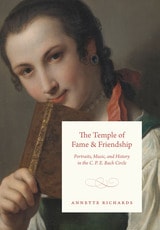
The Temple of Fame and Friendship
Portraits, Music, and History in the C. P. E. Bach CircleAnnette Richards
University of Chicago Press, 2020
One of the most celebrated German composers of the eighteenth century, C. P. E. Bach spent decades assembling an extensive portrait collection of some four hundred music-related items—from oil paintings to engraved prints. The collection was dispersed after Bach’s death in 1788, but with Annette Richards’s painstaking reconstruction, the portraits once again present a vivid panorama of music history and culture, reanimating the sensibility and humor of Bach’s time. Far more than a mere multitude of faces, Richards argues, the collection was a major part of the composer’s work that sought to establish music as an object of aesthetic, philosophical, and historical study.
The Temple of Fame and Friendship brings C. P. E. Bach’s collection to life, giving readers a sense of what it was like for visitors to tour the portrait gallery and experience music in rooms thick with the faces of friends, colleagues, and forebears. She uses the collection to analyze the “portraitive” aspect of Bach’s music, engaging with the influential theories of Swiss physiognomist Johann Caspar Lavater. She also explores the collection as a mode of cultivating and preserving friendship, connecting this to the culture of remembrance that resonates in Bach’s domestic music. Richards shows how the new music historiography of the late eighteenth century, rich in anecdote, memoir, and verbal portrait, was deeply indebted to portrait collecting and its negotiation between presence and detachment, fact and feeling.
The Two-Soul'd Animal
Early Modern Literatures of the Classical and Christian SoulsJames Jaehoon Lee
Northwestern University Press, 2019
The English writers studied in The Two-Soul’d Animal place two prevailing interpretations of the soul’s faculties—one rhetorical on the plane of aesthetics, the other theological on the plane of ethics—into contact as a way to construct a new mode of Christian agency.
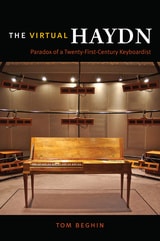
The Virtual Haydn
Paradox of a Twenty-First-Century KeyboardistTom Beghin
University of Chicago Press, 2015
With The Virtual Haydn, Tom Beghin—himself a professional keyboard player—delves deeply into eighteenth-century history and musicology to help us hear a properly complex Haydn. Unusually for a scholarly work, the book is presented in the first person, as Beghin takes us on what is clearly a very personal journey into the past. When a discussion of a group of Viennese sonatas, for example, leads him into an analysis of the contemporary interest in physiognomy, Beghin applies what he learns about the role of facial expressions during his own performance of the music. Elsewhere, he analyzes gesture and gender, changes in keyboard technology, and the role of amateurs in eighteenth-century musical culture.
The resulting book is itself a fascinating, bravura performance, one that partakes of eighteenth-century idiosyncrasy while drawing on a panoply of twenty-first-century knowledge.