Results by title
90 books match the query 'Colonial period, ca. 1600-1775' and 28 start with t
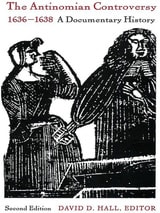
The Antinomian Controversy, 1636-1638
A Documentary HistoryDavid D. Hall, ed.
Duke University Press, 1990
This new edition of the 1968 volume, published now for the first time in paperback, includes an expanding bibliography and a new preface, treating in more detail the prime figures of Anne Hutchinson and her chief clerical supporter, John Cotton. Among the documents gathered here are transcripts of Anne Hutchinson’s trial, several of Cotton’s writings defending the Antinomian position, and John Winthrop’s account of the controversy. Hall’s increased focus on Hutchinson reveals the harshness and excesses with which the New England ministry tried to discredit her and reaffirms her place of prime importance in the history of American women.
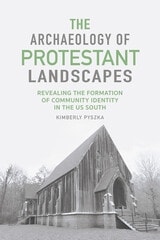
The Archaeology of Protestant Landscapes
Revealing the Formation of Community Identity in the US SouthKimberly Pyszka
University of Alabama Press, 2023
How religious institutions used landscapes and architecture to express their religious and social ideologies
The Archaeology of Protestant Landscapes focuses on three religious institutions in the US South in the eighteenth and nineteenth centuries: St. Paul’s Parish Church in coastal South Carolina, St. Luke’s Episcopal Church in central Alabama, and Cane Hill College in Northwest Arkansas. Drawing from archaeological surveys and excavations, artifact analysis, archival research, geophysical testing, and architectural information on religious structures, Kimberly Pyszka offers case studies of these institutions, which were located in developing communities that varied socially, politically, and economically.
Pyszka uses these case studies to demonstrate that select religious institutions used and modified natural landscape features to create cultural landscapes to express their ideology, identity, goals, and social, religious, and political power. She notes that where those structures were constructed, how they sat on the landscape, their architectural style, and their overall visual appearance were well-considered decisions made by religious leaders to benefit their organizations, communities, and, sometimes, themselves.
Pyszka also uses these case studies to highlight the social roles that religious organizations played in the development of communities. She points to landscape decisions—specifically to how the architectural design of religious structures was used, intentionally or not, to unite people, often those of differing religious backgrounds—as contributing to the creation of a common identity among people living in new and still-growing settlements, aiding in community development. This book contributes to the growing body of work within historical archaeology on churches, churchyards, and cemeteries and to the increasing awareness among archaeologists of how these sites contribute to questions of identity, consumerism, trade, and colonialism.
The Backcountry and the City
Colonization and Conflict in Early AmericaEd White
University of Minnesota Press, 2005
Ed White explores the backcountry-city divide as well as the dynamics of indigenous peoples, bringing together two distinct bodies of scholarship: one stressing the political culture of the Revolutionary era, the other taking an ethnohistorical view of white–Native American contact. White concentrates his study in Pennsylvania, a state in which the majority of the population was rural, and in Philadelphia, a city that was a center of publishing and politics and the national capital for a decade. Against this backdrop, White reads classic political texts such as Crèvecoeur’s Letters from an American Farmer, Franklin’s Autobiography, and Paine’s “Agrarian Justice,” alongside missionary and captivity narratives, farmers’ petitions, and Native American treaties. Using historical and ethnographic sources to enrich familiar texts, White demonstrates the importance of rural areas in the study of U.S. nation formation and finds unexpected continuities between the early colonial period and the federal ascendancy of the 1790s.
Ed White is associate professor of English at the University of Florida.

The Black Aesthetic Unbound
Theorizing the Dilemma of Eighteenth-Century African American LiteratureApril C. E. Langley
The Ohio State University Press, 2007
Consequently, this book has three aims: to locate the eighteenth century as the genesis of the cultural and historical movements which mark twentieth-century black aestheticism—known as the Black Aesthetic; to analyze problematic associations of African identity as manifested in an essentialized Afro-America; and to study the relationship between specific West African modes of thought and expression and the emergence of a black aesthetic in eighteenth-century North America. By exploring how Senegalese, Igbo, and other West African traditions provide striking new lenses for reading poetry and prose by six significant writers, Langley offers a fresh perspective on this important era in our literary history. Ultimately, the author confronts the difficult dilemma of how to use diasporic, syncretic, and vernacular theories of Black culture to think through the massive cultural transformations wrought by the Middle Passage.

The Carter Journals
Time Travels in Early U.S. HistoryShane Phipps
Indiana Historical Society Press, 2014
The Cashaway Psalmody
Transatlantic Religion and Music in Colonial CarolinaStephen A. Marini
University of Illinois Press, 2019
Stephen A. Marini, discoverer of The Cashaway Psalmody, offers the fascinating story of the tunebook and its many meanings. From its musical, literary, and religious origins in England, he moves on to the life of Durham Hills; how Carolina communities used the book; and the Psalmody's significance in understanding how ritual song—transmitted via transatlantic music, lyrics, and sacred singing—shaped the era's development. Marini also uses close musical and textual analyses to provide a critical study that offers music historians and musicologists valuable insights on the Pslamody and its period.
Meticulous in presentation and interdisciplinary in scope, The Cashaway Psalmody unlocks an important source for understanding life in the Lower South in the eighteenth century.
The Cassique of Kiawah
A Colonial RomanceWilliam Gilmore Simms
University of Arkansas Press, 2003

The Centenary Edition of the Works of Nathaniel Hawthorne
Vol. VI, True Stories From History and BiographyNathaniel Hawthorne
The Ohio State University Press, 1972
The Deadly Politics of Giving
Exchange and Violence at Ajacan, Roanoke, and JamestownSeth Mallios
University of Alabama Press, 2006
The First Fleets
Colonial Navies of the British Atlantic World, 1630–1775Benjamin C. Schaffer
University of Alabama Press, 2025
A revealing study on the little-known and misunderstood provincial navies established by North American British colonists.
In The First Fleets, Benjamin C. Schaffer reveals how, contrary to widespread beliefs, the American colonies had a long tradition of independent naval defense decades before the Revolution. He demonstrates that Anglo-American governments established and maintained significant provincial naval forces and that the history of provincial navies illuminates broader aspects of colonial history and the colonies’ ultimate break with the British Crown.
Based on meticulous research, Schaffer recounts the sea-borne threats that American colonies faced from the French, Spanish, pirates, and others. He reviews colonial governance and the relationships between colonial governments and Great Britain. Highlighting Britain’s scant naval power in North America, Schaffer demonstrates how the vulnerable coastal colonies undertook their own self-defense.
Schaffer’s readable study offers many fascinating episodes from colonial history. Establishing a navy was controversial in pacifist-minded, Quaker-dominated Pennsylvania. South Carolina deployed its scout-boat navy to pursue enslaved Africans who fled colonial capture. The first paper money issued in North America was an initiative to pay for a naval expedition against French Quebec in 1690. These and other episodes show the intimate connection between these little-known provincial navies and the major sociopolitical developments of their day.
The First Fleets will be of great interest to historians and readers of early American history, particularly colonial maritime and naval activities. Readers interested in the political and military dynamics of pre-Revolutionary America, as well as enthusiasts of naval history and maritime trade, will find The First Fleets both a valuable resource and an engrossing narrative.
The Last Great Colonial Lawyer
The Life and Legacy of Jeremiah GridleyCharles R. McKirdy
University of Massachusetts Press, 2018
Jeremiah Gridley (1702–1767) is considered “the greatest New England lawyer of his generation,” yet we know little about him. Most of his renown is a product of the fame of his students, most notably John Adams. Gridley deserves more. He was an active participant in the Writs of Assistance trial and the Stamp Act controversy, and as a leader of the Boston bar, an editor, speculator, legislator, and politician, his life touched and was touched by much that was integral to eighteenth-century Massachusetts.
The Last Great Colonial Lawyer presents a portrait of Gridley against the background of his times. Religious controversies enter into this narrative, as do colonial wars and the increasing strains with Great Britain, but Charles R. McKirdy also rescues from the footnotes of time subjects such as the smallpox epidemic of 1721 and the currency crisis of the 1740s. Because Gridley was above all a lawyer, the primary focus is on his cases, which illuminate in a unique and very human way attitudes regarding race, status, commerce, property, and power.

The Old American
A NovelErnest Hebert
Dartmouth College Press, 2001

The Packhorseman
Charles Hudson
University of Alabama Press, 2009

The Pennsylvania Associators, 1747–1777
Joseph Seymour
Westholme Publishing, 2024
The First Complete History of the Military Force of Colonial Pennsylvania, a Volunteer Body Created as a Practical Response to the Ideal of Pacifism
Known at various times as the Military Association of Pennsylvania, the Pennsylvania Association, or simply Associators, this long-neglected organization represented a new constituency in Pennsylvania politics and by extension, a new American response to arbitrary rule. Organized on December 7, 1747, at Philadelphia, the Military Association, an all-volunteer military establishment pledged to the defense of Pennsylvania, served as the de facto armed force for Pennsylvania, a colony whose leadership, a loose coalition of Quaker and German pacifists, land barons, and merchants, foreswore military preparedness on religious and ideological grounds. For the Associators, including their most noted supporter, Benjamin Franklin, a defenseless colony was no longer practical. During the War of Austrian Succession and again in the Seven Years’ War, Associators organized defense efforts in defiance of the Pennsylvania colonial leadership. Associators also helped defend American Indian refugees against the infamous Paxton Boys in 1764. By 1775, Associators found themselves as the colony’s only legitimate military leadership and, by capitalizing on electoral gains in the lead up to the American Revolution, Associators assumed offices vacated by former officials. During the critical battles of 1776, the Associators in their distinctive round hats and brown coats proved a decisive asset to the Continental Army.
In The Pennsylvania Associators, 1747–1777, historian Joseph Seymour has painstakingly researched primary source materials in order to write the first comprehensive history of this influential organization. Seymour demonstrates that while the Pennsylvania Associators contributed to success in the campaigns in which they fought, particularly the battles of Trenton and Princeton, a more fascinating and important investigation are the concerns that motivated these men. Associators considered military service in defense of their religious and civil liberties as a natural right. For three decades, Associators demonstrated that belief in and out of uniform. In a colony founded on religious exceptionalism, Associators saw themselves as faithful soldiers and active agents against leadership by entitlement, a principle guiding our government today.

The Politics of Piracy
Crime and Civil Disobedience in Colonial AmericaDouglas R. Burgess
University Press of New England, 2014
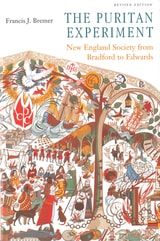
The Puritan Experiment
New England Society from Bradford to EdwardsFrancis J. Bremer
University Press of New England, 1995
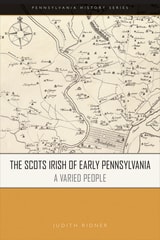
The Scots Irish of Early Pennsylvania
A Varied PeopleJudith A. Ridner
Temple University Press, 2018
The Scots Irish were one of early Pennsylvania’s largest non-English immigrant groups. They were stereotyped as frontier ruffians and Indian haters. In The Scots Irish of Early Pennsylvania, historian Judith Ridner insists that this immigrant group was socio-economically diverse. Servants and free people, individuals and families, and political exiles and refugees from Ulster, they not only pioneered new frontier settlements, but also populated the state’s cities—Philadelphia and Pittsburgh—and its towns, such as Lancaster, Easton, and Carlisle.
Ridner provides a much-overdue synthesis and reassessment of this immigrant group, tracing a century of Scotch-Irish migration from 1720 to 1820. These men and women brought their version of Ulster to the colonies in their fierce commitments to family, community, entrepreneurship, Presbyterianism, republican politics, and higher education. The settlements they founded across the state, including many farms, businesses, meetinghouses, and colleges, ensured that Pennsylvania would be their cradle in America, and these settlements stand as powerful testaments to their legacy to the state’s history and development.
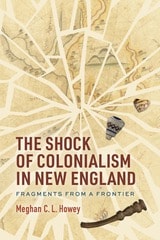
The Shock of Colonialism in New England
Fragments from a FrontierMeghan C. L. Howey
University of Alabama Press, 2025
Explores the untold impacts of colonialism in New England through diverse colonist lives, Indigenous encounters, and environmental legacies.
In The Shock of Colonialism in New England, archaeologist Meghan C. L. Howey uses excavations in the seventeenth-century colonial frontier of the Great Bay Estuary/P8bagok in today’s New Hampshire to trace the connection between European global colonialism and the planetary climate crises. Howey shows how this landscape holds forgotten stories of what it meant to live through the shock of colonialism.
These stories reveal an unexpected diversity and dynamism among English colonists, multifaceted encounters with Indigenous peoples, and lasting environmental damage from labor-intensive industries. Early Euro-American maps and stunning archaeological finds, such as a broken pickaxe embedded in a hearth, and a historical marker for the Oyster River “Massacre” of 1694 complicate our limited views of a shared past.
The reality of English colonialism in the dispossession of Indigenous lands and its wake is not commemorated. Howey’s work is a powerful corrective that traces the rise of intergenerational colonial wealth made possible by land commodified as property, the increased labor required to work newly opened land, the importation of indentured Scots and enslaved Africans to provide that labor, and the resulting degradation of the natural environment. Through Howey’s insights into the stories they tell, these fragments from a frontier can help contemporary readers better understand the past as they seek a more just and sustainable future.

The Snake Fence
Janet Olshewsky
QuakerPress, 2012
The Southern Frontier 1670-1732
Verner Crane, with a new introduction by Steven C. Hahn
University of Alabama Press, 2004
A classic resource on the struggle for dominance in southern North America during the colonial period
This volume recounts the clashes and intrigues that played out over the landscape of the Old Southwest and across six decades as the Spanish, French, British, and ultimately Americans vied for control. Rivalry began soon after initial discovery, mapping, and exploration as the world powers, particularly England and France, competed for control of the lucrative fur trade in the Mississippi valley. The French attempted to establish trade networks stretching from the Atlantic Ocean inland to the Mississippi River and northward from ports on the Gulf of Mexico to the Ohio River. But they found the British already entrenched there.
Verner Crane guides us through this multinational struggle and navigates the border wars and diplomatic intrigues that played crucial roles in the settlement of the South by Euro-Americans. In his new introduction, Steven Hahn places the work in the context of its time, sketches its publication history, and provides biographical information on Crane.
The Struggle for the Georgia Coast
John E. Worth
University of Alabama Press, 2007
In 1733, General James Edward Oglethorpe officially established the colony of Georgia, and within three years had fortified the coast southward toward St. Augustine. Although this region, originally known as the provinces of Guale and Mocama, had previously been under Spanish control for more than a century, territorial fighting had emptied the region of Spanish missionaries, soldiers, and their Indian allies. Spanish officials maintained that the long history of Spanish authority over the territory guaranteed Spain the right to defy and repel the English intruders. By 1739, with diplomatic negotiations failing and the potential for war imminent, King Philip V requested that Don Manuel de Montiano, Governor of Spanish Florida, provide him with every document from both governmental and ecclesiastical sources that would demonstrate prior Spanish presence and control over the region. Original documents and translations were delivered within the year and safely filed for future use--then forgotten. With the outbreak of open war six months earlier, the diplomatic utility of the documents had passed.
For over 250 years, the documents languished safely in the Archive of the Indies in Seville until recognized, recovered, translated, and published by John Worth. Within this volume, Worth brings to light the history of the documents, provides complete translations and full explanations of their contents and a narrative exposition of the Spanish presence along the Atlantic coast never before fully understood. David Hurst Thomas provides an introduction that places Worth's translations and his historical overview into the context of ongoing archaeological excavations on the Georgia coast. With the publication of this volume, one of the least known chapters of Georgia history is finally examined in detail.

The Tutor'd Mind
Indian Missionary-Writers in Antebellum AmericaBernd C. Peyer
University of Massachusetts Press, 1997
In the view of the English colonists and their descendants, Indian converts to Christianity were expected to repudiate native traditions and affirm the superiority of European civilization, to serve as role models, and to spread the gospel far into the wilderness. Yet as Bernd C. Peyer shows, Indian missionaries did not always fulfill the expectations of those who trained them. Once the Indians recognized that conversion alone did not guarantee protection from discrimination, they devised a variety of strategies, theological as well as practical, to resist assimilation into the dominant white culture. Making effective use of their literacy and education, they called attention to the discrepancy between the Protestant ideals they had been taught and the Anglo-American practices to which native people were subjected.
By uncovering this subtext of dissent and resistance, Peyer at once alters and enriches our understanding of the evolution of the American Indian literary tradition.
The Wished For Country
Wayne Karlin
Northwestern University Press, 2002
The stories of these three men, the women who love them, and the community they form, bring to vivid life the experiences of those who came to America pulled by a dream of what could be shaped from an emptiness that embodied promise, of those who were unwillingly brought to be the instruments of that dream, and of those who saw the shape of their world forever changed by the coming of the Europeans.
The Worlds of William Penn
Murphy, Andrew R
Rutgers University Press, 2019

The Yemassee
A Romance of CarolinaWilliam Gilmore Simms
University of Arkansas Press, 1994

Theater Enough
American Culture and the Metaphor of the World Stage, 1607–1789Jeffrey H. Richards
Duke University Press, 1991
The rhetoric, or discourse, of early American theater emerged out of the figures of speech that permeated the colonists’ lives and literary productions. Jeffrey H. Richards examines a variety of texts—histories, diaries, letters, journals, poems, sermons, political tracts, trial transcripts, orations, and plays—and looks at the writings of such authors as John Winthrop and Mercy Otis Warren. Richards places the American usage of theatrum mundi—the world depicted as a stage—in the context of classical and Renaissance traditions, but shows how the trope functions in American rhetoric as a register for religious, political, and historical attitudes.
This Happy Land
The Jews of Colonial and Antebellum CharlestonJames William Hagy
University of Alabama Press, 1993
Trading Spaces
The Colonial Marketplace and the Foundations of American CapitalismEmma Hart
University of Chicago Press, 2019
When we talk about the economy, “the market” is often just an abstraction. While the exchange of goods was historically tied to a particular place, capitalism has gradually eroded this connection to create our current global trading systems. In Trading Spaces, Emma Hart argues that Britain’s colonization of North America was a key moment in the market’s shift from place to idea, with major consequences for the character of the American economy.
Hart’s book takes in the shops, auction sites, wharves, taverns, fairs, and homes of seventeenth- and eighteenth-century America—places where new mechanisms and conventions of trade arose as Europeans re-created or adapted continental methods to new surroundings. Since those earlier conventions tended to rely on regulation more than their colonial offspring did, what emerged in early America was a less-fettered brand of capitalism. By the nineteenth century, this had evolved into a market economy that would not look too foreign to contemporary Americans. To tell this complex transnational story of how our markets came to be, Hart looks back farther than most historians of US capitalism, rooting these markets in the norms of seventeenth- and eighteenth-century Britain. Perhaps most important, this is not a story of specific commodity markets over time but rather is a history of the trading spaces themselves: the physical sites in which the grubby work of commerce occurred and where the market itself was born.