Results by title
153 books match the query 'Comics & Graphic Novels' and 23 start with t
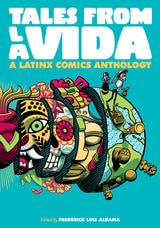
Tales from la Vida
A Latinx Comics AnthologyEdited by Frederick Luis Aldama
The Ohio State University Press, 2018
In the Latinx comics community, there is much to celebrate today, with more Latinx comic book artists than ever before. The resplendent visual-verbal storyworlds of these artists reach into and radically transform so many visual and storytelling genres. Tales from la Vida celebrates this space by bringing together more than eighty contributions by extraordinary Latinx creators. Their short visual-verbal narratives spring from autobiographical experience as situated within the language, culture, and history that inform Latinx identity and life. Tales from la Vida showcases the huge variety of styles and worldviews of today’s Latinx comic book and visual creators.
Whether it’s detailing the complexities of growing up—mono- or multilingual, bicultural, straight, queer, or feminist Latinx—or focusing on aspects of pop culture, these graphic vignettes demonstrate the expansive complexity of Latinx identities. Taken individually and together, these creators—including such legendary artists as Jaime and Gilbert Hernandez, Roberta Gregory, and Kat Fajardo, to name a few—and their works show the world that when it comes to Latinx comics, there are no limits to matters of content and form. As we travel from one story to the next and experience the unique ways that each creator chooses to craft his or her story, our hearts and minds wake to the complex ways that Latinxs live within and actively transform the world.
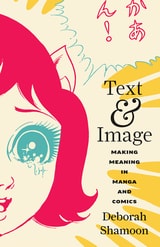
Text and Image
Making Meaning in Manga and ComicsDeborah Shamoon
University of Minnesota Press, 2026
How manga and comics reshape storytelling across cultures
Text and Image is a groundbreaking exploration of how Japanese manga and comics from the United States and United Kingdom craft meaning through the combination of words and pictures. Current scholarship often isolates manga in niche genre studies or prioritizes anime instead; in response, Deborah Shamoon proposes a unified framework for understanding paneled visual storytelling across cultures. She reframes comics not as kids’ stuff but as a sophisticated narrative art with its own grammar, rhythm, and visual poetics.
Drawing on narratology, art history, film studies, and media theory, Text and Image examines a vast array of material, from four-panel comic strips to different manga genres, including shōjo (girls’ romance comics), shōnen (teen action), seinen (adult drama), and gekiga (mature realism). Through close visual analysis, Shamoon demonstrates how creators use panel layout, pacing, and the choreography of text and image to shape emotional impact and narrative momentum. She reveals the shared techniques that link works as disparate as Fun Home and Spider-Man while also showing where cultural conventions diverge. Beyond the traditional print realm, Shamoon discusses digital platforms, such as webtoons and vertically scrolling comics, to show how new technologies merge manga’s cinematic sensibility with global innovation.
Making a bold case for a more expansive, inclusive theory of visual narrative that bridges long-standing divides between manga studies and Anglophone comics scholarship, Text and Image is an indispensable guide to understanding how contemporary stories work and why they resonate across borders.
Retail e-book files for this title are screen-reader friendly with images accompanied by short alt text and/or extended descriptions.
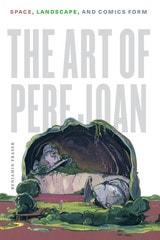
The Art of Pere Joan
Space, Landscape, and Comics FormBy Benjamin Fraser
University of Texas Press, 2019
Born in Mallorca, Pere Joan Riera (known professionally as Pere Joan) thrived in the underground comics world, beginning in the mid-1970s with the self-published collections Baladas Urbanas and MuŽrdago, both of which were released almost immediately after the death of the dictator Francisco Franco and Spain's transition to democracy. The first monograph in English on a comics artist from Spain, The Art of Pere Joan takes a topographical approach to reading comics, applying theories of cultural and urban geography to Pere Joan’s treatment of space and landscape in his singular body of work.
Balancing this goal with an exploration of specific works by Pere Joan, Benjamin Fraser demonstrates that looking at the thematic, structural, and aesthetic originality of the artist's landscape-driven work can help us begin to newly understand the representational properties of comics as a spatial medium. This in-depth examination reveals the resonance between the cultural landscapes of Mallorca and Pere Joan's metaphorical approach to both rural and urban environments in comics that weave emotional, ecological, and artistic strands in revolutionary ways.
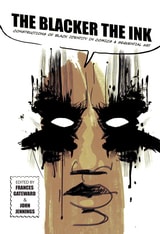
The Blacker the Ink
Constructions of Black Identity in Comics and Sequential ArtGateward, Frances
Rutgers University Press, 2015
Winner of the 2016 Ray and Pat Browne Award for Best Edited Collection in Popular Culture and American Culture by the Popular Culture Association/American Culture Association
Winner of the 2016 PEN Oakland-Josephine Miles Award for Excellence in Literature
When many think of comic books the first thing that comes to mind are caped crusaders and spandex-wearing super-heroes. Perhaps, inevitably, these images are of white men (and more rarely, women). It was not until the 1970s that African American superheroes such as Luke Cage, Blade, and others emerged. But as this exciting new collection reveals, these superhero comics are only one small component in a wealth of representations of black characters within comic strips, comic books, and graphic novels over the past century.
The Blacker the Ink is the first book to explore not only the diverse range of black characters in comics, but also the multitude of ways that black artists, writers, and publishers have made a mark on the industry. Organized thematically into “panels” in tribute to sequential art published in the funny pages of newspapers, the fifteen original essays take us on a journey that reaches from the African American newspaper comics of the 1930s to the Francophone graphic novels of the 2000s. Even as it demonstrates the wide spectrum of images of African Americans in comics and sequential art, the collection also identifies common character types and themes running through everything from the strip The Boondocks to the graphic novel Nat Turner.
Though it does not shy away from examining the legacy of racial stereotypes in comics and racial biases in the industry, The Blacker the Ink also offers inspiring stories of trailblazing African American artists and writers. Whether you are a diehard comic book fan or a casual reader of the funny pages, these essays will give you a new appreciation for how black characters and creators have brought a vibrant splash of color to the world of comics.
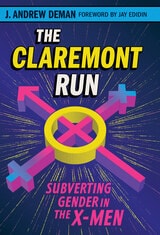
The Claremont Run
Subverting Gender in the X-MenJ. Andrew Deman; Foreword by Jay Edidin
University of Texas Press, 2023
Winner — 2024 Will Eisner Comic Industry Awards in Best Academic/Scholarly Work, announced at San Diego Comic-Con International (2024)
A data-driven deep dive into a legendary comics author’s subversion of gender norms within the bestselling comic of its time.
By the time Chris Claremont’s run as author of Uncanny X-Men ended in 1991, he had changed comic books forever. During his sixteen years writing the series, Claremont revitalized a franchise on the verge of collapse, shaping the X-Men who appear in today’s Hollywood blockbusters. But, more than that, he told a new kind of story, using his growing platform to articulate transgressive ideas about gender nonconformity, toxic masculinity, and female empowerment.
J. Andrew Deman’s investigation pairs close reading and quantitative analysis to examine gender representation, content, characters, and story structure. The Claremont Run compares several hundred issues of Uncanny X-Men with a thousand other Marvel comics to provide a comprehensive account of Claremont’s sophisticated and progressive gender politics. Claremont’s X-Men upended gender norms: where female characters historically served as mere eye candy, Claremont’s had leading roles and complex, evolving personalities. Perhaps more surprisingly, his male superheroes defied and complicated standards of masculinity. Groundbreaking in their time, Claremont’s comics challenged readers to see the real world differently and transformed pop culture in the process.
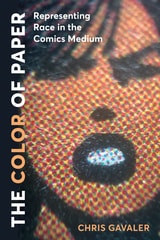
The Color of Paper
Representing Race in the Comics MediumChris Gavaler
The Ohio State University Press, 2026
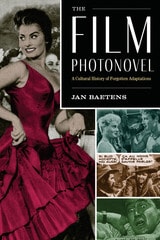
The Film Photonovel
A Cultural History of Forgotten AdaptationsBy Jan Baetens
University of Texas Press, 2019
Discarded by archivists and disregarded by scholars despite its cultural impact on post–World War II Europe, the film photonovel represents a unique crossroads. This hybrid medium presented popular films in a magazine format that joined film stills or set pictures with captions and dialogue balloons to re-create a cinematic story, producing a tremendously popular blend of cinema and text that supported more than two dozen weekly or monthly publications.
Illuminating a long-overlooked ‘lowbrow’ medium with a significant social impact, The Film Photonovel studies the history of the format as a hybrid of film novelizations, drawn novels, and nonfilm photonovels. While the field of adaptation studies has tended to focus on literary adaptations, this book explores how the juxtaposition of words and pictures functioned in this format and how page layout and photo cropping could affect reading. Finally, the book follows the film photonovel's brief history in Latin America and the United States. Adding an important dimension to the interactions between filmmakers and their audiences, this work fills a gap in the study of transnational movie culture.

The Humours of Parliament
Harry Furniss's View of Late-Victorian Political CultureEdited and with an Introduction by Gareth Cordery and Joseph S. Meisel
The Ohio State University Press, 2014
Reproducing some 150 images drawn from Furniss’s extensive graphic work, The Humours of Parliament: Harry Furniss’s View of Late-Victorian Political Culture, edited and with an introduction by Gareth Cordery and Joseph S. Meisel, presents Furniss’s unpublished lecture text for the first time. The extensive introduction places the show in its biographical, political, and performative contexts. Cordery and Meisel’s volume therefore both documents a pivotal moment in British political and social history and provides a rare case study of an important yet little studied nineteenth-century performance genre: the illustrated platform lecture.
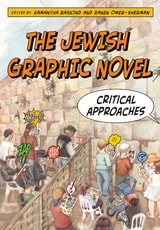
The Jewish Graphic Novel
Critical ApproachesEdited by Samantha Baskind and Ranen Omer-Sherman
Rutgers University Press, 2008
The Jewish Graphic Novel is a lively, interdisciplinary collection of essays that addresses critically acclaimed works in this subgenre of Jewish literary and artistic culture. Featuring insightful discussions of notable figures in the industryùsuch as Will Eisner, Art Spiegelman, and Joann Sfarùthe essays focus on the how graphic novels are increasingly being used in Holocaust memoir and fiction, and to portray Jewish identity in America and abroad
Featuring more than 85 illustrations, this collection is a compelling representation of a major postmodern ethnic and artistic achievement.
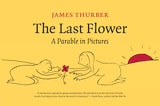
The Last Flower
A Parable in PicturesJames Thurber
University of Iowa Press, 2007
Civilization has collapsed after World War XII, dogs have deserted their masters, all the groves and gardens have been destroyed, and love has vanished from the earth. Then one day, "a young girl who had never seen a flower chanced to come upon the last one in the world." Written among the sorrow and chaos of war, dedicated to this only child " in the wistful hope that her world will be better than mine." The new printing will feature new scans of Thurber's original 1939 drawings.
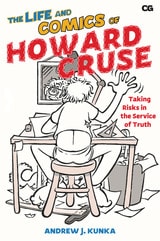
The Life and Comics of Howard Cruse
Taking Risks in the Service of TruthAndrew J. Kunka
Rutgers University Press, 2022
The Life and Comics of Howard Cruse tells the remarkable story of how a self-described “preacher’s kid” from Birmingham, Alabama, became the so-called “Godfather of Gay Comics.” This study showcases a remarkable fifty-year career that included working in the 1970s underground comics scene, becoming founding editor of the groundbreaking anthology series Gay Comix, and publishing the graphic novel Stuck Rubber Baby, partially based on his own experience of coming of age in the Civil Rights era.
Through his exploration of Cruse’s life and work, Andrew J. Kunka also chronicles the dramatic ways that gay culture changed over the course of Cruse’s lifetime, from Cold War-era homophobia to the gay liberation movement to the AIDS crisis to the legalization of gay marriage. Highlighting Cruse’s skills as a trenchant satirist and social commentator, Kunka explores how he cast a queer look at American politics, mainstream comics culture, and the gay community’s own norms.
Lavishly illustrated with a broad selection of comics from Cruse’s career, this study serves as a perfect introduction to this pioneering cartoonist, as well as an insightful read for fans who already love how his work sketched a new vision of gay life.
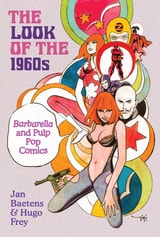
The Look of the 1960s
Barbarella and Pulp Pop ComicsJan Baetens and Hugo Frey
University of Texas Press, 2026
How the classic aesthetic of 1960s pulp comics influenced art, culture, and politics.
As a form of visual art, comic books rely on a distinct and eye-catching aesthetic. This is especially true of the iconic comics, graphic novels, and illustrations of the 1960s and 1970s. The Look of the 1960s explores the sources of inspiration that influenced the world of comics, beginning with the well-known French comics series Barbarella.
Noted comics scholars Jan Baetens and Hugo Frey analyze the impacts of the often-provocative images featured in the comics of the 1960s, which pushed back against French censorship in a politically tense time, and detail how women resisted their objectification in the comic book industry. Barbarella left its mark on the world and gained international attention, inspiring a movie adaptation and changing the look and content of other popular comics. The “Pulp Pop” movement remains relevant today, continuing to influence the art and political world. With new information about artists and an astute analysis of sociopolitical influence, The Look of the 1960s offers deep insights, making it a must read for comics fans all over the world.
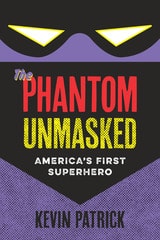
The Phantom Unmasked
America's First SuperheroKevin Patrick
University of Iowa Press, 2017
By tracing the publication history of The Phantom in magazines and comic books across international markets since the mid-1930s, author Kevin Patrick delves into the largely unexplored prehistory of modern media licensing industries. He also explores the interconnections between the cultural, political, economic, and historical factors that fueled the character’s international popularity. The Phantom Unmasked offers readers a nuanced study of the complex cultural flow of American comic books around the world. Equally important, to provide a rare glimpse of international comics fandom, Patrick surveyed the Phantom’s “phans”—as they call themselves—and lets them explain how and why they came to love the world’s first masked superhero.
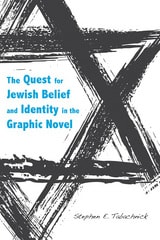
The Quest for Jewish Belief and Identity in the Graphic Novel
Stephen E. Tabachnick
University of Alabama Press, 2014
The creators of Superman (Jerry Siegel and Joe Shuster), Batman (Bob Kane and Bill Finger), and the Marvel superheroes (Stan Lee and Jack Kirby), were Jewish, as was the founding editor of Mad magazine (Harvey Kurtzman). They often adapted Jewish folktales (like the Golem) or religious stories (such as the origin of Moses) for their comics, depicting characters wrestling with supernatural people and events. Likewise, some of the most significant graphic novels by Jews or about Jewish subject matter deal with questions of religious belief and Jewish identity. Their characters wrestle with belief—or nonbelief—in God, as well as with their own relationship to the Jews, the historical role of the Jewish people, the politics of Israel, and other issues related to Jewish identity.
In The Quest for Jewish Belief and Identity in the Graphic Novel, Stephen E. Tabachnick delves into the vivid kaleidoscope of Jewish beliefs and identities, ranging from Orthodox belief to complete atheism, and a spectrum of feelings about identification with other Jews. He explores graphic novels at the highest echelon of the genre by more than thirty artists and writers, among them Harvey Pekar (American Splendor), Will Eisner (A Contract with God), Joann Sfar (The Rabbi’s Cat), Miriam Katin (We Are On Our Own), Art Spiegelman (Maus), J. T. Waldman (Megillat Esther), Aline Kominsky Crumb (Need More Love), James Sturm (The Golem’s Mighty Swing), Leela Corman (Unterzakhn), Ari Folman and David Polonsky (Waltz with Bashir), David Mairowitz and Robert Crumb’s biography of Kafka, and many more. He also examines the work of a select few non-Jewish artists, such as Robert Crumb and Basil Wolverton, both of whom have created graphic adaptations of parts of the Hebrew Bible.
Among the topics he discusses are graphic novel adaptations of the Bible; the Holocaust graphic novel; graphic novels about the Jews in Eastern and Western Europe and Africa, and the American Jewish immigrant experience; graphic novels about the lives of Jewish women; the Israel-centered graphic novel; and the Orthodox graphic novel. The book concludes with an extensive bibliography.
No study of Jewish literature and art today can be complete without a survey of the graphic novel, and scholars, students, and graphic novel fans alike will delight in Tabachnick’s guide to this world of thought, sensibility, and artfulness.
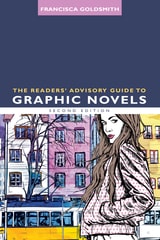
The Readers' Advisory Guide to Graphic Novels
Francisca Goldsmith
American Library Association, 2017
The first edition of this readers' advisory represented a pioneering effort to provide help and encouragement to librarians diving into this exciting format, and since then the popularity of graphic novels has continued apace. Goldsmith has updated her guide to encompass a bounty of new titles, authors, and styles, ensuring its continued usefulness as a tool for both RA and collection development. Suitable for newbies and hardcore fans alike, this book
- sketches in the history of graphic novels, tracing their evolution and showing what makes them unique;
- explores traditional and cutting edge titles most friendly to children, teens, and adults, reflecting the burgeoning and maturing publishing efforts made for each of these audiences;
- discusses common themes, topics, and the place of diversity in graphic novels;
- gives in-depth guidance on ways to connect readers to titles they'll be sure to love;
- offers ideas for media tie-ins, displays, programming, book clubs, and more;
- includes annotated bibliographies, with appeal characteristics noted, and multiple indexes to ensure that locating the right graphic novel is a snap; and
- provides detailed tips for keeping current and aware of new titles and trends.
Spotlighting this expanding body of intellectual, aesthetic, and engaging literature, Goldsmith's guide will entertain as well as inform.
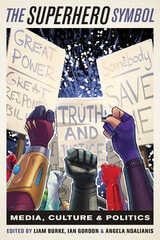
The Superhero Symbol
Media, Culture, and PoliticsLiam Burke
Rutgers University Press, 2020
It is hard to imagine a time when superheroes have been more pervasive in our culture. Today, superheroes are intellectual property jealously guarded by media conglomerates, icons co-opted by grassroots groups as a four-color rebuttal to social inequities, masks people wear to more confidently walk convention floors and city streets, and bulletproof banners that embody regional and national identities. From activism to cosplay, this collection unmasks the symbolic function of superheroes.
Bringing together superhero scholars from a range of disciplines, alongside key industry figures such as Harley Quinn co-creator Paul Dini, The Superhero Symbol provides fresh perspectives on how characters like Captain America, Iron Man, and Wonder Woman have engaged with media, culture, and politics, to become the “everlasting” symbols to which a young Bruce Wayne once aspired.

The Water Defenders
How Ordinary People Saved a Country from Corporate GreedRobin Broad and John Cavanagh with Graphic Adaptation by Jon Sack
The Ohio State University Press, 2026
Initially excited by the company’s promises of jobs and prosperity, farmer Vidalina Morales, brothers Marcelo and Miguel Rivera, and others soon realized that the trade-off was catastrophic contamination of El Salvador’s main source of fresh water. Facing corporate machinations and violence, the ordinary people of San Isidro and surrounding communities built a transnational coalition that prevailed over powerful adversaries to score an environmental victory with worldwide repercussions.
Broad and Cavanagh draw on over a decade of research, interviews, and experience as allies and experts in international development to recount the harrowing saga. A blueprint for civic bravery and local-to-global activism, as well as a rich history of Central America’s political conflicts and people’s fights against environmental and economic exploitation, this story will inspire anyone who feels helpless against corporate malfeasance.
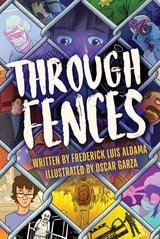
Through Fences
Written by Frederick Luis Aldama and Illustrated by Oscar Garza
The Ohio State University Press, 2024
Honor-winner, 2025 Texas Institute of Letters Jean Flynn Award for Best Young Adult Book
Longlisted, REFORMA National Book Award 2024
Through Fences follows the ups and downs of Latino kids and young adults in the US–Mexico borderlands: San Ysidro, Calexico, McAllen, and back and forth across the border. A young girl's journey north goes wrong, and now she is in a forbidding new place, away from her parents and brother, where she doesn't understand what the adults in green are saying even as she tries to obey their rules. Rocky, one of the few white kids in town, stands by and watches as Miguel is jumped by two of his friends. Maggie and her parents are separated at the border in a tragic accident. Alberto's son doesn't understand his Mexican father's hatred for illegals or his work as a border patrol agent. Alicia is a TikTok influencer who doesn't want to grow up to be a hospital cleaning lady like her mother, but COVID complicates things. Whatever their challenges, the kids, teens, tweens, and adults in these pages are just trying to survive their everyday lives. Vibrantly illustrated by Oscar Garza, each of these short stories brings a different perspective on the perils of living on the border while brown.
Thunderbolt
An American Tale, Vol. 1Wilfred Santiago
The Ohio State University Press, 2019
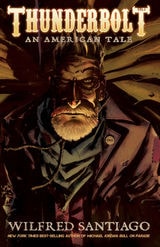
As a young boy in nineteenth-century America, Captain John Brown swore to dedicate his life to the struggle against slavery. Years later, he and his sons have joined the fight in Kansas, the epicenter of the national debate over slavery. As the territory nears statehood, abolitionists and proslavery border ruffians clash in increasingly violent conflict across the territory. But John Brown has more in mind than border skirmishes. He aims to eliminate slavery from US soil once and for all—even if that means raiding a government armory in order to arm a national slave revolt. From the Pottawatomie Massacre to the Battle of Black Jack and the Battle of Osawatomie, this first installment in the story of the legendary John Brown traces the rise of the insurrection in stunning detail.
Gritty, gripping, and masterfully illustrated, Wilfred Santiago’s telling of John Brown’s tale pulls no punches as it unflinchingly recounts the epic struggle across pre–Civil War America. And while John Brown’s methods may be questionable, his story is unforgettable. After all, dying is part of the plan.
Trampoline
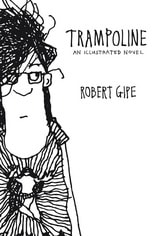
An Illustrated NovelRobert Gipe
Ohio University Press, 2015

Twelve-Cent Archie
Beaty, Bart
Rutgers University Press, 2015
Twelve-Cent Archie
New edition with full color illustrationsBeaty, Bart
Rutgers University Press, 2017
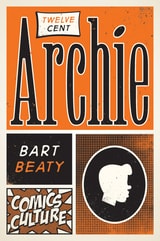
Twelve-Cent Archie is not only the first scholarly study of the Archie comic, it is an innovative creative work in its own right. Inspired by Archie’s own concise storytelling format, renowned comics scholar Bart Beaty divides the book into a hundred short chapters, each devoted to a different aspect of the Archie comics. Fans of the comics will be thrilled to read in-depth examinations of their favorite characters and motifs, including individual chapters devoted to Jughead’s hat and Archie’s sweater-vest. But the book also has plenty to interest newcomers to Riverdale, as it recounts the behind-the-scenes history of the comics and analyzes how Archie helped shape our images of the American teenager.
As he employs a wide range of theoretical and methodological approaches, Beaty reveals that the Archie comics themselves were far more eclectic, creative, and self-aware than most critics recognize. Equally comfortable considering everything from the representation of racial diversity to the semiotics of Veronica’s haircut, Twelve-Cent Archie gives a fresh appreciation for America’s most endearing group of teenagers.
Typical Girls
The Rhetoric of Womanhood in Comic StripsSusan E. Kirtley
The Ohio State University Press, 2021
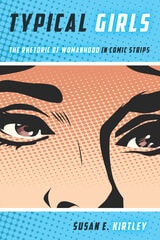
In the years following 1975, a group of female-created comic strips came to national attention in a traditionally male-dominated medium. Typical Girls: The Rhetoric of Womanhood in Comic Strips uncovers the understudied and developing history of these strips, defining and exploring the ramifications of this expression of women’s roles at a time of great change in history and in comic art. This impressive, engaging, and timely study illustrates how these comics express the complexities of women’s experiences, especially as such experiences were shaped by shifting and often competing notions of womanhood and feminism. Including the comics of Lynn Johnston (For Better or For Worse), Cathy Guisewite (Cathy), Nicole Hollander (Sylvia), Lynda Barry (Ernie Pook’s Comeek), Barbara Brandon-Croft (Where I’m Coming From), Alison Bechdel (Dykes to Watch Out For), and Jan Eliot (Stone Soup), Typical Girls is an important history of the representation of womanhood and women’s rights in popular comic strips.