Results by title
112 books match the query 'Commentaries' and 42 start with t
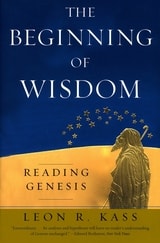
The Beginning of Wisdom
Reading GenesisLeon R. Kass
University of Chicago Press, 2006
“Extraordinary,” says the New York Times, “will leave no reader’s understanding of Genesis unchanged.”
Examining Genesis in a philosophical light, Leon Kass presents it not as a story of what happened long ago, but as the enduring story of humanity itself. He asserts that the first half of Genesis contains insights about human nature that “rival anything produced by the great philosophers.” Kass here reads these first stories—from Adam and Eve to the tower of Babel—as a mirror for self-discovery that reveals truths about human reason, speech, freedom, sexual desire, pride, shame, anger, and death. Taking a step further in the second half of his book, Kass explores the struggles in Genesis to launch a new way of life that addresses mankind’s morally ambiguous nature by promoting righteousness and holiness.
Even readers who don’t agree with Kass’s interpretations will find The Beginning of Wisdom a compelling book—a masterful philosophical take on one of the world’s seminal religious texts.
The Chreia and Ancient Rhetoric
Commentaries on Aphthonius's ProgymnasmataRonald F. Hock
SBL Press, 2012
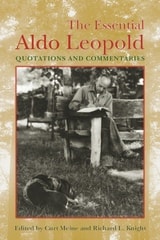
The Essential Aldo Leopold
Quotations and CommentariesEdited by Curt D. Meine and Richard L. Knight
University of Wisconsin Press, 1999
For the first time, the most important quotations of the great conservationist Aldo Leopold, author of A Sand County Almanac, are gathered in one volume. From conservation education to wildlife ecology, from wilderness protection to soil and water conservation, the writings of Aldo Leopold continue to have profound influence on those seeking to understand the earth and its care. Leopold biographer Curt Meine and noted conservation biologist Richard Knight have assembled this comprehensive collection of quotations from Leopold’s extensive and diverse writings, selected and organized to capture the richness and depth of the North American conservation movement.
Prominent biologists, conservationists, historians, and philosophers provide introductory commentaries describing Leopold’s contributions in varied fields and reflecting upon the significance of his work today.
Contributors:
J. Baird Callicott
David Ehrenfeld
Susan L. Flader
Eric T. Freyfogle
Wes Jackson
Paul W. Johnson
Joni L. Kinsey
Richard L. Knight
Gary K. Meffe
Curt Meine
Gary Paul Nabhan
Richard Nelson
Bryan G. Norton
David W. Orr
Edwin P. Pister
Donald Snow
Stanley A. Temple
Jack Ward Thomas
Charles Wilkinson
Terry Tempest Williams
Donald Worster
Joy B. Zedler
The Exposition of 1 John and An Exposition upon Matthew V-VII
William Tyndale
Catholic University of America Press, 2023
The Ideal Bishop
Michael G. Sirilla
Catholic University of America Press, 2017
The Lover of a Subversive Is Also a Subversive
Essays and CommentariesMartín Espada
University of Michigan Press, 2010
Prior praise for Martín Espada:
"Political poetry at its finest…with his soaring lyrics, Espada broadens our appreciation not only of poetry but of resistance itself."
---The Progressive
"(Espada) writes beautiful poems about terrible realities."
---San Francisco Chronicle
A volume in the Poets on Poetry series, which collects critical works by contemporary poets, gathering together the articles, interviews, and book reviews by which they have articulated the poetics of a new generation.
This collection of essays on poetry and politics comes from the man the New York Times predicted would become "the Latino poet of his generation" and whom Sandra Cisneros called "the Pablo Neruda of North American authors."
Martín Espada defends what Walt Whitman called, "the rights of them the others are down upon." He invokes the spirit of poet-advocates such as Whitman and Edgar Lee Masters to explore his own history as a poet and tenant lawyer in Boston's Latino community. He celebrates the poets of Puerto Rico, imprisoned for espousing the cause of independence, and the poets of the Bronx, writing bilingual poems in the voices of the dead.
Espada writes of forgotten places and reminds us of the poet's responsibility to remember, as Pablo Neruda remembers the anonymous builders of Machu Picchu or Sterling Brown remembers the slave uprising of Nat Turner. He argues that poets should embrace the role of Shelley's "unacknowledged legislator" in their work as writers and in their lives as citizens. He challenges the conventional wisdom that poetry and politics are mutually exclusive, and rejects the poetics of self-marginalization, in keeping with Adrian Mitchell's dictum that, "most people ignore most poetry because most poetry ignores most people."
Martín Espada has published seventeen books as a poet, editor, and translator. The Republic of Poetry, a collection of poems, received a Paterson Award for Sustained Literary Achievement and was a finalist for the Pulitzer Prize. Imagine the Angels of Bread won an American Book Award and was a finalist for the National Book Critics Circle Award. He has received numerous fellowships and awards, including a Guggenheim Fellowship and the National Hispanic Cultural Center Literary Award. Espada is a Professor of English at the University of Massachusetts-Amherst.
The Mussar Torah Commentary
A Spiritual Path to Living a Meaningful and Ethical LifeRabbi Barry H. Block
Central Conference of American Rabbis, 2020
This Mussar-based commentary is a vital resource for Torah study, offering a thoughtful analysis of each of the 54 weekly parashot. Each essay in this anthology brings a parashah into juxtaposition with one of the Mussar middot (character traits as described within the Jewish school of ethics called Mussar), thereby providing an applied lens of Mussar teachings that helps us to delve deeper into our tradition with increased mindfulness and intention.
The Nature of Political Philosophy
And Other Studies and CommentariesJames V. Schall
Catholic University of America Press, 2022

The Talmud of the Land of Israel, Volume 10
Orlah and BikkurimJacob Neusner, General Editor
University of Chicago Press, 1991
The Talmud of the Land of Israel, Volume 11
ShabbatJacob Neusner, General Editor
University of Chicago Press, 1991
The Talmud of the Land of Israel, Volume 12
ErubinJacob Neusner, General Editor
University of Chicago Press, 1990
The Talmud of the Land of Israel, Volume 13
Yerushalmi PesahimJacob Neusner, General Editor
University of Chicago Press, 1995
Yerushalmi Pesahim details the specific requirements regarding the preparation for Passover, the Passover sacrifice, and the Seder. Commenting on the many, often contradictory, prescriptions in Exodus, Leviticus, Numbers, and Deuteronomy, this tractate is an important part of a long tradition of interpretation regarding Passover.
The Talmud of the Land of Israel, Volume 14
YomaJacob Neusner, General Editor
University of Chicago Press, 1991
The Talmud of the Land of Israel, Volume 15
SheqalimJacob Neusner, General Editor
University of Chicago Press, 1990
The Talmud of the Land of Israel, Volume 17
SukkahJacob Neusner, General Editor
University of Chicago Press, 1988
The Talmud of the Land of Israel, Volume 18
Besah and TaanitJacob Neusner, General Editor
University of Chicago Press, 1987
The Talmud of the Land of Israel, Volume 19
MegillahJacob Neusner, General Editor
University of Chicago Press, 1987
The Talmud of the Land of Israel, Volume 1
BerakhotJacob Neusner, General Editor
University of Chicago Press, 1989
The Talmud of the Land of Israel, Volume 20
Hagigah and Moed QatanJacob Neusner, General Editor
University of Chicago Press, 1986
The Talmud of the Land of Israel, Volume 21
YebamotJacob Neusner, General Editor
University of Chicago Press, 1987
The Talmud of the Land of Israel, Volume 22
KetubotJacob Neusner, General Editor
University of Chicago Press, 1985
The Talmud of the Land of Israel, Volume 23
NedarimJacob Neusner, General Editor
University of Chicago Press, 1985
The Talmud of the Land of Israel, Volume 24
NazirJacob Neusner, General Editor
University of Chicago Press, 1985
The Talmud of the Land of Israel, Volume 25
GittinJacob Neusner, General Editor
University of Chicago Press, 1985
The Talmud of the Land of Israel, Volume 26
QiddushinJacob Neusner, General Editor
University of Chicago Press, 1984
The Talmud of the Land of Israel, Volume 27
SotahJacob Neusner, General Editor
University of Chicago Press, 1984
The Talmud of the Land of Israel, Volume 28
Baba QammaJacob Neusner, General Editor
University of Chicago Press, 1984
The Talmud of the Land of Israel, Volume 29
Baba MesiaJacob Neusner, General Editor
University of Chicago Press, 1984
The Talmud of the Land of Israel, Volume 2
Yerushalmi PeahJacob Neusner, General Editor
University of Chicago Press, 1990
The Talmud of the Land of Israel, Volume 30
Baba BatraJacob Neusner, General Editor
University of Chicago Press, 1984
The Talmud of the Land of Israel, Volume 31
Sanhedrin and MakkotJacob Neusner, General Editor
University of Chicago Press, 1984
The Talmud of the Land of Israel, Volume 33
Abodah ZarahJacob Neusner, General Editor
University of Chicago Press, 1982
The Talmud of the Land of Israel, Volume 34
Horayat and NiddahJacob Neusner, General Editor
University of Chicago Press, 1982
The Talmud of the Land of Israel, Volume 3
DemaiJacob Neusner, General Editor
University of Chicago Press, 1993
The Talmud of the Land of Israel, Volume 4
KilayimJacob Neusner, General Editor
University of Chicago Press, 1991
The Talmud of the Land of Israel, Volume 5
ShebiitJacob Neusner, General Editor
University of Chicago Press, 1991
The Talmud of the Land of Israel, Volume 6
TerumotJacob Neusner, General Editor
University of Chicago Press, 1987
The Talmud of the Land of Israel, Volume 7
MaaserotJacob Neusner, General Editor
University of Chicago Press, 1987
The Talmud of the Land of Israel, Volume 8
Maaser SheniJacob Neusner, General Editor
University of Chicago Press, 1993
The Talmud of the Land of Israel, Volume 9
HallahJacob Neusner, General Editor
University of Chicago Press, 1991
Theodoret of Cyrus
commentary on the Psalms, 73-150Robert C. Theodoret of Cyrus
Catholic University of America Press, 2000
Three Arabic Treatises on Aristotle’s Rhetoric
The Commentaries of al-Farabi, Avicenna, and AverroesTranslated, with introduction and notes, by Lahcen Elyazghi Ezzaher
Southern Illinois University Press, 2015
Winner, 2018 MLA Aldo and Jeanne Scaglione Prize for a Translation of a Scholarly Study of Literature
It is increasingly well documented that western rhetoric’s journey from pagan Athens to the medieval academies of Christian Europe was significantly influenced by the intellectual thought of the Muslim Near East. Lahcen Elyazghi Ezzaher contributes to the contemporary chronicling of this influence in Three Arabic Treatises on Aristotle’s Rhetoric: The Commentaries of al-Farabi, Avicenna, and Averroes, offering English translations of three landmark medieval Arabic commentaries on Aristotle's famous rhetorical treatise together in one volume for the first time. Elegant and practical, Elyazghi Ezzaher’s translations give English-speaking scholars and students of rhetoric access to key medieval Arabic rhetorical texts while elucidating the unique and important contribution of those texts to the revival of European interest in the rhetoric and logic of Aristotle, which in turn influenced the rise of universities and the shaping of Western intellectual life.
With a focus on Book I of Aristotle’s Rhetoric, the commentaries ofal-Farabi, Avicenna, and Averroes translated by Elyazghi Ezzaher are paramount examples of an extensive Arabic-Muslim tradition of textual commentary while also serving as rich corollaries to the medieval Greek and Latin rhetorical commentaries produced in Europe. Elyazghi Ezzaher’s translations are each accompanied by insightful scholarly introductions and notes that contextualize—both historically and culturally—these immensely significant works while highlighting a comparative, multidisciplinary approach to rhetorical scholarship that offers new perspectives on one of the field’s foundational texts.
A remarkable addition to rhetorical studies, Three Arabic Treatises on Aristotle’s Rhetoric: The Commentaries of al-Farabi, Avicenna, and Averroes not only provides vibrant English translations of essential medieval Arabic rhetorical texts but also challenges scholars and students of rhetoric to consider their own historical, cultural, and linguistic relationships to the texts and objects they study.