Results by title
86 books match the query 'Conflict' and 14 start with t
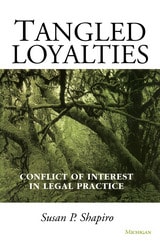
Tangled Loyalties
Conflict of Interest in Legal PracticeSusan P. Shapiro
University of Michigan Press, 2002
This unique, empirical study examines the actual attitudes and perceptions of legal practitioners. The author discusses the realities of the profession--what lawyers face day to day, how they deal with conflicts of interest, and how those experiences vary from LaSalle Street to Wall Street to Main Street, from megafirms to solo practices. In describing how conflicts arise in their daily work, Shapiro sheds light on the nature of legal work--on clients, colleagues, law firm power and politics, economics, markets, malpractice insurance, careers, ethics, values, business judgments, and lawyers' most anguishing moments. In short, we learn what it means to be a lawyer at the end of the twentieth century.
Tangled Loyalties also looks at how these conflicts in law affect other fiduciaries--accountants, doctors, psychotherapists, journalists, and academics--and the way in which they respond to competing interests and the honoring of those interests.
Tangled Loyalties will appeal to readers interested in the legal and other professions, social institutions and relations, and issues of trust, ethics, social control and regulation.
Susan P. Shapiro is Senior Research Fellow, American Bar Foundation.
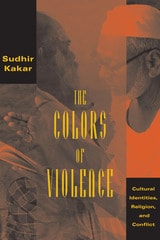
The Colors of Violence
Cultural Identities, Religion, and ConflictSudhir Kakar
University of Chicago Press, 1996
With honesty, insight, and unsparing self-reflection, Kakar confronts the profoundly enigmatic relations that link individual egos to cultural moralities and religious violence. His innovative psychological approach offers a framework for understanding the kind of ethnic-religious conflict that has so vexed social scientists in India and throughout the world.
Through riveting case studies, Kakar explores cultural stereotypes, religious antagonisms, ethnocentric histories, and episodic violence to trace the development of both Hindu and Muslim psyches. He argues that in early childhood the social identity of every Indian is grounded in traditional religious identifications and communalism. Together these bring about deep-set psychological anxieties and animosities toward the other. For Hindus and Muslims alike, violence becomes morally acceptable when communally and religiously sanctioned. As the changing pressures of modernization and secularism in a multicultural society grate at this entrenched communalism, and as each group vies for power, ethnic-religious conflicts ignite. The Colors of Violence speaks with eloquence and urgency to anyone concerned with the postmodern clash of religious and cultural identities.
The Conflict of Interpretations
Paul Ricoeur
Northwestern University Press, 1974
The Conflict of Interpretations
Essays in HermeneuticsPaul Ricoeur
Northwestern University Press, 2007
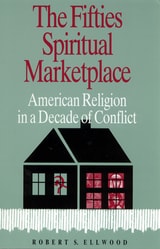
The Fifties Spiritual Marketplace
American Religion in a Decade of ConflictEllwood, Robert S
Rutgers University Press, 1997
A companion to his Sixties Spiritual Awakening, Ellwood explores the major Catholic-Protestant tensions of the decade, the conflict between theology and popular faith, and the underground forms of fifties religiosity like "Beat" Zen, UFO contactees, Thomas Merton monasticism, and the Joseph Campbell / Carl Jung revival of mythology. Ellwood frames his detailed and lively account with the provocative idea of the fifties as a "supply-side" free enterprise spiritual marketplace, with heady competition between religious groups and leaders, and with church attendance at a record high.
In addition to challenging an idealistic fifties cultural milieu, the book analyzes American religious responses to key historical events like the Korean War, McCarthyism, and the civil rights movement, turning a religious lens on the cultural history of the United States.
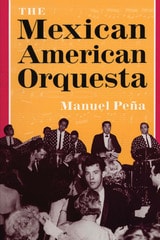
The Mexican American Orquesta
Music, Culture, and the Dialectic of ConflictBy Manuel Peña
University of Texas Press, 1999
The Mexican American orquesta is neither a Mexican nor an American music. Relying on both the Mexican orquesta and the American dance band for repertorial and stylistic cues, it forges a synthesis of the two. The ensemble emerges historically as a powerful artistic vehicle for the expression of what Manuel Peña calls the "dialectic of conflict." Grounded in ethnic and class conflict, this dialectic compels the orquesta and its upwardly mobile advocates to waver between acculturation and ethnic resistance. The musical result: a complex mesh of cultural elements—Mexican and American, working- and middle-class, traditional and contemporary.
In this book, Manuel Peña traces the evolution of the orquesta in the Southwest from its beginnings in the nineteenth century through its pinnacle in the 1970s and its decline since the 1980s. Drawing on fifteen years of field research, he embeds the development of the orquesta within a historical-materialist matrix to achieve the optimal balance between description and interpretation. Rich in ethnographic detail and boldly analytical, his book is the first in-depth study of this important but neglected field of artistic culture.
The New Crusades, the New Holy Land
Conflict in the Southern Baptist Convention, 1969-1991David T. Morgan
University of Alabama Press, 1996
Examines the conflict between modern-day Southern Baptists and “liberal” Southern Baptists over control of the Southern Baptist Convention
David Morgan captures the essence of the conflict between some modern-day Southern Baptists, who saw themselves as crusaders for truth, as they sought to redeem a new holy land--the Southern Baptist Convention-- from the control of other Southern Baptists they viewed as "liberals." To the so-called liberals, the crusaders were "fundamentalists" on a mission, not to reclaim the SBC in the name of theological truth but to gain control and redirect its activities according to their narrow political, social, and theological perspectives. The New Crusades provides a comprehensive history of the conflict, taking the reader through the bitter and divisive struggles of the late 1980s, that culminated in the 1991 emergence of a moderate faction within the SBC. The fundamentalists had won.
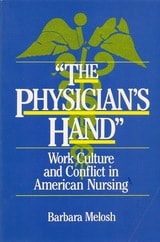
The Physician's Hand
Work Culture and Conflict in American NursingBarbara Melosh
Temple University Press, 1982
This book recasts nursing history and places it in the context of women’s history, labor history, medical history, and sociology. Removed from the limited framework of professionalization, nursing history can provide a fresh perspective on broader issues in social history. First, it offers an illuminating example of the ways in which gender informs work and, conversely. How work reproduces and transforms relationships of power and inequality.
Second, the experience of nurses adds a new dimension to our understanding of work. More than a study of professionalization, nursing history is the story of women workers’ experience in a rationalizing service industry. Like other workers, nurses faced a fundamental reorganization of work that changed the content and experience of nursing. But unlike many others, they did not suffer a dilution of skill. The book also explores the shifting configurations of social relations on the job and their implications for nurses’ work.
Third, nurses’ history provides a useful standpoint for analyzing the possibilities and limitations of women’s work.
Finally, nursing history alerts us to the complexities of working women’s consciousness, countering the common notion of women’s passivity in the workplace.
The Physician’s Hand traces nursing history from the twenties to the seventies. It begins just after World War I when the "trained nurse" had gained a secure place in medical care but not yet found a niche in the hospital. Most worked in private duty. Chapter 1 outlines the theoretical framework of professionalization. Chapter 2 examines the history and culture of hospital schools, and the following chapters focus on the changing structure and experience of nursing in its three major settings: private duty nursing, public health care, and hospital work. The conclusion weighs the competing traditions of professionalization and occupational culture in nurses’ history and their meaning for the current crisis in nursing.
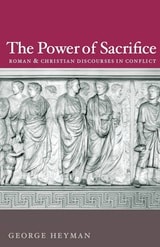
The Power of Sacrifice
Roman and Christian Discourses in ConflictGeorge Heyman
Catholic University of America Press, 2007
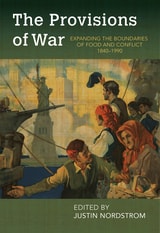
The Provisions of War
Expanding the Boundaries of Food and Conflict, 1840-1990Justin Nordstrom
University of Arkansas Press, 2021
The Provisions of War examines how soldiers, civilians, communities, and institutions have used food and its absence as both a destructive weapon and a unifying force in establishing governmental control and cultural cohesion during times of conflict. Historians as well as scholars of literature, regional studies, and religious studies problematize traditional geographic boundaries and periodization in this essay collection, analyzing various conflicts of the nineteenth and twentieth centuries through a foodways lens to reveal new insights about the parameters of armed interactions.
The subjects covered are as varied and inclusive as the perspectives offered—ranging from topics like military logistics and animal disease in colonial Africa, Indian vegetarian identity, and food in the counterinsurgency of the Malayan Emergency, to investigations of hunger in Egypt after World War I and American soldiers’ role in the making of US–Mexico borderlands. Taken together, the essays here demonstrate the role of food in shaping prewar political debates and postwar realities, revealing how dietary adjustments brought on by military campaigns reshape national and individual foodways and identities long after the cessation of hostilities
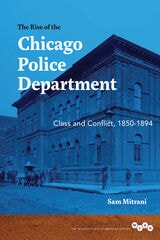
The Rise of the Chicago Police Department
Class and Conflict, 1850-1894Sam Mitrani
University of Illinois Press, 2013
In this book, Sam Mitrani cogently examines the making of the police department in Chicago, which by the late 1800s had grown into the most violent, turbulent city in America. Chicago was roiling with political and economic conflict, much of it rooted in class tensions, and the city's lawmakers and business elite fostered the growth of a professional municipal police force to protect capitalism, its assets, and their own positions in society. Together with city policymakers, the business elite united behind an ideology of order that would simultaneously justify the police force's existence and dictate its functions.
Tracing the Chicago police department's growth through events such as the 1855 Lager Beer riot, the Civil War, the May Day strikes, the 1877 railroad workers strike and riot, and the Haymarket violence in 1886, Mitrani demonstrates that this ideology of order both succeeded and failed in its aims. Recasting late nineteenth-century Chicago in terms of the struggle over order, this insightful history uncovers the modern police department's role in reconciling democracy with industrial capitalism.
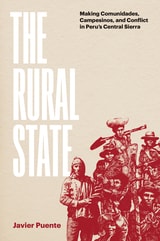
The Rural State
Making Comunidades, Campesinos, and Conflict in Peru's Central SierraJavier Puente
University of Texas Press, 2022
2023 Marysa Navarro Best Book Prize, New England Council of Latin American Studies (NECLAS)
A study of the intersection of rural populations, state formation, and the origins of political conflict in Peru.
On the eve of the twentieth century, Peru seemed like a profitable and yet fairly unexploited country. Both foreign capitalists and local state makers envisioned how remote highland areas were essential to a sustainable national economy. Mobilizing Andean populations lay at the core of this endeavor. In his groundbreaking book, The Rural State, Javier Puente uncovers the surprising and overlooked ways that Peru’s rural communities formed the political nation-state that still exists today.
Puente documents how people living in the Peruvian central sierra in the twentieth century confronted emerging and consolidating powers of state and capital and engaged in an ongoing struggle over increasingly elusive subsistence and autonomies. Over the years, policy, politics, and social turmoil shaped the rural, mountainous regions of Peru until violent unrest, perpetrated by the Shining Path and other revolutionary groups, unveiled the extent, limits, and fractures of a century-long process of rural state formation. Examining the conflicts between one rural community and the many iterations of statehood in the central sierra of Peru, The Rural State offers a fresh perspective on how the Andes became la sierra, how pueblos became comunidades, and how indígenas became campesinos.
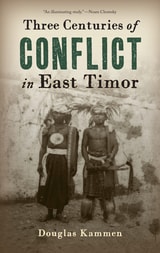
Three Centuries of Conflict in East Timor
Kammen, Douglas
Rutgers University Press, 2015
Download open access ebook here.
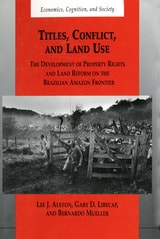
Titles, Conflict, and Land Use
The Development of Property Rights and Land Reform on the Brazilian Amazon FrontierLee J. Alston, Gary D. Libecap, and Bernardo Mueller
University of Michigan Press, 1999