851 books match the query 'Congresses' and 169 start with t

cover of THE AMERICAN QUEST FOR THE PRIMITIVE CHURCH

THE AMERICAN QUEST FOR THE PRIMITIVE CHURCH

Richard T. Hughes

University of Illinois Press, 1988

The dream of restoring primitive Christianity lies close to the core of the identity of some American denominations---Churches of Christ, Latter-day Saints, some Mennonites, and a variety of Holiness and Pentecostal denominations. But how can a return to ancient Christianity be sustained in a world increasingly driven by modernization? What meaning might such a vision have in the modern world? Twelve distinguished scholars explore these and related questions in this provocative book.
 
[more]
cover of Tatars of the Crimea

Tatars of the Crimea

Duke University Press, 1988

[more]
cover of Tax Reform in Developing Countries

Tax Reform in Developing Countries

Malcolm Gillis, ed.

Duke University Press, 1989

This volume presents the work of experts (in most cases the very advisers who designed and helped implement the reforms) on the tax reform efforts of a dozen developing nations—from the restructuring of the economy of postwar Japan to the 1986 reforms in Jamaica. Among the many lessons learned from these efforts are that tax reform is most successful when tax administration is a central (rather than peripheral) focus of reform efforts, and when tax reform is specifically directed toward economic rather than noneconomic objectives.
Other conclusions include the apparently mutually reinforcing nature of tax simplification and tax rate reduction, and the role of indirect tax reforms (such as the value-added tax) in successful reform undertakings.
[more]
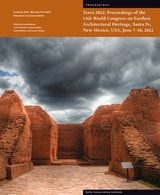
cover of Television Violence and Public Policy

Television Violence and Public Policy

James T. Hamilton, Editor

University of Michigan Press, 2000
Since 1954, violence in television programming has been the subject of legislative debate, congressional hearings, agency pronouncements, and presidential commentary. Most recently, ratings of television programs have been discussed and implemented while other means of controlling the access to certain kinds of television programs have been discussed. The debate over the age-based program rating system recently implemented by the television industry has generated many questions about television violence.
The essays in the volume provide answers to many of these questions on specific policy issues surrounding media violence. The contributors suggest that the research on television violence can serve as the basis for a framework that categorizes programs based on the context in which the violence is presented. The manner in which information is conveyed about violent content affects how viewers react to such warnings. Program warnings with MPAA-style ratings have the potential to confuse parents (since they do not provide detailed content information) and attract some viewers such as teenage males.
The contributors include some of the top researchers in the field of communications, several of whom participated in the National Television Violence Study. Contributors are Eva Blumenthal, Joanne Cantor, Wayne Danielson, Ed Donnerstein, Tim Gray, Kristen Harrison, Cynthia Hoffner, Marlies Klijn, Marina Krcmar, Dale Kunkel, Dominic Lasorsa, Rafael Lopez, Dan Linz, Adriana Olivarez, James Potter, Stacy Smith, Matthew L. Spitzer, Ellen Wartella, D. Charles Whitney, and Barbara Wilson.
This volume will be of interest to communications researchers, media policy experts, legal scholars, government and industry officials, and social scientists interested in media and television.
James Hamilton is Director of the Program on Violence and the Media, Duke University.
[more]
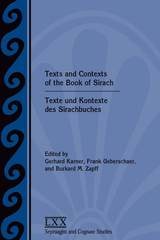
cover of Terra 2022: Proceedings of the 13th World Congress on Earthen Architectural Heritage, Sante Fe, New Mexico, USA, June 7-10, 2022

Terra 2022

Proceedings of the 13th World Congress on Earthen Architectural Heritage, Sante Fe, New Mexico, USA, June 7-10, 2022

Leslie Rainer

J. Paul Getty Trust, The, 2024

Featuring a global compendium of sites, buildings, urban settlements, and cultural landscapes, this volume combines recent research with practical approaches to conservation of earthen architectural heritage.

Earthen architecture is one of the oldest forms of construction and is evidenced around the globe. This volume gathers the research and presentations from Terra 2022: 13th World Congress on Earthen Architectural Heritage, which brought together in Santa Fe, New Mexico, 350 conservation professionals and practitioners from fifty-two countries.

Seventy richly illustrated papers, fifty-seven in English and thirteen in Spanish, address a range of conservation issues. Abstracts are provided in both English and Spanish for each paper. Themes covered include advances in research, strategies for archaeological sites, community-based care and decision-making, cultural landscapes, decorated surfaces, education, historic and modern buildings, conservation history, risks and vulnerabilities, and traditional materials and practices. Sections that draw on symposia held at the congress spotlight two recent architectural heritage initiatives: the rehabilitation of an urban settlement by the AlUla Old Town and Oasis Conservation Project in Saudi Arabia, and the conservation and management of eight monumental enclosure complexes at the Hopewell Ceremonial Earthworks in Ohio.

Reflecting Getty's commitment to open content, Terra 2022 is available as a free PDF download at: https://www.getty.edu/publications/virtuallibrary/9781606069158.html. This paperback edition is available for sale for readers who wish to have a bound reference copy.
[more]
cover of Texts and Contexts of the Book of Sirach / Texte und Kontexte des Sirachbuches

Texts and Contexts of the Book of Sirach / Texte und Kontexte des Sirachbuches

Gerhard Karner

SBL Press, 2017

Now available from SBL Press

Thirteen essays, some in German and others in English, tackle the complicated history of textual transmission of Sirach. This book presents the proceedings of an international conference held in 2014 in Eichstaett, Germany on the text of Ben Sira within its historical contexts.Contributors include James K. Aitken, Pierre-Maurice Bogaert, Franz Böhmisch, Anthony J. Forte SJ, Jan Joosten, Otto Kaiser, Siegfried Kreuzer, Jean-Sébastien Rey, Werner Urbanz, Knut Usener, Oda Wischmeyer, Markus Witte, Benjamin G. Wright, and Burkard M. Zapff.

Features:

  • A sociocultural and theological history of Sirach
  • Philological and textual problems of the Hebrew, Greek, Syriac, and Latin versions
  • Translation strategies based on Greek, Syriac, and Latin text traditions and related hermeneutical questions
[more]
cover of The Absolute Weapon Revisited: Nuclear Arms and the Emerging International Order

The Absolute Weapon Revisited

Nuclear Arms and the Emerging International Order

T. V. Paul, Richard J. Harknett, and James J. Wirtz, Editors

University of Michigan Press, 2000
Soon after nuclear weapons devastated the Japanese cities of Hiroshima and Nagasaki, Bernard Brodie and several colleagues wrote The Absolute Weapon, which predicted that the atomic bomb would revolutionize international politics. In The Absolute Weapon Revisited, a group of noted scholars explores the contemporary role of nuclear weapons in the world after the end of the Cold War. Although superpower rivalry has faded, the complexities of living with nuclear weapons remain. Working from different theoretical perspectives, the contributors offer a set of provocative assessments of nuclear deterrence and the risks of nuclear proliferation and disarmament. Some argue that assured destruction capabilities remain important, while others argue that nuclear deterrence will be increasingly irrelevant. Arms control, crisis stability, and continuity and change in nuclear doctrine as well as new issues such as virtual nuclear states and information warfare, are some of the issues addressed by the contributors to The Absolute Weapon Revisited. The contributors are Zachary Davis, Colin S. Gray, Richard J. Harknett, Ashok Kapur, Robert Manning, William C. Martel, Eric Mlyn, John Mueller, J. V. Paul, George Quester, and James J. Wirtz. This book will be of interest to scholars, policymakers and students interested in issues of nuclear strategy and deterrence, arms control, nonproliferation and disarmament, international security and peace studies.
[more]
cover of The Afterlife of Greek and Roman Sculpture: Late Antique Responses and Practices

The Afterlife of Greek and Roman Sculpture

Late Antique Responses and Practices

Troels Myrup Kristensen and Lea Stirling, editors

University of Michigan Press, 2016

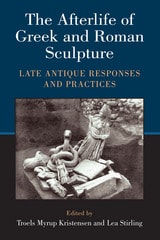
For centuries, statuary décor was a main characteristic of any city, sanctuary, or villa in the Roman world. However, from the third century CE onward, the prevalence of statues across the Roman Empire declined dramatically. By the end of the sixth century, statues were no longer a defining characteristic of the imperial landscape. Further, changing religious practices cast pagan sculpture in a threatening light. Statuary production ceased, and extant statuary was either harvested for use in construction or abandoned in place.

The Afterlife of Greek and Roman Sculpture is the first volume to approach systematically the antique destruction and reuse of statuary, investigating key responses to statuary across most regions of the Roman world. The volume opens with a discussion of the complexity of the archaeological record and a preliminary chronology of the fate of statues across both the eastern and western imperial landscape. Contributors to the volume address questions of definition, identification, and interpretation for particular treatments of statuary, including metal statuary and the systematic reuse of villa materials. They consider factors such as earthquake damage, late antique views on civic versus “private” uses of art, urban construction, and deeper causes underlying the end of the statuary habit, including a new explanation for the decline of imperial portraiture. The themes explored resonate with contemporary concerns related to urban decline, as evident in post-industrial cities, and the destruction of cultural heritage, such as in the Middle East.
 

[more]
cover of The Afterlife of Plutarch

The Afterlife of Plutarch

Edited by John North and Peter Mack

University of London Press, 2018
Plutarch’s writings have had a varied reception history from when he was writing in the second century BCE down to today. This volume starts from what may be a translation into the Syriac dialect of a lost Plutarch essay; continues with a tribute from a leading scholar of the later Byzantine period; and follows the centuries of sustained enthusiasm from the Renaissance to the eighteenth century. This period started once a translation into Latin had become available, and ended when scholars in the nineteenth century lowered Plutarch’s reputation as historian, biographer, philosopher, and stylist. By the end of the century, he came to symbolize in the eyes of Tolstoy precisely what history should not be. Both the causes of the decline and the later recovery of interest raise important new questions about how Plutarch should be assessed in the twenty-first century. This is one of the early volumes in the series of ‘Afterlives’ of the Classics, being produced jointly by the Institute of Classical Studies and the Warburg.  
[more]
cover of The American Automobile Industry: Rebirth or Requiem?

The American Automobile Industry

Rebirth or Requiem?

Robert E. Cole, Editor

University of Michigan Press, 1984
Amid the gloom, indeed the despair, that prevailed among auto industry spokesmen during early 1981, the University of Michigan held the first U.S.-Japan Auto Conference. With all the uncertainty that accompanies a march into new territory, the conference very much resembled a call to arms as industry, union, and government officials sought to comprehend and respond to the Japanese challenge. In the subsequent two conferences in 1982 and 1983, the concerned parties displayed an impressive willingness to roll up their sleeves and get on with creating the conditions for a renewal of the industry. Yet success seemed to elude their efforts, and frustrations mounted as the national recession lengthened and deepened.
It was not until the March 1984 conference that definite change in tone became apparent. By this time, it was clear that the industry was beginning to reap the fruits of its efforts. As Paul McCracken notes in his remarks, the market for new cars was manifesting its traditional high-geared response to improved business conditions, and the voluntary trade restraints were contributing to the ability of the industry to take advantage of this renewed prosperity. In addition, those who know the industry well knew that the major improvements in quality and productivity had been made, and many of the changes responsible for these improvements seem unlikely to be reversed. All this was much on the minds of speakers and participants during the March conference. The various speakers presented an image of people who thought that they were pretty much on the way toward addressing successfully their internal problems of productivity, quality, and marketing. All that remained was to dispose of the external factors that prevented the, from competing on that well-known if elusive "level playing field." [ix]
[more]
cover of The American Economy in Transition

The American Economy in Transition

Edited by Martin Feldstein

University of Chicago Press, 1980

This unusual volume marks the sixtieth anniversary of the National Bureau of Economic Research. In contrast to the technical and specialized character of most NBER studies, the current book is designed to provide the general reader with a broad and critical overview of the American economy. The result is a volume of essays that range from monetary policy to productivity development, from population change to international trade.

[more]
cover of The Anarchist Turn

The Anarchist Turn

Edited by Jacob Blumenfeld, Chiara Bottici, and Simon Critchley

Pluto Press, 2013

The concept of anarchy is often presented as a recipe for pure disorder. The Anarchist Turn brings together innovative and fresh perspectives on anarchism to argue that in fact it represents a form of collective, truly democratic social organisation.

The book shows how in the last decade the negative caricature of anarchy has begun to crack. Globalisation and the social movements it spawned have proved what anarchists have long been advocating: an anarchical order is not just desirable, but also feasible.

The contributors, including leading anarchist and critical theorists, argue that with the failure of both free markets and state socialism the time has come for an 'anarchist turn' in political philosophy. In doing so they relate the anarchist hypothesis to a range of other disciplines such as politics, anthropology, economics, history and sociology.
[more]
cover of The Anti-American Century

The Anti-American Century

Ivan Krastev

Central European University Press, 2007
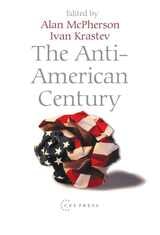
This book interrogates the nature of anti-Americanism today and over the last century. It asks several questions: How do we define the phenomenon from different perspectives: political, social, and cultural? What are the historical sources and turning points of anti-Americanism in Europe and elsewhere? What are its links with anti-Semitic sentiment? Has anti-Americanism been beneficial or self-destructive to its “believers”? Finally, how has the United States responded and why? The authors, scholars from a multitude of countries, tackle the potential political consequences of anti-Americanism in Eastern and Central Europe, the region that has been perceived as strongly pro-American.
[more]
cover of The Archaeology of Hybrid Material Culture

The Archaeology of Hybrid Material Culture

Edited by Jeb J. Card

Southern Illinois University Press, 2013

In recent years, archaeologists have used the terms hybrid and hybridity with increasing frequency to describe and interpret forms of material culture. Hybridity is a way of viewing culture and human action that addresses the issue of power differentials between peoples and cultures. This approach suggests that cultures are not discrete pure entities but rather are continuously transforming and recombining. The Archaeology of Hybrid Material Culture discusses this concept and its relationship to archaeological classification and the emergence of new ethnic group identities. This collection of essays provides readers with theoretical and concrete tools for investigating objects and architecture with discernible multiple influences.

The twenty-one essays are organized into four parts: ceramic change in colonial Latin America and the Caribbean; ethnicity and material culture in pre-Hispanic and colonial Latin America; culture contact and transformation in technological style; and materiality and identity. The media examined include ceramics, stone and glass implements, textiles, bone, architecture, and mortuary and bioarchaeological artifacts from North, South, and Central America, Hawai‘i, the Caribbean, Europe, and Mesopotamia. Case studies include  Bronze Age Britain, Iron Age and Roman Europe, Uruk-era Turkey, African diasporic communities in the Caribbean, pre-Spanish and Pueblo revolt era Southwest, Spanish colonial impacts in the American Southeast, Central America, and the Andes, ethnographic Amazonia, historic-era New England and the Plains,  the Classic Maya, nineteenth-century Hawai‘i, and Upper Paleolithic Europe. The volume is carefully detailed with more than forty maps and figures and over twenty tables.

The work presented in The Archaeology of Hybrid Material Culture comes from researchers whose questions and investigations recognized the role of multiple influences on the people and material they study. Case studies include experiments in bone working in middle Missouri; images and social relationships in prehistoric and Roman Europe; technological and material hybridity in colonial Peruvian textiles; ceramic change in colonial Latin America and the Caribbean; and flaked glass tools from the leprosarium at Kalawao, Moloka‘i. The essays provide examples and approaches that may serve as a guide for other researchers dealing with similar issues.

[more]
cover of The Archaeology of V. Gordon Childe: Contemporary Perspectives

The Archaeology of V. Gordon Childe

Contemporary Perspectives

Edited by David R. Harris

University of Chicago Press, 1994

Although V. Gordon Childe died 36 years ago, he remains the world's most renowned prehistorian. His What Happened in History, first published in 1942, is probably the most widely read book ever written by an archaeologist. His influence and reputation endure despite the fact that many of the theoretical ideas he propounded, as well as his interpretations of European and West Asian prehistory, have been profoundly modified, or even rejected, since his death.

With contributions from such distinguished prehistorians as Kent V. Flannery, David Harris, Leo S. Klejn, John Mulvaney, Colin Renfrew, Michael Rowlands, and Bruce Trigger, The Archaeology of V. Gordon Childe is an attempt to evaluate Childe's achievement from different "partly national" perspectives and to assess how far, and why, his work remains significant today. The contributors examine such persistent themes in Childe's thought as the nature of culture and the role of diffusion in cultural evolution and debate the question of whether Childe anticipated "processual archaeology" in his famous models of the Neolithic and Urban Revolutions. Also included are evaluations of Childe's early career in Australia, his relations with Soviet archaeology, including a previously unknown letter from Childe to Soviet archaeologists, and his impact on American archaeology.
[more]
cover of The Architecture of Chaco Canyon, New Mexico

The Architecture of Chaco Canyon, New Mexico

Lekson, Stephen H

University of Utah Press, 2007

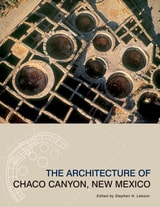
The structures of Chaco Canyon, built by native peoples between AD 850 and 1130, are among the most compelling ancient monuments on earth. Recognized as a World Heritage Site, these magnificent ruins are consistently featured in scholarly books and popular media. Yet, like Chaco itself, these buildings are anomalous in Southwestern archaeology and much debated.

In a century of study, our understanding and means of approaching these ruins have grown considerably. Important tree-ring dating, GIS research, and computer imaging point to the need for a new volume on Chaco architecture that unifies older information with the new.

The chapters in this volume focus on Chaco Great Houses and consider three overlapping themes: studies of technology and building types, analyses of architectural change, and readings of the built environment. To aid reconsideration there are over 150 maps, floor plans, elevations, and photos, including a number of color illustrations.
[more]
cover of The Art and Archaeology of the Moche: An Ancient Andean Society of the Peruvian North Coast

The Art and Archaeology of the Moche

An Ancient Andean Society of the Peruvian North Coast

Edited by Steve Bourget and Kimberly L. Jones

University of Texas Press, 2008

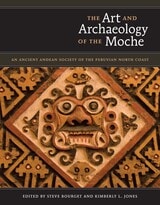
Renowned for their monumental architecture and rich visual culture, the Moche inhabited the north coast of Peru during the Early Intermediate Period (AD 100-800). Archaeological discoveries over the past century and the dissemination of Moche artifacts to museums around the world have given rise to a widespread and continually increasing fascination with this complex culture, which expressed its beliefs about the human and supernatural worlds through finely crafted ceramic and metal objects of striking realism and visual sophistication.

In this standard-setting work, an international, multidisciplinary team of scholars who are at the forefront of Moche research present a state-of-the-art overview of Moche culture. The contributors address various issues of Moche society, religion, and material culture based on multiple lines of evidence and methodologies, including iconographic studies, archaeological investigations, and forensic analyses. Some of the articles present the results of long-term studies of major issues in Moche iconography, while others focus on more specifically defined topics such as site studies, the influence of El Niño/Southern Oscillation on Moche society, the nature of Moche warfare and sacrifice, and the role of Moche visual culture in decoding social and political frameworks.
[more]
cover of The Atlantic Slave Trade: Effects on Economies, Societies and Peoples in Africa, the Americas, and Europe

The Atlantic Slave Trade

Effects on Economies, Societies and Peoples in Africa, the Americas, and Europe

Joseph E. Inikori and Stanley L. Engerman

Duke University Press, 1992

Debates over the economic, social, and political meaning of slavery and the slave trade have persisted for over two hundred years. The Atlantic Slave Trade brings clarity and critical insight to the subject. In fourteen essays, leading scholars consider the nature and impact of the transatlantic slave trade and assess its meaning for the people transported and for those who owned them.
Among the questions these essays address are: the social cost to Africa of this forced migration; the role of slavery in the economic development of Europe and the United States; the short-term and long-term effects of the slave trade on black mortality, health, and life in the New World; and the racial and cultural consequences of the abolition of slavery. Some of these essays originally appeared in recent issues of Social Science History; the editors have added new material, along with an introduction placing each essay in the context of current debates.
Based on extensive archival research and detailed historical examination, this collection constitutes an important contribution to the study of an issue of enduring significance. It is sure to become a standard reference on the Atlantic slave trade for years to come.

Contributors. Ralph A. Austen, Ronald Bailey, William Darity, Jr., Seymour Drescher, Stanley L. Engerman, David Barry Gaspar, Clarence Grim, Brian Higgins, Jan S. Hogendorn, Joseph E. Inikori, Kenneth Kiple, Martin A. Klein, Paul E. Lovejoy, Patrick Manning, Joseph C. Miller, Johannes Postma, Woodruff Smith, Thomas Wilson
[more]
cover of The Bible in the Sixteenth Century

The Bible in the Sixteenth Century

David C. Steinmetz

Duke University Press, 1990

A distinguished group of authors here illuminate a broad spectrum of themes in the history of biblical interpretation. Originally published in 1990, these essays take as their common ground the thesis that the intellectual and religious life of the sixteenth century cannot be understood without attention to the preoccupation of sixteenth-century humanists and theologians with the interpretation of the Bible. Topics explored include Jewish exegesis and problems of Old Testament interpretation and the relationship between the Bible and social, political, and institutional history.

Contributors. Irena Backus, Guy Bedouelle, Kalman P. Bland, Kenneth G. Hagen, Scott H. Hagen, Scott H. Hendrix, R. Gerald Hobbs, Jean-Claude Margolin, H. C. Erik Midelfort, Richard A. Muller, John B. Payne, David C. Steinmetz

[more]
cover of The Bill of Rights in the Modern State

The Bill of Rights in the Modern State

Edited by Geoffrey R. Stone, Richard A. Epstein, and Cass R. Sunstein

University of Chicago Press, 1992

Although the Bill of Rights has existed for two hundred years, the last half century has seen dramatic changes in its meaning and scope. The essays collected in this volume represent the full range of views and interpretations of what these first ten amendments to the U. S. Constitution mean today as guarantors of individual rights.

The contributors to this volume are among the most prominent constitutional scholars in the country. Most of the essays are grouped in pairs, each of which offers conflicting positions on current constitutional controversies, including property rights, freedom of religion, freedom of speech, levels of generality in constitutional interpreation, and unemumerated rights.

The contributors are: Bruce Ackerman, Mary E. Becker, Ronald Dworkin, Frank H. Easterbrook, Richard A. Epstein, Charles Fried, Mary Ann Glendon, Philip B. Kurland, Frank J. Michaelman, Michael W. McConnell, Richard A. Posner, Kathleen M. Sullivan, John Paul Stevens, David A. Strauss, and Cass R. Sunstein.

"A thoughtful and well coordinated set of exchanges between leading modern constitutional theorists about the most significant issues related to the Bill of Rights and the Welfare State. These issues are debated through penetrating essays by opposing theorists who get to the heart of these issues and provide significant answers to their debate opponents' points."—Thomas R. Van Dervort, Southeastern Political Review
[more]
cover of The Black Youth Employment Crisis

The Black Youth Employment Crisis

Edited by Richard B. Freeman and Harry J. Holzer

University of Chicago Press, 1986

In recent years, the earnings of young blacks have risen substantially relative to those of young whites, but their rates of joblessness have also risen to crisis levels. The papers in this volume, drawing on the results of a groundbreaking survey conducted by the National Bureau of Economic Research, analyze the history, causes, and features of this crisis. The findings they report and conclusions they reach revise accepted explanations of black youth unemployment.

The contributors identify primary determinants on both the demand and supply sides of the market and provide new information on important aspects of the problem, such as drug use, crime, economic incentives, and attitudes among the unemployed. Their studies reveal that, contrary to popular assumptions, no single factor is the predominant cause of black youth employment problems. They show, among other significant factors, that where female employment is high, black youth employment is low; that even in areas where there are many jobs, black youths get relatively few of them; that the perceived risks and rewards of crime affect decisions to work or to engage in illegal activity; and that churchgoing and aspirations affect the success of black youths in finding employment.

Altogether, these papers illuminate a broad range of economic and social factors which must be understood by policymakers before the black youth employment crisis can be successfully addressed.
[more]
cover of The Cham of Vietnam: History, Society and Art

The Cham of Vietnam

History, Society and Art

Edited by Bruce Lockhart and Tran Ky Phuong

National University of Singapore Press, 2011
The Cham people once inhabited and ruled over a large stretch of what is now the central Vietnamese coast. The Indianized civilization of this Austronesian-speaking group flourished between roughly the third and fifteenth centuries, and they competed with the Vietnamese and Khmers for influence in mainland Southeast Asia, but the Cham territories eventually became part of modern Vietnam. Written by specialists in history, archaeology, anthropology, art history, and linguistics, the essays in The Cham of Vietnam contribute to a revisionist overview of Cham history by re-assessing the ways the Cham have been studied by different generations of scholars of what "Champa" has represented over the centuries of its history. Several chapters focus on archaeological work in central Vietnam and position recent discoveries within the broader framework of Cham history, but there are also discussions of Cham economy, society and culture. Through this study of a people that did not become a nation-state, the book provides penetrating insights into the history of Vietnam and on the broader dynamic of Southeast Asian history.
[more]
cover of The Changing Roles of Debt and Equity in Financing U.S. Capital Formation

The Changing Roles of Debt and Equity in Financing U.S. Capital Formation

Edited by Benjamin M. Friedman

University of Chicago Press, 1982

This volume, consisting of papers presented at a conference held at Williamsburg, Va., 2-3 April 1981, is a progress report on the National Bureau of Economic Research project, The Changing Roles of Debt and Equity in Financing U.S. Capital Formation. The National Bureau has undertaken this project—including the conference, the research described in this volume, and the publication of the volume itself—with the support of the American Council of Life Insurance.
[more]
cover of The Changing Terrain of Race and Ethnicity

The Changing Terrain of Race and Ethnicity

Maria Krysan

Russell Sage Foundation, 2004
The legal institutions of overt racism in the United States have been eliminated, but social surveys and investigations of social institutions confirm the continuing significance of race and the enduring presence of negative racial attitudes. This shift from codified and explicit racism to more subtle forms comes at a time when the very boundaries of race and ethnicity are being reshaped by immigration and a rising recognition that old systems of racial classification inadequately capture a diverse America. In The Changing Terrain of Race and Ethnicity, editors Maria Krysan and Amanda Lewis bring together leading scholars of racial dynamics to study the evolution of America's racial problem and its consequences for race relations in the future. The Changing Terrain of Race and Ethnicity opens by attempting to answer a puzzling question: how is it that so many whites think racism is no longer a problem but so many nonwhites disagree? Sociologist Lawrence Bobo contends that whites exhibit what he calls "laissez faire racism," which ignores historical and structural contributions to racial inequality and does nothing to remedy the injustices of the status quo. Tyrone Forman makes a similar case in his chapter, contending that an emphasis on "color blindness" allows whites to be comforted by the idea that all races are on a level playing field, while not recognizing the advantages they themselves have reaped from years of inequality. The book then moves to a discussion of the new ways that Americans view race. Eduardo Bonilla-Silva and Karen Glover argue that the United States is moving from a black-white divide to a tripartite system, where certain light-skinned, non-threatening minority groups are considered "honorary whites." The book's final section reexamines the theoretical underpinnings of scholarship on race and ethnicity. Joe Feagin argues that research on racism focuses too heavily on how racial boundaries are formed and needs to concentrate more on how those boundaries are used to maintain privileges for certain groups at the expense of others. Manning Marable contends that racism should be addressed at an institutional level to see the prevalence of "structural racism"—deeply entrenched patterns of inequality that are coded by race and justified by stereotypes. The Changing Terrain of Race and Ethnicity provides an in-depth view of racism in modern America, which may be less conspicuous but not necessarily less destructive than its predecessor, Jim Crow. The book's rich analysis and theoretical insight shed light on how, despite many efforts to end America's historic racial problem, it has evolved and persisted into the 21st century.
[more]
cover of The Chican@ Hip Hop Nation: Politics of a New Millennial Mestizaje

The Chican@ Hip Hop Nation

Politics of a New Millennial Mestizaje

Pancho McFarland

Michigan State University Press, 2013

The population of Mexican-origin peoples in the United States is a diverse one, as reflected by age, class, gender, sexuality, and religion. Far from antiquated concepts of mestizaje, recent scholarship has shown that Mexican@/Chican@ culture is a mixture of indigenous, African, and Spanish and other European peoples and cultures. No one reflects this rich blend of cultures better than Chican@ rappers, whose lyrics and iconography can help to deepen our understanding of what it means to be Chican@ or Mexican@ today. While some identify as Mexican mestizos, others identify as indigenous people or base their identities on their class and racial/ethnic makeup. No less significant is the intimate level of contact between Chican@s and black Americans. Via a firm theoretical foundation, Pancho McFarland explores the language and ethos of Chican@/Mexican@ hip hop and sheds new light on three distinct identities reflected in the music: indigenous/Mexica, Mexican nationalist/immigrant, and street hopper. With particular attention to the intersection of black and Chicano cultures, the author places exciting recent developments in music forms within the context of progressive social change, social justice, identity, and a new transnational, polycultural America.
[more]
cover of The Circuit of Apollo: Eighteenth-Century Women’s Tributes to Women

The Circuit of Apollo

Eighteenth-Century Women’s Tributes to Women

Laura Runge

University of Delaware Press, 2019

Written by a combination of established scholars and new critics in the field, the essays collected in Circuit of Apollo attest to the vital practice of commemorating women’s artistic and personal relationships. In doing so, they illuminate the complexity of female friendships and honor as well as the robust creativity and intellectual work contributed by women to culture in the long eighteenth century. Women’s tributes to each other sometimes took the form of critical engagement or competition, but they always exposed the feminocentric networks of artistic, social, and material exchange women created and maintained both in and outside of London. This volume advocates for a new perspective for researching and teaching early modern women that is grounded in admiration.

Published by University of Delaware Press. Distributed worldwide by Rutgers University Press.
 
[more]
cover of The Colorado Plateau II: Biophysical, Socioeconomic, and Cultural Research

The Colorado Plateau II

Biophysical, Socioeconomic, and Cultural Research

Edited by Charles van Riper III and David J. Mattson

University of Arizona Press, 2005
The publication of The Colorado Plateau: Cultural, Biological, and Physical Research in 2004 marked a timely summation of current research in the Four Corners states. This new volume, derived from the seventh Biennial Conference on the Colorado Plateau in 2003, complements the previous book by focusing on the integration of science into resource management issues. The 32 chapters range in content from measuring human impacts on cultural resources, through grazing and the wildland-urban interface issues, to parameters of climate change on the Plateau. The book also introduces economic perspectives by considering shifting patterns and regional disparities in the Colorado Plateau economy. A series of chapters on mountain lions explores the human-wildland interface. These chapters deal with the entire spectrum of challenges associated with managing this large mammal species in Arizona and on the Colorado Plateau, conveying a wealth of timely information of interest to wildlife managers and enthusiasts. Another provocative set of chapters on biophysical resources explores the management of forest restoration, from the micro scale all the way up to large-scale GIS analyses of ponderosa pine ecosystems on the Colorado Plateau. Given recent concerns for forest health in the wake of fires, severe drought, and bark-beetle infestation, these chapters will prove enlightening for forest service, park service, and land management professionals at both the federal and state level, as well as general readers interested in how forest management practices will ultimately affect their recreation activities. With broad coverage that touches on topics as diverse as movement patterns of rattlesnakes, calculating watersheds, and rescuing looted rockshelters, this volume stands as a compendium of cutting-edge research on the Colorado Plateau that offers a wealth of insights for many scholars.
[more]
cover of The Colorado Plateau III: Integrating Research and Resources Management for Effective Conservation

The Colorado Plateau III

Integrating Research and Resources Management for Effective Conservation

Edited by Charles van Riper III and Mark K. Sogge

University of Arizona Press, 2008
Roughly centered on the Four Corners region of the southwestern United States, the Colorado Plateau covers an area of 130,000 square miles. The relatively high semi-arid province boasts nine national parks, sixteen national monuments, many state parks, and dozens of wilderness areas. With the highest concentration of parklands in North America and unique geological and ecological features, the area is of particular interest to researchers. Derived from the Eighth Biennial Conference of Research on the Colorado Plateau, this third volume in a series of research on the Colorado Plateau expands upon the previous two books. This volume focuses on the integration of science into resource management issues, summarizes what criteria make a successful collaborative effort, outlines land management concerns about drought, provides summaries of current biological, sociological, and archaeological research, and highlights current environmental issues in the Four Corner States of Arizona, New Mexico, Colorado, and Utah. With broad coverage that touches on topics as diverse as historical aspects of pronghorn antelope movement patterns through calculating watershed prescriptions to the role of wind-blown sand in preserving archaeological sites on the Colorado River, this volume stands as a compendium of cuttingedge management-oriented research on the Colorado Plateau. The book also introduces, for the first time, tools that can be used to assist with collaboration efforts among landowners and managers who wish to work together toward preserving resources on the Colorado Plateau and offers a wealth of insights into land management questions for many readers, especially people interested in the natural history, biology, anthropology, wildlife, and cultural management issues of the region.
[more]
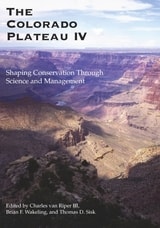
cover of The Colorado Plateau IV: Shaping Conservation Through Science and Management

The Colorado Plateau IV

Shaping Conservation Through Science and Management

Charles van Riper

University of Arizona Press, 2010

Roughly centered on the Four Corners region of the southwestern United States, the Colorado Plateau covers some 130,000 square miles of sparsely vegetated plateaus, mesas, canyons, arches, and cliffs in Arizona, Utah, Colorado, and New Mexico. With elevations ranging from 3,000 to 14,000 feet, the natural systems found within the plateau are dramatically varied, from desert to alpine conditions.

This book focuses on the integration of science and resource management issues in this unique and highly varied environment. Broken into three subsections, this volume addresses conservation biology, biophysical resources, and inventory and monitoring concerns. The chapters range in content, addressing conservation issues—past, present, and future—on the Colorado Plateau, measurement of human impacts on resources, grazing and wildland-urban interfaces, and tools and methods for monitoring habitats and species.

An informative read for people interested in the conservation and natural history of the region, the book will also serve as a valuable reference for those people engaged in the management of cultural and biological resources of the Colorado Plateau, as well as scientists interested in methods and tools for land and resource management throughout the West.
[more]
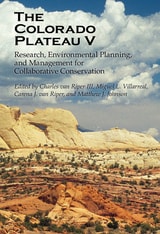
cover of The Colorado Plateau V: Research, Environmental Planning, and Management for Collaborative Conservation

The Colorado Plateau V

Research, Environmental Planning, and Management for Collaborative Conservation

Edited by Charles van Riper III, Miguel L. Villarreal, Carena J. van Riper, and Matthew J. Johnson

University of Arizona Press, 2012

Roughly centered on the Four Corners region of the southwestern United States, the Colorado Plateau covers some 130,000 square miles of sparsely vegetated plateaus, mesas, canyons, arches, and cliffs in Arizona, Utah, Colorado, and New Mexico. With elevations ranging from 3,000 to 14,000 feet, the natural systems found within the plateau are dramatically varied, from desert to alpine conditions.

This volume, the fifth from the University of Arizona Press and the tenth overall, focuses on adaptation of resource management and conservation to climate change and water scarcity, protecting biodiversity through restructured energy policies, ensuring wildlife habitat connectivity across barriers, building effective conservation networks, and exploring new opportunities for education and leadership in conservation science.

An informative read for people interested in the conservation and natural history of the region, the book will also serve as a valuable reference for those people engaged in the management of cultural and biological resources of the Colorado Plateau, as well as scientists interested in methods and tools for land and resource management throughout the West.
[more]
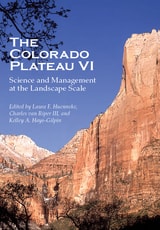
cover of The Colorado Plateau VI: Science and Management at the Landscape Scale

The Colorado Plateau VI

Science and Management at the Landscape Scale

Edited by Laura Foster Huenneke, Charles van Riper, and Kelley Ann Hays-Gilpin

University of Arizona Press, 2015

Covering 130,000 square miles and a wide range of elevations from desert to alpine in Arizona, Utah, Colorado, and New Mexico, the Colorado Plateau has long fascinated researchers. The Colorado Plateau VI provides readers with a plethora of updates and insights into land conservation and management questions currently surrounding the region.

The Colorado Plateau VI’s contributors show how new technologies for monitoring, spatial analysis, restoration, and collaboration improve our understanding, management, and conservation of outcomes at the appropriate landscape scale for the Colorado Plateau. The volume’s chapters fall into five major themes: monitoring as a key tool for addressing management challenges, restoration approaches to improving ecosystem condition and function, collaboration and organizational innovations to achieve conservation and management objectives, landscape-scale approaches to understanding, and managing key species and ecological communities.

Focusing on the integration of science into resource management issues over the Colorado Plateau, this volume includes contributions from dozens of leading scholars of the region. The Colorado Plateau VI proves a valuable resource to all interested in the conservation management, natural history, and cultural biological resources of the Colorado Plateau.
[more]
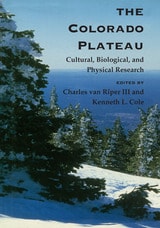
cover of The Colorado Plateau: Cultural, Biological, and Physical Research

The Colorado Plateau

Cultural, Biological, and Physical Research

Charles van Riper

University of Arizona Press, 2004
Stretching from the four corners of Arizona, New Mexico, Colorado, and Utah, the Colorado Plateau is a natural laboratory for a wide range of studies. This volume presents 23 original articles drawn from more than 100 research projects presented at the Sixth Biennial Conference of Research on the Colorado Plateau. This scientific gathering revolved around research, inventory, and monitoring of lands in the region. The book's contents cover management techniques for cultural, biological, and physical resources, representing collaborative efforts among federal, university, and private sector scientists and land managers. Chapters on cultural concerns cover benchmarks of modern southwestern anthropological knowledge, models of past human activity and impact of modern visitation at newly established national monuments, challenges in implementing the 1964 Wilderness Act, and opportunities for increased federal research on Native American lands. The section on biological resources comprises sixteen chapters, with coverage that ranges from mammalian biogeography to responses of elk at the urban-wildland interface. Additional biological studies include the effects of fire and grazing on vegetation; research on bald eagles at Grand Canyon and tracking wild turkeys using radio collars; and management of palentological resources. Two final chapters on physical resources consider a proposed rerouting of the Rio de Flag River in urban Flagstaff, Arizona, and an examination of past climate patterns over the Plateau, using stream flow records and tree ring data. In light of similarities in habitat and climate across the Colorado Plateau, techniques useful to particular management units have been found to be applicable in many locations. This volume highlights an abundance of research that will prove useful for all of those working in the region, as well as for others seeking comparative studies that integrate research into land management actions.
[more]
cover of The Comparative Reception of Darwinism

The Comparative Reception of Darwinism

Edited by Thomas F. Glick

University of Chicago Press, 1988

The reaction to Darwin's Origin of Species varied in many countries according to the roles played by national scientific institutions and traditions and the attitudes of religious and political groups. The contributors to this volume, including M. J. S. Hodge, David Hull, and Roberto Moreno, gathered in 1972 at an international conference on the comparative reception of Darwinism. Their essays look at early pro- and anti-Darwinism arguments, and three additional comparative essays and appendices add a larger perspective. For this paperback edition, Thomas F. Glick has added a new preface commenting on recent research.
[more]
cover of The Concept of <i>Ius</i> and the Nature of Law in Thomas Aquinas

The Concept of <i>Ius</i> and the Nature of Law in Thomas Aquinas

Loic-Marie Le Bot, OP

Catholic University of America Press, 2025
This collection of essays constitutes the fruit of a scholarly conference held in Rome in April 2023, which was organized by the Pontifical University of Saint Thomas Aquinas, the Pontifical University of the Holy Cross, and the Angelicum Thomistic Institute. The essays offer a scholarly reflection on various historical and doctrinal aspects of Aquinas’s concept of ius, and on the extent to which this concept helps to illuminate his account of the nature of law, that is, of the juridical phenomenon. Each essay addresses, from the viewpoint of its specific topic, the implications of the Angelic Doctor’s description of ius as the object of justice, as presented in the Secunda secundae of his Summa theologiae (starting from question 57, article 1). Following Aquinas’s own insights, the focus on the virtue of justice is thus deemed crucial for understanding the essence or the ontological fabric of law. Justice is simultaneously analyzed as always remaining inherently connected to its moral and divine-salvific aspects. The volume is divided in three parts. The first part of the collection contains essays that are dedicated to the analysis of Aquinas’s concept of ius in a historical perspective. The second group of essays in this collection examine some further doctrinal and contextual issues pertinent to the essence of ius. Each attempt to elucidate the ontology of law should be supported by the aptitude of the resulting accounts of law’s nature to provide workable platforms for legal practices. This line of reasoning represents the rationale for the third part of this collection, which focuses on the matters of applying Aquinas’s concept of ius in systemic and practical legal settings of State law and canon law.
[more]
cover of The Connected Iron Age: Interregional Networks in the Eastern Mediterranean, 900-600 BCE

The Connected Iron Age

Interregional Networks in the Eastern Mediterranean, 900-600 BCE

Edited by Jonathan M. Hall and James F. Osborne

University of Chicago Press, 2022

An interdisciplinary consideration of how eastern Mediterranean cultures in the first millennium BCE were meaningfully connected.
 
The early first millennium BCE marks one of the most culturally diverse periods in the history of the eastern Mediterranean. Surveying the region from Greece to Iraq, one finds a host of cultures and political formations, all distinct, yet all visibly connected in meaningful ways. These include the early polities of Geometric period Greece, the Phrygian kingdom of central Anatolia, the Syro-Anatolian city-states, the seafaring Phoenicians and the biblical Israelites of the southern Levant, Egypt’s Twenty-first through Twenty-fifth Dynasties, the Urartian kingdom of the eastern Anatolian highlands, and the expansionary Neo-Assyrian Empire of northern Mesopotamia. This volume adopts an interdisciplinary approach to understanding the social and political significance of how interregional networks operated within and between Mediterranean cultures during that era.

 
[more]
cover of The Constitution, the Law, and Freedom of Expression: 1787-1987

The Constitution, the Law, and Freedom of Expression

1787-1987

James Brewer Stewart

Southern Illinois University Press, 1987

In recognition of the bicentennial of the Constitution of the United States, former chief justice Warren E. Burger, Justice Antonin Scalia, ACLU president Norman Dorsen, and others delivered papers at the first annual DeWitt Wallace Conference on the Liberal Arts, held at Macalester College, St. Paul.

Joining some of the best legal minds in America were novelist John Edgar Wideman, chemist Harry B. Gray, historian Mary Beth Norton, and psychiatrist and social psychologist Robert Jay Lifton.

Opening the conference and this book, former chief Justice Burger emphasizes the daring of those who drafted the Constitution. Justice Scalia, noting the great reduction in curbs to freedom of expression since World War I, points out that the proliferation of freedom has forced courts to distinguish between types of expression.

Although the views expressed in these essays differ widely, opinion concerning the major issue falls into two definite camps: Burger, Scalia, and Dorsen contend that freedom of expression depends on the legal structure for survival; Wideman, Gray, Lifton, and Norton maintain that social forces determine freedom of expression.
[more]
cover of The Costs and Benefits of Price Stability

The Costs and Benefits of Price Stability

Edited by Martin Feldstein

University of Chicago Press, 1999

In recent years, the Federal Reserve and central banks worldwide have enjoyed remarkable success in their battle against inflation. The challenge now confronting the Fed and its counterparts is how to proceed in this newly benign economic environment: Should monetary policy seek to maintain a rate of low-level inflation or eliminate inflation altogether in an effort to attain full price stability?

In a seminal article published in 1997, Martin Feldstein developed a framework for calculating the gains in economic welfare that might result from a move from a low level of inflation to full price stability. The present volume extends that analysis, focusing on the likely costs and benefits of achieving price stability not only in the United States, but in Germany, Spain, and the United Kingdom as well. The results show that even small changes in already low inflation rates can have a substantial impact on the economic performance of different countries, and that variations in national tax rules can affect the level of gain from disinflation.

[more]
cover of The Critical Turn: Rhetoric and Philosophy in Postmodern Discourse

The Critical Turn

Rhetoric and Philosophy in Postmodern Discourse

Edited by Ian Angus and Lenore Langsdorf

Southern Illinois University Press, 1992

Concerned with criticizing representational theories of knowledge by developing alternative concepts of knowing and communicating, Ian Angus and Lenore Langsdorf bring together eight essays that are united by a common theme: the convergence of philosophy and rhetoric.

In the first chapter, Angus and Langsdorf illustrate the centrality of critical reasoning to the nature of questioning itself, arguing that human inquiry has entered a "new situation" where "the convictions and orientations that have traditionally marked the separation of rhetoric and philosophy—the concern for truth and the focus on persuasion—have begun to converge on a new space that can be defined through the central term discourse."In these essays, this convergence of rhetoric and philosophy is addressed as it presents itself to a variety of interests that transcend the traditional boundaries of these fields.

The two editors, Raymie E. McKerrow, Michael J. Hyde and Craig R. Smith, James W. Hikins and Kenneth S. Zagacki, Calvin O. Schrag and David James Miller, and Richard L. Lanigan map this new space, recognizing that such mapping "simultaneously constitutes the territory mapped."

[more]
cover of The Deaf Way II Reader: Perspectives from the Second International Conference on Deaf Culture

The Deaf Way II Reader

Perspectives from the Second International Conference on Deaf Culture

Harvey Goodstein

Gallaudet University Press, 2006

This extraordinary volume features the very best of the scholarship presented at the Deaf Way II, the second international Deaf gathering in 2002 in Washington, DC. More than 100 contributors from countries as far afield as Brazil, Cyprus, Denmark, Great Britain, Greece, Iran, Ireland, Israel, Japan, Nigeria, Russia, South Africa, Spain, and Thailand share their research on a broad spectrum of disciplines joined together by the common Deaf experience.

The Deaf Way II Reader addresses every facet of the human condition from a Deaf World perspective in 65 unique studies, including all plenary addresses. Editor Harvey Goostein has organized these articles in 12 parts: Advocacy and Community Development; Economics; Education; Family; Health and Mental Health; History; Language and Culture; Literature; Recreation, Leisure, and Sports; Sign Language and Interpreting; Technology; and Youth. Each treatise examines one aspect of the deaf experience within a particular community or country. Together, they reveal how deaf people throughout the world live, study, work, and play, as well as how they relate to their families and the dominant hearing societies in which most of them reside. The Deaf Way II Reader provides a fascinating compendium of current knowledge that can, in the words of Deaf Way II host I. King Jordan, “help make the world a better place for deaf people.”
[more]
cover of The Deaf Way: Perspectives from the International Conference on Deaf Culture

The Deaf Way

Perspectives from the International Conference on Deaf Culture

Carol J. Erting

Gallaudet University Press, 1994
The Deaf Way documents the vast scholarly and artistic endeavors that took place in July 1989 when more than 6,000 deaf people from around the world met at Gallaudet University to celebrate Deaf culture. More than 150 articles by world-renowned experts examine every aspect of Deaf life in societies across the globe. This outstanding volume is divided into ten distinct sections: Deaf Culture Around the World, Deaf History, The Study of Sign Language in Society, Diversity in the Deaf Community, Deaf Clubs and Sports, The Deaf Child in the Family, Education, Deaf/Hearing Interaction, Deaf People and the Arts, and Deaf People and Human Rights Issues.
[more]
cover of The Design and Implementation of US Climate Policy

The Design and Implementation of US Climate Policy

Edited by Don Fullerton and Catherine D. Wolfram

University of Chicago Press, 2012
Economic research on climate change has been crucial in advancing our understanding of the consequences associated with global warming as well as the costs and benefits of the various policies that might reduce emissions of greenhouse gases. As nations work to develop climate policies, economic insights into their design and implementation are ever more important.
 
With a balance between theoretical and empirical approaches, The Design and Implementation of US Climate Policy looks at the possible effects of various climate policies on a range of economic outcomes. The studies that comprise the volume examine topics that include the coordination—or lack thereof—between the federal and state governments, implications of monitoring and enforcing climate policy, and the specific consequences of various climate policies for the agricultural, automotive, and buildings sectors.
[more]
cover of The Development of Future-Oriented Processes

The Development of Future-Oriented Processes

Edited by Marshall M. Haith, Janette B. Benson, Ralph J. Roberts Jr., and Bruce

University of Chicago Press, 1994

How do children develop an understanding of future events? In this state of the art review of two decades of empirical and theoretical work, leading researchers in developmental psychology and neuroscience explore what is known about the development of future-oriented processes.

Following Marshall Haith's seminal studies on early infant anticipation, this collection begins with a survey of current knowledge about the early development of expectations. Addressing both the state of neural research in this field and the role of language and social context in the development of future orientation, the authors discuss the nature of planning in action, future orientation in humans and in nonhuman primates, and the development of intermediate and long-term expectations with regard to cognitive skills and scientific activity.

Combining developmental and cognitive perspectives, this volume will interest professionals in developmental psychology, child development, and neuropsychology.
[more]
cover of The Discovery of the Fact

The Discovery of the Fact

Clifford Ando and William P. Sullivan, Editors

University of Michigan Press, 2020

The Discovery of the Fact draws on expertise from lawyers, historians of philosophy, and scholars of classical studies and ancient history, to take a very modern perspective on an underexplored but essential domain of ancient legal history. Everyone is familiar with courts as adjudicators of facts. But legal institutions also played an essential role in the emergence of the notion of the fact, and contributed in a vital way to commonplace understandings of what is knowable and what is not. These issues have a particular importance in ancient Greece and Rome, the first western societies in which state law and state institutions of dispute resolution visibly play a decisive role in ordinary social and economic relations. The Discovery of the Fact investigates, historically and comparatively, the relationships among the law, legal institutions, and the boundaries of knowledge in classical Greece and Rome. Societies wanted citizens to conform to the law, but how could this be insured? On what foundation did ancient courts and institutions base their decisions, and how did they represent the reasoning behind their decisions when announcing them? Slaves were owned like things, and yet they had minds that ancients conceded were essentially unknowable. What was to be done? And where  has the boundary been drawn between questions of law and questions of fact when designing processes of dispute resolution?
[more]
cover of The Distributional Aspects of Social Security and Social Security Reform

The Distributional Aspects of Social Security and Social Security Reform

Edited by Martin Feldstein and Jeffrey B. Liebman

University of Chicago Press, 2002

Social security is the largest and perhaps the most popular program run by the federal government. Given the projected increase in both individual life expectancy and sheer number of retirees, however, the current system faces an eventual overload. Alternative proposals have emerged, ranging from reductions in future benefits to a rise in taxrevenue to various forms of investment-based personal retirement accounts.

As this volume suggests, the distributional consequences of these proposals are substantially different and may disproportionately affect those groups who depend on social security to avoid poverty in old age. Together, these studies persuasively show that appropriately designed investment-based social security reforms can effectively reduce the long-term burden of an aging society on future taxpayers, increase the expected future income of retirees, and mitigate poverty rates among the elderly.


[more]
cover of The Ecology of Place: Contributions of Place-Based Research to Ecological Understanding

The Ecology of Place

Contributions of Place-Based Research to Ecological Understanding

Edited by Ian Billick and Mary V. Price

University of Chicago Press, 2010

Ecologists can spend a lifetime researching a small patch of the earth, studying the interactions between organisms and the environment, and exploring the roles those interactions play in determining distribution, abundance, and evolutionary change. With so few ecologists and so many systems to study, generalizations are essential. But how do you extrapolate knowledge about a well-studied area and apply it elsewhere?

Through a range of original essays written by eminent ecologists and naturalists, The Ecology of Place explores how place-focused research yields exportable general knowledge as well as practical local knowledge, and how society can facilitate ecological understanding by investing in field sites, place-centered databases, interdisciplinary collaborations, and field-oriented education programs that emphasize natural history. This unique patchwork of case-study narratives, philosophical musings, and historical analyses is tied together with commentaries from editors Ian Billick and Mary Price that develop and synthesize common threads. The result is a unique volume rich with all-too-rare insights into how science is actually done, as told by scientists themselves.
[more]
cover of The Economic Analysis of Substance Use and Abuse: An Integration of Econometric and Behavioral Economic Research

The Economic Analysis of Substance Use and Abuse

An Integration of Econometric and Behavioral Economic Research

Edited by Frank J. Chaloupka, Michael Grossman, Warren K. Bickel, and Henry Saffer

University of Chicago Press, 1999

Conventional wisdom once held that the demand for addictive substances like cigarettes, alcohol, and drugs was unlike that for any other economic good and, therefore, unresponsive to traditional market forces. Recently, however, researchers from two disparate fields, economics and behavioral psychology, have found that increases in the overall price of an addictive substance can significantly reduce both the number of users and the amounts those users consume. Changes in the "full price" of addictive substances—including monetary value, time outlay, effort to obtain, and potential penalties for illegal use—yield marked variations in behavioral outcomes and demand.

The Economic Analysis of Substance Use and Abuse brings these distinctive fields of study together and presents for the first time an integrated assessment of their data and results. Unique and innovative, this multidisciplinary volume will serve as an important resource in the current debates concerning alcohol and drug use and abuse and the impacts of legalizing illicit drugs.
[more]
cover of The Economic Consequences of Demographic Change in East Asia

The Economic Consequences of Demographic Change in East Asia

Edited by Takatoshi Ito and Andrew K. Rose

University of Chicago Press, 2010

Recent studies show that almost all industrial countries have experienced dramatic decreases in both fertility and mortality rates. This situation has led to aging societies with economies that suffer from both a decline in the working population and a rise in fiscal deficits linked to increased government spending. East Asia exemplifies these trends, and this volume offers an in-depth look at how long-term demographic transitions have taken shape there and how they have affected the economy in the region.

The Economic Consequences of Demographic Change in East Asia
assembles a group of experts to explore such topics as comparative demographic change, population aging, the rising cost of health care, and specific policy concerns in individual countries. The volume provides an overview of economic growth in East Asia as well as more specific studies on Japan, Korea, China, and Hong Kong. Offering important insights into the causes and consequences of this transition, this book will benefit students, researchers, and policy makers focused on East Asia as well as anyone concerned with similar trends elsewhere in the world.

[more]
cover of The Economic Effects of Aging in the United States and Japan

The Economic Effects of Aging in the United States and Japan

Edited by Michael D. Hurd and Naohiro Yashiro

University of Chicago Press, 1997

Due to falling fertility rates, the aging of the baby-boom cohort, and increases in life expectancy, the percentage of the population that is elderly is expected to increase rapidly in the United States and Japan over the next two decades. These fourteen essays show that, despite differences in culture and social and government structure, population aging will have many similar macro and micro effects on the economic status and behavior of the elderly in both countries.

The most obvious effects will be on social programs such as public pension systems and the provision for medical needs of the elderly. But, the contributors demonstrate, aging will also affect markets for labor, capital, housing, and health care services. It will affect firms through their participation in the demand side of the labor market and through their provisions for pensions. And aging will influence saving rates, the rate of return on assets, the balance of payments, and, most likely, economic growth.

This volume will interest scholars and policy makers concerned with the economics of aging.
[more]
cover of The Economics of Aging

The Economics of Aging

Edited by David A. Wise

University of Chicago Press, 1988

The Economics of Aging presents results from an ongoing National Bureau of Economic Research project. Contributors consider the housing mobility and living arrangements of the elderly, their labor force participation and retirement, the economics of their health care, and their financial status. The goal of the research is to further our understanding both of the factors that determine the well-being of the elderly and of the consequences that follow from an increasingly older population with longer individual life spans. Each paper is accompanied by critical commentary.
[more]
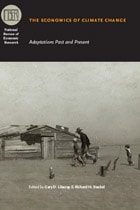
cover of The Economics of Climate Change: Adaptations Past and Present

The Economics of Climate Change

Adaptations Past and Present

Edited by Gary D. Libecap and Richard H. Steckel

University of Chicago Press, 2011

While debates over the consequences of climate change are often pessimistic, historical data from the past two centuries indicate many viable opportunities for responding to potential changes. This volume takes a close look at the ways in which economies—particularly that of the United States—have adjusted to the challenges climate change poses, including institutional features that help insulate the economy from shocks, new crop varieties, irrigation, flood control, and ways of extending cultivation to new geographic areas. These innovations indicate that people and economies have considerable capacity to acclimate, especially when private gains complement public benefits. Options for adjusting to climate change abound, and with improved communication and the emergence of new information and technologies, the potential for adaptation will be even greater in the future.

[more]