Results by title
79 books match the query 'Constitutional law' and 23 start with t
The American Constitution and Religion
Richard J. Regan
Catholic University of America Press, 2013
The Anti-Federalist
An Abridgment of The Complete Anti-FederalistEdited by Herbert J. Storing
University of Chicago Press, 1985
This one-volume edition presents the essence of the other side of that crucial dialogue. It can be read as a genuine counterpart to the Federalist Papers; as an original source companion to Storing's brilliant essay What the Anti-Federalists Were For (volume I of The Complete Anti-Federalist, available as a separate paperback); or as a guide to exploring the full range of Anti-Federalist writing. The Anti-Federalist makes a fundamental source of our political heritage accessible to everyone.

The Bill of Rights in the Modern State
Edited by Geoffrey R. Stone, Richard A. Epstein, and Cass R. Sunstein
University of Chicago Press, 1992
The contributors to this volume are among the most prominent constitutional scholars in the country. Most of the essays are grouped in pairs, each of which offers conflicting positions on current constitutional controversies, including property rights, freedom of religion, freedom of speech, levels of generality in constitutional interpreation, and unemumerated rights.
The contributors are: Bruce Ackerman, Mary E. Becker, Ronald Dworkin, Frank H. Easterbrook, Richard A. Epstein, Charles Fried, Mary Ann Glendon, Philip B. Kurland, Frank J. Michaelman, Michael W. McConnell, Richard A. Posner, Kathleen M. Sullivan, John Paul Stevens, David A. Strauss, and Cass R. Sunstein.
"A thoughtful and well coordinated set of exchanges between leading modern constitutional theorists about the most significant issues related to the Bill of Rights and the Welfare State. These issues are debated through penetrating essays by opposing theorists who get to the heart of these issues and provide significant answers to their debate opponents' points."—Thomas R. Van Dervort, Southeastern Political Review

The Collected Works of William Howard Taft, Volume V
Popular Government and The Anti-trust Act and the Supreme CourtDavid H. Burton
Ohio University Press, 2003
The fifth volume of The Complete Works of William Howard Taft presents two publications Taft wrote as Kent Professor of Constitutional Law at Yale University, the position he assumed in 1913 after he was defeated in his bid for re-election as U.S. president. The first, Popular Government, was prepared for a series of lectures, but was motivated by Taft’s passion over the issue of constitutional interpretation, which had been hotly contested during the campaign. Organized around the preamble of the Constitution, the lectures and later the book were opportunities for Taft to restate his opposition to the direct democracy movement and to reveal the workings of a conservative mind.
In the second, The Anti-trust Act and the Supreme Court, Taft articulates his position in the ongoing debate over the conventional nineteenth-century notion of “laissez faire” and the provisions of the Sherman Antitrust Act. Taft had pursued a policy of vigorous antitrust enforcement during his presidency. In this book he intended to demonstrate that restraint of trade was part of the common law, thereby arguing to good effect in favor of reasonable restraint of trade in his own time.
Taft's careful distinction between predatory monopolistic practices and the reasonable business practices of well-behaved corporations continues to inform today's chambers of government.
The Complete Anti-Federalist
Edited by Herbert J. Storing
University of Chicago Press, 2007
The Complete Anti-Federalist, first published in 1981, contains an unprecedented collection of all the significant pamphlets, newspaper articles and letters, essays, and speeches that were written in opposition to the Constitution during the ratification debate. Storing’s work includes introductions to each entry, along with his own consideration of the Anti-Federalist thought.
This new three-volume set includes all the contents of the original seven-volume publication in a convenient, manageable format.
“A work of magnificent scholarship. Publication of these volumes is a civic event of enduring importance.”—Leonard W. Levy, New York Times Book Review
The Confederate Constitution of 1861
An Inquiry into American ConstitutionalismMarshall L. DeRosa
University of Missouri Press, 1991
In The Confederate Constitution of 1861, Marshall DeRosa argues that the Confederate Constitution was not, as is widely believed, a document designed to perpetuate a Southern "slaveocracy," but rather an attempt by the Southern political leadership to restore the Anti-Federalist standards of limited national government. In this first systematic analysis of the Confederate Constitution, DeRosa sheds new light on the constitutional principles of the CSA within the framework of American politics and constitutionalism. He shows just how little the Confederate Constitution departed from the U.S. Constitution on which it was modeled and examines closely the innovations the delegates brought to the document.
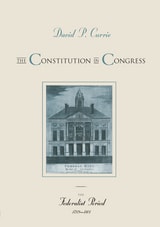
The Constitution in Congress
The Federalist Period, 1789-1801David P. Currie
University of Chicago Press, 1997
"A joy to read."—Appellate Practive Journal and Update
"[A] patient and exemplary analysis of the work of the first six Congresses."—Geoffrey Marshall, Times Literary Supplement
The Constitution in the Supreme Court
The First Hundred Years, 1789-1888David P. Currie
University of Chicago Press, 1985
"A thorough, systematic, and careful assessment. . . . As a reference work for constitutional teachers, it is a gold mine."—Charles A. Lofgren, Constitutional Commentary
The Constitution in the Supreme Court
The Second Century, 1888-1986David P. Currie
University of Chicago Press, 1990
"Elegant and readable. Whether you are in favor of judicial restraint or judicial activism, whatever your feelings about the Warren Court, or the Renquist Court, this is a book that justifies serious study."—Robert Stevens, New York Times Book Review
The Constitution of the Federal Republic of Germany
David P. Currie
University of Chicago Press, 1994
Beginning with an overview of the essential features of the Basic Law of Germany, Currie then elucidates those features by analyzing a number of decisions of the German Constitutional Court. Contrasting German constitutional law with the American model, Currie further illuminates the German system and provides an invaluable comparative perspective on American institutions, judicial methods, and constitutional principles.
The German constitutional court recently has become the object of international attention as it has grappled with controversies involving abortion, ratification of the Maastricht Treaty, and the reunification of East and West. Currie examines these issues and their impact on the German constitution.
An appendix includes (in English translation) the complete Basic Law for the Federal Republic of Germany of May 23, 1949 as amended to December 1, 1993.
The Constitution of the United States
A Primer for the PeopleDavid P. Currie
University of Chicago Press, 2000
A masterly introduction to the United States Constitution, this slim book leads the reader through a concise overview of the document's individual articles and amendments. With clear and accessible language, Currie then examines each of the three branches of the federal government and explains the relation between the federal and state governments. He analyzes those constitutional provisions that are designed to protect citizens from governmental interference, such as the due process and equal protection clauses and the confusing first amendment provisions respecting the separation of church and state, and includes discussions of judicial review and freedom of speech and of the press.
A sympathetic yet critical guide, Currie's book enables students and laypersons to understand one of the cornerstones of the Western political tradition. The second edition, along with an updated chronology and bibliography, incorporates the Supreme Court decisions over the past decade that have affected constitutional interpretation.
The Constitutional Jurisprudence of the Federal Republic of Germany
Third edition, Revised and ExpandedDonald P. Kommers and Russell A. Miller
Duke University Press, 2012
Compared to previous editions of The Constitutional Jurisprudence of the Federal Republic of Germany, this third edition more closely tracks Germany's Basic Law and, therefore, the systematic approach reflected in the most-respected German constitutional law commentaries. Entirely new chapters address the relationship between German law and European and international law; social and economic rights, including the property and occupational rights cases that have emerged from Reunification; jurisprudence related to issues of equality, particularly gender equality; and the tension between Germany's counterterrorism efforts and its constitutional guarantees of liberty. Kommers and Miller have also updated existing chapters to address recent decisions involving human rights, federalism, European integration, and religious liberty.
The Constitutionalism of American States
Edited by George E. Connor & Christopher W. Hammons
University of Missouri Press, 2008
This comparative study of American state constitutions offers insightful overviews of the general and specific problems that have confronted America’s constitution writers since the founding. Each chapter reflects the constitutional history and theory of a single state, encompassing each document’s structure, content, and evolution.
The text is grounded in the model presented by constitutional scholar Donald S. Lutz in The Origins of American Constitutionalism so that even when a state has a relatively stable constitutional history, Lutz’s framework can be used to measure the evolving meaning of the document. With contributors drawn from state governments as well as academia, this is the first work to offer a framework by which state constitutions can be analyzed in relation to one another and to the federal Constitution.
The volume begins with chapters on the New England, Mid-Atlantic, Border, and Southern states. While regional similarities within and between the New England and Mid-Atlantic states are noteworthy, the colonial aspect of their history laid the foundation for national constitution-making. And while North and South moved in distinct directions, the Border states wrestled with conflicting constitutional traditions in the same way that they wrestled with their place in the Union.
Southern states that seceded are shown to have had a common set of problems in their constitutions, and the post–Civil War South emerged from that conflict with a constitutionalism that was defined for it by the war’s victors. These chapters reveal that constitutional self-definition, while not evident in all of the former Confederate states, has redeveloped in the South in the intervening 140 years.
Sections devoted to the Midwest, the Plains, the Mountain West, the Southwest, and the West reflect the special circumstances of states that arose from American expansion. Chapters describe how states of the Midwest, united by common roots in the Northwest Ordinance, wrote constitutions that were defined by that act’s parameters while reflecting the unique cultural and political realities of each state. Meanwhile, the Plains states developed a constitutionalism that was historically rooted in progressivism and populism, sometimes in the clash between these two ideologies.
Perhaps more than any other region, the Mountain West was defined by the physical landscape, and these chapters relate how those states were able to define their individual constitutional identities in spite of geography rather than because of it. And although western states borrowed heavily from those with much older constitutional traditions, the contributors reveal that they borrowed differently—and in different proportions—in order to craft constitutions that were uniquely adapted to their historical situation and peoples.
This work demonstrates the diversity of our governmental arrangements and provides a virtual introduction to the political culture of each—many offering stories of constitutional foundings that are rich with meaning. Although these fifty documents are defined in a federal context, state constitutions are necessary to complete the constitutionalism of the United States.
The Federal Impeachment Process
A Constitutional and Historical Analysis, Third EditionMichael J. Gerhardt
University of Chicago Press, 2019
For more than twenty years, The Federal Impeachment Process has served as the most complete analysis of the constitutional and legal issues raised in every impeachment proceeding in American history. Impeachment, Michael J. Gerhardt shows, is an inherently political process designed to expose and remedy political crimes—serious breaches of duty or injuries to the Republic. Subject neither to judicial review nor to presidential veto, it is a unique congressional power that involves both political and constitutional considerations, including the gravity of the offense charged, the harm to the constitutional order, and the link between an official’s misconduct and duties. For this third edition, Gerhardt updates the book to cover cases since President Clinton, as well as recent scholarly debates. He discusses the issues arising from the possible impeachment of Donald Trump, including whether a sitting president may be investigated, prosecuted, and convicted for criminal misconduct or whether impeachment and conviction in Congress is the only way to sanction a sitting president; what the “Emoluments Clause” means and whether it might provide the basis for the removal of the president; whether gross incompetence may serve as the basis for impeachment; and the extent to which federal conflicts of interest laws apply to the president and other high ranking officials.
Significantly updated, this book will remain the standard work on the federal impeachment process for years to come.
The Federalist Concordance
Edited by Thomas Engeman, Edward J. Erler, and Thomas B. Hofeller
University of Chicago Press, 1988

The Moral Tradition of American Constitutionalism
A Theological InterpretationH. Jefferson Powell
Duke University Press, 1993
Powell locates the origins of constitutional law in the Enlightenment attempt to control the violence of the state by subjecting power to reason. He then traces constitutionalism's rapid evolution into a tradition of rational inquiry centered in the practice of adjudication and embodied in a community of lawyers and judges. Finally, Powell shows how the tradition's nineteenth-century presuppositions about the autonomy and rationality of constitutional argument have been undermined in the twentieth century, within the constitutional community itself, by the acceptance of a positivist and "democratic" understanding of law. Powell shows how the continued willingness of the courts to resolve moral questions by invoking "the Constitution" has thrown the constitutional tradition into an epistemological crisis. He critiques the work of many major theorists—John Hart Ely, Bruce Ackerman, Frank Michaelman, Rogers Smith, Michael Perry, Mark Tushnet, Robert Bork, Sanford Levinson—who, he claims, persist in attempting to resolve the crisis by redefining constitutionalism as American social morality.
With reference to Alasdair MacIntyre's concepts of moral tradition and social practice and John Howard Yoder's theological account of the state, Powell places his analysis of current constitutionalism within a contemporary Christian theological critique of Western liberalism. With certain exceptions, Powell concludes, there are theological grounds in the United States to prefer decision making by elected officials to decision by constitutional courts. Despite the controversial implications for judicial practice and legal argument, Powell ultimately argues that the liberal tradition of rational inquiry--American constitutionalism--be renounced by the Christian community in favor of the majoritarian political process.
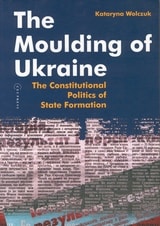
The Moulding of Ukraine
The Constitutional Politics of State FormationKataryna Wolczuk
Central European University Press, 2002
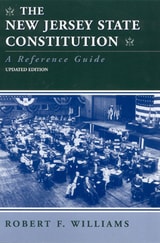
The New Jersey State Constitution
A Reference GuideWilliams, Robert F
Rutgers University Press, 1997
The year 1997 marks the fiftieth anniversary of New Jerseys wellregarded state constitution. State constitutions, although the highest source of law within a state, are not well understood by citizens, government officials, historians, political scientists, lawyers, or even judges.
This book is the first single volume to combine a detailed review of New Jersey's constitutional history and analysis of each section of the current constitution. It is the standard work on New Jersey constitutional development and law. Divided into two parts, the book first covers the historical development of the constitutions of 1776, 1844, the Constitutional Commission of 1873, and the current constitution written in 1947. It then traces the origins and major judicial interpretations of each section of the present-day constitution. It concludes with an exhaustive bibliographical essay which organizes the most complete listing of primary and secondary sources to date.
The Nicaraguan Constitution of 1987
English Translation and CommentaryKenneth J. Mijeski
Ohio University Press, 1991
This volume of seven essays on the 1987 Nicaraguan constitution does not accept a priori the judgment that Latin American constitutions are as fragile as egg shells, easily broken and discarded if found to be inconvenient to the interests of the rulers. Rather, they are viewed as being central to understanding political life in contemporary Nicaragua.
The perspectives of the analysts and their conclusions are not consensual. They prohibit glib and facile general conclusions. Some find the constitution to be nothing more than a façade for arbitrary and capricious rule; others that the document reflects clear commitments to the democratic rule of law. Thus far the implementation of the constitution has resulted in the peaceful transition of power from the Sandinistas to the National Opposition Union.
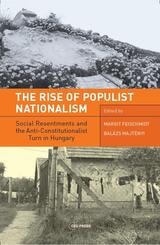
The Rise of Populist Nationalism
Social Resentments and Capturing the Constitution in HungaryBalázs Majtényi
Central European University Press, 2020
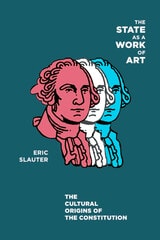
The State as a Work of Art
The Cultural Origins of the ConstitutionEric Slauter
University of Chicago Press, 2009
The founding of the United States after the American Revolution was so deliberate, so inspired, and so monumental in scope that the key actors considered this new government to be a work of art framed from natural rights. Recognizing the artificial nature of the state, these early politicians believed the culture of a people should inform the development of their governing rules and bodies. Eric Slauter explores these central ideas in this extensive and novel account of the origins and meanings of the Constitution of the United States. Slauter uncovers the hidden cultural histories upon which the document rests, highlights the voices of ordinary people, and considers how the artifice of the state was challenged in its effort to sustain inalienable natural rights alongside slavery and to achieve political secularization at a moment of growing religious expression.
A complement to classic studies of the Constitution’s economic, ideological, and political origins, The State as a Work of Art sheds new light on the origins of the Constitution and on ongoing debates over its interpretation.
The Supreme Court Review, 2013
Edited by Dennis J. Hutchinson, David A. Strauss, and Geoffrey R. Stone
University of Chicago Press Journals, 2014

Twilight of the American State
Pierre Schlag
University of Michigan Press, 2023
Finalist: 2024 Order of the Coif Book Award | March 3, 2025
The sudden emergence of the Trump nation surprised nearly everyone, including journalists, pundits, political consultants, and academics. When Trump won in 2016, his ascendancy was widely viewed as a fluke. Yet time showed it was instead the rise of a movement—angry, militant, revanchist, and unabashedly authoritarian.
How did this happen? Twilight of the American State offers a sweeping exploration of how law and legal institutions helped prepare the grounds for this rebellious movement. The controversial argument is that, viewed as a legal matter, the American state is not just a liberal democracy, as most Americans believe. Rather, the American state is composed of an uneasy and unstable combination of different versions of the state—liberal democratic, administered, neoliberal, and dissociative. Each of these versions arose through its own law and legal institutions. Each emerged at different times historically. Each was prompted by deficits in the prior versions. Each has survived displacement by succeeding versions. All remain active in the contemporary moment—creating the political-legal dysfunction America confronts today.
Pierre Schlag maps out a big picture view of the tribulations of the American state. The book abjures conventional academic frameworks, sets aside prescriptions for quick fixes, dispenses with lamentations about polarization, and bypasses historical celebrations of the American Spirit.