Results by title
75 books match the query 'Construction' and 18 start with t
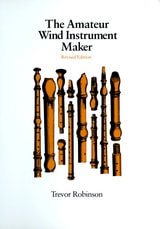
The Amateur Wind Instrument Maker
Trevor Robinson
University of Massachusetts Press, 1980
In The Amateur Wind Instrument Maker, Trevor Robinson provides clear, practical instructions for building a wide variety of wind instruments using materials and tools accessible to the dedicated amateur. Beginning with an introduction to the principles of wind instrument design and the basic woodworking materials required, Robinson proceeds through detailed plans and step-by-step guidance for constructing instruments including flutes and fifes, recorders, clarinets, shawms, and oboes, among others. Each chapter combines historical context with hands-on instruction, offering dimensions, bore specifications, tone hole placement, and finishing techniques that allow the builder to produce genuinely playable instruments.
Compact and accessibly written, the revised edition of The Amateur Wind Instrument Maker remains a foundational reference in the field of amateur instrument building, enabling generations of amateur builders to craft their own instruments, from straightforward projects suitable for beginners to more demanding undertakings for experienced woodworkers.
The Aztec Kings
The Construction of Rulership in Mexican HistorySusan D. Gillespie
University of Arizona Press, 1989
The Aztec Kings is the first major study to take into account the Aztec cyclical conception of time—which required that history constantly be reinterpreted to achieve continuity between past and present—and to treat indigenous historical traditions as symbolic statements in narrative form. Susan Gillespie focuses on the dynastic history of the Mexica of Tenochtitlan, whose stories reveal how the Aztecs used "history" to construct, elaborate, and reify ideas about the nature of rulership and the cyclical nature of the cosmos, and how they projected the Spanish conquest deep into the Aztec past in order to make history accommodate that event.
By demonstrating that most of Aztec history is nonliteral, she sheds new light on Aztec culture and on the function of history in society. By relating the cyclical structure of Aztec dynastic history to similar traditions of African and Polynesian peoples, she introduces a broader perspective on the function of history in society and on how and why history must change.
The Construction of Authorship
Textual Appropriation in Law and LiteratureMartha Woodmansee and Peter Jaszi, eds.
Duke University Press, 1994
These essays, illustrating cultural studies in action, are aggressively interdisciplinary and wide-ranging in topic and approach. Questions of collective and collaborative authorship in both contemporary and early modern contexts are addressed. Other topics include moral theory and authorship; copyright and the balance between competing interests of authors and the public; problems of international copyright; musical sampling and its impact on "fair use" doctrine; cinematic authorship; quotation and libel; alternative views of authorship as exemplified by nineteenth-century women's clubs and by the Renaissance commonplace book; authorship in relation to broadcast media and to the teaching of writing; and the material dimension of authorship as demonstrated by Milton's publishing contract.
Contributors. Rosemary J. Coombe, Margreta de Grazia, Marvin D'Lugo, John Feather, N. N. Feltes, Ann Ruggles Gere, Peter Jaszi, Gerhard Joseph, Peter Lindenbaum, Andrea A. Lunsford and Lisa Ede, Jeffrey A. Masten, Thomas Pfau, Monroe E. Price and Malla Pollack, Mark Rose, Marlon B. Ross, David Sanjek, Thomas Streeter, Jim Swan, Max W. Thomas, Martha Woodmansee, Alfred C. Yen

The Construction of Children's Character
Edited by Alex Molnar
University of Chicago Press, 1997
The idea that character education should be an important element in the curriculum of public schools is controversial. Critics reject the idea that schools should be involved in teaching values. Proponents often disagree among themselves—some detailing the proper values students should be taught, others arguing that character development must be part of a larger process of constructing an ethical community in the schools. The contributors to this volume bring a breadth of perspectives, experience, and approaches to the problem of assessing contemporary character education.
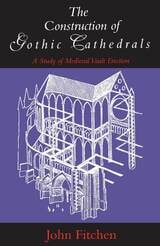
The Construction of Gothic Cathedrals
A Study of Medieval Vault ErectionJohn Fitchen
University of Chicago Press, 1981
In The Construction of Gothic Cathedrals, John Fitchen systematically walks readers through the process of erecting the great edifices of the Gothic era. He explains the building equipment and falsework needed, the actual operations undertaken, and the sequence of these operations as specifically as they can be deduced today. In the absence of contemporary accounts of the techniques used by medieval builders, Fitchen's study brilliantly pieces together clues from manuscript illuminations, pictorial representations, and the fabrics of the building themselves. The result is the clearest picture available of the innovations and techniques that enabled these buildings, which still generate awe today, to rise majestically above the low buildings of their surrounding towns. It's a book that will enthrall readers of history, and one that, as Progressive Architecture noted, "no student of architecture should miss."
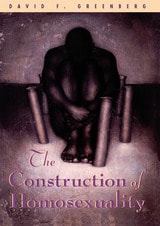
The Construction of Homosexuality
David F. Greenberg
University of Chicago Press, 1990
The Construction of Meaning
Edited by David I. Beaver, Luis D. Casillas Martinez, Brady Z. Clark, and Stefan
CSLI, 2002
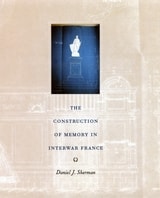
The Construction of Memory in Interwar France
Daniel J. Sherman
University of Chicago Press, 2000
Sherman shows how a wartime visual culture saturated with images of ordinary foot soldiers, together with contemporary novels, memoirs, and tourist literature, promoted a distinctive notion of combat experience. The contrast between battlefield and home front, soldier and civilian was the basis for memory and collective gratitude. Postwar commemoration, however, also grew directly out of the long and agonized search for the remains of hundreds of thousands of missing soldiers, and the sometimes contentious debates over where to bury them. For this reason, the local monument, with its inscribed list of names and its functional resemblance to tombstones, emerged as the focal point of commemorative practice. Sherman traces every step in the process of monument building as he analyzes commemoration's competing goals—to pay tribute to the dead, to console the bereaved, and to incorporate mourners' individual memories into a larger political discourse.
Extensively illustrated, Sherman's study offers a visual record of a remarkable moment in the history of public art. It is at once a moving account of a culture haunted by war and a sophisticated analysis of the political stakes of memory in the twentieth century.
Winner of the 2000 J. Russell Major Prize of the American Historical Association
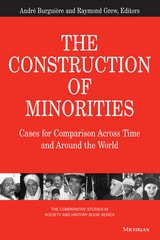
The Construction of Minorities
Cases for Comparison Across Time and Around the WorldAndre Burguiere and Raymond Grew, Editors
University of Michigan Press, 2001
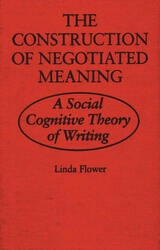
The Construction of Negotiated Meaning
A Social Cognitive Theory of WritingLinda Flower
Southern Illinois University Press, 1994
Based on five years of close observation of students, writing and collaborative planning—the practice in which student writers take the roles of planner and supporter to help each other develop a more rhetorically sophisticated writing plan—foremost cognitive composition researcher Linda Flower redefines writing in terms of an interactive social and cognitive process and proposes a convincing and compelling theory of the construction of negotiated meaning.
Flower seeks to describe how writers construct meaning. Supported by the emerging body of social and cognitive research in rhetoric, education, and psychology, she portrays meaning making as a literate act and a constructive process. She challenges traditional definitions of literacy, adding to that concept the elements of social literate practices and personal literate acts. In Flower’s view, this social cognitive process is a source of tension and conflict among the multiple forces that shape meaning: the social and cultural context, the demands of discourse, and the writer’s own goals and knowledge.
Flower outlines a generative theory of conflict. With this conflict central to her theory of the construction of negotiated meaning, she examines negotiation as an alternative to the metaphors of reproduction and conversation. It is through negotiation, Flower argues, that social expectations, discourse conventions, and the writer’s personal goals and knowledge become inner voices. The tension among these forces often creates the hidden logic behind student writing. In response to these conflicting voices, writers sometimes rise to the active negotiation of meaning, creating meaning in the interplay of alternatives, opportunities, and constraints.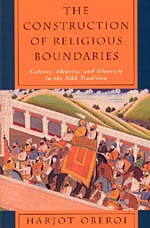
The Construction of Religious Boundaries
Culture, Identity, and Diversity in the Sikh TraditionHarjot Oberoi
University of Chicago Press, 1994
In the closing decades of the nineteenth century, however, the Singh Sabha, a powerful new Sikh movement, began to view the multiplicity in Sikh identity with suspicion and hostility. Aided by social and cultural forces unleashed by the British Raj, the Singh Sabha sought to recast Sikh tradition and purge it of diversity. The ethnocentric logic of a new elite dissolved alternative ideals under the highly codified culture of modern Sikhism.
A study of the process by which a pluralistic religious world view is replaced by a monolithic one, this important book calls into question basic assumptions about the efficacy of fundamentalist claims and the construction of all social and religious identities. An essential book for the field of South Asian religions, this work is also an important contribution to cultural anthropology, postcolonial studies, and the history of religion in general.
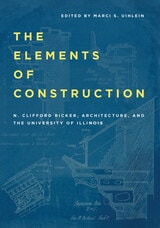
The Elements of Construction
N. Clifford Ricker, Architecture, and the University of IllinoisN. Clifford Ricker. Edited by Marci S. Uihlein
University of Illinois Press, 2025
In addition to providing the full text, Uihlein and the contributors trace Ricker’s career and delve into his practice of teaching. Subject experts explore specific topics. Thomas Leslie surveys contemporary construction practices in Chicago. Tom F. Peters considers Ricker’s writings in the context of the time while Rachel Will looks at masonry know-how and testing. Donald Friedman examines the teaching of iron and steel construction.
An illuminating look at a field and a legacy, The Elements of Construction rediscovers a figure that shaped the teaching of architecture and trained a generation that forever changed Chicago.

The Guitar
Tracing the Grain Back to the TreeChris Gibson and Andrew Warren
University of Chicago Press, 2021
Guitars inspire cult-like devotion: an aficionado can tell you precisely when and where their favorite instrument was made, the wood it is made from, and that wood’s unique effect on the instrument’s sound. In The Guitar, Chris Gibson and Andrew Warren follow that fascination around the globe as they trace guitars all the way back to the tree. The authors take us to guitar factories, port cities, log booms, remote sawmills, Indigenous lands, and distant rainforests, on a quest for behind-the-scenes stories and insights into how guitars are made, where the much-cherished guitar timbers ultimately come from, and the people and skills that craft those timbers along the way.
Gibson and Warren interview hundreds of people to give us a first-hand account of the ins and outs of production methods, timber milling, and forest custodianship in diverse corners of the world, including the Pacific Northwest, Madagascar, Spain, Brazil, Germany, Japan, China, Hawaii, and Australia. They unlock surprising insights into longer arcs of world history: on the human exploitation of nature, colonialism, industrial capitalism, cultural tensions, and seismic upheavals. But the authors also strike a hopeful note, offering a parable of wider resonance—of the incredible but underappreciated skill and care that goes into growing forests and felling trees, milling timber, and making enchanting musical instruments, set against the human tendency to reform our use (and abuse) of natural resources only when it may be too late. The Guitar promises to resonate with anyone who has ever fallen in love with a guitar.
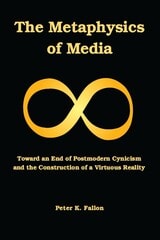
The Metaphysics of Media
Toward an End of Postmodern Cynicism and the Construction of a Virtuous RealityPeter K. Fallon
University of Scranton Press, 2009
In The Metaphysics of Media, award-winning media critic Peter K. Fallon tackles the complicated question of how a succession of dominant forms of media have supported—and even to some extent created—different conceptions of reality. To do so, he starts with the basics: a critical discussion of the very idea of objective reality and the various postmodern responses that have tended to dominate recent philosophical approaches to the subject. From there, he embarks on a survey of the evolution of communication through four major eras: orality; literacy; print; and electricity.
Within each era, Fallon argues, the dominant form of media supported particular ways of understanding the world, from the ascendance of reason that followed the development of alphabets to the obliteration of space and time that we associate with electronic communications. Fallon concludes with a hard look at the mass ignorance that prevails today despite (or perhaps because of) the sea of information with which contemporary life is surrounded.
A stirring, philosophically rich investigation, The Metaphysics of Media offers not only a clear picture of where our society has been but also a road map to a more engaged, informed, and fully human future.

The Sexual Self
The Construction of Sexual ScriptsMichael Kimmel
Vanderbilt University Press, 2007
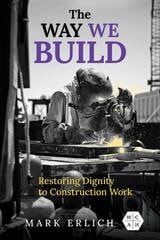
The Way We Build
Restoring Dignity to Construction WorkMark Erlich
University of Illinois Press, 2023
Mark Erlich blends long-view history with his personal experience inside the building trades to explain one of our economy’s least understood sectors. Erlich’s multifaceted account includes the dynamics of the industry, the backdrop of union policies, and powerful stories of everyday life inside the trades. He offers a much-needed overview of construction’s past and present while exploring roads to the future.

Tropical Travels
Brazilian Popular Performance, Transnational Encounters, and the Construction of RaceBy Lisa Shaw
University of Texas Press, 2018
Brazilian popular culture, including music, dance, theater, and film, played a key role in transnational performance circuits—inter-American and transatlantic—from the latter nineteenth century to the middle of the twentieth century. Brazilian performers both drew inspiration from and provided models for cultural production in France, Portugal, Argentina, the United States, and elsewhere. These transnational exchanges also helped construct new ideas about, and representations of, “racial” identity in Brazil. Tropical Travels fruitfully examines how perceptions of “race” were negotiated within popular performance in Rio de Janeiro and how these issues engaged with wider transnational trends during the period.
Lisa Shaw analyzes how local cultural forms were shaped by contact with imported performance traditions and transnational vogues in Brazil, as well as by the movement of Brazilian performers overseas. She focuses specifically on samba and the maxixe in Paris between 1910 and 1922, teatro de revista (the Brazilian equivalent of vaudeville) in Rio in the long 1920s, and a popular Brazilian female archetype, the baiana, who moved to and fro across national borders and oceans. Shaw demonstrates that these transnational encounters generated redefinitions of Brazilian identity through the performance of “race” and ethnicity in popular culture. Shifting the traditional focus of Atlantic studies from the northern to the southern hemisphere, Tropical Travels also contributes to a fuller understanding of inter-hemispheric cultural influences within the Americas.
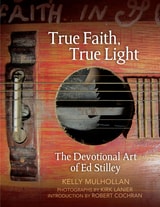
True Faith, True Light
The Devotional Art of Ed StilleyKelly Mulhollan
University of Arkansas Press, 2015
But one day Ed’s life was permanently altered. While plowing his field, he became convinced he was having a heart attack. Ed stopped his work and lay down on the ground. Staring at the sky, he saw himself as a large tortoise struggling to swim across a river. On his back were five small tortoises—his children—clinging to him for survival. And then, as he lay there in the freshly plowed dirt, Ed received a vision from God, telling him that he would be restored to health if he would agree to do one thing: make musical instruments and give them to children.
And so he did. Beginning with a few simple hand tools, Ed worked tirelessly for twenty-five years to create over two hundred instruments, each a crazy quilt of heavy, rough-sawn wood scraps joined with found objects. A rusty door hinge, a steak bone, a stack of dimes, springs, saw blades, pot lids, metal pipes, glass bottles, aerosol cans—Ed used anything he could to build a working guitar, fiddle, or dulcimer. On each instrument Ed inscribed “True Faith, True Light, Have Faith in God.”
True Faith, True Light: The Devotional Art of Ed Stilley documents Ed Stilley’s life and work, giving us a glimpse into a singular life of austere devotion.